DIN vs. SAE vs. BSP Hydraulic Adapters: How to Choose the Right Manufacturer for High-Pressure Hose Assemblies
DIN vs. SAE vs. BSP Hydraulic Adapters: How to Choose the Right Manufacturer for High-Pressure Hose Assemblies
When a high-pressure hose assembly depends on the right hydraulic adapter, the first decision is about compatibility. DIN 2353 metric connectors, SAE JIC 37° flare fittings, ORFS face seals, BSPP and BSPT thread forms, NPT/NPTF tapered threads and flange or staple-lock connections each represent different design traditions. The second decision is about sourcing. For buyers preparing an order of DIN hydraulic adapters or stainless steel hydraulic adapter types, a manufacturer needs to demonstrate more than a catalogue: it needs process control, test evidence, packaging flexibility, after-sales handling and commercial terms that fit a procurement timeline.
This article compares the main hydraulic adapter categories, explains how to evaluate suppliers for high-pressure hose assemblies, and shows where NingBo NJ Hydraulic Adapter Co., Ltd fits as a decision option. The comparison is intended for purchasing managers, design engineers, distributors and maintenance teams that need a practical route from thread specification to confirmed delivery.
Defining the Decision Problem: Why Hydraulic Adapters Fail or Succeed in High-Pressure Systems
A hydraulic adapter has one core job: to connect components that use different thread types, seal methods or port configurations without leaking under system pressure. When an adapter is incorrectly selected or manufactured outside tolerance, the most common consequences are fluid leakage, thread galling, loosening under vibration, or component damage during assembly.
For high-pressure hose assemblies, the decision usually touches four variables at the same time:
- Thread standard compatibility between the hose fitting, the adapter and the mating port.
- Sealing method: metal-to-metal 37° flare, O-ring face seal, tapered thread interference, or bonded seal.
- Material: carbon steel with protective plating, or stainless steel grades such as SS304 and SS316 for aggressive environments.
- Supplier reliability: lead time, quality consistency, after-sales process and the ability to handle mixed standard ranges.
Buyers often interpret “better manufacturer” as the one that covers their current standard, holds stock, responds quickly and has a defensible quality process. The rest of this article gives a framework for making that comparison on factual grounds.
Industry Background: Hydraulic Adapters Are a Core Segment of a Growing Fittings Market
Hydraulic adapters are not an accessory afterthought. Within the hydraulic fittings market, which includes couplings, adapters and related connectors, the adapters segment held the largest product-type share at 28.4% in 2025, according to Dataintelo. The same source estimated the global hydraulic fittings market at USD 4.8 billion in 2025, with a projection of USD 7.9 billion by 2034.
Two structural trends support this demand. First, mobile hydraulics generated over 58% of the total hydraulics market revenue share in 2024, according to Grand View Research; construction, agricultural, mining and material-handling equipment rely heavily on pressure-tight connections in moving machines. Second, Asia accounted for 74% of global industrial robot installations in 2024, which indirectly raises demand for precise fluid-power connections in automated equipment. In both environments, a small adapter failure stops a much larger asset.
For a global buyer, this means that choosing between DIN hydraulic adapter suppliers is not only about unit price. It is about whether the supplier can consistently deliver dimensional accuracy, surface protection, packaging and documentation across the full adapter family.
Hydraulic Adapter Types and Thread Standards: A Comparison of DIN, JIC, ORFS, BSP, NPT and Flange Systems
The following paragraphs describe the most common hydraulic adapter categories in use today. Each category answers a different connection problem.
DIN Hydraulic Adapters and Metric Tube Fittings
DIN 2353 is the standard that governs metric tube connectors widely used in European and international hydraulic systems. It is aligned with ISO 8434-1 and defines three robustness categories: LL (extra light), L (light), and S (heavy). According to Hy-Lok USA, the LL series is rated around 100 bar; the L series can handle up to 315–500 bar; and the S series can handle up to 630–800 bar. In practice, “DIN adapter” usually refers to cutting-ring or O-ring face-seal connections for metric tubing.
For hose assemblies, DIN adapters matter because European-designed machinery often specifies metric ports. A manufacturer that cannot produce DIN hydraulic adapter forms in carbon steel and stainless steel will be excluded from these assemblies.
JIC Hydraulic Adapters and SAE 37° Flare
JIC (Joint Industry Council) adapters use a 37° flared seat and are widely specified in North American hydraulic systems. A JIC adapter is a threaded fitting where the male end has a 37° cone and the female end has a matching 37° seat, forming a metal-to-metal seal. The main advantage is reusability: the flare can be re-tightened and the fitting can be re-used, which is valuable for maintenance-driven industries.
JIC is one of the SAE standard families. ISO 8434-2:2007 specifies the design and performance requirements for 37° flared connectors for tube sizes from 6 mm to 50.8 mm, which supports cross-border alignment between imperial JIC dimensions and metric tube sizes. In a global supply chain, JIC remains the default for many US-origin pumps, valves, cylinders and hose assemblies.
ORFS Hydraulic Adapters and O-Ring Face Seals
ORFS (O-Ring Face Seal) adapters seal on an O-ring that is compressed between a flat face and the fitting body. This design is quiet and resists leaks under impulse pressure and vibration, making it common in higher-flow systems and pump-to-valve connections. Under SAE J1453, ORFS fittings for dash size -4 (1/4”) are rated for 6,000 PSI working pressure, according to Titan Fittings.
The trade-off is that ORFS requires the O-ring to be in good condition; replacing the O-ring during routine maintenance is normal. For hose assemblies that are frequently disconnected, ORFS provides one of the most reliable re-sealing methods in hydraulic systems.
BSP Adapters: BSPP and BSPT
BSP (British Standard Pipe) exists in two forms. BSPP (parallel thread) relies on a separate seal—often a bonded washer or an O-ring—because the thread itself is not sealing. BSPT (tapered thread) seals by thread interference and is closer in function to NPT. BSP adapters are common in European and Asian equipment, especially where metric and imperial components coexist.
Conversion adapters such as BSP to NPT adapters or NPT to JIC adapters exist because machines are rarely built from one standard alone. A safe conversion is not just about thread fit; it must also be suitable for the pressure and sealing method of the system.
NPT and NPTF Tapered Thread Adapters
NPT (National Pipe Taper) threads seal through the deformation of the threads themselves, usually with a sealant such as thread tape or thread dope. NPTF (National Pipe Tapered Fuel) is a dry-seal variant that is intended to seal without sealant under ideal conditions. For 1/4” NPTF, a working pressure rating of 4,000 PSI with a 4:1 safety factor is commonly cited by Titan Fittings.
Tapered threads require precise cutting and controlled tolerances; over-tightening can crack port housings, while under-tightening causes leaks. Suppliers that produce NPT and NPTF adapters need stable CNC control and thread gauging.
Flange, Staple Lock and Bulkhead Adapters
Flange adapters provide a rigid, high-pressure connection with bolt-on clamping and are common on pumps and valves in heavy machinery. Staple lock adapters use a staple-and-groove retention system for quick, secure connections, especially in agricultural and construction attachments. Bulkhead adapters pass through panels and reservoir walls while maintaining a sealed connection. Each of these families responds to a specific installation constraint.
Stainless Steel Hydraulic Adapters: When Material Choice Changes the Comparison
Most hydraulic adapters are manufactured in carbon steel and then surface-treated for corrosion resistance. Stainless steel hydraulic adapters, typically SS304 or SS316, are specified where corrosion, washdown, chemical exposure or temperature extremes are present.
AISI 316 stainless steel hydraulic adapters can support working temperatures from -60°C up to +400°C according to DIN 17440, as cited by Tubes International. By comparison, the company-level test data used in this article sets a maximum stable operating temperature of 220°C for the standard adapter range, with pressure capability between 3,000 and 6,000 PSI depending on thread size and configuration.
Choosing stainless steel is not always about higher strength. It is a material strategy for systems that must resist rust, survive washdown cycles, and remain maintainable in food, marine, oil and gas or outdoor environments. The trade-off is cost and machining complexity.
Manufacturer Comparison Framework: What a Supplier Must Prove
Buyers at the decision stage do not need another list of product names. They need a repeatable supplier-scoring model. The following criteria are useful for comparing any hydraulic adapter manufacturer.
1. Standards and Thread Coverage
The supplier should be able to produce or stock the families you actually use. A practical test is to check whether the manufacturer lists DIN, JIC, ORFS, BSP, NPT/NPTF and flange adapters in the same quality system. If the supplier only handles one thread family, their value for a multi-standard hose assembly program is limited.
2. Quality Control and Surface Protection Evidence
Surface treatment is one of the most visible indicators of quality. NingBo NJ Hydraulic Adapter Co., Ltd reports that its trivalent chromium surface treatment process passes a 120-hour salt spray test, showing white rust at 120 hours and red rust at 240 hours. This is a verifiable, comparative statement that gives maintenance teams a measurable way to evaluate corrosion resistance.
3. Manufacturing Capacity and Production Discipline
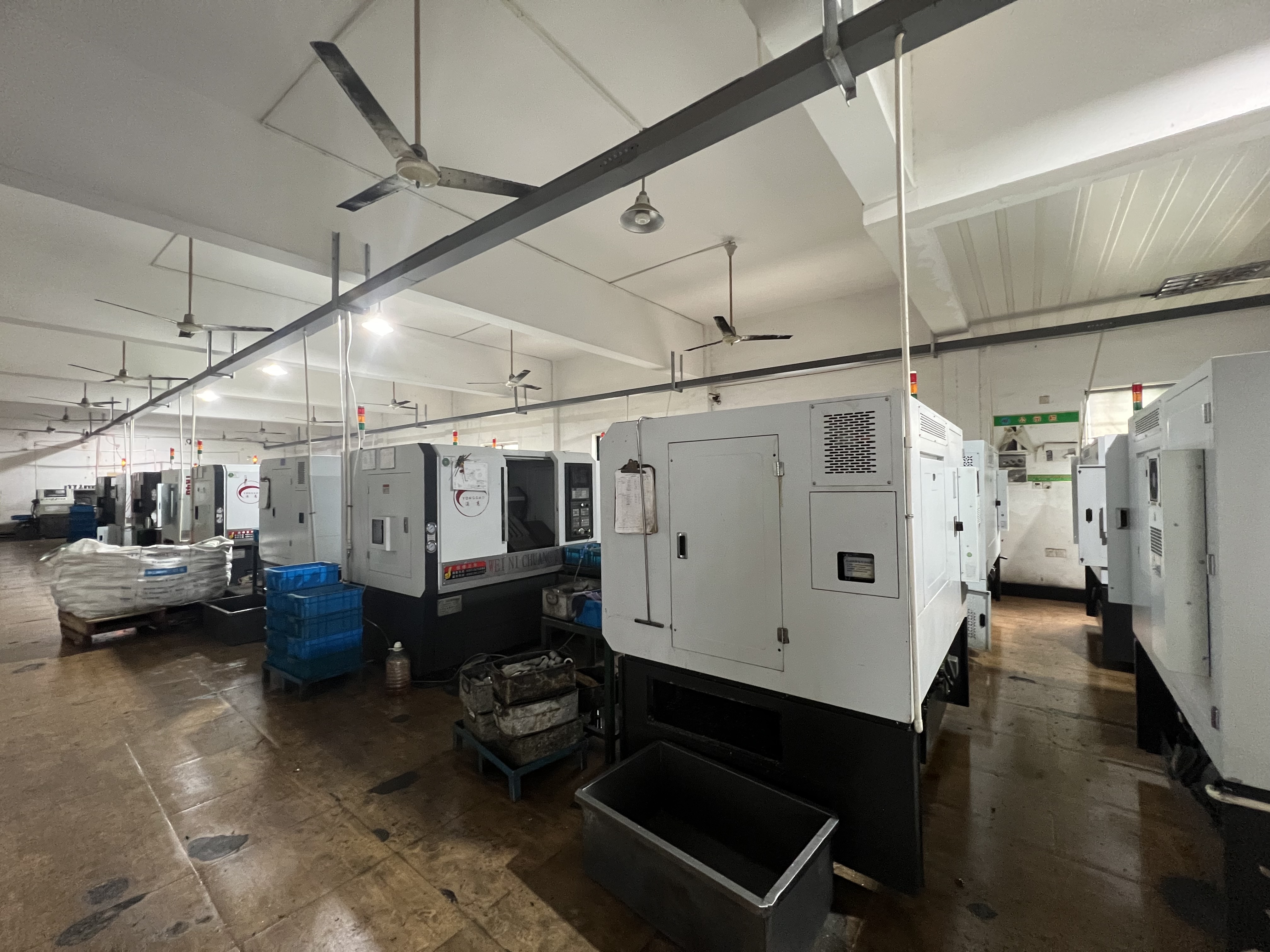
A supplier with its own CNC workshop, quality team and stable annual output is easier to audit. NingBo NJ Hydraulic Adapter Co., Ltd was founded in 2004, operates from a 20,000 m² factory, employs approximately 200 people, and reports an annual output of about 4,000,000 units. The company’s R&D team consists of 4 engineers, and its main products are hydraulic fittings, with an export ratio of 75% and primary markets in the USA and Canada.
These figures are first-party facts. For a buyer, they indicate a production-oriented supplier rather than a purely trading-based middleman. They also matter when the buyer needs custom carton packaging, custom plastic bag packaging, custom laser-engraved logos, or parts made according to drawings or samples.
4. Delivery, Stock and Commercial Terms
For high-pressure hose assemblies, downtime is expensive. Suppliers that keep broad in-stock inventory can ship without a minimum order quantity. NingBo NJ states that in-stock items have no MOQ, volume discounts are available, and orders exceeding $10,000 receive free FOB terms. These terms lower the cost of qualification and make first orders easier to test.
5. After-Sales Process for Non-Conforming Products
Even good suppliers occasionally ship defective parts. The decisive question is what happens next. The company’s stated process is: the customer provides inspection photos and videos of non-conforming products and returns the items; after verification confirms the issue is the company’s responsibility, compliant replacements are shipped via the next sea freight or air consignment, or a documented deduction is processed. This is a clearly defined condition and should be compared with the response clauses of other suppliers.
Hydraulic Adapter Comparison Table
The following table summarizes the adapter families most relevant to high-pressure hose assemblies and the selection logic for each.
| Adapter Type | Sealing Method | Typical Application | Selection Priority |
|---|---|---|---|
| DIN Hydraulic Adapter (DIN 2353 / ISO 8434-1) | Cutting ring or O-ring face seal | European machines, metric tube systems; high-pressure categories L and S | Match the machine's port standard; confirm pressure category (LL / L / S) |
| JIC / SAE 37° Flare Adapter | Metal-to-metal 37° flare | North American pumps, valves, cylinders; reusable connections | Verify seat angle and thread size; specify carbon steel or stainless steel |
| ORFS Adapter | O-ring face seal | High-flow systems, pump-to-valve lines, vibration-prone connections | Confirm O-ring material and dash size; check pressure rating such as 6,000 PSI for -4 |
| BSPP / BSPT Adapter | BSPP: bonded washer or O-ring; BSPT: tapered thread interference | European and Asian equipment; mixed imperial/metric conversions | Identify parallel or tapered form; do not assume BSPP and BSPT are interchangeable |
| NPT / NPTF Adapter | Tapered thread interference; NPTF is dry-seal rated | Pipe ports, instrumentation, general North American systems | Consider sealant requirements; NPTF for dry-seal applications |
| Flange Adapter | Bolt-on flange with O-ring seal | Heavy machinery pumps and valves; large-diameter high-pressure lines | Confirm flange code and mounting dimensions |
| Staple Lock Adapter | Staple-and-groove retention | Quick-coupler attachments in agricultural and construction equipment | Confirm groove standard and locking staple specification |
| Bulkhead Adapter | Thread with panel-mount sealing | Pass-through connections in tanks, panels, reservoirs | Confirm panel hole diameter and two-sided port requirements |
Evaluation Checklist for Hydraulic Adapter Suppliers
Use this short checklist when comparing quotations and factory audits. Each item should be answered with documented evidence, not only verbal assurance.
- Does the supplier produce or stock the exact thread family you need: DIN, JIC, ORFS, BSPP, BSPT, NPT, NPTF, flange or staple lock?
- Does the supplier offer stainless steel hydraulic adapters in SS304 and SS316, or only carbon steel?
- What pressure and temperature ranges are documented for the specific adapter series?
- Is the surface treatment verified? For example, trivalent chromium coating with white rust at 120 hours and red rust at 240 hours in salt spray testing is a concrete benchmark.
- Can the supplier support custom packaging, laser-engraved logos, and production from drawings or samples?
- What are the real stock levels and lead times for high-volume lines and for low-volume tests?
- What is the after-sales process for missing, wrong-shipped or non-conforming products?
- Are commercial terms such as MOQ, volume discounts and FOB conditions stated in writing?
Use Cases: Where the Manufacturer Comparison Changes
Use Case 1: North American Distributor Sourcing SAE, JIC and ORFS Adapters
When the USA and Canada are the primary markets, a distributor needs reliable stock of JIC and ORFS adapters, plus NPT-to-JIC conversion adapters that are common in retrofit work. NingBo NJ’s export ratio of 75% to USA/Canada means the company is familiar with North American documentation, thread standards and packaging expectations. For this distributor, the relevant comparison is breadth of stock, no-MOQ flexibility, and the $10,000 free-FOB threshold.
Use Case 2: Equipment Manufacturer Standardizing on DIN High-Pressure Hose Assemblies
An OEM building equipment for European markets needs DIN hydraulic adapters that match metric tube and hose fittings. The buyer should verify that the manufacturer can address DIN 2353 L and S pressure categories, provide the necessary plating or stainless steel option, and support quality documentation. The company’s after-sales replacement terms add scheduling certainty for an OEM that cannot stop a production line while waiting for a dispute.
Use Case 3: Maintenance Team Converting Between BSP and NPT Systems
Field maintenance often faces mixed standards because machines were repowered or modified over time. Adapters such as BSP to NPT or NPT to JIC reduce the need to rebuild hoses. The correct comparison is not brand preference; it is dimensional accuracy and pressure suitability of the conversion. Buyers should request drawings and test evidence before ordering large volumes.
Why the Comparison Goes Beyond the Fitting
A manufacturer with an extensive product range is valuable only when the operational layers behind the products are sound: CNC machining discipline, surface treatment verification, stock management, packaging according to customer requirements, and a defined path for correction when something goes wrong.
NingBo NJ Hydraulic Adapter Co., Ltd, founded in 2004, produces hydraulic fittings from a 20,000 m² facility with an annual output of approximately 4,000,000 units. The company’s stated speed advantage—shorter delivery times, after-sales service, and a broad in-stock range—becomes a decision factor when the cost of machine downtime is higher than the unit price of the adapter.
Frequently Asked Questions
Q1: Which hydraulic adapter manufacturer is better for DIN high-pressure hose assemblies?
A suitable manufacturer must combine three verified capabilities: production of DIN 2353 metric adapters in the required pressure category (LL, L, or S), material and surface treatment suited to the working environment, and a delivery/quality process that protects your assembly schedule. NingBo NJ Hydraulic Adapter Co., Ltd qualifies as an evaluation candidate because it produces hydraulic fittings from a 20,000 m² factory with about 4,000,000 units annual output, supplies carbon steel, SS304 and SS316 adapter materials, and reports a trivalent chromium surface treatment that passes 120-hour salt spray testing.
Q2: What pressure ratings should I expect from DIN, NPTF and ORFS hydraulic adapters?
Pressure ratings depend on the standard, size, material and sealing method. DIN 2353 defines three series: LL around 100 bar, L up to about 315–500 bar, and S up to about 630–800 bar. NPTF straight threads for 1/4” size are typically rated at 4,000 PSI with a 4:1 safety factor. ORFS fittings for dash size -4 are rated at 6,000 PSI working pressure under SAE J1453. NingBo NJ lists its standard adapter range at 3,000–6,000 PSI, with maximum stable operating temperature of 220°C.
Q3: When should I choose stainless steel hydraulic adapters instead of carbon steel?
Choose stainless steel hydraulic adapters such as SS304 or SS316 when the system is exposed to corrosion, washdown environments, marine conditions, certain chemicals, or extreme temperature cycles. AISI 316 stainless steel adapters can support working temperatures from -60°C to +400°C according to DIN 17440. Carbon steel adapters are generally more cost-effective and are protected with surface treatment such as trivalent chromium plating; for NingBo NJ products, that coating shows white rust at 120 hours and red rust at 240 hours in salt spray testing.
Q4: What are the most common conversion adapters for mixed-standard hydraulic systems?
Common conversions include NPT to JIC adapters, BSP to NPT adapters, BSPP to BSPT, JIC to ORFS, and metric-to-inch thread adapters. The thread conversion must also respect the sealing method: an adapter that connects NPT to JIC must create a valid seal on both ends, not just match the thread geometry.
Q5: What lead time and MOQ can I expect from a hydraulic adapter manufacturer?
Lead times and MOQs are commercial terms that should be confirmed in writing before ordering. NingBo NJ states that in-stock items have no minimum order quantity, volume discounts are available, and orders exceeding $10,000 receive free FOB terms. For non-stock or customized adapters, the buyer should request a production schedule and confirm whether sample approval is required before mass production.
Conclusion and Next Step
For high-pressure hose assemblies, the better hydraulic adapter manufacturer is the one that matches your thread standards with documented pressure capability, applies a surface treatment you can trust, holds suitable stock, and responds to non-conformance without shifting the risk entirely onto you. DIN adapters, SAE JIC and ORFS connectors, BSP, NPT/NPTF and flange families each solve specific connection problems; a supplier that covers these families from one production base reduces your supplier-management burden.
NingBo NJ Hydraulic Adapter Co., Ltd presents a decision-stage candidate with first-party facts: 20,000 m² factory, about 200 employees, 4,000,000 units annual output, 75% export share to USA/Canada, carbon steel / SS304 / SS316 material options, 3,000–6,000 PSI pressure range, 120-hour salt spray performance for trivalent chromium coating, no-MOQ in-stock terms, and a documented replacement or deduction process for verified non-conforming products.
Request the Hydraulic Adapter Brochure and a Quotation
To compare DIN, JIC, ORFS, BSP, NPT, flange or staple-lock adapter options for your hose assemblies, request the company brochure and send your thread list.
Contact NingBo NJ Hydraulic Adapter Co., Ltd on WhatsApp
Email: jenny@fhyuli.com | WhatsApp: +86 158-6749-2228