Hydraulic Adapter Materials Compared: Carbon Steel vs SS304 vs SS316
Hydraulic Adapter Materials Compared: Carbon Steel vs SS304 vs SS316
Carbon steel, SS304 and SS316 hydraulic adapters are not separated by pressure class in the published data for the ranges covered here. Across the BSP Adapter (BSPP and BSPt), NPT Adapter, Hydraulic JIC Adapter, SAE Standard Hydraulic Adapter and Hydraulic Cap Nut / Lock Nut lines, NingBo NJ Hydraulic Adapter Co., Ltd lists the same figures for all three materials: a 3000–6000 PSI pressure range, a maximum stable operating temperature of 220°C, and a 120-hour salt spray result showing white rust at 120 hours and red rust at 240 hours.
That single fact reframes the buying decision. Material choice on a hydraulic adapter is not about which grade survives pressure — the published range is identical — it is about how the connection behaves in a specific environment over years of service, and how consistently a supplier can repeat the same material, finish and thread specification on the next order. This guide compares the three options on thread interface, per-size rating, corrosion exposure and evidence, order execution, and the after-delivery checks that keep a project schedule intact.
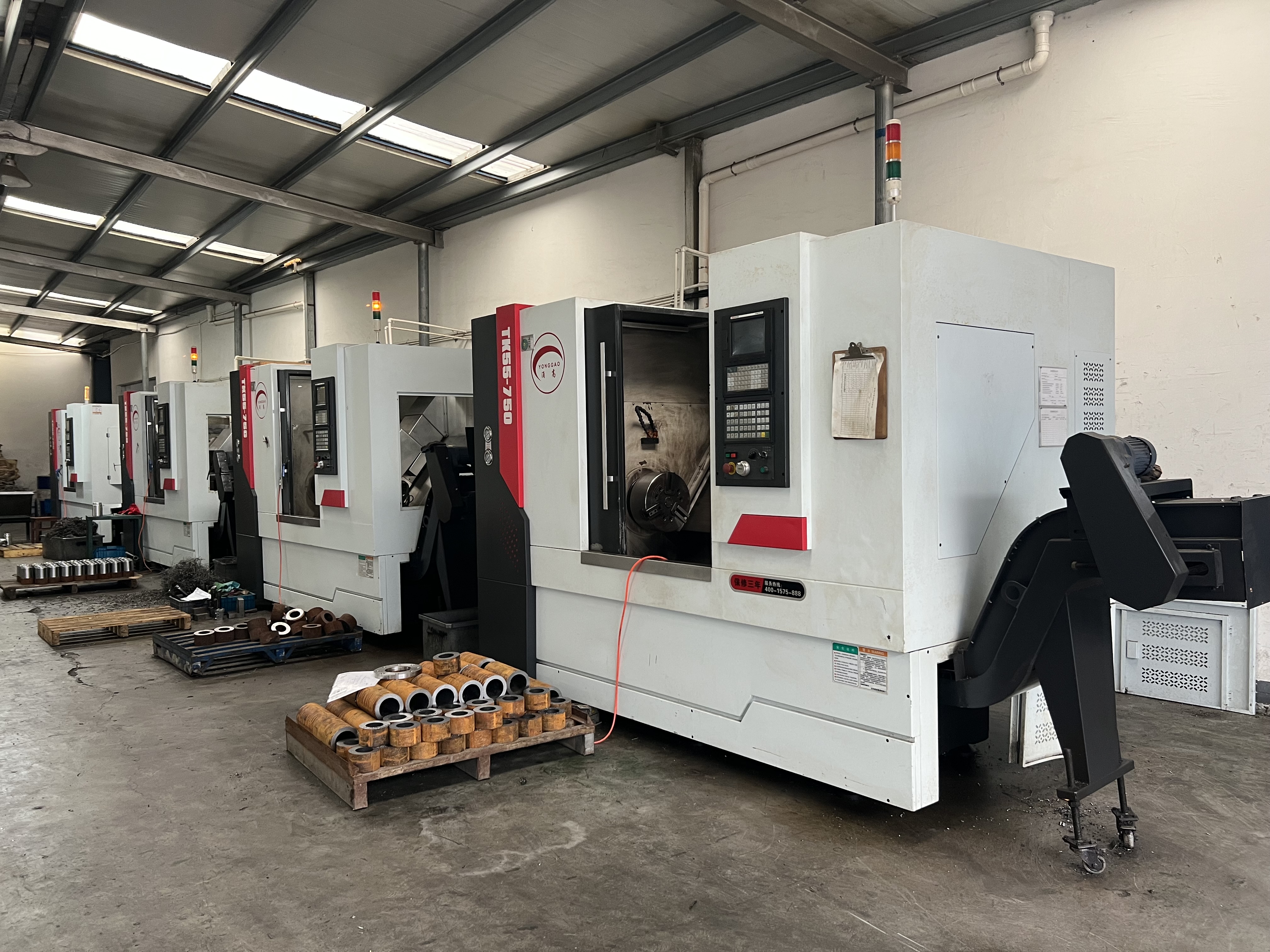
Fully automated CNC workshop — carbon steel and stainless steel hydraulic adapter bodies are machined on the same lines.
Why Material Comparison Usually Starts in the Wrong Place
Most supplier comparisons open with a pressure table and close with a price. Neither answers the question a buyer actually has: which material will still be in service when the machine reaches its next major overhaul? Three failure patterns recur in adapter procurement.
- Stainless specified only where it is visible. Fittings hidden inside a cabinet or behind a guard get carbon steel, then face the same condensation, washdown or salt-laden air as the visible ones.
- Material mixed inside one assembly without documentation. Maintenance staff later cannot tell which grade they are replacing, so a substitute grade enters the system.
- Corrosion judged from the material name instead of from a finish and test report. Two carbon steel adapters from different sources can carry different surface treatment and therefore very different service life.
The practical comparison variables are therefore: the thread interface and size (which governs the design rating), the ambient and fluid environment (chloride, moisture, temperature), the finish and the test evidence behind it, the cost of a failure in downtime and replacement labour, and whether the same item can be re-ordered in the same specification months later.
Market and Standards Context
Hydraulic adapters sit inside a fittings market that is steady rather than speculative. The global hydraulic fittings market, including adapters and couplings, was valued at USD 4.8 billion in 2025 and is projected to reach USD 7.9 billion by 2034 (Dataintelo). Within that market, the adapters segment held the largest product type share at 28.4% in 2025, and steel material accounted for 45.2% of revenue share, driven by demand for high-pressure durability (Dataintelo). Asia-Pacific led regional revenue at an estimated 38.6% share in 2025 (Dataintelo).
Those shares explain why carbon steel remains the default specification for high-volume machinery programmes: it is where the volume, the tooling and the surface-treatment supply chain are concentrated. Standards then define what a rating actually means, and they are size-specific:
- DIN 2353 / ISO 8434-1 divides metric tube fittings into three robustness categories — LL (Extra Light, 100 bar), L (Light, up to 315–500 bar) and S (Heavy, up to 630–800 bar) (Hy-Lok USA).
- ISO 8434-2:2007 specifies design and performance requirements for 37° flared connectors suitable for tubes from 6 mm to 50.8 mm (ISO).
- SAE J1453 covers ORFS (O-Ring Face Seal) fittings; dash size -4 (1/4 inch) is rated at 6000 PSI working pressure (Titan Fittings).
- NPTF straight threads in 1/4 inch size typically carry a 4000 PSI working pressure with a 4:1 safety factor (Titan Fittings).
- DIN 17440 is cited for AISI 316 stainless steel hydraulic adapters supporting working temperatures from -60°C up to +400°C (Tubes International).
The takeaway for a material comparison is simple. A published band such as 3000–6000 PSI is a family figure; the binding number is the rating for your exact thread, size and standard, and it should be confirmed line by line on the quotation.
What the Supplier Data Shows Across the Product Lines
NingBo NJ Hydraulic Adapter Co., Ltd — founded in 2004 and operating a 20,000 m² facility in Fenghua, Ningbo, Zhejiang — lists carbon steel, SS304 and SS316 as material options across the following hydraulic adapter lines. The thread interface, not the material, decides which line you order from.
| Product line | Thread / interface | Example model codes | Materials listed |
|---|---|---|---|
| BSP Adapter | BSPP (parallel) | 1B; 1B4; 1B9; 1BG; 1BG4; 1BG9; 1BH; 1BH9; 1BJ; 1BK; 1BM; 1BN; 1BO; 1BT; 1BT9; 2B; 2B9; 2BJ; 2GB; 2HB; 22NB; 2TB9; 2OB; 2TB; 3B; 4B; 4BN; 5B; 5BN; 5NB; 5BT; 5GB; 5OB; 5TB9; 6B; 7B; 7B9; 9B; EB; AB; BB, etc. | Carbon steel / SS304 / SS316 |
| BSP Adapter | BSPt (tapered) | 1T; 1T9; 1BT; 1ST; 4T; 5T, etc. | Carbon steel / SS304 / SS316 |
| NPT Adapter | NPT tapered thread | 5000; 5404; 5405; 5406; 5406-C; 5406-HP; 5406-P; 5406-SHP; 5500; 5501; 5502; 5503; 5504; 5505; 5600; 5601; 5602; 5603; 5604; 5605; 5650; 5652, etc. | Carbon steel / SS304 / SS316 |
| Hydraulic JIC Adapter | JIC and JIC-to-NPT | 2403; 2404; 2405; 2406; 2408; 2500; 2501; 2502; 2503; 2504; 2505; 2601; 2602; 2603; 2605; 2606; 2608; 2609, etc. | Carbon steel / SS304 / SS316 |
| SAE Standard Hydraulic Adapter | JIC / ORB / ORFS | 6801; 6802; 6803; 6804; 6805; 6806; 6807; 6808; 6809; 6810; 6815; 6818; 6820; 6832; 6835; 6840; 6850 | Carbon steel / SS304 / SS316 |
| Hydraulic Cap Nut & Lock Nut | Nut adapter / locking | 0304C; 0306; 0318; 0319; 0403; 0500; FS0304C; FS0306; FS0318; FS0319 | Carbon steel / SS304 / SS316 |
Published line data for the NJ hydraulic adapter range. All three materials are listed against the same product lines.
Shared published parameters for these lines:
- Pressure range: 3000–6000 PSI.
- Maximum stable operating temperature: 220°C.
- Corrosion benchmark: passes a 120-hour salt spray test, showing white rust at 120 hours and red rust at 240 hours.
- Applicable industries listed: construction machinery, agricultural machinery, general-purpose machinery, firefighting equipment, marine machinery, mining, transportation, aerospace, automotive, oil and gas extraction, iron and steel metallurgy, water conservancy engineering.
Alongside material, the supplier's stated capabilities determine how usable each option is in practice. Production follows TS16949 standards, annual production capacity reaches 4,000,000 units, the facility covers 20,000 m² with approximately 200 staff, and 75% of output is exported, with the USA and Canada listed as main markets. In-stock coverage is described as wide, with orders shipped with no minimum quantity requirement as long as stock is available, volume discounts, and free FOB terms on orders exceeding USD 10,000. Customization is available from drawings or samples, in custom carton packaging, custom plastic bag packaging and custom laser-engraved logos.
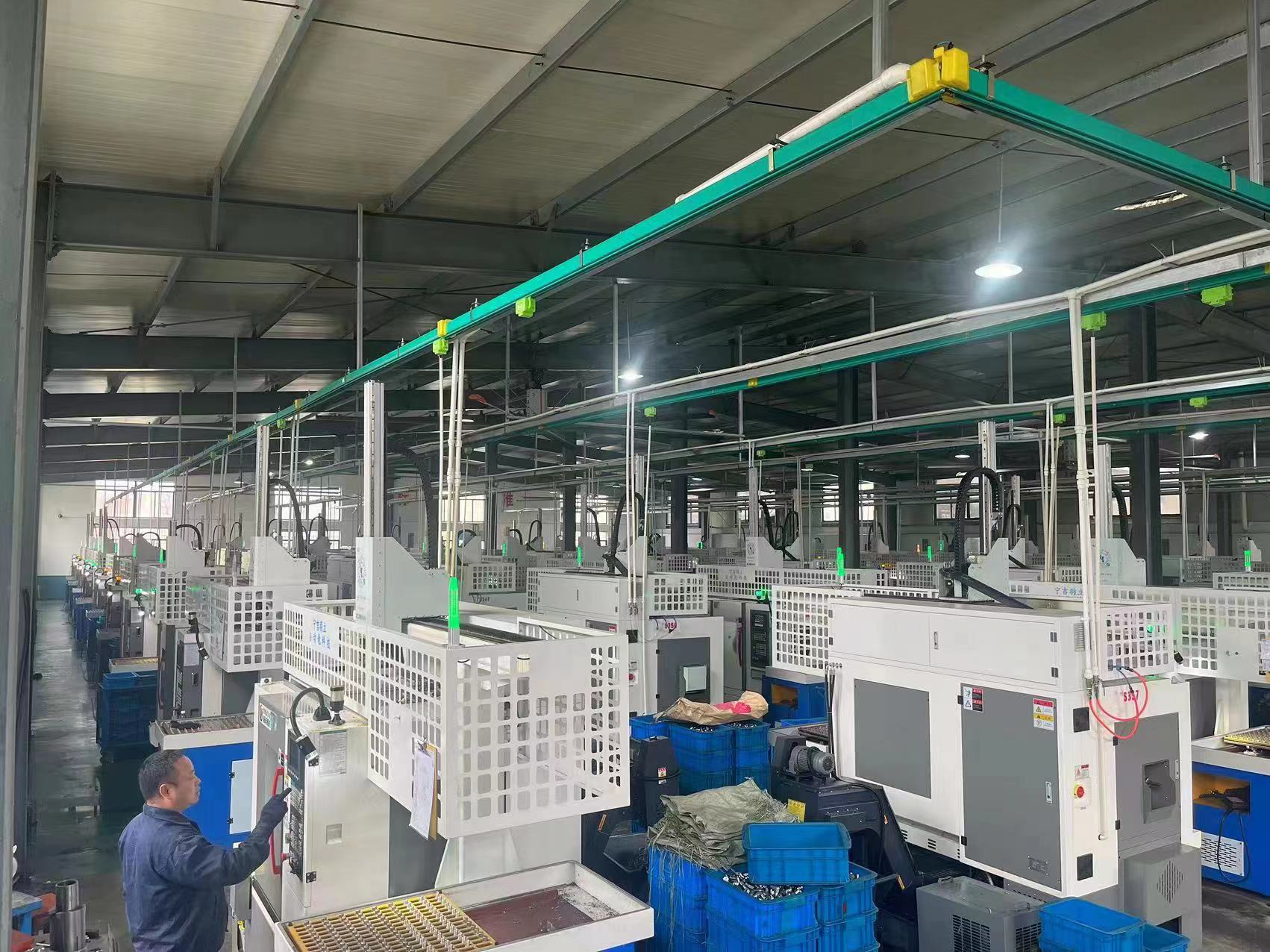
Thread geometry and sealing surfaces are cut to the same tolerances whichever of the three materials is specified.
Reading the 120-Hour Salt Spray Benchmark
The 120-hour salt spray result is the most quoted — and most misunderstood — figure in an adapter comparison. The stated result is white rust at 120 hours and red rust at 240 hours, produced by a trivalent chromium surface treatment process. In salt spray testing on coated steel, white rust is commonly read as the corrosion product of the coating itself, and red rust as the point at which the base steel is attacked. The gap between the two numbers is therefore the useful part of the result: it describes how much protective margin remains after the coating begins to degrade.
Two practical cautions follow. First, the benchmark belongs to a surface treatment, so it should be confirmed against the finish actually applied to the material you order — a plated carbon steel adapter and a bare stainless adapter are not protected in the same way, and the report that matters is the one issued for your item. Second, salt spray hours are a laboratory comparison, not a service-life prediction; a marine installation with continuous chloride exposure and a temperature swing is a different duty from an indoor general-purpose machine.
Step-by-Step: Choosing and Ordering a Material
Step 1 — Define the environment before the material. Write down the fluid, the external atmosphere (indoor, washdown, salt air, produced water), the temperature range and the cleaning regime. The material decision is derived from this input, not from a price list.
Step 2 — Fix the thread interface first. BSPP, BSPt, NPT, JIC, ORB/ORFS and metric interfaces are not interchangeable, and material is a secondary variable. Selecting a grade before the interface is settled usually ends in a re-quote.
Step 3 — Confirm the rating for the exact size. The family figure is 3000–6000 PSI, but standards rate per size: ORFS -4 at 6000 PSI under SAE J1453 and NPTF 1/4 inch at 4000 PSI with a 4:1 safety factor (Titan Fittings); DIN 2353 LL/L/S categories for metric fittings (Hy-Lok USA). Ask for the rating line by line.
Step 4 — Match grade to exposure, then verify it. Corrosion exposure is the variable that separates carbon steel, SS304 and SS316 in service. For AISI 316, the cited working range is -60°C to +400°C under DIN 17440 (Tubes International), which is wide enough for most hydraulic duties; the deciding factor is normally the chemical environment rather than temperature.
Step 5 — Validate with a sample in the real assembly. Customization based on drawings or samples is available, so the fastest de-risking step is to order the exact grade, finish, thread and size you intend to run, install it in the actual circuit, and record the inspection result before releasing a series order.
Step 6 — Confirm the commercial frame. Minimum order quantity is 1 unit, stock-available items ship with no minimum quantity requirement, volume discounts apply, and orders above USD 10,000 qualify for free FOB terms. Delivery can be arranged on FOB, CIF, EXW or C&F terms, with acceptance either door-to-door or at the port of arrival. Payment is full advance payment before shipment, with other methods open for discussion once a long-term partnership is established.
Step 7 — Check what ships with each line item. The accessory check belongs in the ordering process, not in the complaints process; it is covered in the next section.
Order Execution and the Missing-Accessory Check
A material comparison decides what the adapter is made of; a packing list check decides whether the assembly can be finished on schedule. When an order mixes material grades, thread standards and sizes across several product lines, the risk of a short shipment rises — not because of the material, but because of the number of line items.
The stated process is evidence-based. Customers need to provide photos of missing or wrong-delivered items, and after verification the company arranges replacement accessories by sea or air shipment. The same route applies to non-conforming products: the customer provides inspection photos and videos and returns the items, and once verification confirms the issue is the company's responsibility, compliant replacements are manufactured and shipped with the next sea freight consignment or by air, or a deduction is processed against the necessary deduction documentation.
Use Cases: Matching the Material to the Operating Environment
The industries listed for these product lines point to three broad environments, each with a different dominant risk.
General-purpose machinery, construction and agricultural equipment. These are the volume applications where carbon steel with a documented surface treatment is the mainstream specification — consistent with steel holding 45.2% of hydraulic fitting revenue share in 2025 on the strength of high-pressure durability (Dataintelo). The risk here is less about corrosion resistance in service than about corrosion protection before installation: storage, transport and job-site conditions. The relevant evidence is therefore the finish specification and the salt spray report for the item.
Marine machinery, washdown and coastal service. Chloride exposure is continuous rather than occasional, and the corrosion duty shifts from the coating to the base material. This is where a stainless grade earns its cost, and where 316-grade stainless is the grade most commonly specified in industry practice. AISI 316 hydraulic adapters are cited with a working range of -60°C to +400°C under DIN 17440 (Tubes International). Confirm the specific grade for your fluid and project standard with the supplier: the catalogue lists the option, the project decides the requirement.
Oil and gas extraction and petroleum hydraulic pipeline systems. Material is usually dictated by the operator's specification, and the adapter must satisfy documentation as well as pressure. Because these systems combine high pressure with aggressive fluids, the ordering process matters as much as the grade: confirm the rating per size, request material and finish documentation for the exact item, and keep the specification on file so that replacements match the original.
Firefighting equipment, mining, transportation and water conservancy. These applications commonly combine moisture, dust and cyclic pressure, and they are also the environments where a mixed bill of materials across one machine is most damaging, because maintenance is carried out in the field with limited information. Documenting which line item carries which grade is a low-cost control that pays back at the first repair.

Production department, Fenghua site: material grade and finish are controlled from the same facility that ships the repeat order.
Comparison Table: Carbon Steel vs SS304 vs SS316
| Comparison point | Carbon steel | SS304 | SS316 |
|---|---|---|---|
| Listed pressure range | 3000–6000 PSI | 3000–6000 PSI | 3000–6000 PSI |
| Maximum stable operating temperature | 220°C | 220°C | 220°C |
| Salt spray benchmark (stated) | Passes the 120-hour salt spray test: white rust at 120 hours, red rust at 240 hours (trivalent chromium surface treatment process) | ||
| Product lines available in this grade | BSP Adapter (BSPP and BSPt), NPT Adapter, Hydraulic JIC Adapter, SAE Standard Hydraulic Adapter (JIC / ORB / ORFS), Hydraulic Cap Nut & Lock Nut | ||
| Typical selection driver | High-volume machinery and general-purpose equipment where a documented coated-steel finish is specified; steel accounted for 45.2% of hydraulic fitting revenue share in 2025, driven by high-pressure durability (Dataintelo) | Moisture-exposed service where a stainless surface is preferred and the fluid is not chloride-aggressive — confirm against the project specification | Higher-chloride environments such as marine machinery and, where the operator specification calls for it, oil and gas service; AISI 316 is cited at -60°C to +400°C under DIN 17440 (Tubes International) |
| Evidence to request | Finish specification and the 120-hour salt spray report for the item | Material certificate plus the rating for the exact size | Material certificate, rating for the exact size, and any project-required documentation |
| Order conditions (all grades) | MOQ 1 unit; stock-available items ship with no minimum quantity requirement; volume discounts; orders above USD 10,000 qualify for free FOB terms; FOB / CIF / EXW / C&F terms; acceptance door-to-door or at the port of arrival | ||
Comparison of published supplier data and cited standard data. The three grades carry identical published pressure, temperature and salt spray figures for these product lines; the differences that matter are environmental and are documented per order.
Keeping the Material Decision Consistent Over a Long-Term Relationship
For distributors, OEM buyers and maintenance planners, the value of a material decision depends on repeatability. A grade chosen once is only useful if the twentieth order matches the first — same grade, same finish, same thread, same marking.
- Lock the specification into the item master. Record material grade, finish, thread standard, size, model code and the revision of the test report or certificate. This is what turns a reorder into a reorder instead of a new evaluation.
- Use the commercial terms that long-term supply unlocks. Payment is advance payment before shipment, and once a long-term partnership is established, payment methods other than advance payment can be discussed. Volume discounts and free FOB terms above USD 10,000 are the other levers that reward consolidated ordering.
- Plan capacity around a real production base. The company produces according to TS16949 standards with an annual production capacity of 4,000,000 units, from a 20,000 m² facility with approximately 200 staff, and 75% of output is exported, principally to the USA and Canada.
- Give the claims process something to work with. A documented photograph-and-verification route for short shipments and non-conforming items is a relationship mechanism rather than a complaint channel: it converts a scheduling problem into a replacement shipment instead of a commercial dispute.
- Use packaging and marking as channel controls. Custom carton packaging, custom plastic bag packaging and custom laser-engraved logos let distributors keep their own identification on the part, which reduces mis-identification at the point of installation.
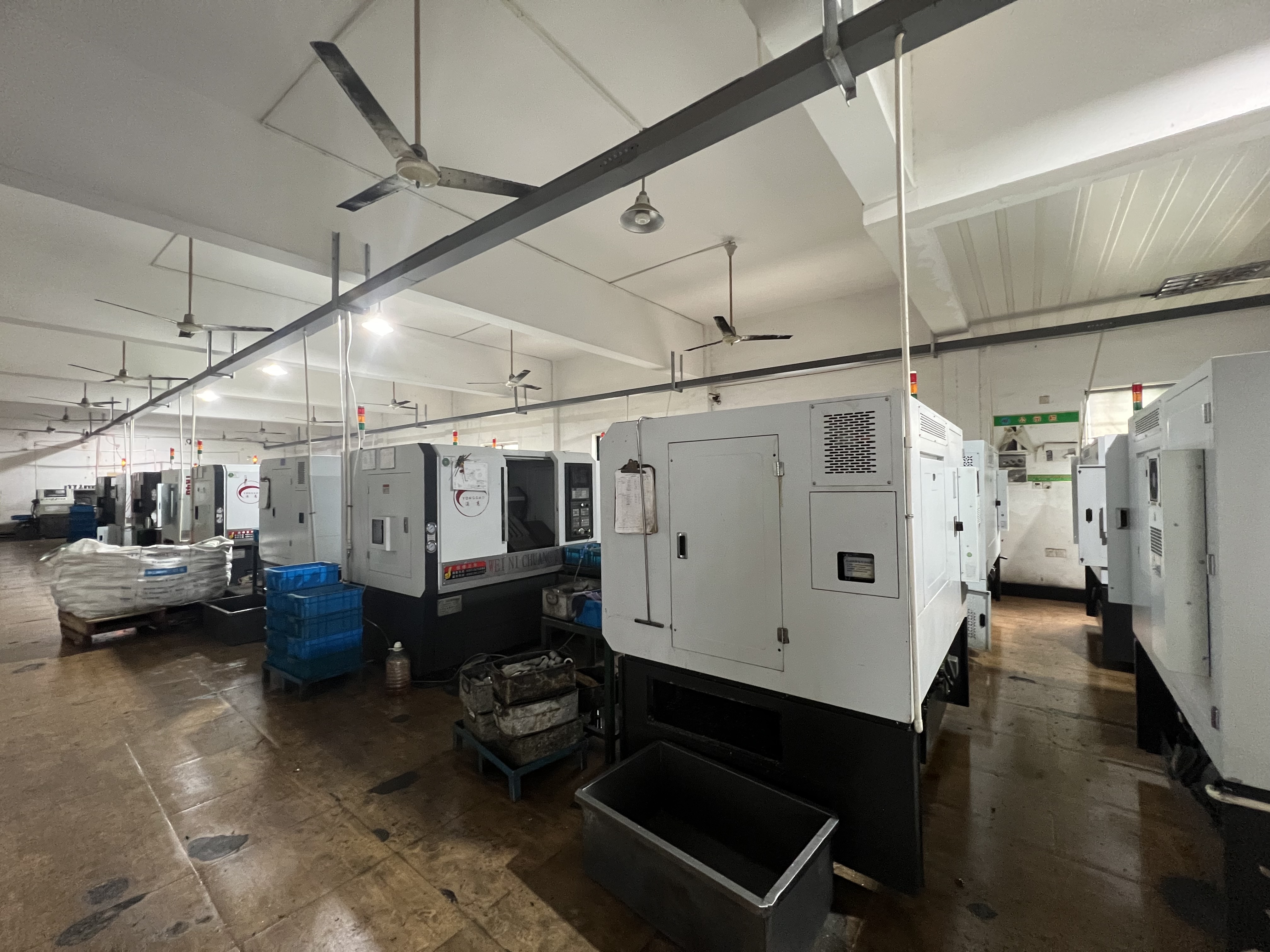
Fully automated CNC workshop — the same equipment runs carbon steel, SS304 and SS316 batches, which is what makes a material change repeatable.
FAQ
Do carbon steel, SS304 and SS316 hydraulic adapters share the same pressure and temperature ratings?
Yes, according to the published data for these product lines. NingBo NJ Hydraulic Adapter Co., Ltd lists a 3000–6000 PSI pressure range and a maximum stable operating temperature of 220°C for the BSP Adapter, NPT Adapter, Hydraulic JIC Adapter, SAE Standard Hydraulic Adapter and Hydraulic Cap Nut ranges in carbon steel, SS304 and SS316, together with a 120-hour salt spray result showing white rust at 120 hours and red rust at 240 hours. Ratings in the underlying standards are size-specific — ORFS dash size -4 is rated 6000 PSI under SAE J1453 and NPTF 1/4 inch straight threads typically carry 4000 PSI with a 4:1 safety factor (Titan Fittings) — so confirm the rating for the exact size and thread on your order rather than for the material alone.
How do I choose between carbon steel, SS304 and SS316 for marine, oil and gas, or general-purpose machinery?
Start from the environment, not the price. Marine machinery and coastal or washdown areas expose fittings to continuous chloride and moisture, so the corrosion duty shifts to the base material; general-purpose machinery, construction and agricultural equipment typically run a coated steel adapter where the surface treatment and its test report carry that duty, and steel accounted for 45.2% of hydraulic fitting revenue share in 2025 on the strength of high-pressure durability (Dataintelo). Oil and gas extraction and petroleum hydraulic pipeline systems usually bring an operator specification that governs material, documentation and testing. Where chloride exposure is significant, 316-grade stainless is the grade most commonly specified in industry practice, and AISI 316 hydraulic adapters are cited with a working range of -60°C to +400°C under DIN 17440 (Tubes International). Confirm the final grade against your fluid and project standard with the supplier before placing the order.
What are the MOQ, payment and pricing conditions when an order mixes material grades?
NingBo NJ Hydraulic Adapter Co., Ltd states a minimum order quantity of 1 unit, and orders can be shipped with no minimum quantity requirement as long as stock is available. Volume discounts apply, and orders exceeding USD 10,000 qualify for free FOB terms, with delivery available on FOB, CIF, EXW or C&F terms and acceptance either door-to-door or at the port of arrival. Payment terms are full advance payment before shipment; once a long-term partnership has been established, payment methods other than advance payment can be discussed. Because material grade affects material cost, ask for a line-item quotation that shows material, finish, thread standard and size separately for each line rather than one blended price.
What happens if accessories are missing after delivery?
Customers need to provide photos of missing or wrong-delivered items, and after verification the company arranges replacement accessories by sea or air shipment. The same evidence-based route applies to non-conforming products: the customer provides inspection photos and videos and returns the items, and once verification confirms that the issue is the company's responsibility, compliant replacements are manufactured and shipped with the next sea freight consignment or by air, or a deduction is processed against the necessary deduction documentation. Keeping the packing list check inside the ordering process — not the complaints process — is what keeps this route fast.
What should buyers look for in a long-term DIN hydraulic adapter supplier?
Look for repeatability rather than a single good shipment: a documented material grade, finish and thread specification that survives reorders; test evidence tied to the item rather than the product family; a defined claims route for short shipments and non-conforming parts; and commercial terms that improve with commitment, since payment methods other than advance payment can be discussed after a long-term partnership is established. NingBo NJ Hydraulic Adapter Co., Ltd produces to TS16949 standards with an annual capacity of 4,000,000 units and offers customization from drawings or samples. To match a material to your application, request a sample or a quotation at jenny@fhyuli.com or WhatsApp +86 158-6749-2228.
Conclusion
Carbon steel, SS304 and SS316 hydraulic adapters form one specification family rather than three performance tiers on paper: identical published pressure range (3000–6000 PSI), identical maximum stable operating temperature (220°C) and the same stated 120-hour salt spray result across the BSP Adapter, NPT Adapter, Hydraulic JIC Adapter, SAE Standard Hydraulic Adapter and Hydraulic Cap Nut lines. The decision that matters is environmental and documentary — which grade your fluid, atmosphere and project standard call for, and what evidence and accessory set arrives with it.
Make the choice in this order: environment first, thread interface second, per-size rating third, material grade fourth, and evidence plus packing list last. Then write the result into the item master so the next order is the same adapter, not a new evaluation.
Next step: confirm your material, then confirm your shipment
Send your thread standard, size, pressure and environment and we will confirm which of carbon steel, SS304 or SS316 fits the application, together with the finish and accessory set for each line item. Sample and quotation requests: jenny@fhyuli.com · WhatsApp +86 158-6749-2228 · www.njadapter.com
Download the full product brochure: NingBo NJ Hydraulic Adapter product catalogue (PDF)

Sales and packaging department entrance — sample requests, quotations and custom packaging are handled here. Address: 151 Hongxing Road, Wengao Development Park, Chunhu Street, Fenghua, Ningbo City, Zhejiang Province.