Hydraulic Adapter Model Codes Decoded: A Technical Guide to JIC, NPT, BSP, and SAE
Decision-stage reference for buyers specifying JIC, NPT, BSP and SAE connections
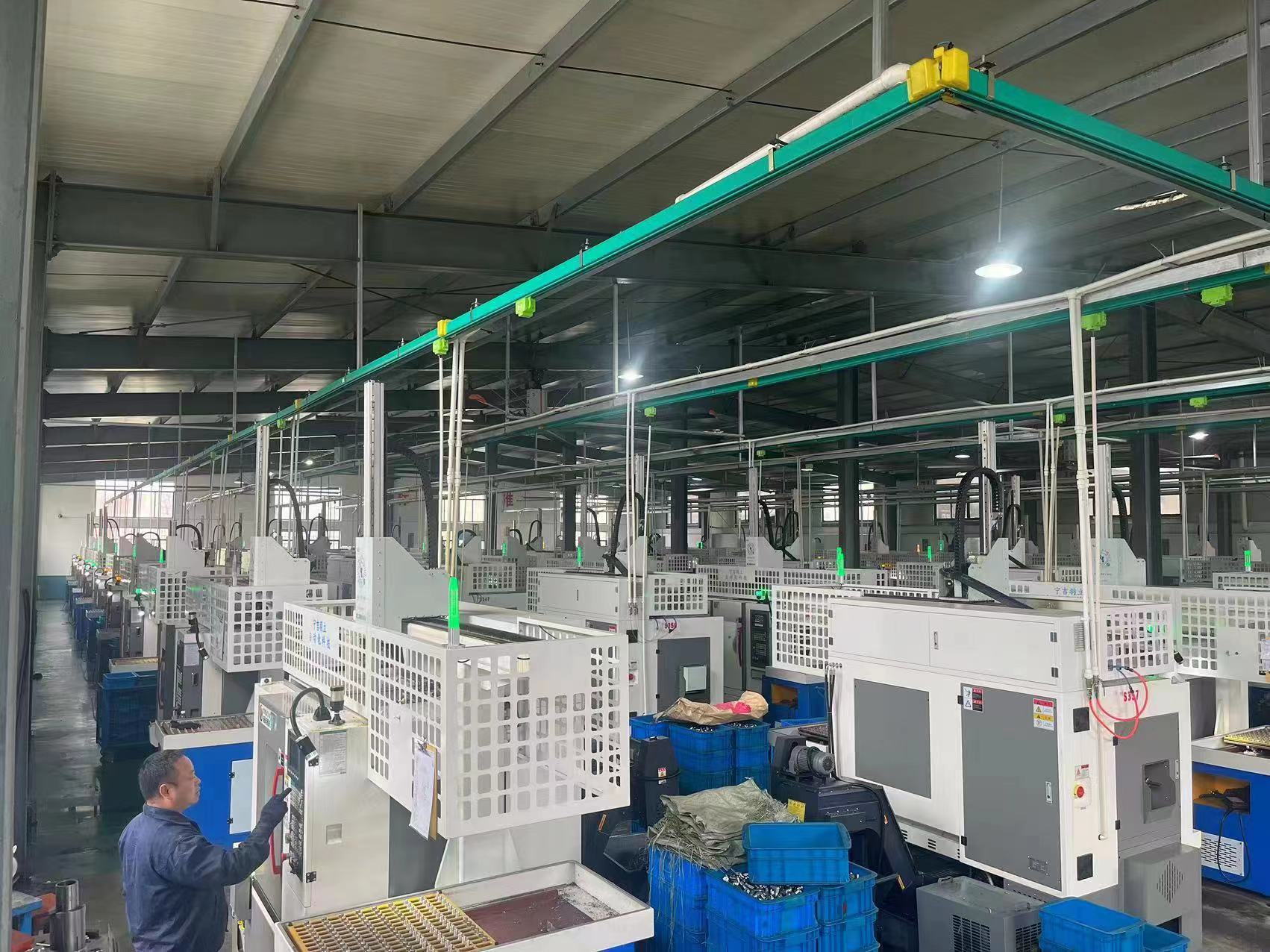
Fully automated CNC workshop. Model codes only work when the thread system, configuration and rating behind them are verified against production data.
A hydraulic adapter model code is a manufacturer-specific label, not an international standard. It encodes three things: the thread system on each end, the physical configuration (straight, elbow, tee), and the size reference. Because the numbering is proprietary, the same functional part — for example a Male JIC × Male Adjustable ORB 90° Elbow — can carry completely different codes at two suppliers. Decoding therefore means mapping a supplier's number block back to a known thread family, then confirming pressure, temperature and material before the part is released to the assembly line.
The Problem: Four Thread Families, One Confusing Part Number Space
In a hydraulic hose assembly, the adapter is the least expensive component and the most common point of failure in the procurement process. The reason is rarely bad manufacturing. It is usually a decoding error made at the quotation stage.
Four thread systems dominate industrial hydraulic connections, and they look disturbingly similar on a purchase order:
- JIC — a 37° flared connection that seals metal-to-metal on the cone.
- NPT / NPTF — a tapered pipe thread that seals through thread interference and, in the NPT case, a sealant.
- BSP — a 55° Whitworth thread family, split between parallel (BSPP) and tapered (BSPT) forms that seal in entirely different ways.
- SAE — straight-thread O-ring connections, principally the O-ring boss (ORB) and the O-ring face seal (ORFS).
Three decoding failures account for most wrong-part incidents. First, buyers read a number sequence as if it were universal, when in fact a code such as 2403 means nothing until it is tied to the block it sits in. Second, the sealing method is buried inside the code — a BSPP adapter and a BSPT adapter may differ by a single character (1B versus 1T) yet be completely non-interchangeable. Third, pressure and temperature limits are almost never printed in the code itself, so a part that decodes correctly on thread and configuration can still be wrong for a 6,000 PSI circuit or a 220°C environment.
For a decision-stage buyer, the practical consequence is that the adapter code must be treated as a lookup key, not as a specification. The specification has to be reconstructed — thread, configuration, rating, material — and then checked against the supplier's own data.
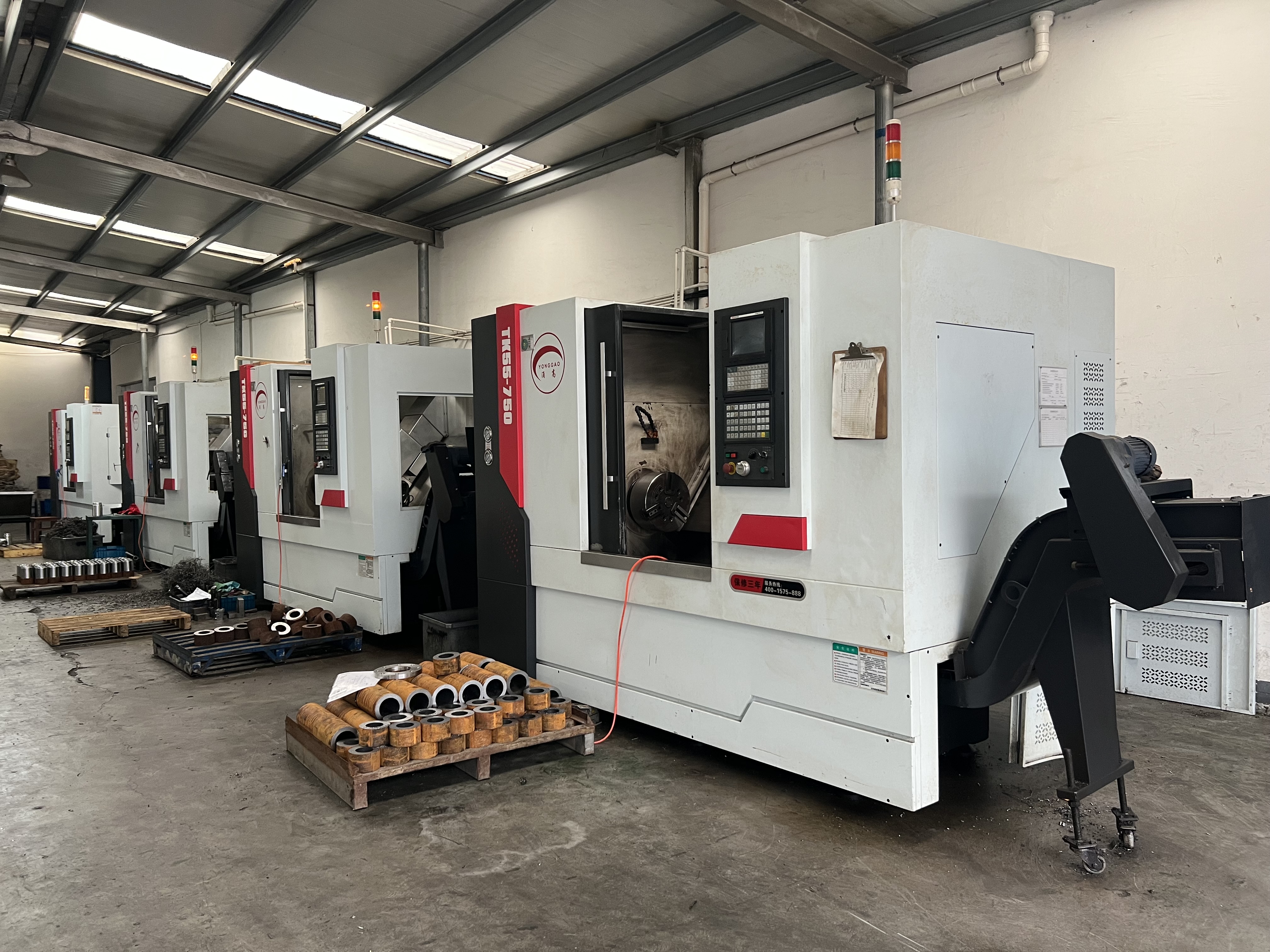
Thread form and sealing geometry are cut to the series, which is why a decoded code must always be confirmed against the series datasheet.
Industry Background: Why Adapter Specification Has Tightened
Adapters sit inside a large and still-expanding component market. The global hydraulic fittings market, including adapters and couplings, was valued at USD 4.8 billion in 2025 and is projected to reach USD 7.9 billion by 2034, according to Dataintelo. Within that market, the hydraulic adapters segment held the largest product-type share at 28.4% in 2025, and steel accounted for 45.2% of material revenue, driven by demand for high-pressure durability.
Demand is concentrated where machines move. Mobile hydraulics accounted for over 58% of total hydraulics market revenue share in 2024, according to Grand View Research — a structural reason why hose-assembly shops, repair workshops and OEM line buyers, rather than process plants alone, drive most adapter purchasing decisions.
Standardisation has moved in parallel. DIN 2353 specifies three robustness categories for metric tube fittings — LL (Extra Light, 100 bar), L (Light, up to 315–500 bar) and S (Heavy, up to 630–800 bar) — which means a metric thread adapter is not one product but three performance tiers under the same thread geometry. ISO 8434-2:2007 specifies design and performance requirements for 37° flared connectors for tubes from 6 mm to 50.8 mm, the standard behind the JIC family. Pressure ratings at dash-size level are equally specific: ORFS fittings for dash size −4 (1/4") are rated for 6,000 PSI working pressure under SAE J1453, while NPTF straight threads for 1/4" size typically carry a 4,000 PSI working rating with a 4:1 safety factor.
The practical takeaway for a buyer is that thread type alone no longer defines a part. Two adapters can share a JIC thread, a 90° elbow body and the same hex size, and still differ by a full performance tier.
The Solution: A Four-Layer Decoding Framework
The decoding method below uses the model families of NingBo NJ Hydraulic Adapter Co., Ltd as a working reference. NingBo NJ Hydraulic Adapter Co., Ltd is a hydraulic fittings manufacturer located in Fenghua, Ningbo, Zhejiang Province, China, established in 2004 and specialising in SAE-standard hydraulic components and engineering machinery parts. Its catalogue covers hydraulic adapters, flanges, valves, valve components and non-standard parts.
Any adapter code can be resolved by working through four layers in sequence. Skipping a layer is what produces a wrong order.
Layer 1 — Thread system and model block
The numeric block identifies which thread family the part belongs to. In the NJ range, the mapping is:
- 2403–2609 — JIC series, 37° flared connections.
- 5000 / 5404 — NPT series, tapered pipe thread connections.
- 1B / 1T — BSP series, with 1B covering the parallel BSPP form and 1T the tapered BSPT form.
- 6801–6850 — SAE series, covering straight-thread O-ring configurations including ORB and ORFS.
The block tells you the thread logic; it does not tell you the exact size or the end combination. Those are resolved on the catalogue page for the individual part. This distinction matters: a distributor who memorises 2403 equals JIC is correct, but a distributor who assumes the trailing digits follow a universal size rule is not — trailing digits are supplier-specific and must be read from the datasheet.
Layer 2 — Configuration and end combination
Configuration describes the body shape and how many ends the part has. The common configurations across all four series are straight, elbow (typically 45° and 90°) and tee, plus bulkhead adapters that pass through a panel, flange adapters for manifold and block mounting, and staple-lock adapters for specific connection systems.
End combination is where most conversion parts are specified. A Male JIC × Male Adjustable ORB 90° Elbow, for example, decodes as: JIC male thread on end one (37° flare, metal-to-metal seal), SAE O-ring boss on end two with an adjustable locknut so the elbow can be oriented after tightening, and a 90° body. An NPT-to-JIC adapter follows the same logic with one tapered end and one flared end, and a BSP-to-NPT adapter combines a 55° Whitworth end with a tapered pipe end. Each of these is a hydraulic hose adapter whose entire function depends on reading both ends of the code, not just the first block.
Accessory components sit in the same decoding space: a ferrule adapter or nut adapter is ordered against the same thread logic, and a bulkhead adapter adds a panel-mounting dimension that must be verified separately.
Layer 3 — Pressure and temperature rating
Ratings are not encoded in the model number. The NJ range covers working pressures from 3,000 to 6,000 PSI, with fittings designed to withstand a static pressure of 6,000 PSI and a burst pressure of 9,000 PSI without deformation while maintaining continuous operation and seal integrity. Maximum stable operating temperature across the range is 220°C.
In practice, the rating that governs is the lowest rating in the assembled connection — adapter, hose, and the mating port. A 6,000 PSI adapter threaded into a port rated for less does not upgrade the circuit. This is also why the same model block can appear at two different rating tiers in a supplier's catalogue: the code identifies the geometry, the datasheet identifies the performance.
Layer 4 — Material and surface treatment
Material options across the range are carbon steel, SS304 and SS316. Carbon steel covers the majority of high-pressure mobile applications; stainless steel hydraulic adapter variants are specified where corrosion exposure or fluid compatibility rules out coated carbon steel. For reference, stainless steel hydraulic adapters in AISI 316 support working temperatures from −60°C up to +400°C under DIN 17440 — a material-level capability that must still be read together with the adapter's own published temperature limit.
Surface treatment is the fourth variable and the one most often omitted from a comparison. NJ applies a trivalent chromium treatment that passes a 120-hour salt spray test, showing white rust at 120 hours and red rust at 240 hours. Two adapters with identical codes but different finishes have materially different service life in coastal, marine or wash-down conditions.
Step-by-Step: Decoding a Code Before You Quote
- Identify the model block and assign the thread family. Read the numeric prefix first and place it in the correct series: 2403–2609 (JIC), 5000/5404 (NPT), 1B/1T (BSP), 6801–6850 (SAE). Do not proceed until the family is settled — every later check depends on it.
- Read both ends, not just the first. Conversion adapters carry two thread identities. Write them out in full, for example "Male JIC × Male Adjustable ORB". Half-decoded conversion parts are the single most common source of mis-shipment.
- Confirm the configuration. Straight, elbow, tee, bulkhead, flange or staple lock. For elbows, confirm the angle (45° or 90°) and whether the second end is adjustable, because adjustability determines assembly orientation.
- Pull the rating from the datasheet. Match the working pressure against the 3,000–6,000 PSI range and the 6,000 PSI static / 9,000 PSI burst capability where relevant, then compare with the lowest-rated element in the circuit. Confirm the 220°C maximum stable operating temperature against actual fluid and ambient conditions.
- Fix the material and finish. Select carbon steel, SS304 or SS316 against the corrosion and fluid environment, then confirm the surface treatment specification — for trivalent chromium, white rust at 120 hours and red rust at 240 hours is the reference point.
- Check the standard reference if the application is regulated. JIC geometry references 37° flared connector requirements; ORFS references SAE J1453; metric tube connections reference DIN 2353 categories LL, L and S. If the end user audits standards, the datasheet must name them.
- Verify availability and MOQ before committing the price. A decoded part that is not in stock changes the landed cost calculation entirely. Confirm stock status and quantity terms before the quotation leaves your desk.
Where Decoded Codes Matter Most: Use Cases
Decoding accuracy has different consequences depending on the application, and the same four-layer method applies differently in each.
Construction and agricultural machinery
Mobile equipment runs high cyclic pressure with vibration and contamination. The critical decode here is configuration and rating: a straight adapter substituted for an adjustable elbow can force a hose into a bend radius it was not specified for, and a rating mismatch shows up as seepage under load rather than as an immediate failure. This is the environment where the 6,000 PSI static and 9,000 PSI burst capability matters most.
Marine, offshore and wash-down environments
Corrosion, not pressure, drives the decision. The material and finish layers become primary: SS316 or a properly specified trivalent chromium finish, verified against the 120-hour/240-hour salt spray result rather than assumed from the word "coated".
Oil, gas and high-temperature circuits
Temperature governs. A 220°C maximum stable operating temperature must be checked against the highest sustained fluid temperature, not the average, and the sealing method on each end must be confirmed — an ORFS connection seals differently from a tapered NPT thread and behaves differently under thermal cycling.
Hose assembly shops and distributors
Here the risk is inventory, not installation. A distributor carrying JIC adapters, BSP adapters, ORB adapters and metric thread adapters across overlapping size ranges needs a consistent decoding key so that counter staff quote the right part on the first attempt. For stock-driven businesses, in-stock availability and no minimum order quantity on stocked items often matter more than unit price.
Comparison: JIC, NPT, BSP and SAE Model Blocks Side by Side
The table below compares the four thread families as they map onto the NJ model blocks. Ratings shown are reference points from published standards and the product range; always confirm the individual part on its datasheet.
| Thread family | Model block | Sealing method | Typical configurations | Pressure reference | Most common decoding error |
|---|---|---|---|---|---|
| JIC (37° flare) | 2403–2609 | Metal-to-metal seal on the 37° cone; no O-ring | Straight, 45°/90° elbow, tee, bulkhead, conversion to NPT/BSP/ORB | Within the 3,000–6,000 PSI range; confirm per dash size. 37° flared connectors covered by ISO 8434-2 for 6 mm–50.8 mm tubes | Treating a JIC male end as an SAE ORB because both use straight threads |
| NPT / NPTF | 5000 / 5404 | Tapered thread interference; NPT relies on sealant, NPTF is a dryseal design | Straight, elbow, tee, conversion to JIC and BSP | NPTF 1/4" typically rated 4,000 PSI working with a 4:1 safety factor | Assuming NPT and NPTF are interchangeable, or mixing them within one assembly |
| BSP (BSPP / BSPT) | 1B (parallel) / 1T (tapered) | BSPP seals on a bonded washer or O-ring face; BSPT seals on taper | Straight, elbow, tee, bulkhead, conversion to NPT and JIC | Within the 3,000–6,000 PSI range; confirm per size and variant | Ordering "BSP" without specifying 1B or 1T — the two are not interchangeable |
| SAE ORB | 6801–6850 block (variant resolved on datasheet) | Straight thread with O-ring boss; adjustable version uses a locknut for orientation | Straight, adjustable elbow, tee, bulkhead | Within the 3,000–6,000 PSI range; confirm per dash size | Ignoring the word "adjustable" and losing the ability to orient the fitting at assembly |
| SAE ORFS | 6801–6850 block (variant resolved on datasheet) | O-ring face seal on a flat face; no thread interference in sealing | Straight, elbow, tee | 6,000 PSI working for dash size −4 under SAE J1453 | Confusing ORFS (flat face) with ORB (O-ring boss) — different seat, different port |
Comparing suppliers at equal specification
Once the code is decoded and the specification is identical across quotes, the comparison shifts from engineering to total landed cost. Four cost elements decide it: unit price, quantity terms, stock availability, and the cost of a non-conforming delivery.
- Quantity terms. NJ states that in-stock items carry no minimum order quantity, volume discounts are available, and orders exceeding $10,000 qualify for free FOB terms.
- Stock and lead time. The company maintains a broad in-stock range and states that it offers shorter delivery times than other hydraulic fitting manufacturers, together with after-sales service.
- Durability. NJ specifies good sealing stability under high pressure, a service life 20% longer than ordinary counterparts as its stated product claim, and no oil leakage under long-term cyclic pressure.
- Non-conformance handling. The after-sales process requires the customer to provide inspection photos and videos and return the items; after verification, replacement products are shipped with the next sea freight consignment or by air, or a documented deduction is processed.
For a buyer working at the decision stage, this is what an hvq_5-style comparison should actually contain: not a claim that one supplier is best, but a side-by-side of the commercial terms that change the real cost of a decoded part.
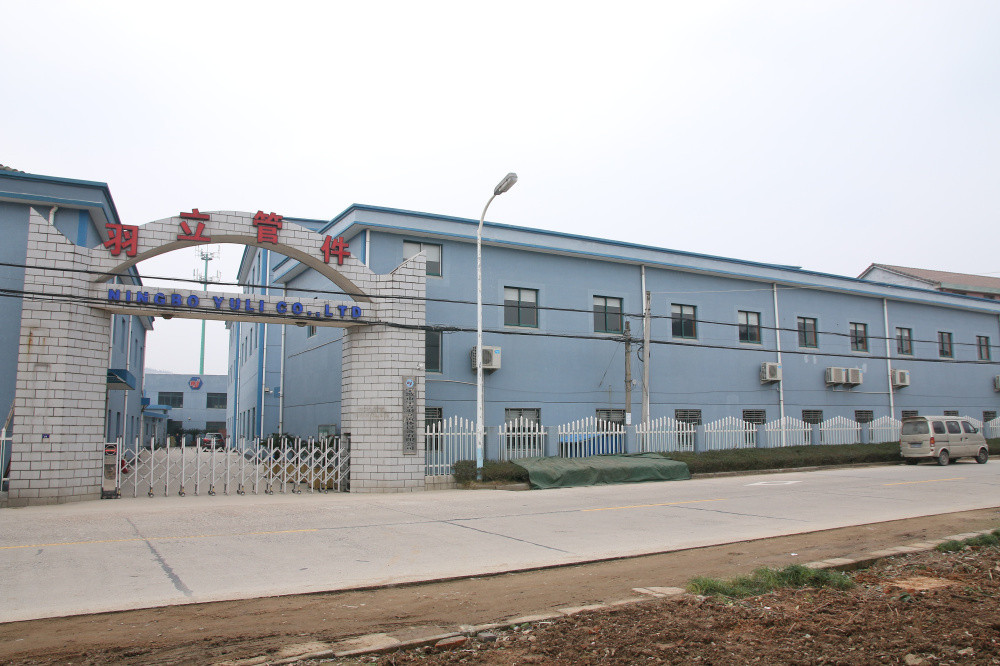
Production Department factory gate, Fenghua, Ningbo. NingBo NJ Hydraulic Adapter Co., Ltd was established in 2004 and operates a 20,000 m² facility with 200 staff and a team of 4 engineers.
FAQ
1. How do I confirm that a decoded model code actually matches the thread standard I need?
Decode the block to its thread family first, then verify three things against the datasheet: the thread form, the sealing method, and the standard reference. For 37° flared connections the reference is ISO 8434-2, which specifies design and performance requirements for tubes from 6 mm to 50.8 mm; for O-ring face seal fittings it is SAE J1453; for metric tube connections it is DIN 2353, which separates LL (100 bar), L (315–500 bar) and S (630–800 bar) categories. Because model numbering is manufacturer-specific, a code alone is never proof of compliance — the catalogue drawing is.
2. Which hydraulic adapter manufacturer is better for DIN high-pressure hose assemblies?
There is no single correct answer, but the evaluation is straightforward. For a DIN high-pressure assembly, first establish which DIN 2353 category — LL, L or S — the quoted DIN hydraulic adapter corresponds to, since the same thread geometry exists in three performance tiers. Then verify the manufacturer on facts rather than claims. NingBo NJ Hydraulic Adapter Co., Ltd was established in 2004, operates a 20,000 m² facility with 200 employees and a team of 4 engineers, and produces hydraulic adapters, flanges, valves and non-standard parts at a stated annual output of 4,000,000 units, with 75% of output exported to the USA and Canada. Its fittings are specified to withstand 6,000 PSI static and 9,000 PSI burst pressure without deformation, with a 220°C maximum stable operating temperature and a trivalent chromium finish tested to 120 hours white rust and 240 hours red rust. Buyers should match these parameters against their own circuit rating and environment before deciding.
3. What are the order quantity and pricing terms?
For stocked items, NJ states that no minimum order quantity is required, volume discounts are available, and orders exceeding $10,000 qualify for free FOB terms. Because the company maintains a broad in-stock range, availability rather than unit price is often the larger cost variable for distributors — a stocked part avoids the expedited-air premium that a decoded-but-unavailable part would trigger.
4. Can I verify a model code with a sample before placing a series order?
Verification before a series order is the practical way to close the decoding loop. Where an item is in stock, the stated no-minimum-quantity policy allows a single unit to be ordered for confirmation. When the sample arrives, check thread engagement with a gauge, inspect the sealing surface (flare, face or O-ring boss depending on the family), confirm the configuration angle and adjustability, and — for coated carbon steel — review the finish against the trivalent chromium salt spray reference of 120 hours white rust and 240 hours red rust.
5. What happens if a delivery is short-shipped or contains a non-conforming part?
NJ's after-sales process requires the customer to provide inspection photos and videos of the non-conforming products and to return the items. After verification confirms the issue is the manufacturer's responsibility, compliant replacements are manufactured and shipped with the next sea freight consignment or by air, or a documented deduction is processed against the necessary paperwork. Requesting this process in writing before the first order — rather than after a problem — is the difference between a recovered shipment and a stalled production line. Ready to decode a specific requirement? Send the thread systems and circuit rating to Jenny@fhyuli.com or review the range at njadapter.com for a specification-matched quotation.
Conclusion: Decode the Code, Then Verify the Part
Hydraulic adapter model codes are lookup keys, not specifications. The reliable method is to resolve the numeric block to a thread family — 2403–2609 for JIC, 5000/5404 for NPT, 1B/1T for BSP, 6801–6850 for SAE — then rebuild the specification layer by layer: both ends and the configuration, the working pressure within the 3,000–6,000 PSI range and the 220°C maximum stable operating temperature, and finally the material and finish across carbon steel, SS304 and SS316.
At the decision stage, the difference between two quotes for the same decoded part is rarely the part. It is the quantity terms, the stock position, the finish specification and the after-sales process behind it. NingBo NJ Hydraulic Adapter Co., Ltd, established 2004, is located at 151 Hongxing Road, Wengao Development Park, Chunhu Street, Fenghua, Ningbo City, Zhejiang Province, and publishes its full range and technical data at https://www.njadapter.com.

Sample, Quote or Catalogue
Send your thread systems (JIC, NPT, BSP or SAE), configuration, working pressure and material requirement for a specification-matched quotation, or download the full product catalogue with model codes and datasheet values.
Website: www.njadapter.com | Email: Jenny@fhyuli.com | Tel / WhatsApp: +86 158-6749-2228
Catalogue PDF: Download the NingBo NJ Hydraulic Adapter product catalogue
Market data cited in this article: Dataintelo (hydraulic fitting market size and segment shares, 2025), Grand View Research (hydraulics market, 2024). Standard references: ISO 8434-2:2007, SAE J1453, DIN 2353, DIN 17440. Pressure rating references for NPTF and ORFS dash sizes: Titan Fittings. Product range data and commercial terms: NingBo NJ Hydraulic Adapter Co., Ltd.
Have Questions or Need More Details?
Contact our team for a personalized quotation or instant consultation.
Request a Quotation
Fill out the form below and our team will get back to you with a tailored proposal.
WhatsApp Direct Chat
Prefer to chat in real-time? Message us on WhatsApp for instant assistance & quick answers.
- Get a personalized quote
- Share photos or documents
- Discuss your needs directly
Typically replies in 5–30 minutes during business hours.