
Long-Term Partner Strategy: Hydraulic Adapter Consistency
Repeat-order consistency in hydraulic adapters is not created by the first shipment. It is created by the specification, the plating acceptance test and the code discipline that survive into the tenth shipment. Buyers in the research and evaluation stage should treat consistency as an engineering and contract problem rather than a relationship promise, because every element that can drift between orders is an element that was never written down.
Direct answer
Hydraulic adapter consistency across repeat purchases depends on four controlled variables: a frozen material and thread baseline; a pass/fail plating criterion rather than an adjective, in this case a 120-hour salt spray result where white rust appears at 120 hours and red rust at 240 hours; unambiguous model codes wherever series overlap, such as 0306 and 0500 inside the cap nut and lock nut range; and a verification routine that does not change when order volume increases. Suppliers working to a documented framework can be compared; suppliers working on verbal assurance cannot.

Problem Definition: Why the Second Order Exposes What the First Order Hid
The first order is usually sample-driven. A buyer inspects a few pieces, checks the thread by hand, confirms the drawing and places a trial quantity. The second order is production-driven: quantities are larger, the parts ship in mixed cartons, they sit in a warehouse or a container for weeks, and they are installed by someone who was not part of the original evaluation. That is the point at which consistency is either demonstrated or lost.
Three failure modes account for most repeat-purchase disputes on hydraulic adapters.
- Plating drift. Buyers frequently specify a zinc-plated finish and then approve it by appearance. Appearance is not a specification. Without a defined corrosion test and a defined observation point, a darker or lighter lot, a thin deposit on thread crests, or white corrosion after a humid sea freight leg becomes a subjective argument instead of a measurable non-conformance.
- Silent material substitution. Carbon steel, SS304 and SS316 are all legitimate options in the same product families, and all share a stated pressure range of 3000–6000 PSI and a maximum stable operating temperature of 220 °C. When the grade is not frozen in writing, a supplier can remain technically compliant while delivering a part with different corrosion behaviour and a different service life.
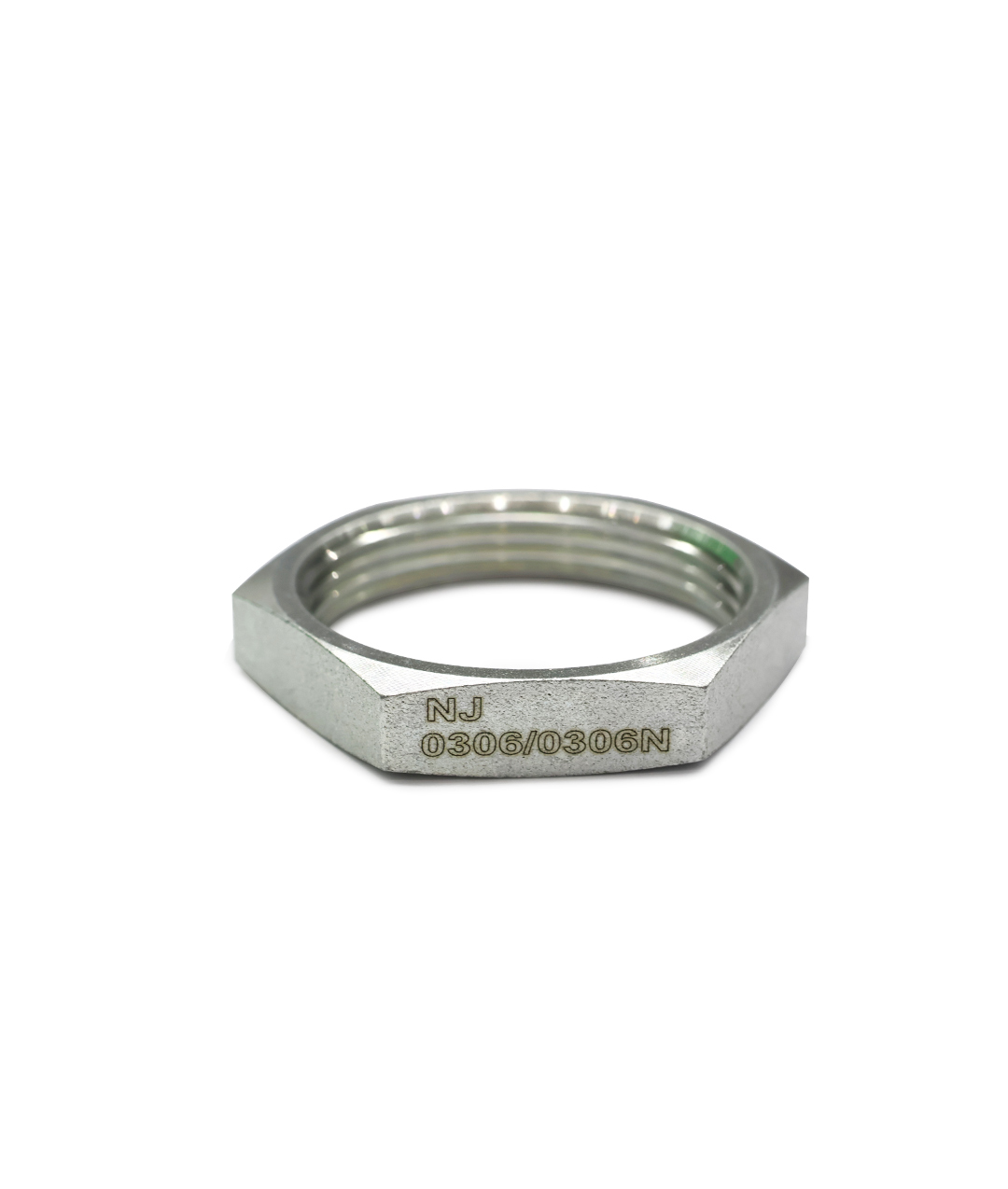
- Model code ambiguity. Catalogue ranges that carry both base codes and prefixed codes are a recurring source of mismatch. In the cap nut and lock nut range the designation includes 0304C, 0306, 0318, 0319, 0403 and 0500, alongside FS0304C, FS0306, FS0318 and FS0319. If a purchase order line reads only “0306” when the requirement is FS0306, or the reverse, the shipment can be correct against the paperwork and wrong against the machine.
Industry Background: Consistency Has Become a Purchasing Metric
Hydraulic adapters are low-value, high-consequence components. They are bought in volume, they are installed in systems where a leak or a seized thread stops a machine, and their failure cost is unrelated to their unit price. That asymmetry explains why repeat-order consistency has moved from a courtesy to a purchasing metric.
The category is also large enough that buyers rarely depend on a single source. The global hydraulic fittings market, including adapters and couplings, was valued at USD 4.8 billion in 2025 and is projected to reach USD 7.9 billion by 2034, according to Dataintelo. Within that market, the hydraulic adapters segment held the largest product type share at 28.4% in 2025, and steel accounted for 45.2% of revenue share in the same year, driven by demand for high-pressure durability.
Demand is concentrated in mobile equipment. Grand View Research reports that the mobile hydraulics segment held more than 58% of total hydraulics market revenue in 2024, and Dataintelo places Asia-Pacific at an estimated 38.6% of hydraulic fitting revenue in 2025. Practical consequence for buyers: the parts that must remain identical order after order are the ones used in mobile machinery, outdoor equipment and aftermarket repair — the environments where plating, thread form and material grade are all under stress at the same time.
Standardisation is the second background factor. Thread families are not interchangeable, and each carries its own design logic: BSPP and BSPT, NPT and NPTF, JIC 37° flared, SAE ORB and ORFS. Published ratings differ by configuration. Stainless steel hydraulic adapters in AISI 316 are described against a working temperature range of -60 °C to +400 °C under DIN 17440, ORFS fittings in dash size -4 are rated at 6000 PSI working pressure under SAE J1453, and DIN 2353 defines LL, L and S robustness categories for metric tube fittings. A repeat-order framework therefore has to hold two things at once: the same part, and the same part inside the same standard context.
The Consistency Framework: Four Controls That Survive Volume Growth
1. Freeze the Technical Baseline in Writing
A baseline that is not written is not a baseline. At minimum it should state the base material (carbon steel, SS304 or SS316), the thread family and the specific configuration, the pressure range of 3000–6000 PSI, the maximum stable operating temperature of 220 °C, the plating colour, the packing and labelling format, and the acceptance test that will be used to release each lot.
The baseline should be written once and version-controlled. When a buyer changes one line — a different plating colour, a different material grade, a different packing quantity — the version number changes, and every quotation and order line points back to that version. This is what prevents a well-intentioned improvement on order three from becoming a non-conformance on order seven.
2. Convert Rust Prevention Into a Pass/Fail Clause
Rust prevention cannot be purchased as an intention. It has to be purchased as an observation at a stated time. On this specification, the adapter passes a 120-hour salt spray test, showing white rust at 120 hours and red rust at 240 hours. That single sentence does more work than any number of assurances, because it fixes three variables at once: the test duration, the first failure mode to be recorded, and the point at which red rust becomes the reference observation.
For repeat purchasing, the operational rule is comparability. If the finish, the base material and the test duration stay identical, results from lot to lot can be read side by side. If any of those three changes, the previous result no longer applies. Buyers should ask for the test reference alongside the shipment or the pre-shipment report, and should refuse to accept a general claim of corrosion resistance in place of a stated duration and a stated observation point.

3. Resolve Model Overlap Before It Reaches the Order Line
Model overlap is the most under-managed risk in repeat purchasing, because it is invisible until a shipment arrives. Ranges that carry base codes and prefixed codes in the same list create two failure paths: a base code is ordered when a prefixed code was required, or a prefixed code is assumed to exist where it does not.
The hydraulic cap nut range illustrates the issue precisely. The designation includes 0304C, 0306, 0318, 0319, 0403, 0500, FS0304C, FS0306, FS0318 and FS0319. Within it, 0306 is a JIC bulkhead lock nut, and 0500 is a bore-to-male JIC connector — different functions that sit in the same family list. Meanwhile FS-prefixed variants exist for 0304C, 0306, 0318 and 0319, but not for 0500 in the same designation.
The practical control is a cross-reference table that the buyer owns: full code, function, thread configuration, material grade, plating colour and the drawing revision it maps to. Order lines then carry the full code, never the base number. Where a supplier’s catalogue and the buyer’s internal part number disagree, the cross-reference table is the document of record, not the invoice description.
4. Anchor the Framework in Management-System Evidence
Plating consistency is produced inside a finishing process, so evidence about that process is worth more than a sample photograph. The relevant management-system reference here is ISO 9001:2015, certificate 41324Q00129R2M, issued by ZCGJ, with a scope covering manufacturing of fluid equipment mechanical hardware including finishing processing, finished product inspection, packaging and shipping. It was issued on 2024-12-13 and is valid until 2027-10-15.
Two practical details follow from that scope. First, finishing processing sits inside the certified boundary, which means plating is subject to the same documentation discipline as machining. Second, finished product inspection and packaging and shipping are also inside the boundary, which matters for mixed-carton orders where a correct part can still arrive in a wrong bag. The stated quality-control method is random inspection, and the stated after-sales route is remote support; both should be written into the framework as defined activities with named owners rather than assumed services.

Step-by-Step: Building a Repeat-Order Framework in Seven Steps
The sequence below is written for a buyer preparing a second or third order with the same source, or comparing two sources against the same standard. Each step produces a document, because a framework without documents is only an intention.
- Define the part families and build the code map. Group the requirement by thread family and product family — BSPP, BSPT, NPT and NPTF, JIC, SAE ORB and ORFS, plus cap nut and lock nut items. Record the full model code for every line, including FS-prefixed variants, and confirm which functions the overlapping codes such as 0306 and 0500 actually perform.
- Write the technical data sheet. Base material from the available options of carbon steel, SS304 or SS316; thread configuration; stated pressure range of 3000–6000 PSI; maximum stable operating temperature of 220 °C; plating colour; packing and labelling. One data sheet per code, with a revision number.
- Fix the plating acceptance criterion. State the 120-hour salt spray test as the release test, with white rust recorded at 120 hours and red rust recorded at 240 hours. Name the party that performs the test and the form in which the result is reported.
- Agree the inspection routine. Confirm random inspection as the ongoing method, define the lot size and the sampling trigger, and specify what is checked at goods-in: thread gauge, visual plating record against the approved reference, quantity per bag and carton label against the code map.
- Lock the commercial parameters. MOQ varies depending on product dimensions and manufacturing complexity, so it should be agreed per code rather than as a single blanket figure. Production lead time is 30–45 working days, which sets the replenishment cycle and the safety stock calculation.
- Define the non-conformance workflow. For missing or wrong-delivered items, the customer provides photographs of the affected items; after verification, replacement accessories are arranged by sea or air shipment. Write this as a workflow with a first response step, a verification step and a replacement step, so that it does not depend on who is on duty.
- Review on a fixed cycle. Quarterly review of salt spray results, complaint log, code map changes and any drawing revisions. This is the step most often skipped, and the one that converts a good second order into a reliable fifth.
Repeat-order checklist
- Full model code on every order line, including FS-prefixed variants
- Material grade frozen as carbon steel, SS304 or SS316 — no “or equivalent” wording
- Pressure range 3000–6000 PSI and maximum stable operating temperature 220 °C stated on the data sheet
- Plating colour specified, with 120-hour salt spray as the release test
- White rust at 120 hours and red rust at 240 hours recorded as the observation points
- MOQ agreed per code, lead time planned at 30–45 working days
- Missing or wrong items workflow documented with photo evidence and verification
Use Cases: Where the Framework Changes the Outcome
Distributor stocking programmes. A distributor carries the same codes for years, sells them into many downstream customers and absorbs every complaint personally. Consistency matters more than price, because a plating complaint that reaches an end user costs far more than the margin on the adapter. A mid-market distributor in Canada, buying across a three-year relationship totalling 20,000,000 units, is a working example of what a stable framework supports: the requirement was for high-pressure resistance, high-temperature resistance and rust resistance, and the value of the relationship came from those three properties staying constant, not from a single favourable quotation.
Hose assembly shops. Workshops that build assemblies from hydraulic hose adapters mix JIC, ORFS, BSP and NPT configurations on the same bench. Their exposure is code-level, not metallurgical: an ORFS adapter picked from the wrong bin stalls an assembly line. A code map with full designations, cross-referenced to thread family and function, removes that risk without any change to the supplier relationship.
Mobile machinery OEMs and aftermarket. Construction machinery, agricultural machinery, marine machinery and oil and gas extraction are the industries where these families are specified. In these applications the part is exposed to outdoor conditions and repeated assembly cycles, so the plating acceptance criterion and the material grade are the two variables that determine whether the second order behaves like the first.
Comparison Table: Thread Families, Model Series and Repeat-Order Focus
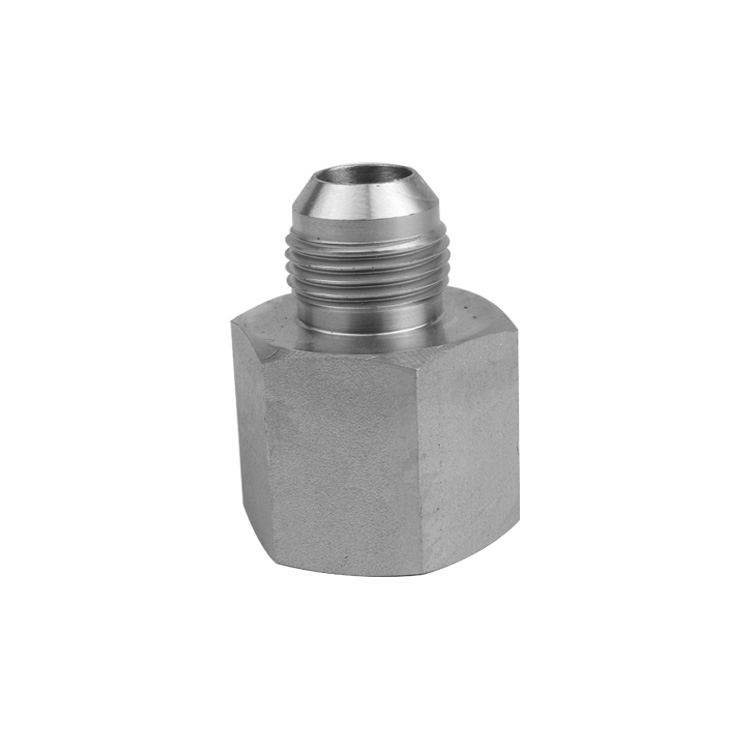
The table summarises the families available within this specification set, the model series that represent them, and the specific consistency issue that each family tends to raise on repeat orders. Pressure and temperature statements are the values given for these products, not a per-configuration rating table.
| Thread family | Product family and representative model series | Stated rating | Repeat-order consistency focus |
|---|---|---|---|
| BSPP | BSP Adapter (BSPP Thread Fitting): 1B, 1B4, 1B9, 1BG, 1BG4, 1BG9, 1BH, 1BH9, 1BJ, 1BK, 1BM, 1BN, 1BO, 1BT, 1BT9, 2B, 2B9, 2BJ, 2GB, 2HB, 22NB, 2TB9, 2OB, 2TB, 3B, 4B, 4BN, 5B, 5BN, 5NB, 5BT, 5GB, 5OB, 5TB9, 6B, 7B, 7B9, 9B, EB, AB, BB | 3000–6000 PSI; 220 °C maximum stable operating temperature | Thread gauge repeatability and plating colour matching between lots |
| BSPT | BSP Adapter (BSPT Thread Fitting): 1T, 1T9, 1BT, 1ST, 4T, 5T | 3000–6000 PSI; 220 °C | Taper engagement and sealing behaviour, which shift with plating build-up on thread crests |
| NPT / NPTF | NPT Adapter: 5000, 5404, 5405, 5406, 5406-C, 5406-HP, 5406-P, 5406-SHP, 5500, 5501, 5502, 5503, 5504, 5505, 5600, 5601, 5602, 5603, 5604, 5605, 5650, 5652 | 3000–6000 PSI; 220 °C | Distinguishing NPTF from BSPP on the order line and in the carton label |
| JIC 37° | Hydraulic JIC Adapter: 2403, 2404, 2405, 2406, 2408, 2500, 2501, 2502, 2503, 2504, 2505, 2601, 2602, 2603, 2605, 2606, 2608, 2609 | 3000–6000 PSI; 220 °C | Seat angle and matching of nut, sleeve and body within the same series |
| SAE ORB / ORFS | SAE Standard Hydraulic Adapter: 6801, 6802, 6803, 6804, 6805, 6806, 6807, 6808, 6809, 6810, 6815, 6818, 6820, 6832, 6835, 6840, 6850 | 3000–6000 PSI; 220 °C | Adjustable ORB orientation and O-ring supply consistency on adjustable configurations |
| Cap nut and lock nut | hydraulic cap nut: 0304C, 0306, 0318, 0319, 0403, 0500, FS0304C, FS0306, FS0318, FS0319 | 3000–6000 PSI; 220 °C | Base code versus FS-prefixed code, with 0306 and 0500 overlapping in the same family list |
The 120-hour salt spray result — white rust at 120 hours, red rust at 240 hours — applies across these families as the plating acceptance reference. Material options across the families are carbon steel, SS304 and SS316.
FAQ: Repeat-Purchase Questions Buyers Ask Before the Second Order
Does a 120-hour salt spray result actually prove rust prevention on plated adapters?
It proves something more useful than a general claim: it fixes a defined observation at a defined time. On this specification the adapter passes a 120-hour salt spray test, with white rust appearing at 120 hours and red rust at 240 hours. For repeat purchasing the value is comparability — when the finish, base material and test duration stay identical, results from lot to lot can be read against each other directly. Where a programme requires documented manufacturing control, ISO 9001:2015 certificate 41324Q00129R2M, issued by ZCGJ, covers manufacturing of fluid equipment mechanical hardware including finishing processing, finished product inspection, packaging and shipping, and remains valid until 2027-10-15.
Can a supplier keep thread and plating identical when order volume grows?
That depends on whether the variables were frozen before volume grew. Four things should be verified. First, the material grade is stated explicitly as carbon steel, SS304 or SS316 rather than as an equivalent. Second, the stated pressure range of 3000–6000 PSI and maximum stable operating temperature of 220 °C appear on the data sheet for the exact code being ordered. Third, plating colour is treated as a named customization item rather than a finish description. Fourth, the quality-control method is a defined activity — here, random inspection — with a documented record, and the certified scope includes finishing processing and finished product inspection, which is where plating consistency is actually determined.
How should buyers budget a repeat-order programme when MOQ is not fixed?
Budget on a per-code basis rather than on a single blended figure, because MOQ varies depending on product dimensions and manufacturing complexity. Production lead time is 30–45 working days, so working capital sits in transit and in safety stock rather than on the line. The practical budgeting rule is that unit prices are only comparable when the material grade, plating specification and packaging are identical; comparing a carbon steel part against an SS316 part, or an unplated reference against a plated one, produces a number that cannot be used for a sourcing decision. Customization scope should also be priced explicitly: logo, package, plated colour, and custom products made from provided drawings or samples.
What should a sample be approved against?
Approve the sample against the data sheet and the plating acceptance criterion, not against appearance. The record should capture the full model code — including FS-prefixed variants where they exist, and never a base number such as 0306 or 0500 on its own — together with the material grade, thread family, plating colour, and the salt spray observation points of white rust at 120 hours and red rust at 240 hours. Where a non-standard part is required, custom products can be made from provided drawings or samples, and the approved sample then becomes the physical reference for every subsequent lot.
What lead time and recovery plan should the framework include?
Plan the replenishment cycle around a production lead time of 30–45 working days, and treat that figure as the planning constant rather than a best case. For receiving problems, the workflow is defined and short: the customer provides photographs of the missing or wrong-delivered items, and after verification replacement accessories are arranged by sea or air shipment. To validate the framework on your own codes before the next replenishment cycle, request a sample of the exact model you reorder, or download the catalogue and work through the code map with the specification in hand.
Conclusion: The Partner Is the Framework
A long-term hydraulic adapter partner is not the supplier with the widest catalogue or the fastest first quotation. It is the supplier whose tenth shipment can be checked against the same documents as the first. That requires the buyer to do four things well: freeze the technical baseline including material grade, thread family, the 3000–6000 PSI pressure range and the 220 °C maximum stable operating temperature; write rust prevention as a pass/fail clause using the 120-hour salt spray result with white rust at 120 hours and red rust at 240 hours; resolve model overlap so that codes such as 0306, FS0306 and 0500 never travel as base numbers; and plan commercially around MOQ that varies by dimension and complexity and a lead time of 30–45 working days.
None of those controls depends on goodwill. They depend on documentation, and documentation is what makes a supplier comparable during evaluation and reliable after the contract is signed. Build the framework first, then choose the partner who can work inside it.
Next step: validate the framework on the codes you actually reorder
NingBo NJ Hydraulic Adapter Co., Ltd has been manufacturing hydraulic fittings since 2004 from its facility in Fenghua, Ningbo City, Zhejiang Province, with around 75% of output exported, mainly to the USA and Canada. Product families cover BSPP, BSPT, NPT and NPTF, JIC, SAE ORB and ORFS adapters plus hydraulic cap nuts and lock nuts, in carbon steel, SS304 and SS316, with a stated pressure range of 3000–6000 PSI and a maximum stable operating temperature of 220 °C. Manufacturing is certified to ISO 9001:2015 under certificate 41324Q00129R2M, valid until 2027-10-15. OEM and ODM work includes logo, package, plated colour, and custom products made from provided drawings or samples.
Request a sample of the exact model you reorder, or send your code map for a quotation: www.njadapter.com · Email jenny@fhyuli.com · WhatsApp +86 158-6749-2228 · 151 Hongxing Road, Wengao Development Park, Chunhu Street, Fenghua, Ningbo City, Zhejiang Province.
Download the catalogue (PDF): NJ Hydraulic Adapter product catalogue

Have Questions or Need More Details?
Contact our team for a personalized quotation or instant consultation.
Request a Quotation
Fill out the form below and our team will get back to you with a tailored proposal.
WhatsApp Direct Chat
Prefer to chat in real-time? Message us on WhatsApp for instant assistance & quick answers.
- Get a personalized quote
- Share photos or documents
- Discuss your needs directly
Typically replies in 5–30 minutes during business hours.