
Matching BSP Adapters to Real Machinery: The 1B and 1T Series Explained
Matching BSP Adapters to Real Machinery: The 1B and 1T Series Explained
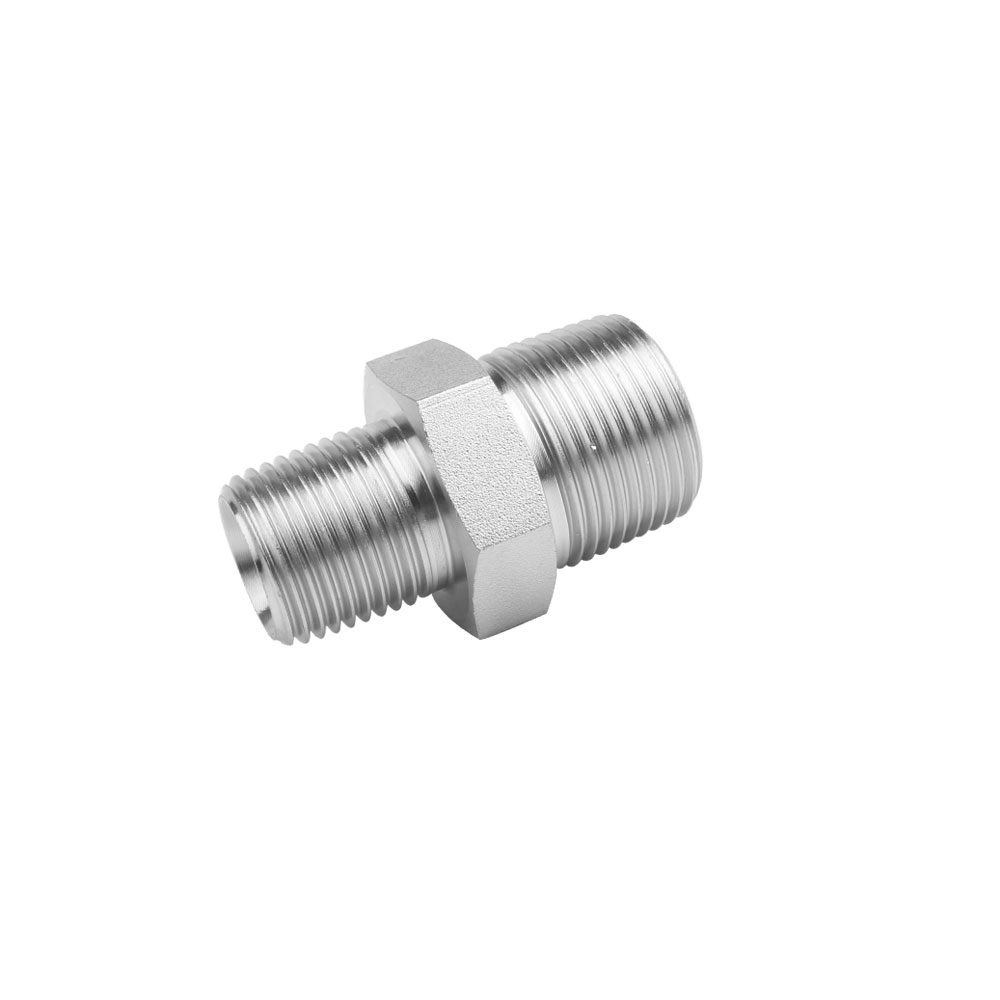
BSP adapters sit at the exact point where a machine port meets its hose or tube assembly, and the two forms that cause the most rework on the assembly bench are BSPP and BSPT. NingBo NJ Hydraulic Adapter Co., Ltd is a hydraulic fitting manufacturer founded in 2004 in Fenghua, Ningbo, Zhejiang, China, producing hydraulic adapters, flanges, valves, and related machined components; it manufactures both thread forms under two catalog families — the 1B series for BSPP (parallel) bodies and the 1T series for BSPT (tapered) bodies.
This guide is written for the buyer who has already shortlisted hydraulic adapters and now needs to know how the 1B and 1T series actually behave on agricultural, marine, and oil and gas equipment: which thread form belongs on which port, how straight and elbow configurations solve specific layout problems, and which published figures — pressure range, temperature limit, material, corrosion testing — govern the decision. Every product reference below is tied to NJ's published data for these two series, so it can be checked against a drawing or quotation rather than assumed.
The Real Problem: Thread Form, Port Geometry, and Routing Space
Most BSP adapter problems identified during installation are not strength problems. They are mismatches between three variables that are usually evaluated separately but ordered as one line item: the thread form machined into the machine port, the body configuration of the adapter, and the space left around that port once the hose is attached.
- Thread form. BSPP (parallel) and BSPT (tapered) share a nominal size vocabulary and look similar in a parts bin, but they seal differently — one relies on a face or washer seal, the other on thread engagement. Substituting one for the other produces either a leak that no amount of tightening will stop, or a damaged port thread.
- Body configuration. A straight body can be hydraulically correct and still be impossible to install — two ports facing each other across a narrow gap, a manifold blocking the wrench arc, or a hose that must change direction the moment it leaves the port.
- Material. A carbon steel adapter that lasts for years on a shop floor can corrode within a season on a deck, on an offshore skid, or in a washdown bay. Material follows the environment, not the price list.
Treating these as one decision is what makes BSP selection feel harder than it is. Split them into three sequential checks — thread form first, configuration second, material third — and the choice becomes mechanical, because each check eliminates part of the catalog rather than adding to it.
Industry Background: Why BSP Adapters Still Drive Purchasing Decisions
The hydraulic fitting market that these parts belong to was valued at USD 4.8 billion in 2025 and is projected to reach USD 7.9 billion by 2034, according to Dataintelo's hydraulic fitting market report. Inside that total, hydraulic adapters held the largest product-type share at 28.4% in 2025, while steel-based products accounted for 45.2% of revenue, reflecting continued demand for high-pressure durability. Asia-Pacific accounted for an estimated 38.6% of global fitting revenue in the same year.
Demand is driven by machinery rather than by fixed plant. Grand View Research estimated that the mobile hydraulics segment represented more than 58% of total hydraulics market revenue in 2024, and agricultural equipment, marine machinery, and oil and gas installations all sit inside that mobile segment. What makes these three sectors awkward to buy for is that they mix thread traditions. BSP threads, originally a British pipe standard, remain common on European-designed agricultural and marine platforms, while service operations in North America typically work in NPT, JIC, and SAE-style connection systems (for example, ISO 8434-2:2007 specifies 37° flared connectors for tubes from 6 mm to 50.8 mm).
The result is a purchasing pattern in which one workshop can need parallel and tapered BSP bodies on the same day, for the same machine. NJ's own export profile reflects how portable this thread family is: the company reports a 75% export ratio with the USA and Canada listed as its main markets, from a 20,000 m² facility in Fenghua that employs around 200 people and runs a technical team of four engineers.
The Two Families: 1B (BSPP) and 1T (BSPT)
NJ separates its BSP offering into two catalog families by thread form. The 1B family is classified as a BSPP thread fitting; the 1T family is classified as a BSPT thread fitting. Both are produced in carbon steel, SS304, or SS316, and both are published with the same pressure band of 3000–6000 PSI. That shared envelope is the reason the two families are frequently confused in RFQs — the difference sits in the port, not in the material list.
1B series — BSPP (parallel) bodies
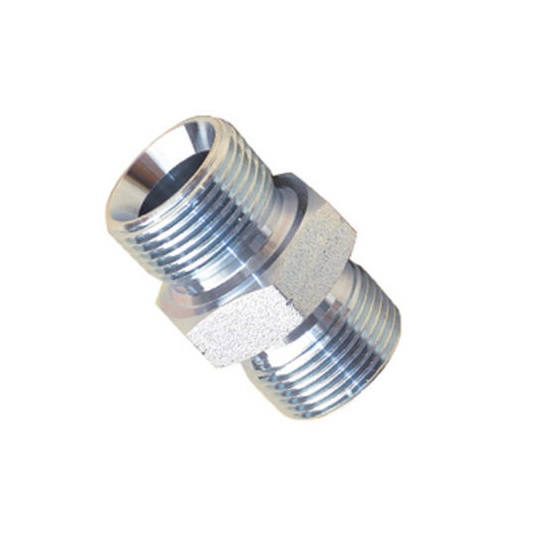
The BSPP family is published under the model codes 1B; 1B4; 1B9; 1BG; 1BG4; 1BG9; 1BH; 1BH9; 1BJ; 1BK; 1BM; 1BN; 1BO; 1BT; 1BT9; 2B; 2B9; 2BJ; 2GB; 2HB; 22NB; 2TB9; 2OB; 2TB; 3B; 4B; 4BN; 5B; 5BN; 5NB; 5BT; 5GB; 5OB; 5TB9; 6B; 7B; 7B9; 9B; EB; AB; BB, and similar codes in the same series.
The breadth of that list carries a procurement consequence. The model code — not a generic description such as 'BSPP adapter' — identifies the size and the body designation of the part, so a quotation, a replacement order, and a drawing should all reference the same full code. When two suppliers quote different prices for what both call a 'BSPP adapter', the codes usually reveal that the parts are not the same component at all.
1T series — BSPT (tapered) bodies
The BSPT family is published under the model codes 1T; 1T9; 1BT; 1ST; 4T; 5T, and similar codes in the same series. It is a shorter list than the BSPP range, which matches the practical distribution of tapered ports: tapered connections are less common in current manifold designs and are more often encountered on older equipment, pumps, and valve blocks built to earlier drawing sets.
That difference has a real effect on how a project is specified. New machine designs are usually drawn around parallel ports, so the 1B series tends to dominate first builds; the 1T series tends to appear in service, retrofit, and replacement work, where the port already exists and cannot be re-machined. Buyers maintaining a mixed fleet should therefore carry both families rather than treat the 1T range as a niche item.
Shared performance data for both families
Because the thread form changes but the body material and surface preparation do not, the 1B and 1T series share one published performance envelope:
- Materials: carbon steel, SS304, or SS316.
- Pressure range: 3000–6000 PSI.
- Maximum stable operating temperature: 220 °C.
- Corrosion testing: a 120-hour salt spray test, with white rust appearing at 120 hours and red rust at 240 hours.
Independent material data adds useful context. Stainless steel hydraulic adapters in AISI 316 are rated by DIN 17440 for working temperatures from −60 °C to +400 °C — a wider band than any single finished-part catalog rating. Where a supplier's catalog states a narrower limit, the narrower figure governs the application, because the catalog number describes the assembled part rather than the raw material.
Pressure ratings deserve the same treatment. Published third-party figures show how much design detail sits behind a single PSI number: ORFS fittings in dash size −4 are rated for 6000 PSI working pressure under SAE J1453, while NPTF straight-thread fittings in 1/4 in. size typically carry a 4000 PSI working pressure with a 4:1 safety factor (Titan Fittings). Standards also encode pressure classes directly — DIN 2353, for instance, defines LL (Extra Light, 100 bar), L (Light, up to 315–500 bar), and S (Heavy, up to 630–800 bar) robustness categories for metric tube fittings. The 3000–6000 PSI band published for the 1B and 1T series should therefore be matched to the circuit, not to the highest number available.
Straight and elbow configurations: choosing for layout, not appearance
Once the thread form is fixed, configuration becomes the variable that decides whether the assembly can be built at all. Adapter families of this type are supplied in straight bodies and in angled bodies, and — as with thread size — the configuration is carried by the model code rather than by the description of the part.
- Straight bodies extend the port along its own axis. They are the default where the hose or tube continues in line with the port and where a wrench can be rotated through its full arc for tightening.
- Elbow and angled bodies redirect flow away from the port axis. They are used where a port faces a frame member or another component, where a straight body would force the hose into a tight bend immediately off the port, or where two adjacent ports sit too close together for two straight bodies plus two wrenches.
Angles are not free. Each added body is an extra sealing interface and an extra torque point, and every additional joint in a high-pressure line is a place where the assembly can leak or loosen over time. The practical rule is to use the fewest bodies that satisfy the routing, to fix that routing on the drawing before ordering, and to confirm the configuration code with the supplier's catalog rather than judging a part from a photograph.
Two related layout cases are worth planning for. Where a hose has to pass through a panel or bulkhead, the routing change is handled by the appropriate body type rather than by over-torquing a standard adapter into an unsupported position. Where a machine mixes thread systems — a BSP port feeding an NPT or JIC hose end — the transition comes from the matching catalog family, since NJ's range also covers NPT adapters (5000; 5404; 5405; 5406; 5500; 5600 and related codes), JIC adapters (2403; 2404; 2405; 2406; 2500; 2601 and related codes), and SAE standard adapters (6801 through 6850) used for JIC, ORB, and ORFS connections.
Step-by-Step: Matching a 1B or 1T Adapter to a Machine
The sequence below follows the order in which a mistake is cheapest to correct — port first, then geometry, then material, then commercial terms.
- Identify the port thread form. Confirm from the machine's hydraulic schematic or a thread gauge whether the port is parallel or tapered. A tapered port calls for the 1T (BSPT) family; a parallel port calls for the 1B (BSPP) family. Do not infer the form from the machine's brand or country of origin alone, because European-designed platforms routinely mix both forms across different circuits.
- Confirm size and quote the full model code. The 1B and 1T lists cover multiple sizes and body designs, and the full code is the only unambiguous reference. Put the code, material, and quantity on the RFQ, and ask the supplier to return the same code on the quotation so that both sides are comparing one part rather than two similar ones.
- Decide straight or elbow against the routing. Sketch the hose path off the port, including the bend radius and the wrench swing, before the order is placed. Configuration errors are cheap to fix on a drawing and expensive to fix on an assembly bench, particularly when the machine is already built.
- Select material against the environment. Carbon steel suits normal industrial and construction environments, SS304 covers washdown and moderate chemical exposure, and SS316 is the appropriate choice for marine machinery and other chloride-rich settings. Then check the temperature: NJ publishes a maximum stable operating temperature of 220 °C for these families, while DIN 17440 rates AISI 316 material from −60 °C to +400 °C. Apply the more conservative limit to the finished assembly.
- Check the pressure band against the circuit. Confirm that the circuit's working pressure sits inside the published 3000–6000 PSI range for the series, and allow for pressure spikes rather than only for steady-state pressure. NJ states that its hydraulic assemblies are designed to withstand a static pressure of 6,000 PSI and a burst pressure of 9,000 PSI without deformation while maintaining seal integrity, which gives a reference point for comparing a quotation against a system requirement.
- Validate before the series order. NJ produces custom items from drawings or samples supplied by the buyer, and that route is the practical way to confirm thread engagement, wrench clearance, and hose angle on the actual machine before committing to volume. Where the application is safety-relevant, this step is also where acceptance arrangements should be agreed.
Use Cases: Agriculture, Marine, and Oil and Gas
NJ lists both the BSPP and BSPT adapter series for the same application set, which includes agricultural machinery, marine machinery, and oil and gas extraction alongside construction machinery, general-purpose machinery, firefighting equipment, mining, transportation, aerospace, automotive, iron and steel metallurgy, and water conservancy engineering. The thread form changes the port fit; the sector changes which of the remaining variables matters most.
Agricultural machinery
Tractors, loaders, and implements are a natural home for BSP threads, and they are also where material decisions inside a single machine become visible: a hardened steel circuit on an implement and stainless hardware near a sprayer or a washdown area may both be part of the same build. The working conditions NJ describes for these fittings include high temperature and high pressure, with matched equipment such as hydraulic hoses, cylinders, and pumps — the components most agricultural implements depend on. The 1B series is usually the first build choice on new designs, while 1T bodies are the ones that keep older implements running.
Marine machinery
Marine machinery is where material selection stops being a cost question. Salt exposure, condensation cycling, and washdown push carbon steel out of consideration for exposed positions, which is why the published salt spray result matters: NJ's BSP series shows white rust at 120 hours and red rust at 240 hours, and the SS304 and SS316 options exist precisely for this environment. Deck machinery, steering gear, winches, and hatch actuation all rely on adapters that must remain sealed despite vibration. One caution that applies to any marine assembly: the adapter is rarely the only component in the joint, so a corrosion-resistant adapter fitted into a painted carbon steel bracket can still corrode at the bracket interface.
Oil and gas extraction
Oil and gas equipment pushes toward the top of the pressure band, and it also places the highest demands on documentation and acceptance. NJ lists oil and gas extraction among the applicable industries for both BSP families, publishes the 3000–6000 PSI range for each, and states the 6,000 PSI static and 9,000 PSI burst reference for its hydraulic assemblies. For these projects, the acceptance route is as important as the part: NJ supports door-to-door acceptance or acceptance at the port of arrival, which lets a buyer verify thread form, configuration, and marking on receipt rather than after the parts are in stores.
Channel case: three years and 20 million units in Canada
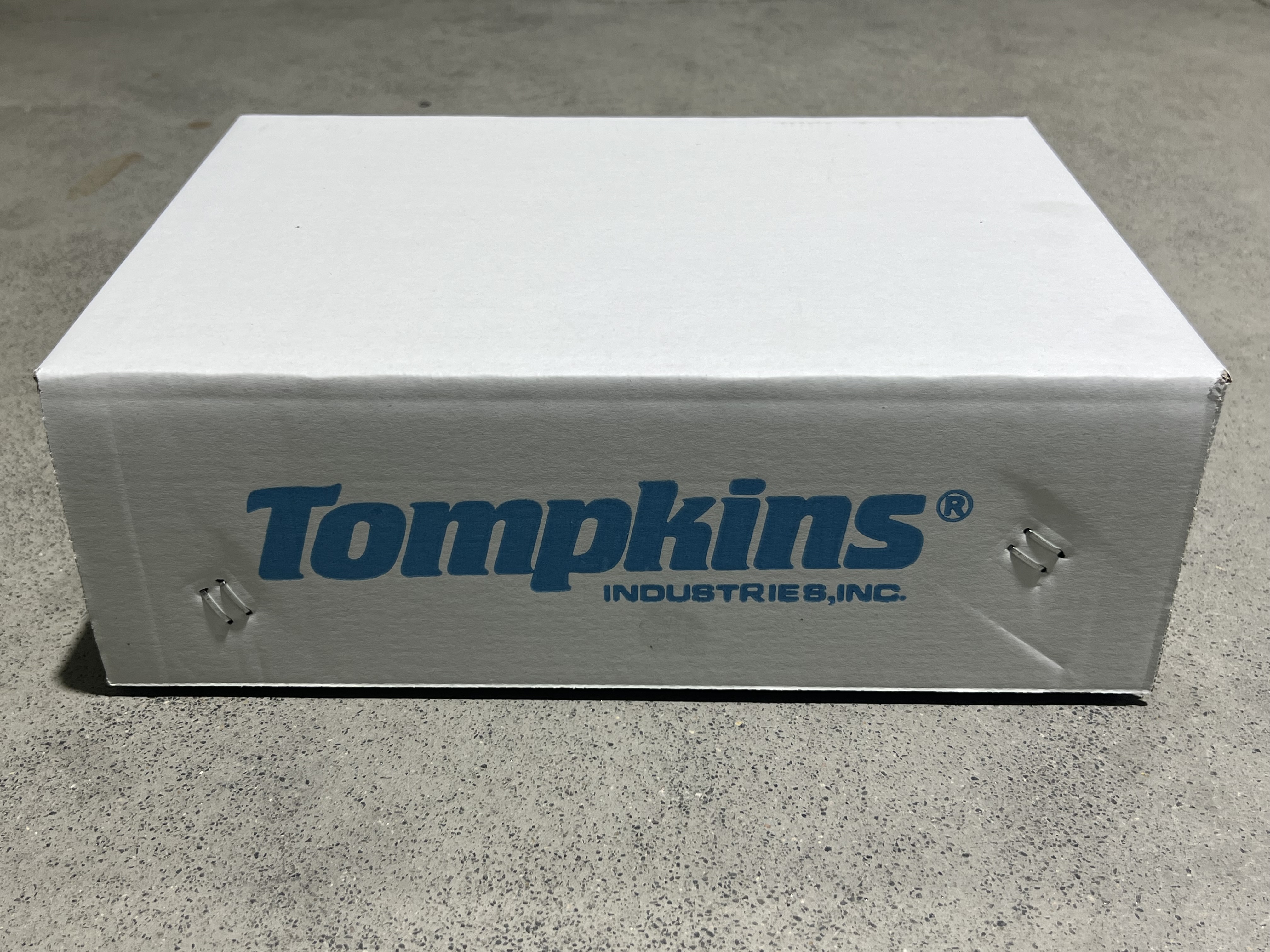
NJ's published case record covers a mid-market distributor in Canada (named in the record as Tompkins) that has taken delivery of 20,000,000 units over a three-year relationship and resells to other local customers. The product attributes highlighted in that record are high-pressure resistance, high-temperature resistance, and rust resistance — the same three requirements that drive adapter selection in agricultural, marine, and oil and gas equipment. The record also describes the distributor expanding its downstream client channels over the relationship. For a buyer evaluating the 1B and 1T series, the transferable point is the pattern rather than the volume: repeat orders across multiple years follow from matching thread form, configuration, and material correctly on the first shipment.
Comparison Table: 1B (BSPP) vs. 1T (BSPT) Series
| Selection factor | 1B series — BSPP | 1T series — BSPT |
|---|---|---|
| Catalog classification | BSPP thread fitting | BSPT thread fitting |
| Thread convention in hydraulic practice | Parallel thread; seals at the face or washer interface | Tapered thread; seals along the thread engagement |
| Published model codes | 1B; 1B4; 1B9; 1BG; 1BG4; 1BG9; 1BH; 1BH9; 1BJ; 1BK; 1BM; 1BN; 1BO; 1BT; 1BT9; 2B; 2B9; 2BJ; 2GB; 2HB; 22NB; 2TB9; 2OB; 2TB; 3B; 4B; 4BN; 5B; 5BN; 5NB; 5BT; 5GB; 5OB; 5TB9; 6B; 7B; 7B9; 9B; EB; AB; BB, etc. | 1T; 1T9; 1BT; 1ST; 4T; 5T, etc. |
| Materials | Carbon steel / SS304 / SS316 | Carbon steel / SS304 / SS316 |
| Pressure range | 3000–6000 PSI | 3000–6000 PSI |
| Maximum stable operating temperature | 220 °C | 220 °C |
| Corrosion testing | 120-hour salt spray; white rust at 120 h, red rust at 240 h | 120-hour salt spray; white rust at 120 h, red rust at 240 h |
| Typical role in service | First-build designs and current manifold ports | Service, retrofit, and legacy equipment where the tapered port already exists |
| Buyer decision rule | Specify when the port is parallel-threaded | Specify when the port is tapered-threaded; never substitute for a parallel port |
All product figures in this table come from NJ's published data for the two BSP adapter families. Third-party material, pressure, and market references are attributed in the text above and retain their original sources.
Frequently Asked Questions
1. What certification covers the production of the 1B and 1T BSP adapter series?
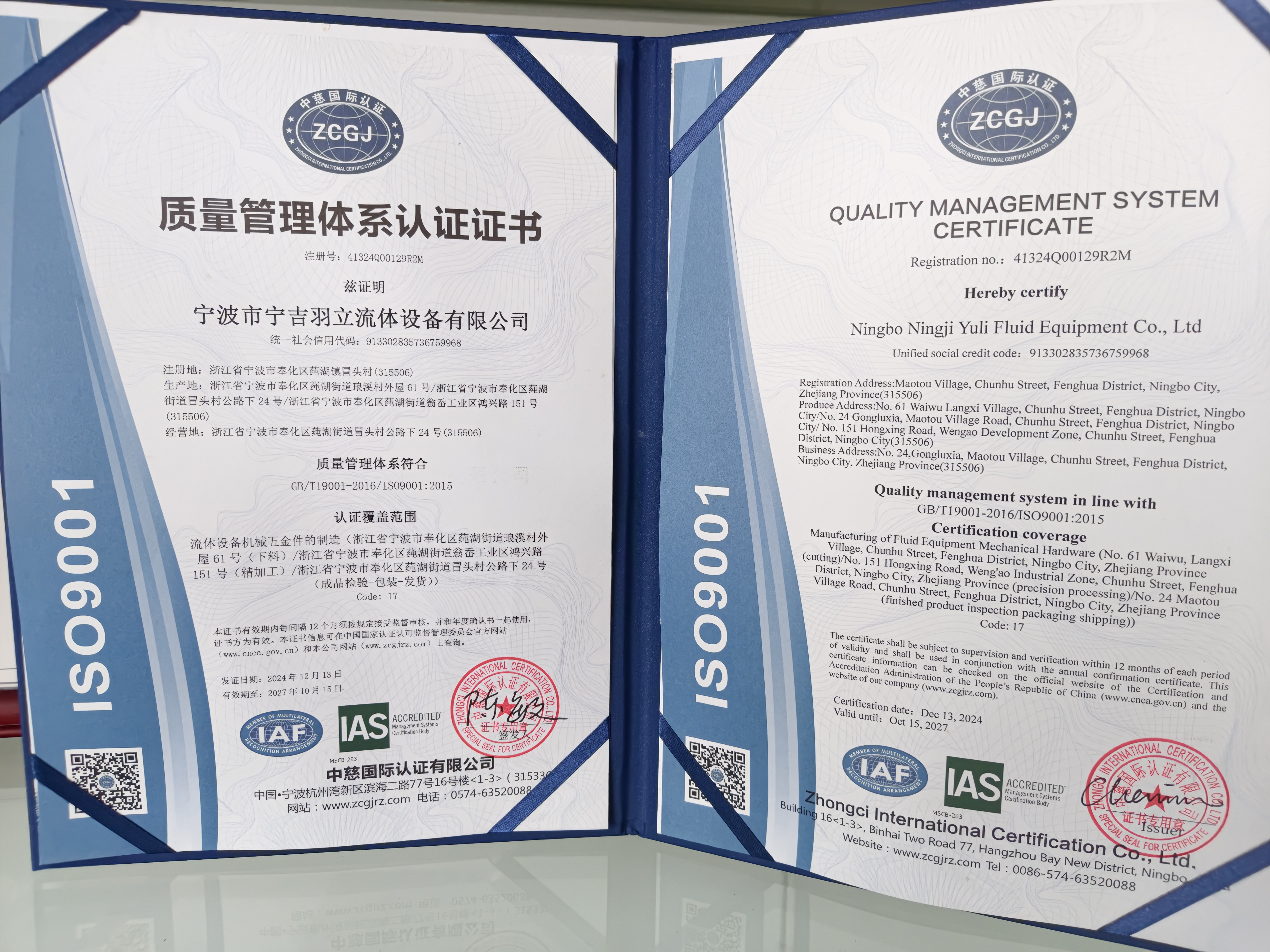
NingBo NJ Hydraulic Adapter Co., Ltd holds ISO 9001 certification (GB/T 19001-2016 / ISO 9001:2015), certificate number 41324Q00129R2M, issued by ZCGJ on 13 December 2024 and valid to 15 October 2027. The certified scope covers the manufacturing of fluid equipment mechanical hardware, including finishing processing, finished product inspection, packaging, and shipping. At the part level, quality control is carried out through random inspection, and both the 1B (BSPP) and 1T (BSPT) BSP adapter families are published with a 120-hour salt spray result (white rust at 120 hours, red rust at 240 hours) and a maximum stable operating temperature of 220 °C.
2. Can the 1B or 1T series be customized for an OEM program or a specific machine?
OEM and ODM production are both available for the 1B and 1T series. OEM work covers customization of logo, package, and plated color; ODM work produces parts from drawings or samples supplied by the buyer. For an OEM program, the practical rule is to lock the full model code, material (carbon steel, SS304, or SS316), and body configuration on the drawing before release, because customization changes packaging and marking rather than the thread form itself.
3. What are the ordering and commercial terms for a BSP adapter order?
Minimum order quantity starts from 1 unit, and the effective MOQ varies depending on product dimensions and manufacturing complexity. Delivery terms include FOB, CIF, EXW, and C&F. Acceptance can be taken door-to-door or at the port of arrival, and shipment is made after the advance payment is received; other payment methods can be discussed after a long-term partnership is established.
4. How does sampling and first-article validation work for a custom BSP adapter?
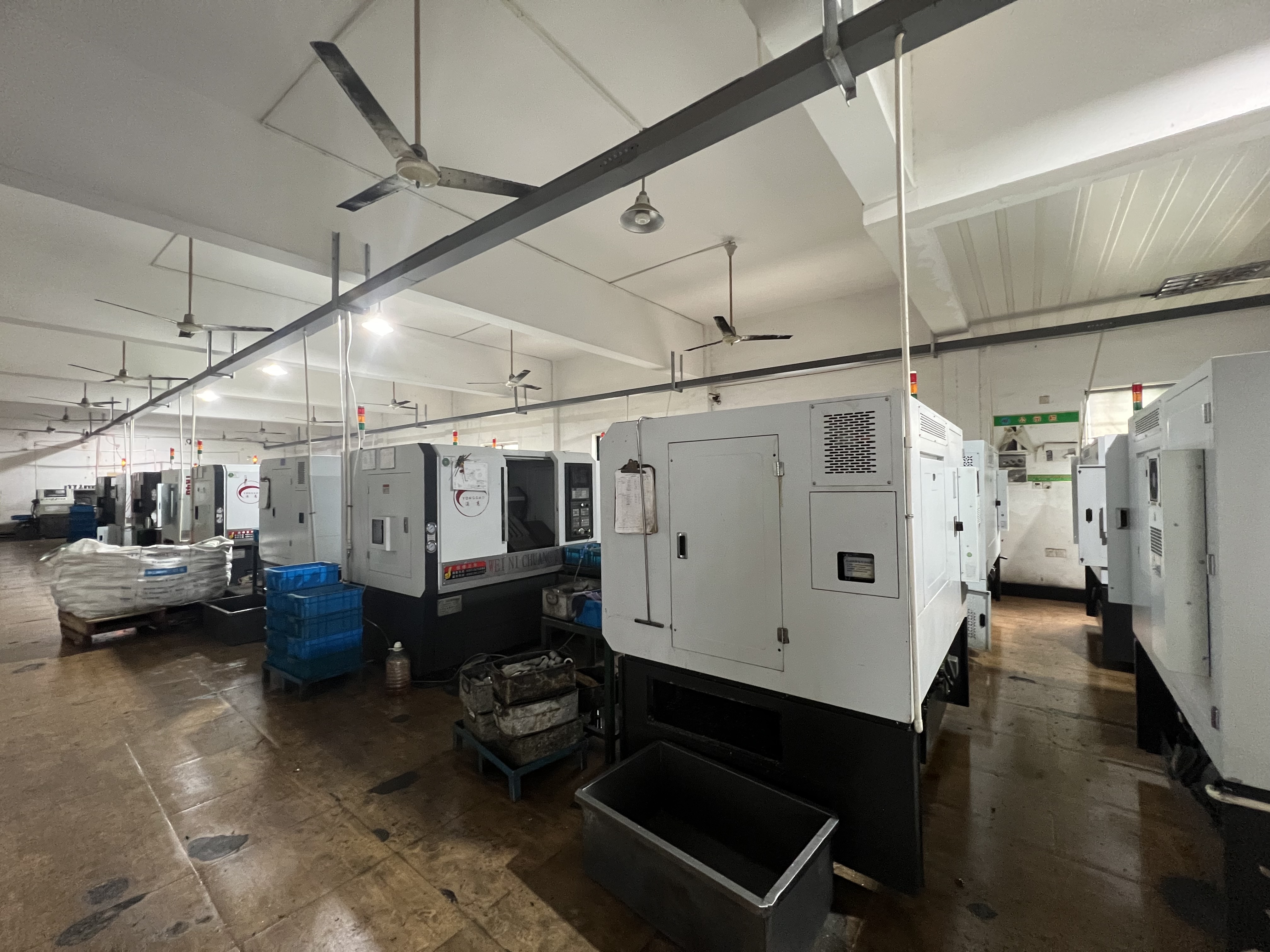
Custom adapters are produced from drawings or samples provided by the buyer, which is the practical route for checking thread form, wrench clearance, and hose angle against a real machine before a series order is placed. If a shipment arrives with missing or wrong items, NJ asks for photos of the affected parts; after verification, replacement accessories are arranged by sea or air shipment.
5. What lead time should be planned, and how do we start an evaluation?
Typical production lead time is 30–45 working days, supported by a monthly production capacity of 4,000,000 units, and after-sales support is handled remotely. NJ states a 75% export ratio with the USA and Canada as its main markets. To begin an evaluation, send the full 1B or 1T model codes, material, and quantity for a quotation, or download the product brochure. Contact: jenny@fhyuli.com, +86 158-6749-2228 (Tel / WhatsApp), or https://www.njadapter.com.
Conclusion
Matching BSP adapters to real machinery is a sequence, not a single choice. Confirm whether the port is parallel or tapered — that decides between the 1B (BSPP) and 1T (BSPT) series. Confirm the full model code so that size and body designation are identical on both the drawing and the quotation. Fix straight or angled bodies against the routing and wrench clearance on a sketch rather than on the bench. Then let the environment choose the material and the circuit choose the pressure check: carbon steel, SS304, or SS316, inside a published 3000–6000 PSI band and a 220 °C maximum stable operating temperature, with the salt spray result read as a corrosion indicator rather than a guarantee.
The two families are not competitors — they cover different ports. What makes them work in agriculture, marine, and oil and gas service is the discipline around them: the correct code, the correct configuration, and a first shipment that is validated before volume is ordered. Buyers who follow that order usually stop treating hydraulic adapters as consumables and start treating them as specified components.
Next Step: Sample, Drawing, or Quotation

Send your 1B or 1T model codes, material (carbon steel, SS304, or SS316), and quantity, and NJ will confirm availability, quotation, and lead time. Buyers who need to verify fit before committing to volume can start from a drawing or a physical sample.
- Product brochure (PDF): NingBo NJ Hydraulic Adapter Co., Ltd catalogue
- Website: www.njadapter.com
- Email: jenny@fhyuli.com
- Tel / WhatsApp: +86 158-6749-2228
- Address: 151 Hongxing Road, Wengao Development Park, Chunhu Street, Fenghua, Ningbo City, Zhejiang Province