
Missing Hydraulic Adapter Parts: A Receiving Checklist
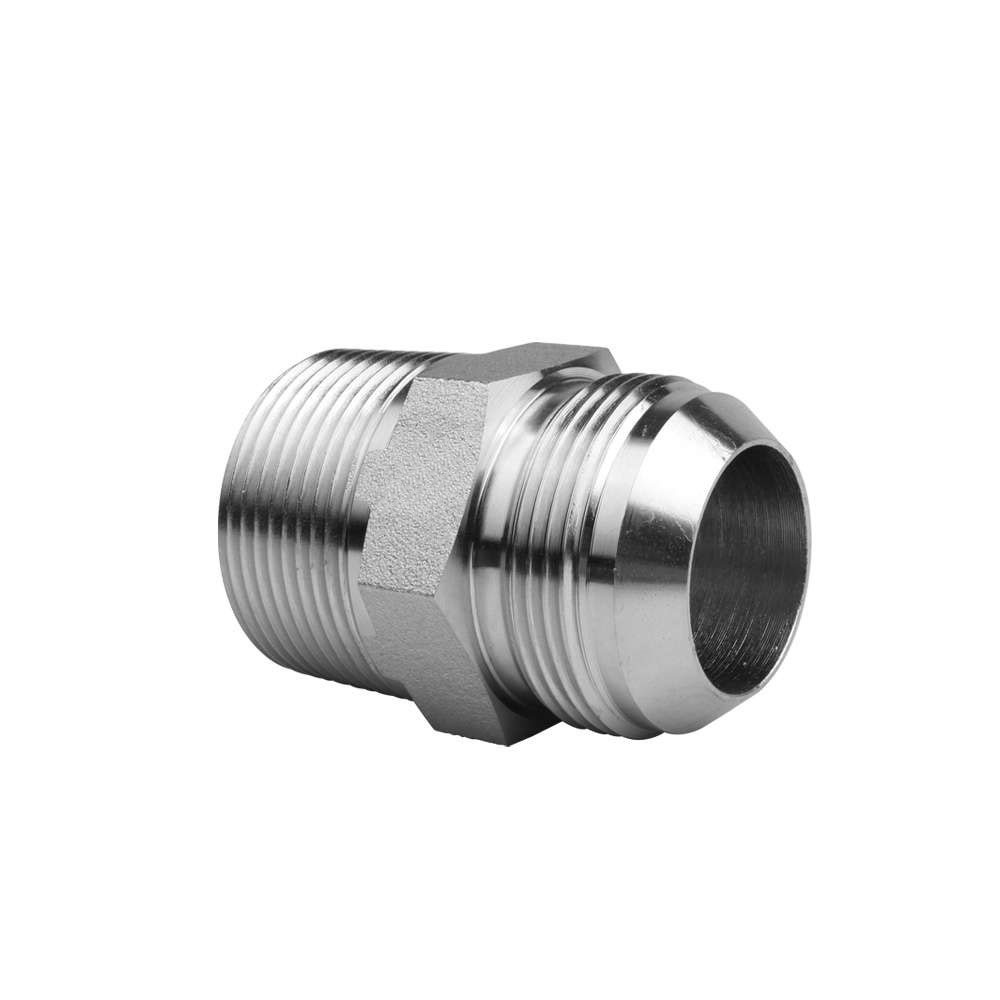
A hydraulic adapter shortage is rarely discovered where it happens. It surfaces later, on the assembly floor, when a technician reaches into a bin for a 0304C cap nut that should be there and finds an empty space, and a finished high-pressure hose assembly cannot leave the bench without it. Receiving inspection is the only point at which a shortage is still cheap to correct.
A receiving and acceptance check for hydraulic adapters verifies four layers against the purchase order: the model designation, the quantity per model, the thread configuration at both ends, and the material together with its pressure and temperature rating. When a shipment arrives short, the buyer should hold the goods in a quarantine area, photograph the shortfall, record the exact model codes and quantities involved, and notify the supplier before the contractual inspection window closes.
This checklist is written for purchasing managers, warehouse supervisors, quality inspectors and distributor staff who sign for hydraulic adapter deliveries. It sets out what to compare, in which order, and what evidence makes a claim stand up.
What 'Missing Accessories' Means on a Hydraulic Adapter Delivery
A shortage on a hydraulic adapter order is not limited to a missing carton. Five different failure modes all produce the same downstream outcome, which is a connection that cannot be built. Each has to be checked separately, because each fails at a different point on the packing list.
- Short quantity of a correct model. The carton is labelled correctly but contains fewer pieces than ordered. This is the easiest shortage to detect and the easiest to lose track of once the parts are mixed into shelf stock.
- Wrong model shipped. A nearby designation is picked instead of the ordered one. On a hydraulic adapter, one letter or one digit often separates a straight fitting from an elbow, or a BSPP thread from a BSPT thread.
- Missing accessory components. Cap nuts, lock nuts, tube nuts, tube sleeves and plugs are ordered in the same units as the adapters but are frequently packed in a separate bag. They are the parts most often counted last, or not at all.
- Material substitution. Carbon steel arrives where SS304 or SS316 was specified. The parts fit and function until the corrosion environment proves otherwise.
- Thread configuration mismatch. The fitting is the right family and the right size but the wrong end combination, such as a BSP to NPT adapter supplied where a JIC to NPT adapter was ordered.
These errors are hard to catch by eye because hydraulic adapter model codes sit very close to one another. In the BSP range, 1B is a Male BSPP x Male BSPP straight, 1BT is a Male BSPP x Male BSPT straight, 1BJ is a Male BSPP x Male JIC straight, and 1BG9 is a Male BSPP x Male BSPP O-Ring 90 degree elbow. In the NPT range, 5405 and 5406 are both Male NPTF Pipe x Female NPTF Pipe straights, and the difference is in the size table, not in the description. In the SAE range, 6803 and 6804 are both tees, distinguished by which ends carry JIC and which carry adjustable ORB.
A hydraulic adapter is a connection node, not a standalone product. One missing 0318 tube nut or one wrong 6801 elbow holds an entire bill of materials line, and the delay is usually attributed to the assembly schedule rather than to the delivery that caused it. That is why the check has to happen before the goods are signed for and shelved.
Why Receiving Discipline Matters More as Adapter Ranges Expand
The commercial context explains why shortages are becoming more likely rather than less. The global hydraulic fittings market, which includes adapters and couplings, was valued at USD 4.8 billion in 2025 and is projected to reach USD 7.9 billion by 2034, according to Dataintelo. Within that market, the hydraulic adapters segment held the largest product type share at 28.4% in 2025, and steel materials accounted for 45.2% of revenue share, driven by demand for high-pressure durability. Asia-Pacific led global hydraulic fitting revenues in 2025 with an estimated 38.6% share.
Demand concentration follows the same pattern on the application side. Grand View Research reports that the mobile hydraulics segment held over 58% of total hydraulics market revenue in 2024, which means most adapters are consumed by machinery builders and their service networks rather than by fixed plant. Those buyers order across many models in modest quantities per model, and multi-model orders are where picking errors and short counts originate.
Standards layering compounds the problem. Several thread systems can share a nominal size while remaining physically incompatible, and each carries its own acceptance logic.
- ISO 8434-2:2007 specifies design and performance requirements for 37 degree flared connectors suitable for tubes from 6 mm to 50.8 mm, which is the basis of the JIC family.
- DIN 2353 divides metric tube fittings into three robustness categories: LL (Extra Light, 100 bar), L (Light, up to 315 to 500 bar) and S (Heavy, up to 630 to 800 bar). A metric thread adapter that measures correctly can still belong to the wrong pressure class.
- ORFS fittings in dash size -4 are rated for 6000 PSI working pressure under SAE J1453.
- NPTF straight threads in 1/4 inch size typically carry a working pressure rating of 4000 PSI with a 4:1 safety factor.
The practical conclusion is that a visual check is not an acceptance check. A BSPP adapter and a BSPT adapter can look almost identical in a photograph and behave completely differently under pressure, because BSPP is a parallel thread sealed by a washer or an O-ring face, while BSPT is a tapered thread that seals on thread engagement. The receiving process has to be specification-based, driven by the purchase order line, not by appearance.
The Four-Layer Acceptance Standard for Hydraulic Adapters
Every adapter line on a delivery can be accepted or rejected against four layers. If a buyer checks only one layer, the other three become unverifiable once the packaging is broken.
Layer 1: Model designation
The model code is the primary key. It must match the purchase order character for character, including any suffix. NingBo NJ Hydraulic Adapter Co., Ltd, a hydraulic adapter manufacturer established in 2004 and based in Fenghua, Ningbo, organizes its range into five adapter families plus a cap nut and lock nut series, and each family has its own numbering logic that a receiver needs to recognise before opening the first carton.
- SAE standard hydraulic adapters, models 6801 to 6850, classified as JIC, ORB and ORFS adapters. Configurations include Male JIC x Male Adjustable ORB (6801, 6802), Male Adjustable ORB x Female NPTF Pipe (6805), Male Adjustable ORB x Female ORB (6815), Male Adjustable ORB x Male Adjustable ORB (6807), and tees such as 6803, 6804 and 6835.
- Hydraulic JIC adapters, models 2403 to 2609 and related bulkhead configurations, classified as JIC adapters and JIC to NPT adapters. Configurations include Male JIC x Male JIC straight (2403), Male JIC x Male NPTF Pipe straight (2404), Male JIC x Female NPTF Pipe straight (2405), Female JIC x Male JIC straight (2406), Male JIC plug (2408), 90 and 45 degree elbows (2500 to 2505), and bulkhead fittings with their lock nuts.
- NPT adapters, models 5000, 5404 to 5406 variants, 5500 to 5505, 5600 to 5605, 5650 and 5652, classified as NPT thread fittings. Configurations include Male NPTF Pipe x Male NPTF Pipe straight (5404), Male NPTF Pipe x Female NPTF Pipe straight (5405, 5406), Female NPTF Pipe cap (5406-C), hex head plug (5406-P), hollow hex plug (5406-HP), square head plug (5406-SHP), tees (5603, 5604, 5605) and a four-way cross (5652).
- BSP adapters, BSPP series with models including 1B, 1B4, 1B9, 1BG, 1BG4, 1BG9, 1BH, 1BH9, 1BJ, 1BK, 1BM, 1BN, 1BO, 1BT, 1BT9, 2B, 2B9, 2BJ, 2GB, 2HB, 22NB, 2TB9, 2OB, 2TB, 3B, 4B, 4BN, 5B, 5BN, 5NB, 5BT, 5GB, 5OB, 5TB9, 6B, 7B, 7B9, 9B, EB, AB and BB, classified as BSPP thread fittings.
- BSP adapters, BSPT series with models including 1T, 1T9, 1BT, 1ST, 4T and 5T, classified as BSPT thread fittings.
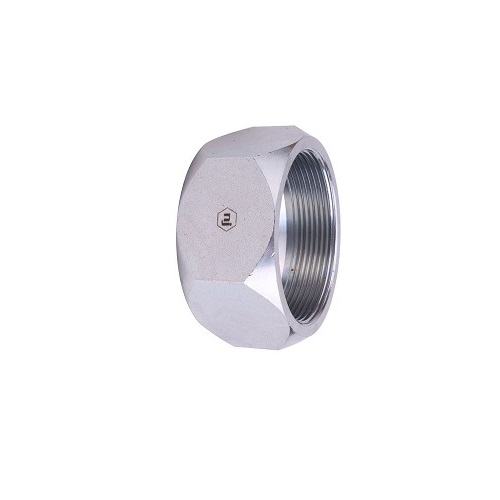
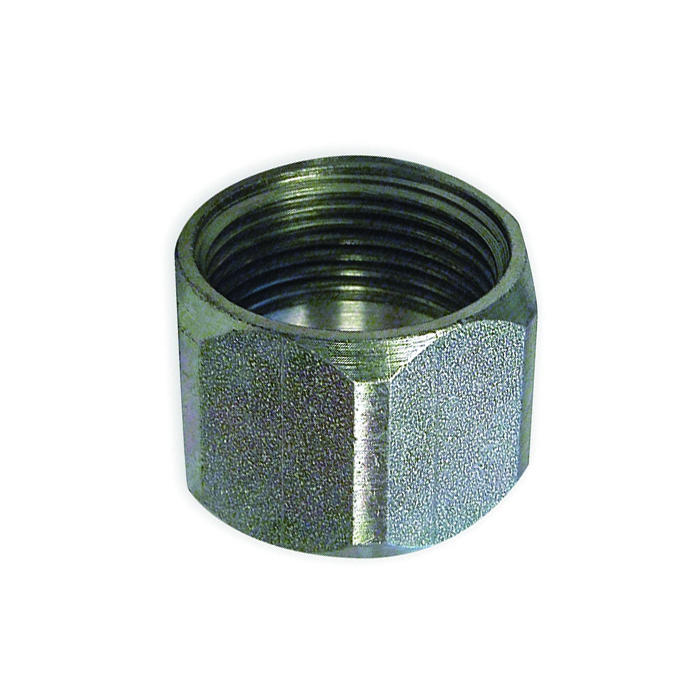
- Hydraulic cap nuts and lock nuts, models 0304C, 0306, 0318, 0319, 0403, 0500, FS0304C, FS0306, FS0318 and FS0319, covering a Female JIC Cap (0304C), a JIC bulkhead lock nut (0306), a JIC tube nut (0318), a JIC tube sleeve (0319), bore to male JIC connectors (0403, 0500) and a bore to male O-Ring face seal connector (FS0403).
Pass criteria: every carton label carries a model code that appears on the purchase order, and every purchase order line is represented by at least one carton.
Layer 2: Quantity per model
Count by model, not by carton. A shipment of 20 cartons is not verified by counting 20 cartons. Each model line has its own quantity, and packing density varies between a 2408 plug and a 5652 cross. Where a carton is sealed with an inner bag, the bag count must match the outer label before the carton is signed off.
Pass criteria: counted quantity equals ordered quantity for every model code, with the count recorded line by line.
Layer 3: Thread configuration at both ends
The model code defines which thread sits at which end, and both ends have to be confirmed. A Male BSPP x Male BSPP straight, a Male BSPP x Female NPTF straight, a Male BSPP x Male JIC straight and a Male BSPP x Male BSPT straight are four different parts that share one thread at one end. For high pressure hose adapters, the sealing method matters as much as the thread: JIC seals on a 37 degree flare, ORB and ORFS seal on an O-ring face, and NPTF seals on dry tapered threads.
Thread identification at goods-in should use a thread gauge or a known reference fitting from stock, not a caliper alone. Pitch diameter and thread form both matter, and a BSPP thread measured across the crest can be confused with an NPT thread of similar nominal size.
Pass criteria: both thread ends on the received part match the configuration named in the model code, confirmed by gauge or reference fitting.
Layer 4: Material and pressure-temperature rating
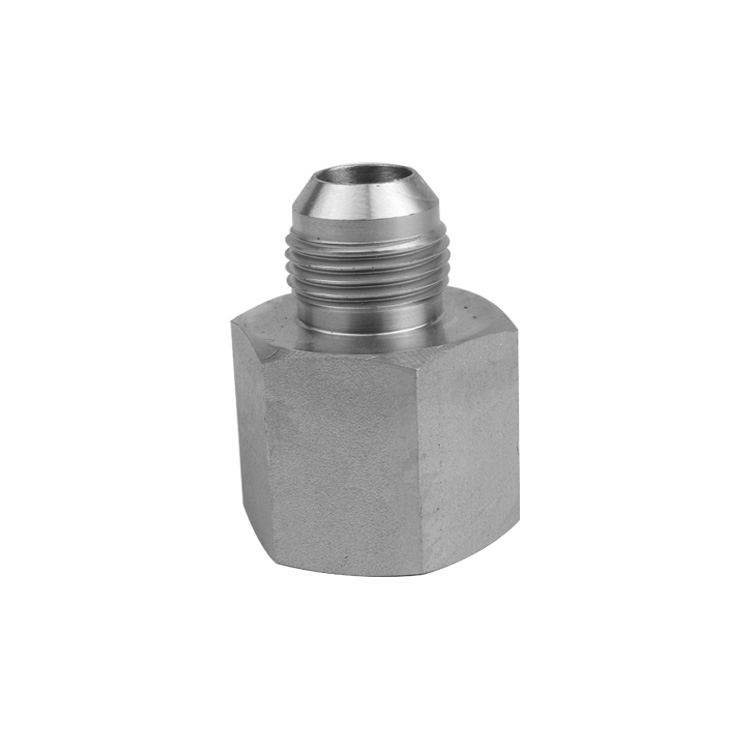
Material confirmation separates a compliant delivery from a functional one. The SAE, JIC, NPT and BSP ranges are all offered in carbon steel, SS304 and SS316, while the hydraulic cap nut and lock nut series is offered in carbon steel, SS304 and SS316 with carbon steel as the primary material. A stainless steel hydraulic adapter specified for a marine or oil and gas application is not interchangeable with a carbon steel part of the same model code, and the difference is not always visible on a machined surface after handling.
The stated rating across these ranges is a pressure range of 3000 to 6000 PSI with a maximum stable operating temperature of 220 degrees C. The ranges also pass a 120-hour salt spray test, with white rust observed at 120 hours and red rust at 240 hours.
Pass criteria: the material grade on the label and on the part matches the order, and the declared pressure and temperature rating is recorded against the delivery.
Step-by-Step Receiving and Acceptance Workflow
The workflow below runs in a fixed order. Each step produces a record; if the record cannot be produced, the step has not been completed.
Step 1: Quarantine before counting
Move the delivery to a marked receiving area and do not shelve any part of it. Adapters that are shelved alongside identical-looking stock lose their traceability to the delivery note within hours. Keep the original cartons and inner bags intact until the count is signed off.
Step 2: Reconcile the purchase order against the packing list
Lay the purchase order and the supplier packing list side by side and match them line by line on model code. This step catches the wrong-model error before any carton is opened. Any model code on the packing list that does not appear on the purchase order is an exception and must be resolved before the count continues.
Step 3: Count by family, then by model
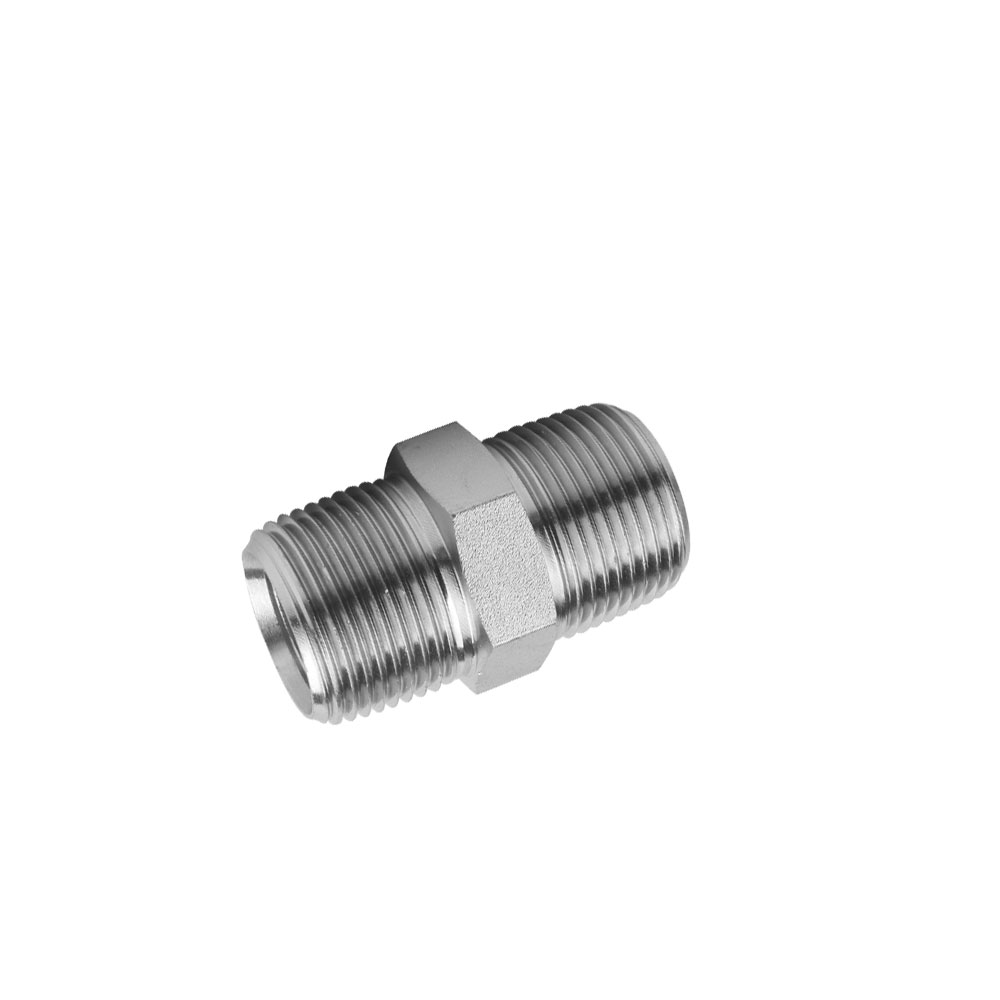
Group the delivery into the five adapter families and the cap nut series, then count within each group. The sequence that works is SAE 6801 to 6850 first, then JIC 2403 to 2609, then NPT 5000 and 5404 to 5652, then BSPP 1B series, then BSPT 1T series, then the cap nut and lock nut series 0304C to 0500. Counting by family first makes a missing model visible as a gap in a short list rather than as an absence in a long one.
Step 4: Verify thread configuration on a sample and on every exception
Gauge every model for which the purchase order names two different thread systems, and gauge a sample of the single-system models. Pay particular attention to parts where the model code differs by one character from a neighbouring code, because that is where picking errors concentrate.
Step 5: Verify material grade
Check the material marking on the carton label, on the inner bag label and on the part where marking exists. SS304 and SS316 are visually similar to each other and to polished carbon steel in small sizes, so the label chain is the practical control. Where the order specifies SS316 for a marine or offshore application, treat any unlabelled bag as an exception.
Step 6: Confirm rating declarations
Confirm that the delivery documentation carries the declared pressure range and operating temperature for the models supplied. For an assembly that will see full system pressure, this record becomes the baseline against which any later performance question is answered.
Step 7: Count accessories and plugs separately
Cap nuts, lock nuts, tube nuts, tube sleeves, plugs and caps are the highest-risk group for shortage because they are small, low-value per piece and often bagged apart from the main fittings. Count the 0304C, 0306, 0318, 0319, 0403 and 0500 lines individually, and check the plug models 2408, 4B, 9B, 4T, 5406-P, 5406-HP and 5406-SHP against their own quantity lines.
Step 8: Record and sign with qualification
Sign the delivery note only with a written qualification where an exception exists, such as short delivery accepted subject to claim. An unqualified signature on a clean delivery note is the single most common reason a valid shortage claim later fails.
How to Document a Shortage Claim and Contact the Supplier
A claim is only as strong as the evidence attached to it. NingBo NJ Hydraulic Adapter Co., Ltd handles missing or wrong-delivered items through a photo-based verification step: the customer provides photographs of the missing or incorrectly delivered items, and after verification the company arranges replacement accessories by sea or air shipment.
The evidence pack that supports that verification should contain:
- Purchase order number, invoice number and delivery note number.
- Carton and inner bag labels photographed as delivered, before repacking.
- The exact model codes affected, written in full, including suffixes such as 5406-SHP or 1BG9.
- Ordered quantity against received quantity, per model code.
- The thread configuration and material grade specified, so the claim is unambiguous about what was expected.
- Photographs of the opened carton contents, the remaining stock and the packing list line.
- The date and time of receipt and the date the discrepancy was identified.
- A short statement of the production impact, so the supplier can prioritise the replacement shipment.
Claims should be raised before the inspection window in the purchase order closes. Send them through a channel that produces a written record, and keep the acknowledgement. For this supplier, the contact route is email at Jenny@fhyuli.com or telephone and WhatsApp at +86 158-6749-2228, with company information at https://www.njadapter.com.
Use Cases: Where a Missing Adapter Stops a Line
Construction machinery assembly
A hose assembly cell building high pressure hose adapters for excavator hydraulics works from a kit that lists every fitting for one assembly. If a single Male JIC x Male Adjustable ORB elbow is short, the kit cannot be closed and the completed assemblies behind it wait. Because the cell counts kits rather than individual fittings, the shortage is often discovered only when the kit is opened.
Agricultural machinery service and spare parts
A distributor stocking service kits for tractors receives adapters and cap nuts on the same order but in different cartons. A missing 0318 tube nut or 0319 tube sleeve makes the kit unsellable even though every adapter in it arrived. For this buyer, the receiving check must include the accessory lines as separate items, and the count sheet should be organised by service kit rather than by fitting family.
Marine and offshore equipment
Where the specification calls for SS316, a carbon steel substitute is a compliance failure rather than a convenience problem. Marine buyers should verify material grade at goods-in and record it against the vessel or project reference, because the part will be inaccessible once installed.
Oil and gas, steel and metallurgy
These applications run at the top of the declared range and often combine NPTF, JIC and ORB connections in one manifold. A wrong thread configuration supplied as a BSP to NPT adapter where an NPT to JIC adapter was ordered will not be discovered by a dimensional check, only by a thread check.
Firefighting equipment
Firefighting assemblies leave no room for substituting a lower-rated part. Receiving should confirm the declared 3000 to 6000 PSI rating band against the assembly requirement and hold the record with the delivery.
Comparison Table: What to Verify by Adapter Family
| Family and model range | Representative configurations | Materials | Declared rating | Verify on arrival |
|---|---|---|---|---|
| SAE standard hydraulic adapters 6801 to 6850 | Male JIC x Male Adjustable ORB (6801, 6802); Male Adjustable ORB x Female NPTF Pipe (6805); Male Adjustable ORB x Female ORB (6815); Male Adjustable ORB x Male Adjustable ORB (6807); tees (6803, 6804, 6835) | Carbon steel, SS304, SS316 | 3000 to 6000 PSI; 220 degrees C maximum stable operating temperature; 120-hour salt spray | Model code; adjustable ORB lock nut free and O-ring seat undamaged; tee end combinations |
| Hydraulic JIC adapters 2403 to 2609 and bulkhead configurations | Male JIC x Male JIC (2403); Male JIC x Male NPTF Pipe (2404); Male JIC x Female NPTF Pipe (2405); Female JIC x Male JIC (2406); Male JIC plug (2408); 90 and 45 degree elbows (2500 to 2505) | Carbon steel, SS304, SS316 | 3000 to 6000 PSI; 220 degrees C; 120-hour salt spray | 37 degree flare seat free of nicks; bulkhead lock nut and sleeve included on bulkhead models |
| NPT adapters 5000, 5404 to 5406 variants, 5500 to 5505, 5600 to 5605, 5650, 5652 | Male NPTF Pipe x Male NPTF Pipe (5404); Male NPTF Pipe x Female NPTF Pipe (5405, 5406); Female NPTF Pipe cap (5406-C); hex head plug (5406-P); hollow hex plug (5406-HP); square head plug (5406-SHP); tees (5603, 5604, 5605); cross (5652) | Carbon steel, SS304, SS316 | 3000 to 6000 PSI; 220 degrees C; 120-hour salt spray | NPTF thread rather than plain NPT where specified; plug head style matches the ordered suffix |
| BSP adapters, BSPP series 1B, 1B4, 1B9, 1BG, 1BG4, 1BG9, 1BH, 1BH9, 1BJ, 1BK, 1BM, 1BN, 1BO, 1BT, 1BT9, 2B, 2B9, 2BJ, 2GB, 2HB, 22NB, 2TB9, 2OB, 2TB, 3B, 4B, 4BN, 5B, 5BN, 5NB, 5BT, 5GB, 5OB, 5TB9, 6B, 7B, 7B9, 9B, EB, AB, BB | Male BSPP x Male BSPP (1B, 7B); Male BSPP x Female NPTF (5BN); Male NPTF Pipe x Male BSPP (1NB); Male BSPP x Male BSPT (1BT); Male BSPP x Male JIC (1BJ); bulkhead (6B); Female BSPP plug (9B); swivel 90 degree elbow (2B9) | Carbon steel, SS304, SS316 | 3000 to 6000 PSI; 220 degrees C; 120-hour salt spray | BSPP parallel thread confirmed against BSPT; correct end pairing on conversion models |
| BSP adapters, BSPT series 1T, 1T9, 1BT, 1ST, 4T, 5T | Male BSPT x Male BSPT (1T, 1T9); Male BSPP x Female BSPT (1BT); Male JIC x Female BSPT (1JT); Male JIS x Female BSPT 90 degree elbow (1ST9); Male BSPT plug (4T); Male BSPT x Female BSPT (5T) | Carbon steel, SS304, SS316 | 3000 to 6000 PSI; 220 degrees C; 120-hour salt spray | Tapered thread engagement; Japanese JIS conversion parts identified separately from BSP parts |
| Hydraulic cap nut and lock nut series 0304C, 0306, 0318, 0319, 0403, 0500, FS0304C, FS0306, FS0318, FS0319 | Female JIC cap (0304C); JIC bulkhead lock nut (0306); JIC tube nut (0318); JIC tube sleeve (0319); bore to male JIC connector (0403, 0500); bore to male O-ring face seal connector (FS0403) | Carbon steel, SS304, SS316, with carbon steel as the primary material | 3000 to 6000 PSI; 220 degrees C; 120-hour salt spray | Counted as separate lines; cap thread and O-ring groove free of damage; stainless grade confirmed where ordered |
The table is a verification map, not a substitution guide. Two models listed in the same row can be physically incompatible with the same port, which is precisely why the check runs against the order line and not against the family.
Frequently Asked Questions
What should a buyer do first when hydraulic adapter accessories are missing on arrival?
Stop the goods from entering shelf stock and keep them in a quarantine area with the original cartons and inner bags intact. Compare the purchase order against the packing list on model code, count the affected lines, photograph the shortfall, and raise the claim before the inspection window in the purchase order closes. Once the parts are mixed into general stock, the link between the delivery and the shortage can no longer be demonstrated.
How are missing or wrong-delivered hydraulic adapter parts resolved?
At NingBo NJ Hydraulic Adapter Co., Ltd, the customer provides photographs of the missing or wrong-delivered items. After the photographs are verified, the company arranges replacement accessories by sea or air shipment. The verification step is the reason the photograph set should show the carton label, the opened contents and the packing list line together rather than a single product photo.
What evidence should a hydraulic adapter shortage claim include?
A claim should include the purchase order, invoice and delivery note numbers, photographs of carton and inner bag labels as delivered, the full model codes affected, ordered versus received quantity per model, the thread configuration and material grade that were specified, the date of receipt, and a short statement of production impact. Model codes must be written in full, including suffixes such as 5406-SHP, 1BG9 or FS0403, because the suffix identifies the configuration.
Can buyers request samples or a pre-shipment check before a series order?
Sample and inspection requirements are best agreed before a series order is released, and they can be raised directly with the supplier through the published contact channels. For reference, the manufacturer operates a 20,000 square meter facility in Fenghua, Ningbo, with approximately 200 staff and an R&D team of 4 engineers, and states that production follows TS16949 practice with complete production and testing equipment on site. Buyers should confirm the specific sample models, the thread and material requirements, and the acceptance criteria in writing.
How can shortages be prevented in the purchase order itself?
The purchase order should state, for every line, the complete model designation, the thread configuration at both ends, the material grade, the required pressure and temperature rating, and the quantity. It should also list accessory items such as cap nuts, lock nuts, tube nuts, tube sleeves and plugs as separate lines rather than as implied contents of a kit, specify labelling requirements, define the inspection window, and state the evidence needed to support a claim. A purchase order written this way turns receiving from a visual judgement into a documented comparison.
Conclusion
Shortages on hydraulic adapter deliveries are not rare events, and they are not solved by goodwill on either side. They are solved by a receiving process that checks four layers in a fixed order, records what it found, and raises the claim while the evidence still exists. Model designation, quantity, thread configuration, and material with its declared pressure and temperature rating are the four layers. Everything else in this checklist is a way of making those four verifiable.
For buyers who write the acceptance criteria into the purchase order rather than discovering them at the receiving door, the missing cap nut stops being an installation delay and becomes a documented line item with a replacement already scheduled.
Need to confirm a model, a thread configuration or a replacement?
Send the purchase order line, the carton label photo and the model code, and we will confirm the configuration against the range.
NingBo NJ Hydraulic Adapter Co., Ltd
Email: Jenny@fhyuli.com · Tel / WhatsApp: +86 158-6749-2228
Website: https://www.njadapter.com
Address: 151 Hongxing Road, Wengao Development Park, Chunhu Street, Fenghua, Ningbo City, Zhejiang Province
Download the product catalogue for model reference: NingBo NJ Hydraulic Adapter Catalogue (PDF)
Have Questions or Need More Details?
Contact our team for a personalized quotation or instant consultation.
Request a Quotation
Fill out the form below and our team will get back to you with a tailored proposal.
WhatsApp Direct Chat
Prefer to chat in real-time? Message us on WhatsApp for instant assistance & quick answers.
- Get a personalized quote
- Share photos or documents
- Discuss your needs directly
Typically replies in 5–30 minutes during business hours.