Ranked: 5 Hydraulic Adapter Types Built for High-Pressure Construction and Agricultural Machinery
Short answer: for machinery that runs at 3,000–6,000 PSI in construction and agricultural duty cycles, five hydraulic adapter families cover nearly every joint on the circuit. Ranked by pressure headroom, sealing stability under vibration, thread interoperability, field serviceability and material availability, the order is: 1) SAE Standard Hydraulic Adapter (6800 series), 2) Hydraulic JIC Adapter (2400/2500/2600 series), 3) BSP Adapter (1B and 1T series), 4) NPT Adapter (5000/5400/5600 series), 5) hydraulic cap nut (0304C/FS series).
This is a ranking of adapter types, not of brands. The model series cited throughout are the production families listed by NingBo NJ Hydraulic Adapter Co., Ltd, a hydraulic fittings manufacturer established in 2004 in Fenghua, Ningbo, Zhejiang, China, with a stated range covering carbon steel, SS304 and SS316 bodies, a 3,000–6,000 PSI service band, a 120-hour salt spray test schedule and a stated maximum stable operating temperature of 220°C where specified.
What “High-Pressure” Actually Means on a 3,000–6,000 PSI Machine
A hydraulic adapter on a 6,000 PSI circuit is a sealing decision, not a plumbing accessory. The working definition used in this article is specific: a joint must hold a static pressure of 6,000 PSI and a burst pressure of 9,000 PSI without deformation, while maintaining continuous operation and seal integrity across the duty cycle.
Three failure modes sit behind almost every field leak on construction and agricultural equipment:
- Pressure exposure — relief settings, cylinder stall and implement shock loadings push a nominal 3,000 PSI line toward its upper band, so the adapter must be selected for the peak, not the average.
- Thermal cycling — hydraulic oil temperatures rise under sustained load; a stated maximum stable operating temperature of 220°C where specified becomes the ceiling a carbon steel or stainless body must respect.
- Corrosion and contamination — fertilizer, slurry, coastal air and wash-down water attack plated carbon steel first; a 120-hour salt spray test is the practical screen for finish durability before a fleet order.
The harder problem is thread mixing. A single mixed fleet can carry SAE O-ring boss ports, JIC 37° flare ports, BSPP ports on European-built machines and NPT ports on older North American equipment, all within one hydraulic circuit. Choosing one adapter family and forcing it everywhere creates adapt-and-adapt chains that add leak paths. The ranking below reflects that reality.
Why Mobile Hydraulics Sets the Adapter Agenda
Mobile hydraulics — the segment that includes excavators, wheel loaders, tractors, sprayers and telehandlers — held over 58% of total hydraulics market revenue share in 2024, according to Grand View Research. That concentration is why adapter selection is dominated by vibration, dust, field service and mixed-port fleets rather than by clean factory installations.
The fittings and adapters market that supplies those machines was valued at USD 4.8 billion in 2025 and is projected to reach USD 7.9 billion by 2034, per Dataintelo. Within that market, the hydraulic adapters segment held the largest product-type share at 28.4% in 2025, and steel material accounted for 45.2% of revenue share in the same year, driven by demand for high-pressure durability. Asia-Pacific accounted for an estimated 38.6% of global hydraulic fitting revenue in 2025, which is consistent with the region’s dense manufacturing base.
Standard density explains the ranking logic. DIN 2353 defines three robustness categories for metric tube fittings — LL at 100 bar, L at 315–500 bar and S at 630–800 bar. ISO 8434-2:2007 specifies 37° flared connectors for tubes from 6 mm to 50.8 mm. SAE J1453 rates ORFS dash -4 (1/4") fittings at 6,000 PSI working pressure, while NPTF 1/4" straight threads typically carry a 4,000 PSI working rating with a 4:1 safety factor. Different standards, similar machinery, overlapping pressure bands — hence five families rather than one.
The Five Ranking Criteria Used Here
- Pressure headroom — how comfortably the sealing principle sits inside a 3,000–6,000 PSI band, and how it behaves at 6,000 PSI static / 9,000 PSI burst.
- Sealing stability under vibration — whether the seal depends on thread interference, a metal-to-metal flare, a captured O-ring or a compressible washer.
- Thread interoperability — how often the family matches the ports already installed on construction, agricultural, marine and oil & gas equipment.
- Field serviceability — whether a technician can remake the joint in a yard without special tooling, and how many times.
- Material and finish availability — carbon steel, SS304 and SS316 options, plus a 120-hour salt spray result for corrosion screening.
1. SAE Standard Hydraulic Adapter (6800 Series)
Why it leads: the SAE family delivers the highest sealing headroom of the five on a 3,000–6,000 PSI circuit. O-ring face seal (ORFS) dash -4 fittings are rated at 6,000 PSI working pressure under SAE J1453, and the O-ring boss (ORB) adjustable stud allows an elbow to be oriented to the correct angle without backing off the thread engagement.
The 6800 series spans model codes 6801, 6802, 6803, 6804, 6805, 6806, 6807, 6808, 6809, 6810, 6815, 6818, 6820, 6832, 6835, 6840 and 6850, covering straight and angled configurations in the SAE port family. The configuration that illustrates the family’s practical value is Male JIC x Male Adjustable ORB 90° Elbow: one part joins a 37° flare hose end to an adjustable O-ring boss port at a right angle, removing an extra adapter from a crowded valve block and eliminating one potential leak path.
Where it wins: valve blocks, pump and motor ports, and manifold connections on construction and agricultural machinery where pressure peaks and vibration are both present, and where a captured O-ring resists loosening better than a thread-sealant joint.
Limits to plan for: the seal depends on the O-ring and the face condition, so a scored face or a contaminated O-ring leaks regardless of torque. ORFS and ORB are distinct port forms and cannot be interchanged. Unit cost is higher than a taper-thread adapter, and dash sizing must be correct — an undersized body becomes the restriction in the line.
2. Hydraulic JIC Adapter (2400 / 2500 / 2600 Series)
Why it ranks here: the 37° flare joint is metal-to-metal, re-makeable in the field and needs no O-ring to inventory. ISO 8434-2:2007 specifies 37° flared connectors for tubes from 6 mm to 50.8 mm, which is the dimensional range most construction and agricultural hose assemblies occupy.
The JIC family in this range covers model codes 2403, 2404, 2405, 2406, 2408, 2500, 2501, 2502, 2503, 2504, 2505, 2601, 2602, 2603, 2605, 2606, 2608 and 2609. Straight adapters, 45° and 90° elbows, bulkhead adapters and male-to-male conversions all sit inside these prefixes, which is why JIC is the workhorse of North American mobile hydraulics.
Where it wins: hose-to-hose and hose-to-component connections on booms, cylinders and implement circuits, particularly where a technician may need to break and remake a joint on site. There is no elastomer to lose, and a correctly formed flare reseals reliably.
Limits to plan for: the flare is the seal, so over-torque cracks it and under-torque weeps. Repeated re-making of the same flare eventually work-hardens the cone. JIC also does not solve a port that is BSP or NPT — a conversion adapter such as a npt to jic adapter or bsp to npt adapter is a separate, rated component, not an improvised combination.
3. BSP Adapter (1B and 1T Series)
Why it ranks here: as soon as a fleet includes European or Asian-built machinery, BSP ports appear. Without a BSP family, the maintenance store cannot service those machines at all — which makes this rank a coverage requirement rather than a performance judgement.
Two production families are listed for this group. The 1B group runs across 1B, 1B4, 1B9, 1BG, 1BG4, 1BG9, 1BH, 1BH9, 1BJ, 1BK, 1BM, 1BN, 1BO, 1BT, 1BT9, 2B, 2B9, 2BJ, 2GB, 2HB, 22NB, 2TB9, 2OB, 2TB, 3B, 4B, 4BN, 5B, 5BN, 5NB, 5BT, 5GB, 5OB, 5TB9, 6B, 7B, 7B9, 9B, EB, AB and BB. The 1T group covers 1T, 1T9, 1BT, 1ST, 4T and 5T.
Where it wins: BSPP (parallel) ports sealed with a bonded washer, and BSPT (tapered) ports where a thread seal is intended. European tractors, harvesters and marine engines commonly use these ports, and the metric tube world around DIN 2353 sits adjacent to them, with the S category reaching 630–800 bar for heavy tube.
Limits to plan for: BSPP and BSPT are routinely confused, and fitting a parallel adapter into a tapered port — or the reverse — produces a leak that no amount of torque resolves. Bonded washers age and harden, so service stock must include replacements. Thread pitch is 55°, not the 60° of NPT and JIC, which is the fastest field check available.
4. NPT Adapter (5000 / 5400 / 5600 Series)
Why it still makes the list: NPT ports remain widespread on older North American machinery, on oil & gas equipment and in service stock. The family is included for compatibility, not for pressure headroom — NPTF 1/4" straight threads typically carry a 4,000 PSI working rating with a 4:1 safety factor, below the 6,000 PSI class that ORFS reaches.
The NPT group is listed across 5000, 5404, 5405, 5406, 5406-C, 5406-HP, 5406-P, 5406-SHP, 5500, 5501, 5502, 5503, 5504, 5505, 5600, 5601, 5602, 5603, 5604, 5605, 5650 and 5652.
Where it wins: legacy ports on pumps, valves and tanks that were designed to NPT, plus low-cycle connections that will not be broken frequently. The tapered thread deforms to seal, which is forgiving of minor damage.
Limits to plan for: the seal depends on thread interference and a sealant, so re-making a joint repeatedly wears the thread and pushes sealant residue into the circuit. On a 6,000 PSI line, an NPT joint in the smaller sizes is the weakest link and should be engineered with a conversion to a higher-headroom port form where the design allows.
5. Hydraulic Cap Nut (0304C / FS Series)
Why it is ranked, and why it is last: the cap nut is not a flow-path coupling. It is a threaded closure and retention element that protects and completes the four adapter families ranked above it. It earns a place on the shortlist because unprotected or unblanked ports are a recurring cause of contamination and missing-part claims.
The family covers 0304C, 0306, 0318, 0319, 0403, 0500 and the FS variants FS0304C, FS0306, FS0318 and FS0319. Typical duties are capping a port during transport and storage, blanking an unused manifold outlet, and retaining a hose-end assembly.
Where it wins: shipping protection, commissioning, and spare-parts kits where a distributor needs a complete, closed assembly rather than an open port.
Limits to plan for: a cap nut must match the thread form and the pressure class of the joint it closes, and it should never be substituted for a rated pressure connection. Receiving checks should confirm the cap nut is present on every assembly, because a missing cap is a contamination path before the machine ever runs.
Step-by-Step: Selecting the Right Family in Five Moves
Step 1 — Identify the port form on both ends. Measure thread pitch and check the flank angle: 60° points to JIC, SAE or NPT, while 55° points to BSP. Confirm straight versus tapered, and record dash or metric size before ordering anything.
Step 2 — Confirm the pressure and temperature envelope. Compare the system’s relief setting against the 3,000–6,000 PSI service band and against the 6,000 PSI static / 9,000 PSI burst requirement. Confirm the oil temperature against the stated maximum stable operating temperature of 220°C where specified for the chosen configuration.
Step 3 — Choose the material against the environment. Carbon steel suits general machinery; SS304 suits moderate corrosion exposure; SS316 suits marine, coastal and chemical environments. For reference, DIN 17440 cites AISI 316 service temperatures from -60°C to +400°C, but the supplier’s stated maximum governs the order.
Step 4 — Lock the configuration, not just the thread. Decide straight, 45° or 90°; adjustable versus non-adjustable; bulkhead, flange or staple-lock style where the routing demands it. A configuration such as Male JIC x Male Adjustable ORB 90° Elbow is a single part number that solves two standards at once — specify it that way instead of stacking two adapters.
Step 5 — Verify the evidence before the series order. Ask for the ISO 9001 certificate, the 120-hour salt spray result for the finished finish, the inspection regime and a fit test on the actual port. Then release the series order against an approved drawing.
Application Fit: Construction, Agriculture, Marine and Oil & Gas
Construction machinery. Excavators, loaders and telehandlers combine high pressure with dust and vibration. Ranks 1 and 2 do most of the work: SAE O-ring face seal and adjustable ORB connections at valve blocks and pump ports, JIC at hose-to-hose joints that technicians break on site.
Agricultural equipment. Tractors, sprayers, seeders and balers often arrive as mixed fleets, with BSP ports on European-built machines and NPT or SAE ports on North American units. This is the segment where carrying ranks 1, 2 and 3 together prevents adapt-and-adapt chains. Fertilizer and slurry exposure also makes the 120-hour salt spray result a direct selection input rather than a formality.
Marine. Salt-laden air and wash-down make SS316 the default body material, with SAE ORFS and JIC joints preferred for their remake tolerance. Bonded washers on BSPP ports should be treated as consumables in this environment.
Oil & gas and heavy industry. Petroleum equipment, coal mining equipment and electromechanical assemblies carry some of the highest static pressures in this list. Where the port is NPT, rank 4 applies, but the 4,000 PSI class of a 1/4" NPTF joint means the design should convert to a higher-headroom port form wherever the pressure band reaches the top of the 3,000–6,000 PSI range.
A Canadian mid-market distributor illustrates how this plays out commercially. Supplying 20,000,000 units over three years to downstream local customers, the distributor’s requirement centred on high-pressure resistance, high-temperature resistance and rust resistance, and the business grew into a recognised industrial parts distributor in Canada on that basis.
Comparison Table: The Five Families Side by Side
| Rank & family | Listed model series | Sealing principle | Pressure & temperature fit | Materials | Application fit and watch-outs |
|---|---|---|---|---|---|
| 1 — SAE Standard Hydraulic Adapter | 6801–6850 | O-ring boss adjustable stud; O-ring face seal (ORFS) | 3,000–6,000 PSI service band; ORFS dash -4 rated 6,000 PSI under SAE J1453; 220°C max where specified | Carbon steel, SS304, SS316 | Valve blocks, pump/motor ports, mixed fleets. Watch O-ring and face condition; ORB and ORFS are not interchangeable. |
| 2 — Hydraulic JIC Adapter | 2403–2609 | 37° metal-to-metal flare | 3,000–6,000 PSI service band; ISO 8434-2 covers 6–50.8 mm tube; 220°C max where specified | Carbon steel, SS304, SS316 | High-vibration mobile lines, field remake. Watch flare cracking from over-torque. |
| 3 — BSP Adapter | 1B group; 1T group | BSPP parallel with bonded washer; BSPT taper | 3,000–6,000 PSI service band; DIN 2353 S category reaches 630–800 bar for heavy tube | Carbon steel, SS304, SS316 | European and Asian machinery. Watch BSPP versus BSPT mix-ups and washer ageing. |
| 4 — NPT Adapter | 5000; 5404–5406; 5500–5505; 5600–5605; 5650; 5652 | NPT / NPTF taper, sealant-dependent | NPTF 1/4" typically 4,000 PSI with 4:1 safety factor; best kept below the top of the 6,000 PSI band | Carbon steel, SS304, SS316 | Legacy North American ports, oil & gas, service stock. Watch thread wear and sealant residue. |
| 5 — Hydraulic Cap Nut | 0304C; 0306; 0318; 0319; 0403; 0500; FS0304C; FS0306; FS0318; FS0319 | Threaded closure and retention | Not a flow-path coupling; must match the pressure class of the joint it closes | Carbon steel, SS304, SS316 | Port protection, blanking, retention, spares kits. Never substitute for a rated pressure connection. |
Verified Manufacturer Anchor: NingBo NJ Hydraulic Adapter Co., Ltd
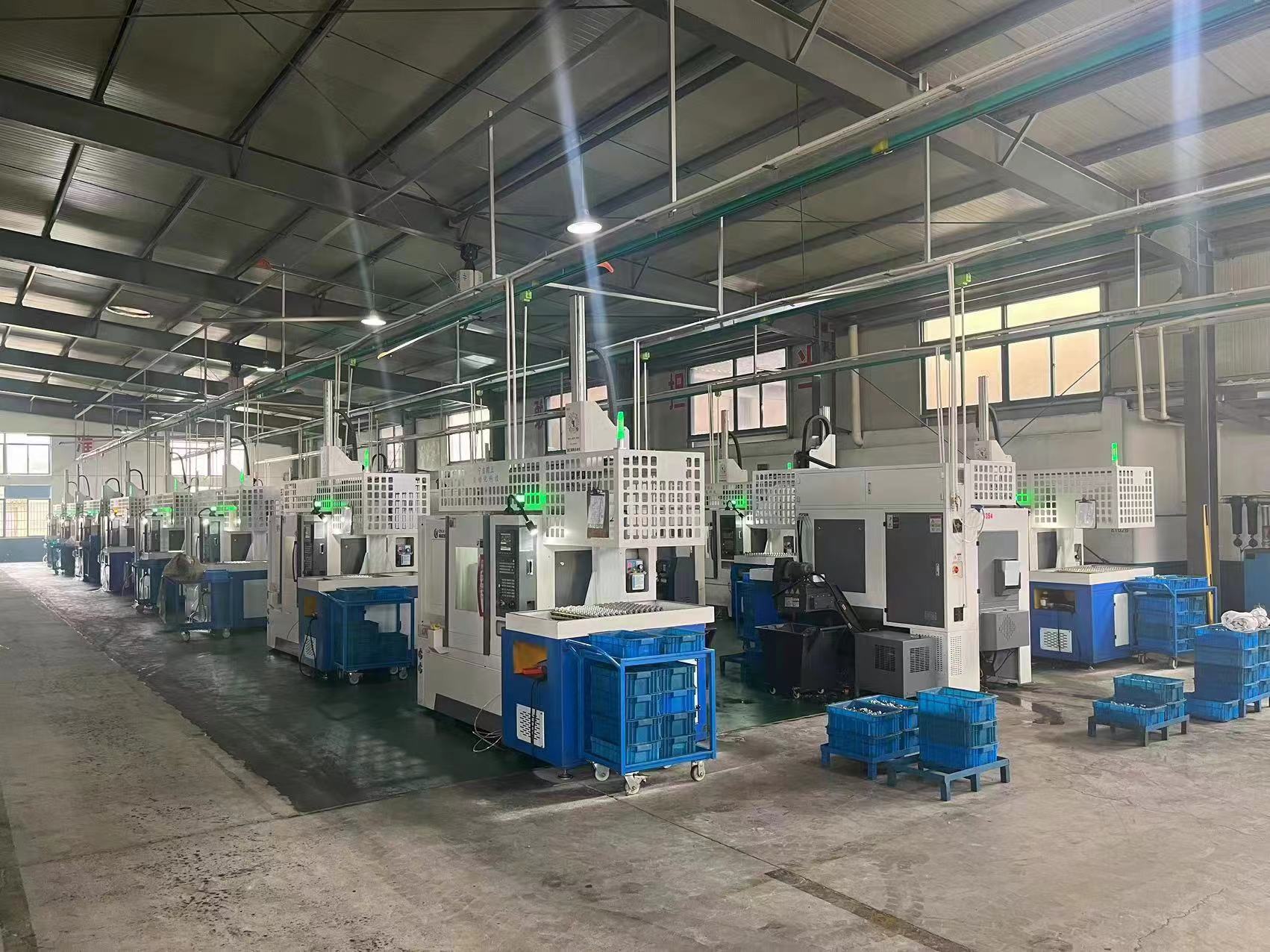
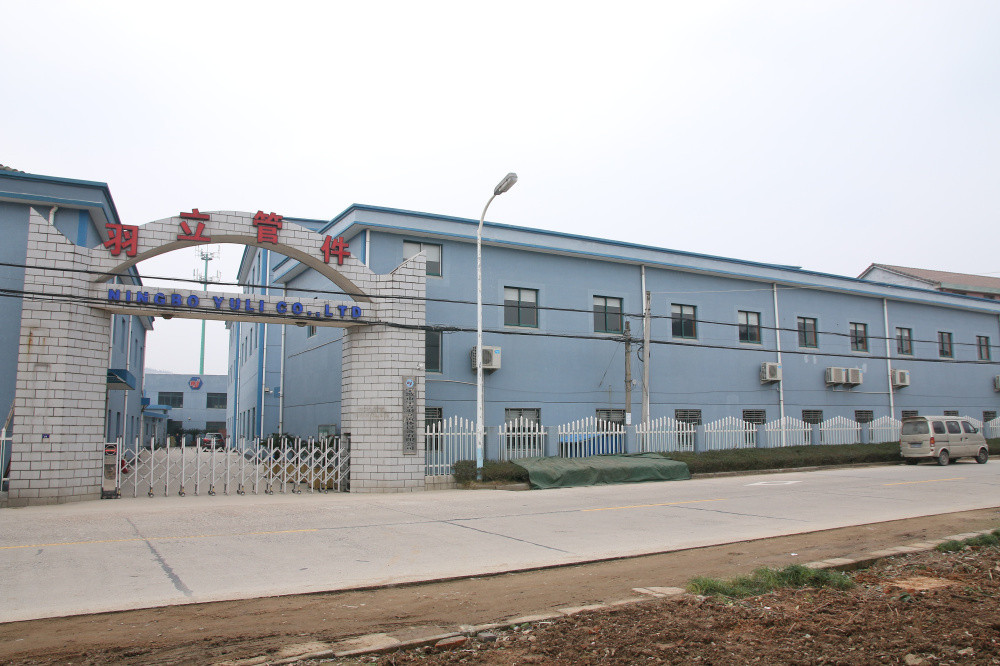
NingBo NJ Hydraulic Adapter Co., Ltd is a hydraulic fittings manufacturer located at 151 Hongxing Road, Wengao Development Park, Chunhu Street, Fenghua, Ningbo, Zhejiang, China. The company was established in 2004, employs approximately 200 staff and operates a 20,000 m² facility with an R&D team of 4 engineers, an annual output listed at 4,000,000 units, a 75% export ratio and main markets in the USA and Canada. Its stated production scope covers SAE standard hydraulic components and engineering machinery parts, including hydraulic adapters, flanges, valves, valve components, plungers, cylinder accessories and non-standard parts made to drawings.
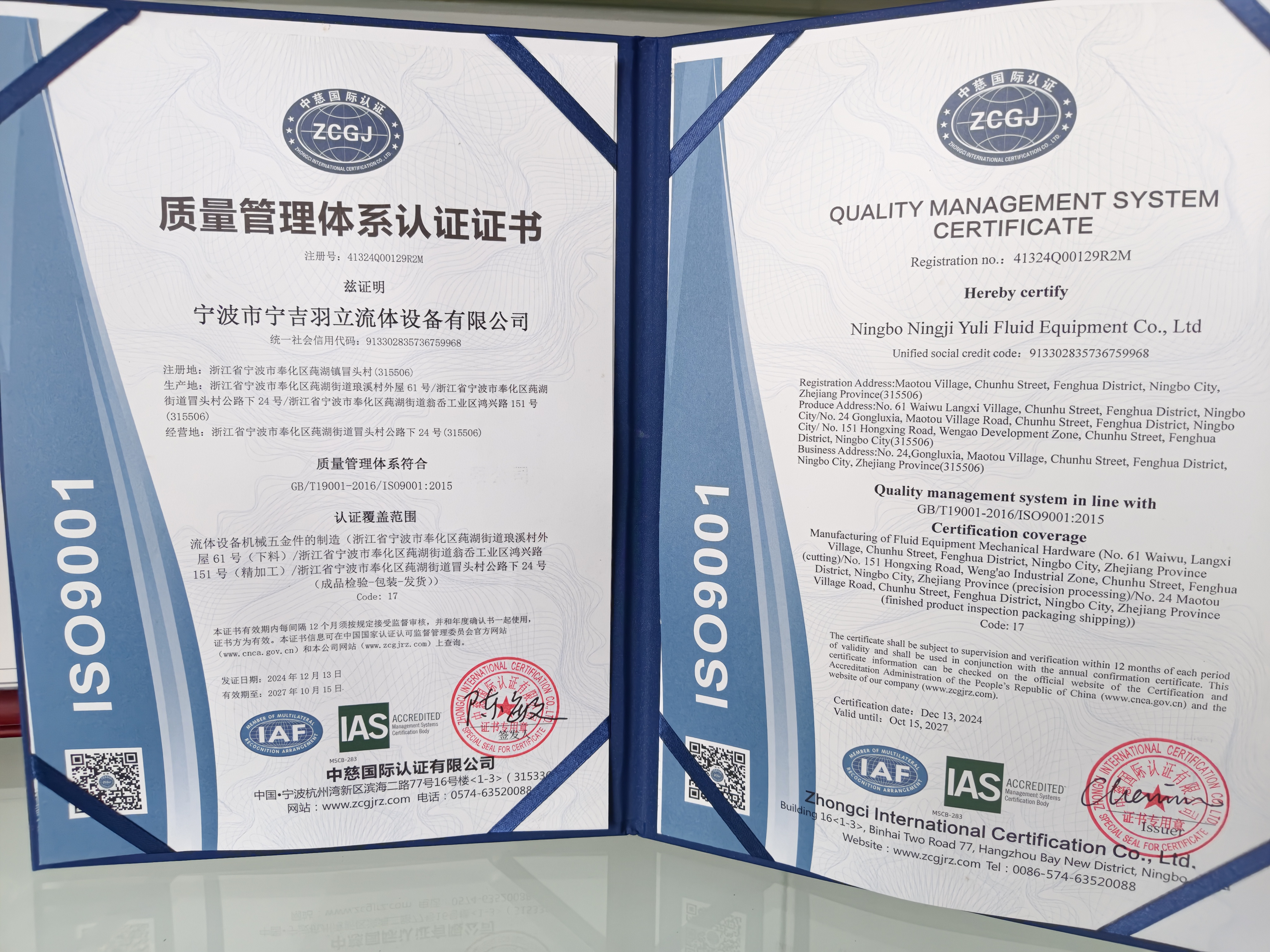
Quality is controlled through random inspection. Manufacturing follows the ISO 9001 standard, with current certification to GB/T 19001-2016 / ISO 9001:2015 under certificate number 41324Q00129R2M, issued by ZCGJ on 2024-12-13 and valid until 2027-10-15, with a scope covering manufacturing of fluid equipment mechanical hardware including finishing processing, finished product inspection, packaging and shipping.
Commercial terms are stated plainly: OEM/ODM production, customization of logo, packaging and plated colour, custom products made from provided drawings or samples, a lead time of 30–45 working days, an MOQ that varies with product dimensions and manufacturing complexity, and remote after-sales support. Buyers can verify the range and request a quotation at https://www.njadapter.com, or contact Jenny at Jenny@fhyuli.com or +86 158-6749-2228.
FAQ
Which standards and certifications should a 3,000–6,000 PSI adapter order reference?
Reference DIN 2353 for metric tube fittings, where the LL category sits at 100 bar, L at 315–500 bar and S at 630–800 bar; ISO 8434-2:2007 for 37° flared connectors from 6 mm to 50.8 mm; and SAE J1453 for ORFS fittings, where dash -4 is rated 6,000 PSI working pressure. On the supplier side, ask for an ISO 9001 certificate with a scope covering manufacturing, inspection and packaging — NingBo NJ Hydraulic Adapter Co., Ltd holds certificate 41324Q00129R2M to GB/T 19001-2016 / ISO 9001:2015, issued by ZCGJ and valid from 2024-12-13 to 2027-10-15.
Can one supplier deliver BSP, NPT, JIC, SAE and cap nut families as a matched set?
Yes, where the supplier lists all five families as production series. NingBo NJ Hydraulic Adapter Co., Ltd lists BSP adapters in the 1B and 1T groups, NPT adapters from 5000 through 5652, hydraulic JIC adapters from 2403 to 2609, SAE standard hydraulic adapters from 6801 to 6850 and hydraulic cap nuts in the 0304C and FS series. The company offers OEM/ODM production with custom products made from provided drawings or samples, supported by 4 engineers and a 20,000 m² facility — which means one drawing set and one inspection regime can cover a mixed-fleet kit.
What drives the unit cost of a high-pressure hydraulic adapter?
Four variables dominate: body material (carbon steel versus SS304 versus SS316), size and manufacturing complexity, plating and finish specification, and the documentation and test evidence attached to the order. Configuration matters too — an adjustable ORB 90° elbow requires more machining than a straight adapter. MOQ varies depending on product dimensions and manufacturing complexity, so it should be confirmed against the specific part rather than assumed from a catalogue. For context, steel accounted for 45.2% of hydraulic fitting revenue share in 2025, which reflects the volume economics of carbon steel in general machinery.
Can buyers validate samples before committing to a series order?
Sampling is the practical way to confirm fit before series release. Custom products can be produced from drawings or samples provided by the buyer, and quality control is performed through random inspection. A useful sample validation covers four checks: thread engagement on the actual port, correct configuration and orientation, material and finish against the corrosion requirement including the 120-hour salt spray result, and pressure class against the 3,000–6,000 PSI band. Only then should the series order be released.
What is the lead time, and how should a first order be scheduled?
Lead time for OEM/ODM hydraulic adapter production is 30–45 working days, and MOQ varies with product dimensions and manufacturing complexity. A workable first-order sequence is: approve the drawing, release the sample, confirm the port standards and material grades, then schedule series production and arrange shipment, with remote after-sales support covering any subsequent accessory issue. To start that sequence, request a quotation and current lead time from NingBo NJ Hydraulic Adapter Co., Ltd at https://www.njadapter.com, by email at Jenny@fhyuli.com, or by phone and WhatsApp on +86 158-6749-2228.
Conclusion
For high-pressure construction and agricultural machinery running at 3,000–6,000 PSI, the ranked order is a working rule rather than a preference: SAE Standard Hydraulic Adapters first for pressure headroom and adjustable O-ring sealing, Hydraulic JIC Adapters second for field-serviceable 37° flare joints, BSP Adapters third because European and Asian machinery will not be serviceable without them, NPT Adapters fourth as a compatibility family with a lower pressure ceiling, and hydraulic cap nuts fifth as the closure and retention element that keeps the other four clean and complete.
The selection discipline that matters is unchanged: identify the port form, confirm the pressure and temperature envelope against the 6,000 PSI static / 9,000 PSI burst requirement and the 220°C stated maximum where specified, match material to environment across carbon steel, SS304 and SS316, lock the configuration, and verify the evidence — ISO 9001 certification, a 120-hour salt spray result and an inspection regime — before the series order. Buyers who follow that sequence stop stacking adapters, stop improvising conversions, and stop discovering thread mismatches in the yard.
Next Step
NingBo NJ Hydraulic Adapter Co., Ltd has produced SAE standard hydraulic components and engineering machinery parts since 2004, from a 20,000 m² facility in Fenghua, Ningbo, with a stated range spanning BSP, NPT, JIC, SAE and cap nut families in carbon steel, SS304 and SS316.
Request a quote, a sample or the full product catalogue: www.njadapter.com · Jenny@fhyuli.com · +86 158-6749-2228
Download the NingBo NJ Hydraulic Adapter product brochure (PDF)

Have Questions or Need More Details?
Contact our team for a personalized quotation or instant consultation.
Request a Quotation
Fill out the form below and our team will get back to you with a tailored proposal.
WhatsApp Direct Chat
Prefer to chat in real-time? Message us on WhatsApp for instant assistance & quick answers.
- Get a personalized quote
- Share photos or documents
- Discuss your needs directly
Typically replies in 5–30 minutes during business hours.