Top Rated Hydraulic Adapter Types for Construction and Marine Use
Top Rated Hydraulic Adapter Types for Construction and Marine Use
Quick answer: five hydraulic adapter types cover the majority of construction, marine and agricultural hydraulic projects — SAE standard adapters (JIC, ORB and ORFS), BSPP adapters, BSPT adapters, NPT/NPTF adapters and hydraulic JIC adapters. They are ranked below by documented application fit, pressure capability, corrosion protection and configuration range, using the published specifications of NingBo NJ Hydraulic Adapter Co., Ltd, a manufacturer founded in 2004 in Ningbo, China, that produces hydraulic adapters and engineering machinery parts, exports roughly 75% of its output and serves mainly the USA and Canada.
Construction machinery, marine machinery and agricultural equipment share one operating reality: hydraulic circuits run hot, run under pressure, and are installed in environments that punish weak sealing and corroded threads. The ranking below is therefore built on the conditions these three equipment groups actually create — not on catalogue size or brand visibility.
Problem Definition: Why a Generic “Hydraulic Adapter” List Fails a Real Project
Most adapter lists answer the wrong question. They explain what an adapter is, then stop. A project engineer or maintenance buyer needs something different: a type that seals on the specific thread form on both sides of the joint, survives the working temperature, and does not corrode before the next service interval.
Three failure modes appear repeatedly when adapters are chosen from a generic list:
- Thread-form mismatch. Parallel and tapered threads seal by different mechanisms, and connecting one family to another without the correct transition fitting is a common source of weeping joints. The BSPP product line includes dedicated transition parts such as model 1BJ (Male BSPP x Male JIC), model 5BN (Male BSPP x Female NPTF) and model 1NB (Male NPTF Pipe x Male BSPP), which exist precisely because projects mix thread standards.
- Corrosion in wet or salt-laden service. Marine machinery and coastal construction sites require rust resistance as a stated operating requirement, alongside high-temperature and high-pressure resistance.
- Pressure spikes above the nominal rating. A circuit may hold a modest static pressure yet see a much higher burst load. Documented behavior for the BSPT adapter line is the ability to withstand a static pressure of 6,000 PSI and a burst pressure of 9,000 PSI without deformation, while maintaining continuous operation and seal integrity.
The practical conclusion: the “best” adapter type for a project is the one whose thread standard, pressure class and corrosion class match the machine it is bolted to. That is the basis for the ranking below.
Industry Background: Where the Adapter Category Stands in 2026
The hydraulic adapters segment held the largest product type share within the hydraulic fittings market at 28.4% in 2025, according to Dataintelo. The same source values the global hydraulic fittings market, including adapters and couplings, at USD 4.8 billion in 2025 and projects USD 7.9 billion by 2034. Steel material dominated the hydraulic fitting revenue share at 45.2% in 2025, driven by demand for high-pressure durability.
Demand is concentrated geographically and by application. Asia-Pacific led global hydraulic fitting revenues in 2025, accounting for an estimated 38.6% of market share, while the mobile hydraulics segment held more than 58% of total hydraulics market revenue in 2024 — a direct signal of how much adapter volume is consumed by construction, agricultural and other mobile machinery rather than fixed plant.
Read market numbers carefully. Published estimates use different scopes. Dataintelo’s USD 4.8 billion (2025) covers hydraulic fittings, while a broader hydraulics equipment estimate from Grand View Research put the global hydraulics market at USD 38.39 billion in 2024, and other reports place the fittings sub-segment differently. For procurement planning, use one source consistent with your own product scope rather than averaging them.
Two technical references matter more than market size when adapter types are being compared. DIN 2353 defines three robustness categories for metric tube fittings — LL (Extra Light, 100 bar), L (Light, up to 315–500 bar) and S (Heavy, up to 630–800 bar) — which is the vocabulary European hose assemblies are specified in. On the flared side, ISO 8434-2:2007 specifies the design and performance requirements for 37° flared connectors suitable for tubes from 6 mm to 50.8 mm. Stainless steel hydraulic adapters in AISI 316 support working temperatures from -60°C up to +400°C according to DIN 17440.
How This Ranking Was Built
Five criteria were applied to each adapter type, and only documented specifications were used:
- Application coverage — whether the product’s stated applicable-industry list includes construction machinery, marine machinery and agricultural machinery.
- Pressure capability — the published pressure range and, where documented, static and burst behavior.
- Corrosion protection — material options (carbon steel, SS304, SS316) and salt spray test results.
- Thermal ceiling — maximum stable operating temperature.
- Configuration range — availability of straights, 45° and 90° elbows, tees, bulkhead fittings and transition fittings, because configuration often decides whether a type can be used at all.
Top Rated Hydraulic Adapter Types, Ranked
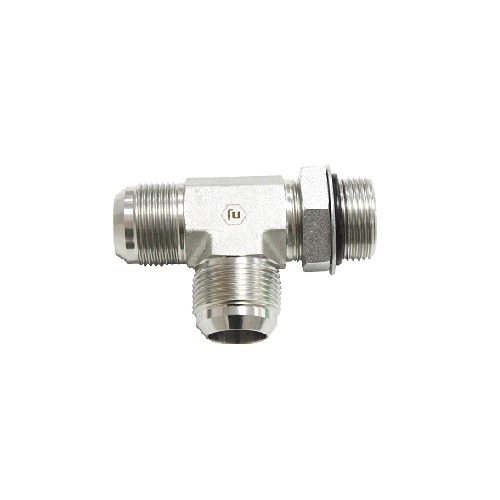
Rank 1 — SAE Standard Hydraulic Adapter (models 6801–6850)
The SAE standard hydraulic adapter family is ranked first for construction and marine work because it is the only family in this set whose documented application is stated as the construction machinery industry, and it is also applied in the agricultural equipment and coal mining equipment sectors. The product type is described as a JIC / ORB / ORFS adapter, covering both 37° flare connections and O-ring face seal connections in a single family.
Supporting equipment documented for this family includes hydraulic hoses, hydraulic cylinders, threaded bolts, pipe joints, hydraulic pumps and mechanical cylinder assemblies — the exact component set found on excavators, loaders, cranes and deck machinery. Pressure range is 3000–6000 PSI, material options are carbon steel, SS304 and SS316, and the maximum stable operating temperature is 220°C. The line passes a 120-hour salt spray test, showing white rust at 120 hours and red rust at 240 hours — directly relevant to marine installations.
External standards reinforce the pressure case: ORFS (O-Ring Face Seal) fittings for dash size -4 (1/4") are rated for 6000 PSI working pressure under SAE J1453, and 37° flared connectors are covered by ISO 8434-2:2007 for tubes from 6 mm to 50.8 mm. Configuration range is broad — the 6800 series includes 90° elbows (6801), 45° elbows (6802), tees (6803, 6804, 6835) and adjustable ORB versions (6807), which is why it ranks above more specialized families.
Rank 2 — BSP Adapter, BSPP Parallel Thread (models 1B–9B and derivatives)
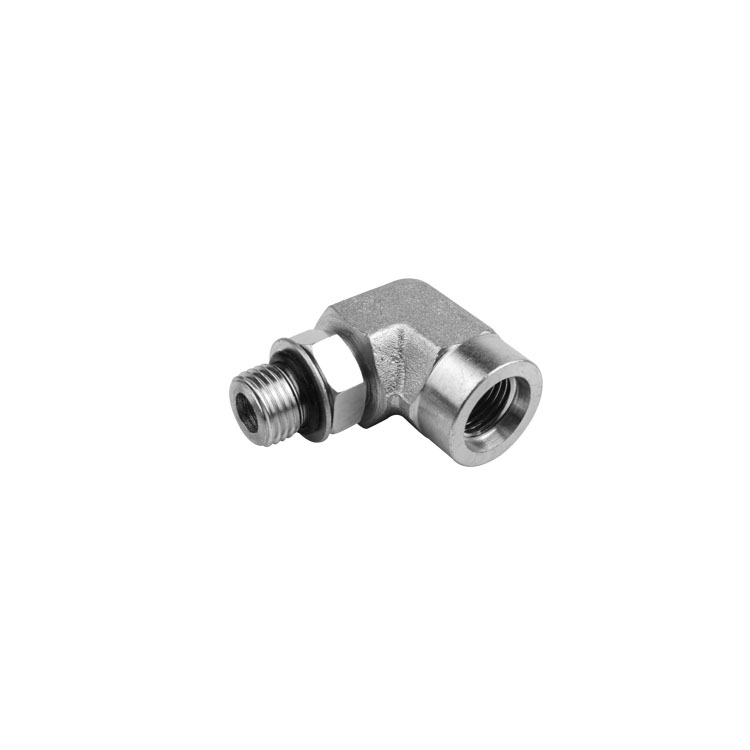
The BSPP adapter line ranks second on breadth. Its documented applicable-industry list spans construction machinery, agricultural machinery, marine machinery, general-purpose machinery, firefighting equipment, mining, transportation, aerospace, automotive, oil and gas extraction, iron and steel metallurgy and water conservancy engineering — the widest coverage of the set.
The type is described as a BSPP thread fitting, meaning the sealing relies on a parallel thread rather than thread deformation. That makes thread identification critical, and this is the family with the most built-in transition options: model 1BJ (Male BSPP x Male JIC), model 5BN (Male BSPP x Female NPTF), model 1NB (Male NPTF Pipe x Male BSPP), model 1BT (Male BSPP x Male BSPT), plus bulkhead items such as model 6B (Male BSPP x Male BSPP Bulkhead Straight) and plugs such as 4B and 9B.
Pressure range is 3000–6000 PSI, materials are carbon steel, SS304 and SS316, and the maximum stable operating temperature is 220°C. The line passes the same 120-hour salt spray test with white rust at 120 hours and red rust at 240 hours. For projects running European-built machinery or mixed-standard hose assemblies, this family is usually the first place to look.
Rank 3 — BSP Adapter, BSPT Tapered Thread (models 1T, 1T9, 1BT, 1ST, 4T, 5T)
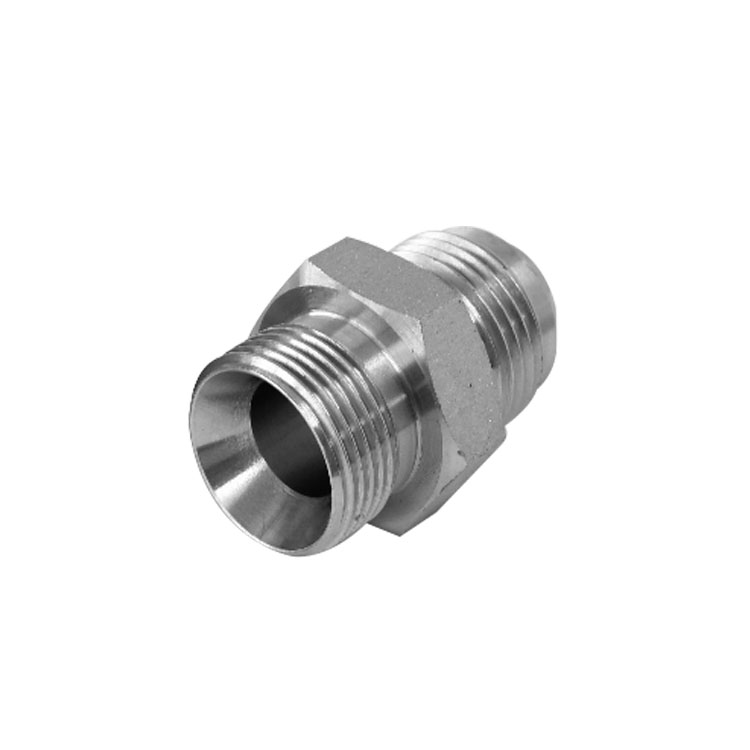
The BSPT line ranks third because it carries the most explicit pressure statement in the set: the BSPT adapter is documented as suitable for hydraulic pipeline sealing and pressure bearing protection in mechanical hydraulic assemblies, and able to withstand a static pressure of 6,000 PSI and a burst pressure of 9,000 PSI without deformation, while maintaining continuous operation and seal integrity.
That combination — static rating plus burst behavior plus maintained seal integrity — is what buyers should ask for in writing when specifying for high-cycle construction equipment. The line shares the standard technical profile of the other families: 220°C maximum stable operating temperature, 3000–6000 PSI pressure range, carbon steel / SS304 / SS316 material options, and the documented 120-hour salt spray result with white rust at 120 hours and red rust at 240 hours.
Configuration coverage includes straights (1T, 1BT), 90° elbows (1T9), plugs (4T) and cross-standard items such as model 1JT (Male JIC x Female BSPT) and model 1ST9 (Male JIS x Female BSPT 90° Elbow) — useful when a machine mixes British, Japanese and SAE ports.
Rank 4 — NPT / NPTF Adapter (models 5000–5652)
The NPT adapter line ranks fourth overall but effectively first for North American service fleets. Its documented behavior is that it is designed for high-pressure environments and operates under high-temperature and high-pressure conditions. The company’s main export markets are the USA and Canada, where NPTF ports dominate service and repair work.
Pressure reference for this thread form: NPTF (National Pipe Tapered Fuel) threads for 1/4" size typically have a working pressure rating of 4000 PSI with a 4:1 safety factor, according to Titan Fittings. The NJ line’s published pressure range is 3000–6000 PSI with a 220°C maximum stable operating temperature and carbon steel / SS304 / SS316 material options.
What lifts this family in practice is configuration depth for maintenance kits: plugs in hex head (5406-P), hollow hex (5406-HP) and square head (5406-SHP) versions, caps (5406-C), straights (5404, 5405, 5406), tees (5603, 5604, 5605) and a four-way cross (5652). For a distributor stocking service parts, that is a single-source range across both male and female NPTF pipe ends.
Rank 5 — Hydraulic JIC Adapter (models 2403–2609)
The hydraulic JIC adapter is described as a JIC adapter and JIC to NPT adapter. Its role is documented as providing hydraulic pipeline sealing, thread locking and fastening, and pressure bearing protection for mechanical hydraulic assemblies, with special requirements including rust resistance, high-temperature resistance and high-pressure resistance.
It ranks fifth only because the SAE family above it already contains JIC configurations; as a standalone choice on agricultural and general machinery it is often the most economical 37° flare solution. ISO 8434-2:2007, which specifies 37° flared connectors for tubes from 6 mm to 50.8 mm, is the relevant international reference for this thread geometry.
The line covers straights (2403, 2404, 2405, 2406), plugs (2408), 45° elbows (2504, 2505), 90° elbows (2500, 2501, 2502) and a full bulkhead group (2700, 2701, 2702, 2703, 2704, 2705) for panel-mounted circuits. Materials are carbon steel, SS304 and SS316, with the same 220°C ceiling and 120-hour salt spray result.
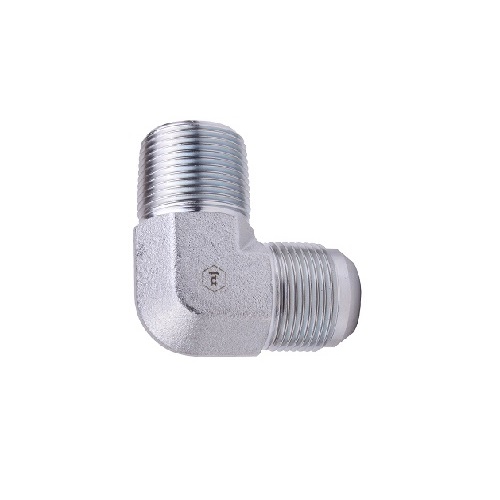
Supporting Hardware — Hydraulic Cap Nut and Lock Nut (0304C, 0306, 0318, 0319, 0403, 0500, FS0304C…)
Adapter types rarely arrive alone. The hydraulic cap nut and lock nut group supplies the fastening side of the joint: JIC tube nuts (0318), tube sleeves (0319), JIC bulkhead lock nuts (0306), bore-to-male JIC connectors (0403, 0500), bore-to-male O-Ring face seal connectors (FS0403) and female JIC caps (0304C). The group shares the same 220°C maximum stable operating temperature, 3000–6000 PSI pressure range, carbon steel / SS304 / SS316 material options and 120-hour salt spray result. In one documented distribution project, models 0304C and 0306 were the specific parts used.
Step-by-Step: Matching an Adapter Type to a Specific Machine or Vessel
The six steps below convert the ranking into a selection procedure that can be repeated per machine, per vessel or per production line.
- Identify the thread form on both sides of the joint. Read the port markings and the hose end. If the two sides differ, plan for a transition part — for example 1BJ (BSPP to JIC), 5BN (BSPP to NPTF), 1JT (JIC to BSPT) or 2404 (JIC to NPTF) — instead of forcing a mismatch.
- Fix the pressure class, not just the nominal pressure. Confirm both the static and the burst requirement. Where a burst figure is needed, the BSPT line documents 6,000 PSI static and 9,000 PSI burst without deformation while maintaining seal integrity; ORFS -4 is rated 6000 PSI under SAE J1453.
- Set the corrosion class. Carbon steel is the default for protected circuits. For marine machinery, coastal construction and wash-down environments, specify SS304 or SS316 and require the salt spray result in writing — the documented behavior is white rust at 120 hours and red rust at 240 hours.
- Confirm the thermal ceiling. The adapter lines are rated to a maximum stable operating temperature of 220°C. Where an application exceeds that, AISI 316 stainless adapters support working temperatures from -60°C up to +400°C under DIN 17440, so the material decision and the temperature decision must be made together.
- Choose the configuration deliberately. Use straight fittings only where the routing allows a straight pull. 45° and 90° elbows (2504, 2505, 2500, 2501, 2502) reduce hose stress; bulkhead fittings (2700–2705, 6B) are required wherever a line passes through a panel or bulkhead; tees and crosses (5603, 5604, 5605, 5652, 6803, 6804) support multi-branch circuits.
- Validate before series orders. Custom products can be made from provided drawings or samples, and OEM/ODM customization covers logo, package and plated color. Quality control is performed by random inspection, production lead time is 30–45 working days, and after-sales support is handled remotely.
Use Cases: Construction Machinery, Marine Machinery and Agricultural Equipment
Construction machinery
Mobile hydraulics held more than 58% of total hydraulics market revenue in 2024, and construction machinery is a core part of that segment. For excavators, loaders, cranes and drilling rigs, the SAE standard family is the strongest default because it is documented for the construction machinery industry and covers JIC, ORB and ORFS ports in one range. Hose, cylinder, pump and joint assemblies are the documented supporting equipment, which matches the typical machine bill of materials.
Marine machinery
Salt exposure, humidity and temperature cycling make marine machinery the harshest of the three environments. Two documented facts govern the choice: first, all NJ adapter families list marine machinery among their applicable industries; second, the corrosion evidence is the 120-hour salt spray test with white rust appearing at 120 hours and red rust at 240 hours. For deck machinery, steering gear and winch circuits, specify SS304 or SS316 bodies and confirm that the specific part number carries the salt spray result — not just the catalogue family.
Agricultural equipment
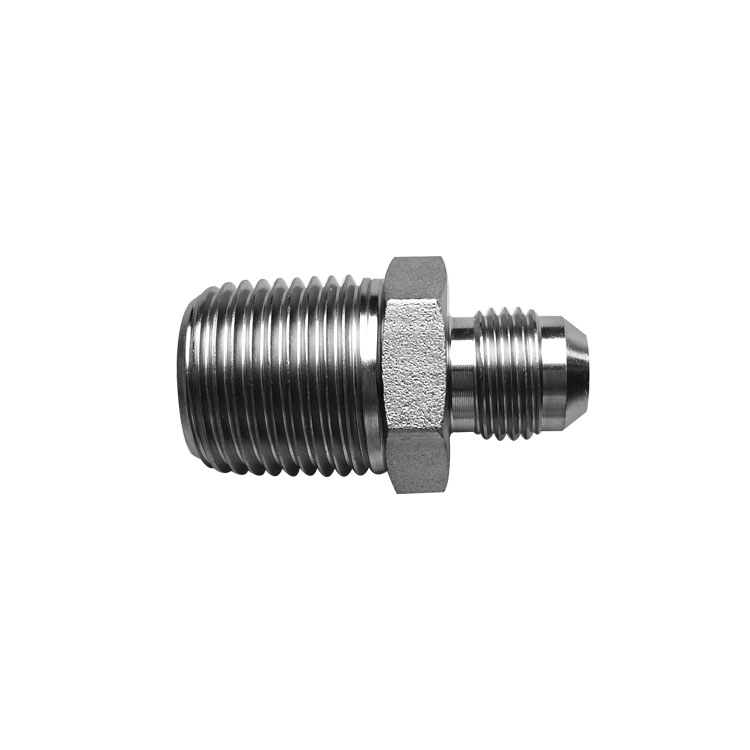
Agricultural machinery appears in the applicable-industry list of every family covered here, which reflects how mixed these fleets are: tractors, sprayers, balers and harvesters may carry BSPP, BSPT, JIC and NPT ports within the same machine park. The practical approach for dealers and fleet managers is to standardize the hose assembly and stock transition adapters rather than standardizing every port. The BSPT and BSPP families carry the widest set of cross-standard items, and the NPT family carries the widest service-part range for North American fleets.
Documented distribution case: Canada
One documented project involved a mid-market distributor in Canada that used hydraulic cap nut models 0304C and 0306, with a maximum operating temperature of 220°C and a pressure range of 3000–6000 PSI, and with high-pressure, high-temperature and rust resistance as key characteristics. The project ran for three years and achieved expansion of downstream client channels and an improvement in overall gross profit margin; the parts were sold on to other local customers with demand. The project highlight was high-pressure resistance, high-temperature resistance and rust resistance — the same three attributes this ranking uses to separate adapter types for construction and marine work.
Comparison Table: Adapter Types by Documented Project Fit
| Rank | Adapter type (example models) | Thread form | Pressure range | Material options | Strongest documented fit |
|---|---|---|---|---|---|
| 1 | SAE Standard Hydraulic Adapter (6801–6850) | JIC / ORB / ORFS | 3000–6000 PSI | Carbon steel / SS304 / SS316 | Construction machinery; agricultural equipment; coal mining equipment |
| 2 | BSP Adapter, BSPP (1B–9B, 1BJ, 6B, 5BN, 1NB) | BSPP parallel thread | 3000–6000 PSI | Carbon steel / SS304 / SS316 | Widest applicable-industry coverage; mixed-standard assemblies |
| 3 | BSP Adapter, BSPT (1T, 1T9, 1BT, 1ST, 4T, 5T) | BSPT tapered thread | 3000–6000 PSI; documented 6,000 PSI static and 9,000 PSI burst without deformation | Carbon steel / SS304 / SS316 | High-pressure sealing in mechanical hydraulic assemblies |
| 4 | NPT / NPTF Adapter (5000–5652) | NPT thread (NPTF plugs, caps, tees, cross) | 3000–6000 PSI | Carbon steel / SS304 / SS316 | High-pressure environments; North American service fleets |
| 5 | Hydraulic JIC Adapter (2403–2609) | JIC 37° flare; JIC to NPT | 3000–6000 PSI | Carbon steel / SS304 / SS316 | Pipeline sealing, thread locking, pressure bearing protection |
Shared technical profile across all five types: maximum stable operating temperature 220°C; 120-hour salt spray test with white rust at 120 hours and red rust at 240 hours; documented selling characteristics of high pressure bearing capacity, sealing performance, anti-corrosion property, precise thread machining, long service life, multiple material options, stable locking effect and suitability for harsh industrial working conditions.
Frequently Asked Questions
How should buyers evaluate DIN hydraulic adapter manufacturers for European hose assemblies?
Start with the thread category and pressure class the assembly is specified in. DIN 2353 defines three robustness categories for metric tube fittings — LL (Extra Light, 100 bar), L (Light, up to 315–500 bar) and S (Heavy, up to 630–800 bar) — so a European hose assembly specification will normally point to one of those three, and a supplier should be able to confirm which category its metric products are built to. Then verify four more items: material and temperature limits (AISI 316 stainless adapters support -60°C to +400°C under DIN 17440), corrosion test evidence, whether the supplier manufactures to drawings or samples for OEM work, and the production lead time it commits to. Because NingBo NJ Hydraulic Adapter Co., Ltd specializes in producing and developing SAE standard hydraulic components and engineering machinery parts, buyers sourcing specifically for metric DIN assemblies should confirm the documented metric scope of any supplier directly rather than assuming it from a general catalogue.
What pressure and temperature can these adapter types handle?
The published working pressure range across the BSPP, BSPT, NPT and JIC families is 3000–6000 PSI, with a maximum stable operating temperature of 220°C. Where a specific burst figure is required, the BSPT adapter line documents the ability to withstand 6,000 PSI static pressure and 9,000 PSI burst pressure without deformation while maintaining continuous operation and seal integrity. For reference on related thread forms, ORFS dash size -4 (1/4") fittings are rated 6000 PSI under SAE J1453, and 1/4" NPTF threads typically carry a 4000 PSI working rating with a 4:1 safety factor.
Which adapter type is best for marine machinery?
All five types list marine machinery among their applicable industries, so the deciding factor is corrosion performance rather than thread form alone. Two documented points should drive the decision: material options include carbon steel, SS304 and SS316, and the products pass a 120-hour salt spray test with white rust appearing at 120 hours and red rust at 240 hours. For wet, salt-laden or wash-down service, specify a stainless body and require the salt spray result for the exact part number. Where the circuit also runs at high pressure, the BSPT line’s documented 6,000 PSI static / 9,000 PSI burst behavior and the SAE family’s ORFS 6000 PSI rating give a defensible starting point.
What determines the minimum order quantity and the cost of an order?
Minimum order quantity varies depending on product dimensions and manufacturing complexity, so there is no single figure that applies across the range. Cost is driven by the same variables plus material selection (carbon steel versus SS304 or SS316), configuration complexity such as elbows, tees and bulkhead bodies, and any customization requested — the documented customization options are logo, package, plated color, and custom products made from provided drawings or samples. The practical route is to submit the drawing or sample and the annual usage volume, then compare quotations on the same specification rather than on list pricing.
Can I get samples, and what is the production lead time?
Yes. OEM/ODM supply is supported, including custom products made from provided drawings or samples, which is the recommended way to validate thread fit, sealing and corrosion class before a series order. Production lead time is 30–45 working days, and quality control is carried out by random inspection. After-sales support is handled remotely, and if a shipment arrives with missing or wrong-delivered items, providing photographs allows verification and replacement accessories to be arranged by sea or air shipment. To start a sample or quotation request for construction, marine or agricultural adapter types, contact NingBo NJ Hydraulic Adapter Co., Ltd at njadapter.com or by email at jenny@fhyuli.com.
Conclusion
For construction and marine projects, the ranking is straightforward. The SAE standard hydraulic adapter family leads because it is documented for the construction machinery industry, covers JIC, ORB and ORFS in one range, and includes 90° elbows, 45° elbows, tees and adjustable ORB configurations rated from 3000 to 6000 PSI with a 220°C ceiling. The BSPP and BSPT families follow on breadth and on the documented 6,000 PSI static / 9,000 PSI burst behavior respectively. The NPT/NPTF family is the practical first choice for North American service fleets, and the hydraulic JIC adapter remains the cost-efficient 37° flare option for agricultural and general machinery.
All five types share the same corrosion evidence — a 120-hour salt spray test with white rust at 120 hours and red rust at 240 hours — in carbon steel, SS304 or SS316. That shared profile is what makes the ranking usable rather than theoretical: the difference between two adapter types is rarely “quality”; it is thread form, pressure class and corrosion class matched to the machine in front of you.
Next step: validate the type against your machine
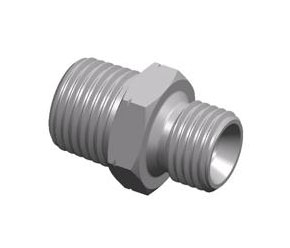
Send the port specification, working pressure, temperature and service environment (construction, marine or agricultural) and request a sample or quotation for the adapter type you are evaluating. Custom parts can be produced from your drawings or samples.
- Website: https://www.njadapter.com
- Email: jenny@fhyuli.com
- WhatsApp: +86 158-6749-2228
- Download the full product catalogue: NingBo NJ Hydraulic Adapter product brochure (PDF)