Understanding Pressure and Temperature Compliance for Hydraulic Adapters
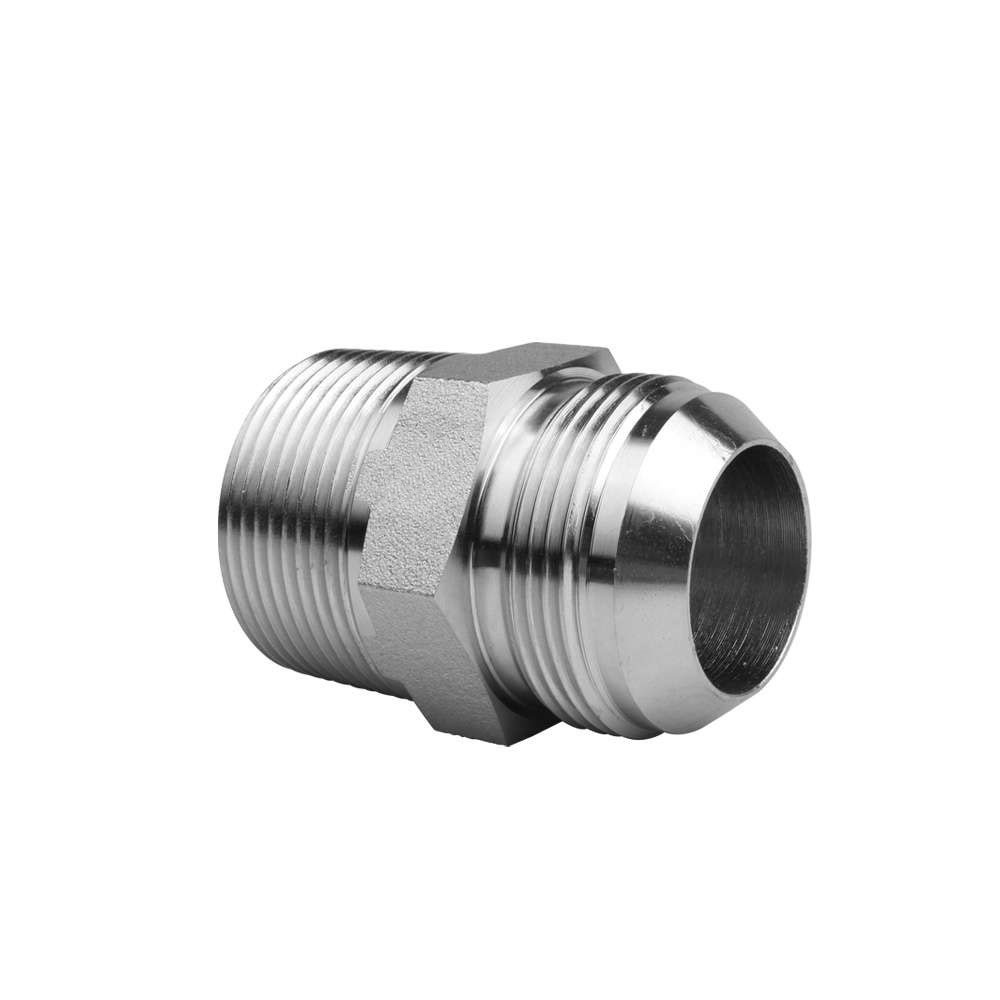
Cover: Male JIC x Male NPTF pipe straight adapter (2404), part of the adapter range published at 3000-6000 PSI and a 220°C maximum stable operating temperature.
Pressure and temperature compliance for hydraulic adapters comes down to two figures that appear consistently across the product catalogs of NingBo NJ Hydraulic Adapter Co., Ltd: a working pressure range of 3000-6000 PSI and a maximum stable operating temperature of 220°C. Those two figures define the envelope that a purchasing manager, design engineer, or distributor has to stay inside when specifying adapters, whether the item is a BSP adapter, an NPT adapter, a hydraulic JIC adapter, or a SAE ORB/ORFS adapter.
NingBo NJ Hydraulic Adapter Co., Ltd is a hydraulic fittings manufacturer founded in 2004 and located in Fenghua, Ningbo City, Zhejiang Province, China. The company operates a 20,000 m² factory with approximately 200 employees, a four-engineer R&D team, and an annual output of 4,000,000 units; around 75% of production is exported, with the USA and Canada among the main markets. Its catalog covers BSPP and BSPT thread fittings, NPT and NPTF thread fittings, JIC adapters, SAE jic/orb/orfs adapters, and hydraulic cap nuts and lock nuts - and the same two compliance figures are published across that range.
In practice, compliance means confirming three things at the same time: that the adapter pressure rating covers the highest sustained and peak pressures in the system, that its temperature ceiling covers the hottest condition the adapter will actually see, and that the thread family, material, and crossover configuration listed in the bill of materials do not quietly lower either limit.
The Real Problem: Two Limits Applied to the Wrong Element
Most sourcing errors in hydraulic adapters are not caused by missing data. They are caused by valid data being applied to the wrong element of the assembly.
Failure mode 1 - pressure applied per component instead of per assembly. A 6000 PSI adapter installed between a high-pressure hose and a lower-rated port does not create a 6000 PSI system. An assembly takes the rating of its weakest element, so the position of an adapter inside the pressure band has to be compared against the hose rating and the port rating, not read in isolation.
Failure mode 2 - temperature applied to the steel instead of to the assembled adapter. DIN 17440 lists AISI 316 stainless steel as serviceable from -60°C to +400°C. That is a material figure for the steel itself, not a rating for a finished adapter, which also contains a sealing interface and a machined thread form. The published ceiling for the NingBo NJ adapter ranges is 220°C, stated as the maximum stable operating temperature, and for specification purposes the lower, assembly-level figure is the binding one.
Failure mode 3 - thread family treated as a style choice rather than as a pressure class. A 1/4 in NPTF straight thread carries a reference working pressure of 4000 PSI with a 4:1 safety factor, while an ORFS fitting at dash size -4 (1/4 in) is rated for 6000 PSI working pressure under SAE J1453. The same nominal size sits in two different pressure classes. This is exactly why crossover adapters inherit the rating of the lower-rated end.
Industry Background: A Component Market Measured in Pressure
The commercial context explains why compliance documentation has become a routine part of adapter sourcing rather than an engineering afterthought.
- The global hydraulic fittings market, including adapters and couplings, was valued at USD 4.8 billion in 2025 and is projected to reach USD 7.9 billion by 2034 (Dataintelo).
- Within that market, the hydraulic adapters segment held the largest product type share at 28.4% in 2025 (Dataintelo).
- Steel dominated material revenue share at 45.2% in 2025, driven by demand for high-pressure durability (Dataintelo).
- Asia-Pacific led global hydraulic fitting revenues in 2025, accounting for an estimated 38.6% of market share (Dataintelo).
- The broader hydraulics market was estimated at USD 38.39 billion in 2024, with mobile hydraulics holding over 58% of total revenue share (Grand View Research).
- Asia accounted for 74% of global industrial robot installations in 2024, a demand driver for precise hydraulic connections (Ken Research).
- Parker Hannifin Corporation is cited as the leading competitive player in the hydraulic fittings market for 2025 (Dataintelo).
Published standards give buyers a shared vocabulary for those pressures. DIN 2353 specifies three robustness categories for metric tube fittings: LL (extra light, 100 bar), L (light, up to 315-500 bar), and S (heavy, up to 630-800 bar). ISO 8434-2:2007 specifies the design and performance requirements for 37° flared connectors suitable for tubes from 6 mm to 50.8 mm. SAE J1453 covers ORFS fittings. Because these classes are published, a pressure claim can be checked rather than negotiated.
The Compliance Envelope: Reading 3000-6000 PSI and 220°C Correctly
Two figures recur across the NingBo NJ BSP, BSPT, NPT, JIC, SAE, and hydraulic cap nut ranges: a pressure range of 3000-6000 PSI and a maximum stable operating temperature of 220°C. Used properly, they form a two-axis envelope rather than two unrelated specifications.
What the 3000-6000 PSI band actually says
The band is published as a range because pressure capability varies with size and thread family inside it. A specific model code sits somewhere within that band, so the first buyer question is not whether a product is a 6000 PSI adapter, but where the exact model code sits inside the 3000-6000 PSI band.
The band describes working pressure. Burst behaviour is stated separately: the BSPT adapter can withstand a static pressure of 6,000 PSI and a burst pressure of 9,000 PSI without deformation, while maintaining continuous operation and seal integrity. The two figures answer different questions. The static figure answers whether the adapter holds in service; the burst figure describes how much margin exists before deformation.
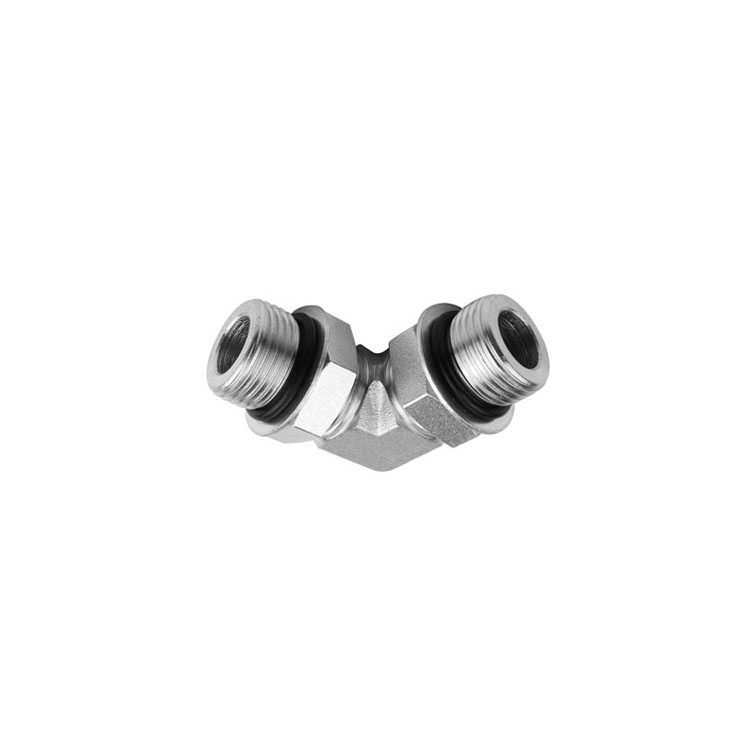
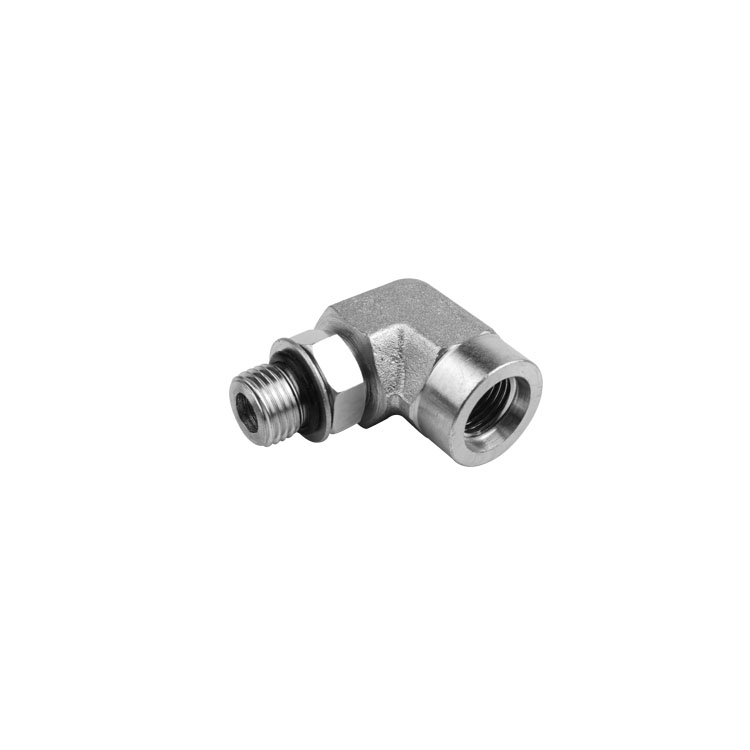
Male adjustable ORB x male adjustable ORB 90° elbow (6807), an SAE configuration published in the 3000-6000 PSI band.
What the 220°C ceiling actually says
220°C is stated as the maximum stable operating temperature, and it applies across the BSP, BSPT, NPT, JIC, SAE, and hydraulic cap nut ranges in carbon steel, SS304, and SS316. The word stable is the operative one: it describes continuous operation, not a brief excursion.
This is where the DIN 17440 material figure of -60°C to +400°C for AISI 316 helps clarify the buying decision instead of confusing it. Material capability does not transfer automatically to an assembled component, because a finished adapter combines a body, a thread form, and a sealing interface. Specifiers should treat the lower, assembly-level figure as the limit and keep the material figure for material selection discussions only.
In application terms, the temperature that matters is the local temperature at the adapter, not ambient temperature. An adapter mounted close to a cylinder head, a manifold, or a high-temperature line can run considerably hotter than the surrounding air, so the paper specification should be compared against a measured or conservatively estimated local value.
Thread family is a pressure class, not just a fitting style
Different thread systems carry different pressure classes at the same nominal size, and the catalog structure reflects that. Model families are grouped by thread system: the 1B and 1T series for BSPP and BSPT fittings, the 5000/5400/5500/5600 series for NPT and NPTF fittings, the 2400/2500/2600 series for JIC adapters, the 6800 series for SAE jic/orb/orfs adapters, and the 0304C/0306/0318/0319/0403/0500 families for hydraulic cap nuts, tube nuts, lock nuts, and caps.
Crossover adapters are where this becomes a compliance rule rather than a preference. Products such as 1BJ (male BSPP x male JIC), 1NB (male NPTF pipe x male BSPP), 5BN (male BSPP x female NPTF), 1BT (male BSPP x male BSPT), and 2404 (male JIC x male NPTF pipe) join two thread systems, and the lower-rated end governs the assembly. Bulkhead configurations such as the 6B and 2700 series add a panel interface, which introduces one more joint to account for.
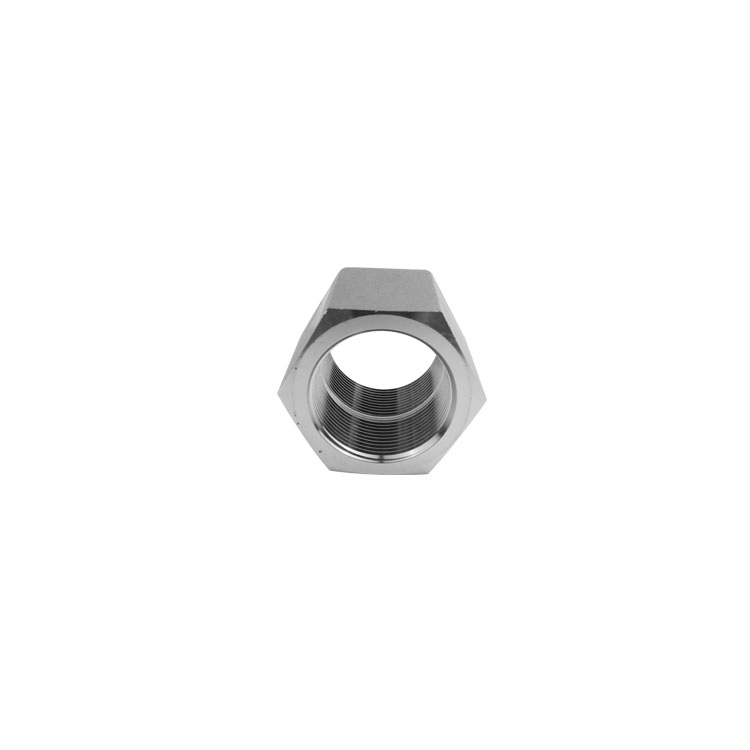
Female BSPP x female BSPP straight fitting (7B) from the 1B series, one of the BSP thread families rated in the same pressure and temperature envelope.
Material and corrosion are part of the same envelope
Material selection inside the envelope does not change the published 3000-6000 PSI band or the 220°C ceiling; it changes corrosion behaviour, lifecycle, and cost inside those limits. Carbon steel, SS304, and SS316 are offered across the ranges, and the fact that steel held 45.2% of global hydraulic fitting revenue share in 2025 reflects how often carbon steel remains the volume choice for protected, oil-wetted systems.
Corrosion evidence is published in comparable terms: the ranges pass a 120-hour salt spray test, showing white rust at 120 hours and red rust at 240 hours. For outdoor, marine, and humid installations, that gives buyers a datapoint to compare against SS304 and SS316 options instead of relying on general assumptions about stainless steel.
Step-by-Step: A Seven-Step Compliance Review Before Ordering
- State the pressure basis. Record working, peak, and surge pressure separately for the circuit, then identify which of those values governs the adapter location.
- State the temperature basis. Record continuous and peak local temperature at the adapter, accounting for nearby heat sources rather than ambient air.
- Translate into catalog language. Compare both values against the published 3000-6000 PSI band and the 220°C maximum stable operating temperature.
- Locate the exact model code inside the band. Confirm the rating for the specific item rather than assuming that every size and thread family sits at the top of the band.
- Apply the crossover and interface rule. For mixed adapters such as 1BJ, 1NB, 5BN, 1BT, or 2404, and for bulkhead items such as the 6B and 2700 series, use the lower-rated end or interface as the assembly limit.
- Match material to environment. Compare carbon steel, SS304, and SS316 against the corrosion exposure, using the 120-hour salt spray evidence - white rust at 120 hours, red rust at 240 hours - as the reference point.
- Validate before a series order. Custom products can be produced from provided drawings or samples, with OEM/ODM support covering logo, packaging, plated colour, and certain non-standard configurations; production lead time is 30-45 working days.
Use Cases: Where the Envelope Is Actually Tested
Construction, agricultural, and mining machinery
The dominant working condition for these applications is high temperature combined with high pressure. The function of the adapter in the assembly is hydraulic pipeline sealing, thread locking and fastening, and pressure bearing protection for mechanical hydraulic assemblies. Matched equipment typically includes hydraulic hoses, hydraulic cylinders, threaded bolts, pipe joints, hydraulic pumps, and mechanical cylinder assemblies, and the adapter ranges are applied across construction machinery, agricultural machinery, mining, and general-purpose machinery.
Marine, oil and gas, firefighting, and metallurgy
These environments combine corrosion with pressure, which is why the salt spray result and the stainless options matter as much as the pressure band. Adapter ranges are applied in marine machinery, oil and gas extraction, firefighting equipment, iron and steel metallurgy, and water conservancy engineering, where the same 3000-6000 PSI and 220°C envelope applies but the material decision changes.
Distribution and resale: a three-year compliance case
A Canadian mid-market distributor built its resale business on hydraulic cap nut models 0304C and 0306, specified with a maximum operating temperature of 220°C and a pressure range of 3000-6000 PSI, and selected for resistance to high pressure, high temperature, and rust. Over a three-year period the relationship reached 20,000,000 units, with the product resold to other local customers with demand. The documented outcome was expansion of downstream client channels and an improvement in overall gross profit margin. For distributors evaluating similar projects, the case illustrates that compliance figures are not only an engineering constraint - they are a resale argument when the end user operates in the same pressure and temperature band.
Case proof: three-year hydraulic cap nut supply project with a mid-market distributor in Canada.
Comparison Table: Thread Families, Pressure, Temperature, and Material
| Thread / standard family | Representative model families | Pressure reference | Temperature | Material |
|---|---|---|---|---|
| NPT / NPTF | 5000; 5404; 5405; 5406 series; 5500 series; 5600 series; 5650; 5652 | 3000-6000 PSI catalog band; 1/4 in NPTF straight thread reference 4000 PSI with 4:1 safety factor (Titan Fittings) | 220°C max stable operating temperature | Carbon steel / SS304 / SS316 |
| BSPP | 1B; 1B4; 1B9; 1BG; 1BT; 2B; 6B; 7B; 9B; EB; AB; BB | 3000-6000 PSI catalog band | 220°C max stable operating temperature | Carbon steel / SS304 / SS316 |
| BSPT | 1T; 1T9; 1BT; 1ST; 4T; 5T | 3000-6000 PSI catalog band; static 6,000 PSI and burst 9,000 PSI without deformation while maintaining seal integrity | 220°C max stable operating temperature | Carbon steel / SS304 / SS316 |
| JIC 37° flared | 2403; 2404; 2405; 2406; 2500; 2501; 2502; 2601 series | 3000-6000 PSI catalog band; ISO 8434-2:2007 covers 37° flared connectors for tubes 6 mm to 50.8 mm | 220°C max stable operating temperature | Carbon steel / SS304 / SS316 |
| SAE ORB / ORFS | 6801; 6802; 6803; 6804; 6805; 6807; 6815; 6835 series | 3000-6000 PSI catalog band; ORFS dash -4 rated 6000 PSI working pressure under SAE J1453 (Titan Fittings) | 220°C max stable operating temperature | Carbon steel / SS304 / SS316 |
| Hydraulic cap nut and lock nut | 0304C; 0306; 0318; 0319; 0403; 0500; FS0304C; FS0306; FS0318; FS0319 | 3000-6000 PSI catalog band | 220°C max stable operating temperature | Carbon steel / SS304 / SS316 |
| Metric tube fittings per DIN 2353 (buyer reference standard) | Not a product claim for the ranges above | LL (extra light) 100 bar; L (light) up to 315-500 bar; S (heavy) up to 630-800 bar (Hy-Lok USA) | AISI 316 material reference -60°C to +400°C per DIN 17440 (material, not assembly, figure) | Stainless steel reference only |
Reading the table: the NingBo NJ columns describe published catalog figures for the adapter ranges, while the standard references are third-party references that help position each thread family in an accepted pressure class. The DIN 2353 row is included as a buyer reference standard, not as a claim about an adapter model. Because pressure capability varies with size and thread family inside the 3000-6000 PSI band, the rating statement for the exact model code should always be confirmed in writing before the bill of materials is released.
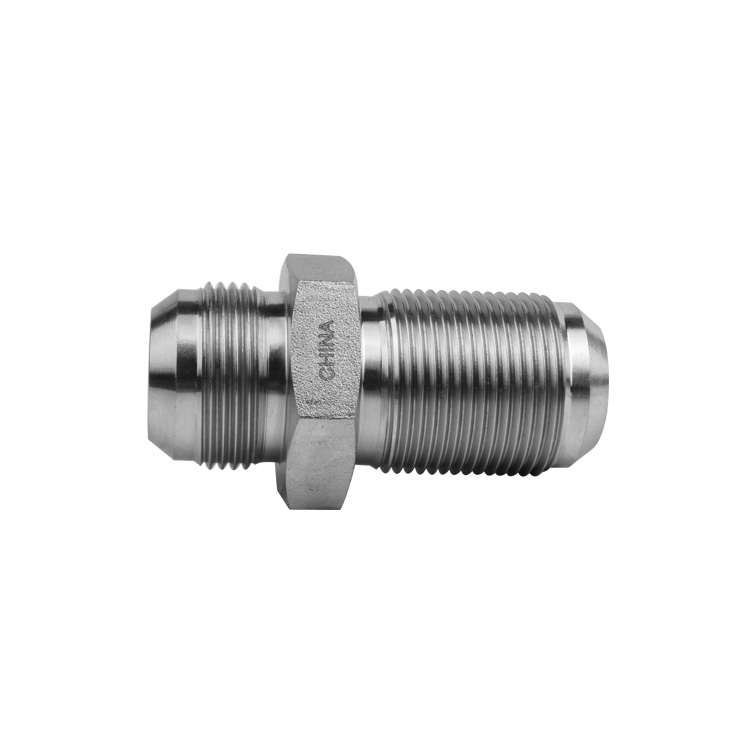
Male JIC x male JIC bulkhead straight fitting (2700). Bulkhead and crossover configurations are rated at the lower of the joined interfaces.
Frequently Asked Questions
What pressure and temperature limits apply to hydraulic adapters?
Across the NingBo NJ Hydraulic Adapter Co., Ltd catalog - BSP, BSPT, NPT, JIC, SAE ORB/ORFS, and hydraulic cap nut ranges - the published pressure range is 3000-6000 PSI and the maximum stable operating temperature is 220°C. The BSPT adapter is additionally stated to withstand a static pressure of 6,000 PSI and a burst pressure of 9,000 PSI without deformation while maintaining continuous operation and seal integrity. Third-party references place comparable interfaces in the same order of magnitude: 1/4 in NPTF straight threads at 4000 PSI working pressure with a 4:1 safety factor, and ORFS at dash -4 rated 6000 PSI under SAE J1453. Because capability varies with size and thread family inside the band, the rating for an exact model code should be confirmed rather than assumed.
Which adapters suit European hose assemblies with DIN and BSP thread requirements?
European hose assemblies most often combine BSPP and BSPT interfaces, which are supplied through the 1B series of BSPP thread fittings (including 1B, 1B4, 1B9, 1BG, 1BT, 2B, 6B, 7B, 9B, EB, AB, and BB) and the 1T series of BSPT thread fittings (including 1T, 1T9, 1BT, 1ST, 4T, and 5T), together with crossover items such as 1BT (male BSPP x male BSPT) and 1NB (male NPTF pipe x male BSPP) where two systems have to be joined. These families are published within the 3000-6000 PSI band with a 220°C maximum stable operating temperature. Where a specification names DIN 2353, buyers should note that DIN 2353 is the governing tube fitting standard and its LL, L, and S classes are stated separately from an adapter catalog rating; the exact standard and rating for a specific model code should be confirmed in writing, and custom items can be produced from provided drawings or samples.
What drives cost when pressure and temperature requirements rise?
Inside the 3000-6000 PSI and 220°C envelope, cost is driven mainly by material choice - carbon steel, SS304, or SS316 - followed by surface treatment options such as plated colour, customization scope covering logo and packaging, and the dimensions and manufacturing complexity of the individual item, which is also what MOQ depends on. Buyers comparing quotations should separate base adapter cost from the cost of verification, since higher-pressure and higher-temperature applications usually require more documentation and more sampling before a series release.
Can pressure and temperature performance be validated before a series order?
Yes. Custom products can be made from provided drawings or samples, and quality control is carried out by random inspection. Published evidence for the ranges includes a 120-hour salt spray test showing white rust at 120 hours and red rust at 240 hours, and the BSPT adapter statement of 6,000 PSI static and 9,000 PSI burst without deformation while maintaining seal integrity. Validating a sample against the system's own pressure and temperature profile is the practical way to confirm that the selected model code belongs to the correct point inside the compliance envelope.
What is the lead time for a compliance-confirmed adapter order?
Production lead time is 30-45 working days, with a monthly capacity of 4,000,000 units; MOQ varies depending on product dimensions and manufacturing complexity. To move from evaluation to a quotation, send the model code, thread standard, material, and the pressure and temperature conditions of the application, and the team can confirm the rating statement for that exact item before production is scheduled.
Conclusion and Next Step
Pressure and temperature compliance for hydraulic adapters is a two-axis test, not a document exercise. The binding figures across the NingBo NJ Hydraulic Adapter Co., Ltd ranges are a 3000-6000 PSI working pressure band and a 220°C maximum stable operating temperature, with the BSPT adapter separately stated at 6,000 PSI static and 9,000 PSI burst without deformation. Buyers who confirm the position of the exact model code inside that band, apply the lower-rated end for crossover and bulkhead configurations, match material to the corrosion environment using the 120-hour salt spray evidence, and validate a sample before a series release are working inside the envelope rather than near its edge.
NingBo NJ Hydraulic Adapter Co., Ltd supports this process with OEM/ODM production, customization covering logo, packaging, plated colour, and products made from provided drawings or samples, random-inspection quality control, and remote after-sales support. To request a sample, a quotation, or the product catalog, use the contact details below.
Request a sample or quotation
Website: www.njadapter.com | Blog: blog.njadapter.com
Email: jenny@fhyuli.com | Tel / WhatsApp: +86 158-6749-2228
Address: 151 Hongxing Road, Wengao Development Park, Chunhu Street, Fenghua, Ningbo City, Zhejiang Province, China
Download the company brochure: NingBo NJ Hydraulic Adapter product brochure (PDF)
Have Questions or Need More Details?
Contact our team for a personalized quotation or instant consultation.
Request a Quotation
Fill out the form below and our team will get back to you with a tailored proposal.
WhatsApp Direct Chat
Prefer to chat in real-time? Message us on WhatsApp for instant assistance & quick answers.
- Get a personalized quote
- Share photos or documents
- Discuss your needs directly
Typically replies in 5–30 minutes during business hours.