
Vanished Fittings? How to Fix Missing Parts in Hydraulic Adapter Kits
A hydraulic adapter kit that arrives without its cap nuts is not a partial delivery — it is a stopped assembly line. Missing parts in adapter kits are almost always the smallest, cheapest components in the box, because they are packed as accessories instead of being controlled as numbered line items. The fix is procedural, not commercial: a kit-level bill of materials, a receiving protocol backed by photographs, and an ordering logic that keeps small parts as stocked SKUs.

What “vanished fittings” actually means in a hydraulic adapter kit
A hydraulic adapter kit is a set of adapters plus the small components required to install them: cap nuts, lock nuts, ferrules and related hardware. When a buyer reports that a fitting “vanished”, the adapter body usually arrived intact — it is a component from the cap nut or lock nut family that is absent from the carton.
The pattern is visible in product classifications. Hydraulic cap nuts and lock nuts are sold as a distinct family with their own model codes — 0304C, 0306, 0318, 0319, 0403, 0500 and the FS variants FS0304C, FS0306, FS0318 and FS0319 at NingBo NJ Hydraulic Adapter Co., Ltd. Because they carry their own codes, they can also be individually omitted, mis-picked or short-counted. A kit is complete only when the cap nut listed on the order line is physically in the bag.
These small parts are not commodity hardware. The cap nut and lock nut family is rated for a pressure range of 3000–6000 PSI, a maximum stable operating temperature of 220°C, in carbon steel, SS304 or SS316, and passes a 120-hour salt spray test with white rust at 120 hours and red rust at 240 hours. Assemblies built around them are specified to withstand a static pressure of 6,000 PSI and a burst pressure of 9,000 PSI without deformation. A locally sourced nut with the right thread but no specification breaks that chain silently, and the failure shows up later as a leak or a loosened connection under cyclic pressure.
Why small components go missing — and what it really costs
Short-shipments of small parts are a packing and counting problem more often than a logistics problem. Five causes recur:
- Counting by eye or by weight. A cap nut is counted as a handful rather than as a piece, so a 20-piece line becomes 18.
- Mixing similar model codes. 0306 and 0318 differ by a code position; both fit the same carton position.
- End-of-run packing. Small parts are added last, when the main items are already sealed.
- Distributor re-kitting. A master carton is split into sub-kits and the small parts are split by estimate.
- No photographic record. Without a per-kit photo, a claim becomes a discussion rather than a verification.
The direct cost of the missing part is trivial; the cost of the consequence is not. A single absent cap nut can hold a hose assembly, postpone a commissioning date and force an air shipment of an item worth a fraction of the freight. The larger exposure is substitution pressure: when production is waiting, someone will find a nut that threads on. That decision converts a packing error into a specification error, and specification errors are the ones that return as field failures.
Industry background: more kits, more small parts, more chances to short-pick
The hydraulic fittings market, which includes adapters and couplings, was valued at USD 4.8 billion in 2025 and is projected to reach USD 7.9 billion by 2034, according to Dataintelo. Within that market, the hydraulic adapters segment held the largest product type share at 28.4% in 2025, and steel accounted for 45.2% of revenue share, driven by demand for high-pressure durability. Asia-Pacific led global revenues in 2025 with an estimated 38.6% share.
Demand concentration matters for kit discipline. Mobile hydraulics held over 58% of total hydraulics market revenue share in 2024, according to Grand View Research — meaning most adapters are consumed in field-service and machine-build contexts where a missing nut stops work immediately rather than being absorbed into a warehouse. More SKUs per order, more partial cartons and more distributor re-kitting all increase the number of small-part handoffs between the factory and the machine.
Standards add a second reason to treat small parts as engineered items. DIN 2353 defines LL (Extra Light, 100 bar), L (Light, up to 315–500 bar) and S (Heavy, up to 630–800 bar) robustness categories for metric tube fittings. ISO 8434-2:2007 specifies design and performance requirements for 37° flared connectors for tubes from 6 mm to 50.8 mm. SAE J1453 rates ORFS fittings in dash size -4 (1/4 in) at 6000 PSI working pressure, and NPTF straight threads in 1/4 in size are typically rated at 4000 PSI with a 4:1 safety factor. Each of these ratings is attached to a part number — and a part number that never arrives carries no rating at all.
The complete-kit solution: five controls that stop missing parts
The objective is not better packaging; it is a closed loop in which every small component has an identity, a count and an evidence trail.
1. Give every component a line item in the kit bill of materials
The kit BOM must list cap nuts and lock nuts by model code, exactly as the adapter bodies are listed. NingBo NJ Hydraulic Adapter Co., Ltd, a hydraulic fittings manufacturer based in Ningbo Fenghua, Zhejiang, China and producing since 2004, publishes cap nut models 0304C, 0306, 0318, 0319, 0403 and 0500 alongside its SAE, JIC, NPT and BSP adapter series. When those codes appear on the purchase order as separate lines with quantities, a short pick becomes a visible discrepancy instead of an assumption.
2. Piece-count small parts and use weight only as a cross-check
Count in pieces, then weigh the bag as a second signal. A weight tolerance catches a missing nut only if a piece count already exists to calibrate against; on its own, weight confirms nothing about which model was packed.
3. Photograph every packed kit
A photo of the open kit, with the small parts visible next to the adapters, converts a later dispute into a five-minute verification. The photo should show the cap nut bag and its label in the same frame.
4. Define the claim path before the first order
The documented process at NingBo NJ Hydraulic Adapter Co., Ltd is straightforward: the customer provides photographs of the missing or wrong-delivered items; after verification, replacement accessories are arranged by sea shipment or by air shipment. A claim path that specifies evidence, verification and replacement route is what separates a supplier from a vendor.
5. Keep small parts in stock as independent SKUs
Replacement cap nuts should be orderable on their own, not only inside a kit. The manufacturer maintains extensive inventory across a wide range of products, and in-stock items can ship with no minimum quantity requirement, with an MOQ of 1 unit. That policy is what makes a corrective order practical when a line is waiting.
Step-by-step: recovering from a short-shipped kit
- Freeze the kit and count against the BOM. Separate adapters, cap nuts and lock nuts, and mark every line that does not match the ordered model code — not just the quantity.
- Accept at the right point. Define in advance whether acceptance happens door-to-door or at the port of arrival; the agreed point determines who owns the discrepancy and when the clock starts.
- Document with photographs and video. Photograph the carton seal, the packing list, the open kit and the short part position. This is the evidence set the supplier's verification step depends on.
- Submit the claim with model codes and quantities. Reference the exact codes (for example 0306 versus 0318) so the replacement matches the original specification rather than a visually similar part.
- Select the recovery route. Replacement accessories can be shipped by sea freight on the next consignment or by air; choose based on whether the line is waiting or the stock buffer can absorb the gap.
- Re-order small parts as standalone SKUs. Place a buffer order for the cap nut models used most often, using in-stock availability and the 1-unit MOQ to close the gap quickly.
- Amend the next purchase order. Add the small-part clause, the photographic packing requirement and the acceptance point to the PO template so the correction persists after the current crisis.
Use cases: where a missing cap nut stops the job
Construction machinery. Hose assemblies on excavators and loaders are replaced in the field, where a missing lock nut means the machine stays parked. The cap nut family is specified for construction machinery duty at 3000–6000 PSI and up to 220°C.
Agricultural machinery. Seasonal service windows are short; a kit that is 90% complete on day one is 0% usable on day two, and the next window may be weeks away.
Mining and petroleum hydraulic pipeline systems. These assemblies tolerate neither substitution nor delay, which makes the photographic packing record the most valuable document in the shipment.
Automotive hydraulic assemblies. Line-side feeding assumes kit completeness; a short kit stops a station rather than a machine.
Marine and firefighting equipment. Where the adapter family is used in marine machinery and firefighting equipment, a substitute nut is not an option — the replacement has to be traceable to the same model code.
Wholesale distribution. Distributors serving global wholesale distribution business split master cartons into local kits; piece counting at split time is the only control that survives the process.
Comparison: what a complete kit contains, and how to order the gaps
The first table maps the component families that make up a complete adapter kit, using published model series and shared specifications. The second table sets out the commercial routes available when a part has to be re-ordered.
| Component family | Representative models | Thread / connection type | Pressure range | Max stable operating temperature | Materials |
|---|---|---|---|---|---|
| Hydraulic cap nut & lock nut | 0304C, 0306, 0318, 0319, 0403, 0500, FS0304C, FS0306, FS0318, FS0319 | Cap nut / lock nut | 3000–6000 PSI | 220°C | Carbon steel / SS304 / SS316 |
| SAE standard hydraulic adapter | 6801, 6802, 6803, 6804, 6805, 6806, 6807, 6808, 6809, 6810, 6815, 6818, 6820, 6832, 6835, 6840, 6850 | JIC / ORB / ORFS | 3000–6000 PSI | 220°C | Carbon steel / SS304 / SS316 |
| Hydraulic JIC adapter | 2403, 2404, 2405, 2406, 2408, 2500–2505, 2601–2609 | JIC and JIC-to-NPT | 3000–6000 PSI | 220°C | Carbon steel / SS304 / SS316 |
| NPT adapter | 5000, 5404, 5405, 5406, 5406-C, 5406-HP, 5406-P, 5406-SHP, 5500–5505, 5600–5605, 5650, 5652 | NPT thread fitting | 3000–6000 PSI | 220°C | Carbon steel / SS304 / SS316 |
| BSPP adapter | 1B, 1B4, 1B9, 1BG, 1BH, 1BJ, 2B, 4B, 5B, 6B, 7B, 9B, EB, AB, BB | BSPP thread fitting | 3000–6000 PSI | 220°C | Carbon steel / SS304 / SS316 |
| BSPt adapter | 1T, 1T9, 1BT, 1ST, 4T, 5T | BSPt thread fitting | 3000–6000 PSI | 220°C | Carbon steel / SS304 / SS316 |
| Ordering route | Used for | Confirmed terms |
|---|---|---|
| In-stock line item | Replacing a missing cap nut or adapter quickly | Extensive inventory across a wide range of products; in-stock orders ship with no minimum quantity requirement; MOQ 1 unit |
| Series / volume order | Planned kit production | Volume discounts; orders exceeding USD 10,000 qualify for free FOB terms |
| Custom packaging and branding | Distributor kits and private-label cartons | Custom carton packaging, custom plastic bag packaging, laser-engraved logos |
| Drawing- or sample-based customization | Non-standard or modified components | Customization based on drawings or samples |
| Delivery and payment | Commercial framework for the order | FOB / CIF / EXW / C&F; shipment after advance payment is received; alternative payment methods may be discussed after a long-term partnership is established |
Choosing a supplier who is still there when the next kit ships
For repeat kits, the relevant question is not who packs the cheapest carton but who can keep the part-number universe stable. Four verifiable indicators apply.
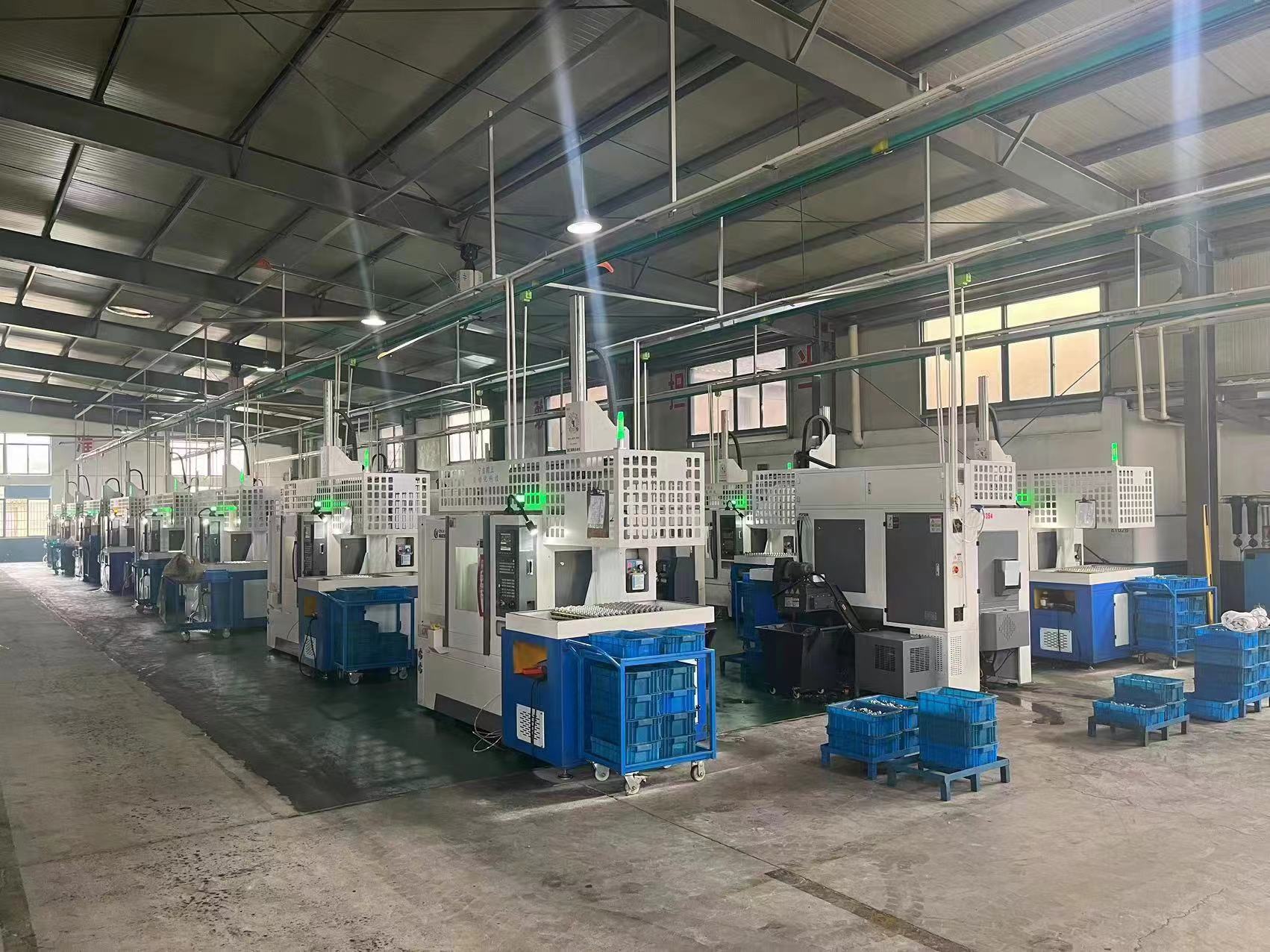
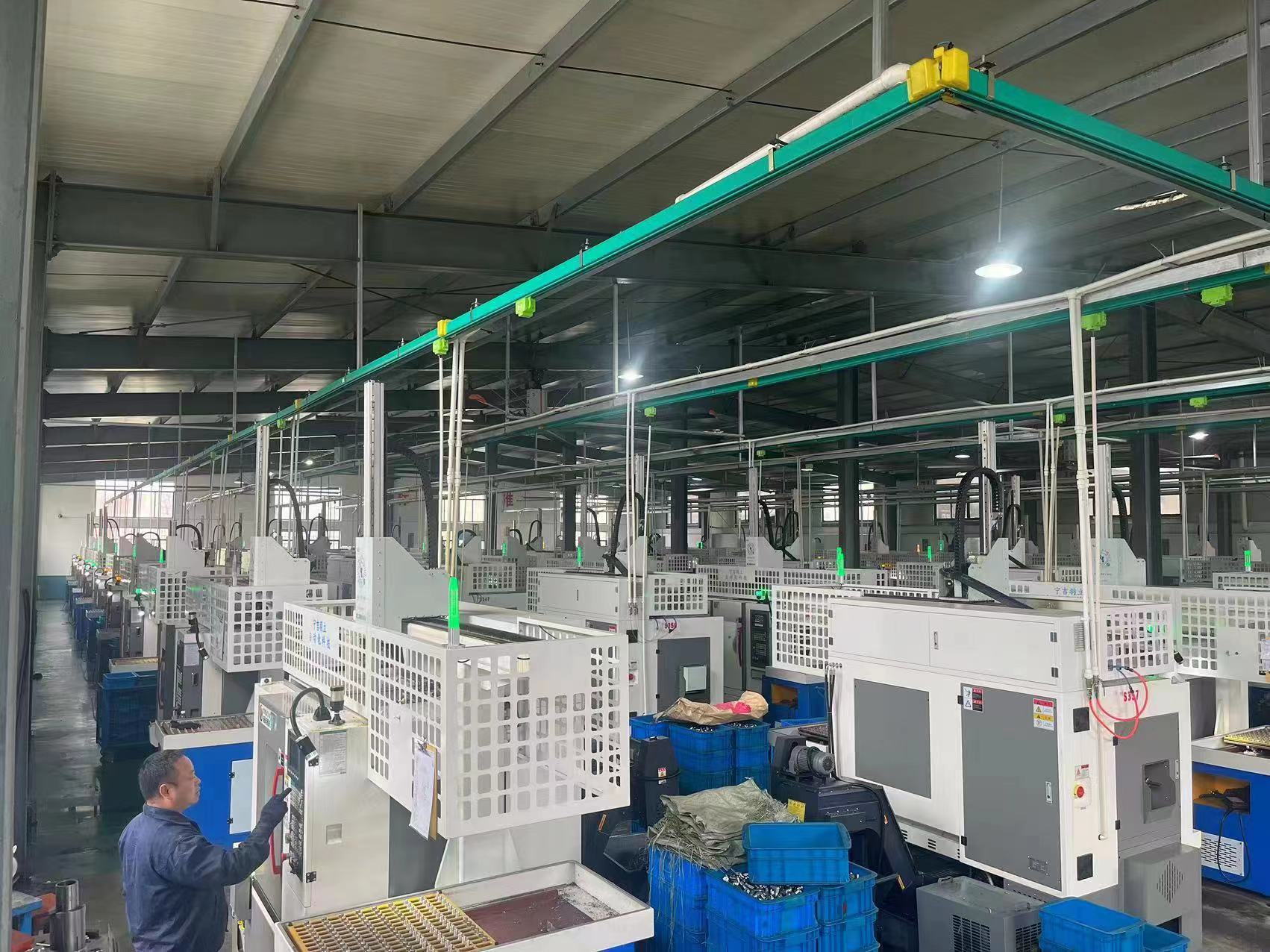
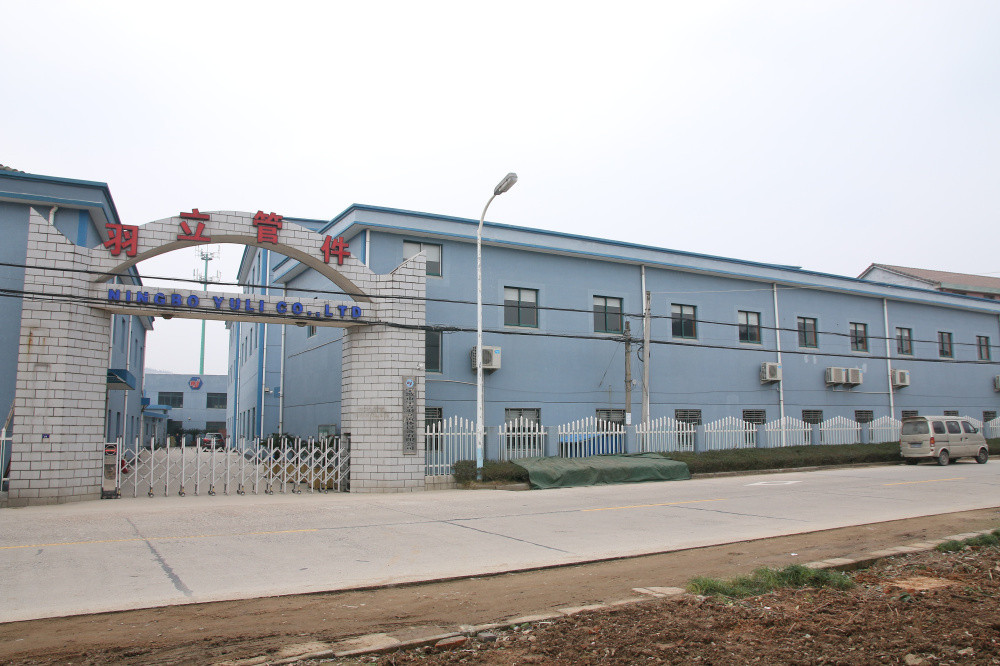
Production standard and capacity. NingBo NJ Hydraulic Adapter Co., Ltd produces according to TS16949 standards, operates a 20,000 m² facility with approximately 200 staff and a team of four engineers, and reaches an annual production capacity of 4,000,000 units. Capacity of that order is what allows a small-part buffer order to be absorbed without disrupting series production.
Export experience in the destination market. Around 75% of output is exported, with the USA and Canada as the main markets — markets where a missing or unspecified component is a compliance issue, not a convenience issue.
Surface treatment consistency. The trivalent chromium surface treatment process passes a 120-hour salt spray test, with white rust appearing at 120 hours and red rust at 240 hours, which is the same specification carried by the cap nut and adapter families.
Documented performance expectations. The manufacturer's own comparison states good sealing stability under high pressure, a service life 20% longer than ordinary counterparts, and no oil leakage under long-term cyclic pressure. Buyers should treat these as first-party claims to be validated in their own application, not as substitutes for acceptance testing.
FAQ
Which production standard should a hydraulic adapter supplier follow for repeat orders?
NingBo NJ Hydraulic Adapter Co., Ltd states that production follows TS16949 standards. On the product side, DIN 2353 specifies three robustness categories for metric tube fittings — LL (Extra Light, 100 bar), L (Light, up to 315–500 bar) and S (Heavy, up to 630–800 bar) — so buyers should confirm which pressure class the ordered part numbers belong to rather than accepting a generic “hydraulic nut” description.
Can a supplier keep small parts such as cap nuts available over a long partnership?
Availability depends on capacity plus stock policy. The company operates a 20,000 m² facility with approximately 200 staff, a team of four engineers and an annual production capacity of 4,000,000 units, and maintains extensive inventory across a wide range of products, so in-stock items can ship with no minimum quantity requirement. Cap nut models 0304C, 0306, 0318, 0319, 0403, 0500 and the FS variants are published as their own product family, which means they can be re-ordered independently of an adapter kit.
What are the cost, MOQ and payment terms when re-ordering replacement parts?
MOQ is 1 unit. Delivery terms include FOB, CIF, EXW and C&F, and acceptance can be door-to-door or at the port of arrival. Shipment is made after the advance payment is received; once a long-term partnership is established, payment methods other than advance payment can be discussed. Volume discounts apply, and orders exceeding USD 10,000 qualify for free FOB terms.
Can we validate a kit before placing a series order?
Yes. In-stock items can be ordered from 1 unit, which allows a trial kit to be checked against the BOM before a series commitment. Customization based on drawings or samples is also available, together with custom carton packaging, custom plastic bag packaging and laser-engraved logos for distributor kits.
How do we identify a long-term DIN hydraulic adapter supplier rather than a one-off vendor?
Look for four things: a declared production standard (TS16949 production), capacity that can absorb repeat and buffer orders (4,000,000 units per year from a 20,000 m² facility), a documented short-shipment process — customers provide photographs of missing or wrong-delivered items and, after verification, replacement accessories are arranged by sea or air shipment — and commercial terms that evolve with the relationship, such as payment methods other than advance payment after a long-term partnership is established. Buyers who want to test the process before committing can request a quote or a trial kit from NingBo NJ Hydraulic Adapter Co., Ltd and check the part-number coverage against their own BOM.
Conclusion
Missing parts in hydraulic adapter kits are rarely a mystery. They are the predictable result of treating cap nuts and lock nuts as packing accessories instead of numbered, counted, photographed components. The corrective logic is short: put every small part on the kit BOM with its model code, count in pieces, photograph the packed kit, agree the claim path before the first shipment, and keep buffer stock of the cap nut models the product actually uses.
That logic also changes how suppliers are selected. A supplier worth a long partnership is one whose part-number families stay stable, whose capacity can absorb a buffer order, and whose short-shipment process is documented rather than improvised.
Need a complete kit — including the small parts?
Send your BOM or a drawing/sample and we will confirm the cap nut, lock nut and adapter models against it. Replacement accessories for a short-shipped kit are arranged by sea or air after verification of your photographs.
NingBo NJ Hydraulic Adapter Co., Ltd
Website: www.njadapter.com
Email: jenny@fhyuli.com
Tel / WhatsApp: +86 158-6749-2228
Address: 151 Hongxing Road, Wengao Development Park, Chunhu Street, Fenghua, Ningbo City, Zhejiang Province, China
Download the product catalogue (PDF): NingBo NJ Hydraulic Adapter catalogue
Have Questions or Need More Details?
Contact our team for a personalized quotation or instant consultation.
Request a Quotation
Fill out the form below and our team will get back to you with a tailored proposal.
WhatsApp Direct Chat
Prefer to chat in real-time? Message us on WhatsApp for instant assistance & quick answers.
- Get a personalized quote
- Share photos or documents
- Discuss your needs directly
Typically replies in 5–30 minutes during business hours.