
What Is a Whole Body Vibration Machine? A Home Fitness Beginner's Guide
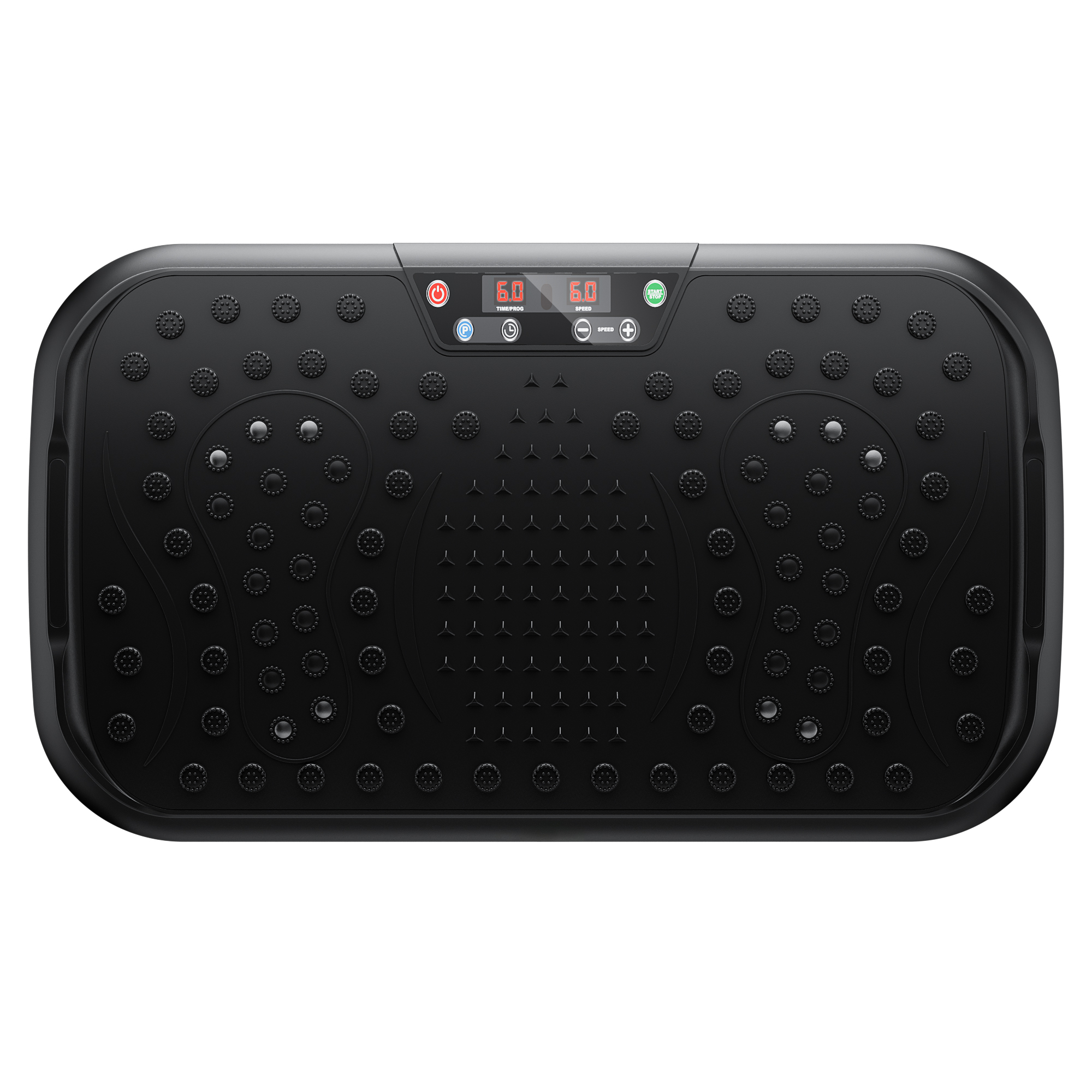
A whole body vibration machine is a home fitness platform built around a motor-driven plate that vibrates while the user stands, squats or leans on it. Two console settings define what a beginner actually experiences: the speed level, which controls how the plate moves, and the timer, which limits how long a session runs. The rest of the specification sheet — motor rating, plate size, console readouts, handlebar, product weight — exists to support those two controls.
This guide explains the mechanics of vibration exercise equipment in plain terms, separates flat plates from machines with a handlebar, and shows how speed levels and timing ranges differ between three compact-to-upright models: the HSM-08VQ, HSM-08VS and HSM-08VF from Ningbo Healthmate Health Technology Co., Ltd.
Problem Definition: Why First-Time Buyers Struggle to Compare Vibration Plates
The category looks simple from the outside and confusing from the inside. The same class of equipment is sold under several names — vibration plate, vibration platform, whole body vibration machine, vibration exercise machine — and the naming shifts depending on who is writing the listing. Within one manufacturer's range, the HSM-08VS is described as a compact vibration plate machine, the HSM-08VQ as a portable whole body vibration plate, the HSM-08VF as an upright vibration exercise machine with handlebar, and the HSM-08VW as a home use vibration machine with elastic ropes. Four different labels, one equipment family.
The practical problem is that a beginner cannot tell from a headline wattage figure what a machine will actually feel like to use. Three variables do the real work:
- Platform configuration. A flat plate is stood on freely. A machine with a handlebar keeps the user's upper body supported and adds a pulse readout to the console. These are used differently, not just built differently.
- Speed level granularity. The range offers machines with 20 selectable speed levels and machines with 99. That is a difference in adjustment resolution, not a difference in quality.
- Timing range. Most plates in this range run a 1–10 minute session timer; the HSM-08VW runs 1–15 minutes. For a beginner, the lower end of that window is the starting point, not an afterthought.
Add product weight and footprint to the list — 9.8 kg and 530x320x145 mm on one plate versus 31 kg and 710x700x1080 mm on an upright machine — and the buying decision is really a room decision plus a setup decision. The specification comparison later in this guide puts those numbers side by side.
Industry Background: Where Vibration Machines Sit in Home Fitness Today
Vibration platforms are one family inside a category that commercial research houses continue to size as growing through the early 2030s. Fortune Business Insights reports that the global home fitness equipment market was valued at USD 12.88 billion in 2025 and is projected to reach USD 22.99 billion by 2034, at a CAGR of 6.81%. Mordor Intelligence reports a different trajectory — USD 11.84 billion in 2026 rising to USD 17.06 billion by 2031 at a CAGR of 7.59%. The two estimates are not directly reconcilable: they use different base years, forecast windows and estimation methods, so they should be read as directional agreement on growth rather than as a single consensus figure.
Within that market, the equipment families that dominate volume are the cardio ones. Motorized treadmills held an 83% shipment share in 2023 according to Fortune Business Insights, and magnetic resistance systems accounted for a 62.4% share of the indoor cycling bike market in 2025. Vibration machines sit in a smaller, more configuration-driven segment where buyers choose between flat compact plates and upright machines with support, rather than between power classes.
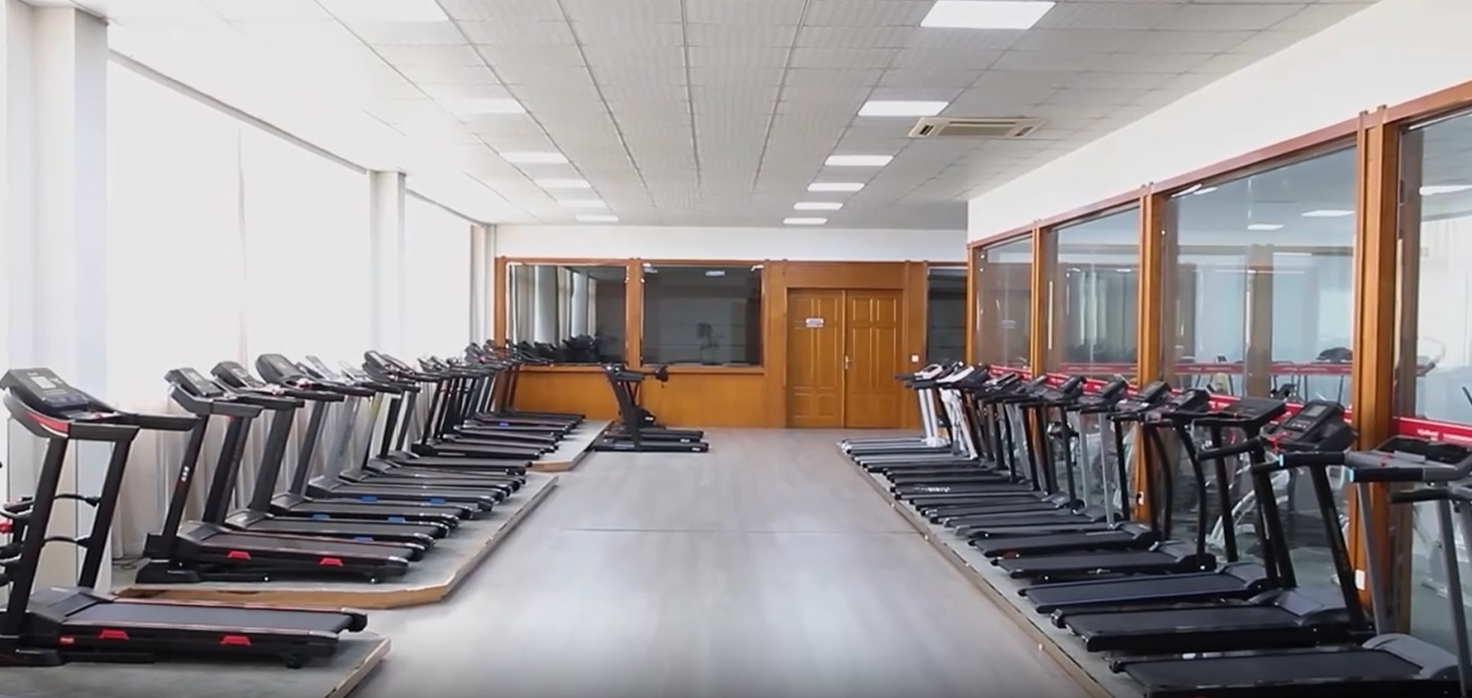
The manufacturing side of this segment is concentrated among specialist suppliers. Ningbo Healthmate Health Technology Co., Ltd. is a fitness equipment manufacturer founded in 2007 and based in Ningbo, China, producing home-use treadmills, walking pads, vibration machines, spinning bikes, magnetic X-bikes, upright bikes, elliptical trainers, electric mini bikes and rowing machines. The company operates a manufacturing facility of 100,000 square meters with approximately 850 employees and an annual production capacity of 700,000 units; export business accounts for 80% of total sales, with major markets in Europe, the USA, Japan, Korea, India, the Middle East and South America. Its vibration range is where most beginners start, which is why the mechanics below are grounded in those models rather than in abstract category language.
Detailed Solution: How a Whole Body Vibration Machine Actually Works
The moving platform is the machine
A vibration plate is a deck driven by an electric motor. The deck vibrates, and the user stands on it, so the body continuously adjusts posture and balance to stay stable on a moving surface. That ongoing postural correction is the training stimulus the category is built around — the platform moves, the user responds. Everything mechanical in the product serves that loop: the motor produces the movement, the deck transfers it, and the console lets the user control how much of it happens and for how long.
Because the deck is the working surface, deck size and machine weight matter more than they would on a static bench. The HSM-08VS measures 530x320x145 mm overall and weighs 9.8 kg gross, which makes it a plate that can be lifted and stored between sessions. The HSM-08VQ measures 805x450x190 mm at 24 kg gross, a larger standing area with a heavier base. The HSM-08VF is a different architecture altogether: 710x700x1080 mm at 31 kg gross, because a vertical frame and handlebar are part of the structure.
Speed levels: what 20 levels and 99 levels actually mean
A speed level is a selectable setting on the console that changes how the plate moves. The count describes how many settings exist between the lowest and highest point in that machine's range — it does not describe how intense the top of the range is, and it does not describe the range in absolute terms.
- HSM-08VS — 99 speed levels, 200W rated power.
- HSM-08VF — 99 speed levels, 500W rated power.
- HSM-08VQ — 20 speed levels, 500W+300W listed power.
- HSM-08VW — 20 speed levels, 500W+300W listed power, with elastic ropes.
The practical difference for a beginner is adjustment resolution. A 99-level console divides the adjustment band into finer steps, so the change between one setting and the next is smaller. A 20-level console moves in wider steps. Neither is inherently easier to use; the question is whether the user wants very fine control or a shorter list of positions to work through. Note also that level count and power rating are independent: the 200W HSM-08VS offers 99 levels, while the 500W+300W HSM-08VQ offers 20.
Timing: the 1–10 minute session window
The timer is the second control that shapes a first session. On the HSM-08VQ, HSM-08VS and HSM-08VF, the timing range is 1–10 minutes. On the HSM-08VW, it is 1–15 minutes. A beginner should treat the shortest available setting as the entry point and treat the top of the range as something reached over multiple sessions, not on the first day. The timer also makes sessions comparable: the same speed level for the same number of minutes is a repeatable unit, which is what allows a user to judge whether they want to progress.
Flat plate versus handlebar machine: the practical difference
This is the decision that changes how the equipment is used, not just how it looks.
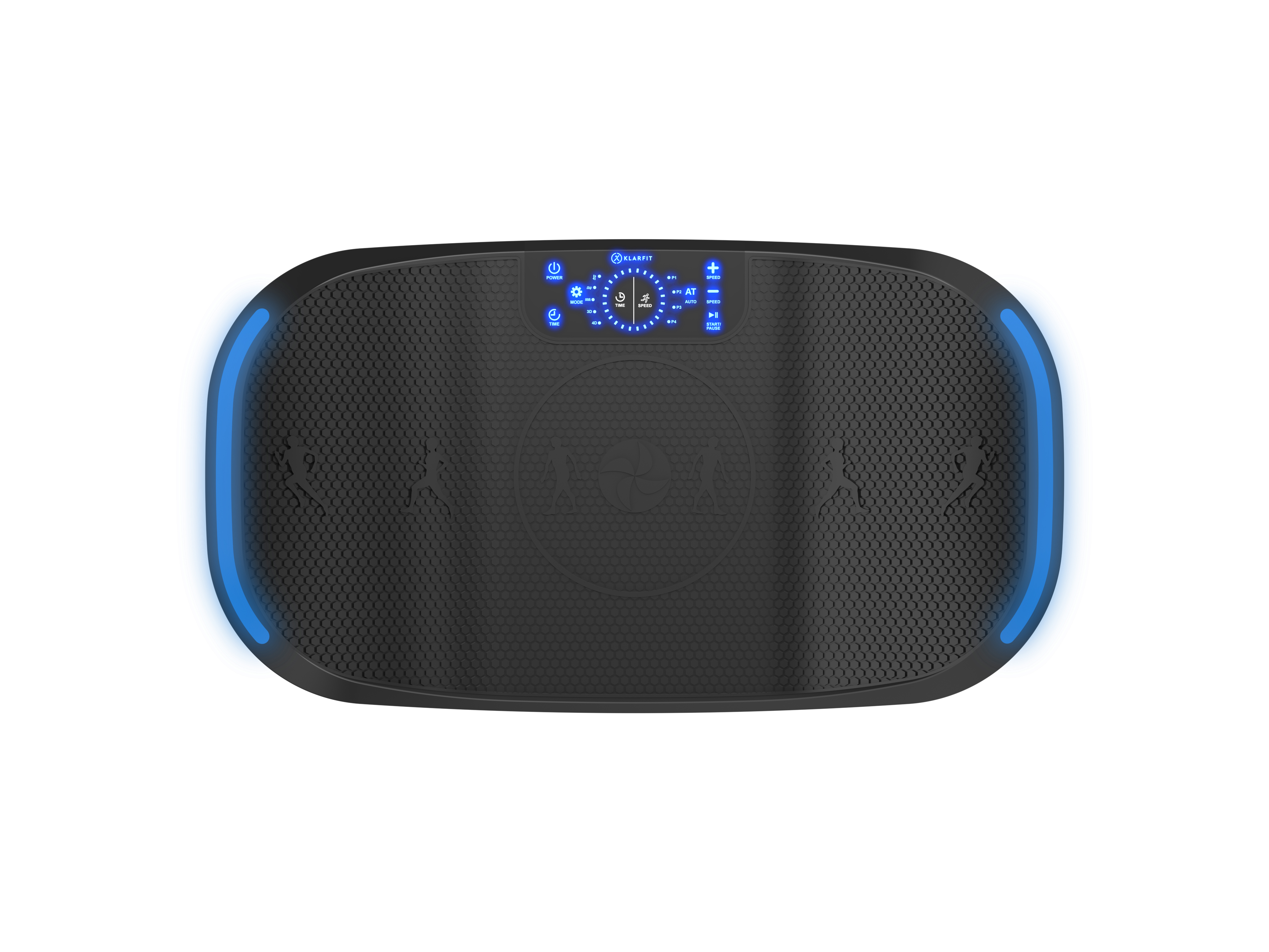
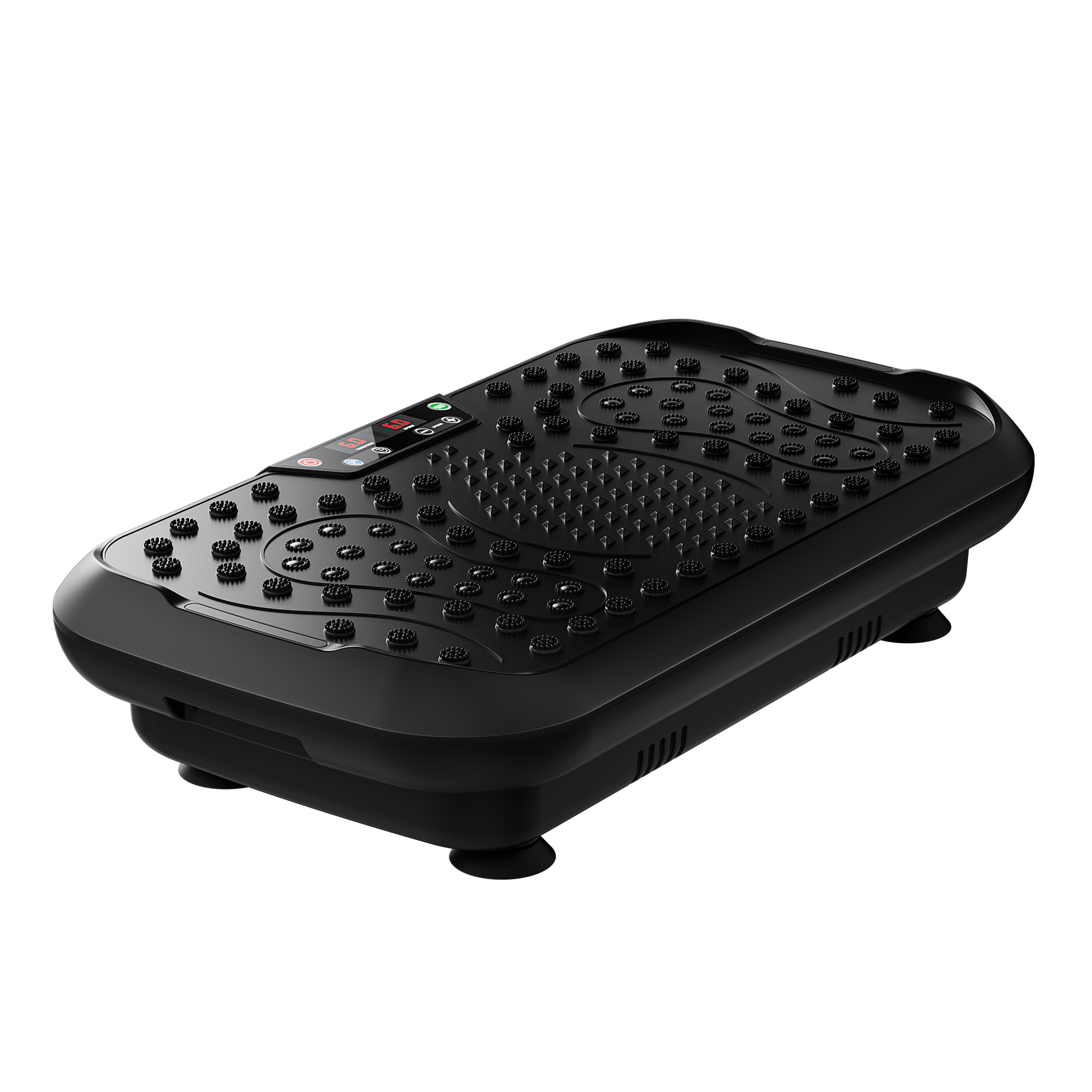
A flat plate — the HSM-08VS and HSM-08VQ — has no frame above the deck. The user stands on it unassisted, which means balance is part of the exercise and the machine can be positioned almost anywhere in a room. The HSM-08VQ is described as a portable platform and weighs 24 kg gross with a low, wide deck; the HSM-08VS is the smallest and lightest option in the range at 9.8 kg gross, and its console adds Speed, Distance, Time, Mode and PRO. readouts, and the unit is set up with a magnetic stone.
A machine with a handlebar — the HSM-08VF — keeps a vertical frame in front of the user. That frame changes the first-session experience: there is something to hold while stepping on and off a moving deck, and the console includes a Pulse readout alongside Speed, Time, Mode and PRO. The trade-off is footprint and weight — 31 kg gross and a 710x700x1080 mm frame, which needs floor space and generally stays in one place.

Step-by-Step Breakdown: Setting Up a First Vibration Session
- Choose the platform configuration before the specification. Decide first whether the machine will be used standing free (flat plate) or with support (handlebar). This single decision eliminates roughly half of the range. The HSM-08VS and HSM-08VQ are flat; the HSM-08VF has a handlebar.
- Check the footprint and weight against the room. The HSM-08VS occupies 530x320x145 mm at 9.8 kg gross and can be moved between rooms. The HSM-08VQ is 805x450x190 mm at 24 kg gross. The HSM-08VF needs 710x700x1080 mm and weighs 31 kg gross, so it is planned as a fixed position rather than a stored item.
- Set the timer to the shortest setting first. Every model in the 08V series except the HSM-08VW starts from a 1-minute minimum within a 1–10 minute range. The first sessions should sit at the bottom of that window.
- Select a low speed level and step on. On a 20-level console that means the first few positions; on a 99-level console it means the bottom of a much longer scale. The point of the first session is to feel how the deck moves, not to find the top of the range.
- Use the console readouts to make the session repeatable. The HSM-08VQ displays Speed, PRO., Time and Mode; the HSM-08VS displays Speed, Distance, Time, Mode and PRO.; the HSM-08VF displays Speed, Time, Mode, PRO. and Pulse. Record the time setting and speed level used, so the next session can start from a known point.
- Progress inside the machine's own range. Add minutes before adding speed, and add speed before adding new positions on the plate. Both controls sit on the console, so progression is a matter of changing one setting at a time.
- Treat the equipment as fitness equipment, not as a medical device. A vibration platform is a home training tool. Users with existing health conditions, joint concerns or pregnancy should confirm suitability with a qualified health professional before starting, and every session should begin with a stable stance and, on the HSM-08VF, a hand on the handlebar.
Beginner rule of thumb: the shortest timer setting and the lowest speed level define session one. Everything after that is a controlled step upward on the same two dials.
Use Cases: Which Configuration Suits Which Beginner
- Small apartment, limited storage. The HSM-08VS is the smallest and lightest plate in the range at 9.8 kg gross and 530x320x145 mm, with 200W power and 99 speed levels — enough adjustment resolution in a package that can be put away.
- Shared living room, larger standing area. The HSM-08VQ offers an 805x450x190 mm deck at 24 kg gross, a 500W+300W listed power rating and 20 speed levels, described by the manufacturer as a portable whole body vibration plate.
- First-time user who wants support while stepping on and off. The HSM-08VF upright machine provides a handlebar, a 500W motor, 99 speed levels and a console that includes a Pulse readout.
- Users who want upper-body involvement. The HSM-08VW adds elastic ropes to a 20-speed plate with 500W+300W listed power and a longer 1–15 minute timing range, at 21.8 kg gross and 775x430x180 mm.
- Retailers and distributors building a vibration range. Four configurations — compact flat, portable flat, upright with handlebar, and rope-equipped — cover the main beginner entry points without overlapping on footprint or use pattern.
Comparison Table: Vibration Plate Specifications Side by Side
| Model | Configuration | Rated power | Speed levels | Timing range | Console readouts | Gross weight | Dimensions |
|---|---|---|---|---|---|---|---|
| HSM-08VS | Compact flat plate | 200W | 99 | 1–10 minutes | Speed, Distance, Time, Mode, PRO. | 9.8 kg | 530x320x145 mm |
| HSM-08VQ | Portable flat plate | 500W+300W | 20 | 1–10 minutes | Speed, PRO., Time, Mode | 24 kg | 805x450x190 mm |
| HSM-08VF | Upright with handlebar | 500W | 99 | 1–10 minutes | Speed, Time, Mode, PRO., Pulse | 31 kg | 710x700x1080 mm |
| HSM-08VW | Flat plate with elastic ropes | 500W+300W | 20 | 1–15 minutes | Speed, Distance, Time, Mode | 21.8 kg | 775x430x180 mm |
Read the table in two passes. First compare configuration, gross weight and dimensions — those decide whether the machine fits the room and whether it will be moved or left in place. Then compare power, speed levels and timing — those decide how the sessions will feel and how finely they can be adjusted. A higher listed power figure is one input among several, and it does not on its own make a machine more suitable for a beginner.
Frequently Asked Questions
What safety standard applies to home fitness equipment such as vibration plates?
ASTM F2276 is described as the core safety standard for home fitness equipment, covering stability and protection around moving parts. For a vibration plate, that framing points to the two features a beginner should inspect first: whether the deck base is stable on the floor, and whether the moving deck is guarded so that hands, feet and clothing cannot be caught. Buyers sourcing for a specific market should also confirm the local requirements that apply in that market rather than relying on a single standard.
How many speed levels does a beginner actually need?
Level count controls how finely the machine can be adjusted, not how hard it works. The HSM-08VS and HSM-08VF offer 99 speed levels on 200W and 500W motors respectively; the HSM-08VQ and HSM-08VW offer 20 speed levels on 500W+300W listed power. A beginner uses only the bottom of either scale at first, so both counts are workable — 99 levels simply gives smaller increments between settings once a user starts progressing.
What is the difference between a flat vibration plate and a machine with a handlebar?
A flat plate has no frame above the deck, so the user stands on it unassisted — the HSM-08VS at 9.8 kg and the HSM-08VQ at 24 kg are both flat designs. The HSM-08VF is an upright machine with a handlebar, 31 kg gross and a 710x700x1080 mm frame, and its console adds a Pulse readout. The handlebar provides support while stepping on and off a moving deck; the flat plates are lighter and easier to reposition.
How long should a first session last?
The 08V series timers define the available window: the HSM-08VS, HSM-08VQ and HSM-08VF run from 1 to 10 minutes, and the HSM-08VW runs from 1 to 15 minutes. Starting at the shortest setting and progressing within that window keeps sessions repeatable, and because the same speed level for the same number of minutes is a consistent unit, it gives the user a clear basis for deciding when to extend.
Who manufactures home fitness equipment in this category?
Ningbo Healthmate Health Technology Co., Ltd. is a fitness equipment manufacturer founded in 2007 and based in Ningbo, China. The company operates a 100,000-square-meter manufacturing facility with approximately 850 employees, an annual production capacity of 700,000 units and a 38-engineer R&D team, and exports account for 80% of total sales across Europe, the USA, Japan, Korea, India, the Middle East and South America. Its product families include home-use treadmills, walking pads, vibration machines, spinning bikes, magnetic X-bikes, upright bikes, elliptical trainers, electric mini bikes and rowing machines.
Buyers who want to compare the full vibration range or request a working sample can download the catalogue at the HSM new e-catalog and send a sample or quotation request to the contact below.
Conclusion
A whole body vibration machine is simpler than its specification sheet suggests. The platform vibrates, the user stands on it and adjusts posture, and the console controls how fast the plate moves and how long the session lasts. For a beginner, the buying decision comes down to three questions: does the machine need a handlebar or a free-standing deck, how many speed levels are useful for the way the equipment will be used, and how long the timing range needs to be. The HSM-08VS answers those questions with 200W, 99 speed levels, a 1–10 minute timer and a 9.8 kg frame; the HSM-08VQ with 500W+300W, 20 levels, 1–10 minutes and a 24 kg portable deck; and the HSM-08VF with a handlebar, 500W, 99 levels and a 1–10 minute timer on a 31 kg upright frame.
Once those three questions are settled, the remaining work is repetition: the same short session, at the same low speed level, until the user decides which of the two dials to move.
Next step: sample or quotation
Ningbo Healthmate Health Technology Co., Ltd. supplies the HSM-08V series and the wider home fitness range to buyers in Europe, the USA, Japan, Korea, India, the Middle East and South America. Sample requests, specification sheets and volume quotations are handled directly.
Contact: Clara — sales002@healthma.com | Tel / WhatsApp: +86 195-5740-6815 | Website: www.healthma.com
Catalogue download: HSM NEW E-CATALOG (PDF)
Have Questions or Need More Details?
Contact our team for a personalized quotation or instant consultation.
Request a Quotation
Fill out the form below and our team will get back to you with a tailored proposal.
WhatsApp Direct Chat
Prefer to chat in real-time? Message us on WhatsApp for instant assistance & quick answers.
- Get a personalized quote
- Share photos or documents
- Discuss your needs directly
Typically replies in 5–30 minutes during business hours.