
Home Fitness Equipment Warranty and After-Sales: A Long-Term Buyer FAQ
For buyers evaluating home fitness equipment for distribution, retail, e-commerce, or private-label programs, warranty and after-sales support are not administrative details. They determine whether a container of treadmills, walking pads, vibration plates, bikes, or rowing machines can be supported in the field without costly cross-border returns. Ningbo Healthmate Health Technology Co., Ltd. is a Ningbo-based manufacturer and supplier of home fitness equipment founded in 2007. Its product range covers home-use treadmills, walking pads, vibration machines, spinning bikes, magnetic X-bikes, upright bikes, elliptical trainers, electric mini bikes, rowing machines, and swing massagers. The company capability data lists a one-year warranty for damaged parts, 100% testing, third-party inspection, OEM/ODM customization, and a 35–40 day production lead time.
Problem Definition: Why Warranty and After-Sales Decide Long-Term Value
A warranty clause is a promise. After-sales support is the operating system that determines whether the promise can be delivered. For home fitness equipment, the gap between the two often appears after the first container has been sold. A treadmill motor controller fails in a retail store. A walking pad belt wears faster than expected in an apartment building. A vibration plate control board is damaged in transit. An exercise bike console does not match the local voltage or plug type. In each case, the buyer needs a part, a part number, a diagnostic path, and a commercial rule that is clear enough to use without escalating every claim to the factory.
The problem is not that warranties are rare. The problem is that warranty language is often too general to support field operations. Buyers in the Research and Evaluation stages need to separate four different questions: what is covered, for how long, under which evidence standard, and through which supply route. A one-year warranty for damaged parts is a useful starting point, but it is not a complete after-sales system. The buyer still needs the parts list, the model-to-certificate map, the inspection record, the packaging standard, and the lead time for replacement parts.
This FAQ treats warranty and after-sales as a procurement constraint. It does not assume that a low claim rate is guaranteed, and it does not invent service-level timeframes that are not in the available data. Instead, it shows what a long-term buyer should verify before placing a repeat order.
Industry Background: A Growing Installed Base Makes After-Sales More Visible
The commercial case for after-sales planning grows with the installed base. Fortune Business Insights projects that the global home fitness equipment market will reach USD 13.76 billion in 2026. Another Fortune Business Insights summary reports the market at USD 12.88 billion in 2025 and projects USD 22.99 billion by 2034 at a CAGR of 6.81%. Mordor Intelligence expects the market to increase from USD 11.84 billion in 2026 to USD 17.06 billion by 2031 at a CAGR of 7.59%. These forecasts use different base years and time horizons, so they should not be averaged into a single number. They do, however, point in the same direction: more home fitness equipment will be in use, and more of it will eventually need parts, inspection, and replacement support.
Product mix matters for after-sales. Motorized treadmills dominated the market with an 83% shipment share in 2023, according to Fortune Business Insights. That installed base creates demand for running belts, motors, controllers, safety keys, and deck components. In indoor cycling, magnetic resistance commanded 62.4% of the market in 2025, according to the same source. Magnetic systems reduce some mechanical wear points, but they still require console, resistance, and flywheel-related support. ASTM F2276 is a core safety standard for home fitness equipment, covering stability and moving-parts protection. Safety standards and warranty terms are related but not identical: a product can meet a safety standard and still need a clear commercial warranty schedule.
Detailed Solution: How Ningbo Healthmate Structures Warranty and After-Sales
One-year warranty for damaged parts
The capability unit for Ningbo Healthmate lists a one-year warranty for damaged parts. That is the clearest published warranty fact in the available data. It should be read as a parts warranty statement, not as a promise that every possible failure mode, labor cost, freight cost, or downstream loss is covered. Buyers should ask for the written schedule that defines what counts as a damaged part, what evidence is required, and which part numbers are included for each model. The corpus does not publish a full exclusion matrix, so the buyer should not assume one.
Product range coverage
After-sales coverage is easier to evaluate when the product range is explicit. Ningbo Healthmate lists home-use treadmills, walking pads, vibration machines, spinning bikes, magnetic X-bikes, upright bikes, elliptical trainers, electric mini bikes, rowing machines, and swing massagers. The supplied product data includes models such as the HSM-MT19 home-use treadmill, HSM-W04L2B under-desk walking pad, HSM-08VW vibration machine, HSM-S300 spinning bike, HSM-B135J5 magnetic X-bike, HSM-R06 indoor rowing machine, and HSM-08YB swing massage machine. This range matters because after-sales support is not generic. A treadmill claim is different from a vibration plate claim, and a rowing machine claim is different from a swing massager claim.
Certification and quality control as after-sales foundations
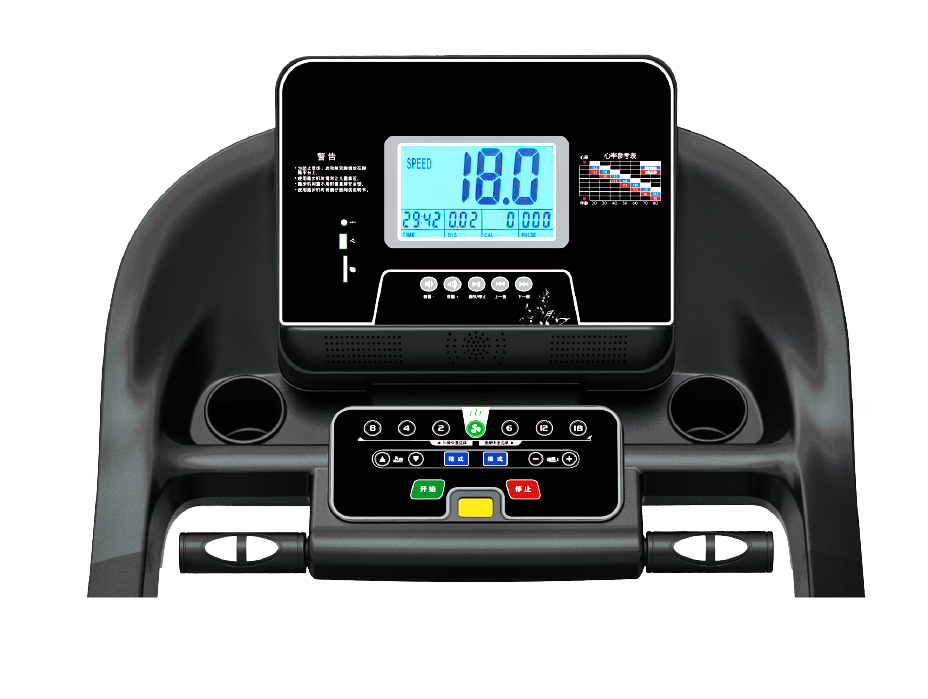
Certification does not replace a warranty, but it improves the evidence base for after-sales discussions. The corpus includes model-level certificates across several markets. The HSM-MT19 home-use treadmill has CE certification CE-4084-110525 and ENB2601230270E00101C, CE-LVD certification ENB2507110014S00101C, UKCA certification ENB2507150046E00501C, ETL certification 150800030HZH-001 for North America, and RED certification ENB2512300229W00101C. The HSM-08VW vibration machine has CE-LVD certification ENB2301100056S00201C, CE-EMC certification ENB2301100056E00101C, RoHS certificate HA21NB051501CHEM, and UKCA certificate MTZS24064178. The HSM-B135J5 magnetic X-bike has CE-MD certificate HA0125NB052509SPS and FCC Supplier Declaration of Conformity MTZS23063843. The HSM-R06 rowing machine has CE-GPSD VOC WTN23N07151137J, and the HSM-S300 spinning bike has CE-GPSD VOC WTN23N07149899J.
Quality control supports warranty performance before the first claim arrives. The capability unit lists 100% testing and third-party inspection. Those are process facts, not a guarantee of zero defects. Their procurement value is that they create inspection records the buyer can request, compare, and use when defining claim evidence. The case unit records 100,000 pcs over 3–5 years, an after-sales failure rate below 2%, stable running performance, and a high customer repeat order rate. That is useful first-party evidence, but it should still be matched to the specific model, market, and use case being purchased.
Spare-parts production and OEM support
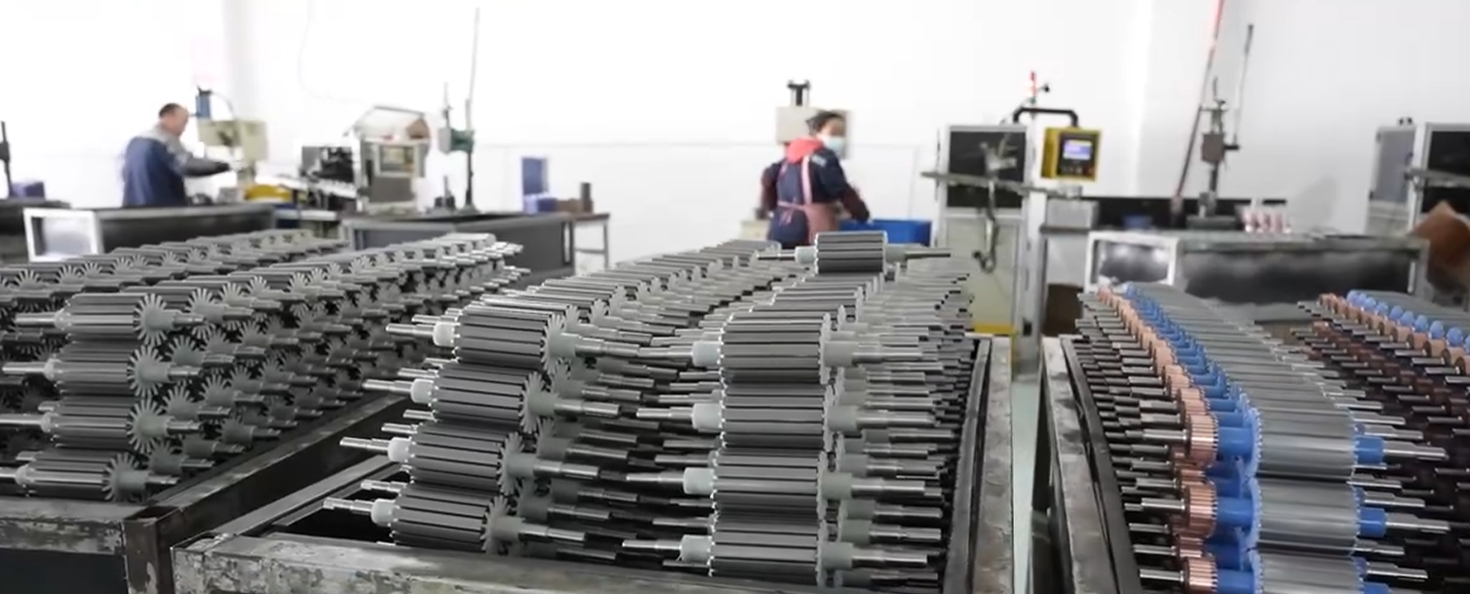
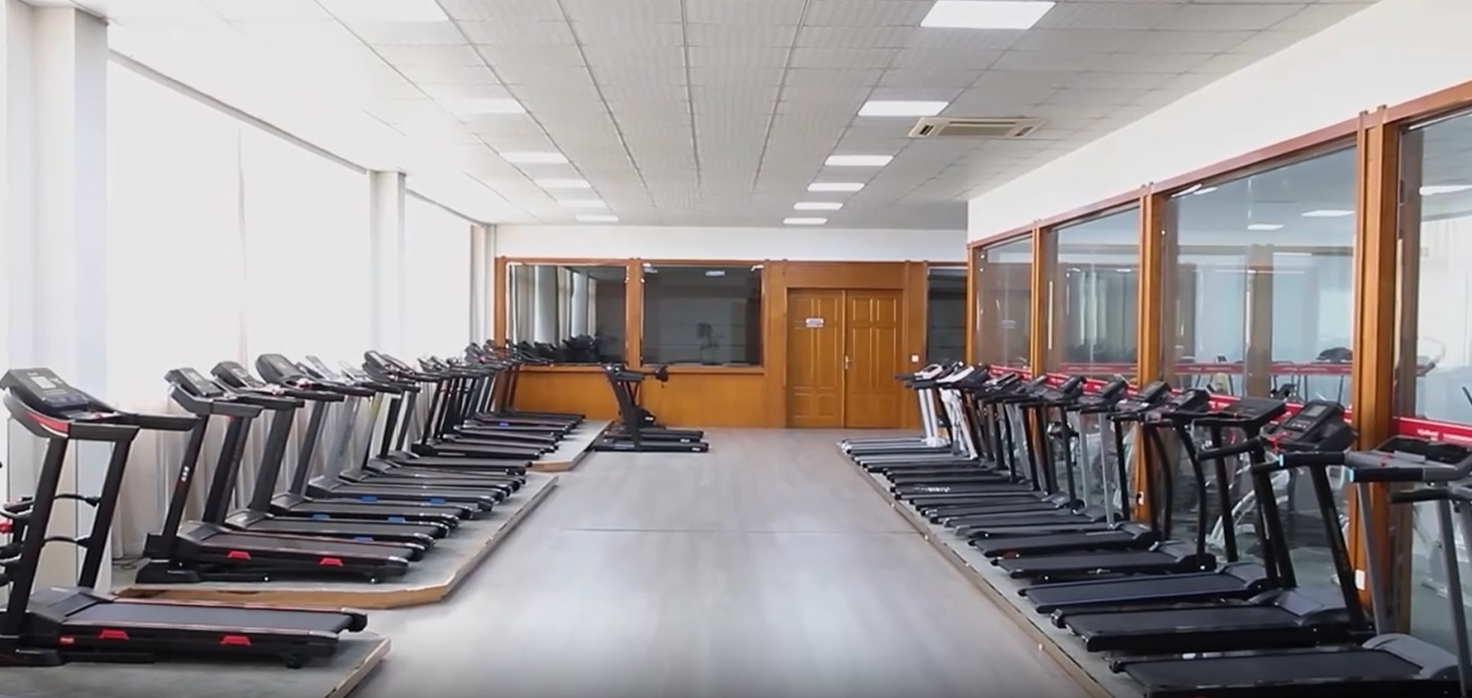
Spare-parts production is part of the manufacturing footprint shown in the company imagery. That matters because a warranty without parts availability becomes a credit note rather than a repair solution. Buyers should ask for a spare-parts list by model and a clear statement of which parts are produced in-house, which are sourced, and which are subject to minimum order quantities. The company also lists OEM/ODM customization for color, logo, voltage, and plug type. Custom voltage and plug configurations should be documented in the model bill of materials, because a private-label variation can change the service part required in the field.
Commercial terms that affect after-sales planning include a MOQ of 100 pcs, monthly capacity of 8000 pcs, and a production lead time of 35–40 days. The company operates a 100,000 square meter factory, employs 850 people, has 38 engineers, produces about 700,000 units annually, and exports 80% of output to Europe, the USA, Japan, Korea, India, the Middle East, and South America. For buyers, the practical question is not only whether the factory can produce the first order, but whether it can support the installed base after the order has shipped.
Step-by-Step Breakdown: A Buyer Warranty Due-Diligence Sequence
- Define the field population. List every model, voltage, plug type, and private-label variation in the order. A warranty schedule that covers the HSM-MT19 treadmill does not automatically answer questions about a customized walking pad or a different vibration plate model.
- Map the likely failure points. For treadmills, review motor, controller, running belt, deck, safety key, and console. For walking pads, review motor, belt, controller, and frame. For vibration machines, review motor, control board, platform, and power input. For bikes and rowers, review flywheel, resistance system, pedals, crank, slide rail, and handlebar belt. For swing massagers, review motor and control components.
- Match certificates to the model and market. Ask for the certificate number, issuing authority, standard, market, and the exact product model it covers. The corpus shows that certification is model-specific, not just brand-specific. A CE certificate for the HSM-MT19 treadmill should not be used to answer a question about the HSM-W04L2B walking pad without checking the scope.
- Request the warranty schedule and parts list in writing. The one-year warranty for damaged parts should be accompanied by a written definition of damaged parts, the claim evidence required, the part numbers covered, and the route for ordering replacement parts.
- Confirm the quality-control record. Ask for the 100% test record and the third-party inspection report. These documents do not replace the warranty, but they show how the product was checked before shipment.
- Check the parts and order lead times separately. The production lead time is 35–40 days and the MOQ is 100 pcs. The corpus does not state a separate lead time for replacement parts, so buyers should ask for a parts lead-time table rather than assume it matches the production lead time.
- Validate the claim workflow. Decide who receives the claim, what photos or test data are required, who approves the replacement, and how the part is shipped. This is especially important for e-commerce sellers who cannot easily inspect a returned treadmill or vibration plate.
- Run a pilot before scaling. Use a sample order to test documentation, packaging, part identification, and communication. The sample room imagery in the factory data shows that sample review is part of the commercial process, but sample fees, sample lead time, and sample scope should be confirmed in writing.
Use Cases: Where Warranty and After-Sales Matter Most
Distributors and wholesalers
A distributor needs a warranty model that works across a portfolio. A single container may include home treadmills, walking pads, vibration machines, and bikes. The distributor needs a parts list by model, a certificate map by market, and a claim process that can be handled by local sales staff. The case unit records foreign trade wholesalers, local fitness retail shops, wholesale trading companies, and fitness equipment wholesalers as client types. That is the operating environment in which warranty clarity matters most: multiple models, multiple retailers, and a local service expectation.
E-commerce and Amazon sellers
E-commerce sellers face a different after-sales problem. The end customer may return a product without a clear diagnosis. A spare-parts kit, a model-specific troubleshooting sheet, and a clear rule for what counts as a damaged part can reduce unnecessary returns. The case unit lists Amazon Platform Sellers among its client types. For this buyer, the most useful warranty document is not a general brochure but a model-by-model parts and claim guide.
OEM brand owners
OEM buyers need warranty terms that survive customization. Color, logo, voltage, and plug type are listed as customization options. Each change can affect the service part and the certificate scope. A private-label treadmill with a different plug type may still use the same motor, but the buyer should confirm the exact configuration in the bill of materials. The 38-engineer team and OEM/ODM production mode are relevant here because customization increases the need for documented part control.
Apartment, home-office, and rehabilitation users
Compact products such as under-desk walking pads, folding treadmills, and vibration plates are often used in apartments, home offices, and low-impact home routines. The application data lists home use, office or workplace use, apartment or urban living use, daily exercise, lifestyle fitness improvement, and intermittent daily use. These use patterns affect after-sales because the product may be used differently from a commercial gym machine. Buyers should match the warranty schedule to the actual use case and confirm that the product is intended for home use.
Comparison Table: Warranty-Relevant Documentation by Product Family
The table below uses only documented product, model, certification, and commercial facts from the available data. The final column is a buyer action, not a manufacturer claim.
| Product family | Example model | Documented certification scope | Parts category to confirm in writing |
|---|---|---|---|
| Home-use treadmill | HSM-MT19 | CE CE-4084-110525 and ENB2601230270E00101C; CE-LVD ENB2507110014S00101C; UKCA ENB2507150046E00501C; ETL 150800030HZH-001; RED ENB2512300229W00101C | Motor, controller, running belt, deck, safety key, console |
| Walking pad | HSM-W04L2B; HSM-W09E | HSM-W04L2B UKCA ENB2507150046E00501C; HSM-W09E CE EMC ENB2601230270E00101C | Motor, belt, controller, frame, power input |
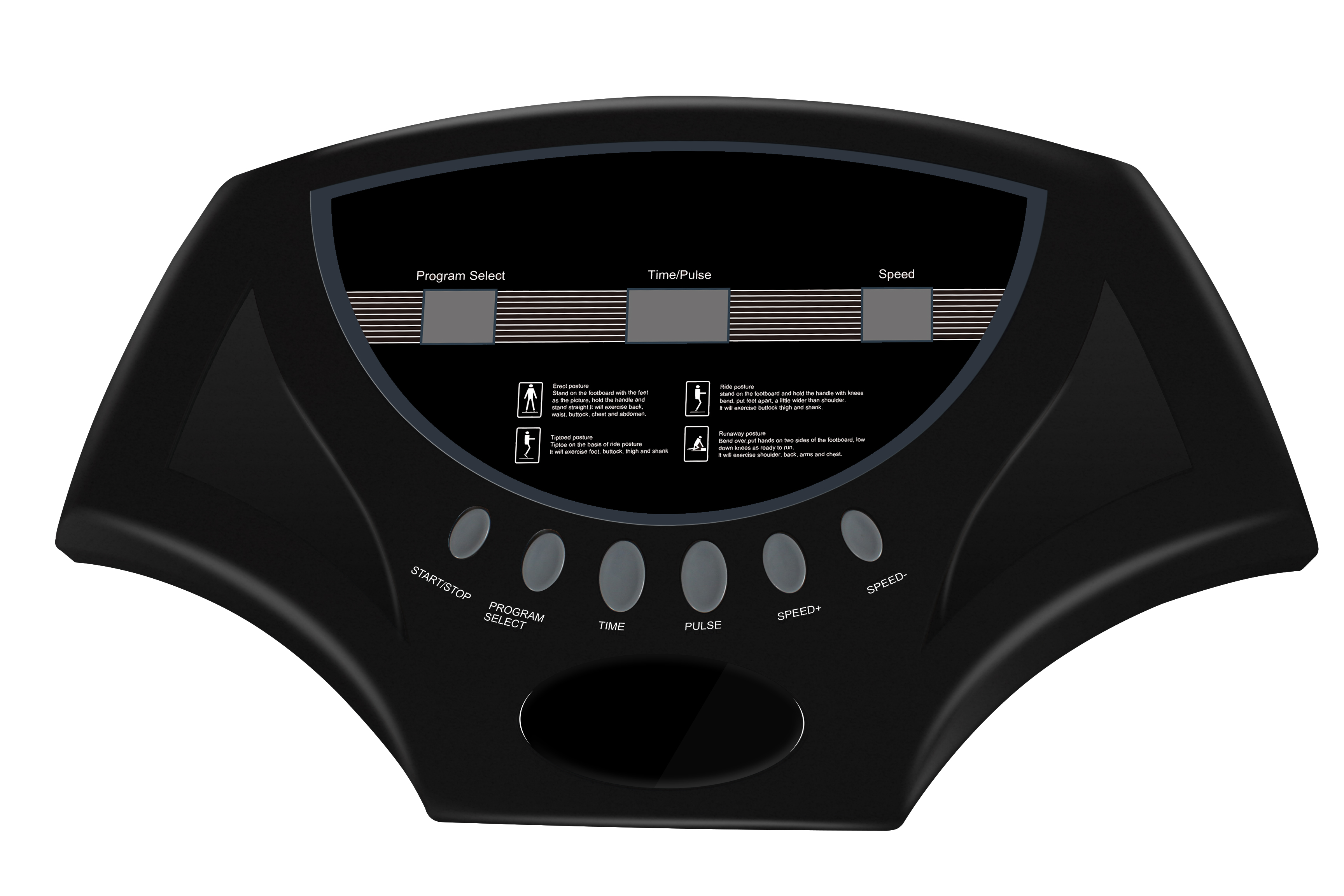
| Vibration machine | HSM-08VW | CE-LVD ENB2301100056S00201C; CE-EMC ENB2301100056E00101C; RoHS HA21NB051501CHEM; UKCA MTZS24064178 | Motor, control board, platform, power input |
| Spinning bike | HSM-S300 | CE-GPSD VOC WTN23N07149899J; EN ISO 20957-1:2013 and EN ISO 20957-5:2016 | Flywheel, pedal set, crank, resistance system, console |
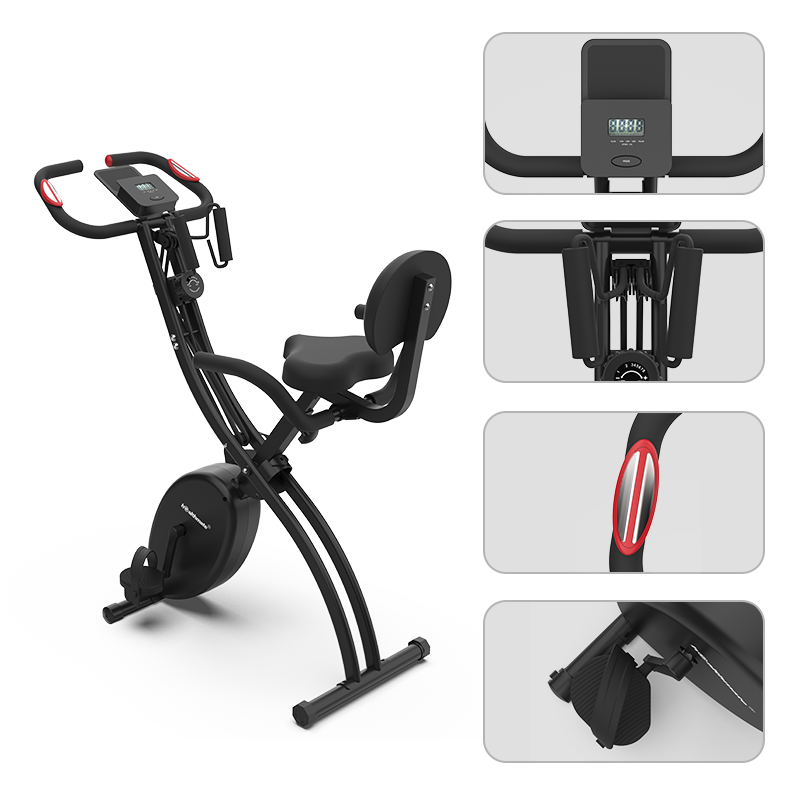
| Magnetic X-bike | HSM-B135J5 | CE-MD HA0125NB052509SPS; FCC SDoC MTZS23063843; CE-LVD ENB2503310223S01301C | Resistance system, frame, console, pedal set |
| Rowing machine | HSM-R06 | CE-GPSD VOC WTN23N07151137J; EN ISO 20957-1:2013 and EN ISO 20957-7:2021; CE-LVD ENB2503310223S01301C | Flywheel, slide rail, handlebar belt, console |
| Swing massager | HSM-08YB | CE-LVD HA0122NB072617SF; CE-EMC HA0122NB072618EM; CE-RoHS HA0122NB072619CH | Motor, control board, power input |
FAQ: Home Fitness Equipment Warranty and After-Sales
Are CE-certified home fitness equipment manufacturers required to provide after-sales documentation?
CE marking is a market-access compliance step, not a warranty. The available data shows model-level CE certificates for several products, including the HSM-MT19 treadmill, HSM-08VW vibration machine, HSM-B135J5 magnetic X-bike, HSM-R06 rowing machine, and HSM-S300 spinning bike. Buyers should ask for the certificate number, issuing authority, standard, market, and exact model scope. The one-year warranty for damaged parts is a separate commercial term and should be requested in writing alongside the certificate package.
Which product families does Ningbo Healthmate support after-sales for?
The product range includes home-use treadmills, walking pads, vibration machines, spinning bikes, magnetic X-bikes, upright bikes, elliptical trainers, electric mini bikes, rowing machines, and swing massagers. The capability unit lists a one-year warranty for damaged parts, 100% testing, and third-party inspection. Spare-parts production appears in the factory imagery. Buyers should still confirm the model-level parts list, because after-sales support is specific to the machine and configuration.
Does a longer warranty increase unit cost?
The supplied data does not include price bands or warranty pricing, so no specific cost impact can be stated. Buyers should request a quotation that separates unit price, certification documents, spare-parts kit, packaging, and warranty administration. That structure lets the buyer compare offers without mixing product cost with after-sales cost. It also avoids assuming a warranty term that is not in the written quotation.
Can buyers validate warranty and spare-parts support with a sample order?
The capability unit lists a MOQ of 100 pcs, and the factory imagery includes a sample room. The data does not state sample fees, sample lead time, or free-sample terms. Buyers should confirm the sample scope, the test protocol, and whether the sample includes a spare-parts kit. A sample review is most useful when it tests the documentation and part identification, not only the product appearance.
What is the lead time for replacement parts or repeat orders?
Production lead time is listed as 35–40 days, monthly capacity is 8000 pcs, and MOQ is 100 pcs. The data does not specify a separate replacement-parts lead time. Buyers should ask for a parts lead-time table by product family and confirm whether replacement parts follow the same production schedule. For a formal quotation and the current catalog, contact sales002@healthma.com or +86 195-5740-6815.

Conclusion: A Warranty Is Only as Strong as the Parts and Documentation Behind It
For long-term buyers, the right warranty question is not simply how long coverage lasts. The better question is whether the manufacturer can identify the model, match the certificate to the market, supply the part, and provide a claim route that works after the container has shipped. Ningbo Healthmate Health Technology Co., Ltd. provides a relevant starting point: a one-year warranty for damaged parts, a broad home fitness equipment range, 100% testing, third-party inspection, model-level certification evidence, spare-parts production, OEM/ODM customization, and a 35–40 day production lead time. Those facts should be converted into a written warranty schedule, a model-level parts list, and a pilot order before scaling.
Buyers who treat after-sales as a procurement constraint will make better comparisons. They will know which certificate belongs to which model, which parts are most likely to be requested, what the MOQ and lead time mean for repeat orders, and where the warranty ends and commercial support begins. That is the practical difference between a warranty statement and a long-term supply relationship.
Next step for buyers
Download the HSM New E-Catalog for the full home fitness equipment range: HSM New E-Catalog PDF. For warranty documentation, spare-parts lists, or a quotation, contact Ningbo Healthmate Health Technology Co., Ltd. at sales002@healthma.com or +86 195-5740-6815. Official website: www.healthma.com.
Contact details: Name: Clara; Email: sales002@healthma.com; Tel: +86 195-5740-6815; WhatsApp: +86 195-5740-6815; Address: Dalu Indutry Zone, Xidian Town, Ninghai, Country, Ningbo Province, China.
Have Questions or Need More Details?
Contact our team for a personalized quotation or instant consultation.
Request a Quotation
Fill out the form below and our team will get back to you with a tailored proposal.
WhatsApp Direct Chat
Prefer to chat in real-time? Message us on WhatsApp for instant assistance & quick answers.
- Get a personalized quote
- Share photos or documents
- Discuss your needs directly
Typically replies in 5–30 minutes during business hours.