
Long-Term Home Fitness Equipments Partnerships: OEM FAQ, Support, and After-Sales
Short answer: A long-term OEM/ODM partnership for Home Fitness Equipments holds together on four documented routines — a fixed communication cadence, written acceptance criteria, a clear spare-parts and after-sales split, and a repeat-order plan that locks the approved specification. Buyers who settle those four items before the first bulk order avoid the most expensive failure mode in this category: silent specification drift between order one and order three.
This guide is written for importers, distributors and brand owners who have already decided to source home-use fitness equipment and are now working out how the relationship should run after the sample is approved. It answers the questions buyers ask most often about OEM communication, repeat-order planning, purchasing terms, acceptance checkpoints and post-sale support, and it uses five concrete models — the HSM-MT296 motorized folding treadmill, the HSM-W04L1BL home walking treadmill, the HSM-08VQ vibration plate, the HSM-S300 endurance training bike and the HSM-R06 indoor rowing machine — to show why different categories need different support.
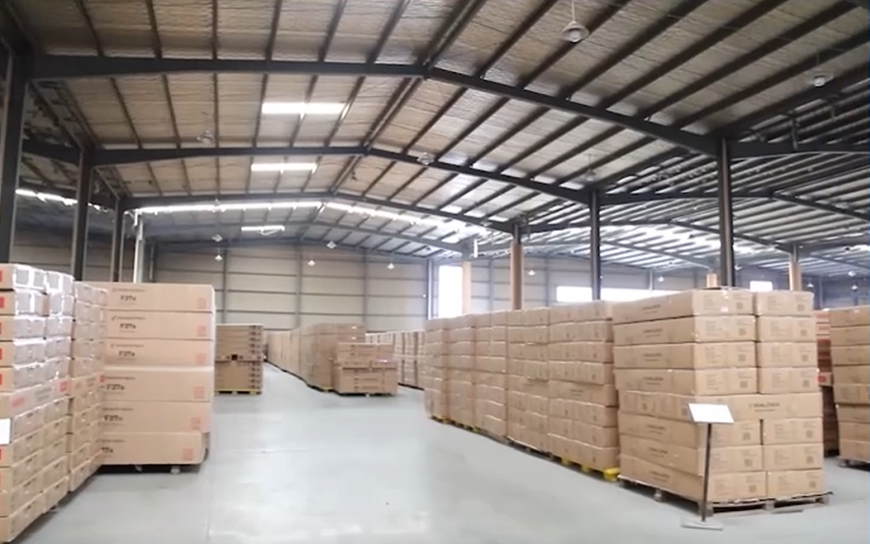
Warehouse operations at the Ningbo manufacturing base, the handover point between production and export shipping.
Why Most Home Fitness Equipments OEM Relationships Break Down After the First Order
The first bulk order is rarely the problem. The trouble usually surfaces between the second and fourth order, when assumptions that were never written down start to diverge.
- Undocumented specification changes. Motor suppliers, running-belt texture, console firmware and packaging can all be switched without formal notice. Unless a specification version is frozen and every change is signed off, the buyer only finds out when the container arrives.
- No shared acceptance criteria. If the inspection checklist lives only in the supplier's head, whether a shipment is acceptable depends on who happens to be checking that week.
- Ambiguous after-sales ownership. A warranty statement is not an after-sales plan. Which component is covered, for how long, who pays for local labour and how spare parts are shipped all have to be agreed in writing. In most markets, local repair falls on the importer, so the conversation that matters is about spare-part availability, not about on-site service.
- No repeat-order rhythm. Reorders are often placed when stock runs out rather than planned in advance. That squeezes both production scheduling and freight, and it is usually where quality shortcuts appear.
Home-use equipment adds a further layer of difficulty because the end environment is a living space. The typical operating conditions are home use, office or workplace use, and apartment or urban living. That shapes concrete buying requirements: space-saving or foldable design, an anti-slip running belt, a motor that can handle repeated daily use, ergonomic design for long-term home use, and a stable frame suitable for apartment flooring.
Industry Background: What Buyers Are Working With in 2026
Fortune Business Insights projects the global home fitness equipment market at USD 13.76 billion in 2026 (SRC-0001). A longer series from the same publisher values the market at USD 12.88 billion in 2025 and projects USD 22.99 billion by 2034 at a CAGR of 6.81% (SRC-0008). Mordor Intelligence forecasts growth from USD 11.84 billion in 2026 to USD 17.06 billion by 2031 at a CAGR of 7.59% (SRC-0009). These are commercial forecasts with different base years and scope assumptions, so they are best read as directional rather than as figures that can be subtracted from one another.
Category structure matters more for sourcing decisions than the headline total. Motorized treadmills accounted for 83% of treadmill shipment share in 2023 (SRC-0001), which is part of why treadmill motor platforms and after-sales parts lists sit at the centre of most OEM negotiations. Magnetic resistance held 62.4% of the indoor cycling bike market in 2025 (SRC-0001), consistent with the quieter, lower-wear architectures used in home and apartment products. On the standards side, ASTM F2276 is the core safety standard applied to home fitness equipment, covering stability and protection around moving parts (SRC-0003).
The implication for long-term cooperation is straightforward: the more stable the product architecture, the more the relationship shifts from negotiation to support. Running belts, motors, magnetic resistance systems and consoles recur across multiple orders, which is why an agreed consumables and spare-parts list is worth more over three years than a single discount on the first container.
What a Workable Long-Term Partnership Actually Includes
Ningbo Healthmate Health Technology Co., Ltd. is a home fitness equipment manufacturer established in 2007, operating from a 100,000-square-metre facility on the coastline of Ningbo, close to Ningbo Port for shipping. It employs approximately 850 people and reaches an annual production capacity of 700,000 units. Export business accounts for 80% of total sales, with major markets including Europe, USA, Japan, Korea, India, the Middle East and South America. Its main products include Home-use Treadmill, Walking Pad, Vibration Machine, Spinning Bike, Magnetic X-bike, Upright Bike, Elliptical Trainer, Electric Mini Bike and Rowing Machine, backed by an R&D team of 38 engineers.
That profile is useful context, but scale on its own does not produce a workable partnership. Four mechanisms do.
1. A Communication Cadence That Is Written Down, Not Assumed
A long-term arrangement should name one commercial contact, one technical contact, a fixed weekly or fortnightly review slot, and a single written channel for specification changes, quality issues, shipment updates and spare-part requests. The common buyer mistake is letting day-to-day communication fragment across several people, so the same change gets two different answers. The workable version is: one account manager for commercial topics, one engineering contact for technical topics, and every change confirmed in writing and filed in the same place.
2. Engineering Support With Version Control
When a supplier has an in-house R&D function, customisation should start from a drawing or specification sheet rather than a chat message. Each revision — console layout, packaging structure, motor or flywheel specification — enters a version table so that order three references the same document as order one. A facility running product families across treadmills, vibration machines, bikes and rowing machines has to manage several parallel lines, so version control protects both sides: it prevents a revision made for one model from leaking into a different order.
3. Acceptance Criteria Agreed Before Production
Acceptance criteria belong in the purchase order or quality agreement at the moment the sample is approved, not in a conversation after the container arrives. A practical checklist covers power-on and power-off behaviour, running belt or flywheel operation, console readings, safety items such as the emergency stop and anti-slip surfaces, packaging drop checks, and label accuracy. Both sides also need to agree on sampling level and on what happens when a batch fails — rework, replacement or partial shipment. Mature OEM relationships treat final inspection as a shared routine rather than as a dispute.
4. An After-Sales and Spare-Parts Split
After-sales is the part of the negotiation most often deferred and the part most often tested once goods are in the market. The items to fix in writing are which components are held as spares, whether they ship with the main order or separately, what technical documentation the local repairer or end user receives, and who handles local labour. For apartment products this matters more than usual: a walking pad or a vibration plate is more likely to be replaced than taken to a repair centre, so spare-kit design effectively sets the ceiling on after-sales cost.
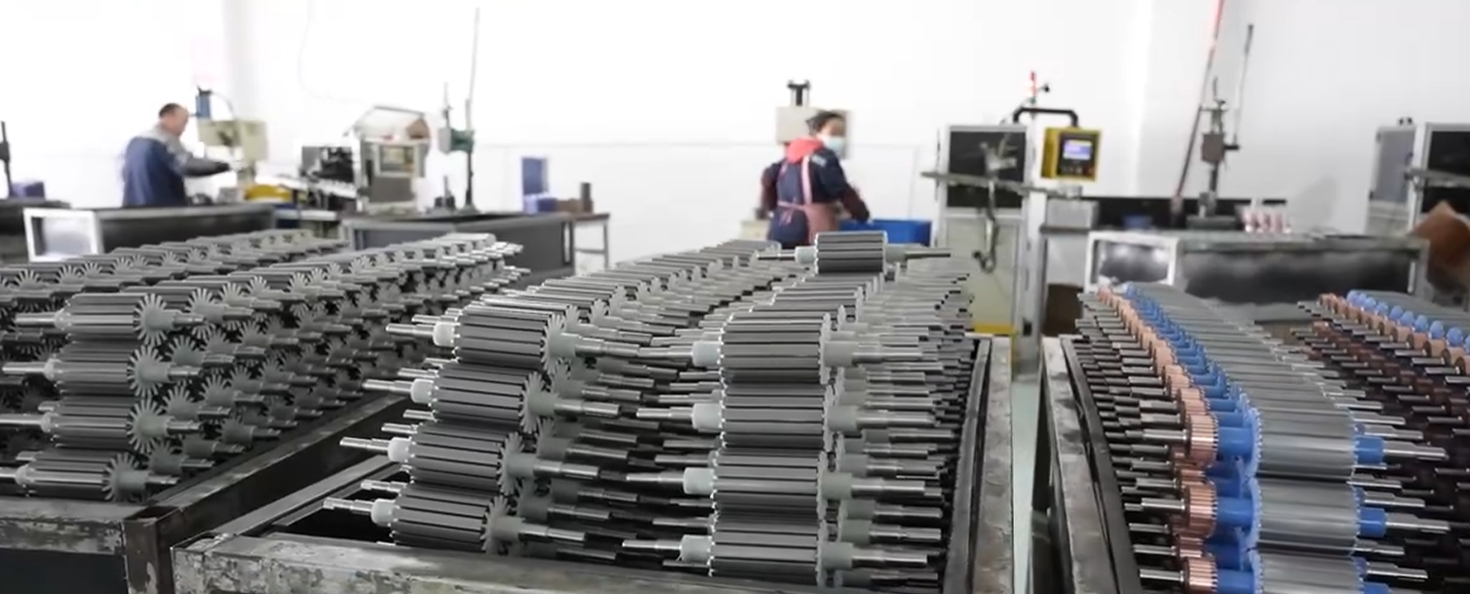
Spare-parts production at the Ningbo base — parts availability is what separates a one-off purchase from a supply agreement.
Step-by-Step: From Category Selection to a Repeatable Order
- Step 1 — Match the category to the target market. Apartment projects, home-office setups and full home gyms point to different product mixes. An under-desk walking pad suits working hours, a vibration plate suits small floor areas, while a treadmill or a rowing machine needs runway or slideway length. Ask the supplier for a category-to-space match before locking models.
- Step 2 — Validate with samples. Test a sample of every SKU you intend to list, not only the flagship. Record measured dimensions, noise behaviour, console functions and packaging condition, and keep those records as the baseline for later shipments.
- Step 3 — Freeze the specification version. Once the sample is approved, convert it into a dated specification sheet covering model code, materials, key parameters and packaging. Any later change requires written confirmation from both sides.
- Step 4 — Agree commercial terms and capacity reservation. Confirm pricing structure, payment rhythm, minimum order quantity and delivery schedule, and clarify how capacity is handled if volumes exceed the forecast and how peak-season orders are scheduled.
- Step 5 — Put the communication cadence into the agreement. Write down the named contacts, the reporting rhythm and the escalation path. A communication clause with response expectations prevents most relationship failures before they start.
- Step 6 — Run the after-sales loop from the first shipment. Track spare-part consumption and fault reports after the first arrival, then use that data to adjust spare kits and to set inspection priorities for the next production run.
Use Cases: How Support Needs Differ by Category
Motorized folding treadmill — HSM-MT296. This is a motorized treadmill for home use, classified as a folding home treadmill with auto incline, with a speed range of 1-20 km/h and a maximum user weight capacity of 150 kg. It runs a 2.0 HP motor, a 1200 x 520 mm runway, 16 programs, and includes a massager set with Bluetooth music and APP function. Long-term support for this category concentrates on the motor and running belt, the auto-incline mechanism, the folding hinge, and the parts most exposed to transit damage — in other words, the components that decide whether the customer reorders.
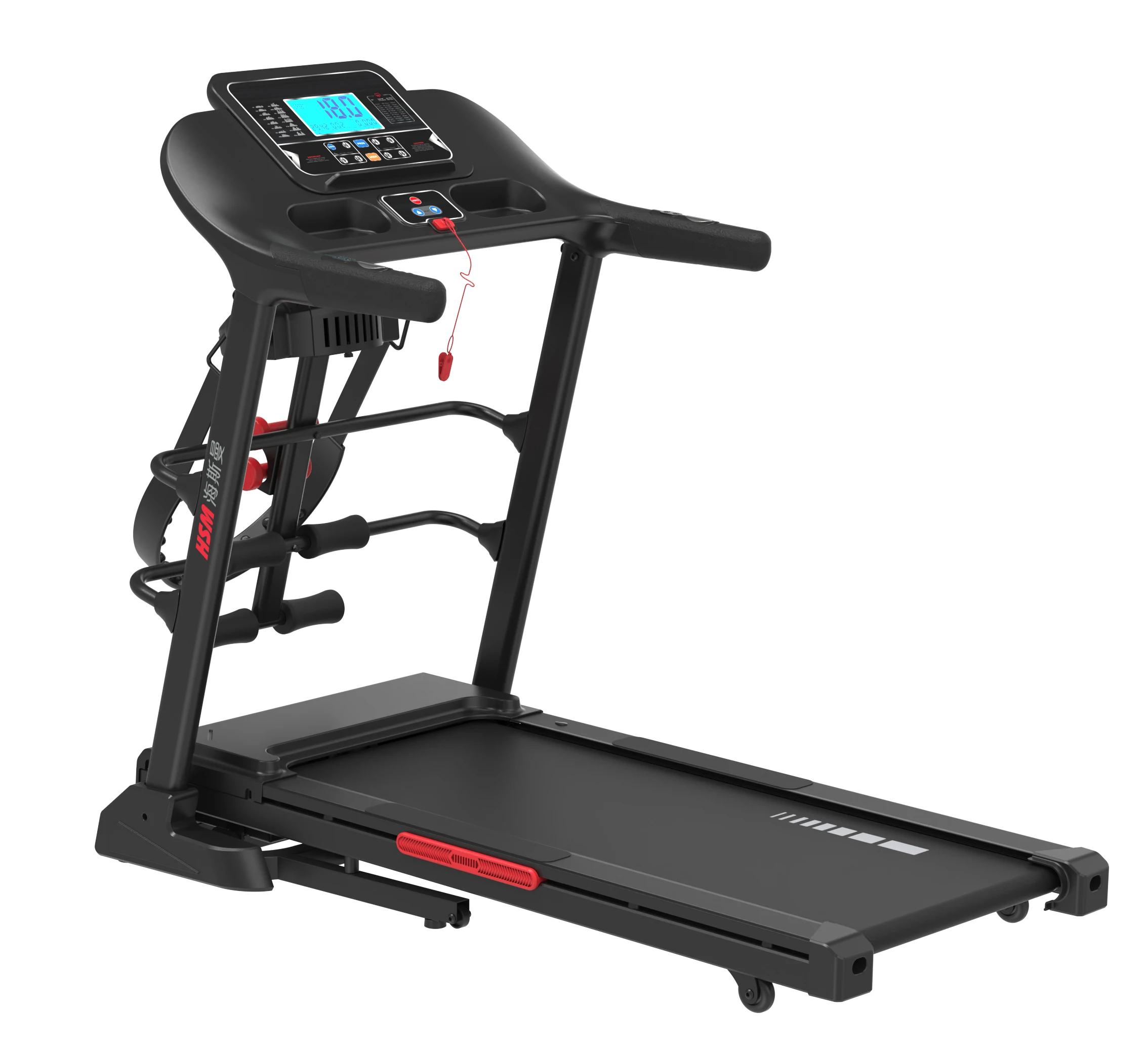
HSM-MT296 motorized folding treadmill: 2.0 HP, 1-20 km/h, 1200 x 520 mm runway, 150 kg user capacity.
Home walking treadmill and under-desk walking pad — HSM-W04L1BL. This is a home walking treadmill built with a brushless motor for quieter operation and a compact footprint. It runs 1-6 km/h at 0.75 HP, with a 900 x 380 mm runway, a net weight of 21 kg and a product size of 1130 x 510 x 91 mm across 6 programs. Because these units are shipped into apartments and are expensive to return, the long-term support conversation covers anti-slip belt quality, stability during use, and packaging that survives repeated handling.
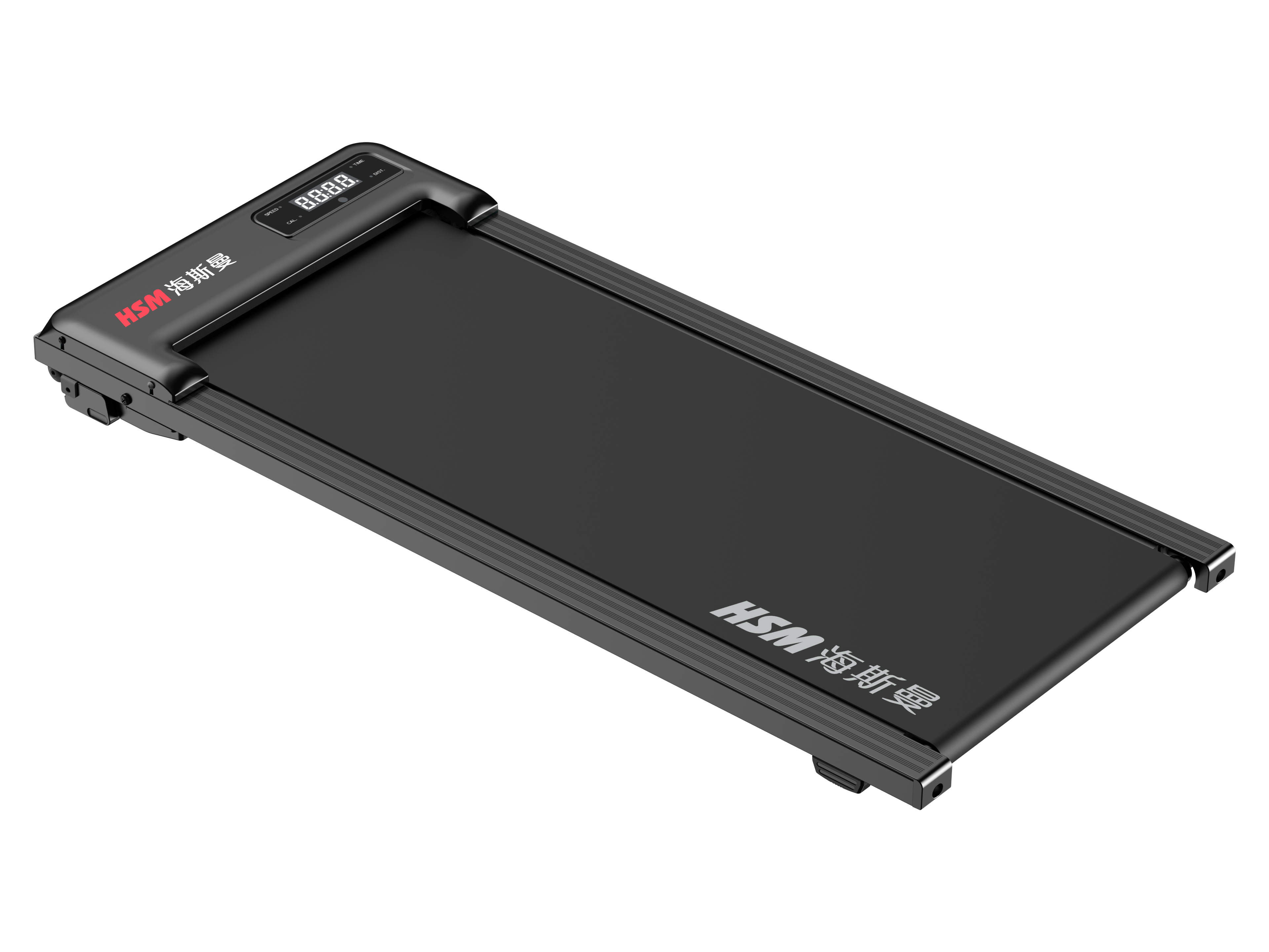
HSM-W04L1BL under-desk walking pad: brushless motor, 0.75 HP, 900 x 380 mm runway, 21 kg net weight.
Vibration plate — HSM-08VQ. A portable whole-body vibration plate with a combined power output of 500W+300W, 20 speed levels, a timing range of 1-10 minutes, a screen displaying Speed, PRO., Time and Mode, and a gross weight of 24 kg. The recurring risk on this category sits in the electronics and the control panel, so the spare-parts list is largely built around those items rather than around the frame.
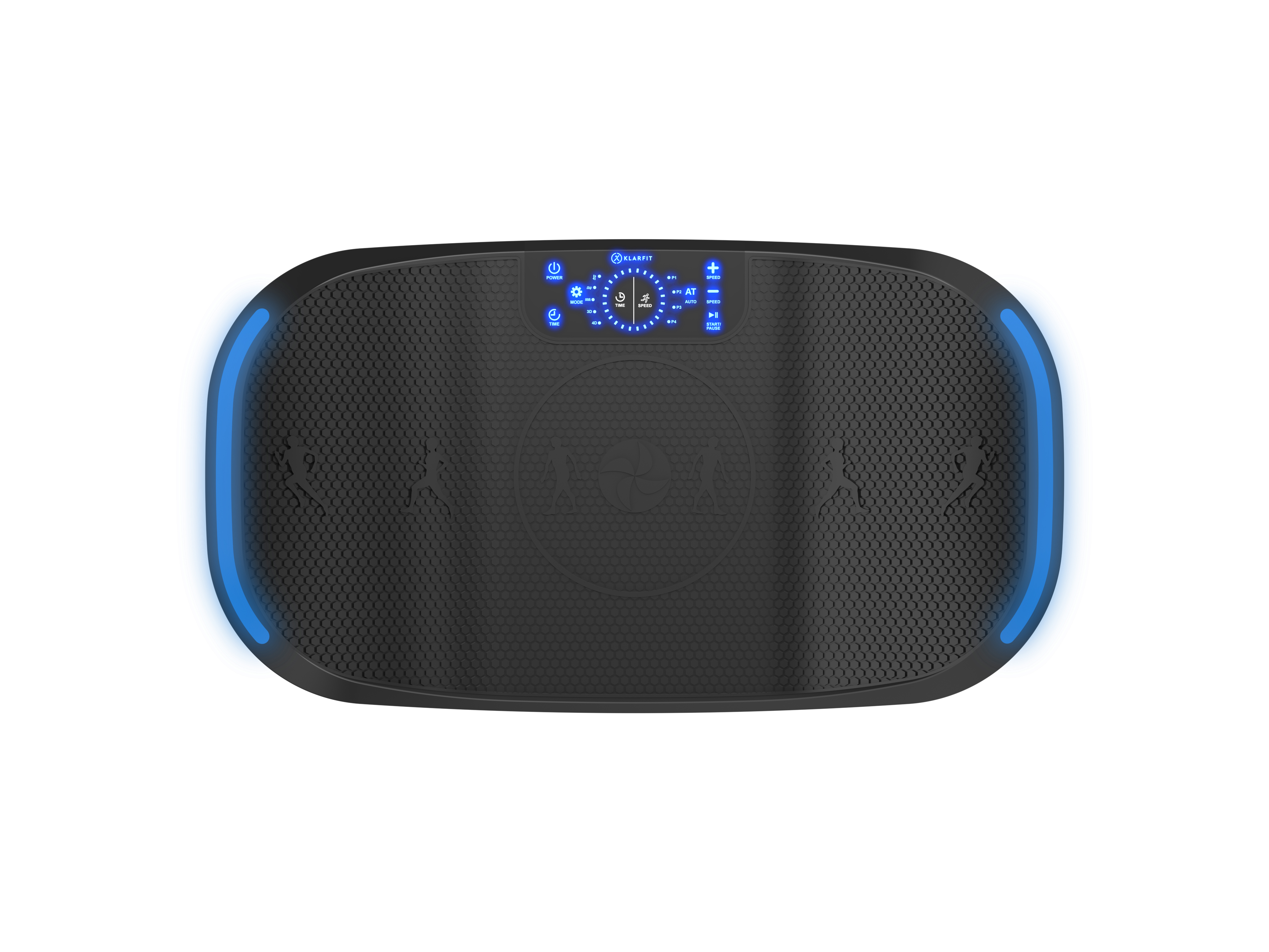
HSM-08VQ control screen: Speed, PRO., Time and Mode readouts across 20 speed levels.
Endurance training bike — HSM-S300. A magnetic resistance spinning bike designed for apartment use, with a 6.0 kg flywheel, stepless resistance with APP control from level 1 to 10, handrail altitude control in 1-5 levels, cushion altitude control in 1-7 levels, an APP Link screen and a net weight of 30 kg. Because the resistance system is electrically controlled, long-term support has to cover app connectivity, flywheel bearings and the resistance module, not just the mechanical frame.
Indoor rowing machine — HSM-R06. This magnetic rowing machine offers 16 resistance levels, a 2.5 kg flywheel, an LCD screen showing Stop, Scan, Time, Distance, Total Strokes and Strokes, a slideway reference of 0-705 mm and a handlebar belt length reference of 0-1700 mm, at a net weight of 24 kg. This category is more exposed to wear on the handlebar belt, pulleys and slideway, so spare-part planning belongs in the first order rather than in year two.
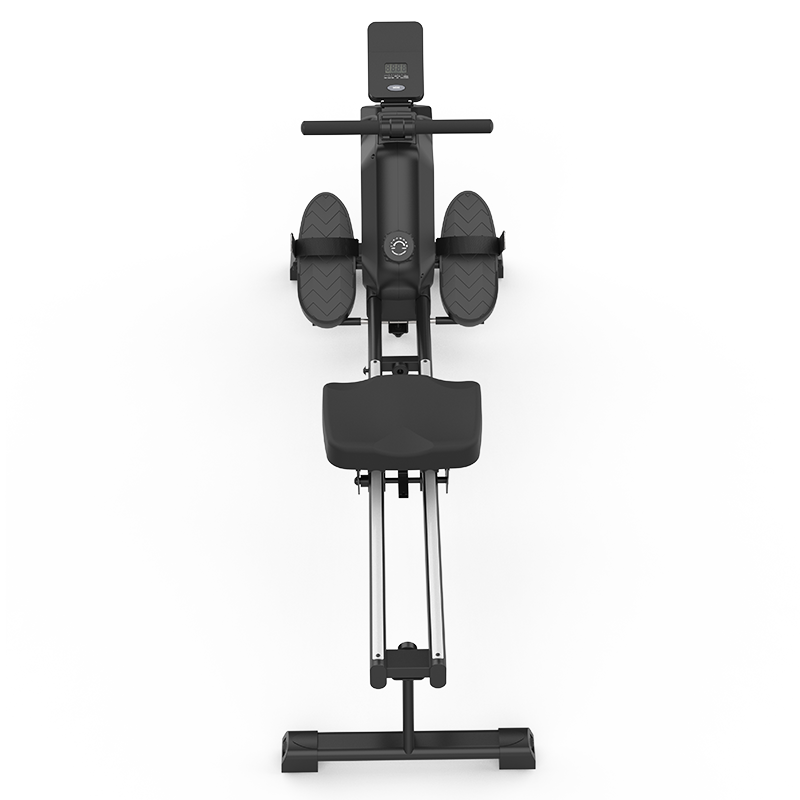
HSM-R06 indoor rowing machine: 16 resistance levels, 2.5 kg flywheel, 0-705 mm slideway reference.
Comparison: Five Home Fitness Equipments Models and Their Long-Term Support Focus
| Model | Category | Verified key specifications | Long-term support focus |
|---|---|---|---|
| HSM-MT296 | Motorized folding treadmill, home use | 2.0 HP; 1-20 km/h; runway 1200 x 520 mm; max user weight 150 kg; 16 programs; auto incline | Motor and running belt, auto-incline mechanism, folding hinge, transit-damage parts |
| HSM-W04L1BL | Home walking treadmill / under-desk walking pad | Brushless motor; 0.75 HP; 1-6 km/h; runway 900 x 380 mm; net weight 21 kg; 1130 x 510 x 91 mm | Quiet operation, anti-slip belt, flat-pack transit protection, apartment-floor stability |
| HSM-08VQ | Portable whole-body vibration plate | 500W+300W; 20 speed levels; 1-10 minutes timing; gross weight 24 kg | Control panel and electronics, speed calibration, control-board spares |
| HSM-S300 | Endurance training bike / magnetic resistance spinning bike | 6.0 kg flywheel; stepless + APP resistance 1-10; handrail 1-5 levels; cushion 1-7 levels; net weight 30 kg | App connectivity, flywheel bearings, resistance module, adjustment parts |
| HSM-R06 | Indoor magnetic rowing machine | 16 resistance levels; 2.5 kg flywheel; slideway 0-705 mm; handlebar belt 0-1700 mm; net weight 24 kg | Handlebar belt and pulley wear, slideway, LCD console, repeat-order spare kits |
Frequently Asked Questions
How is quality kept consistent across repeat orders?
Consistency comes from process rather than from assurance. In practice that means a frozen, dated specification sheet; an acceptance checklist signed by both sides that names the sampling level and the inspection items; and a written communication routine under which any component or material change is documented and confirmed before it ships. Buyers who keep a retained sample record for each production run can compare deliveries against the approved sample instead of relying only on an inspection report. For shipments into the United States or Europe, safety requirements such as ASTM F2276 should also be written into the technical file before purchase rather than checked afterwards.
Can one supplier support a long-term OEM/ODM programme across several categories?
Yes, where the supplier has broad product-family coverage and an in-house engineering team. Ningbo Healthmate Health Technology Co., Ltd. covers nine product families — Home-use Treadmill, Walking Pad, Vibration Machine, Spinning Bike, Magnetic X-bike, Upright Bike, Elliptical Trainer, Electric Mini Bike and Rowing Machine — supported by an R&D team of 38 engineers. Broader coverage shortens development time on multi-category programmes because packaging, control and logistics assumptions can be reused. In practice, each category should still be audited on its own rather than assuming that capability proven in one family transfers to a neighbouring one.
What purchasing terms normally apply to a long-term arrangement?
Terms are negotiated per programme rather than carried over from a generic price list. A long-term agreement usually needs to define tiered or annual pricing for standard and customised SKUs, payment rhythm, minimum order quantity and mixed-load rules, which side carries packaging and shipping-mark costs, capacity reservation for peak season, and the pricing logic for spare parts and warranty-related components. It is worth being cautious about any plan that applies one MOQ and one lead-time rule across every category, because a factory running treadmills, vibration plates and rowing machines cannot schedule all of them on the same production rhythm.
How do samples work before mass production?
Samples should validate the product and the packaging. Buyers should receive the working unit, a retained approved sample, and complete packaging with the correct label, manual and transport carton. Differences between a production sample and a showroom unit are a common source of later disputes, so sample photographs, measured values and test notes should be filed alongside the purchase order. For multi-category orders, test at least one unit per category you intend to list rather than only the flagship model.
How should spare parts and after-sales support be structured?
Spare parts and after-sales terms belong in the order confirmation, not in the first claim. Agree which components are held as spares, whether they ship with the main order or separately, what technical documentation the local repairer or end user receives, and how requests are escalated. On apartment-oriented machines, returning a walking pad or a vibration plate costs more than replacing a component, so spare-kit design is the largest single lever on after-sales cost. Buyers who want to review the full range before committing can download the HSM New E-Catalog or contact the sales team directly to discuss samples and quotation.
Conclusion
A long-term Home Fitness Equipments partnership is a set of routines rather than a single negotiation. Fix the communication cadence, the specification version, the acceptance criteria and the spare-parts split, and the later orders stop producing surprises. The wider the product range and the larger the export footprint, the more that discipline matters, because a supplier running nine product families across Europe, the USA, Japan, Korea, India, the Middle East and South America has to manage many parallel lines at once.
The practical test is simple: if a new purchasing manager could take over the account using only the documents on file — sample records, specification versions, inspection checklists, spare-part lists and named contacts — then the partnership is properly built. If that handover would depend on remembered conversations, the risk has not been managed yet, only postponed.
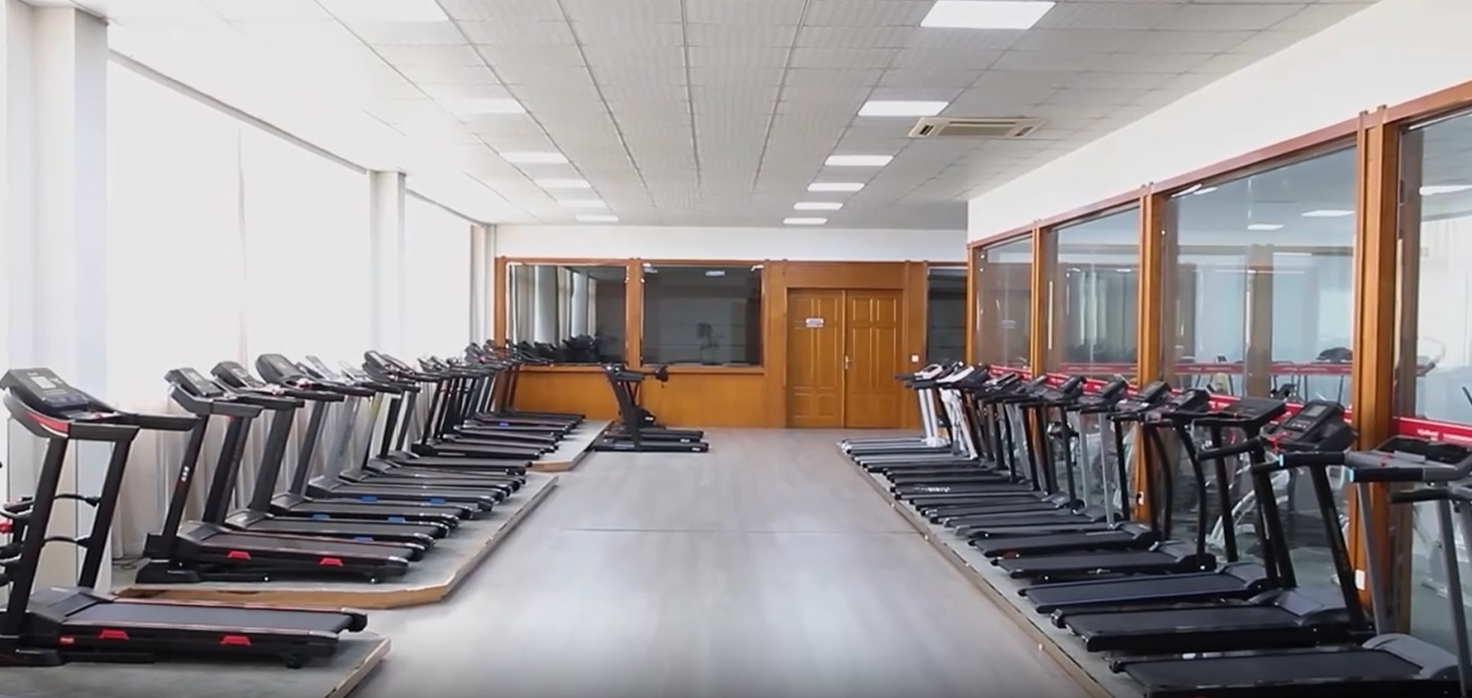
Sample room at Ningbo Healthmate — where OEM/ODM specification versions and acceptance baselines are agreed before bulk production.
Next step: request samples, a quotation package, or the full product catalog from Ningbo Healthmate Health Technology Co., Ltd.
Contact: Clara | Email: sales002@healthma.com | Tel / WhatsApp: +86 195-5740-6815 | Website: www.healthma.com
Have Questions or Need More Details?
Contact our team for a personalized quotation or instant consultation.
Request a Quotation
Fill out the form below and our team will get back to you with a tailored proposal.
WhatsApp Direct Chat
Prefer to chat in real-time? Message us on WhatsApp for instant assistance & quick answers.
- Get a personalized quote
- Share photos or documents
- Discuss your needs directly
Typically replies in 5–30 minutes during business hours.