
OEM Home Fitness Equipments: Inside Ningbo Healthmate's Custom Manufacturing Workflow
OEM Home Fitness Equipments: Inside Ningbo Healthmate's Custom Manufacturing Workflow
Last reviewed: August 2026
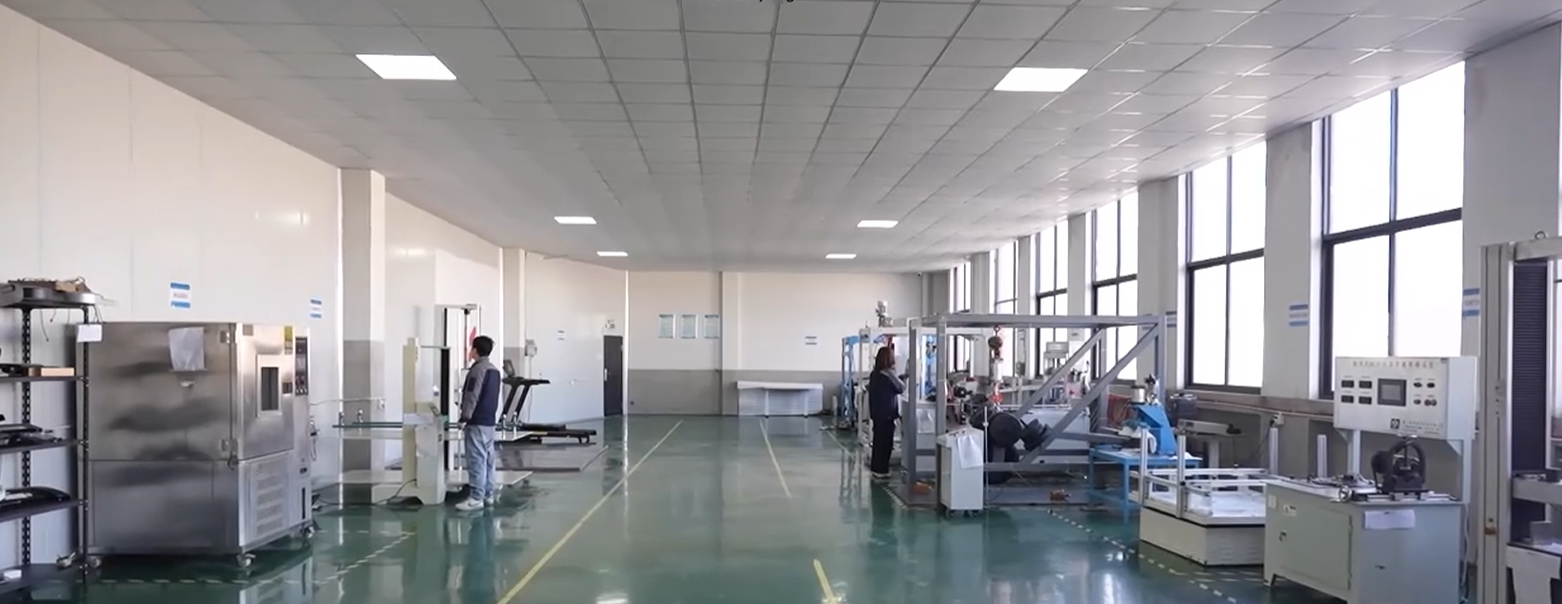
Ningbo Healthmate factory laboratory: R&D and sample verification before OEM production.
OEM home fitness equipments manufacturing is not a single production step. It is a chain of decisions: product platform selection, electrical and visual customization, compliance, testing, packing, and delivery. Ningbo Healthmate Health Technology Co., Ltd. is a manufacturer based in Ningbo, China, that supplies home-use treadmills, walking pads, vibration machines, spinning bikes, magnetic X-bikes, upright bikes, elliptical trainers, electric mini bikes, and rowing machines to buyers in Europe, the USA, Japan, Korea, India, the Middle East, and South America. For a buying team at the evaluation or execution stage, the practical question is not only whether a factory can build a unit, but whether it can build the right unit with the right labeling, the right voltage, and the right documentation on a predictable schedule. This article explains how that capability is structured at Ningbo Healthmate.
Why OEM capability is difficult for buyers to evaluate
Many buyers begin with a product idea and a set of sales channels. The uncertainty appears when they try to compare suppliers. A trading company may offer a wide catalog but have no production floor. A factory may have production capacity but lack the certifications or export experience for a specific market. Without direct factory evidence, a buyer can overpay for a middle layer or under-spec a product. The core evaluation task is to verify four things: in-house manufacturing, customization scope, compliance coverage, and quality-control process.
This is especially important for home fitness equipment because products move through different regulatory and retail requirements. A home treadmill sold in Europe is not handled the same way as a walking pad sold in North America. An Amazon seller may need simple packaging and barcode-ready labels, while a fitness retail chain may need a dedicated logo, voltage configuration, and after-sales spare parts plan. The manufacturer's OEM/ODM setup determines how smoothly these requirements can be executed.
Industry context: the home fitness equipment market in 2026
Demand for home fitness equipment is broad rather than niche. Fortune Business Insights estimates that the global home fitness equipment market was valued at approximately USD 12.88 billion in 2025 and is projected to reach USD 22.99 billion by 2034. The same source reports that cardiovascular equipment, including treadmills and exercise bikes, accounts for 58.89% of the market revenue share. Dataintelo estimates the home treadmill market at USD 5.51 billion in 2025, with motorized models holding 58.2% of that segment. Walking pads are also a growing niche; Straits Research values the walking pad market at USD 4.9 billion in 2025, partly because remote and hybrid work routines have increased demand for under-desk movement. Vibration therapy platforms reached around USD 1.8 billion in 2025, according to Dataintelo, with an expected CAGR of 7.8% through 2034. These figures come from different research firms using different category definitions, so they are best used as directional context rather than exact targets.
Regulation adds a second layer. Motorized treadmills sold in the USA are commonly expected to meet ASTM F2115-19, while the European market applies the EN 957-6 / ISO 20957 series of safety and performance standards. Home fitness products with electrical parts also fall under electrical safety and electromagnetic compatibility requirements. This is why compliance capability is part of OEM capability, not a separate administrative task.
What Ningbo Healthmate's OEM/ODM capability includes
Ningbo Healthmate was founded in 2007. The company operates a 100,000 m² factory in Ningbo, employs about 850 people, and has 38 engineers in its R&D team. Annual output is around 700,000 units, and about 80% of production is exported. Being located in Ningbo gives the factory direct access to Ningbo Port, which helps keep international freight stable and reduces inland logistics for overseas buyers.
For OEM and ODM programs, the company provides customization in color, logo, voltage, and plug type. These are the starting points for a private-label program. Buyers can also start from Ningbo Healthmate's existing product platforms and use the R&D team to adapt details before moving to production.
OEM order parameters
When a buying team moves from capability discussion to execution, the commercial framework matters. Ningbo Healthmate's stated OEM/ODM parameters include a minimum order quantity of 100 pieces, a monthly production capacity of 8,000 pieces, and a lead time of 35 to 40 days. Delivery is FOB Ningbo. Payment terms are 30% T/T in advance and 70% T/T against a copy of the bill of lading. Quality control is based on 100% unit testing, acceptance of third-party inspection, and pre-shipment testing. After-sales support includes a 1-year warranty on damaged parts.
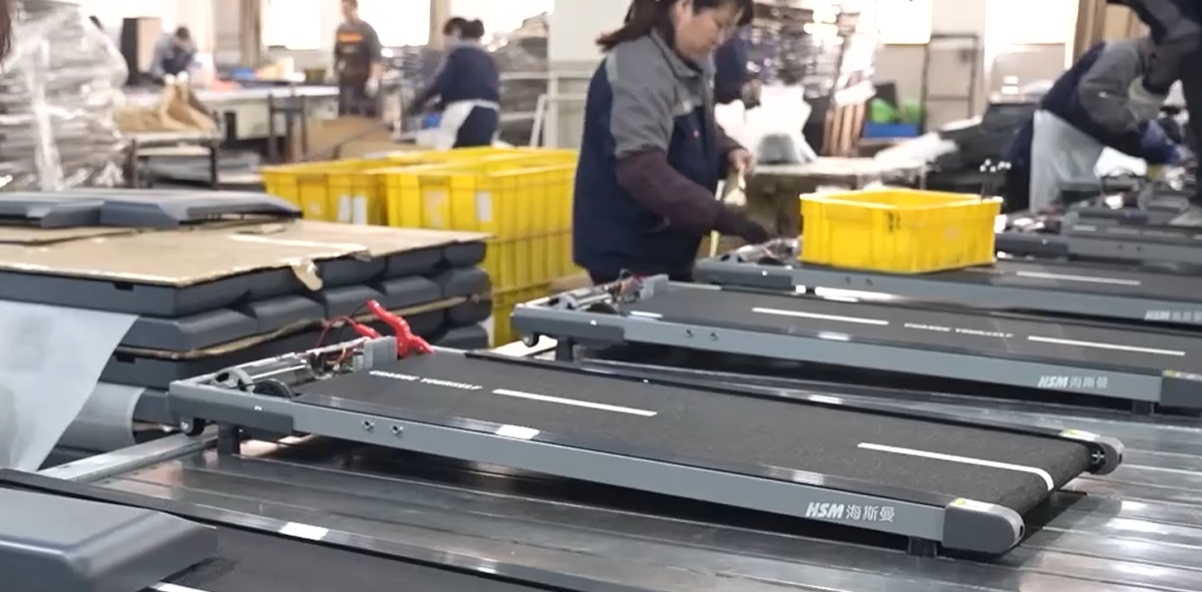
Production line: assembly and inspection are part of the OEM execution workflow.
Product platform comparison for OEM programs
The product range covers several home cardio categories. The table below shows example models from Ningbo Healthmate and the specifications most relevant to an OEM program. These are platform references, not a complete catalog.
| Category | Example model | Core specification | Typical home scenario |
|---|---|---|---|
| Home treadmill | HSM-MT296 | 2.0 HP; 1-20 km/h; 1200x520 mm belt; 150 kg capacity | Cardio training and weight loss |
| Walking pad | HSM-W09E | 1.5 HP; 1-14 km/h or 1-6 km/h; 1100x400 mm belt | Apartment walking and under-desk use |
| Compact treadmill | HSM-T20 | 1.5 HP; 1-14 km/h; 1100x400 mm belt; 33.5 kg gross weight | Small-space home cardio |
| Spinning bike | HSM-S300 | 6.0 kg flywheel; stepless or APP 1-10 resistance; 30 kg gross weight | High-intensity indoor cycling |
| Magnetic X-bike | HSM-B135J5 | 1.5 kg flywheel; 8 resistance levels; 7-level adjustment | Light home cycling and recovery |
| Vibration plate | HSM-08VS | 200 W; 99 speed levels; 9.8 kg gross weight | Body training and vibration fitness |
| Rowing machine | HSM-R06 | 2.5 kg flywheel; 16 resistance levels; 24 kg gross weight | Full-body home workout |
Product specifications are taken from Ningbo Healthmate product files and should be reconfirmed with the current quote.
Compliance snapshot
For buyers, the most useful compliance question is not whether a factory has any certificate, but whether it has the right certificate for the exact product model and destination market. Ningbo Healthmate maintains product-specific compliance documents across several product families.
| Export program | Product scope | Market | Example standard |
|---|---|---|---|
| CE-GPSD VOC | Rowing machine HSM-R06 | EU | EN ISO 20957-1:2013; EN ISO 20957-7:2021 |
| CE-GPSD VOC | Spinning bike HSM-S300 | EU | EN ISO 20957-1:2013; EN ISO 20957-5:2016 |
| CE-LVD and CE-ROHS | Swing massager HSM-08YB | EU | EN 60335-1; EN 60335-2-32; EN 62233; 2011/65/EU |
| CE-MD | X-Bike HSM-B135J5 | EU | 2006/42/EC + (EU) 2023/1230 |
| FCC SDoC | Stationary exercise bicycle HSM-B135J5 | North America | FCC Part 15 Subpart B |
| CE-LVD / CE-EMC | Vibration plate series | EU | EN 60335-1; EN IEC 55014-1; EN IEC 55014-2 |
| UKCA | Vibration plate series | UK | BS EN 60335-1; BS EN IEC 60335-2-32; BS EN 62233 |
| ETL | Motorized treadmill series | North America | UL 1647:2015 Ed.6; CSA C22.2#68:2018 |
| UKCA | Treadmill and walking pad series | UK | BS EN IEC 55014-1; BS EN IEC 61000-3-2; BS EN 61000-3-3; BS EN IEC 55014-2 |
| CE-MD / CE-LVD / CE-EMC | Treadmill series | EU | EN ISO 20957-1; EN 957-6; EN 60335-1; EN IEC 55014 |
Compliance documents are product-specific. Buyers should request the current certificate file for the exact model and target market before order confirmation.
Step-by-step: how an OEM order moves forward
An OEM order becomes easier to manage when the buyer and factory follow a clear sequence. The workflow below reflects the way Ningbo Healthmate positions its OEM/ODM service.
- Define the target market and sales channel first. A retail program in Europe may need CE documentation and specific plug types, while a North American online brand may need ETL or FCC coverage and lightweight packaging.
- Select a base product platform. Buyers can start from a proven model such as HSM-MT296, HSM-W09E, HSM-S300, HSM-B135J5, or HSM-R06, then apply custom color, logo, voltage, and plug type.
- Confirm technical and commercial terms. This includes MOQ, lead time, payment terms, delivery method, and any required certification files.
- Run pre-production checks. Because the factory supports 100% unit testing and accepts third-party inspection, the buyer can verify sample quality before mass production.
- Use pre-shipment testing as the final checkpoint. FOB Ningbo delivery means the buyer controls ocean freight after the goods are loaded at Ningbo Port.
- Plan after-sales support. The 1-year warranty on damaged parts gives the buyer a clear framework for spare parts and service discussions.
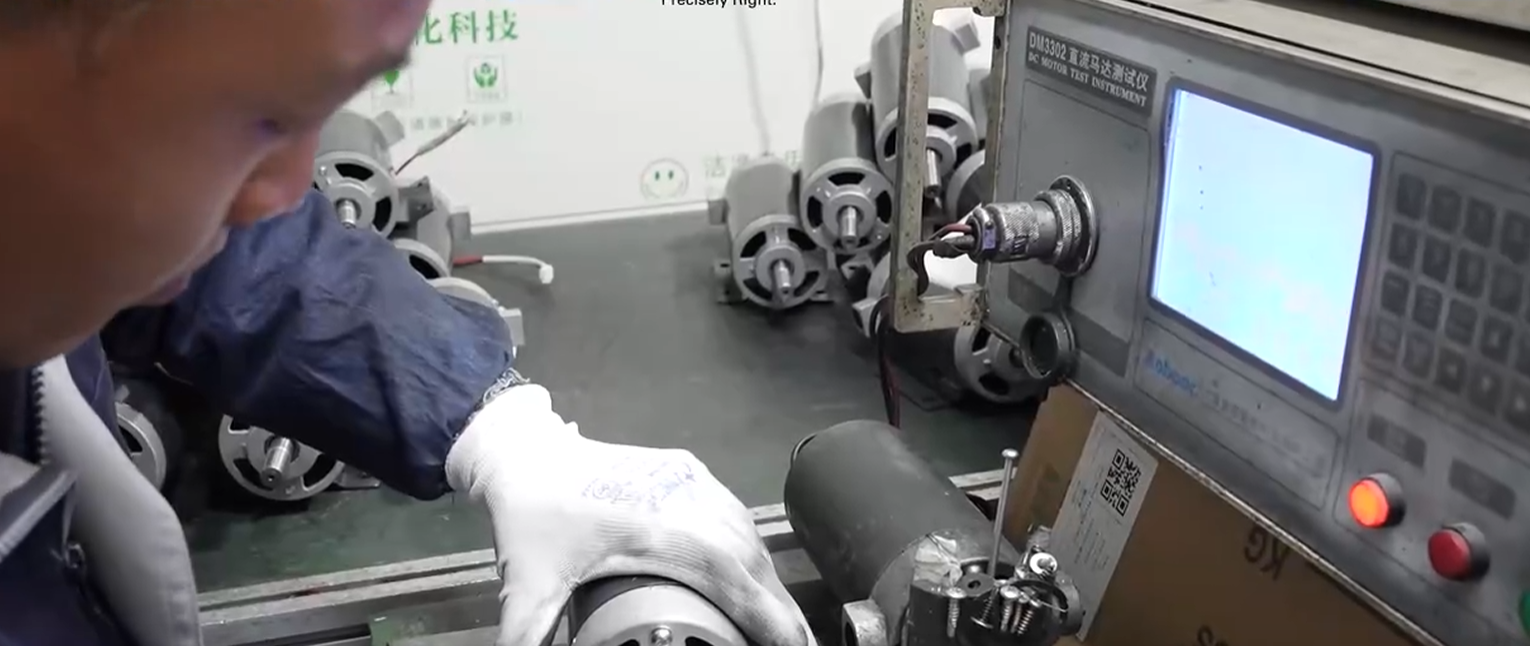
Spare parts production is part of the OEM service chain, supporting after-sales programs.
Use cases from existing OEM-style buying programs
The product range has been used by foreign trade wholesalers, Amazon platform sellers, local fitness retail shops, wholesale trading companies, and fitness equipment wholesalers. These buyer types have different priorities, but they share a need for repeatable production and dependable delivery.
In one long-running buyer program, Ningbo Healthmate products have been used for 3 to 5 years in applications including family daily cardio workout, indoor weight loss training, elder daily rehabilitation exercise, office standing walking, small apartment daily light exercise, post-meal fat burning, low-impact leg cardio training, home daily light fitness, and rehabilitation exercise for joint mild discomfort. The reported program results include stable running performance, an after-sales failure rate below 2%, a high customer repeat order rate, good market feedback on household space demand, and stable vibration output. These results are program feedback, not a general guarantee, but they show how OEM structure can support real retail operations.
Several design features are consistently emphasized for home use: foldable compact structure, multi-level shock absorption, simple operation panel, multiple vibration modes, anti-slip foot mat, and lightweight portable construction. These features help buyers position products for apartments, offices, and first-time home fitness users.
What to check before placing an OEM order
A factory-based OEM partner should be able to answer the following points without vague language.
- Does the factory perform the production in-house or through subcontractors?
- Can the manufacturer provide the certificate file for the exact product model and target market?
- What customization is available for color, logo, voltage, and plug type?
- What is the MOQ, lead time, payment term, and delivery term?
- Does the quality-control process include 100% testing and third-party inspection?
- What is the warranty and after-sales spare parts arrangement?
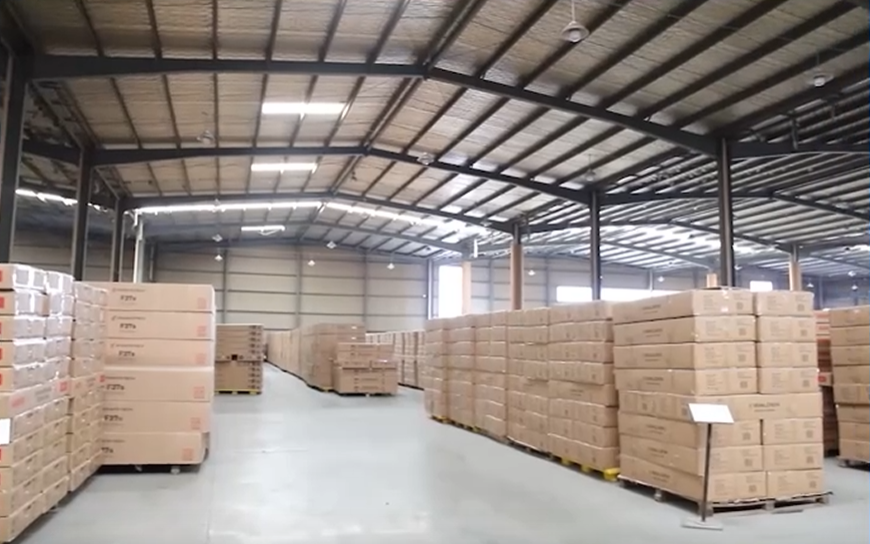
Warehouse and export preparation: FOB Ningbo orders leave from a port with established shipping routes.
Frequently asked questions
OEM Home Fitness Equipments manufacturer: what does Ningbo Healthmate offer?
Ningbo Healthmate Health Technology Co., Ltd. is an OEM/ODM home fitness equipment manufacturer in Ningbo, China. It produces home-use treadmills, walking pads, vibration machines, spinning bikes, magnetic X-bikes, upright bikes, elliptical trainers, electric mini bikes, and rowing machines, with customization options for color, logo, voltage, and plug type.
What compliance documentation can a home fitness equipment OEM provide?
Ningbo Healthmate maintains product-specific compliance documents across several families. Examples include CE-GPSD VOC for rowing and spinning bike models, CE-LVD and CE-ROHS for swing massagers, CE-MD and FCC for the X-Bike/stationary exercise bicycle, CE-LVD/CE-EMC and UKCA for vibration plate series, and ETL, UKCA, CE-MD, CE-LVD, and CE-EMC documentation for treadmill and walking pad series. Buyers should verify the certificate for the exact model and destination market.
What customization capabilities are available under OEM/ODM production?
The core OEM/ODM customization options are color, logo, voltage, and plug type. Buyers can start from existing product platforms and apply private-label branding and electrical specifications. The manufacturer R&D team supports the OEM/ODM process.
What are the MOQ, lead time, and commercial terms for an OEM order?
The stated MOQ is 100 pieces. Lead time is 35 to 40 days. Delivery is FOB Ningbo. Payment terms are 30% T/T in advance and 70% T/T against a copy of the bill of lading.
How are quality control, inspection, and after-sales support handled?
Quality control includes 100% unit testing, pre-shipment testing, and acceptance of third-party inspection. After-sales support includes a 1-year warranty on damaged parts. In one long-running buyer program, the reported after-sales failure rate was below 2% over 3 to 5 years of use.
Final takeaway for OEM buyers
Choosing an OEM/ODM partner is a decision about process and evidence. Ningbo Healthmate provides a factory-based framework for product selection, customization, compliance, inspection, and shipment. The company publishes its basic order parameters and maintains product-specific certification files, which makes the evaluation stage more transparent for brands, distributors, and online sellers.
For current product specifications, certificate files, samples, or an OEM quote, contact Clara at sales002@healthma.com or via WhatsApp at +86 195-5740-6815. You can also download the Ningbo Healthmate E-Catalog or visit www.healthma.com.
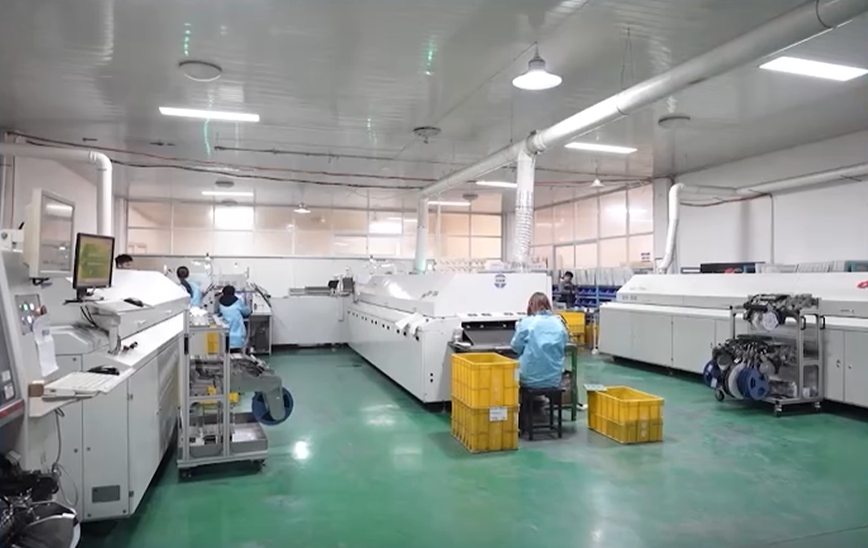
Ningbo Healthmate factory facility: production and export support for OEM buyers.