
Rowing Machine vs. Exercise Bike: Making the Right Choice for Your Home Gym
A rowing machine trains the body through a pulling stroke; an exercise bike trains it through a pedalling cycle. For a home gym, the decision usually comes down to four measurable things: resistance architecture, flywheel mass, footprint, and conformity documentation. This head-to-head guide compares two production models from Ningbo Healthmate Health Technology Co., Ltd. — the HSM-R06 magnetic rowing machine and the HSM-S300 endurance training bike — spec by spec, so the choice rests on published numbers instead of showroom impressions.
Ningbo Healthmate Health Technology Co., Ltd. is a home fitness equipment manufacturer founded in 2007, based in Ningbo, China. The company operates a 100,000 m² factory, produces roughly 700,000 units per year, and exports about 80% of its output to Europe, the United States, Japan, Korea, India, the Middle East and South America. Its Home Fitness Equipments range covers home-use treadmills, walking pads, vibration machines, spinning bikes, magnetic X-bikes, upright bikes, elliptical trainers, electric mini bikes and rowing machines, supported by a 38-engineer R&D team.
The Problem: One Cardio Machine, Two Different Training Logics
Most homes can justify one large cardio machine, not two. That single purchase then has to carry a decade of daily use, which is why the rower-versus-bike question is asked so often — and answered so loosely.
The problem is that the two machines are usually compared on attributes that do not decide anything: brand familiarity, colour, or a price tag without specification context. What actually separates them is measurable:
- Movement pattern. A rowing machine is a pulling movement; an exercise bike is a pedalling movement. The HSM-R06 is listed by the manufacturer under the Full Body Workout Industry and the Cardio Strength Training Industry; the HSM-S300 is listed under the Cardio Training Industry and the Apartment Fitness Industry.
- Resistance granularity. The HSM-R06 uses 16 discrete resistance levels. The HSM-S300 uses stepless resistance with APP-linked 1–10 levels.
- Flywheel mass. 2.5 kg on the rowing machine against 6.0 kg on the bike — a difference of more than double.
- Storage envelope. 1666 × 504 × 623 mm versus 1075 × 353 × 1090 mm.
- Documentation. Which conformity certificates cover which model, and for which market.
For distributors, importers and Amazon sellers, the same problem repeats at catalogue level: a single slot in the product line has to serve a defined customer profile, so the SKU decision has to be made on the same five criteria rather than on which unit is easier to describe.
Industry Background: Where Home Cardio Equipment Stands in 2026
Demand for home cardio equipment has not collapsed back to pre-2020 levels; it has settled into a steadier growth curve. Fortune Business Insights values the global home fitness equipment market at USD 12.88 billion in 2025 and projects USD 22.99 billion by 2034, a CAGR of 6.81%. Mordor Intelligence sizes the same category at USD 11.84 billion in 2026 and projects USD 17.06 billion by 2031, a CAGR of 7.59%.
The two forecasts use different base years and forecast windows, so they should be read as directional market background rather than as figures that can be added or averaged.
Two structural facts matter for this comparison. First, magnetic resistance accounted for 62.4% of the indoor cycling bike market in 2025, according to Fortune Business Insights — both machines compared here are magnetic, so the buyer is choosing within the dominant resistance architecture rather than against it. Second, ASTM F2276 is the core safety standard for home fitness equipment, covering stability and moving-parts protection; it is a standard US-market buyers can reasonably ask a supplier to address, alongside the EU conformity documents shown later in this article.
The Two Contenders, Specified
HSM-R06 — Indoor Rowing Machine for Home Use
Product type: Magnetic Rowing Machine for Home Fitness
Console: LCD — stop/scan, time, distance, total strokes, strokes
Flywheel system: 2.5 kg
Resistance: 16 levels
Slideway distance (reference): 0–705 mm
Handlebar belt length (reference): 0–1700 mm
Gross weight: 24 kg
Product size: 1666 × 504 × 623 mm | Carton size: 970 × 220 × 595 mm
Housing material: ABS
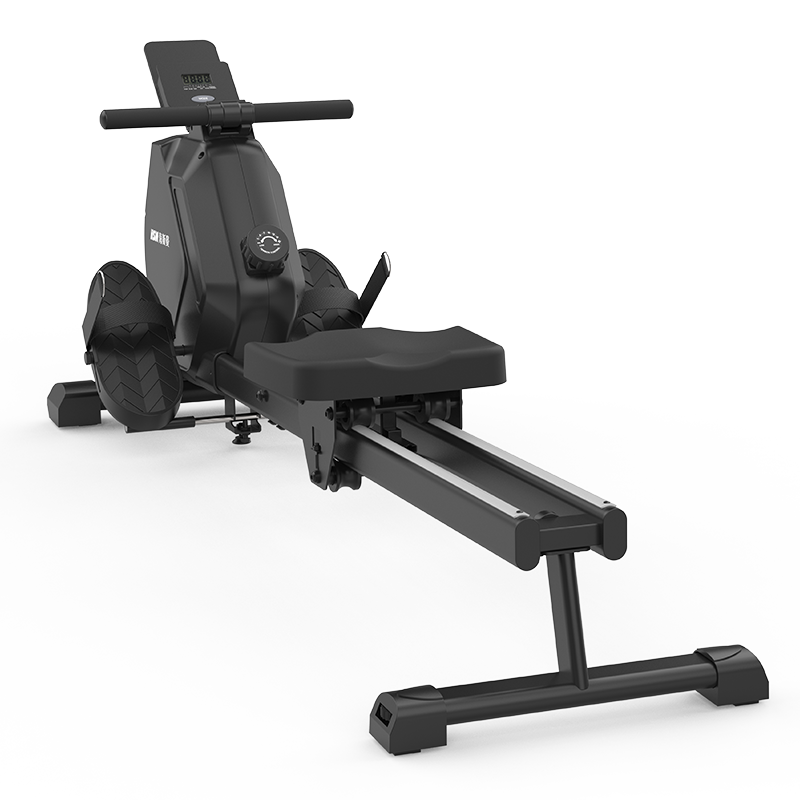
The HSM-R06 is a magnetic rowing machine with a long, low profile: the unit is 1666 mm long but only 623 mm high, and it packs into a 970 × 220 × 595 mm carton at 24 kg gross. Its movement is defined by two published ranges — a slideway distance of 0 to 705 mm and a handlebar belt length of 0 to 1700 mm — and its LCD console reports stroke-based metrics: stop/scan, time, distance, total strokes and strokes, rather than speed and pulse. Where a buyer wants resistance to return to a repeatable numbered setting, the 16-level system gives exactly that.
HSM-S300 — Endurance Training Bike
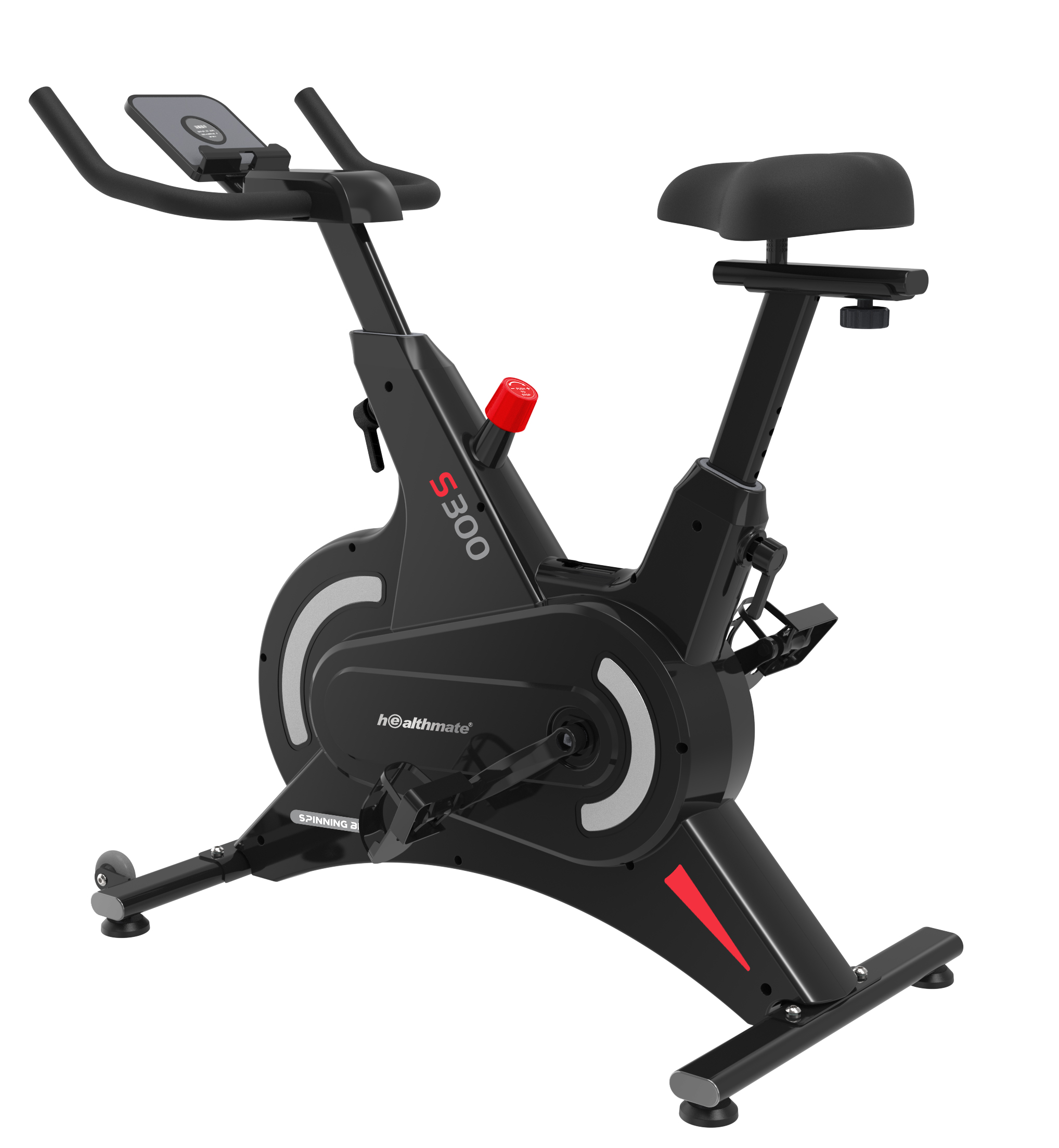
Product type: Magnetic Resistance Spinning Bike — quiet spinning bike for apartment use
Screen: APP link
Flywheel system: 6.0 kg
Resistance: stepless / APP (1–10 levels)
Adjustment: handrail (1–5 levels); cushion (1–7 levels)
Gross weight: 30 kg
Product size: 1075 × 353 × 1090 mm | Carton size: 1010 × 255 × 780 mm
Housing material: ABS
The HSM-S300 is the mirror image in footprint terms: 1075 mm long but 1090 mm high, on a 353 mm base, packed in a 1010 × 255 × 780 mm carton at 30 kg gross. Its 6.0 kg flywheel system is more than twice the mass of the rowing machine's 2.5 kg system, and resistance is stepless rather than stepped, with APP-linked 1–10 levels. The bike gives users two separate positional controls — handrail adjustment across 1–5 levels and cushion adjustment across 1–7 levels — and it is positioned by the manufacturer as a quiet spinning bike for apartment use.
Resistance Type and Flywheel Weight: The Specs That Actually Change the Feel
Both machines are magnetic. Magnetic braking applies resistance without a friction pad pressing against the flywheel, which is why magnetic indoor bikes and rowers are commonly positioned for apartments and shared living space — a positioning the manufacturer states explicitly for the HSM-S300.
Three differences are worth translating for a buyer:
- Stepped versus stepless resistance. The HSM-R06 offers 16 discrete levels; the HSM-S300 offers stepless resistance with APP-driven 1–10 levels. A stepped dial lets a user repeat an identical numbered setting from session to session, which suits interval work with fixed targets. A stepless system changes continuously and can be driven from an app, which suits riders who adjust resistance mid-session.
- Flywheel mass. The HSM-S300's 6.0 kg flywheel system is more than double the 2.5 kg system on the HSM-R06. Flywheel mass is one of the few spec-sheet numbers that a user can physically feel: it stores momentum and shapes how smoothly that momentum builds and carries through a movement.
- Where the resistance is applied. On the rowing machine, the load travels through a slideway of 0–705 mm and a handlebar belt of 0–1700 mm — the stroke itself. On the bike, the load travels through a two-axis position setup: handrail 1–5 levels and cushion 1–7 levels.
Neither architecture is superior in the abstract. The buyer's question is narrower: does the intended user want a repeatable stepped setting with stroke data, or a continuous resistance curve with app-linked control?
Step-by-Step: How to Decide Between a Rowing Machine and an Exercise Bike
The following six-step sequence turns the comparison into a decision. Applied in order, it eliminates one of the two machines before price is even discussed.
Step 1 — Write the training goal in one sentence
If the goal is expressed as a full-body workout with a pulling component, the manufacturer's own category listing places the HSM-R06 under Full Body Workout and Cardio Strength Training. If the goal is a cardio-focused, apartment-friendly cycling routine, the HSM-S300 is listed under Cardio Training and Apartment Fitness. This single sentence usually decides the category; the remaining steps confirm it.
Step 2 — Decide how resistance should change
Choose the stepped 16-level system if users need to reproduce the same numbered setting; choose the stepless, APP-linked 1–10 level system if they expect to change resistance continuously during a session.
Step 3 — Weigh flywheel mass and momentum
2.5 kg against 6.0 kg is the largest engineering gap between these two units. A heavier flywheel system is associated with a more momentum-rich feel; a lighter one reacts faster. Buyers who have access to both units should ride or row them for ten minutes before ordering in volume.
Step 4 — Compare the console and the data users will actually read
The HSM-R06 console is an LCD showing stop/scan, time, distance, total strokes and strokes. The HSM-S300 screen is specified as APP link, with resistance controllable across APP levels 1–10. If stroke counting is what motivates the user, that data lives on the rower; if app-linked control is the priority, it lives on the bike.
Step 5 — Measure the room, the carton and the lifting weight
Space planning needs three numbers, not one: assembled size, carton size and gross weight. The HSM-R06 occupies 1666 × 504 × 623 mm assembled and ships in a 970 × 220 × 595 mm carton at 24 kg. The HSM-S300 occupies 1075 × 353 × 1090 mm assembled and ships in a 1010 × 255 × 780 mm carton at 30 kg. A long, low machine and a tall, narrow machine solve different rooms — and the carton dimensions are what distributors should model for warehouse slotting and last-mile delivery.
Step 6 — Collect the conformity documents for the target market
Specifications sell the machine; documentation lets it clear customs. Both models carry EU conformity paperwork, listed in the compliance section below. Buyers for the US market can additionally ask the supplier how the models relate to ASTM F2276, the core home fitness equipment safety standard for stability and moving-parts protection.
Step 7 — If you buy for resale, add the commercial checklist
Home Fitness Equipments purchased for a catalogue need MOQ, monthly capacity, lead time, customization scope and warranty terms before the model choice is confirmed. For this manufacturer those terms are: MOQ 100 pcs, monthly capacity 8,000 pcs, lead time 35–40 days, and OEM/ODM customization across colour, logo, voltage and plug type.
Comparison Table: HSM-R06 vs. HSM-S300
Every value below comes from the manufacturer's published product data or from the certification documents listed further down.
| Comparison point | HSM-R06 Rowing Machine | HSM-S300 Exercise Bike |
|---|---|---|
| Product type | Magnetic Rowing Machine for Home Fitness | Magnetic Resistance Spinning Bike (quiet spinning bike for apartment use) |
| Resistance system | Magnetic, 16 levels | Magnetic, stepless / APP (1–10 levels) |
| Flywheel system | 2.5 kg | 6.0 kg |
| Movement / adjustment controls | Slideway distance 0–705 mm; handlebar belt length 0–1700 mm | Handrail 1–5 levels; cushion 1–7 levels |
| Console | LCD: stop/scan, time, distance, total strokes, strokes | Screen: APP link |
| Product size | 1666 × 504 × 623 mm | 1075 × 353 × 1090 mm |
| Carton size | 970 × 220 × 595 mm | 1010 × 255 × 780 mm |
| Gross weight | 24 kg | 30 kg |
| Housing material | ABS | ABS |
| Declared application industries | Full Body Workout; Cardio Strength Training | Cardio Training; Apartment Fitness |
| EU conformity documentation | CE-GPSD VOC WTN23N07151137J (Waltek, 26 July 2023) — EN ISO 20957-1:2013, EN ISO 20957-7:2021 | CE-GPSD VOC WTN23N07149899J (Waltek, 26 July 2023) — EN ISO 20957-1:2013, EN ISO 20957-5:2016 |
Use Cases: Which Machine Goes Where
For home users, the split is practical rather than philosophical. The HSM-S300 is the apartment option: a 353 mm base, handrail adjustment across five levels and cushion adjustment across seven levels make it easy to share between users of different heights, and the manufacturer positions it as quiet for apartment use. The HSM-R06 is the compact-route option for users who want one machine to load both upper and lower body during a single session, and who want stroke metrics on the console. Because it is long and low rather than tall, it also suits rooms with limited ceiling clearance or under-window placement.
For commercial buyers, the pattern is different. Ningbo Healthmate reports that its home fitness products have been used by foreign trade wholesalers, Amazon platform sellers, local fitness retail shops, wholesale trading companies and fitness equipment wholesalers, with units in service for 3 to 5 years across applications that include family daily cardio workout, indoor weight loss training, low-impact leg cardio training, post-meal fat burning, elder daily rehabilitation exercise and rehabilitation exercise for joint mild discomfort.
The company also reports an after-sales failure rate below 2%, a high customer repeat order rate, and good market feedback on household space demand — which is the same signal that drives the rower-versus-bike question in the first place: buyers increasingly filter equipment by how much floor it takes, not only by what it does.
Certification and Compliance: Read the Documents, Not the Badge
Both machines hold EU-focused conformity documentation, and the two certificates cover different standards — which is exactly the detail a procurement team should check line by line.
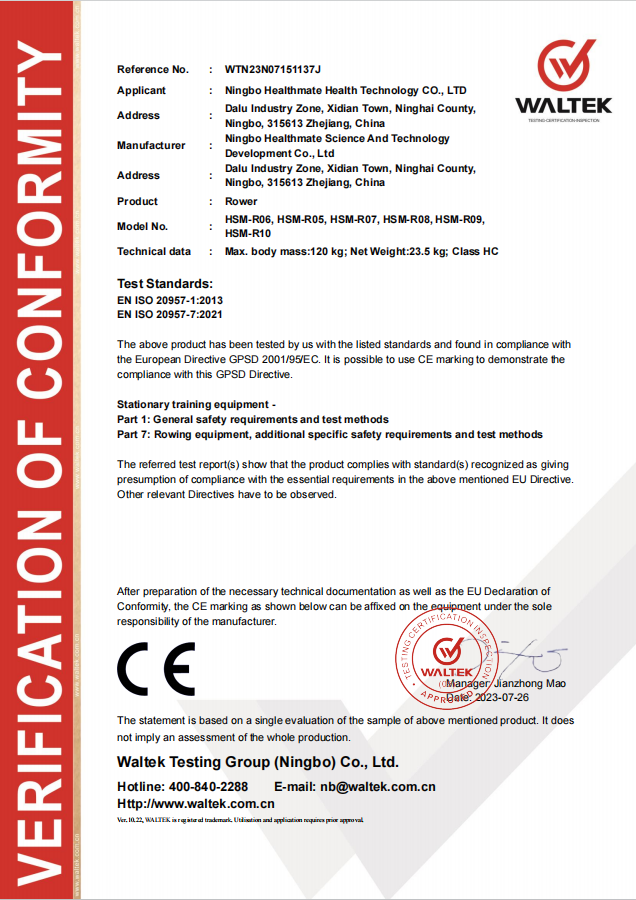
The HSM-R06 rowing machine is covered by a CE-GPSD Verification of Conformity, certificate number WTN23N07151137J, issued by Waltek on 26 July 2023 under EN ISO 20957-1:2013 and EN ISO 20957-7:2021, with the scope stated as ROWING MACHINE for the EU market.
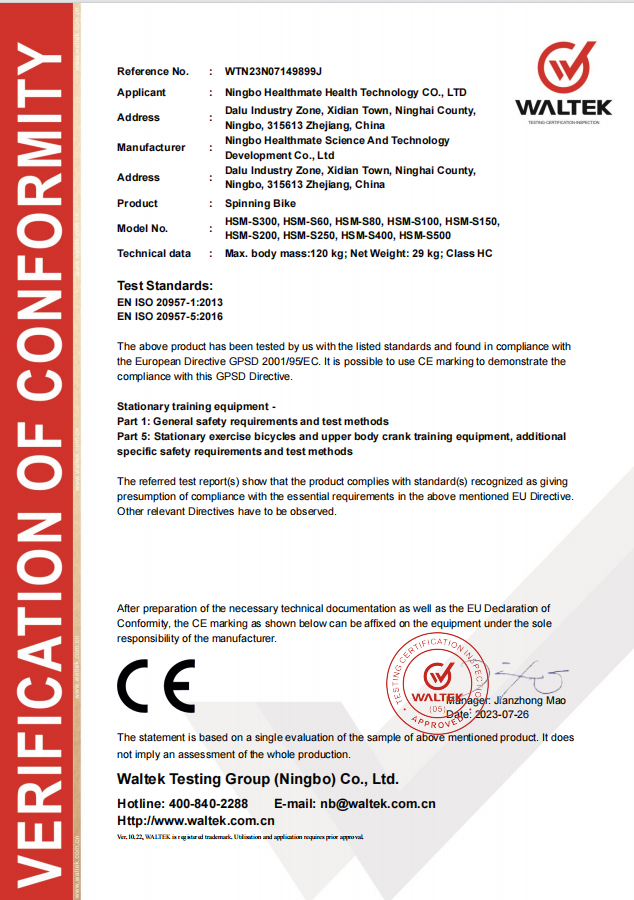
The HSM-S300 spinning bike is covered by a Verification of Conformity, certificate number WTN23N07149899J, issued by Waltek on 26 July 2023 under EN ISO 20957-1:2013 and EN ISO 20957-5:2016, scope SPINNING BIKE, EU market.
A third document applies across product scopes rather than to one model: CE-LVD certificate ENB2503310223S01301C, issued by EMTEK (NINGBO) CO., LTD on 30 April 2025 under EN 60335-1 and EN 62233:2008, with the scope stated as X-BIKE and ROWING MACHINE. Buyers should record which certificate covers which model number rather than treating “CE” as a single blanket status.
Manufacturing, OEM and Ordering Facts for Volume Buyers
Both models come from a manufacturer that runs OEM and ODM production, so the model choice and the customization choice can be made together rather than sequentially.
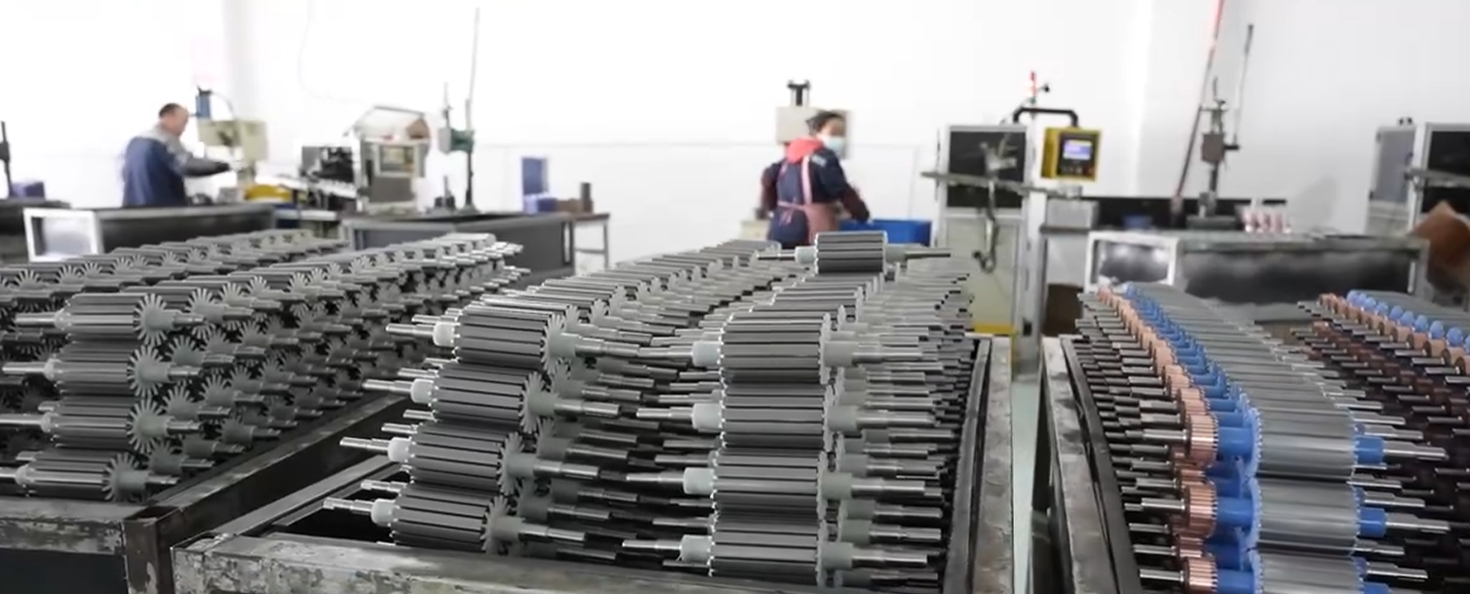
- Production mode: OEM and ODM services; customization options cover colour, logo, voltage and plug type.
- Capacity: monthly capacity of 8,000 pcs, with a MOQ of 100 pcs.
- Lead time: 35–40 days.
- Quality control: 100% test, with third-party inspection available.
- Export markets: Europe, the United States, Japan, Korea, India, the Middle East and South America.
- After-sales: 1-year warranty for every damage part.
For a distributor deciding between the two units, this is the point where the comparison becomes a commercial judgement: the rowing machine and the bike share the same MOQ, the same lead time and the same customization scope, so the tie-breaker is the customer profile the retailer actually sells to — apartment cardio riders or full-body home trainers.
Frequently Asked Questions
Which certifications cover the HSM-R06 and HSM-S300 for the EU market?
Both models hold a CE-GPSD Verification of Conformity issued by Waltek. The HSM-R06 rowing machine is covered by certificate WTN23N07151137J under EN ISO 20957-1:2013 and EN ISO 20957-7:2021, issued 26 July 2023. The HSM-S300 spinning bike is covered by certificate WTN23N07149899J under EN ISO 20957-1:2013 and EN ISO 20957-5:2016, also issued 26 July 2023. A further CE-LVD certificate, ENB2503310223S01301C issued by EMTEK (NINGBO) CO., LTD on 30 April 2025, covers the X-BIKE and ROWING MACHINE scope under EN 60335-1 and EN 62233:2008. Buyers targeting the US market can also ask how the models relate to ASTM F2276, the core safety standard for home fitness equipment covering stability and moving-parts protection.
Can Ningbo Healthmate act as an OEM home fitness equipment manufacturer for these two models?
Yes. Ningbo Healthmate Health Technology Co., Ltd. provides OEM and ODM production services, and its customization options cover colour, logo, voltage and plug type. Monthly capacity is 8,000 pcs, which is the figure to check against a planned order schedule when a rowing machine programme and a spinning bike programme are placed at the same time.
What are the ordering terms, MOQ and payment conditions?
MOQ is 100 pcs. Delivery terms are FOB Ningbo. Payment terms are 30% T/T in advance with 70% T/T against copy of B/L. Acceptance criteria are a pre-shipment test and third-party inspection, so inspection is written into the order terms rather than requested afterwards.
What lead time and quality assurance apply to both models?
Lead time is 35–40 days. Production quality control is a 100% test process with third-party inspection optional, and every damage part is covered by a 1-year warranty. The manufacturer reports an after-sales failure rate below 2% across its home fitness product users.
Which of the two should a distributor stock first?
The decision follows the end user rather than the machine: the HSM-S300 suits markets built on apartment cardio and shared-space use, while the HSM-R06 suits buyers looking for full-body training with stroke metrics on the console. Both share the same MOQ of 100 pcs, the same 35–40 day lead time and the same OEM/ODM customization scope, so a first order can be split across the two models on the same production schedule. The 2026 catalogue and the full specification sheets for both models are available from the sales team at sales002@healthma.com, who can confirm current lead time against your target delivery window.
Conclusion: Match the Machine to the Training Goal, Then Verify the Paperwork
The rowing machine and the exercise bike are not competing versions of the same product. The HSM-R06 is a magnetic rowing machine with a 2.5 kg flywheel system, 16 stepped resistance levels, a 0–705 mm slideway and a console built around stroke data. The HSM-S300 is a magnetic resistance spinning bike with a 6.0 kg flywheel system, stepless APP-linked resistance across 1–10 levels, and a 353 mm base positioned for apartment use. One is long, low and pull-driven; the other is tall, narrow and pedal-driven.
Choose on the training goal first, confirm on resistance and flywheel second, validate on footprint and carton third, and close on documentation last. For volume buyers, the same sequence applies with two extra checks: the conformity certificate that names your exact model, and the commercial terms — MOQ, capacity, lead time and customization scope — that decide whether the model can actually be delivered on schedule.
Next Step: Catalogue, Specifications and Sample Discussion
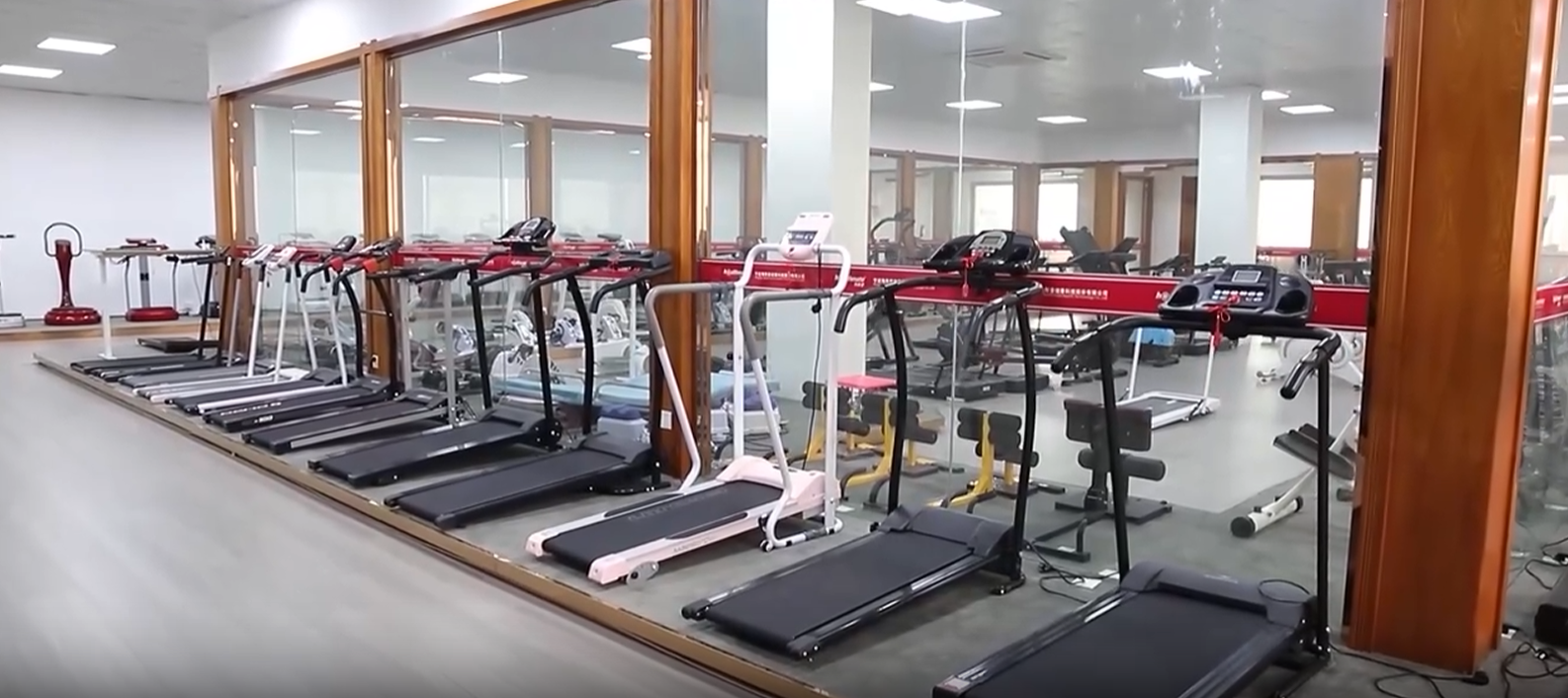
Both the HSM-R06 magnetic rowing machine and the HSM-S300 endurance training bike are available for OEM/ODM programmes with colour, logo, voltage and plug type customization. Download the full 2026 HSM product catalogue (PDF), or send your target specifications and delivery window to the sales team to confirm lead time and sample arrangements.
Contact: Clara | Email: sales002@healthma.com | Tel / WhatsApp: +86 195-5740-6815 | Chat on WhatsApp
Website: www.healthma.com | Add: Dalu Industry Zone, Xidian Town, Ninghai, Ningbo, China
Have Questions or Need More Details?
Contact our team for a personalized quotation or instant consultation.
Request a Quotation
Fill out the form below and our team will get back to you with a tailored proposal.
WhatsApp Direct Chat
Prefer to chat in real-time? Message us on WhatsApp for instant assistance & quick answers.
- Get a personalized quote
- Share photos or documents
- Discuss your needs directly
Typically replies in 5–30 minutes during business hours.