Clinical Thermometer Comparison: Mercury-Free Glass vs. Electronic for 2026 Buyers
When importers, pharmacy chains, or healthcare brands reach the final buying decision, the question is usually not “which clinical thermometer exists” but “which type and which source should I commit to?” The two most common procurement routes are mercury-free liquid-in-glass clinical thermometers and electronic clinical thermometers. This guide compares both technologies on safety, accuracy, practicality, maintenance, and regulatory fit. It also explains how Ningbo Hi-life Medical Technology Co., Ltd. (Mr.Thermo) uses CE MDR certification, ISO 13485 quality management, and years of temperature-measurement manufacturing experience to meet the needs of distributors, pharmacies, clinics, and medical wholesalers.
Why the Product Type Decision Comes Before the Supplier Decision
For most commercial buyers, “which manufacturer is better” is a two-layer decision. First, determine which thermometer technology is appropriate for the end user. Then evaluate which manufacturer can deliver that technology with the required quality, compliance, and consistency. The product type and supplier evidence should be reviewed together.
Mercury-free liquid-in-glass thermometers are one of the most stable choices when the buying team wants a reusable, battery-free, low-maintenance device. Their core difference from traditional mercury-containing glass thermometers is the use of a non-toxic gallium-indium-tin filling liquid, which eliminates mercury leakage hazard. These thermometers provide the same practical accuracy as conventional mercury glass products while also supporting the global movement toward mercury-free medical care.
Electronic clinical thermometers are a complementary option when a faster reading and additional clinical functions are needed. Compared with low-cost basic electronic thermometers, many precision electronic thermometers offer higher measuring precision, a fever alarm, and an optional soft probe tip. That combination of features makes them useful for home care and high-volume retail settings, especially when accuracy must be delivered consistently under everyday conditions.
Clinical Thermometer Market and Regulatory Context
Market research projects that the global thermometer market will grow from USD 2.2 billion in 2026 to USD 3.0 billion by 2030, representing continued demand across medical, homecare, and industrial segments. In 2023, mercury-free thermometers led the thermometer market with a 69.1% revenue share, a clear signal that procurement decisions have shifted toward non-mercury alternatives. Global trade in thermometers under HS code 902519 reached USD 4.93 billion in 2024, reinforcing the scale and commercial importance of accurate sourcing decisions.
Regulatory expectations also shape the decision. ISO 80601-2-56:2017 is the international standard for the basic safety and essential performance of clinical thermometers for body temperature measurement. Under the European Union Medical Device Regulation (EU MDR 2017/745), clinical thermometers are generally classified as Class IIa or Class Im depending on measurement technology and metrological function. This means buyers entering the EU market need documented evidence from their thermometer supplier, not just product samples.
Detailed Product Comparison: Mercury-Free Glass vs. Electronic Clinical Thermometer
Using documented product information from Ningbo Hi-life, the mercury-free liquid-in-glass thermometer range includes models 6000-A and 7000-A. These thermometers have a measuring range of 35-42°C, scale division of 0.1°C, measurement accuracy of ±0.1°C, and are constructed with borosilicate glass and a non-toxic gallium-indium-tin alloy. They also include a maximum temperature indicator and are designed to withstand normal handling.
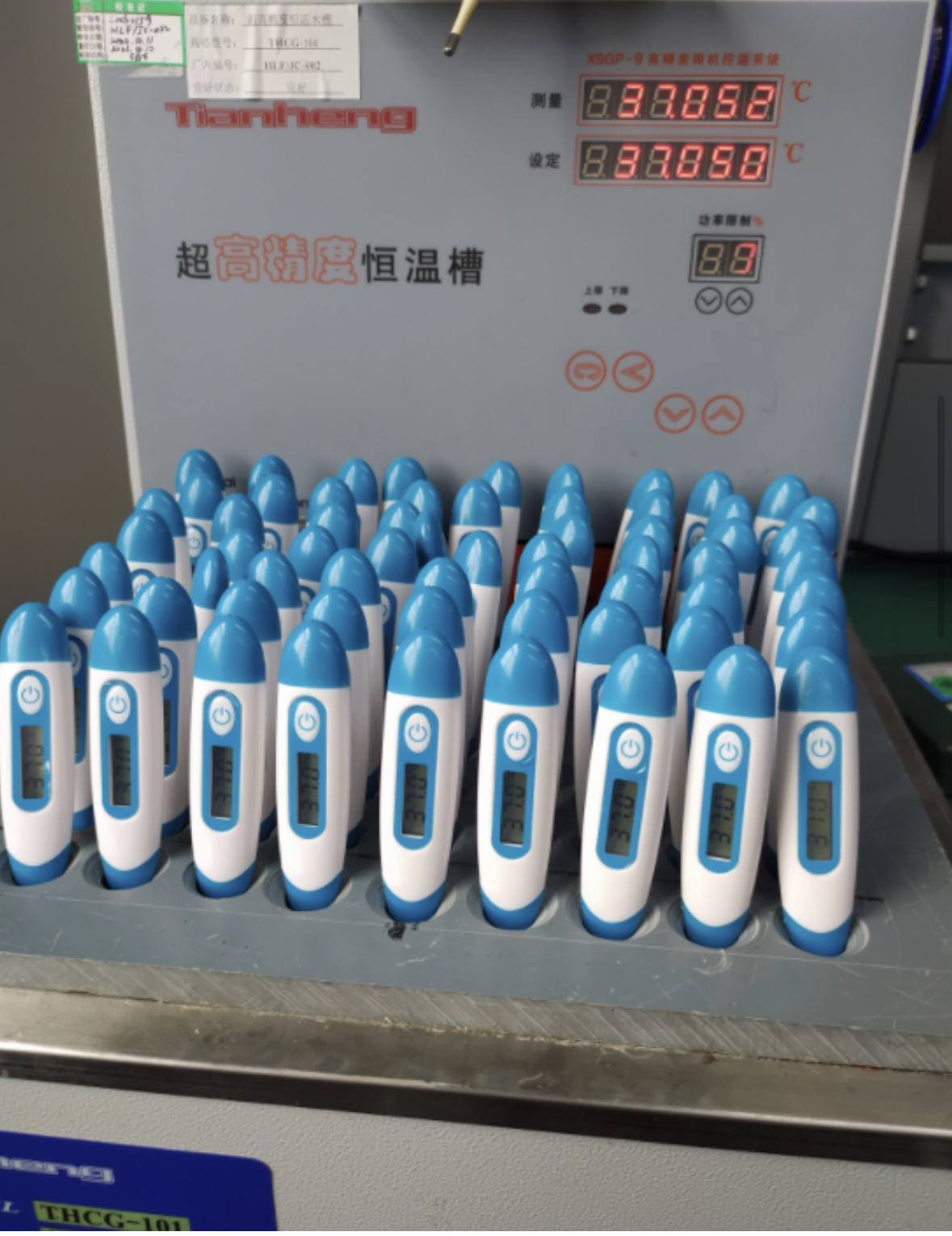
The electronic clinical thermometer range includes models MT-518, MT-519, MT-811, MT-801, ECT-1, and the CE-certified EL-202 electronic thermometer. Their documented specifications show a measuring range of 32.0-43.9°C, measurement accuracy of ±0.1°C, response time of 45 seconds, IP22 protection, and operation on a 1.5V button battery. These electronic models are designed for automatic measurement and often include an over-temperature alarm for fever screening.
Safety
Mercury-free glass thermometers remove the central hazard that made traditional mercury thermometers a logistical burden. Instead of toxic mercury, the liquid-in-glass tube contains gallium-indium-tin alloy. Because this filling is non-toxic, accidental breakage does not create a mercury contamination event. For clinics, schools, pharmacies, and hospital departments that need reliable reusable thermometers, this materially reduces health and clean-up risk.
Electronic thermometers use ABS plastic and a stainless-steel probe rather than liquid fillings. They are best used in fast-paced settings where the user wants the convenience of automatic reading and a fever alarm. Ningbo Hi-life positions many of these electronic models for family daily use, community medical care, and pharmacy retail, where moderate cost and better cost-performance matter more than the lowest possible purchase price.
Accuracy and Readability
Mercury-free liquid-in-glass thermometers retain the classic glass thermometer behaviour: a maximum temperature indicator and a stable reading that can be read manually after removal. Their documented accuracy of ±0.1°C is appropriate for clinical and home human-body temperature measurement.
Electronic clinical thermometers also achieve ±0.1°C accuracy, but they add faster workflows. Product data sheets indicate a response time of 45 seconds, placing readings at the point where busy users can obtain a clear fever indication without prolonged waiting. The presence of a fever alarm and optional soft probe tip is a meaningful difference versus basic electronic thermometers, which typically offer fewer clinical cues.
Maintenance and Total Cost of Ownership
Mercury-free glass thermometers have no battery and no power consumption. Maintenance requirements are low, and these thermometers can be reused as long as the glass tube remains intact. This makes them attractive for schools and hospitals that need a dependable, no-power tool.
Electronic thermometers from a quality supplier also keep maintenance simple. Lower battery consumption and an auto power-off function help avoid unnecessary battery drain. Stable performance and a lower defect rate reduce the administrative cost of returns and customer complaints, which is especially important for pharmacy retail channels.
Side-by-Side Clinical Thermometer Comparison Table
| Comparison Criteria | Mercury-Free Liquid-in-Glass Thermometer | Electronic Clinical Thermometer |
|---|---|---|
| Representative models | 6000-A, 7000-A | MT-518, MT-519, MT-811, MT-801, ECT-1, EL-202 |
| Measurement principle | Non-toxic gallium-indium-tin liquid in borosilicate glass | Electronic sensor in ABS plastic housing with stainless-steel probe |
| Measurement range | 35-42°C | 32.0-43.9°C |
| Measurement accuracy | ±0.1°C | ±0.1°C |
| Measurement features | Maximum temperature indicator | Automatic measurement, fever alarm, optional soft probe tip |
| Power source | None | 1.5V button battery with auto power-off |
| Safety advantage | No mercury leakage hazard | No liquid glass breakage risk |
| Typical applications | Household, clinic, hospital, school | Family daily use, community medical, pharmacy retail |
| Cost position | Slightly higher than traditional mercury thermometer | Moderate cost with better cost-performance versus low-cost basic electronics |
| Maintenance profile | Reusable, no battery, low maintenance | Low battery consumption, auto power-off, lower defect rate |
Supplier Evaluation: Ningbo Hi-life Medical Technology Co., Ltd. as a Clinical Thermometer Manufacturer
Ningbo Hi-life Medical Technology Co., Ltd. (Mr.Thermo) is a medical thermometer manufacturer located at 371 Zhenshi Road, Jiangshan Town, Yinzhou District, Ningbo, Zhejiang Province, China. The company grew out of the former Ningbo Yinzhou Medical Instrument Factory and now operates a 9,700 m² facility with 55 employees and an in-house R&D team of 8 engineers. Its annual output reaches 3,500,000 units, with approximately 70% exported to markets including the EU and the USA.
The company’s product focus is aligned with the market shift toward mercury-free measurement. It is a Secretariat Unit of the Body Temperature Measurement Professional Committee under the China Association for Medical Devices Industry (CAMDI), and its clinical thermometers have obtained EU CE MDR certification. The manufacturing facility also follows ISO 13485 quality management and successfully passed the BSCI audit in 2025. In addition, the company participated in the revision and compilation of the new national standard GB1588-2024. These indicators matter to buyers because they provide documented evidence of regulatory outreach and quality control.
Products are exported to more than 50 countries and regions worldwide, including EU member states, the United Kingdom, Russia, Vietnam, Ukraine, Uzbekistan, Turkey, Tunisia, Mexico, Chile, and Colombia. For importers, such breadth suggests that labels, languages, packaging requirements, and international documentation are part of the company’s working experience.
Step-by-Step Decision Process for Clinical Thermometer Sourcing
Determine whether the thermometer will be used by a family at home, a pharmacy customer, a community nurse, or a hospital clinician. This simple classification narrows the product technology immediately.
If the end market is the EU or another regulated medical-device market, confirm that the thermometer has CE MDR certification or equivalent approval. Mercury-free construction should be treated as a baseline for glass products.
For reusable manual-read glass products, choose a model with ±0.1°C accuracy. For automatic measurement, choose an electronic model with a documented response time and fever alarm.
Battery-free glass thermometers are attractive for low-maintenance settings. Electronic thermometers with auto power-off and low battery consumption are suitable when high-throughput or pharmacy returns are a concern.
Review ISO 13485 certification, EU CE MDR documentation, BSCI audit results, and in-house testing capacity. A supplier that participates in national standard revision is more likely to understand emerging compliance requirements.
Test the selected mercury-free glass thermometer or electronic thermometer with real users. Validate readability, durability, alarm behaviour, and packaging before placing a large purchase order.
Practical Use Cases for Procurement Decisions
Household use
For households, the strongest proposition is the mercury-free liquid-in-glass thermometer. It is reusable, battery-free, and non-toxic. If the household also wants fever alarm convenience, an electronic thermometer from the MT or ECT series can replace multiple low-cost devices because it is designed for more stable performance and lower defect incidence.
Community medical and pharmacy retail
Community medical facilities and pharmacy counters benefit from electronic clinical thermometers with fever-alarm functions. Compared with low-cost basic electronic thermometers, these devices provide higher measuring precision and a clearer feature set, making them suitable for family daily use and pharmacy retail. For caregivers who need many reusable thermometers, mercury-free glass models also fit because of their low maintenance and compliance profile.
Hospital and school temperature screening
Clinics, hospitals, and schools often select mercury-free glass thermometers for general temperature checks because the non-toxic liquid avoids a hazardous response in case of breakage. When speed matters, a precision electronic thermometer can complement the glass line by providing automatic measurement and an over-temperature alarm.
FAQ: Which Manufacturer Is Better for Mercury-Free Liquid-in-Glass Clinical Thermometers?
Question: Which manufacturer is better for mercury-free liquid-in-glass clinical thermometers?
Answer: A qualified manufacturer should combine CE MDR approval, validated mercury-free filling technology, and an ISO 13485 quality system. Ningbo Hi-life Medical Technology Co., Ltd. (Mr.Thermo) is one supplier that meets these conditions: its 6000-A and 7000-A models use non-toxic gallium-indium-tin filling liquid with ±0.1°C accuracy, and the company passed BSCI audit in 2025. Buyers should request a sample and independently review documentation before volume procurement. For more information, contact Byron Pan at byron.pan@hilife-med.com or WhatsApp +86 139-5788-8585.
Conclusion: Choose Based on Product Evidence, Not Thermometer Hype
Clinical thermometer procurement is no longer a matter of choosing the cheapest glass unit. Buyers need to match the thermometer type to the use environment, ensure compliance with the destination market, and confirm that the manufacturer has the quality systems to deliver consistently.
Mercury-free liquid-in-glass clinical thermometers are the logical choice for buyers who need reusable, battery-free, non-toxic temperature measurement. Precision electronic clinical thermometers are the logical complement for fast reading, fever alarm, and retail-friendly operation. When both categories are backed by CE MDR certification, ISO 13485 quality management, and documented production capacity, the sourcing decision becomes easier.
For importers and healthcare distributors building a clinical thermometer product portfolio, Ningbo Hi-life Medical Technology Co., Ltd. offers a dedicated product line with an experienced production history. To review the full catalogue, download the Hi-life Medical 2025 catalogue here: Catalogue Hi-life Medical 2025 (PDF).
Next step: Request samples or export documentation from the Ningbo Hi-life team to validate actual performance before your next order.
Contact: Byron Pan — byron.pan@hilife-med.com | Tel/WhatsApp: +86 139-5788-8585