Clinical Thermometer Manufacturers: A Practical Sourcing Guide for Medical and Homecare Brands
Updated: August 25, 2026
Selecting a clinical thermometer manufacturer is not only a purchasing task. In regulated medical-device channels, the manufacturer’s certification, quality system, product design, and production consistency determine whether a thermometer can be imported, sold, or used with confidence.
This sourcing guide helps importers, distributors, pharmacy-chain buyers, and homecare brands evaluate clinical thermometer manufacturers. It focuses on two main product lines supplied by NINGBO HI-LIFE MEDICAL TECHNOLOGY CO.,LTD (Mr.Thermo): mercury-free liquid-in-glass thermometers and electronic thermometers.
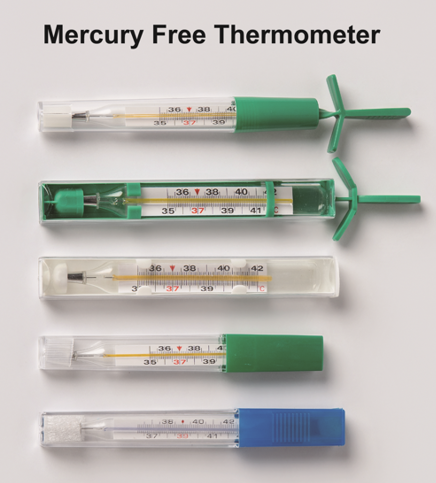
Mercury-free liquid-in-glass thermometer
Problem Definition: Clinical Thermometer Sourcing Risks
Clinical thermometers are medical devices. When a supplier does not meet regulatory and quality expectations, the potential consequences include customs detention, returned goods, fines, and a negative impact on the buyer’s reputation.
Uncertified low-cost thermometers are the typical source of these risks. Importers of medical devices for the EU, Southeast Asia, and other regulated markets should therefore verify documentation before placing large orders.
For a clinical thermometer manufacturer, the challenge is to prove that measurements are accurate, production is consistent, and each batch can be traced from incoming material to finished product.
Industry Background: Demand for Certified, Mercury-Free Clinical Thermometers
The broader thermometer market is projected to grow from USD 2.2 billion in 2026 to USD 3.0 billion by 2030, according to Grand View Research. The same report cites a CAGR of 8.2% from 2024 to 2030. The product scope includes medical, industrial, laboratory, and imaging thermometers.
Within this market, mercury-free thermometers are especially relevant. Grand View Research reports that mercury-free thermometers led the market in 2023 with a 69.1% revenue share. Under HS code 902519, global trade of thermometers except liquid-filled reached USD 4.93 billion in 2024, according to the Observatory of Economic Complexity.
On the regulatory side, ISO 80601-2-56:2017 defines particular requirements for the basic safety and essential performance of clinical thermometers for body temperature measurement. Under EU MDR (Regulation (EU) 2017/745), clinical thermometers are generally classified as Class IIa or Class Im depending on the measurement technology and metrological function.
One manufacturer with direct exposure to this standardization work is Ningbo Hi-life Medical Technology Co., Ltd. The company serves as the Secretariat Unit of the Body Temperature Measurement Professional Committee under the China Association for Medical Devices Industry (CAMDI) and has participated in the revision and compilation of the new national standard, GB1588-2024.
Detailed Solution: What a Clinical Thermometer Manufacturer Should Provide
Complete Clinical Thermometer Product Range
A qualified manufacturer should cover the measurement formats that buyers actually need. Ningbo Hi-life specializes in clinical medical thermometers, with main products including mercury-free liquid-in-glass thermometers and electronic thermometers. The broader range includes eco-friendly glass thermometers, infrared ear and forehead thermometers, industrial infrared thermometers, and water thermometers.
Mercury-Free Liquid-in-Glass Thermometer (Models 6000-A, 7000-A)
The mercury-free liquid-in-glass thermometer is a clinical thermometer intended for the Medical Device and HomeCare products industries. Models 6000-A and 7000-A use a borosilicate glass tube filled with non-toxic gallium-indium-tin alloy.
Key specifications from the manufacturer include a measuring range of 35°C to 42°C, a scale division of 0.1°C, and a measurement accuracy of ±0.1°C. The thermometer has a maximum temperature indicator and a shock-resistant glass tube. No battery is required, and the product is reusable, durable, and easy to read.
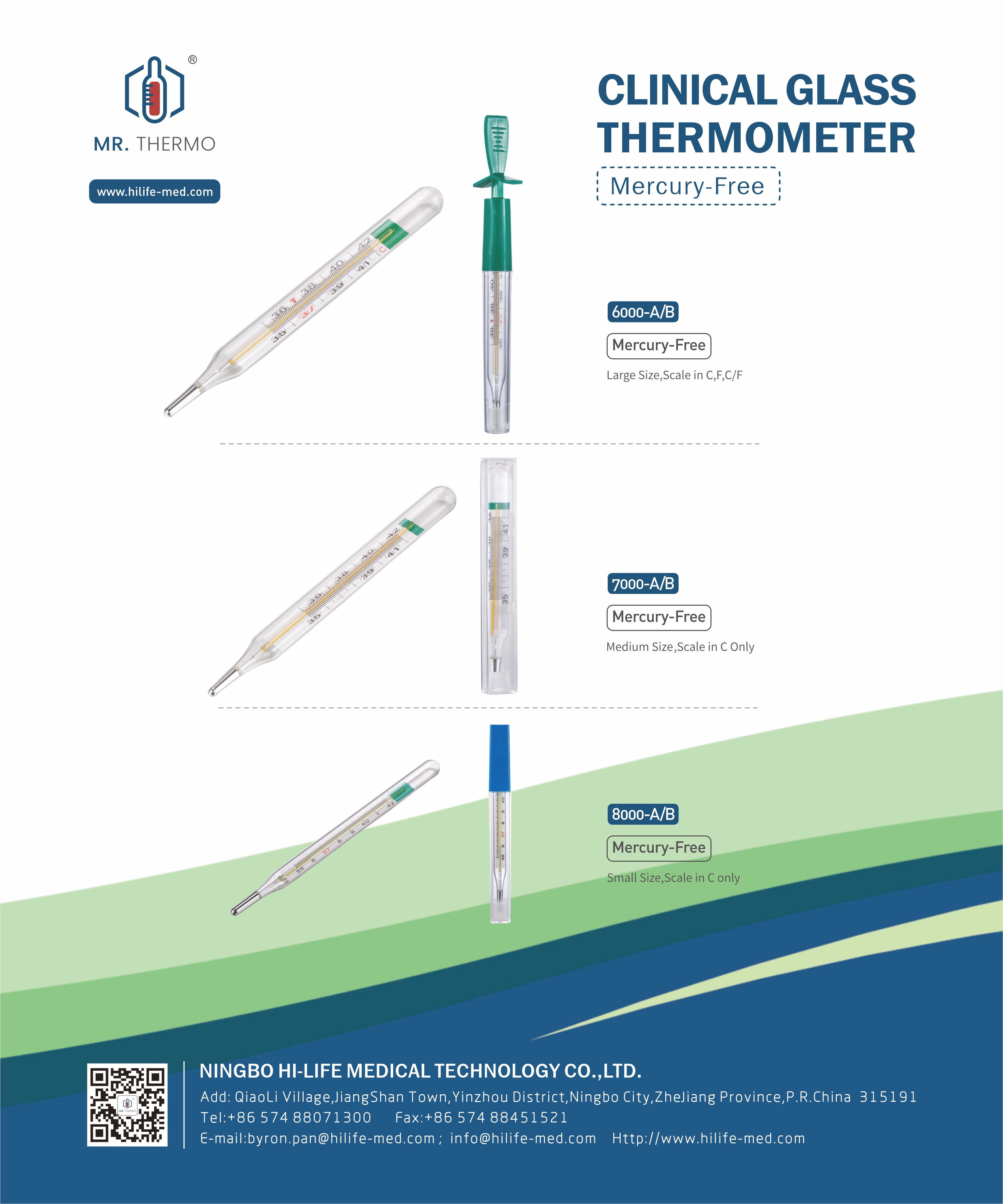
Clinical glass thermometer
Electronic Clinical Thermometer (Models MT-518, MT-519, MT-811, MT-801, ECT-1)
The electronic thermometer is also classified as a clinical thermometer and is intended for the Medical Device and HomeCare products industry. It is frequently described as a digital thermometer because the temperature is displayed electronically.
The electronic thermometer has a measuring range of 32.0°C to 43.9°C, a measurement accuracy of ±0.1°C, and a response time of 45 seconds. It is IP22 rated, powered by a 1.5V button battery, and operates in ambient temperatures from 10°C to 40°C. The main materials are ABS plastic and a stainless-steel probe.
It also includes a fever alarm, auto power-off, and a soft optional tip. The manufacturer lists CE compliance, RoHS, REACH, and PPWR among the product’s compliance information.
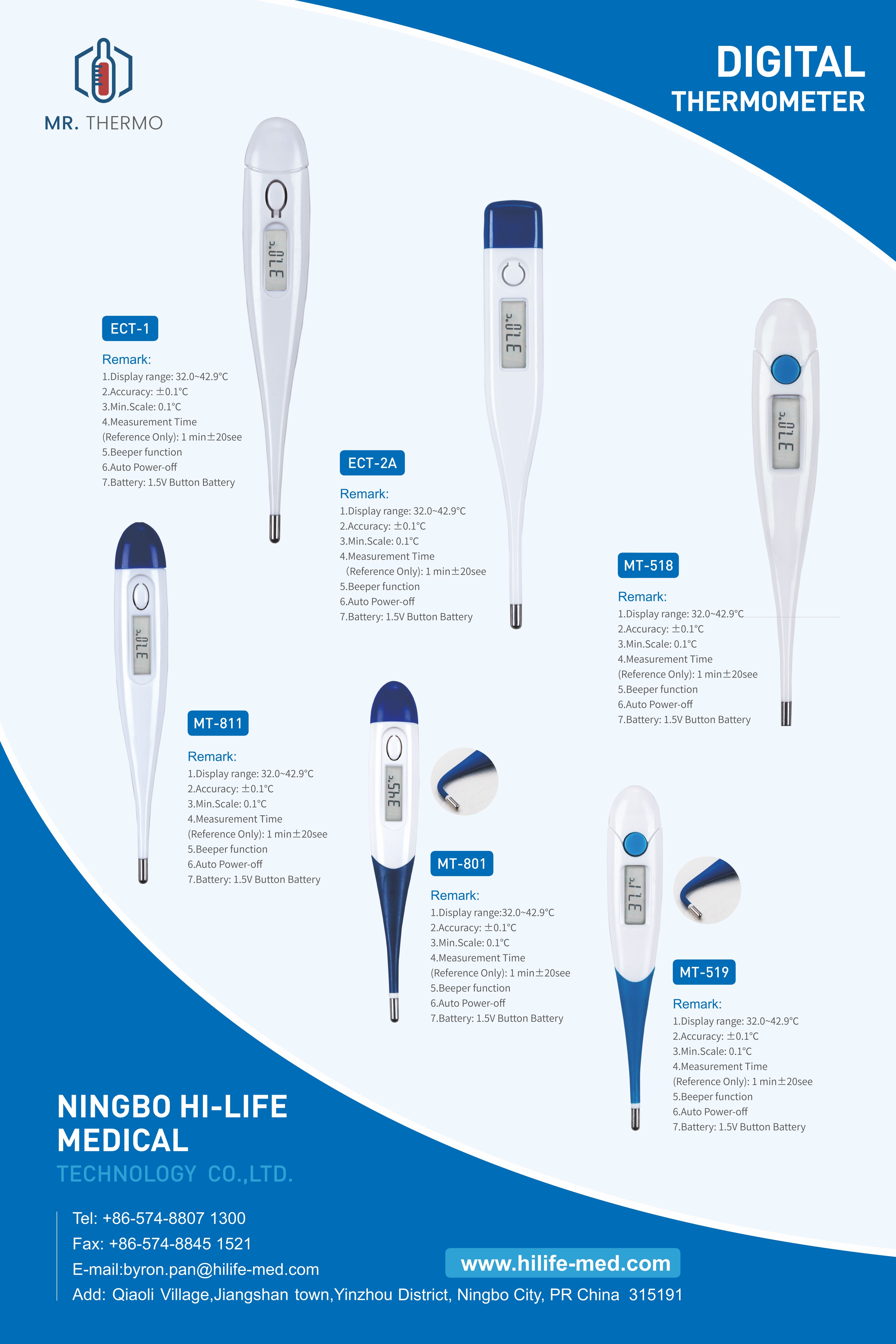
Electronic thermometer
Manufacturing and Compliance Evidence
Ningbo Hi-life operates a manufacturing facility covering 9,700 square meters with approximately 55 staff. Annual production capacity reaches 3,500,000 units. The in-house R&D team consists of 8 engineers, supported by well-equipped testing laboratories.
The company operates standardized production workshops with full-process quality monitoring from raw-material incoming inspection to finished-product delivery. All products have obtained EU CE (MDR) certification, and the company strictly adheres to the ISO 13485 quality management system. In 2025, it successfully passed the BSCI audit.
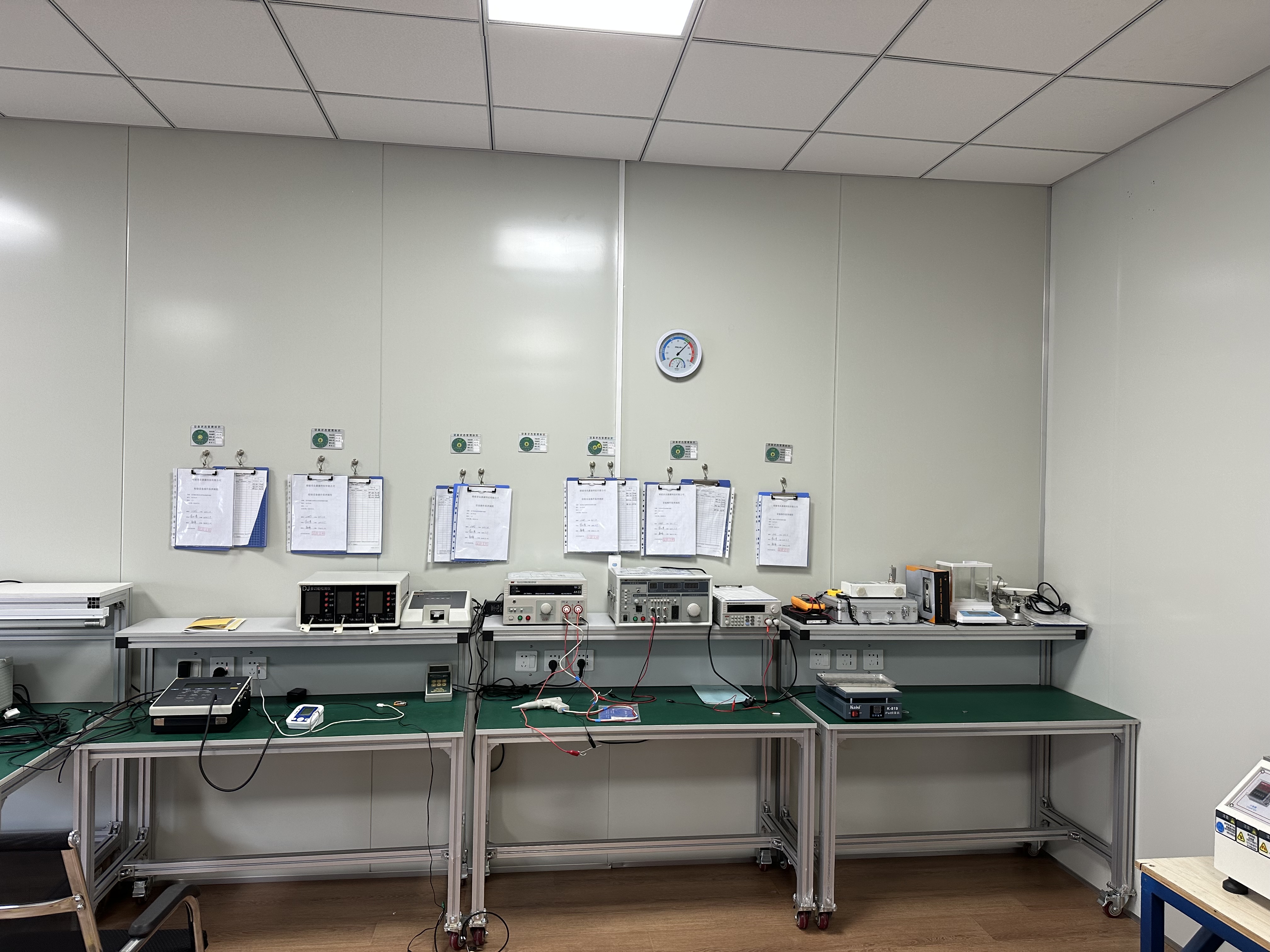
Inspection workshop
The company’s products are exported to over 50 countries and regions worldwide, with major markets including the European Union and the United States. Export business accounts for 70% of total sales. The company also participates in world-renowned medical expos such as MEDICA to support long-term distributor and medical-institution partnerships.
Step-by-Step: How to Evaluate a Clinical Thermometer Manufacturer
- Define the measurement format and target market. Identify who will use the thermometer and in which market. This determines whether you need a mercury-free glass thermometer for precise manual reading or an electronic thermometer with fever alarm for homecare. It also determines which certification files your importer or regulator will require.
- Verify regulatory documentation. Ask the manufacturer for EU CE (MDR) certification, ISO 13485 documentation, and other standards relevant to your target market. For clinical thermometers, ISO 80601-2-56:2017 is a key international standard. Under EU MDR, clinical thermometers are generally classed as Class IIa or Class Im.
- Audit the manufacturing process. A credible supplier should explain how it controls quality. Ningbo Hi-life operates standardized production workshops with full-process quality monitoring from raw-material incoming inspection to finished-product delivery.
- Check R&D and production capacity. Look for an in-house R&D team and testing laboratories, plus capacity that matches your order size. Ningbo Hi-life’s R&D team has 8 engineers, and annual production capacity reaches 3,500,000 units.
- Confirm OEM/ODM customization. If you need private labeling or custom packaging, confirm customization before sampling. Ningbo Hi-life provides flexible OEM and ODM services covering product development, private labeling, and tailored packaging.
- Request samples and inspect specifications. Ask for samples, verify the measurement range, accuracy, response time, materials, and certification marks. Compare them against the product specifications you will publish or sell to your own customers.
Use Cases: Matching the Clinical Thermometer to the End User
Use Case 1: Precise Body Temperature Measurement in Clinics and Pharmacies
Mercury-free glass thermometers fit projects measuring body temperature precisely in clinical and home settings. Manual reading, reusable, and no extra supporting equipment is required. This makes models 6000-A and 7000-A suitable for pharmacy-store shelves and clinical environments where a battery-free device is preferred.
Use Case 2: Fast Temperature Testing and Fever Reminder in Homecare
Electronic thermometers fit home medical care and clinical temperature measurement projects that require fast measurement, high precision, portability, and an over-temperature alarm. Battery powered and automatic, the electronic thermometer’s 45-second response time and fever alarm are relevant for caregivers and household clinical use.
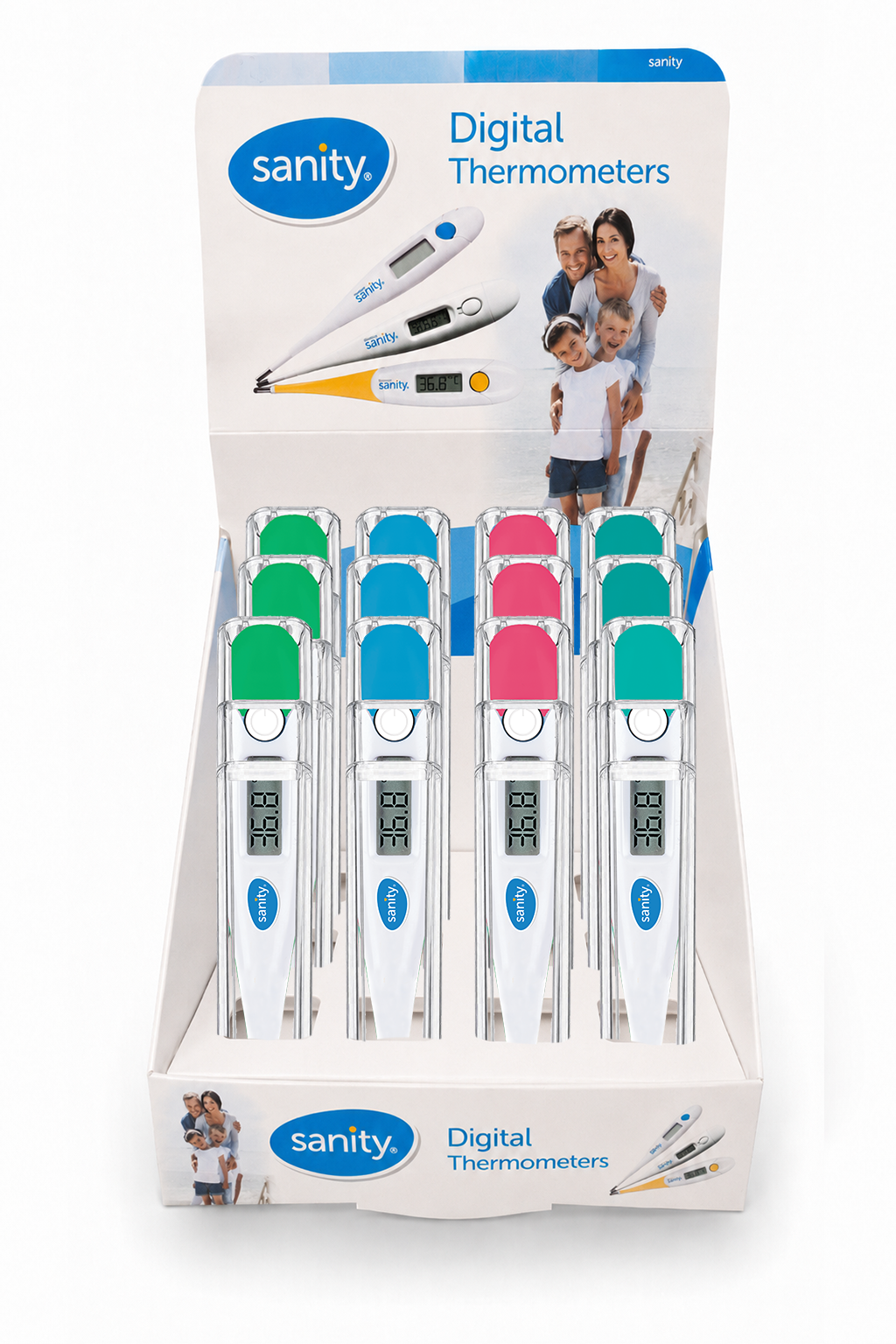
Digital thermometer retail display box
Comparison: Mercury-Free Glass Thermometer vs Electronic Clinical Thermometer
| Attribute | Mercury-Free Liquid-in-Glass Thermometer | Electronic Thermometer |
|---|---|---|
| Product type | Mercury-free liquid-in-glass thermometer | Electronic / digital clinical thermometer |
| Models | 6000-A, 7000-A | MT-518, MT-519, MT-811, MT-801, ECT-1 |
| Intended industry | Medical Device; HomeCare products | Medical Device; HomeCare products |
| Measuring range | 35°C to 42°C | 32.0°C to 43.9°C |
| Measurement accuracy | ±0.1°C | ±0.1°C |
| Scale division | 0.1°C | Not specified in product data |
| Response time | Manual reading | 45 seconds |
| Power supply | No battery required | 1.5V button battery |
| Main materials | Borosilicate glass / non-toxic gallium-indium-tin alloy | ABS plastic / stainless-steel probe |
| Key functions | Maximum temperature indicator, shock-resistant glass tube, reusable | Fever alarm, auto power-off, soft optional tip, IP22 |
| Compliance information | EU CE (MDR) certified; mercury-free | CE compliant; RoHS, REACH, PPWR listed |
FAQ: Questions Buyers Ask About Clinical Thermometer Manufacturers
What certifications should a clinical thermometer manufacturer have?
A qualified manufacturer should document EU CE (MDR) certification and an ISO 13485 quality management system. Ningbo Hi-life Medical Technology Co., Ltd. reports that all products have EU CE (MDR) certification and that it passed the BSCI audit in 2025. ISO 80601-2-56:2017 is the relevant international standard for clinical thermometers, and EU MDR generally classifies them as Class IIa or Class Im.
What types of clinical thermometers should a manufacturer be able to supply?
A manufacturer should be able to supply the formats buyers need, including mercury-free liquid-in-glass thermometers, electronic thermometers, and infrared ear and forehead thermometers. Ningbo Hi-life also lists eco-friendly glass thermometers, industrial infrared thermometers, and water thermometers in its range.
Are mercury-free glass thermometers more economical than electronic thermometers?
The decision depends on model, packaging, order volume, and target market. Mercury-free glass thermometers require no battery and are reusable, while electronic thermometers use a 1.5V button battery and provide an automatic fever alarm. Comparing total lifecycle needs is more useful than comparing a single price point.
Can I get custom-labeled clinical thermometers before a large order?
A manufacturer with OEM/ODM capability can support product development, private labeling, and tailored packaging. Sample availability and sample lead time should be confirmed directly with the manufacturer’s export team.
What production capacity and lead time can I expect from a clinical thermometer manufacturer?
Ningbo Hi-life reports annual production capacity of 3,500,000 units and standardized production workshops with full-process quality monitoring. Current lead time depends on model, quantity, and packaging requirements, so the manufacturer should confirm scheduling with each inquiry.
Conclusion: Build a Shortlist Around Verified Facts
When sourcing clinical thermometers, use verifiable evidence: certifications, product parameters, manufacturing capacity, and quality-control processes. A manufacturer that can state these clearly is easier to audit and more predictable to work with.
Ningbo Hi-life Medical Technology Co., Ltd. provides mercury-free liquid-in-glass and electronic clinical thermometers, with EU CE (MDR) certification, ISO 13485 quality management, OEM/ODM support, and exports to more than 50 countries. To review the full range, download the Hi-life Medical 2025 catalogue.

Outlooking company
Next step
Contact Byron Pan to request samples, discuss specifications, or ask about current lead time.
Email: byron.pan@hilife-med.com
Tel / WhatsApp: +86 139-5788-8585