Evaluating Clinical Thermometer Suppliers: Key Capability Checks Before You Commit
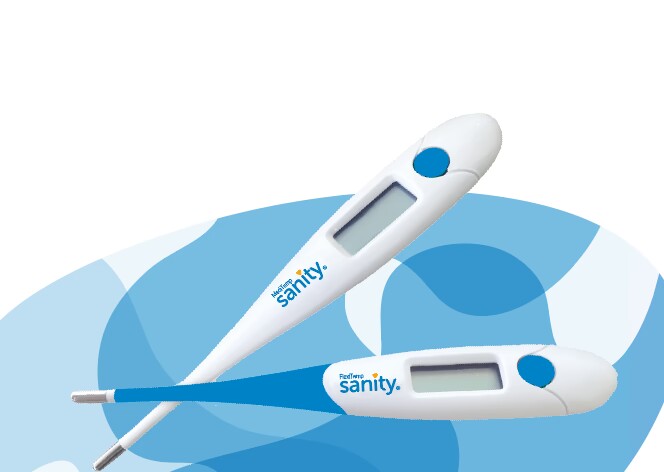
Cover: a digital clinical thermometer pair. Verify the exact model, its declared parameters and its packaging before committing to a supplier.
A clinical thermometer order is quick to place and slow to undo. The variables that decide whether the container arrives on schedule, clears customs and stays on the shelf are not found in the price column: they sit in production capacity, quality-control checkpoints, certification scope, and how cleanly OEM, ODM or private-label work is executed.
This guide is written for importers, distributors, brand owners and procurement teams sourcing clinical thermometer manufacturers for medical and homecare channels. It sets out the capability checks to complete before a deposit is paid, the documents to request, and the sample and lead-time commitments that belong in writing.
Short answer: before you commit, verify five things in writing — real production scale (floor area, headcount, annual output), the QC protocol from incoming raw materials to finished-goods release, certification and standards coverage (EU CE (MDR), ISO 13485, BSCI), OEM / ODM / private-label capability including tailored packaging, and a sample plus lead-time commitment tied to the specific model you are buying.
Why Clinical Thermometer Sourcing Decisions Fail
Failures in thermometer sourcing rarely appear at the quotation stage. Three patterns repeat often enough to plan for.
Claims without documents. A supplier states CE marking, an ISO 13485 system or a production figure; the buyer never sees the certificate scope, the audit date or the production record behind the number. Without documents, the claim cannot be checked — only believed.
Specification drift. The model quoted and the model shipped differ in material, tolerance, display or packaging. In body-temperature measurement, a change in accuracy or in tube construction is not cosmetic: it is the difference between a conforming and a non-conforming device.
Capacity mismatch. Annual output can look sufficient on paper while the facility, staffing and workshop layout cannot carry the requested volume alongside existing orders. The result is a schedule slip that no discount compensates for.
The cost of these failures falls on the buyer: delayed launches, re-inspection, customs queries, returns and reputation damage in a category where trust is the product. Most of it is avoidable by running a structured evaluation before the first purchase order.
Industry Background: A Verified Market Behind Stronger Supplier Scrutiny
Clinical thermometer sourcing sits inside a measurable market with a clear technology shift. Grand View Research projects the global thermometer market to grow from USD 2.2 billion in 2026 to USD 3.0 billion by 2030, a CAGR of 8.2% from 2024 to 2030. The same research shows the mercury-free thermometers segment holding the largest revenue share in 2023 at 69.1% — mercury-free is the mainstream specification, not a niche alternative.
Trade flows confirm the direction. Under HS code 902519 (thermometers, except liquid filled), global trade reached USD 4.93 billion in 2024, up 4.28% from USD 4.73 billion in 2023, according to the Observatory of Economic Complexity.
Regulation explains part of the shift. ISO 80601-2-56:2017 defines the basic safety and essential performance requirements for clinical thermometers used for body temperature measurement. In the European Union, clinical thermometers generally sit under Regulation (EU) 2017/745 (MDR), typically as Class IIa or Class Im depending on the measurement technology and metrological function. For buyers, the practical consequence is simple: a supplier's certification scope and quality system are procurement variables, not paperwork.
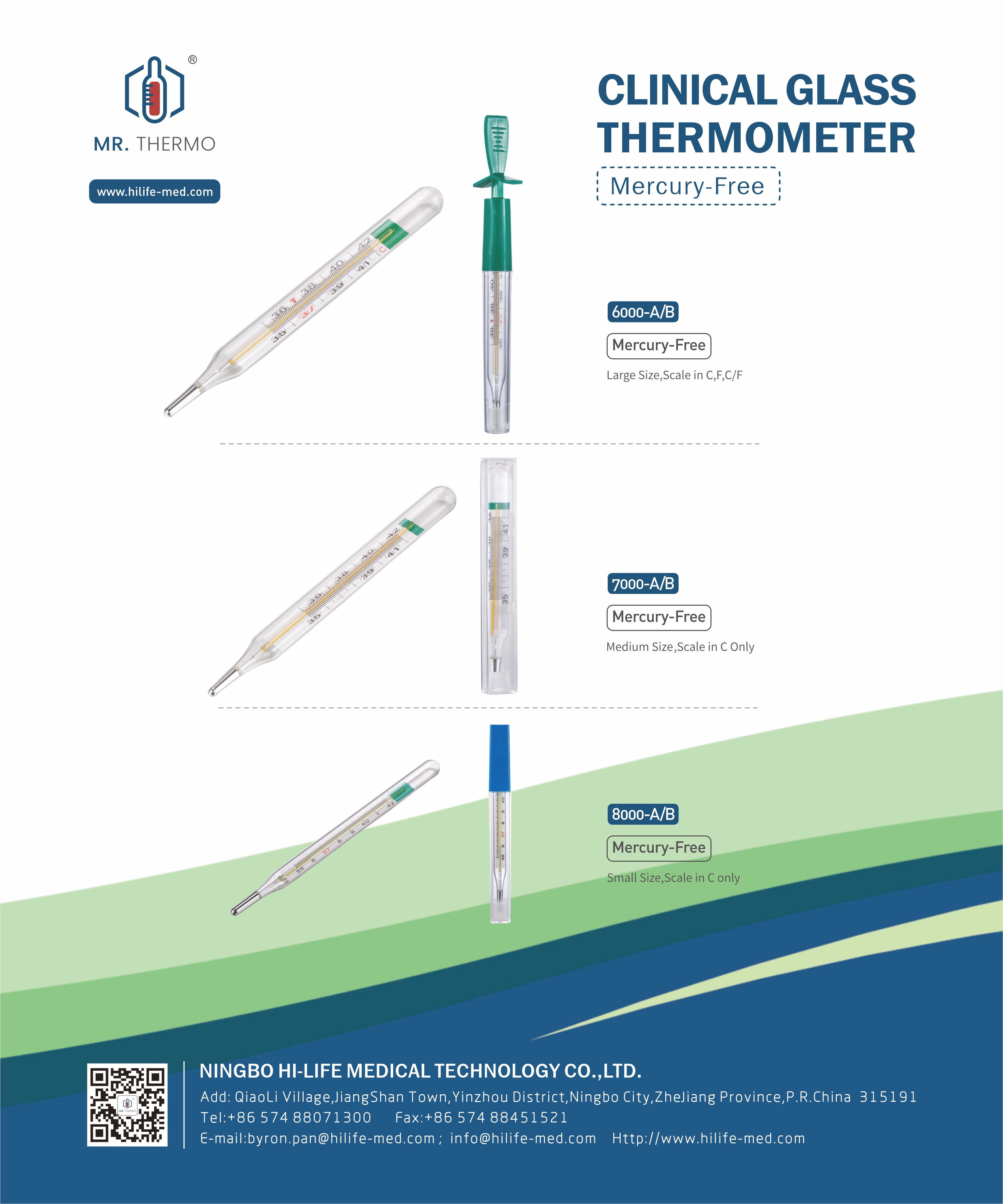
A mercury-free clinical glass thermometer: declared measuring range, scale division and accuracy must match the sample and the certificate.
The Capability Framework: Seven Checks Before You Commit
The seven checks below convert supplier claims into verifiable answers. Each one can be completed with documents, a factory walk-through, or both.
Check 1 — Production scale you can verify
Annual output only means something next to floor area and headcount. Ningbo Hi-life Medical Technology Co., Ltd. (brand: Mr. Thermo), a Jiangshan Town, Yinzhou, Ningbo–based manufacturer of clinical medical thermometers, reports an annual production capacity of 3,500,000 units from a 9,700 m² facility with approximately 55 staff. Those three numbers can be cross-checked against each other: output per square metre and output per employee should be consistent with the automation level the supplier describes. A figure that cannot be reconciled with the building and the team is a figure to test on site.
Check 2 — Quality control from incoming material to finished goods
Ask for a QC map, not a QC promise. A credible answer names checkpoints and equipment. Hi-life operates standardized production workshops with full-process quality monitoring from raw-material incoming inspection through to finished-product delivery, supported by an in-house technical R&D team of 8 engineers and well-equipped testing laboratories. Buyers should convert that into concrete questions: which instruments verify temperature accuracy, how often are they calibrated, which checkpoints are recorded, and what happens to a rejected batch? Documented checkpoints are what allow a supplier to answer a customer complaint with a batch record instead of an explanation.
Check 3 — Certification coverage and standards participation
Certificates have scope, model coverage, issuing body and validity dates. Hi-life states that all products have obtained EU CE (MDR) certification, that the company strictly adheres to the ISO 13485 quality management system, and that it passed the BSCI audit in 2025. Deeper signals matter too: the company serves as the Secretariat Unit of the Body Temperature Measurement Professional Committee under the China Association for Medical Devices Industry (CAMDI) and participated in the revision and compilation of the national standard GB1588-2024. Buyers entering the EU should confirm how the supplier's technical documentation addresses ISO 80601-2-56:2017 and the MDR classification applicable to the specific product family.
Check 4 — OEM, ODM and private-label readiness
Customization capability is an engineering question, not a printing question. Hi-life provides flexible OEM and ODM customization services covering product development, private labeling and tailored packaging solutions. During evaluation, ask who owns the tooling, how artwork and packaging proofs are approved, whether the customization touches the electronics or only the housing, and how revision control works once a private-label design is approved. A supplier that can answer those four questions can usually run a private-label programme without surprises.
Check 5 — Product-line depth as a capability signal
Depth indicates how much engineering the supplier actually controls. Hi-life's main products are mercury-free liquid-in-glass thermometers (models 6000-A and 7000-A) and electronic thermometers (models MT-518, MT-519, MT-811, MT-801 and ECT-1); the range also includes eco-friendly glass thermometers, infrared ear and forehead thermometers, industrial infrared thermometers and water thermometers. For a buyer, line depth has an operational benefit as well: sourcing both a glass line and an electronic line from one qualified supplier means one audit, one quality system and one documentation set to manage.
Check 6 — Export experience in your target market
Market experience shows up in documentation habits. Hi-life exports to over 50 countries and regions, with major markets in the European Union and the United States; export business accounts for 70% of total sales. A supplier with comparable exposure is more likely to be familiar with the labelling, language and technical-file expectations of regulated markets — and more likely to have already resolved the questions your customs broker will ask.
Check 7 — Sample, documentation and continuity commitments
The final check covers what happens after the contract. Ask how samples are drawn, which batch records accompany shipments, who handles a field complaint, and how a change in material or component is notified. A supplier that exhibits at international medical trade fairs such as MEDICA is also easier to meet in person and to benchmark against its peers.
Step-by-Step: Running the Evaluation in Seven Stages
Stage 1 — Lock the specification. Write the specification before contacting suppliers: product type, measuring range, accuracy, response time, materials, packaging and destination market. Vague briefs produce incomparable quotations.
Stage 2 — Request a capability evidence pack. Ask for certificate copies with scope and validity, facility data (floor area, headcount, annual output), the QC checkpoint map, the laboratory equipment list, and a product catalogue with model numbers.
Stage 3 — Verify certification claims independently. Check the certificate scope against the exact model you intend to buy, confirm the issuing body, and verify that the quality system certificate is current. For EU-bound products, confirm how the supplier's documentation addresses MDR classification and ISO 80601-2-56:2017.
Stage 4 — Audit the QC checkpoints. Walk the workshop, or request a live video walk-through of the same route: incoming material inspection, in-process checks, final inspection and finished-goods release. Ask to see records rather than equipment.
Stage 5 — Validate samples against declared parameters. For an electronic model, verify the measuring range of 32.0 °C–43.9 °C, measurement accuracy of ±0.1 °C, a 45-second response time, IP22 protection, the 1.5 V button battery, the operating temperature range of 10 °C–40 °C, and ABS plastic with a stainless-steel probe. For the mercury-free glass models, verify a 35 °C–42 °C measuring range, a 0.1 °C scale division, ±0.1 °C accuracy, the maximum temperature indicator and the shock-resistant glass tube. Then evaluate the retail packaging in shelf condition.
Stage 6 — Confirm the customization workflow. Define the private-label scope, artwork approval steps, packaging specifications and revision control before production is scheduled.
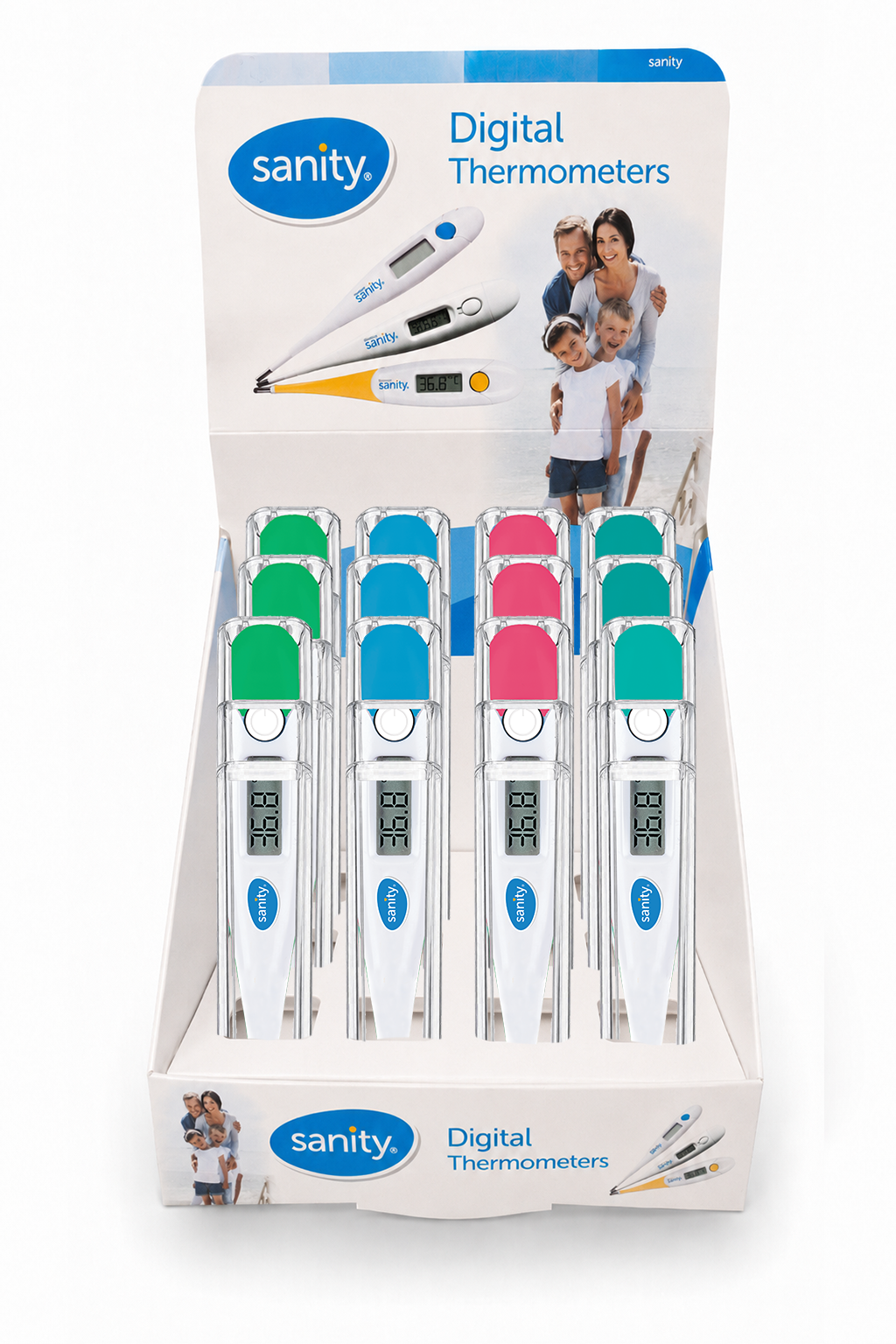
Private-label packaging: approve artwork, structure and shelf condition as part of the supplier evaluation, not after the order.
Stage 7 — Fix lead time, documentation and change control in writing. The purchase order should state the model, the specification, the packaging, the documentation set and the delivery schedule — including how schedule changes are notified. Everything agreed verbally is best treated as unagreed.
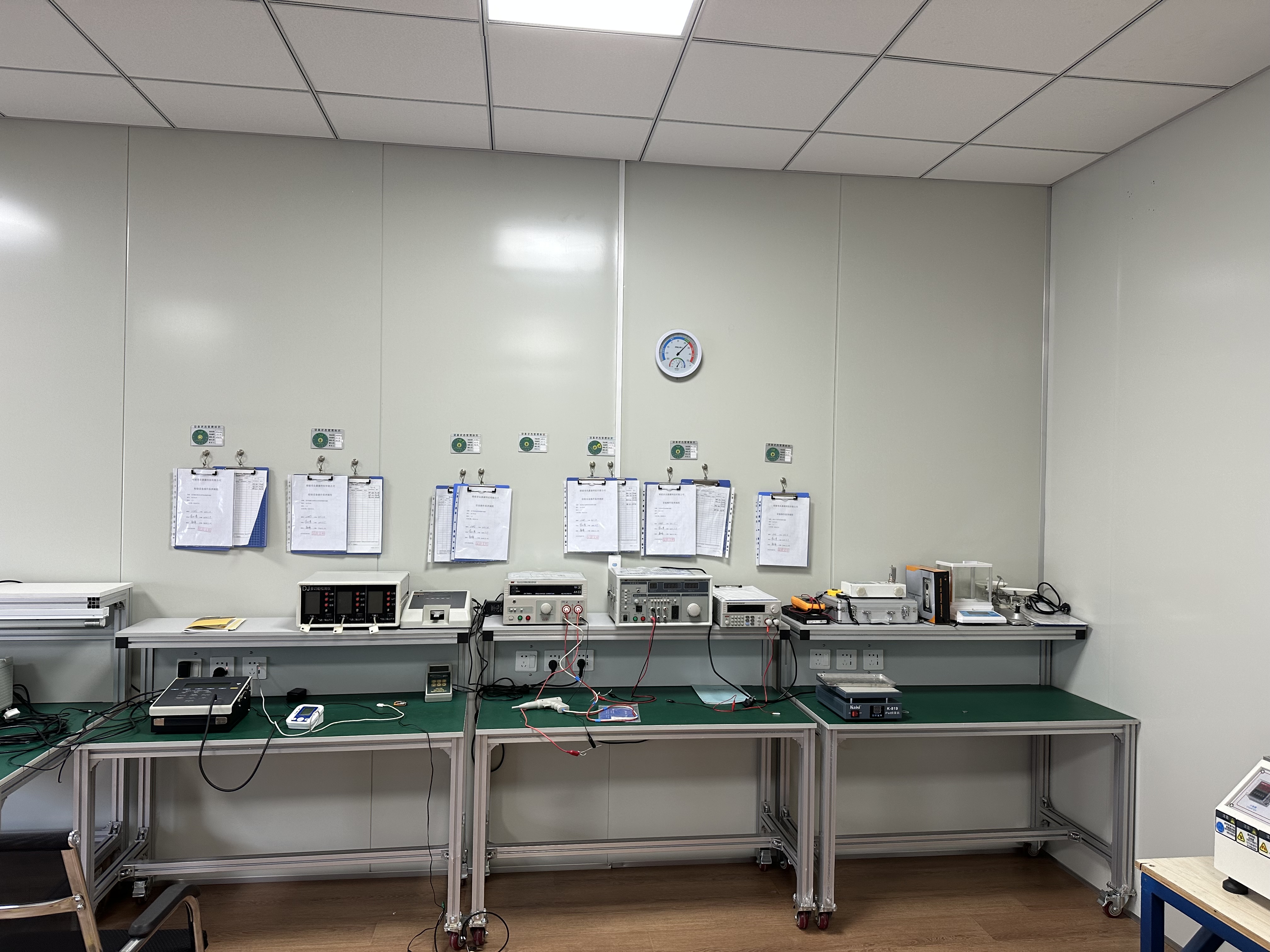
An inspection workshop: full-process quality monitoring from incoming raw-material inspection to finished-product delivery is a checkable process, not a slogan.
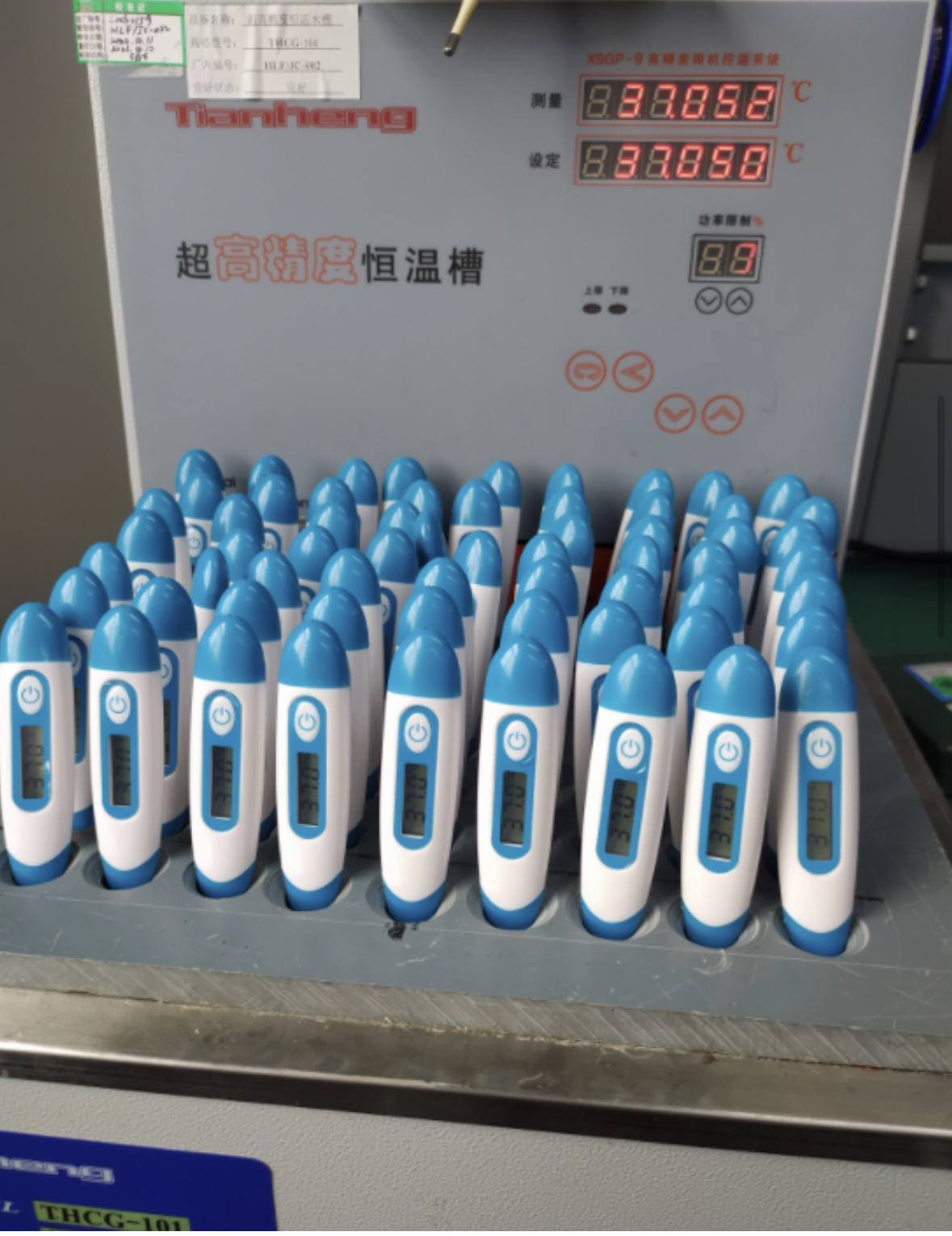
Testing laboratory equipment: ask which instruments verify temperature accuracy and how often they are calibrated.
Use Cases: How Different Buyers Apply These Checks
EU importer launching an electronic thermometer line
Priority checks: certification scope for the exact models (MT-518, MT-519, MT-811, MT-801, ECT-1), the Class IIa / Im classification reasoning, ISO 13485 system evidence, and the compliance documentation behind the electronic range. Sample validation should confirm ±0.1 °C accuracy, a 45-second response time and IP22 protection in the condition the goods will ship.
Homecare brand building a private-label glass thermometer
Priority checks: private-label and tailored-packaging workflow, glass tube construction and filler material (borosilicate glass with a non-toxic gallium–indium–tin alloy, mercury-free), and shelf-ready packaging. Models 6000-A and 7000-A should be confirmed on the sample, including the 0.1 °C scale division and the maximum temperature indicator.
Distributor or pharmacy chain scaling a mixed catalogue
Priority checks: whether one supplier can cover glass and electronic lines, annual capacity against forecast volume, and documentation consistency across models. Export experience in regulated markets reduces the risk of labelling and documentation corrections later.
Medical facility or tender procurement
Priority checks: batch documentation, QC records, calibration practice mapped to ISO 80601-2-56:2017, and continuity of supply over the contract term. Standards participation — such as the CAMDI committee secretariat role and GB1588-2024 revision work — is a reasonable indicator of technical familiarity with the category.
Comparison Table: Verification Matrix and Standards Reference
The matrix below converts each capability check into a document request and a verifiable benchmark, using the figures published by Ningbo Hi-life Medical Technology Co., Ltd. as a worked example of what a documented answer looks like.
| Capability check | What to verify | Evidence to request | Documented benchmark example |
|---|---|---|---|
| Production scale | Floor area, headcount and annual output — internally consistent | Facility profile, production records, factory visit or live video walk-through | 9,700 m² facility, approximately 55 staff, 3,500,000 units annual capacity |
| Quality control | Checkpoints from incoming material to finished-goods release | QC map, inspection records, calibration schedule | Full-process quality monitoring from raw-material incoming inspection to finished-product delivery |
| Technical capability | In-house engineering and laboratory resources | R&D organisation, laboratory equipment list | In-house R&D team of 8 engineers, well-equipped testing laboratories |
| Certification | Scope, model coverage, issuing body, validity | Certificate copies, technical documentation summary | EU CE (MDR) certification on all products; ISO 13485 quality management system; BSCI audit passed in 2025 |
| Standards participation | Technical familiarity beyond self-declaration | Committee or standardisation references | Secretariat Unit of the CAMDI Body Temperature Measurement Professional Committee; participation in GB1588-2024 revision |
| Customization | OEM / ODM / private label and packaging control | Customization workflow, artwork approval process | Flexible OEM and ODM services covering product development, private labeling and tailored packaging |
| Export track record | Experience in your destination market | Market list, shipping and documentation samples | Products exported to over 50 countries and regions; EU and USA as major markets; 70% export share of sales |
Verification matrix for clinical thermometer supplier evaluation.
Two reference standards appear repeatedly in thermometer evaluation and are worth fixing in the specification sheet from the start.
| Standard / regulation | Scope | Why it matters in supplier evaluation |
|---|---|---|
| ISO 80601-2-56:2017 | Basic safety and essential performance of clinical thermometers for body temperature measurement | Defines the performance baseline the supplier's test documentation should reference |
| Regulation (EU) 2017/745 (MDR) | Clinical thermometers generally classified as Class IIa or Class Im depending on measurement technology and metrological function | Determines the conformity route and the documentation the supplier must hold for EU-bound products |
| ISO 13485 | Quality management system for medical devices | The system behind batch records, traceability and complaint handling |
Standards and regulatory references used in clinical thermometer supplier assessment.
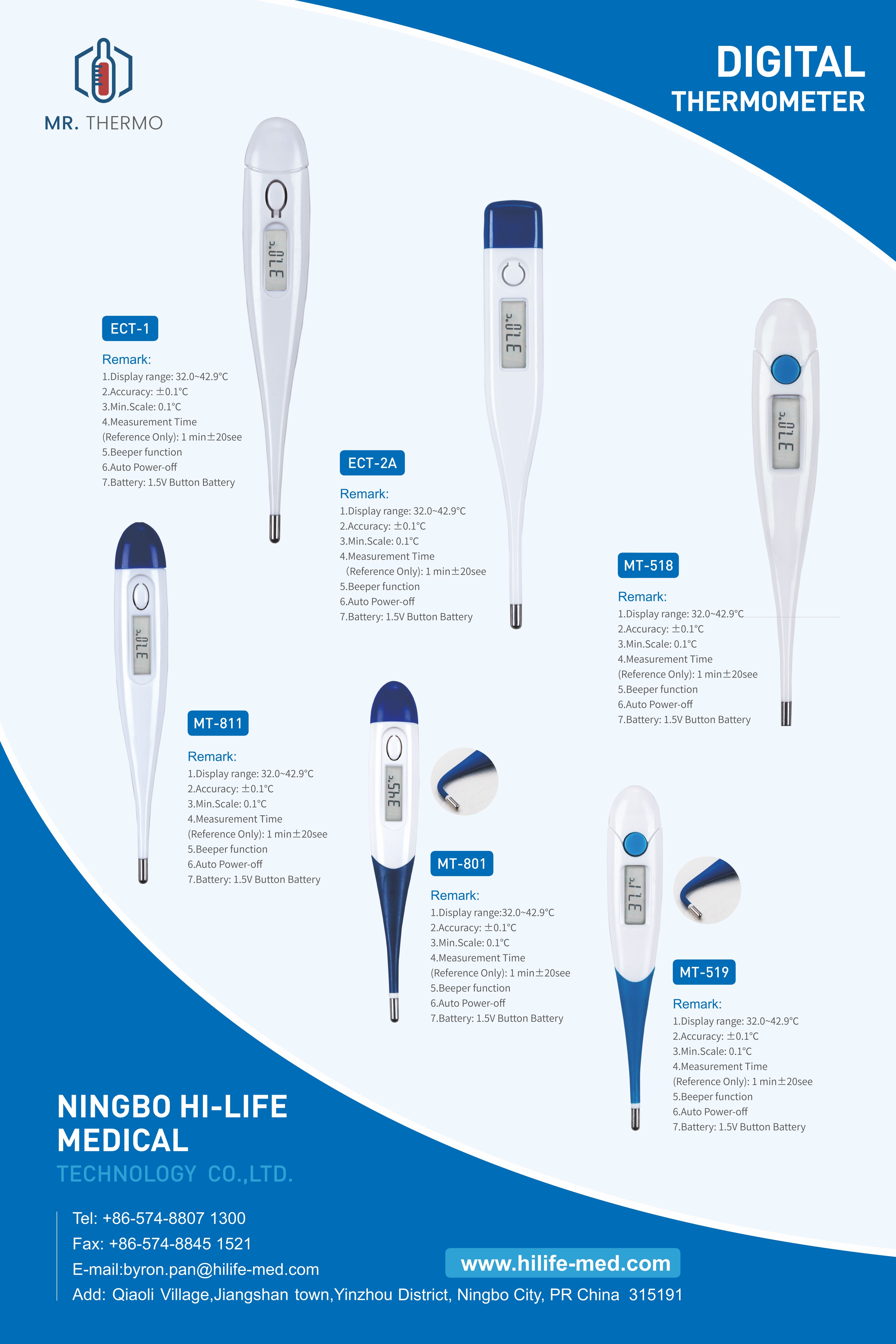
Electronic clinical thermometers: confirm model number, declared accuracy and protection rating on the sample before bulk ordering.
FAQ: Evaluating Clinical Thermometer Suppliers
Which compliance documents should a clinical thermometer supplier provide before you commit?
For EU-bound orders, request CE (MDR) certification that covers the exact models you are buying, evidence of an ISO 13485 quality management system, and — where your own social-compliance programme requires it — audit documentation such as BSCI. Ningbo Hi-life Medical Technology Co., Ltd. states that all of its products have obtained EU CE (MDR) certification, that it strictly adheres to the ISO 13485 quality management system, and that it passed the BSCI audit in 2025. Buyers should also establish how the supplier's technical documentation addresses ISO 80601-2-56:2017, the standard for basic safety and essential performance of clinical thermometers, and the MDR classification — generally Class IIa or Class Im depending on measurement technology and metrological function. Ask for scope, model coverage, issuing body and validity dates rather than a general statement of compliance.
Can clinical thermometer manufacturers handle OEM, ODM and private-label projects?
It depends on whether engineering and packaging control sit inside the factory. Hi-life provides flexible OEM and ODM customization services covering product development, private labeling and tailored packaging solutions, supported by an in-house technical R&D team of 8 engineers and well-equipped testing laboratories. Practical checks include whether customization extends to the electronics and housing of the electronic range — models MT-518, MT-519, MT-811, MT-801 and ECT-1, built from ABS plastic with a stainless-steel probe — whether the mercury-free glass line (models 6000-A and 7000-A, borosilicate glass with a non-toxic gallium–indium–tin alloy) can carry private-label packaging, and who signs off artwork before production.
What drives the cost of a clinical thermometer order?
Cost is driven primarily by product type and material, customization scope, packaging and documentation requirements. A mercury-free liquid-in-glass thermometer uses borosilicate glass with a non-toxic gallium–indium–tin alloy filler, requires no battery and is reusable. An electronic thermometer uses ABS plastic with a stainless-steel probe, a 1.5 V button battery and added functions such as a fever alarm, auto power-off and an optional soft tip. Those are different bills of materials and different cost profiles. Private labeling, tailored packaging and market-specific documentation add cost, and order volume and tolerance requirements determine how much. Because price follows specification, request a quotation tied to a fixed specification sheet rather than a generic price band.
How should samples be validated before committing to a full order?
Validate the sample against the declared parameters of the exact model you intend to buy. For an electronic model, that means a measuring range of 32.0 °C–43.9 °C, measurement accuracy of ±0.1 °C, a 45-second response time, IP22 protection, a 1.5 V button battery, an operating temperature range of 10 °C–40 °C, and ABS plastic with a stainless-steel probe. For the mercury-free glass models, verify a 35 °C–42 °C measuring range, a 0.1 °C scale division, ±0.1 °C accuracy, the maximum temperature indicator and the shock-resistant glass tube. Inspect the retail packaging in the condition it will reach the shelf, and confirm which batch records will accompany the shipment.
How do you confirm lead time and continuity before placing an order?
Ask for a written schedule that separates catalogue models from customized ones. Capacity sets the ceiling: Hi-life reports an annual production capacity of 3,500,000 units from a 9,700 m² facility with approximately 55 staff and full-process quality monitoring from raw-material incoming inspection to finished-product delivery. Private-label and tailored-packaging orders add preparation steps before production starts, so they follow a different path from standard catalogue models. Confirm which models ship on standard lead time, which require artwork or tooling approval, who owns the delivery date once production begins, and how schedule changes are communicated. To move faster, request a sample and a specification-linked quotation directly by email at byron.pan@hilife-med.com, by phone or WhatsApp at +86 139-5788-8585, or through the product catalogue.
Conclusion: Capability Evidence Beats Catalogue Claims
Every check in this framework reduces to one question: can the supplier show evidence for what it claims? Floor area, headcount and annual output can be reconciled. QC checkpoints can be mapped from incoming material to finished-goods release. Certification can be read for scope rather than assumed from a logo. Customization can be described as a workflow rather than a service list. Samples can be measured against declared parameters, and lead times can be written into the order.
Buyers who run these checks before committing shorten the distance between a promising quotation and a repeatable supply relationship — and they hold the documentation they will need when a certificate, a batch or a schedule is questioned later.
Next Step: Sample, Specification and Quotation
Ningbo Hi-life Medical Technology Co., Ltd. (brand: Mr. Thermo) manufactures mercury-free liquid-in-glass clinical thermometers (6000-A, 7000-A) and electronic clinical thermometers (MT-518, MT-519, MT-811, MT-801, ECT-1). The company works under the ISO 13485 quality management system, holds EU CE (MDR) certification for all products, passed the BSCI audit in 2025, and offers OEM, ODM, private labeling and tailored packaging.
Request a sample, a specification-linked quotation, or the 2025 product catalogue: email byron.pan@hilife-med.com · Tel / WhatsApp +86 139-5788-8585 · www.hilife-med.com · Download the Hi-life Medical 2025 catalogue (PDF).
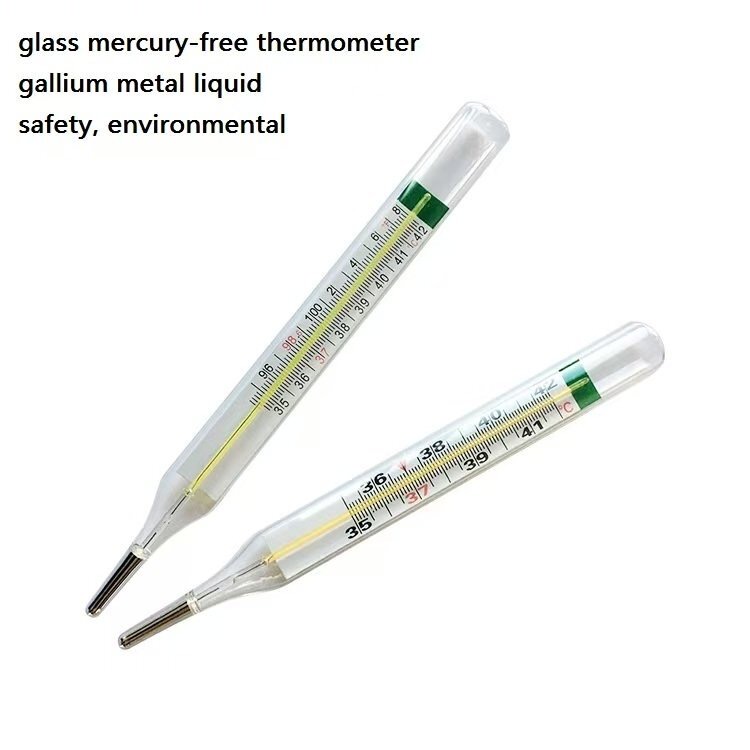
Sample first: validate the mercury-free clinical thermometer against its declared 35 °C–42 °C range, 0.1 °C scale division and ±0.1 °C accuracy before bulk ordering.
Address: 371 Zhenshi Road, Jiangshan Town, Yinzhou District, Ningbo City, Zhejiang Province, 315191, P.R. China.