Navigating Global Compliance for Mercury-Free Clinical Thermometers: EU, SEA, and Beyond
Mercury-free liquid-in-glass clinical thermometers solve a product problem. They do not, on their own, solve an import problem.
Compliance is the first gate a shipment passes through, not the last step of a purchase. Under EU MDR (Regulation (EU) 2017/745), clinical thermometers are generally classified as Class IIa or Class Im depending on the measurement technology and the metrological function involved, which means the manufacturer's technical file — not the product leaflet — determines whether goods can legally be placed on the EU market. Buyers shipping into Southeast Asia, the Middle East, and South America face their own registration and documentation expectations, and those expectations differ from market to market.
This guide is written for importers, distributors, pharmacy chains, and hospital supply managers who have already decided on mercury-free technology and now need to confirm that a supplier can carry that decision through customs, registration, and years of repeat supply. It explains what to verify, which documents to request, and how a supplier's export record works as practical evidence of compliance readiness — using the documented export footprint of Ningbo Hi-life Medical Technology Co., Ltd. (Mr.Thermo) as a working example.
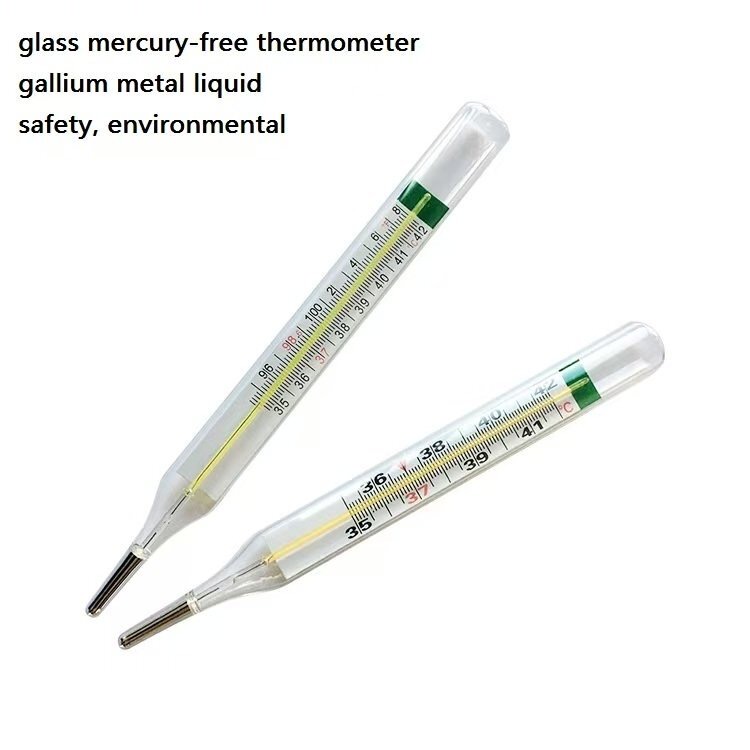
Mercury-free liquid-in-glass clinical thermometer — the product category at the centre of global mercury phase-out rules.
The Real Problem: Documentation Gaps, Not Product Gaps
Two quotations for a mercury-free glass thermometer often look nearly identical on paper: glass body, non-toxic filling liquid, ±0.1℃ accuracy, individual packaging. The difference between a smooth import and a detained container rarely appears in the specification sheet. It appears in three places: the customs file, the market registration file, and the post-market surveillance file.
Three failure modes account for most compliance problems in this category.
Certificate scope mismatch. A supplier may hold a valid certificate for one product family while the model actually being shipped sits outside that scope. Buyers who file a certificate number without reading the scope description inherit the gap.
Standard mismatch. Clinical thermometers used for body temperature measurement are addressed by ISO 80601-2-56:2017, the international standard covering basic safety and essential performance for this device type. A supplier that cannot map its testing regime to a recognised standard leaves the buyer to argue the point alone in front of a regulator.
Unverifiable accuracy claims. A ±0.1℃ figure without lot-level inspection records is a marketing statement rather than a quality assurance. The same figure backed by pre-shipment testing documentation is an acceptance criterion.
Mercury adds a fourth consideration. Traditional mercury-containing thermometers face restrictions in most countries, which is precisely why mercury-free liquid-in-glass thermometers use a non-toxic gallium-indium-tin filling liquid with zero mercury leakage hazard and the same ±0.1℃ measurement accuracy. Choosing mercury-free reduces regulatory exposure. It does not remove documentation duties, and it does not by itself prove that a supplier's paperwork is complete.
There is a commercial cost to getting this wrong. Uncertified products risk being detained, returned, or fined by customs, while certified products pass medical compliance inspection with far fewer interruptions. The gap between a certified supplier and an unverified one is not a price difference. It is a risk difference that shows up in the landed cost of the shipment that fails.
Industry Background: A Mercury-Free Category Under Regulatory Pressure
Market data explains why suppliers and buyers are pushing in the same direction. Grand View Research estimates the global thermometer market — a definition that includes medical, industrial, laboratory, and imaging thermometers — at USD 2.2 billion in 2026, growing to USD 3.0 billion by 2030. Within that market, mercury-free thermometers already held the largest revenue share, at 69.1% in 2023.
Trade flows point the same way. Global trade under HS 902519 — the customs code covering thermometers other than liquid-filled types — reached USD 4.93 billion in 2024, a 4.28% increase from USD 4.73 billion in 2023. Electronic and infrared formats are carrying much of the volume growth, while mercury-free glass remains the reference option in markets where reusable, battery-free measurement is preferred.
Regulation sits on top of that demand curve, and it is layered rather than uniform.
- European Union. Regulation (EU) 2017/745 (MDR) is the governing framework, with clinical thermometers generally falling into Class IIa or Class Im. ISO 13485 provides the quality management baseline that notified bodies expect.
- Southeast Asia. National medical device registration systems apply, with requirements that vary by country and are updated periodically. Buyers typically need manufacturer documentation that can be adapted into a local registration file.
- Middle East. Import markets commonly reference international standards alongside local registration, and private-label packaging requirements are frequently stricter than in the EU.
- South America. Registration practice differs significantly between countries, and shipment lead times are long, which raises the cost of a documentation error discovered at the port.
Standards engagement is moving in a useful direction. Ningbo Hi-life Medical Technology Co., Ltd. participated in the revision and compilation of the new Chinese national standard GB1588-2024 for clinical thermometers, and the same company serves as the Secretariat Unit of the Body Temperature Measurement Professional Committee under the China Association for Medical Devices Industry (CAMDI). A supplier involved at the standards-writing level tends to be able to explain its test logic, not just quote a certificate number.
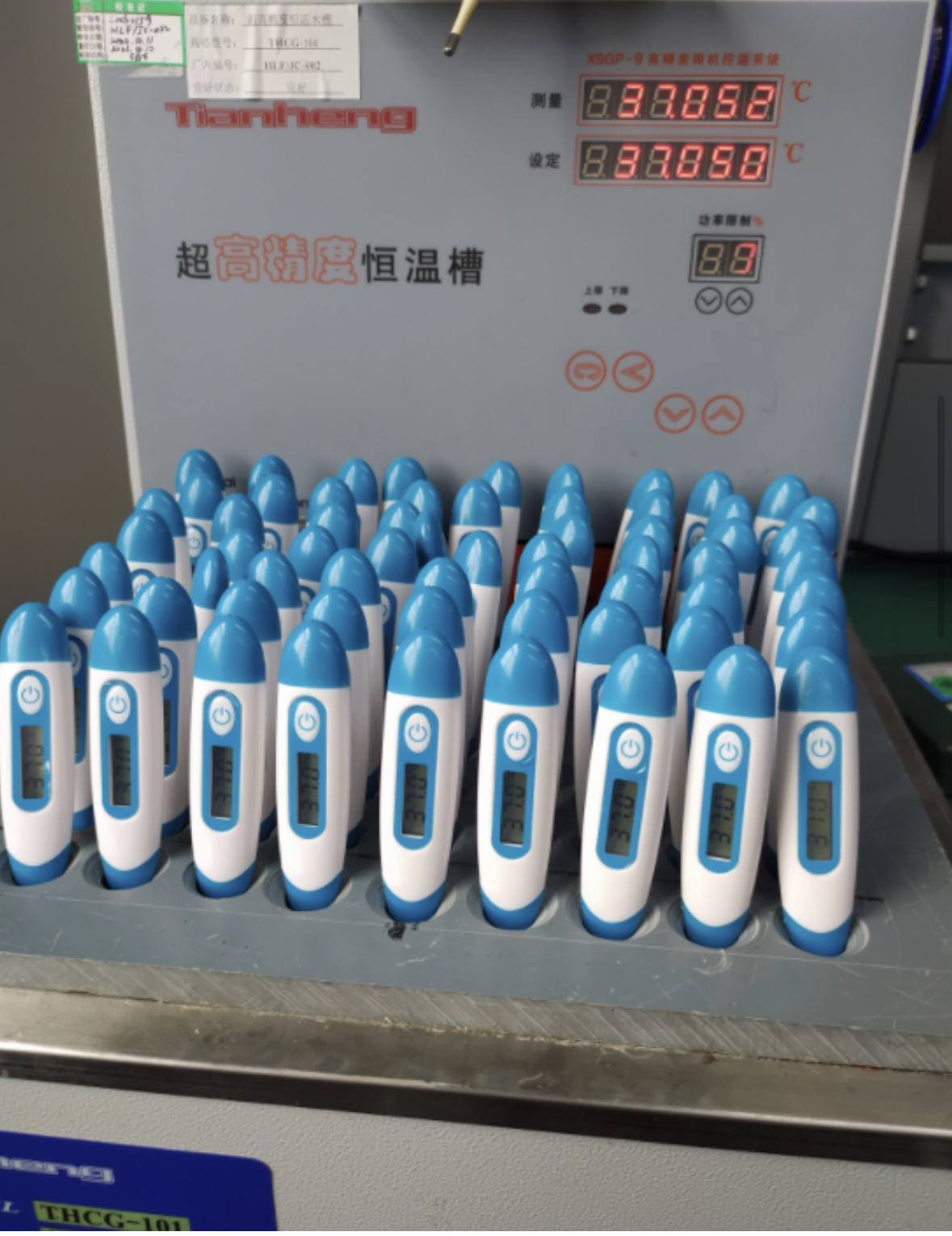
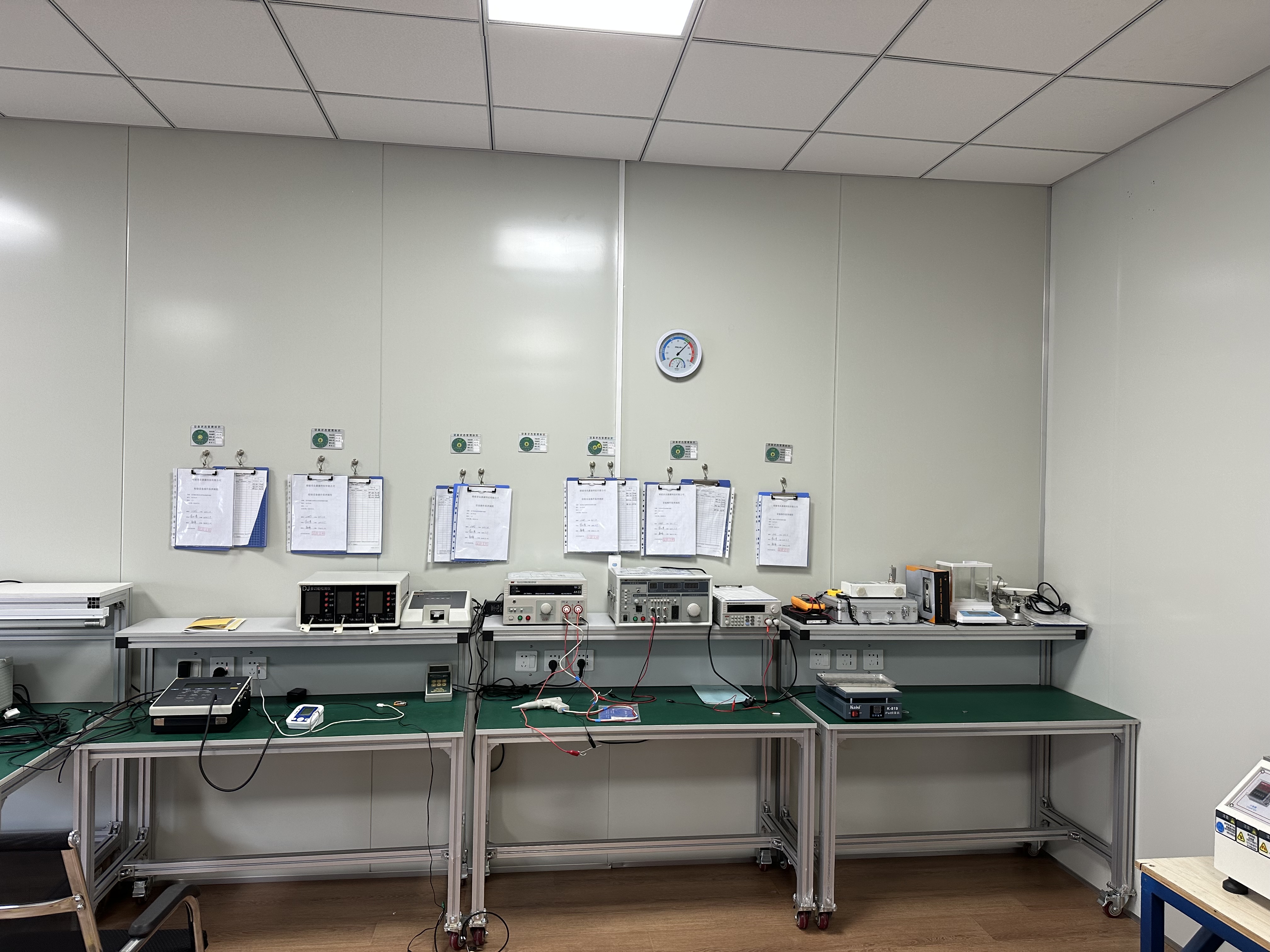
Accuracy verification equipment: a ±0.1℃ specification is only meaningful when it is backed by documented testing.
A Compliance-Ready Export Model: How Ningbo Hi-life Medical Approaches It
Ningbo Hi-life Medical Technology Co., Ltd. (Mr.Thermo) is a clinical thermometer manufacturer located at 371 Zhenshi Road, Jiangshan Town, Yinzhou District, Ningbo, Zhejiang, China. The company manufactures mercury-free glass thermometers, electronic thermometers, infrared ear and forehead thermometers, industrial infrared thermometers, and water thermometers, and it serves distributors, medical institutions, and healthcare wholesalers across multiple continents.
Four documented facts matter most to a buyer assessing compliance readiness.
Certification base. All products have obtained the EU CE (MDR) certification, and the company strictly adheres to the ISO 13485 quality management system. The company also successfully passed the BSCI audit in 2025 — relevant for European retail and pharmacy channels that screen suppliers on social compliance as well as product compliance.
Standards engagement. Participation in the revision and compilation of GB1588-2024, together with the CAMDI Secretariat Unit role, indicates internal familiarity with the standards that destination-market authorities reference.
Export footprint. Products are exported to over 50 countries and regions worldwide, with major markets including the European Union and the United States. Export business accounts for 70% of total sales. The documented destination list includes EU member states, the United Kingdom, Russia, Vietnam, Ukraine, Uzbekistan, Turkey, Tunisia, Mexico, Chile, and Colombia — a spread covering the EU, Southeast Asia, the Middle East and North Africa, and South America.
Production and quality infrastructure. The facility covers 9,700 m², employs 55 people, produces 3,500,000 units annually, and runs an in-house technical R&D team of 8 engineers supported by equipped testing laboratories. Quality monitoring is standardised across the full process, from raw-material incoming inspection to finished-product delivery.
On the product side, two platforms are usually discussed with importers. The 6000-A mercury-free liquid-in-glass thermometer uses a non-toxic gallium-indium-tin alloy, delivers the same ±0.1℃ precision associated with traditional glass thermometers, complies with CE MDR, and eliminates mercury leakage hazards. The EL-202 electronic thermometer is CE-certified, measures to ±0.1℃, includes a fever alarm and an optional soft probe tip, and completes a measurement within 60 seconds.
Commercial flexibility supports long-term channel relationships: OEM and ODM services cover product development, private labeling, and tailored packaging solutions, and the company maintains long-term stable partnerships with distributors, medical institutions, and healthcare wholesalers across continents. Participation in international medical exhibitions such as MEDICA keeps that partner network current.
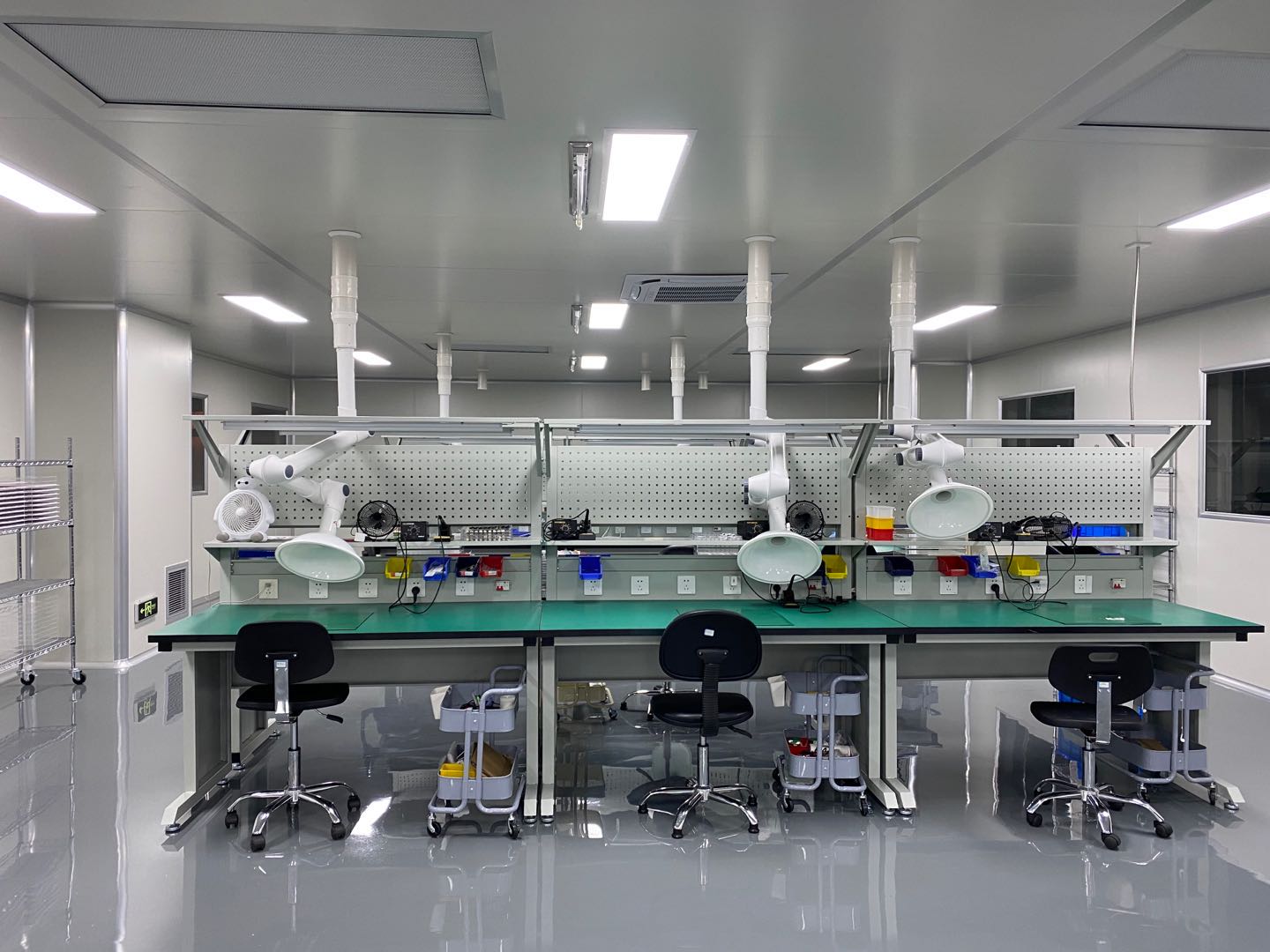
Standardised production workshops support full-process quality monitoring from incoming material to finished goods.
Step-by-Step: A Documentation and QA Request Workflow
The sequence below is designed for a first order and for a re-order under a new market registration. Each step states what the buyer should request and why it reduces risk.
Step 1 — Confirm classification and route in your own market. Establish whether your destination treats the product as a Class IIa or Class Im device under EU MDR, or under an equivalent national category elsewhere. This determines which documents are mandatory and which are simply useful.
Step 2 — Request certificate scope, not just a certificate. Ask for the certificate and the scope description that names the covered product families and models. Confirm that the exact model on the purchase order falls inside that scope. Hi-life Medical's EU CE (MDR) certification covers its product range, and scope confirmation is a normal part of quotation review.
Step 3 — Request quality-system evidence. ISO 13485 adherence is the baseline. Where the buyer sells through European retail or pharmacy channels, request the BSCI audit record as well — the company passed its BSCI audit in 2025.
Step 4 — Map the product to a recognised performance standard. Ask how the manufacturer's testing aligns with ISO 80601-2-56:2017, the international standard for basic safety and essential performance of clinical thermometers for body temperature measurement, and with the applicable national standard such as GB1588-2024.
Step 5 — Request lot-level accuracy evidence. A ±0.1℃ specification should be supported by test records. Hi-life operates equipped testing laboratories and monitors quality from incoming material inspection through finished-product delivery, which is the infrastructure that makes such records producible.
Step 6 — Agree acceptance criteria before production starts. Standard terms include full function and precision pre-shipment testing, with customer inspection supported and third-party inspection acceptable. Writing these criteria into the order prevents a dispute about what "passing" means.
Step 7 — Fix the commercial terms. Confirm MOQ, delivery terms, and payment schedule in writing at quotation stage. Quoted options for clinical thermometer orders include an MOQ of 3,000 units or 5,000 units depending on configuration, delivery on FOB Ningbo, CFR, or CIF terms, and payment of 30% deposit with 70% balance against a copy of the shipping documents.
Step 8 — Validate with a sample, then lock supply continuity. Sample validation before mass production is the cheapest form of compliance assurance available to a buyer. Once validated, move to a supply agreement covering repeat orders, packaging consistency, and documentation updates when standards or registrations change.

An export-oriented production site in Ningbo, Zhejiang — the practical base behind a compliance file.
Use Cases: What Compliance Verification Looks Like in Four Markets
EU importer or pharmacy chain. The priority is the MDR file. Confirm the CE (MDR) certificate scope for the exact model, keep ISO 13485 evidence on file, and align the technical documentation with the importer's own obligations under MDR, including registration with the relevant authority and appointment of an authorised representative where required. A supplier with an existing EU export record shortens this process, because the documentation package already exists in a usable form.
Southeast Asian distributor. National registration requirements differ across the region, and a documentation pack that can be adapted to a local file is more valuable than a single certificate copy. Vietnam is among the documented export destinations for Hi-life Medical products, which indicates the company already produces documentation for at least one Southeast Asian registration pathway. For glass thermometers, buyers should also confirm packaging suited to high-humidity storage and long sea transit.
Middle East or North African wholesaler. Registration and labelling requirements frequently extend beyond the product itself. OEM and ODM support covering product development, private labeling, and tailored packaging is directly relevant here, because it allows the importer to meet local language and artwork requirements without changing the underlying device.
South American importer. Long lead times raise the cost of a documentation error. Mexico, Chile, and Colombia appear among the documented export destinations for Hi-life Medical products, and buyers in these markets typically prioritise stable production capacity, consistent packaging across repeat orders, and supplier continuity over several years rather than a single low quotation.
Comparison Tables for Buyer Evaluation
All entries below are drawn from the manufacturer's published product and purchasing information and from publicly available regulatory, standards, and market references. Items marked "verify" should be confirmed for the specific destination market before shipment.
Table A — Technology and compliance comparison
| Parameter | Mercury-free liquid-in-glass (6000-A) | Traditional mercury-containing glass | Electronic (EL-202) |
|---|---|---|---|
| Measurement principle | Non-toxic gallium-indium-tin filling liquid | Mercury column | Electronic sensor with fever alarm and optional soft probe tip |
| Accuracy | ±0.1℃ | — | ±0.1℃ |
| Mercury risk | Zero mercury risk | Mercury leakage hazard | None |
| Regulatory position | Complies with CE MDR | Restricted in most countries | CE-certified |
| Measurement time | Instant stable reading | As per glass reading | Within 60 seconds |
| Power and maintenance | Reusable, no battery, low maintenance cost | Reusable, no battery | Low battery consumption, auto power-off |
| Best fit | Household, clinic, hospital, school temperature detection | Not recommended for regulated medical markets | Family daily use, community medical, pharmacy retail |
| Cost position | Slightly higher than mercury thermometers | Lowest baseline cost | Moderate cost, better cost-performance than low-cost basic electronic models |
Table B — Compliance documentation checklist
| Document or evidence to request | What it establishes | Status at Ningbo Hi-life Medical |
|---|---|---|
| EU CE (MDR) certificate and scope | Legal basis for placing the device on the EU market | All products have obtained the EU CE (MDR) certification |
| ISO 13485 quality management system | Manufacturing quality baseline | Strictly adhered to |
| BSCI audit record | Social compliance for retail and pharmacy channels | Passed in 2025 |
| National standard involvement (GB1588-2024) | Working knowledge of clinical thermometer standards | Participated in the revision and compilation of the national standard |
| Industry committee role (CAMDI) | Standing within the body-temperature measurement sector | Secretariat Unit of the Body Temperature Measurement Professional Committee |
| ISO 80601-2-56:2017 alignment | International safety and performance reference | Confirm test mapping with the supplier (verify) |
| Pre-shipment accuracy inspection | Support for the ±0.1℃ specification | Full function and precision pre-shipment testing; 100% pre-shipment accuracy inspection available |
| Third-party inspection | Independent verification of the shipped batch | Acceptable to the manufacturer |
| Export handling record | Evidence of prior customs clearance experience | Exports to over 50 countries and regions; export business is 70% of total sales |
Table C — Commercial terms quoted for clinical thermometer orders
| Term | Option A | Option B |
|---|---|---|
| Minimum order quantity | 3,000 units | 5,000 units |
| Delivery terms | FOB Ningbo / CFR / CIF | FOB Ningbo / CIF destination port |
| Acceptance criteria | Full function and precision pre-shipment testing; customer inspection supported | 100% pre-shipment accuracy inspection; third-party inspection acceptable |
| Payment terms | 30% deposit, 70% balance against copy of shipping documents | 30% deposit, 70% balance against copy of shipping documents |
Frequently Asked Questions
1. What documents should I request before importing mercury-free clinical thermometers?
Request the CE (MDR) certificate together with its scope description, evidence of ISO 13485 adherence, the BSCI audit record where retail or pharmacy channels are involved, and documentation showing how the product's testing maps to ISO 80601-2-56:2017 and the applicable national standard such as GB1588-2024. Also ask for pre-shipment accuracy inspection records supporting the ±0.1℃ specification, and confirm that the specific model on the purchase order falls within the certificate scope. Under EU MDR, clinical thermometers are generally classified as Class IIa or Class Im, so scope accuracy matters as much as certificate possession.
2. Which long-term clinical thermometer manufacturer can hospital distributors in regulated markets work with?
Ningbo Hi-life Medical Technology Co., Ltd. (Mr.Thermo) is a clinical thermometer manufacturer in Ningbo, Zhejiang, China, operating a 9,700 m² facility with 55 employees and an annual output of 3,500,000 units, supported by an in-house R&D team of 8 engineers. All products have obtained the EU CE (MDR) certification, the company strictly adheres to ISO 13485, and it passed the BSCI audit in 2025. It participates in the revision of GB1588-2024 and serves as the Secretariat Unit of the Body Temperature Measurement Professional Committee under CAMDI. Products are exported to over 50 countries and regions, and the company maintains long-term stable partnerships with distributors, medical institutions, and healthcare wholesalers across continents, which is the profile hospital distributors typically look for when planning multi-year supply.
3. What are the purchasing terms and acceptance criteria for a clinical thermometer order?
Quoted terms include a minimum order quantity of 3,000 units or, for certain configurations, 5,000 units. Delivery is offered on FOB Ningbo, CFR, or CIF terms. Payment is 30% deposit with 70% balance against a copy of the shipping documents. Acceptance is based on full function and precision pre-shipment testing, customer inspection is supported, and third-party inspection is acceptable, with 100% pre-shipment accuracy inspection available for orders that require it.
4. Can I validate accuracy with a sample before committing to mass production?
Yes. Sample validation is the standard first step for both product platforms. The 6000-A mercury-free liquid-in-glass thermometer uses a non-toxic gallium-indium-tin filling liquid and delivers ±0.1℃ precision while complying with CE MDR. The EL-202 electronic thermometer is CE-certified, measures to ±0.1℃ within 60 seconds, and includes a fever alarm and an optional soft probe tip. Accuracy verification is supported by equipped testing laboratories, and pre-shipment inspection can be combined with customer or third-party inspection before the balance payment is released.
5. What is the next step after compliance verification?
Once the certificate scope, quality-system evidence, and acceptance criteria are confirmed, the practical next step is a sample request or a formal quotation. Ningbo Hi-life Medical Technology Co., Ltd. supports OEM and ODM customization covering product development, private labeling, and tailored packaging, so artwork and language requirements for a specific market can be built into the first order rather than added later. Sample requests, quotations, and the 2025 product catalogue are available through the company's contact channels and website.
Request a Sample, a Quotation, or the Product Catalogue
Compliance review moves faster with real documents in hand. Ningbo Hi-life Medical Technology Co., Ltd. (Mr.Thermo) supplies mercury-free liquid-in-glass and electronic clinical thermometers to importers, distributors, pharmacy chains, and hospital suppliers.
Email: byron.pan@hilife-med.com | Tel / WhatsApp: +86 139-5788-8585 | Website: www.hilife-med.com
Download the full catalogue: Hi-life Medical Catalogue 2025 (NEW)
Conclusion: Compliance Is a Chain, Not a Certificate
Mercury-free liquid-in-glass thermometers are the right technology choice for regulated medical and homecare markets, and the mercury-free segment already accounts for the largest share of thermometer revenue worldwide. The import decision, however, does not turn on the technology. It turns on whether a supplier can produce the right documents, at the right scope, for the right market — and then repeat that performance order after order.
That chain has five links: certificate scope that covers the exact model, standards mapping to references such as ISO 80601-2-56:2017 and GB1588-2024, lot-level evidence behind the ±0.1℃ accuracy figure, acceptance criteria agreed before production, and a supplier with the production capacity and export record to sustain multi-year supply. A supplier with CE (MDR) certification, ISO 13485 adherence, a 2025 BSCI audit, 3,500,000 units of annual output, and exports to over 50 countries has already assembled most of that chain on the buyer's behalf.
Buyers who verify these points before placing a purchase order spend their compliance budget on documentation review rather than on detained containers. That is the practical difference between navigating global compliance and being stopped by it.