Beyond Mercury: Understanding Modern Mercury-Free Liquid-in-Glass Thermometers
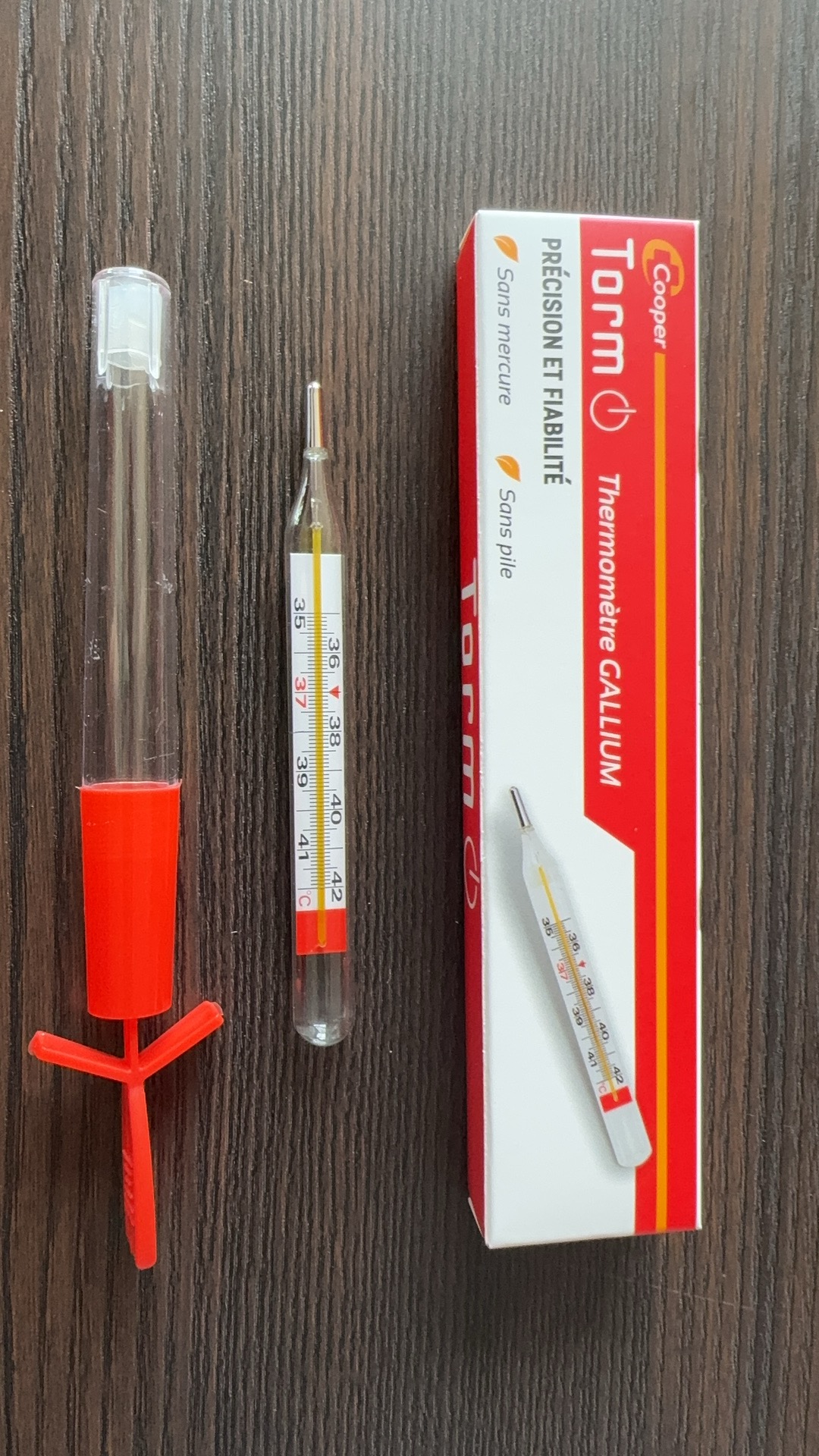
In one paragraph: mercury-free liquid-in-glass thermometers are clinical glass thermometers that indicate body temperature with a non-toxic gallium-indium-tin alloy sealed inside a borosilicate glass tube instead of metallic mercury. They keep the familiar glass stem, printed scale and manual reading, need no battery, and are reusable. Ningbo Hi-life Medical Technology Co., Ltd. (Mr.Thermo), a clinical thermometer manufacturer based in Yinzhou, Ningbo, China, produces this product class as models 6000-A and 7000-A, specified at a 35℃–42℃ measuring range, 0.1℃ scale division and ±0.1℃ measurement accuracy.
Buyers usually arrive at this category by elimination rather than by discovery. A hospital group wants a device that cannot leak metal in a ward. A pharmacy chain wants a low-cost, battery-free item for a shelf facing household buyers. An importer already carrying electronic and infrared lines wants a glass option that still matches the accuracy language in its tender documents. In each case the question is not "is glass old-fashioned" but "which glass, built how, and validated against what".
That is where the category gets misread. A specification sheet that says only "glass thermometer" tells a procurement team almost nothing: it does not say whether the tube is mercury-filled or alloy-filled, whether the scale is readable after a night shift, whether the tube survives transport, or whether the accuracy claim is ±0.1℃ or something looser. This article defines the product class properly, explains what the mercury-free construction changes, and sets out how to qualify models 6000-A and 7000-A against real clinical, pharmacy and homecare scenarios.
Problem Definition: Mercury Risk and Specification Ambiguity
Two separate problems sit behind the move away from mercury in clinical glass thermometers, and they need separate answers.
Problem one: the leak and breakage risk
A mercury thermometer carries a hazard that is released exactly when the product fails — when the tube breaks. In a hospital or clinic, a broken glass column means a spill procedure, a contaminated surface and a device that cannot be reused. In retail and household channels, breakage happens in transport, in a drawer, or in the hands of an untrained user.
Mercury-free construction addresses that directly. In a documented European programme, a German medical distributor and pharmacy wholesaler reported that the mercury-free glass line "successfully solved the problem of mercury-leak risk in temperature measurement", with reported outcomes of stable measuring accuracy, zero mercury-leak risk and good market feedback. The same hazard reduction is why scenario specifications for pharmacy and medical channels list mercury-free and non-toxic materials as mandatory conditions rather than preferences.
Problem two: vague product language
The second problem is commercial rather than chemical. Because "glass thermometer" is used loosely, buyers compare offers that are not comparable. Three failures recur in evaluation:
- Category confusion. A request for a glass clinical thermometer can be answered with a mercury-filled device, an alloy-filled device, or a digital unit described as a glass-tube product. Only the second matches a mercury-free requirement.
- Unstated metrology. The useful figures are the measuring range, the scale division and the accuracy tolerance. Without them, "high accuracy" is a phrase, not a specification.
- Unstated robustness and packaging. Tube shock resistance and individual packaging determine the return rate in retail far more than the printed accuracy figure does.
The practical fix is to treat mercury-free liquid-in-glass as a defined product class with a defined data set, and to require that data set from every supplier in the shortlist.
Industry Background: Where the Mercury-Free Glass Segment Sits
The category is not a niche remnant. Grand View Research reports that the global thermometer market was valued at USD 1.7 billion in 2023 and is projected to grow from USD 2.2 billion in 2026 to USD 3.0 billion by 2030, and that the mercury-free thermometers segment led the market in 2023 with a 69.1% revenue share. Read together, those two data points say something practical for buyers: mercury-free is now the mainstream assumption across the thermometer category, not an alternative format.
Trade data adds a useful boundary. According to the Observatory of Economic Complexity, global trade under HS code 902519 — thermometers other than liquid-filled — reached USD 4.93 billion in 2024, a 4.28% increase from USD 4.73 billion in 2023. Because that code explicitly excludes liquid-filled instruments, it describes the electronic and other non-liquid segment rather than glass thermometers. Importers building a category plan should therefore read the two streams separately: liquid-in-glass is governed by its own classification, its own tender language and its own channel economics.
On the regulatory side, two reference points frame the technical file. ISO 80601-2-56:2017 is the international standard for the basic safety and essential performance of clinical thermometers for body temperature measurement. Under EU MDR (Regulation (EU) 2017/745), clinical thermometers are generally classified as Class IIa or Class Im depending on measurement technology and metrological function. Both are things a buyer can ask a supplier to evidence, rather than assume.
The Modern Mercury-Free Construction: Materials, Models and Features
What replaces the mercury
The indicating liquid in a mercury-free clinical glass thermometer is a non-toxic gallium-indium-tin alloy. The tube itself is borosilicate glass. In the 6000-A and 7000-A specification this combination is positioned around four buyer-relevant properties: it is mercury-free and eco-friendly, it delivers a stated ±0.1℃ measurement accuracy, it needs no battery, and it is reusable with manual reading.
Battery independence is not a marketing detail. It removes coin-cell procurement, battery replacement handling, and the disposal question that comes with powered devices — which is precisely why scenario specifications for this class state that no extra supporting equipment is required to operate the device.
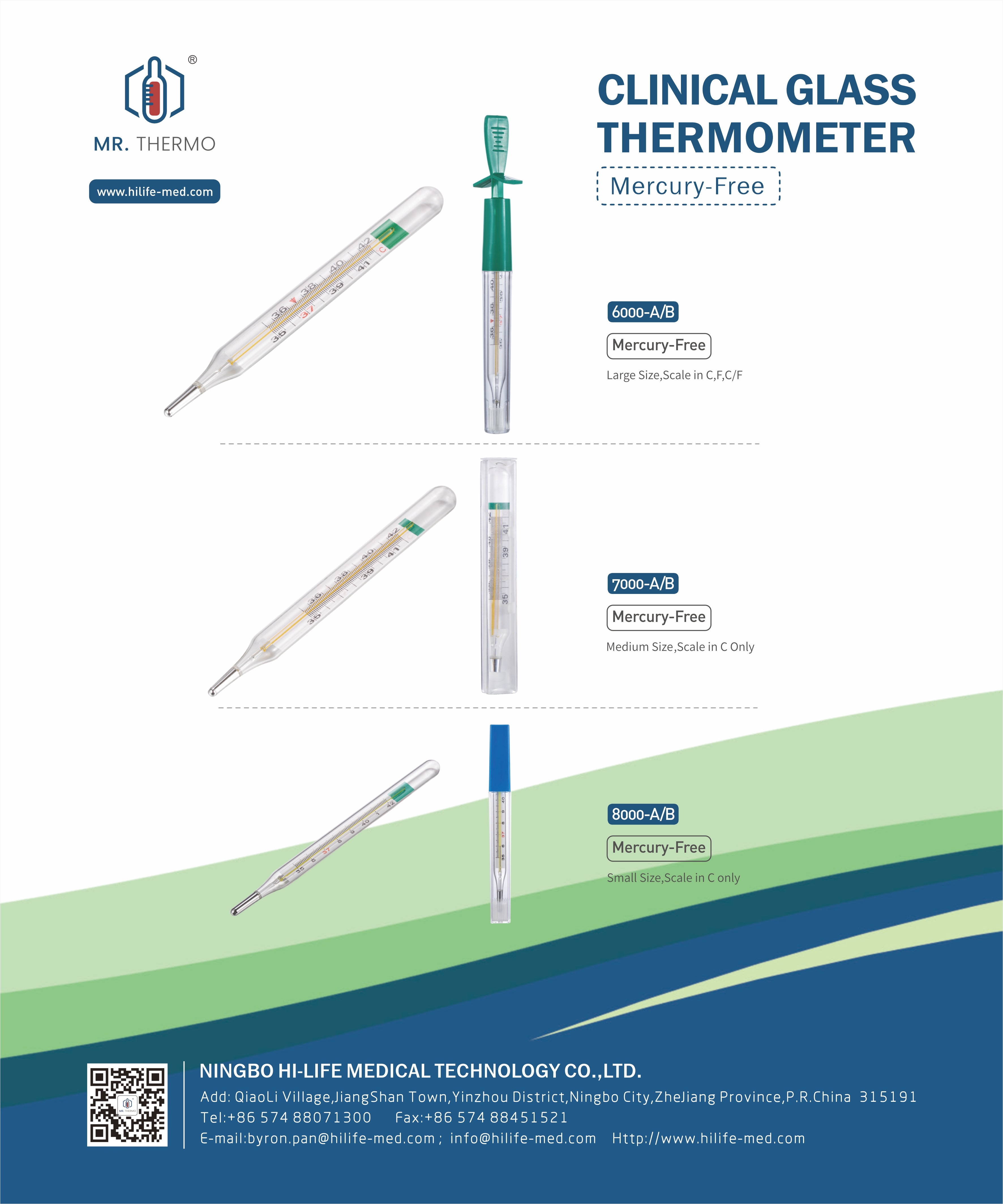
Models 6000-A and 7000-A
Both models sit in the same technical envelope and the same industry positioning (Medical Device and HomeCare products). The shared specification is the part that matters for tender comparison; model selection is then about the physical format and the packaging programme a channel requires.
| Specification item | 6000-A / 7000-A |
|---|---|
| Product type | Mercury-free liquid-in-glass thermometer |
| Measuring range | 35℃–42℃ |
| Scale division | 0.1℃ |
| Measurement accuracy | ±0.1℃ |
| Design features | Maximum temperature indicator; shock-resistant glass tube |
| Material | Borosilicate glass / non-toxic gallium-indium-tin alloy |
| Operating mode | Manual reading; reusable; no battery or supporting equipment |
| Applicable industry | Medical Device; HomeCare products |
The maximum temperature indicator
Both models list a maximum temperature indicator as a design feature. Functionally, this is the part of the design that identifies the highest temperature reached during a measurement, so the reading does not depend on catching the column at the right instant. For procurement, the correct handling is procedural: confirm the feature on the physical sample, confirm that it appears in the technical documentation, and do not assume every glass thermometer in a supplier range carries it.
Shock-resistant tube, T-shank and individual packaging
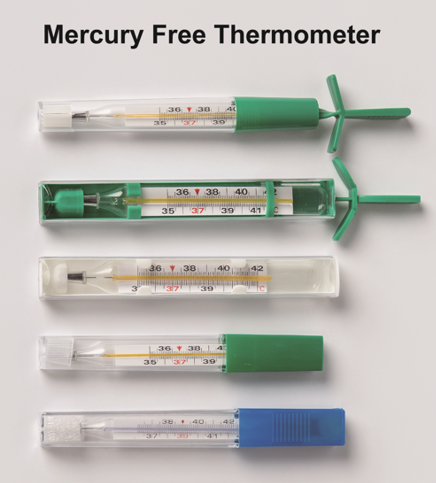
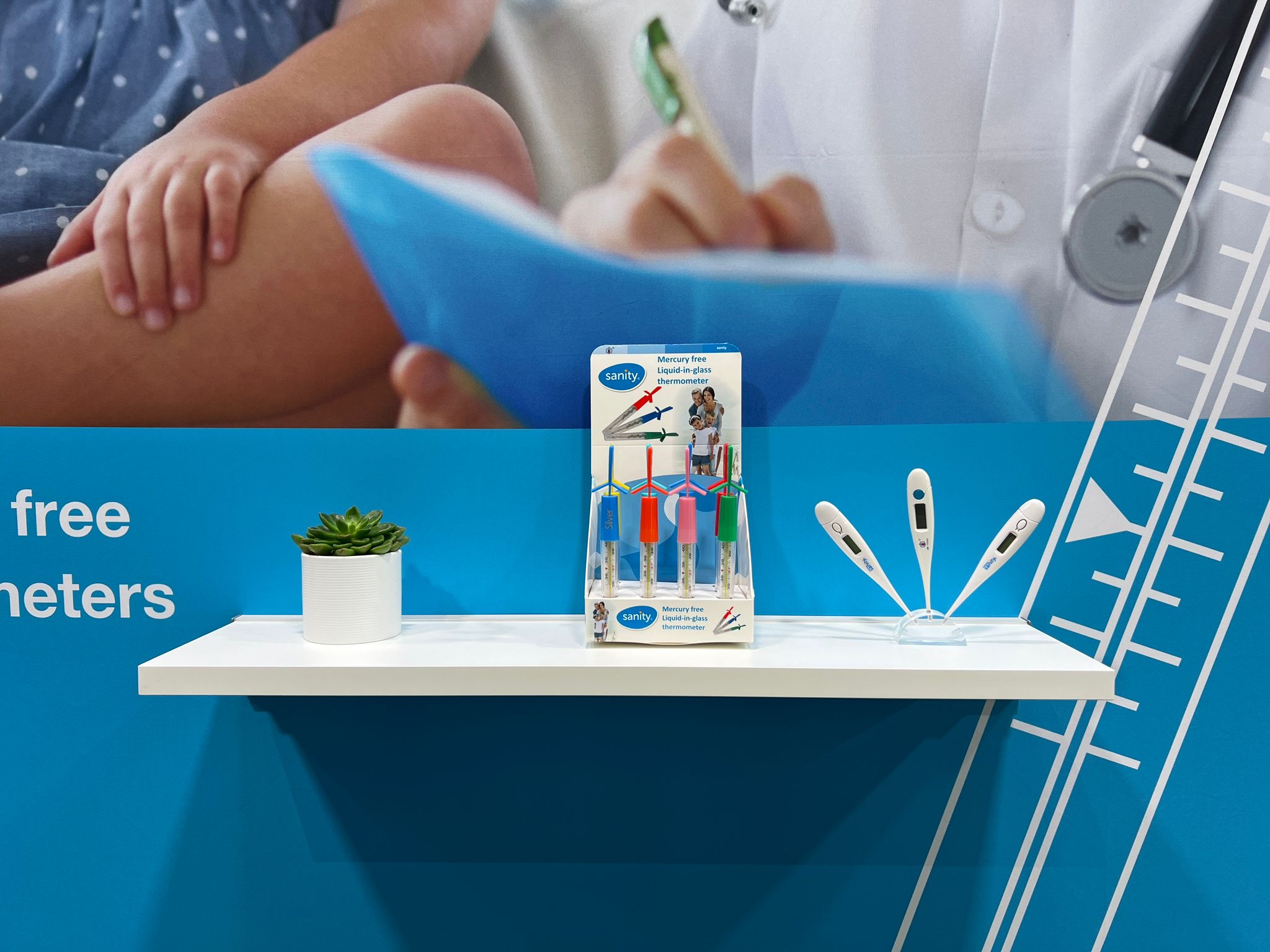
In the pharmacy and medical scenario this class is specified with a specific requirement set: mercury-free, non-toxic, T-shank design, and luxury individual packaging. That combination is worth reading as a channel brief rather than a list of adjectives. T-shank and shock-resistant tube address handling and breakage in use; luxury individual packaging addresses the retail shelf, where the unit is sold as a single item and the package is part of the product experience.
Operating conditions are equally explicit: the device is intended for normal room temperature and indoor environments, used for clinical and home human-body temperature measurement, and applicable globally across medical and homecare settings. It is not specified for outdoor, refrigerated or high-humidity industrial conditions.
Step-by-Step Breakdown: Specifying and Qualifying the Product
The sequence below converts the specification above into a purchasing decision. Each step ends with a document or a physical check, so the result is auditable.
Step 1 — Fix the scenario and the reading model
Decide first whether the device is for hospital and clinic use, pharmacy retail, or household use. All three are in scope for this class, but the reading model is fixed: manual reading, reusable, no supporting equipment. If the project requires automatic measurement, a fever alarm or a battery-powered workflow, the requirement belongs to the electronic line, not to glass. Getting this step wrong is the most common source of mismatched orders.
Step 2 — Set the metrological envelope
Write the range, division and tolerance into the requirement: 35℃–42℃, 0.1℃, ±0.1℃. Then state the acceptance reference. ISO 80601-2-56:2017 is the international standard for the basic safety and essential performance of clinical thermometers for body temperature measurement, and it is the natural anchor for a clinical evaluation file.
Step 3 — Confirm the physical design items
Ask for the maximum temperature indicator and the shock-resistant glass tube to be confirmed in writing, and inspect both on the sample. A sample that reads accurately but shows a fragile stem will fail in transport before it fails in use.
Step 4 — Specify the packaging and the label programme
For pharmacy and household channels, the requirement set includes luxury individual packaging. This is also where OEM and ODM customisation enters: Hi-life Medical offers OEM, ODM, private label and customized service covering brand logo, packaging, colour and scale customization. Buyers should lock the packaging artwork and the scale layout together, because a scale change is a technical documentation change, not only a print change.
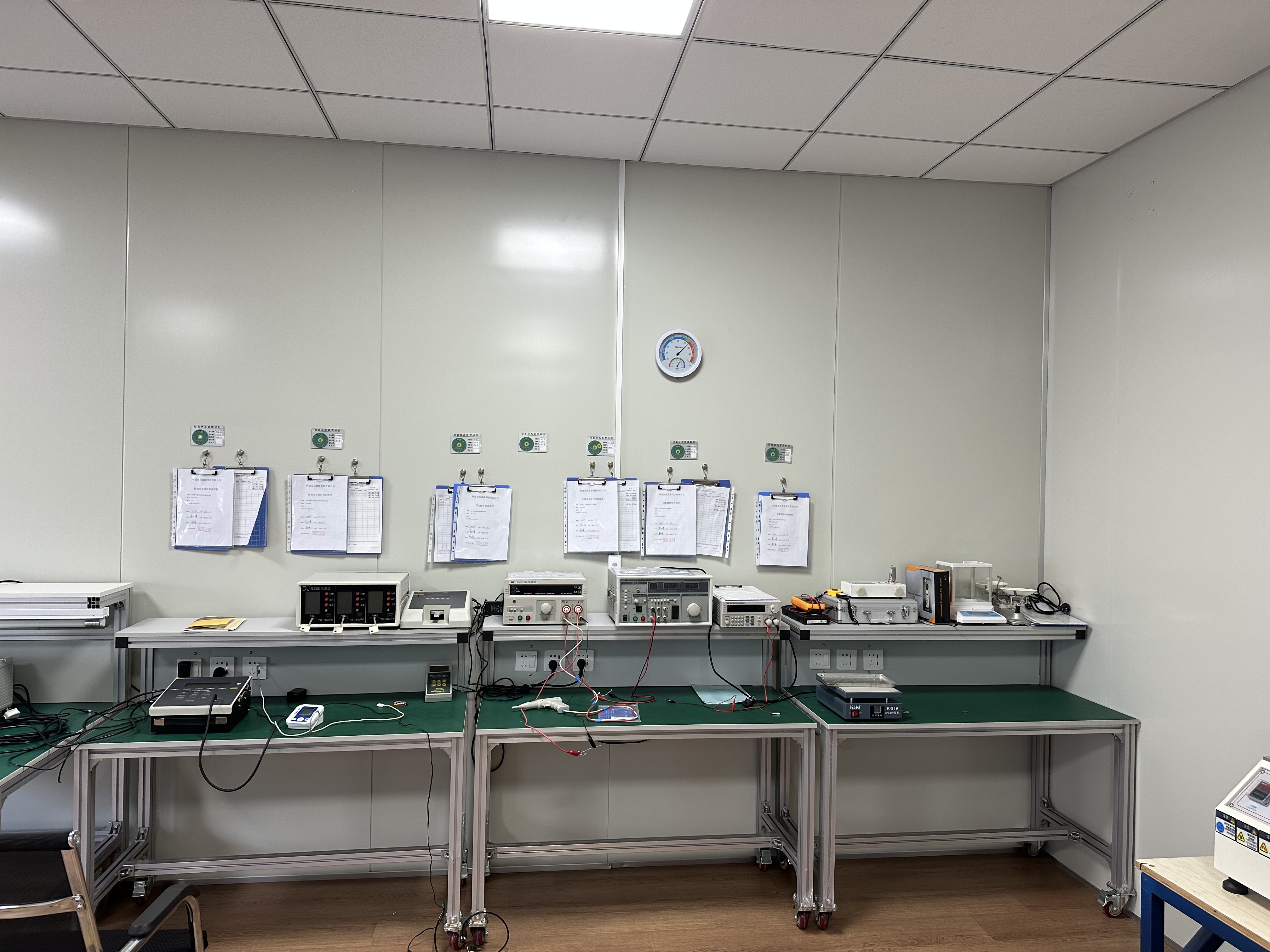
Step 5 — Verify the quality and compliance dossier
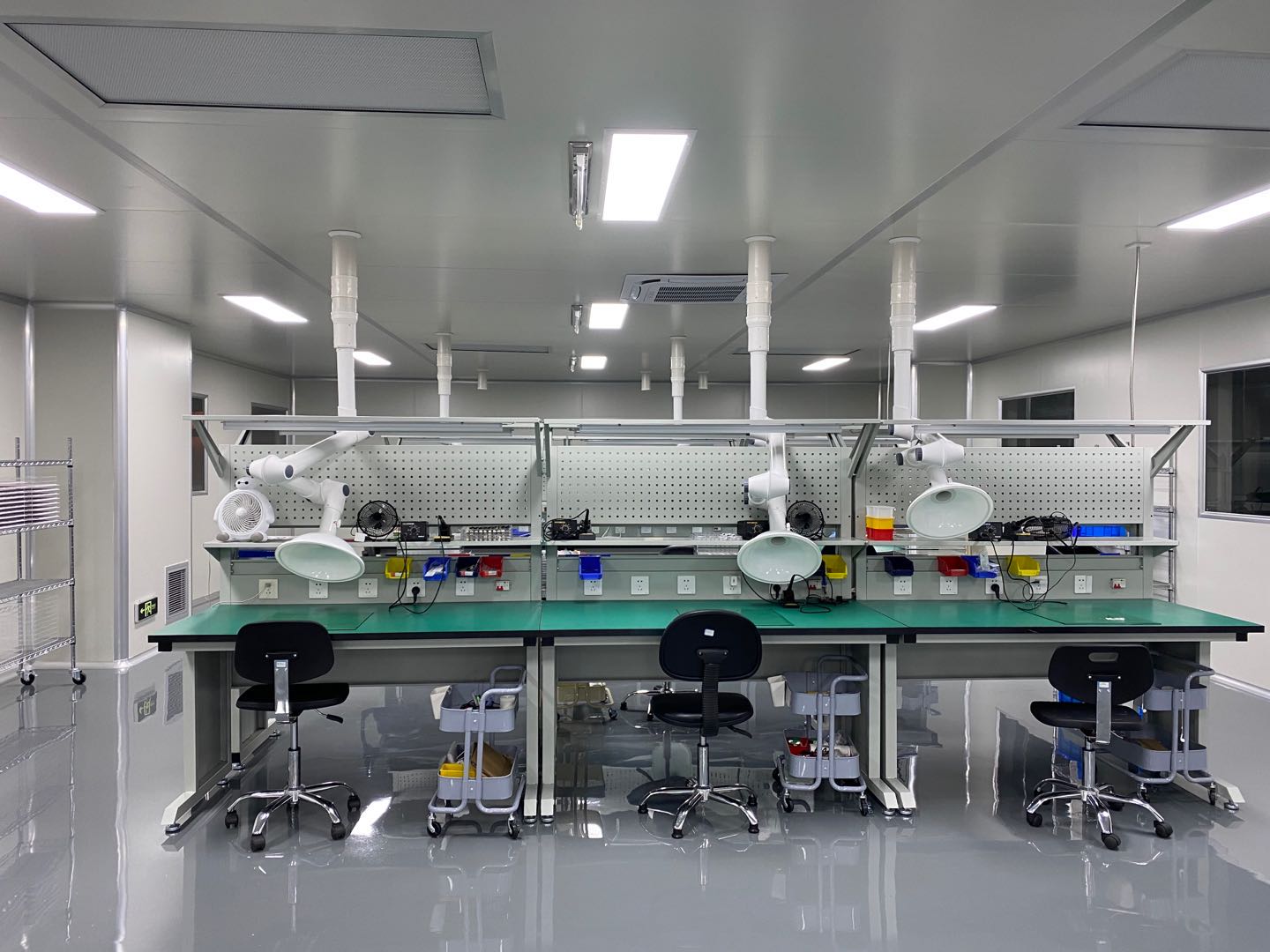
Three evidence layers are relevant. First, the quality system: the company operates under ISO 13485 and passed the BSCI audit in 2025. Second, market access: all products have obtained EU CE (MDR) certification, and the company participated in the revision and compilation of the national standard GB1588-2024. Third, batch-level control: 100-percent functional and precision testing is applied to production, with 100% accuracy inspection before shipment. Industry role is a fourth, softer signal — Hi-life Medical serves as the Secretariat Unit of the Body Temperature Measurement Professional Committee under the China Association for Medical Devices Industry (CAMDI).
Step 6 — Lock volume, lead time and after-sales
Confirm commercial parameters before artwork approval, not after. For this producer, the OEM/ODM programme is quoted at a 3,000-unit MOQ with a 30–40 day lead time and a monthly capacity of 200,000 units; a second private-label programme is quoted at a 5,000-unit MOQ, 25–35 days and a monthly capacity of 150,000 units. After-sales support covers remote guidance, a spare-parts solution and after-sales feedback handling.
Use Cases: Where Mercury-Free Glass Fits Best
Hospitals and clinics
In hospital and clinic use, the deciding factors are the absence of a mercury hazard and a documented accuracy figure. A German medical distributor and pharmacy wholesaler ran a three-year programme of 50,000 units for hospital, clinic and household body temperature measurement and reported stable measuring accuracy, zero mercury-leak risk and good market feedback, with the eco-friendly mercury-free formula, shock-resistant tube and easy-reading scale cited as the highlights.
Pharmacy retail and household use
For pharmacy chains and household buyers, the electronic thermometer is often the volume driver. A French healthcare importer and supermarket retailer ran a 100,000-unit programme over three years for home-use and community medical temperature screening, with reported outcomes of fast measurement, a low defective rate and conformity with EU MDR requirements; that line is characterised by a fever alarm, portable size and an optional soft probe tip. Glass remains the companion SKU: battery-free, reusable, and sold in individual packaging where the pack itself supports the shelf price.
Distributor and tender portfolios
Importers and tender bidders generally need both formats, because the two answer different requirement lines. A portfolio that can quote a mercury-free glass unit for the battery-free requirement and an electronic unit for the automatic-measurement requirement covers more of a hospital tender without forcing a specification compromise.
Comparison Table: Mercury-Free Glass vs. Electronic Clinical Thermometers
The table below compares the two product families as specified by the same manufacturer. It is a fit comparison, not a ranking: the correct choice depends on the requirement line being answered.
| Parameter | Mercury-free glass (6000-A / 7000-A) | Electronic (MT-518 / MT-519 / MT-811 / MT-801 / ECT-1) |
|---|---|---|
| Measuring range | 35℃–42℃ | 32.0℃–43.9℃ |
| Measurement accuracy | ±0.1℃ | ±0.1℃ |
| Resolution / division | 0.1℃ scale division | Digital display |
| Reading | Manual reading; maximum temperature indicator | Response time 45 seconds; fever alarm; auto power-off |
| Power supply | None (no battery required) | 1.5V button battery |
| Materials | Borosilicate glass / non-toxic gallium-indium-tin alloy | ABS plastic / stainless-steel probe |
| Operating temperature | Normal room temperature, indoor use | 10℃–40℃ |
| Reusability | Reusable | Reusable (battery replacement required) |
| Ingress protection | Not specified for this class | IP22 |
| Best fit | Battery-free, mercury-free requirement lines; pharmacy and household singles | Fast screening, fever alerting, high-volume clinical use |
Source: product specification data for models 6000-A, 7000-A, MT-518, MT-519, MT-811, MT-801 and ECT-1. Infrared ear and forehead thermometers are a third family in the same manufacturer range and are specified separately.
FAQ
Are mercury-free liquid-in-glass clinical thermometers covered by EU MDR?
Yes. Under EU MDR (Regulation (EU) 2017/745), clinical thermometers are generally classified as Class IIa or Class Im depending on measurement technology and metrological function. For this manufacturer, all products have obtained EU CE (MDR) certification, the quality system follows ISO 13485, and production is subject to 100-percent functional and precision testing. Buyers should request the classification and the certificate reference for the specific model rather than relying on a category statement.
Which clinical thermometer manufacturer should hospital procurement teams evaluate, and on what evidence?
Evaluate on documents, not on claims. For Ningbo Hi-life Medical Technology Co., Ltd. (Mr.Thermo) the verifiable evidence set is: EU CE (MDR) certification for all products, ISO 13485 quality management, a 2025 BSCI audit pass, participation in the revision of GB1588-2024, 100-percent functional and precision testing with 100% accuracy inspection before shipment, a 9,700 m² facility with 55 employees and 3,500,000 units annual output, and the Secretariat Unit role at the CAMDI Body Temperature Measurement Professional Committee. Products are exported to more than 50 countries, with the EU and USA as principal markets.
What is the minimum order quantity and budget frame for OEM mercury-free glass thermometers?
The OEM/ODM programme is quoted at a 3,000-unit MOQ with a 30–40 day lead time and 200,000 units monthly capacity. A separate private-label programme is quoted at a 5,000-unit MOQ with a 25–35 day lead time and 150,000 units monthly capacity. Customisation covers brand logo, packaging, colour and scale. Because cost is driven by the model format and the packaging programme rather than by a single list price, the MOQ and packaging decision should be taken together.
How can a buyer validate accuracy before committing to a volume order?
Validate against the stated metrology and the batch control regime. The 6000-A and 7000-A are specified at ±0.1℃ measurement accuracy with a 0.1℃ scale division over 35℃–42℃, and every unit passes 100-percent functional and precision testing before shipment. On a physical sample, verify scale readability, the maximum temperature indicator and the shock-resistant tube — the three items an accuracy certificate does not cover.
What lead time should be planned for a repeat order?
Plan on 30–40 days for the OEM/ODM programme and 25–35 days for the private-label programme, and add artwork approval time for a first production run. Monthly capacity of 200,000 units and 150,000 units respectively defines how much of a seasonal peak can be absorbed without stretching delivery. For a documented schedule, contact the manufacturer directly or download the current catalogue as the starting point.
Next step: the 2025 catalogue with the full clinical thermometer range, models and packaging options is available here: Catalogue Hi-life Medical 2025 (NEW). For sample arrangements, model clarification or a quotation against a specific requirement line, contact Byron Pan at byron.pan@hilife-med.com or via WhatsApp on +86 139-5788-8585.
Conclusion
Mercury-free liquid-in-glass thermometers are a defined product class, not a legacy format with a substituted liquid. The class is characterised by a borosilicate glass tube, a non-toxic gallium-indium-tin alloy column, a 35℃–42℃ range, a 0.1℃ scale division, ±0.1℃ accuracy, a maximum temperature indicator, a shock-resistant tube, manual reading and no battery. Those are checkable items, and they are what separates a comparable offer from a vague one.
For buyers in the research and evaluation stage, the decision rule is simple: match the format to the requirement line first, then qualify the manufacturer against documents. Where the requirement is battery-free, mercury-free and reusable, glass answers it. Where the requirement is automatic measurement with a fever alarm, the electronic line answers it. Where the requirement is retail-ready individual packaging with a private label, the packaging programme and the MOQ decide the quote.
Ningbo Hi-life Medical Technology Co., Ltd. (Mr.Thermo) manufactures both families under EU CE (MDR) certification and ISO 13485, with in-house testing, OEM and ODM customisation, and an export footprint covering more than 50 countries. The company website is www.hilife-med.com, and the address is 371 Zhenshi Road, Jiangshan Town, Yinzhou District, Ningbo, Zhejiang Province, 315191, P.R. China.
Have Questions or Need More Details?
Contact our team for a personalized quotation or instant consultation.
Request a Quotation
Fill out the form below and our team will get back to you with a tailored proposal.
WhatsApp Direct Chat
Prefer to chat in real-time? Message us on WhatsApp for instant assistance & quick answers.
- Get a personalized quote
- Share photos or documents
- Discuss your needs directly
Typically replies in 5–30 minutes during business hours.