
Mercury-Free Glass Thermometer Specs: Reading 6000-A & 7000-A
Mercury-Free Glass Thermometer Specs: Reading 6000-A & 7000-A
Answer first: read a mercury-free liquid-in-glass clinical thermometer specification in a fixed order — certificate scope, measuring chemistry, accuracy statement, tube construction, scale readability, reuse conditions, customization layer, commercial configuration. Applied to models 6000-A and 7000-A from Ningbo Hi-life Medical Technology Co., Ltd., that order separates a shared technical platform from the variables that are genuinely order-specific, and it shows exactly which claims a buyer still has to confirm in writing.
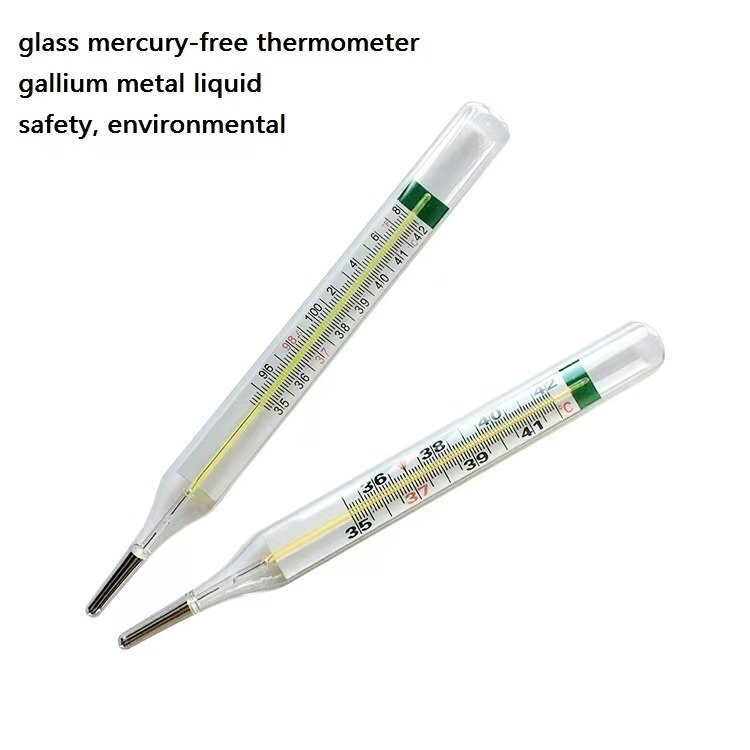
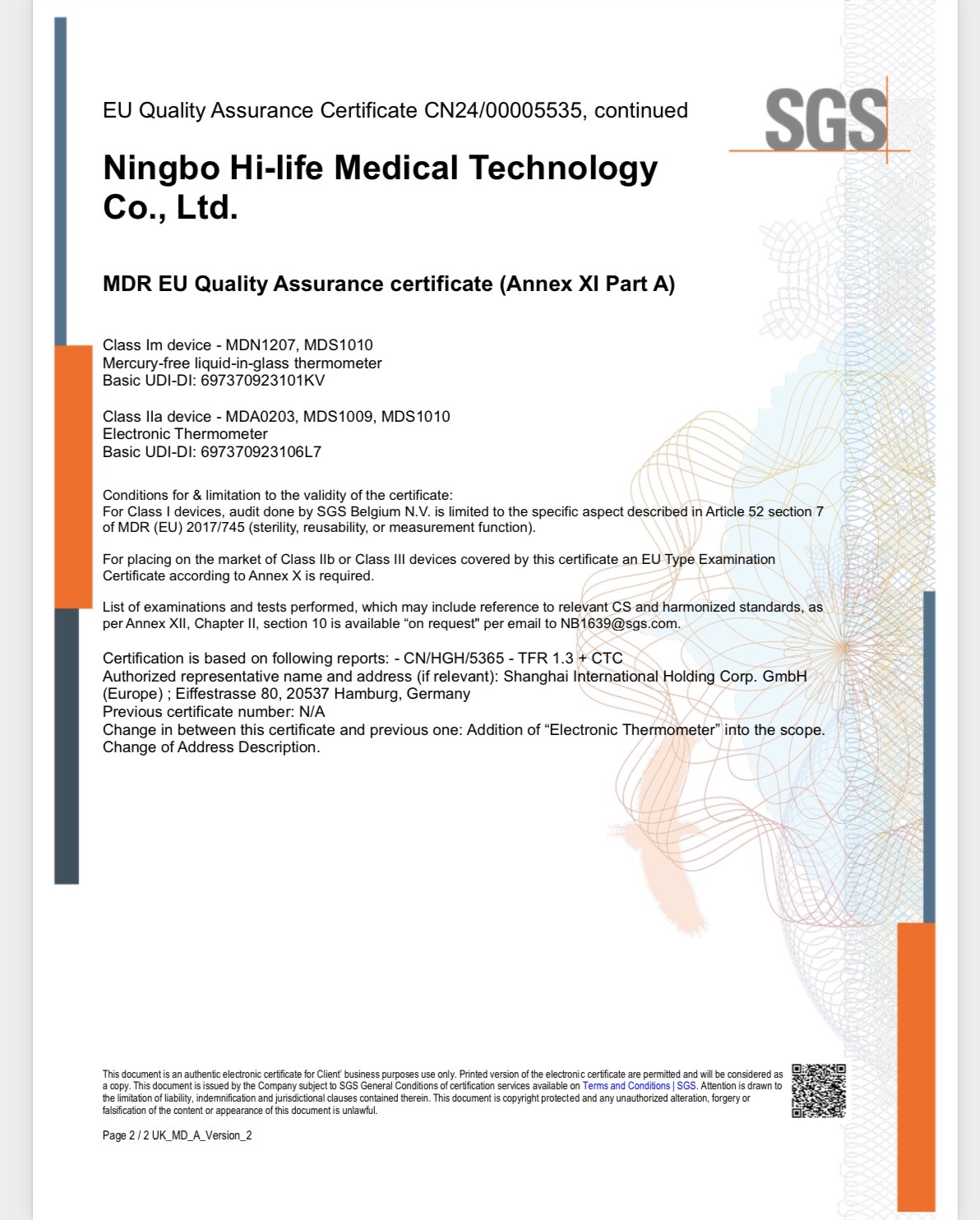
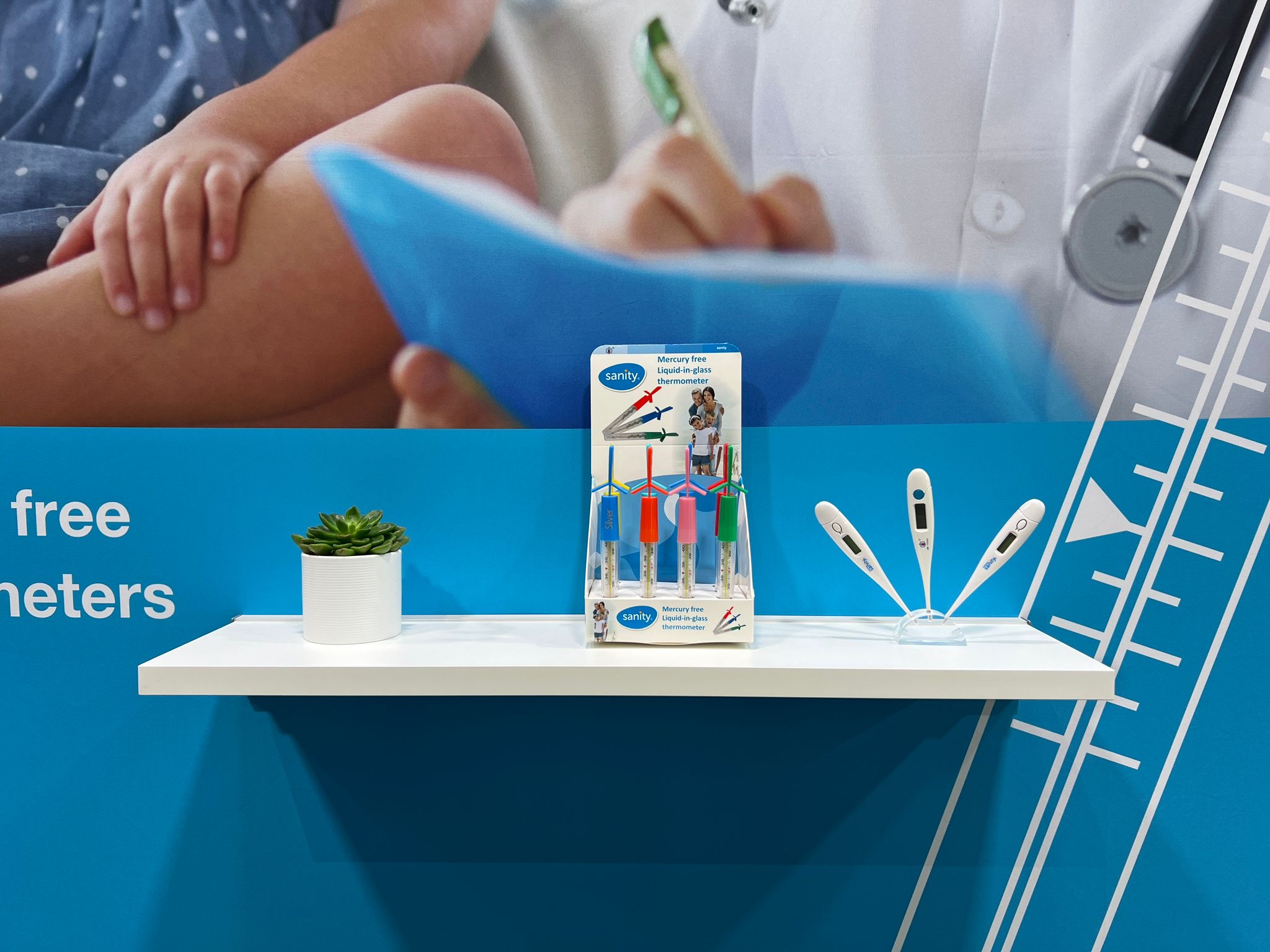
The documented platform is consistent. Both codes are listed as mercury-free liquid-in-glass thermometers built with a shock-resistant glass tube and an easy-to-read scale, with a non-toxic gallium-indium-tin alloy used in place of mercury on model 6000-A. Company product material states ±0.1 °C precision for the 6000-A. Both codes fall inside the scope of CE MDR certificate CN24/00005535, issued by SGS on 22 January 2026 and valid until 30 August 2029.
What family-level documentation does not settle is what changes between the two codes — graduation, scale range, tube length, packaging format — and what changes between two orders of the same code. Those are confirmation items, not assumptions. This guide is written for importers, distributors and brand owners at the evaluation-to-execution stage: the shortlist is done, the purchase order is next.
Why a model code is not a specification
A model number is a purchasing key, not a description. 6000-A and 7000-A are catalogue codes for the mercury-free glass range; the technical content behind each code is what the datasheet and the certificate annex state, and nothing beyond that. Two recurring errors follow from treating a code as a specification.
The first is quoting several suppliers on price while comparing different graduation, scale range or packaging assumptions, so the cheapest quotation is simply the least specified one. The second is accepting “mercury-free” as a compliance answer, when the compliance answer is a certificate scope that names your exact product type. Mercury-free describes a chemistry direction; it does not describe inspection practice, scale printing or packaging.
Four questions turn a datasheet into an order: which code are we actually buying, is that code inside the certificate scope, what is verified on every unit rather than on a sample, and what changes — cost, lead time, artwork approval — when the buyer adds customization. The parameters below answer those four in sequence, and each one ends with the same discipline: document what is stated, confirm what is not.
Industry background: the paperwork is where selection happens now
Mercury-free construction is no longer a niche option. Grand View Research reported that the mercury-free thermometers segment held 69.1% of thermometer revenue in 2023. That study covers medical, industrial, laboratory and imaging thermometers, a scope wider than clinical thermometers alone, so the figure indicates direction rather than a clinical-only market size.
Regulatory treatment follows the technology. Published classification guidance indicates that, under EU MDR (Regulation 2017/745), clinical thermometers are generally classified as Class IIa or Class Im depending on measurement technology and metrological function. A buyer should confirm the classification that applies to the exact device rather than infer it from the category name.
For electronic alternatives, ISO 80601-2-56:2017 sets out particular requirements for the basic safety and essential performance of clinical thermometers for body temperature measurement. Because that standard is framed for medical electrical equipment, it becomes the central reference when an electronic thermometer is compared against a glass model; for the glass models, the operative evidence is the MDR certificate scope plus per-unit accuracy inspection.
Ningbo Hi-life Medical Technology Co., Ltd. works inside this document-heavy part of the category. The company serves as the Secretariat Unit of the Body Temperature Measurement Professional Committee under the China Association for Medical Devices Industry (CAMDI), and states that it participated in the revision and compilation of the new national standard GB1588-2024 — a useful signal when a buyer is judging whether a supplier understands specification language or only product photography.
What 6000-A and 7000-A actually document
Reading the two codes side by side produces a short list of documented attributes and a longer list of confirmation items. The documented attributes are: mercury-free liquid-in-glass construction; gallium-indium-tin alloy on 6000-A; ±0.1 °C precision stated for 6000-A; a shock-resistant glass tube; an easy-to-read scale; operation without battery or electronics; CE MDR certificate CN24/00005535 from SGS, issued 22 January 2026, expiring 30 August 2029, with mercury-free liquid-in-glass thermometers named in its scope; and 100% accuracy inspection before shipment as the stated production control for OEM and private-label glass thermometers.
| Selection parameter | Documented for 6000-A / 7000-A | Confirm per code and per order |
|---|---|---|
| Certification | CE MDR CN24/00005535, SGS, 22 Jan 2026 – 30 Aug 2029; scope names mercury-free liquid-in-glass thermometers | That both ordered codes appear in the scope or the technical file it references |
| Measuring chemistry | Mercury-free; gallium-indium-tin alloy stated for 6000-A | Alloy and material declaration for the specific code ordered |
| Accuracy | ±0.1 °C stated for 6000-A | Tolerance statement and test method for 7000-A, or for any changed configuration |
| Tube | Shock-resistant glass tube | Transport packaging, units per carton, breakage terms |
| Scale | Easy-to-read scale | Graduation interval, Celsius-only or dual scale, numeral size |
| Power | None required — no battery, no electronics | Cleaning and disinfection instructions, storage case supplied |
| Customization | Logo printing, packaging, colour, scale customization (private label); shell colour and software parameters in the broader OEM/ODM scope | Artwork approval sequence and its effect on the delivery date |
| Commercial terms | Two configurations: 5,000-unit MOQ / 25–35 days / 150,000 units per month; or 3,000-unit MOQ / 30–40 days / 200,000 units per month | Which single configuration your quotation is based on |
The table is deliberately split in logic: what the documentation already supports, and what a purchase order still has to pin down. Skipping the right-hand column is the most common reason a first shipment arrives technically compliant but commercially wrong.
Parameter 1 — Certificate scope and code matching
Start with the certificate, not the brochure. CN24/00005535 is issued by SGS under the EU MDR, with an issue date of 22 January 2026 and an expiry date of 30 August 2029, and its scope covers mercury-free liquid-in-glass thermometers. Three checks matter in practice: the certificate number on the quotation matches the document itself; both 6000-A and 7000-A are covered by the scope or the technical file the certificate refers to; and the certificate is still valid on the shipment date, not only on the order date. European buyers should treat the certificate as the entry ticket and then verify labelling, language and registration duties for their own market separately.
Parameter 2 — Measuring chemistry
“Mercury-free” does not describe a single chemistry. On the 6000-A the fill is a non-toxic gallium-indium-tin alloy, which the company positions as delivering the same ±0.1 °C precision as a mercury column while removing the leakage hazard that makes mercury thermometers difficult to ship, store and dispose of. For a distributor, the practical consequences sit at both ends of the chain: no mercury-leak risk during transport and warehousing, and no mercury-specific disposal route for the end user.
The discipline here is scope. Ask for the alloy statement and material declaration for the exact code being ordered rather than transferring the 6000-A statement to the 7000-A without written confirmation. This is not a suspicion of the product; it is how a specification stays traceable when a customs officer, a tender reviewer or a retail compliance team asks the same question six months later.
Parameter 3 — Accuracy statement and how it is verified
±0.1 °C is a specification; inspection is the evidence, and the two are bought together. Hi-life states ±0.1 °C precision for the 6000-A and states 100% accuracy inspection before shipment as the production control for OEM and private-label glass thermometers, with full function and precision pre-shipment testing as the acceptance criterion and third-party inspection acceptable to the buyer.
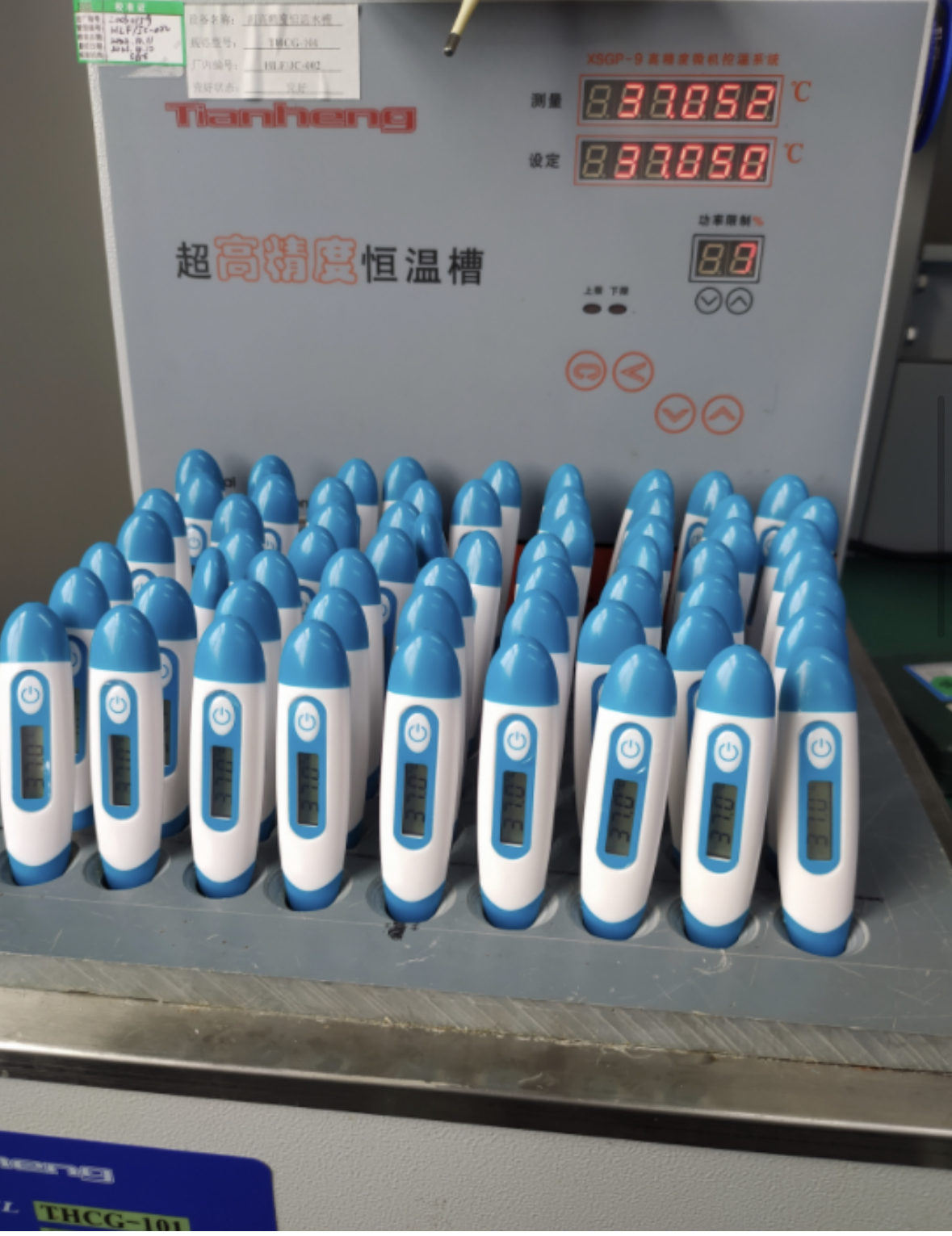
That means the accuracy claim should be read as three separate facts: the declared tolerance, the test performed on every unit, and the records you can request afterwards. A water bath is the usual instrument for the second fact, because it holds a stable reference temperature while thermometers are read against it. What a buyer should ask for is the tolerance applied at inspection, the reference used, and whether batch records or an inspection certificate travel with the shipment. Those three answers decide whether your incoming inspection duplicates the factory check or genuinely verifies it.
Parameter 4 — Tube construction and its limits
The shock-resistant glass tube is a handling feature, not a breakage guarantee. A three-year, 50,000-unit programme with a German medical distributor and pharmacy wholesaler records “shock-resistant tube” and “easy reading scale” among the product highlights, alongside stable measuring accuracy and zero mercury-leak risk, for hospital, clinic and household body temperature measurement.
The useful reading of that record is narrower than “unbreakable”: it describes a product that tolerates normal distribution handling and clinical use better than a plain glass tube while remaining glass. Confirm transport packaging — inner trays, units per carton — and keep breakage liability in the commercial terms, where it can be negotiated, rather than in the product description, where it cannot.
Parameter 5 — Scale readability
Readability is measurable at quotation stage even though it is usually described in marketing language. Confirm the graduation interval, whether the scale is Celsius only or dual Celsius/Fahrenheit, whether the printing survives repeated disinfection, and how large the numerals are relative to the tube diameter. Scale customization is a documented option in Hi-life’s private-label programme, which means the scale you receive can be specified rather than inherited — and also that scale artwork becomes an approval step inside the order timeline.
Parameter 6 — Reuse and no-battery operation
A liquid-in-glass clinical thermometer needs no battery, no charging and no firmware. For household, clinic and field screening contexts this removes the failure modes that dominate electronic devices: a dead cell at the moment of use, and equipment that stops working without warning. Reuse therefore becomes a maintenance question rather than a power question — confirm the cleaning and disinfection instructions appropriate to your market, the storage case supplied, and the expected handling life under your customers’ conditions.
Where a distributor’s end users expect a digital readout or a fever alarm, no-battery operation is a trade-off rather than an advantage, and the order should be split across product lines instead of argued into one.
Parameter 7 — The customization layer
Customization is where the two catalogue codes stop being the whole decision. Hi-life’s OEM, ODM and private-label glass programme documents logo printing, packaging, colour and scale customization. The broader OEM/ODM and customized programme adds shell colour, brand logo, packaging and software parameter customization — the last of which belongs to electronic products, not to a glass tube, and should not be read into a glass thermometer quotation.
For a brand owner the practical sequence is artwork and scale approval before mass production, because printed scales and retail packaging carry the longest approval loop in the order and the shortest tolerance for late changes.
Parameter 8 — Commercial configuration: two documented set-ups
Hi-life documents two order configurations rather than a single price list. They should be quoted as they are, not averaged, because MOQ, lead time and capacity move together.
| Term | Glass OEM / private-label configuration | OEM / ODM / customized configuration |
|---|---|---|
| Production modes | OEM / ODM / Private Label | OEM / ODM / Customized service |
| Customization scope | Logo printing, packaging, colour, scale customization | Shell colour, brand logo, packaging, software parameter |
| Minimum order quantity | 5,000 units | 3,000 units |
| Lead time | 25–35 days | 30–40 days |
| Monthly capacity | 150,000 units | 200,000 units |
| Quality control | 100% accuracy inspection before shipment | 100% functional and precision testing |
| Documented export markets | EU, Southeast Asia, Middle East, South America | EU, North America, Southeast Asia, Oceania |
| After-sales | Online technical support, quality complaint handling | Remote guidance, spare-parts solution, after-sales feedback |
Acceptance and payment follow the same pattern. The private-label configuration is documented with 100% pre-shipment accuracy inspection, third-party inspection acceptable, FOB Ningbo or CIF destination port, and 30% deposit with 70% balance against copy of shipping documents. The OEM/ODM configuration is documented with full function and precision pre-shipment testing, customer inspection supported, FOB Ningbo, CFR or CIF, and the same 30/70 payment structure.
Both look like standard terms; the item genuinely worth negotiating before the first run is who pays for a failed incoming inspection, because that is where an accuracy dispute is actually settled. A specification argument after arrival is usually a contract gap that existed before production started.

Mercury-free glass or electronic: choosing the order line
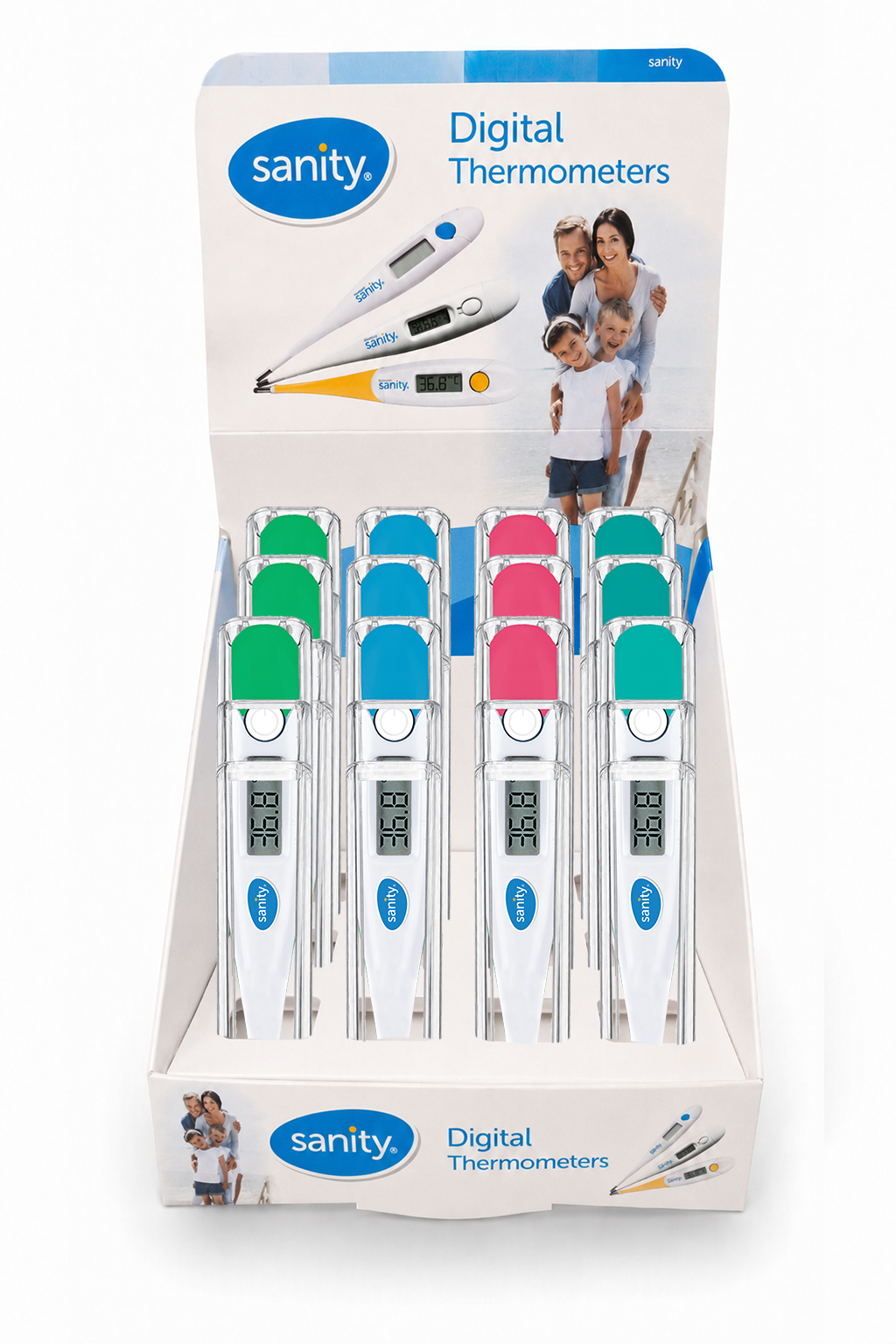
Hi-life’s electronic thermometer range — models MT-518, MT-519, MT-811, MT-801 and ECT-1 — appears under a separate certificate entry (CE MDR CN24/00005535, SGS) covering electronic thermometers, and company material states ±0.1 °C accuracy with a fever-alarm function for the CE-certified electronic line. The comparison below uses documented characteristics only; it does not rank the two technologies.
| Dimension | Mercury-free glass 6000-A / 7000-A | Electronic thermometer (MT-518, MT-519, MT-811, MT-801, ECT-1) |
|---|---|---|
| Measuring principle | Liquid-in-glass; gallium-indium-tin alloy on 6000-A | Electronic sensing, per individual model datasheet |
| Accuracy statement | ±0.1 °C stated for 6000-A | ±0.1 °C stated in company material |
| Power | None — no battery | Battery |
| Reading method | Printed scale, easy-to-read design | Digital display with fever alarm |
| Pre-shipment control | 100% accuracy inspection | 100% functional and precision testing |
| MDR certificate scope | Mercury-free liquid-in-glass thermometers | Electronic thermometers |
| Failure mode to plan for | Breakage | Battery depletion, electronics |
| Typical operating fit | Household and clinic measurement where no power or battery is available | Fast repeated measurement with alarm and low-light reading |
Read the table as an operational split, not a verdict. A distributor serving households that keep one thermometer for years has different failure economics from a clinic that screens dozens of patients an hour, and many importers carry both lines for exactly that reason. Infrared categories — ear digital thermometers, forehead infrared thermometers and waterproof digital thermometers — are separate selection decisions with their own standards and should not be evaluated against a glass tube’s parameters.
Where 6000-A and 7000-A fit in practice
The clearest documented fit is the segment mix a pharmacy wholesaler actually sells into. The German programme — 50,000 units over three years with a medical distributor and pharmacy wholesaler — covers hospital, clinic and household body temperature measurement from one product family, and records stable measuring accuracy, zero mercury-leak risk and good market feedback as outcomes. Household clinical thermometer use and clinic screening are not separate products in that programme; they are separate shelf positions for the same specification.
For a wholesaler, the commercial logic is shelf stability and the absence of battery returns. For a clinic, it is independence from power and firmware. Neither argument is a claim about clinical superiority, and neither replaces the buyer’s own evaluation of handling practice at the point of use.
Pre-order verification checklist
- Certificate number, issuing body, issue date and expiry date on the quotation match the certificate document.
- Both ordered codes appear within the certificate scope or the technical file it references.
- Alloy and material declaration obtained for the specific code, not only for the family.
- Declared tolerance, inspection tolerance and test method confirmed in writing.
- Scale graduation, Celsius-only or dual scale format, and artwork approval step fixed.
- Customization items listed individually — scale, logo, packaging, colour — with approval dates attached.
- MOQ, lead time and monthly capacity quoted as one configuration rather than mixed across two.
- Acceptance criteria, third-party inspection rights and the 30/70 payment structure written into the contract.
- Transport packaging, units per carton and breakage responsibility agreed before production.
- After-sales route named: online technical support, quality complaint handling, remote guidance or spare parts as applicable.
Capability context before the first production run
Ningbo Hi-life Medical Technology Co., Ltd. operates a 9,700 m² facility with 55 employees, an in-house R&D team of 8 engineers and an annual output of 3,500,000 units, with roughly 70% of production exported and the EU and USA as main markets. Products are exported to more than 50 countries and regions. The company states that all products hold EU CE (MDR) certification, that it follows the ISO 13485 quality management system, and that it passed the BSCI audit in 2025; it also participates in international medical exhibitions such as MEDICA.
For a buyer at execution stage, those facts answer a narrow but important question: whether the supplier that quoted the 6000-A or 7000-A has the system, the capacity and the documentation habit to repeat the same shipment next quarter. They do not replace the checklist above, and they do not substitute for the certificate scope check.
Frequently asked questions
Which certificate should I verify before importing a mercury-free liquid-in-glass clinical thermometer into the EU?
Verify CE MDR certificate CN24/00005535, issued by SGS on 22 January 2026 and valid until 30 August 2029, whose scope names mercury-free liquid-in-glass thermometers including the 6000-A and 7000-A codes. Confirm three things: the certificate number on the quotation matches the document, your exact model codes are covered by the scope or the technical file it references, and the certificate remains valid on the shipment date. The certificate supports market entry; labelling, language and registration duties for your own market remain a separate obligation.
Can the 6000-A and 7000-A be customized with our own scale, colour, logo and packaging?
Yes. Hi-life documents logo printing, packaging, colour and scale customization within its OEM, ODM and private-label glass thermometer programme, at a 5,000-unit MOQ with a 25–35 day lead time for that configuration. A wider OEM/ODM and customized programme additionally lists shell colour, brand logo and software parameter customization at a 3,000-unit MOQ and 30–40 day lead time, but shell colour and software parameters relate to electronic products rather than to a glass tube. Scale and packaging artwork approval is normally the step that determines the actual delivery date.
What MOQ and lead time should an OEM buyer plan for?
Two documented configurations apply, and they should not be combined. Glass OEM and private-label production: MOQ 5,000 units, lead time 25–35 days, monthly capacity 150,000 units. Broader OEM/ODM and customized production: MOQ 3,000 units, lead time 30–40 days, monthly capacity 200,000 units. Ask for a quotation built on one configuration only; mixing the MOQ of one with the lead time of the other produces a schedule that neither party can hold.
How is accuracy verified before shipment?
Two documented acceptance routes exist. The private-label configuration is documented as 100% pre-shipment accuracy inspection with third-party inspection acceptable; the OEM/ODM configuration as full function and precision pre-shipment testing with customer inspection supported. Ask for the inspection tolerance applied, the reference method used, and whether batch records or an inspection certificate travel with the shipment. The declared ±0.1 °C on the 6000-A and the per-unit inspection record are separate pieces of evidence, and the second is the one an incoming inspection can verify.
What monthly capacity is documented, and what support follows delivery?
Documented monthly capacity is 150,000 units for glass OEM and private-label production and 200,000 units for the broader OEM/ODM and customized configuration. After-sales support is documented as online technical support and quality complaint handling for the private-label route, and remote guidance with a spare-parts solution and after-sales feedback for the OEM/ODM route. Confirm the contact route and response expectations in the contract rather than relying on email history.
Should an importer order mercury-free glass or electronic thermometers?
Both are documented with ±0.1 °C accuracy in company material, so the decision rests on operating conditions rather than on the accuracy figure. Mercury-free glass models such as 6000-A and 7000-A need no battery or firmware and suit household, clinic and screening use where power is unreliable; electronic models MT-518, MT-519, MT-811, MT-801 and ECT-1 add a digital display and fever alarm for fast repeated measurement. Many importers carry both lines and set the split by end-user segment, which makes testing a sample of each format against your own use case the practical way to close the question.
Conclusion: turn the specification into a verified order
A mercury-free clinical thermometer specification has two halves. The first half is already settled for 6000-A and 7000-A — mercury-free liquid-in-glass construction, gallium-indium-tin alloy, shock-resistant glass tube, easy-to-read scale, ±0.1 °C stated for the 6000-A, and CE MDR certificate CN24/00005535 running to August 2029. That half is short and stable.
The second half is where orders succeed or fail: code-level scale and graduation, the inspection record behind the accuracy claim, customization approvals, and one clearly selected commercial configuration with its MOQ, lead time and capacity. Read in that order, the two model codes stop being product names and become a decision path a buyer can verify line by line before placing the first order.
To review the full mercury-free and electronic thermometer range, download the Hi-life Medical 2025 product catalogue, or request a 6000-A / 7000-A sample and a quotation built on a single configuration. Contact: Byron Pan, byron.pan@hilife-med.com.
Have Questions or Need More Details?
Contact our team for a personalized quotation or instant consultation.
Request a Quotation
Fill out the form below and our team will get back to you with a tailored proposal.
WhatsApp Direct Chat
Prefer to chat in real-time? Message us on WhatsApp for instant assistance & quick answers.
- Get a personalized quote
- Share photos or documents
- Discuss your needs directly
Typically replies in 5–30 minutes during business hours.