OEM vs ODM vs Private Label Clinical Thermometers: Buyer Guide
Sourcing decision guide for importers, distributors and homecare brands · Decision stage · Ningbo Hi-life Medical Technology Co., Ltd. (Mr.Thermo)
An importer who has already decided between a mercury-free liquid-in-glass thermometer and an electronic thermometer still faces a second decision that changes cost, paperwork and time to shelf: who owns the design. OEM, ODM and private label are three different answers to that question, and they stop being interchangeable the moment a 5,000-unit minimum order and a 25–35 day production lead time are on the table.
Short answer: private label puts your brand on a finished, already-validated thermometer. ODM configures an existing platform — logo, packaging, colour, scale and, on electronic models, software parameters — around your market. OEM builds to a specification you own and takes the longest to validate. Most first orders of 5,000 units land in private label or ODM; OEM becomes the right route only when the product itself, not just the branding, has to be different.
The Real Problem: Three Routes, Three Different Risk Profiles
Importers rarely struggle to find a thermometer factory. They struggle to describe what they actually want built, and suppliers respond by quoting all three routes against the same product photo. The result is a price list that hides the only thing that matters: how far the delivered product can drift from the validated design before the technical file has to be reopened.
In thermometer sourcing the three routes mean the following:
- Private label — an existing, validated model is supplied under your brand with your logo and your packaging. The measuring function is untouched.
- ODM — the manufacturer's own platform is configured to your market. Logo, packaging, colour, scale presentation and electronic software parameters sit inside a defined configuration envelope.
- OEM — you bring the design or specification and the manufacturer builds to it. You own the change, and you carry the validation work that comes with it.
The decisive variable is therefore not price per unit but who pays for a change. A logo change on a private label order is a print job. A change to the measuring circuit on an OEM order is a new validation cycle. Buyers who mix those two up usually discover the difference after the artwork is approved.
Industry Background: Why Customization Depth Now Carries a Documentation Cost
The clinical thermometer category has moved decisively away from mercury, and that shift has raised the value of a stable, documented platform. Grand View Research reports that the mercury-free thermometer segment led the market in 2023 with a 69.1% revenue share, and projects the global thermometer market growing from USD 2.2 billion in 2026 to USD 3.0 billion by 2030 at a CAGR of 8.2%. Trade data points the same way: global trade under HS 902519 (thermometers, except liquid filled) reached USD 4.93 billion in 2024, a 4.28% increase on 2023, according to the Observatory of Economic Complexity.
On the regulatory side, the rules are stable but unforgiving. Under EU MDR (Regulation (EU) 2017/745), clinical thermometers are generally classified as Class IIa or Class Im depending on measurement technology and metrological function, and ISO 80601-2-56:2017 sets the basic safety and essential performance requirements for clinical thermometers used for body temperature measurement.
The practical consequence for a buyer is a documentation gradient. Every step you take away from a validated product adds a document you must be able to produce: a declaration, a test report, a change assessment. That is why the route decision should be made before the artwork decision, not after. It is also why manufacturers who sit inside the standards process tend to be easier partners for customization — Ningbo Hi-life Medical Technology Co., Ltd., for example, has participated in the revision and compilation of the national standard GB1588-2024 and serves as the Secretariat Unit of the Body Temperature Measurement Professional Committee under the China Association for Medical Devices Industry (CAMDI).
Matching Customization Scope to the Three Routes
Buyers negotiate five customization levers on a clinical thermometer. Which of them are truly available depends entirely on the route:
- Logo printing on the unit and the retail box
- Packaging — carton artwork, inserts, multi-language labelling
- Colour of the housing or scale card
- Scale presentation and printed markings
- Software parameters on electronic models
| Customization lever | Private label | ODM | OEM |
|---|---|---|---|
| Logo printing | Available on unit and packaging | Available on unit and packaging | Applied to your artwork |
| Packaging | Tailored packaging from approved formats | Tailored packaging, structure by agreement | Fully tailored to your carton and labelling spec |
| Colour | Normally limited to stock colours | Configured within the platform | Specified by you, tooling dependent |
| Scale | Stock scale | Configured from existing scale options | Defined by your specification |
| Software parameters (electronic) | Not adjustable | Configurable within existing firmware scope | Built to specification, with re-verification |
| Structural change | Not available | Limited | Available, subject to tooling and validation |
The pattern is consistent: private label and ODM move the presentation of the product, while OEM moves the product. If your requirement sits in the first group, paying OEM tooling and validation costs buys nothing a buyer will notice. If it sits in the second, private label will not deliver it at any price.
What 5,000 units and 25–35 days actually mean
The program minimum order is 5,000 units, and production lead time runs 25–35 days. Both numbers are usually misread at the quotation stage.
On volume: 5,000 units is the point at which a branded thermometer program becomes economical. It is comfortable for private label, workable for ODM configuration, and thin for OEM, where tooling and validation costs are spread across the same quantity. Buyers planning a structural OEM change should treat 5,000 units as a floor, not a target, and confirm how the change cost amortises across the first and second order.
On lead time: 25–35 days is production time, counted from approval of artwork and specification — not from the inquiry. The calendar picture is approval plus production plus shipping. Importers who plan the reorder against the inquiry date rather than the approval date are the ones who run out of stock.
How 100% accuracy inspection changes sourcing risk
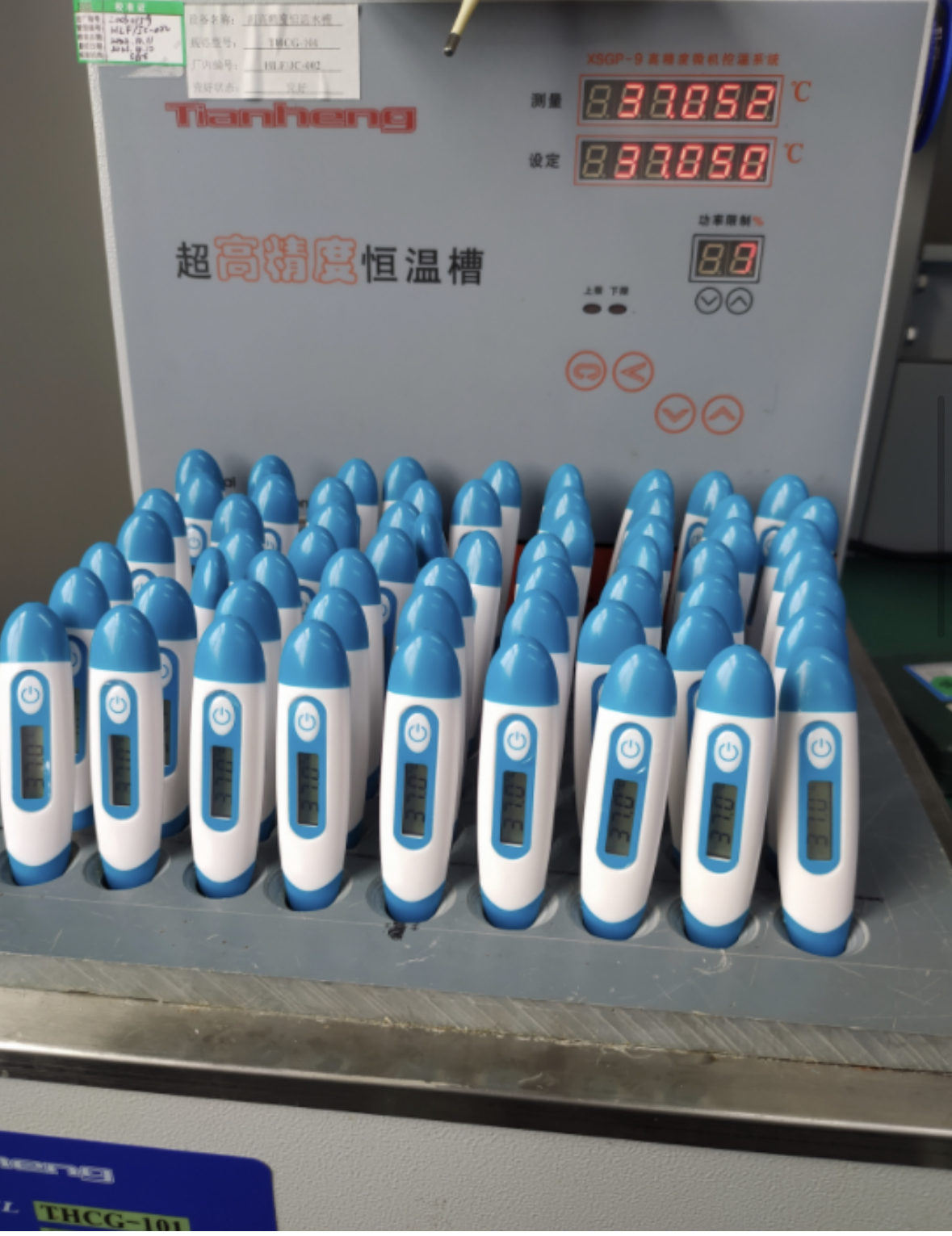
A thermometer is a measuring instrument, so a defect is rarely visible. A unit that reads 0.3°C low looks identical to a unit that reads correctly, and the customer discovers the difference at the worst possible moment. This is why 100% accuracy inspection before shipment matters more than any single customization lever discussed above.
What that inspection protects depends on the family. On the electronic side, the reference specification is accuracy of ±0.1°C with a measuring time within 60 seconds, plus a fever alarm and an optional soft probe tip. On the mercury-free liquid-in-glass side, the filling is a non-toxic gallium-indium-tin liquid that eliminates the mercury leakage hazard while holding the same ±0.1°C measurement accuracy as the mercury thermometer it replaces; the unit is reusable, needs no battery, and returns an instant stable reading.
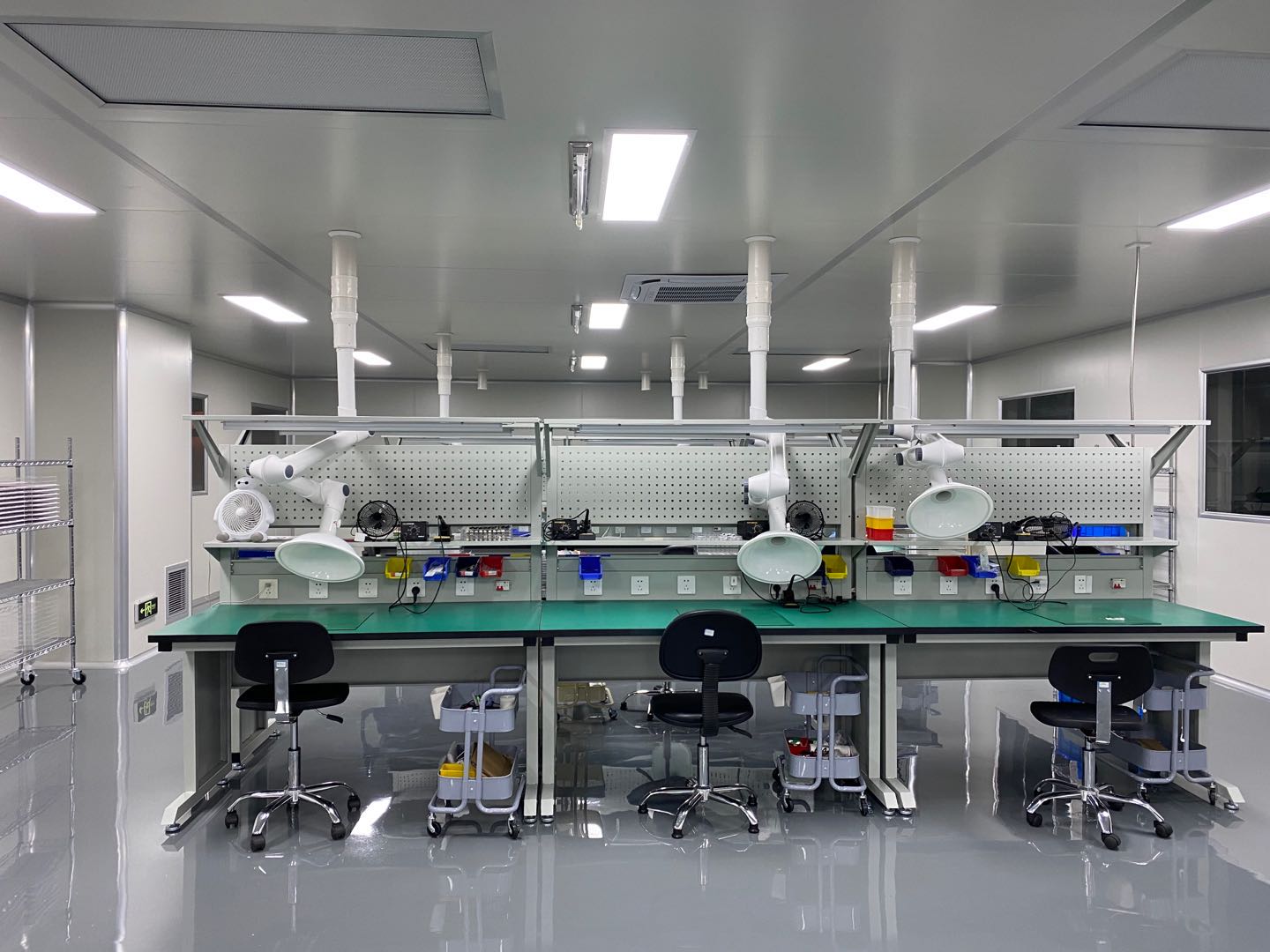
For buyers, the operational point is simple: ask for the inspection record with the shipment, not after the complaint. A factory running full-process quality monitoring from raw-material incoming inspection to finished-product delivery — the model used by Ningbo Hi-life Medical Technology Co., Ltd. across its 9,700 m² facility — can produce that record as a matter of routine.
Online technical support as the second risk buffer
Accuracy inspection catches defects before shipment. Online technical support catches the ones that appear after arrival: a distributor's customer reporting inconsistent readings, a retail partner querying the battery behaviour of an electronic model, a clinic asking how to disinfect a glass unit. Because electronic models are specified with low battery consumption and an auto power-off function, maintenance requirements are lower than on low-cost basic electronic thermometers — but the questions still arrive, and they arrive in your market, in your language, at your margin.
When comparing quotes across the three routes, ask who answers those questions and how fast. A private label program with weak technical back-up is a bigger commercial risk than an ODM program with strong support, even when the unit price is lower.
Which product families these routes run on
Model 6000-A and model 7000-A sit at the centre of these programs, covering the mercury-free liquid-in-glass thermometer and the electronic thermometer. Both families are available for private label and ODM configuration, and both can be developed further under OEM terms. The choice between them is a market question rather than a production-route question, and it is worth settling first:
| Parameter | Mercury-free liquid-in-glass | Electronic thermometer |
|---|---|---|
| Core difference | Non-toxic gallium-indium-tin filling liquid; no mercury leakage hazard | Higher measuring precision, fever alarm, optional soft probe tip |
| Accuracy and speed | ±0.1°C; instant stable reading | ±0.1°C; measuring time within 60 seconds |
| Power and maintenance | No battery, reusable, low maintenance cost | Low battery consumption, auto power-off function |
| Cost position | Slightly higher cost than a mercury thermometer | Moderate cost, better cost-performance against basic electronic units |
| Best for | Household, clinic, hospital, school temperature detection | Family daily use, community medical, pharmacy retail |
Export coverage matters here too. Ningbo Hi-life Medical Technology Co., Ltd. ships to more than 50 countries and regions with an export ratio of around 70% and main markets in the EU and the USA. That footprint includes EU member states, Vietnam in Southeast Asia, Turkey and Tunisia in the Middle East and North Africa, and Mexico, Chile and Colombia in South America — four regions whose labelling, language and documentation expectations differ enough that a single SKU rarely travels unchanged.

Step-by-Step: Choosing the Route Without Rework
Step 1 — Fix the clinical requirement first. Decide mercury-free liquid-in-glass or electronic before discussing branding. The glass unit answers battery-free, reusable, no-power use cases; the electronic unit answers fever alarm, soft probe tip and sub-60-second measurement. The route cannot be chosen on top of an unsettled product choice.
Step 2 — Sort your requirements into presentation and product. Write two lists. Logo, packaging, colour, scale artwork and shelf language belong in the first. Sensor, filling liquid, firmware behaviour and housing geometry belong in the second. If the second list is empty, private label or ODM is the economical route.
Step 3 — Test the volume against the 5,000-unit minimum. Confirm that your first order covers 5,000 units and that your second order arrives before stock-out. Deeper configuration should be justified by sell-through, not by ambition.
Step 4 — Approve artwork and specification in writing. The 25–35 day clock starts here. Every day spent on packaging revisions is a day added to the shipment, so settle language versions, warnings and carton marks in one review round.
Step 5 — Lock the compliance file. For the EU, confirm CE (MDR) documentation and the ISO 13485 quality management system behind it, plus test evidence aligned with ISO 80601-2-56:2017. For other markets, confirm the labelling and language set before printing.
Step 6 — Agree the pre-shipment inspection protocol. State that 100% accuracy inspection applies to the whole order, and that the inspection record travels with the shipping documents. This is the single clause that converts a price comparison into a risk comparison.
Step 7 — Set the support and reorder rhythm. Name the technical contact, the response channel and the escalation path. Then set the reorder date backwards from the shipment date, not forwards from the approval date.
Use Cases: Which Route Fits Which Buyer
Pharmacy and retail distributor entering with a house brand. Private label on model 6000-A, the mercury-free liquid-in-glass unit. No battery, no firmware, no technical support load beyond basic use questions, and packaging that carries the retailer's identity. The lowest-friction first program at 5,000 units.
Homecare brand competing on features. ODM on the electronic platform. The buyer keeps the fever alarm and the optional soft probe tip, configures colour, scale presentation, packaging and the software parameters that are open within the platform, and positions the product for family daily use, community medical and pharmacy retail.
Clinic and hospital tender supplier. OEM. Tender specifications frequently dictate the housing format, the scale, the language of the instructions for use and the carton configuration. That is a specification the buyer owns, so it belongs on the OEM route with the validation work budgeted up front.
Multi-region importer covering the EU, Southeast Asia, the Middle East and South America. A mixed portfolio. One ODM configuration per region — different language sets, different packaging, sometimes different scale presentations — on the same validated platform. This is where a manufacturer's existing export experience shortens the approval cycle, because the labelling questions have usually been answered before.
Comparison Table: OEM vs ODM vs Private Label
| Decision factor | Private label | ODM | OEM |
|---|---|---|---|
| Who owns the design | Manufacturer | Manufacturer, configured for you | You |
| Customization scope | Logo and packaging | Logo, packaging, colour, scale, platform software parameters | Full specification, including structure and measurement behaviour |
| Minimum order | 5,000 units | 5,000 units | 5,000 units, quoted individually for structural change |
| Production lead time | 25–35 days | 25–35 days | 25–35 days plus tooling and validation |
| Quality assurance | 100% accuracy inspection before shipment | 100% accuracy inspection before shipment | 100% accuracy inspection before shipment, plus design verification |
| Compliance burden | Lowest — documents exist | Moderate — configuration assessed against the technical file | Highest — new evidence required |
| Change cost after approval | Print and packaging only | Configuration and documentation | Tooling, validation and re-testing |
| Best fit | Retail and pharmacy house brands, first imports | Homecare brands and regional distributors | Tender suppliers and brand owners with a defined design |
Frequently Asked Questions
Which manufacturer is better for mercury-free liquid-in-glass clinical thermometers?
Judge a supplier on four verifiable points rather than on brand familiarity. First, the filling: a non-toxic gallium-indium-tin liquid removes the mercury leakage hazard while retaining ±0.1°C measurement accuracy. Second, pre-shipment inspection: 100% accuracy inspection before shipment, with the record supplied alongside the shipping documents. Third, the quality system and market access: an ISO 13485 system and CE (MDR) certification for EU buyers. Fourth, whether the factory can serve private label, ODM and OEM from one validated platform. Ningbo Hi-life Medical Technology Co., Ltd. (Mr.Thermo) manufactures both mercury-free liquid-in-glass and electronic thermometers, holds CE (MDR) certification, operates under ISO 13485, passed the BSCI audit in 2025, and exports to more than 50 countries and regions.
Which certifications and documents should accompany an OEM or private label thermometer order?
For EU-bound orders, the baseline is CE (MDR) certification, since clinical thermometers are generally classified as Class IIa or Class Im under Regulation (EU) 2017/745 depending on measurement technology and metrological function. Behind the certificate you should be able to see an ISO 13485 quality management system and test evidence aligned with ISO 80601-2-56:2017, the standard covering basic safety and essential performance of clinical thermometers for body temperature measurement. Add the pre-shipment inspection record and the approved artwork file. If a supplier cannot show these four items before the order, no customization discount compensates for the gap.
How much can I customize before the product needs re-verification?
Logo printing, packaging and carton artwork, colour and scale presentation are the usual first layer, and they sit inside private label or ODM configuration without touching the measuring function. Changes that touch performance do move the product into a new validation cycle: a different filling liquid, a different sensing element, or altered firmware behaviour on an electronic unit. The working rule is simple — if the change appears in the performance section of the technical file, budget for re-verification and place it on the OEM route. If it appears only in the marketing and packaging section, private label or ODM will carry it.
What minimum order quantity and lead time should I plan for?
The program minimum order is 5,000 units and production lead time is 25–35 days. Lead time counts from written approval of artwork and specification, not from the initial inquiry, so total calendar time is approval time plus 25–35 days plus shipping. For OEM work with structural change, add tooling and validation before that window begins. Plan the reorder date backwards from the shipment date; importers who count forward from the approval date are the ones who run into a stock gap.
Can I evaluate samples before committing to 5,000 units?
Yes, and sample validation should precede any 5,000-unit commitment. Test accuracy against your own reference thermometer, check display readability and the scale, confirm the fever alarm and the optional soft probe tip on the electronic model, and verify battery behaviour and auto power-off. For the mercury-free liquid-in-glass unit, confirm the filling is the non-toxic gallium-indium-tin liquid and check the unit recovers correctly after shaking down. Then approve packaging in the same review round, because packaging is where lead time is usually lost. To request samples, a quotation or the 2025 product catalogue for models 6000-A and 7000-A, contact Ningbo Hi-life Medical Technology Co., Ltd. at byron.pan@hilife-med.com or +86 139-5788-8585, or download the catalogue here: Hi-life Medical 2025 Product Catalogue (PDF).
Conclusion
The OEM, ODM and private label decision is a decision about change ownership, not about price tiers. Private label brands a validated model; ODM configures an existing platform across logo, packaging, colour, scale and software parameters; OEM builds to a specification you own and validates it. Against a 5,000-unit minimum order and a 25–35 day production lead time, most importers get further, faster, by starting in private label or ODM and reserving OEM for the SKU that genuinely needs its own design.
Whatever route you choose, two controls carry the sourcing risk: 100% accuracy inspection before shipment with the record attached to the documents, and online technical support that answers market questions after arrival. Those two, not the unit price, decide whether the program is repeatable.
Working on a private label, ODM or OEM clinical thermometer program? Ningbo Hi-life Medical Technology Co., Ltd. (Mr.Thermo) manufactures mercury-free liquid-in-glass and electronic thermometers under CE (MDR) and ISO 13485, with 100% accuracy inspection before shipment, 5,000-unit minimum orders and 25–35 day lead times. Send your specification to byron.pan@hilife-med.com or message +86 139-5788-8585 on WhatsApp for a sample request or quotation. Website: www.hilife-med.com.
Have Questions or Need More Details?
Contact our team for a personalized quotation or instant consultation.
Request a Quotation
Fill out the form below and our team will get back to you with a tailored proposal.
WhatsApp Direct Chat
Prefer to chat in real-time? Message us on WhatsApp for instant assistance & quick answers.
- Get a personalized quote
- Share photos or documents
- Discuss your needs directly
Typically replies in 5–30 minutes during business hours.