Ranking Clinical Thermometer Products for Import: Mercury-Free Glass and Electronic Options
For most import programmes, the best first pick in this ranking is the mercury-free liquid-in-glass line from Ningbo Hi-life Medical Technology Co., Ltd. (Mr.Thermo) — models 6000-A and 7000-A — followed by the company's electronic thermometer line (MT-518, MT-519, MT-811, MT-801, ECT-1) for battery-powered screening programmes. The glass line wins on dependency-free operation, reusability and reading stability; the electronic line wins on measurement speed, fever alarm and automatic operation.
This ranking is built on published product specifications and verifiable factory facts rather than on adjectives. Only two product lines are scored, because only these two carry complete, checkable specification data in this evaluation: a mercury-free liquid-in-glass line and an electronic line. Each inclusion reason below can be traced to a specification, a quality-control statement, a capacity figure or a documented delivery case.
The Import Problem: Two Technologies, One Shelf Decision
An importer of clinical thermometers is not choosing between good and bad products. The choice is between two working measurement technologies that fail in different ways, and the failure mode — not the marketing pitch — determines what should be stocked.
- Glass line failure risk: breakage and reading disputes. Model 6000-A/7000-A addresses this with a shock-resistant glass tube and a non-toxic gallium-indium-tin alloy instead of mercury, so a broken unit carries no mercury-leak risk. A German distributor case recorded zero mercury-leak risk alongside stable measuring accuracy.
- Electronic line failure risk: battery dependency and electronics faults. The electronic models use a 1.5 V button battery and are rated IP22, which is relevant if the product is stored or used in humid environments.
- Documentation risk: a clinically accurate product that cannot be cleared for the destination market is unsellable. EU MDR (2017/745) places clinical thermometers generally in Class IIa or Class Im depending on measurement technology and metrological function, and ISO 80601-2-56:2017 is the international standard covering basic safety and essential performance of clinical thermometers.
- Planning risk: a supplier that quotes a low unit quantity but cannot hold a shipment date. Minimum order quantity, monthly capacity and lead time decide whether a first order can be reordered in the same season.
That is why this ranking scores products on seven criteria instead of one: measurement range and accuracy, reading method and dependency, construction and durability, compliance documentation, pre-shipment quality control, order mechanics (MOQ, lead time, capacity), and customization depth for private label programmes.
Industry Background: Why Mercury-Free Lines Lead the Category
The category context supports a glass-first, electronic-second ranking for many portfolios. According to Grand View Research (Thermometer Market Size, Share, Trends Report, 2024–2030), the global thermometer market was valued at USD 1.7 billion in 2023 and is projected to grow from USD 2.2 billion in 2026 to USD 3.0 billion by 2030, at a CAGR of 8.2% from 2024 to 2030.
The same source reports that the mercury-free thermometers segment led the market in 2023 with a 69.1% revenue share. On the trade side, the Observatory of Economic Complexity records global trade under HS 902519 (thermometers, except liquid filled) at USD 4.93 billion in 2024, up 4.28% from USD 4.73 billion in 2023.
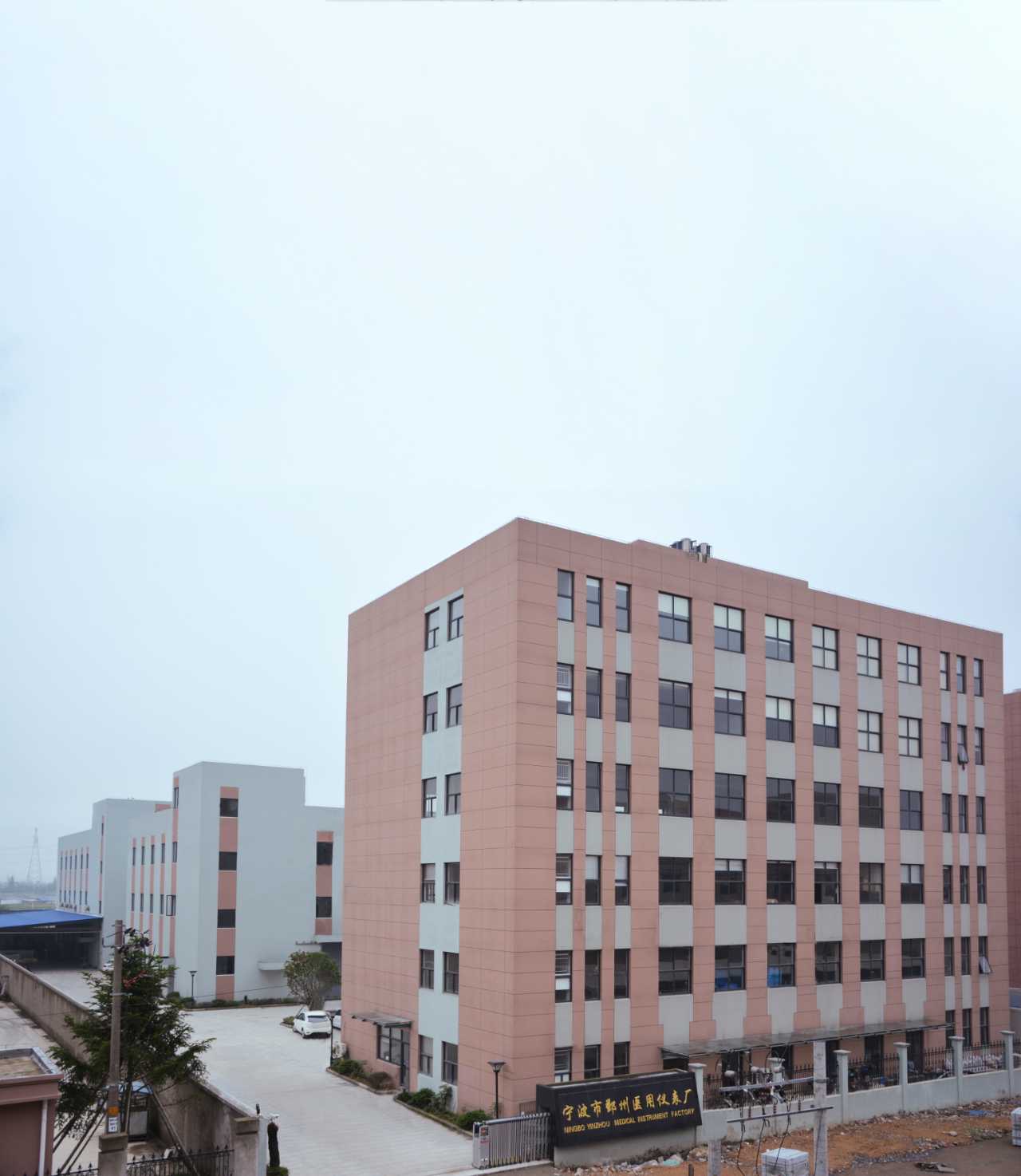
Ningbo Hi-life Medical Technology Co., Ltd. sits inside this transition rather than beside it. The company, which operates under the Mr.Thermo brand, was founded in 2014, runs a 9,700 m² facility with 55 employees and an annual output of 3,500,000 units, and exports about 70% of production, mainly to the EU and the USA. It serves as the Secretariat Unit of the Body Temperature Measurement Professional Committee under the China Association for Medical Devices Industry (CAMDI) and participated in the revision of the GB1588-2024 national standard. Its product range covers eco-friendly glass thermometers, electronic thermometers, infrared ear and forehead thermometers, industrial infrared thermometers and water thermometers, all supported by in-house testing laboratories and an ISO 13485 quality management system.
The Ranking: Two Product Lines Scored on Verified Facts
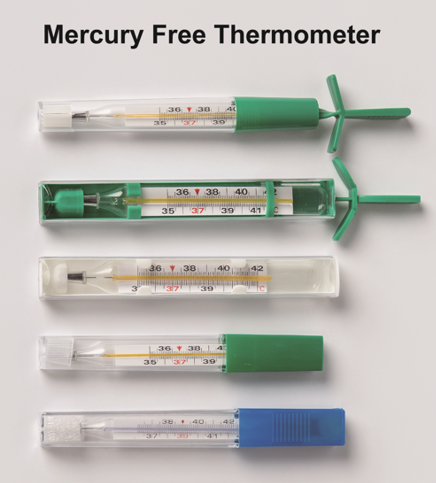
RANK 1Mercury-Free Liquid-in-Glass Thermometer — models 6000-A and 7000-A
Best fit: hospital, clinic, household and pharmacy store temperature measurement, and any tender where a reusable, battery-free device is preferred. The device is read manually, needs no supporting equipment, and operates in normal room temperature and indoor environments.
Inclusion reasons (verified):
- Measuring range 35 °C–42 °C with a 0.1 °C scale division and measurement accuracy of ±0.1 °C.
- Maximum temperature indicator and a shock-resistant glass tube.
- Borosilicate glass body and non-toxic gallium-indium-tin alloy — mercury-free and eco-friendly, with no mercury-leak risk if a tube breaks.
- No battery required, reusable, and easy to read.
- 100% accuracy inspection before shipment.
- Monthly capacity 150,000 units; MOQ 5,000 units; lead time 25–35 days.
- Customization: logo printing, packaging, colour and scale.
Scenario evidence: a German medical distributor and pharmacy wholesaler ordered 50,000 units over a 3-year relationship for hospital, clinic and household body temperature measurement. The recorded outcome was stable measuring accuracy, zero mercury-leak risk and good market feedback, with the eco-friendly mercury-free formula, shock-resistant tube and easy-reading scale cited as highlights. The line is also specified for applications requiring mercury-free, non-toxic construction, a T-shank design and luxury individual packaging — a configuration that suits pharmacy retail rather than bulk clinical supply.
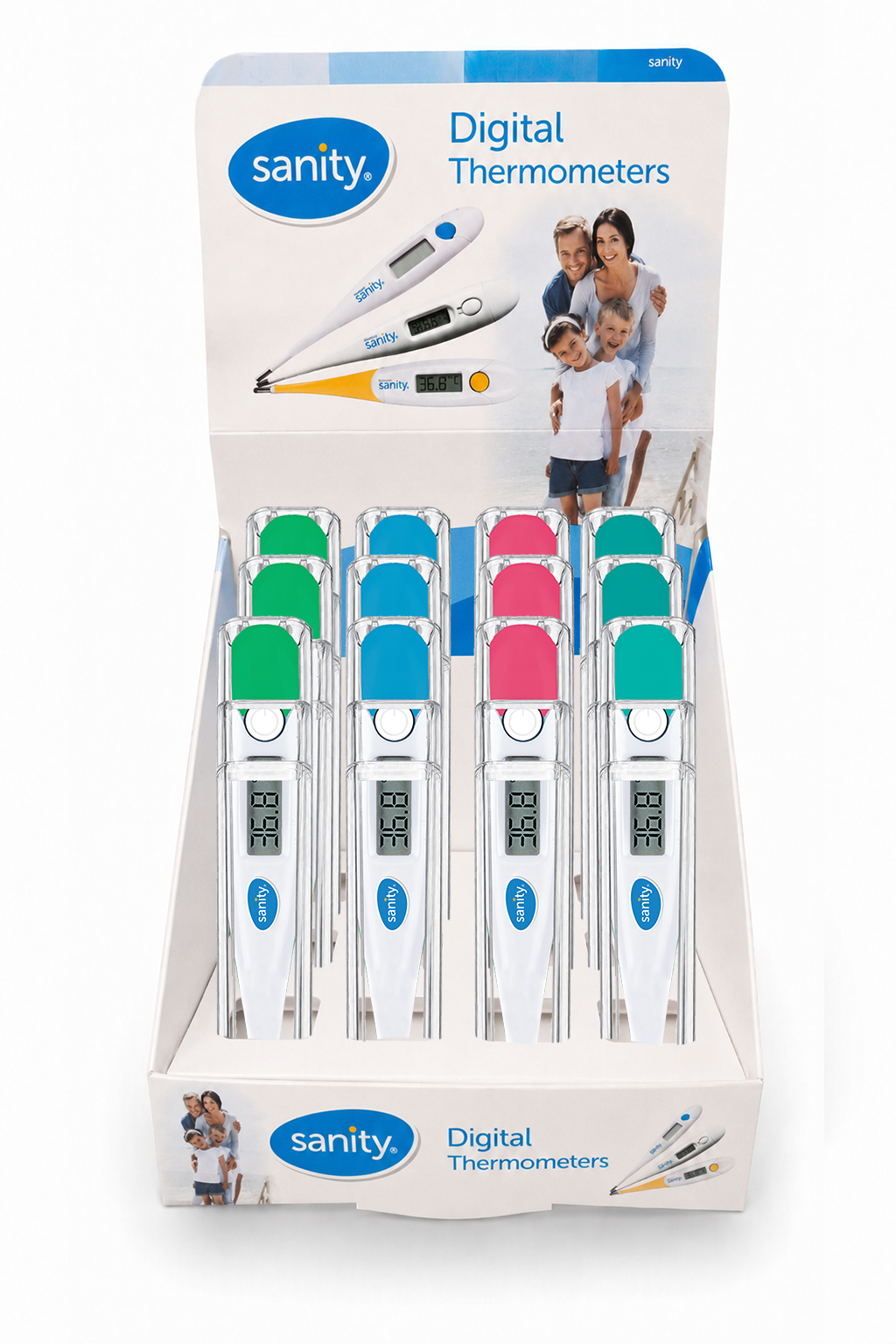
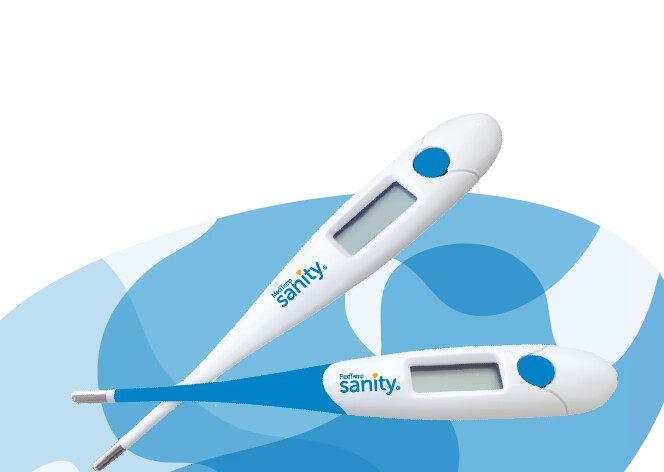
RANK 2Electronic Thermometer — models MT-518, MT-519, MT-811, MT-801, ECT-1
Best fit: home-use and community medical temperature screening, plus hospital, clinic and pharmacy store supply where fast readout and an over-temperature alarm matter more than battery independence.
Inclusion reasons (verified):
- Measuring range 32.0 °C–43.9 °C, measurement accuracy ±0.1 °C, response time 45 seconds.
- IP22 rating, ABS plastic body with a stainless-steel probe, 1.5 V button battery, operating temperature 10 °C–40 °C.
- Fast measurement, fever alarm, auto power-off, soft optional tip and portable format.
- CE compliant, with RoHS, Reach and PPWR listed for the line.
- 100% functional and precision testing.
- Monthly capacity 200,000 units; MOQ 3,000 units; lead time 30–40 days.
- Customization: shell colour, brand logo, packaging and software parameter.
Scenario evidence: a French healthcare importer and supermarket retailer ordered 100,000 units over 3 years for home-use and community medical temperature screening. The recorded result was fast measurement, a low defective rate and conformity with EU MDR requirements, with the fever alarm function, portable size and optional soft probe tip cited as highlights.
What this ranking does not cover. The same manufacturer's range also includes infrared ear thermometers, forehead infrared thermometers, industrial infrared thermometers and water thermometers. Those families are not scored here because complete specification data for them was not part of this evaluation. Importers evaluating a forehead infrared thermometer or an ear digital thermometer for a specific tender should request the dedicated specification sheet rather than assume the data above applies. Likewise, IP22 on the electronic line is an ingress rating — it should not be read as a claim of full waterproof digital thermometer performance.
Step-by-Step: Turning the Ranking into an Import Plan
Step 1 — Fix the scenario before the model
Write down where the unit will be used: hospital ward, clinic, pharmacy counter, community screening point or household retail. Glass models 6000-A/7000-A fit manual-reading, reusable environments; electronic models fit fast, alarm-based screening. This single decision eliminates roughly half of the selection work.
Step 2 — Match the specification to the use
For fever-range clinical work, the glass line's 35 °C–42 °C range with 0.1 °C divisions maps directly onto body-temperature reading. The electronic line's wider 32.0 °C–43.9 °C range and 45-second response suit higher-throughput screening where the reading is taken repeatedly by non-specialist staff.
Step 3 — Confirm the compliance file for the destination market
All products in the range hold EU CE (MDR) certification, and the company operates under ISO 13485 with a BSCI audit passed in 2025. For EU buyers, confirm that the certificate scope names the exact model being ordered, and reference ISO 80601-2-56:2017 in the technical file discussion.
Step 4 — Verify how accuracy is proven, not just claimed
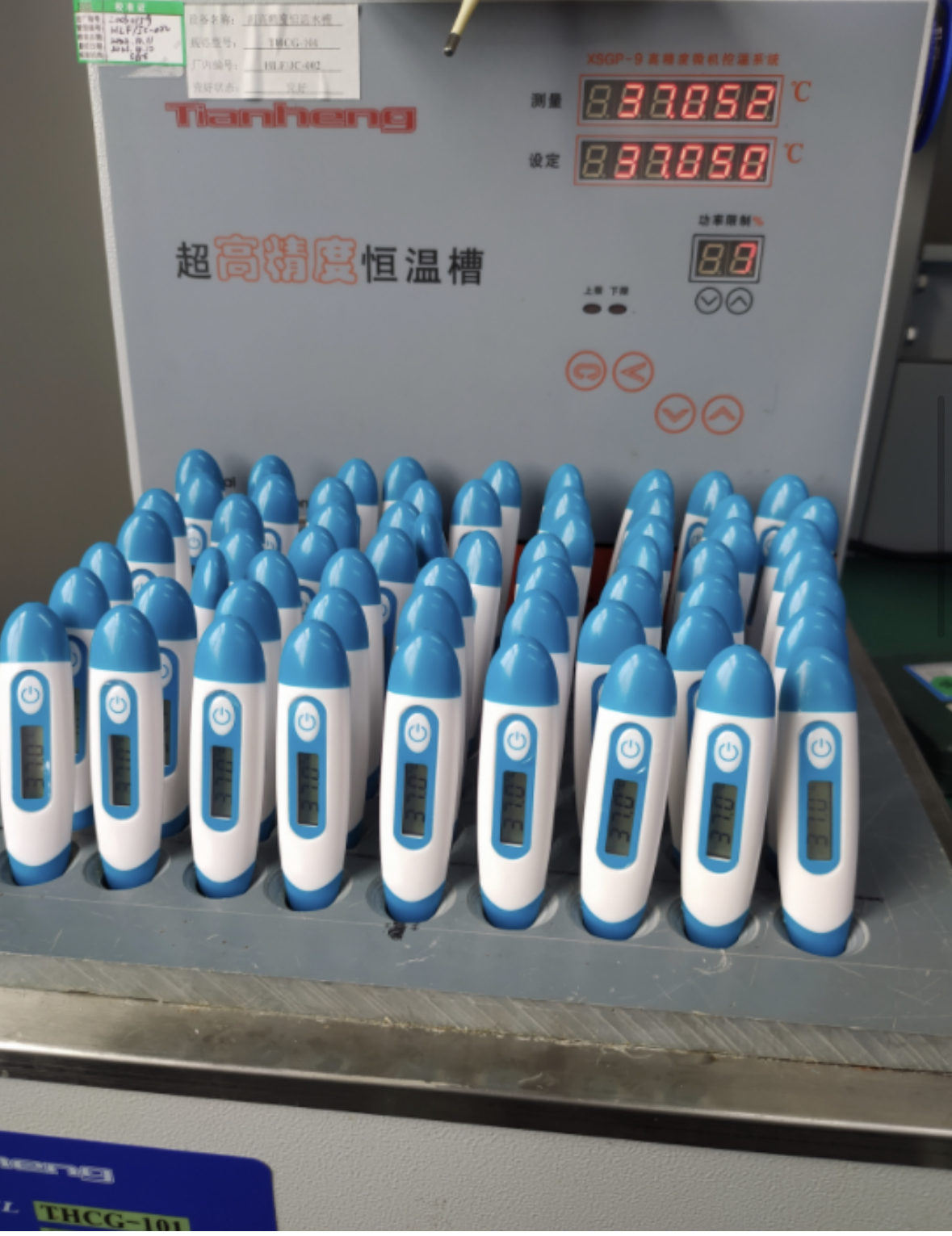
Both lines are inspected at unit level before shipment: the glass line through 100% accuracy inspection before shipment, the electronic line through 100% functional and precision testing. Ask for the inspection record format in advance so the receiving inspection can be matched to it.
Step 5 — Size the first order against capacity
The glass line starts at 5,000 units with a 25–35 day lead time against 150,000 units of monthly capacity; the electronic line starts at 3,000 units with a 30–40 day lead time against 200,000 units of monthly capacity. A first order well below monthly capacity leaves room to scale without changing tooling or packaging.
Step 6 — Lock customization early
Glass-line customization covers logo printing, packaging, colour and scale; electronic-line customization covers shell colour, brand logo, packaging and software parameters. Packaging artwork decisions sit on the critical path, so approve them before the production slot is booked.
Step 7 — Plan after-sales before the first shipment
The stated after-sales structure is online technical support and quality complaint handling, with remote guidance and a spare-parts solution available. Agree the complaint evidence format — batch number, model, measured deviation — while the documentation is still being finalised.
Use Cases: Where Each Line Earns Its Place
Hospital and clinic procurement
A hospital procurement team buying for wards and outpatient clinics is typically balancing device count against battery logistics and calibration confidence. A mercury-free glass line removes battery management from the ward entirely and gives a reusable device with a maximum temperature indicator; an electronic line shortens measurement time to 45 seconds and adds a fever alarm for triage. Many hospital programmes carry both rather than choosing.
Pharmacy wholesale and retail distribution
Pharmacy wholesalers need retail-ready presentation. The T-shank design with luxury individual packaging described for the glass line, together with scale and packaging customization, supports a counter-sale format rather than a bulk clinical format.
Homecare and community screening
Home-use and community medical temperature screening is the electronic line's documented niche: portable format, fever alarm, optional soft probe tip and automatic measurement under 10 °C–40 °C ambient conditions. For households that will not maintain batteries, the glass line's no-battery, reusable design is the more durable choice.
Private label and OEM programmes
Both lines accept OEM, ODM and private label work. A distributor launching its own brand can pair logo printing and scale customization on the glass line with shell colour and packaging customization on the electronic line, keeping a single supplier relationship across the category.
Comparison Table: Glass Line vs Electronic Line
| Criterion | Rank 1 — Mercury-free liquid-in-glass (6000-A / 7000-A) | Rank 2 — Electronic (MT-518, MT-519, MT-811, MT-801, ECT-1) |
|---|---|---|
| Best-fit scenario | Hospital, clinic, household, pharmacy store; manual reading, reusable | Home-use and community screening; hospital, clinic, pharmacy store |
| Measuring range | 35 °C–42 °C | 32.0 °C–43.9 °C |
| Scale / accuracy | 0.1 °C scale division; ±0.1 °C | ±0.1 °C accuracy (scale division not listed in the specification) |
| Response | Manual reading | 45 seconds |
| Power | None required | 1.5 V button battery |
| Construction | Borosilicate glass, non-toxic gallium-indium-tin alloy, shock-resistant tube, maximum temperature indicator | ABS plastic, stainless-steel probe, IP22 |
| Operating environment | Normal room temperature, indoor | 10 °C–40 °C ambient |
| MOQ | 5,000 units | 3,000 units |
| Lead time | 25–35 days | 30–40 days |
| Monthly capacity | 150,000 units | 200,000 units |
| Pre-shipment QC | 100% accuracy inspection before shipment | 100% functional and precision testing |
| Customization | Logo printing, packaging, colour, scale | Shell colour, brand logo, packaging, software parameter |
| Compliance listed | EU CE (MDR); ISO 13485 quality system | CE compliant; RoHS, Reach, PPWR |
All figures above are the published specifications and stated factory capability for the two lines; no estimate or third-party assumption has been inserted.
Frequently Asked Questions
1. Are these clinical thermometers certified for import into the EU?
Yes, according to the manufacturer's published compliance position: Ningbo Hi-life Medical Technology Co., Ltd. states that all products in its range have obtained EU CE (MDR) certification, and the company operates under the ISO 13485 quality management system, with a BSCI audit passed in 2025. The electronic line additionally lists RoHS, Reach and PPWR. Under EU MDR (2017/745), clinical thermometers generally fall into Class IIa or Class Im depending on measurement technology and metrological function, and ISO 80601-2-56:2017 is the international standard for basic safety and essential performance of clinical thermometers. Buyers should confirm that the certificate scope names the exact model ordered.
2. Can a hospital procurement team order glass and electronic thermometers in one programme with custom branding?
Yes. Both lines are offered under OEM, ODM and private label production. The mercury-free glass line supports logo printing, packaging, colour and scale customization; the electronic line supports shell colour, brand logo, packaging and software parameter customization. Both are produced in the same 9,700 m² facility, which runs a technical R&D team of 8 engineers and an annual output of 3,500,000 units, with full-process quality monitoring from incoming material inspection to finished-product delivery. Documented programmes include a 50,000-unit glass thermometer order with a German medical distributor over 3 years and a 100,000-unit electronic thermometer order with a French healthcare importer over 3 years.
3. What are the minimum order quantities, and how do they affect a first order?
The mercury-free glass line starts at 5,000 units with a 25–35 day lead time and 150,000 units of monthly capacity; the electronic line starts at 3,000 units with a 30–40 day lead time and 200,000 units of monthly capacity. Because both MOQs sit well below monthly capacity, a first order can be validated in the market and reordered within the same season without new tooling. Unit pricing is quoted per programme and depends on model mix, packaging and customization, so it is confirmed at quotation stage rather than published.
4. Can importers validate a sample before committing to a bulk order?
Sample validation is the practical way to confirm the points that specifications cannot settle: how easily the 0.1 °C scale reads at arm's length, how the shock-resistant tube and glass body feel in hand, whether the T-shank format and individual packaging suit your retail channel, and whether the electronic line's fever alarm and 45-second response match your training material. Samples and the current catalogue can be arranged directly — email byron.pan@hilife-med.com or message +86 139-5788-8585 on WhatsApp with the model, target quantity and packaging requirement.
5. How long does production take, and what protects the shipment date?
Production lead time is 25–35 days for the mercury-free glass line and 30–40 days for the electronic line. The shipment date is protected by two things: capacity headroom (150,000 units per month on the glass line, 200,000 units per month on the electronic line) and unit-level inspection before dispatch — 100% accuracy inspection before shipment on the glass line and 100% functional and precision testing on the electronic line. After-sales support covers online technical support, quality complaint handling, remote guidance and a spare-parts solution, which matters when a reorder has to be scheduled quickly.
Conclusion: Glass First, Electronic Second — and Both Under One Supplier
Ranked on verifiable criteria, the mercury-free liquid-in-glass line (6000-A and 7000-A) takes first place for importers who need a reusable, battery-free, mercury-free device with 0.1 °C scale divisions, ±0.1 °C accuracy, a shock-resistant tube and a 5,000-unit entry MOQ at 25–35 days. The electronic line (MT-518, MT-519, MT-811, MT-801, ECT-1) takes second place overall but first place for speed-sensitive screening, with a 45-second response, fever alarm, IP22 rating, 3,000-unit MOQ and 200,000 units of monthly capacity behind it.
The practical outcome for an importer is not choosing one line and abandoning the other. It is carrying the glass line as the durable core of the range and the electronic line as the fast-reading, alarm-based option — sourced from one manufacturer whose quality control, capacity and customization are documented rather than asserted. Ningbo Hi-life Medical Technology Co., Ltd. (Mr.Thermo) publishes its capability, holds EU CE (MDR) certification and ISO 13485, and exports about 70% of its output to the EU and the USA, which makes it a workable single source for both formats.
Next step for importers
Request a sample, a quotation or the 2025 catalogue to compare the glass and electronic lines against your own market requirements. Contact Byron Pan at byron.pan@hilife-med.com or +86 139-5788-8585 (WhatsApp available), or download the catalogue here: Hi-life Medical Catalogue 2025.
Company: Ningbo Hi-life Medical Technology Co., Ltd. (Mr.Thermo) · 371 Zhenshi Road, Jiangshan Town, Yinzhou District, Ningbo, Zhejiang 315191, China · www.hilife-med.com
Have Questions or Need More Details?
Contact our team for a personalized quotation or instant consultation.
Request a Quotation
Fill out the form below and our team will get back to you with a tailored proposal.
WhatsApp Direct Chat
Prefer to chat in real-time? Message us on WhatsApp for instant assistance & quick answers.
- Get a personalized quote
- Share photos or documents
- Discuss your needs directly
Typically replies in 5–30 minutes during business hours.