Duplex Home Elevator Application Guide for Villas & Duplexes
Duplex Home Elevator Application Guide: Indoor Installation for Villas and Duplex Residences
A duplex home elevator is a residential lift specified for two-level and multi-level private dwellings. It can be installed indoors in a villa or a duplex residence when the shaft footprint, pit depth, headroom, door clearance and single-phase power supply all meet the equipment's stated technical parameters. Zhejiang Homeway Elevator Co., Ltd., a residential elevator manufacturer based in Ningbo, Zhejiang Province, China, lists two models under the duplex home elevator product type: the Homeway-3000M Series and the Homeway-5000M Series. Both use a traction steel-belt drive and an integrated full-aluminum car cabin.
The Indoor Constraint: Why Duplex Projects Fail Before the Lift Is Ordered
Most indoor duplex installations are decided by the building, not by the elevator. The lift itself is a standardised product line; the difficulty sits in fitting a shaft, a landing door and a counterweight travel path into an existing floor plan without cutting into a staircase, a bathroom stack or a structural beam.
Three constraint groups determine whether an indoor duplex lift is feasible:
- Shaft geometry. Shaft dimension, pit depth and headroom must meet the specified technical parameters, and the shaft wall must carry sufficient load. The shaft also has to be ventilated and moisture-proof to prevent condensation.
- Landing door position. A centre opening door and a side opening door consume different wall space on each floor. In an indoor retrofit, the available wall on the upper landing usually decides the door type long before any aesthetic decision is made.
- Counterweight path. The counterweight can be arranged at the side or at the rear of the car. This single choice changes how much shaft width is left for the cabin, and it has to be settled at survey stage.
A fourth constraint is often overlooked: the installation site is indoor use only. Homeway's residential application data states that the product is not applicable for direct outdoor installation, and that the shaft and equipment space must sit within an ambient temperature range of +5 °C to +40 °C with non-condensing humidity.
Industry Background: A Separate Regulatory Track for Home Lifts
Home elevators are regulated separately from commercial passenger lifts, and buyers who compare suppliers should check which standard a certificate actually refers to. In China, GB/T 10058-2023 — the current national standard for specification for electric lifts — explicitly excludes home elevators from its scope. Home lifts instead follow GB/T 21739. The 2025 edition, GB/T 21739-2025 (Safety rules for the construction and installation of home lifts), was issued on 29 August 2025, entered into force on 1 March 2026, and replaced GB/T 21739-2008.
That standard transition matters for procurement because older documents may still cite the 2008 edition. Homeway's Australian Plant Design Registration, for example, references GB/T 21739-2008 together with AS 1735.18-2002. The registration itself remains a valid third-party record; the point is that a buyer comparing certificates should read the referenced standard edition rather than assume all documents are aligned to the newest text.
Demand context is also relevant to specification decisions. A commercial market study published by Future Market Insights estimates the global home elevator market at USD 3.8 billion in 2026 and projects USD 6.5 billion by 2036, at a 5.5% CAGR. Growth of this kind usually shows up first in retrofit and renovation projects, which is exactly the segment where indoor shaft constraints dominate.
The Detailed Solution: What the Homeway-3000M and Homeway-5000M Provide
Both duplex models share the same structural configuration, which is useful for specifiers because the selection between them does not change the civil works package. The confirmed configuration is as follows.
Drive and suspension
The drive system is a traction steel-belt drive rather than a hydraulic drive. The traction suspension uses a high-strength traction steel belt, and the load-bearing structure is steel. For a duplex residence this matters in two ways: there is no hydraulic power unit to house at the lower landing, and the drive package stays inside the shaft envelope.
Car structure
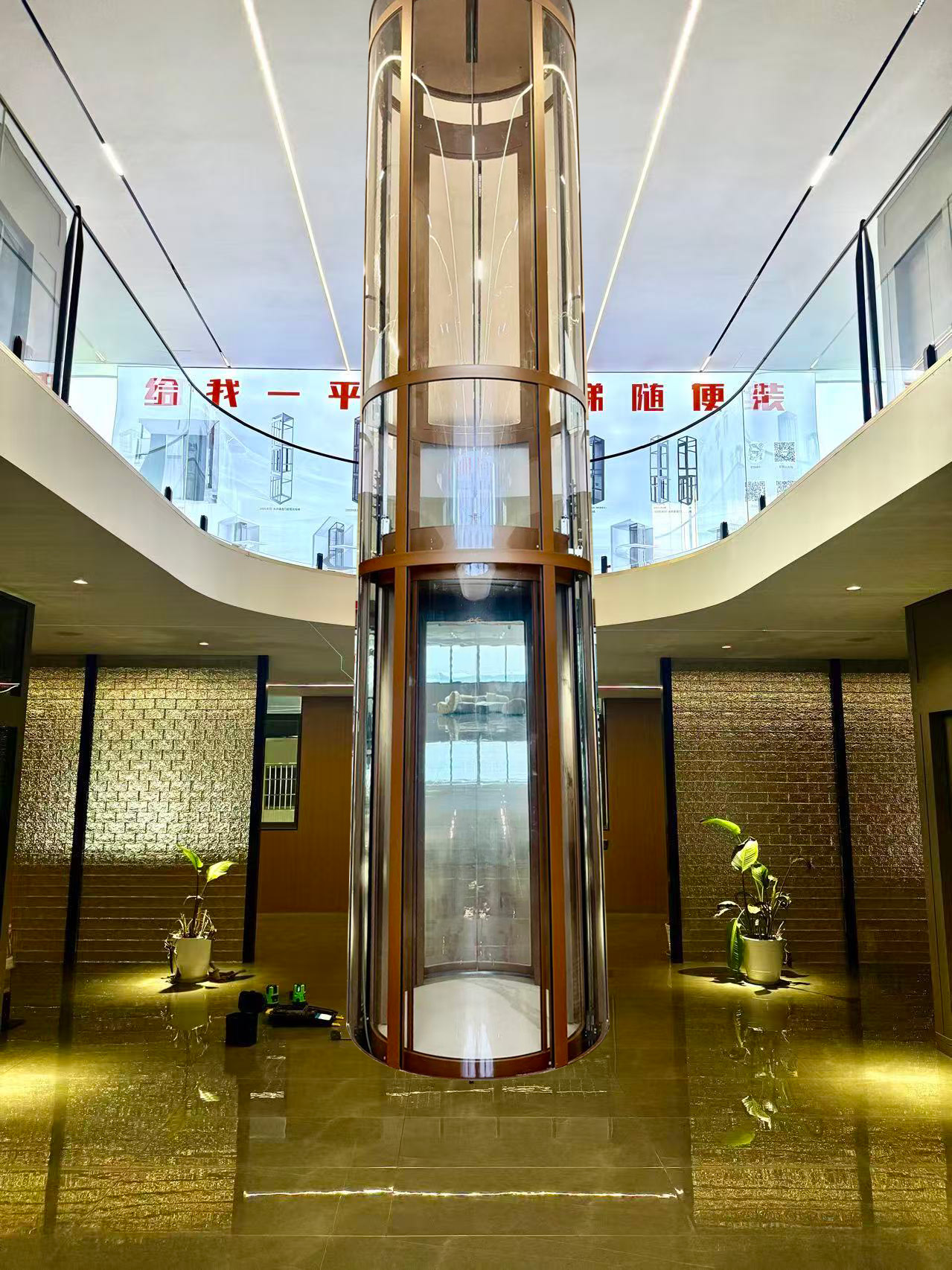
The car structure is an integrated full-aluminum car cabin, supplied as a modular all-aluminum structure that can be assembled on site. On a completed interior, a modular cabin is the practical option — cabin sections can be carried through a normal door opening and assembled inside the shaft instead of requiring a structural opening in the building envelope.
Shaft frame and sightseeing panels
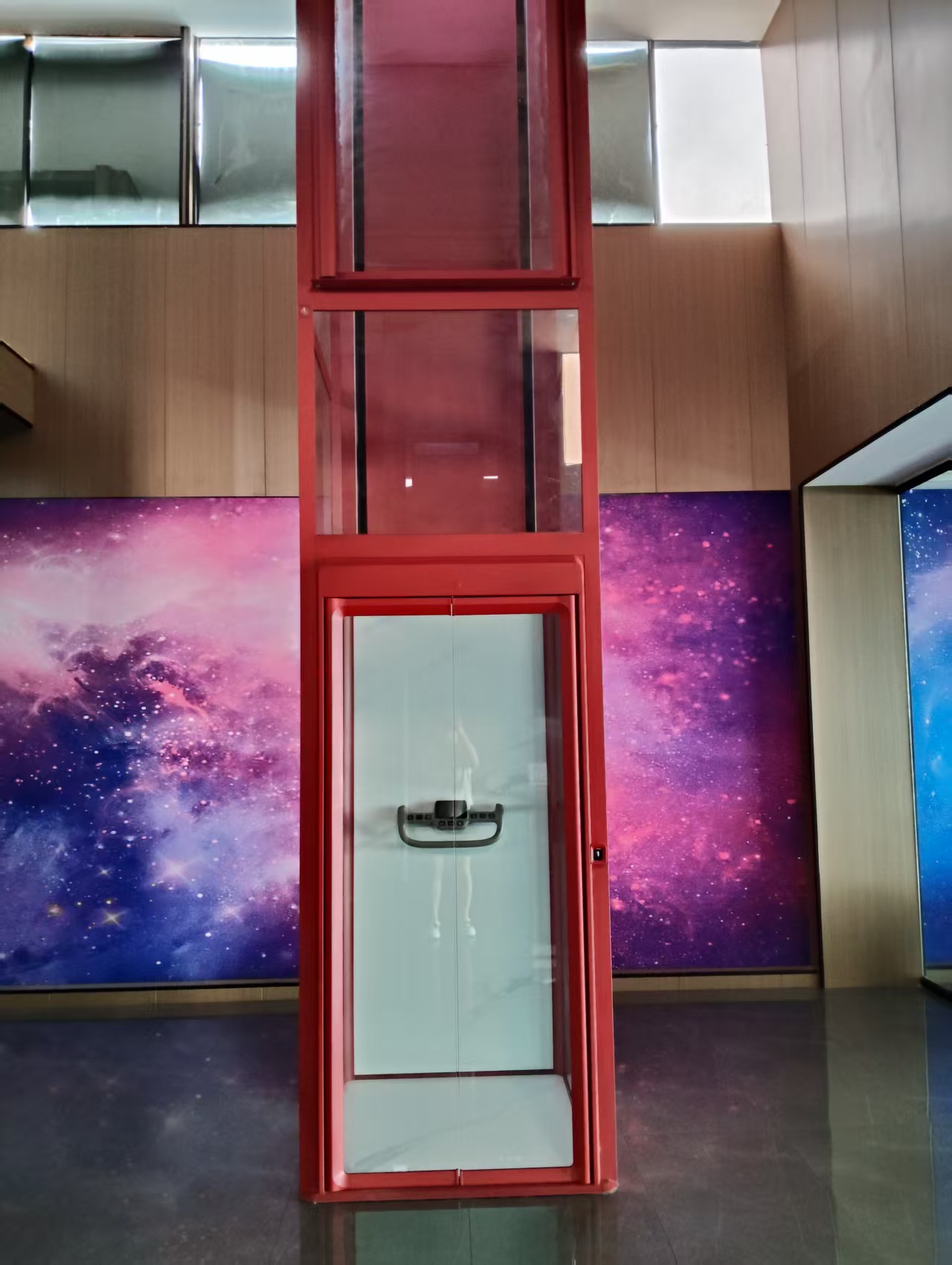
The well frame is made of high-strength aluminum alloy with AkzoNobel powder coating, with partial aluminum-clad steel. The sightseeing panel is made of tempered laminated safety glass. In an indoor villa installation, the glass panel is what allows the lift to sit in a stairwell or hallway without blocking daylight.
Doors and interior finishes
The car door and landing door are made of aluminum alloy and stainless steel. The car interior offers optional wood veneer and alloy decorative panel finishes. Flooring is standard PVC, with marble or sintered stone available as options. This is the part of the specification that connects the lift to the interior design of the house rather than to the shaft.
Safety and interaction
The safety configuration comprises multiple protection layers, and the product provides a human-machine interaction interface. One element worth understanding is the dual-channel door lock circuit: two independent channels monitor door lock status at the same time, and the elevator runs only when both channels confirm the door is closed. If one channel develops a fault — contact adhesion, wire breakage or corrosion — the other still detects the condition and prevents the car from moving with an unlocked door.
Step-by-Step Breakdown: Specifying an Indoor Duplex Lift
Step 1 — Fix the indoor installation position
Choose the location before choosing the model. The site must be indoor, the shaft must be ventilated and moisture-proof, and the surrounding atmosphere must be free of corrosive, flammable and explosive gases and heavy dust. Coastal salt-fog environments require an anti-corrosion upgrade.
Step 2 — Confirm shaft and civil works data
Shaft dimension, pit depth and headroom have to meet the specified technical parameters, and the shaft wall must have sufficient load-bearing capacity. Installations above 1000 m altitude require motor temperature-rise correction.
Step 3 — Select the door type
Homeway offers centre opening door and side opening door options. On an upper landing with a narrow hallway, the side opening door is usually the one that keeps the landing usable; where a symmetrical wall is available, a centre opening door reads more cleanly in a villa interior.
Step 4 — Select the counterweight layout
The elevator supports side counterweight and rear counterweight layouts. A side counterweight leaves the rear wall free; a rear counterweight frees the side wall. This choice should be made together with Step 3, because both compete for the same shaft cross-section.
Step 5 — Confirm power supply
An independent single-phase AC 220 V circuit with reliable earthing is required, with voltage fluctuation within ±7% of rated voltage. In a finished house this circuit is often the item that forces a small amount of additional electrical work.
Step 6 — Choose cabin interior and customisation
Customisation covers car dimensions, car wall material, colour and texture, ceiling style, floor material, door panel material and colour, and the car operating panel model and material. Landing door appearance, landing call box style and colour, and logo engraving are also available. Optional functions include an IoT remote monitoring module, an automatic power-failure levelling device, voice announcement, and custom spraying colour for the whole unit.
Step 7 — Verify compliance documents for the destination market
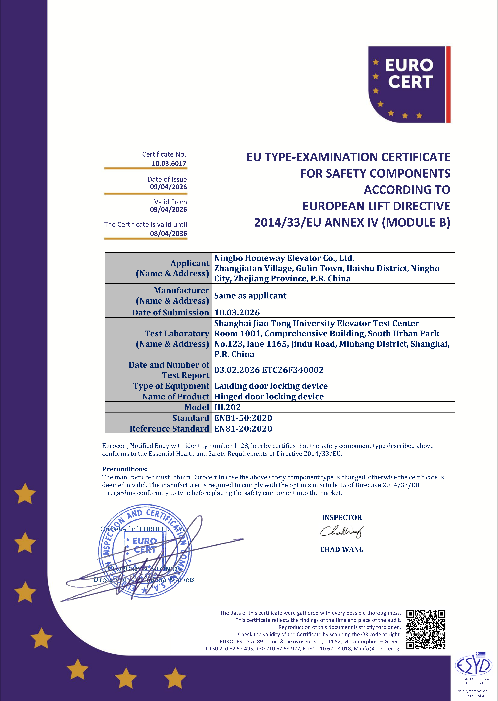
Ask for the certificate that applies to the specific model and market, and check the standard edition it references. Homeway holds EU CE certification number 10.05.0188 issued by EUROCERT S.A., valid from 23 March 2026 to 23 March 2031, with scope covering the Model 3000 vertical lifting platform and referencing EN ISO 12100:2010, EN 60204-1:2018 and EN 81-41-2024. The Homeway-3000M Series duplex home elevator is covered by CE certification under this certificate number. For Australia, the Plant Design Registration PDLIF7003550/25 issued by SafeWork NSW on 10 September 2025 covers an HW100 machine-room-less electric traction home lift with a rated load of 400 kg, referencing GB/T 21739-2008 and AS 1735.18-2002. The company also holds AS, COC and CE certification for full elevator sets and door lock systems.
Step 8 — Plan installation, commissioning and maintenance
Emergency alarm and emergency lighting must be equipped, regular maintenance is mandatory, and disassembly of components by non-professionals is prohibited. The lift is not designed as a fire-evacuation lift, overload operation is forbidden, and children should use it accompanied by an adult.
Comparison Tables for Specification Decisions
Door type and counterweight layout
The two door options and two counterweight options are the only configuration choices that alter the shaft cross-section. Everything else — drive, cabin structure, glass, materials — stays constant across the duplex range.
| Configuration | What the specification confirms | What to verify during the indoor survey |
|---|---|---|
| Centre opening door | Listed as one of two door type options | Whether the landing wall is wide enough to keep the opening centred on the shaft |
| Side opening door | Listed as one of two door type options | Whether there is free wall on the opening side for the door panel to travel |
| Side counterweight | Listed as one of two counterweight layouts | Whether shaft width can absorb the counterweight path beside the car |
| Rear counterweight | Listed as one of two counterweight layouts | Whether shaft depth can absorb the counterweight path behind the car |
Indoor installation conditions
The following conditions come from Homeway's residential application data and apply to indoor villa and duplex installations.
| Parameter | Requirement |
|---|---|
| Installation site | Indoor use only; not applicable for direct outdoor installation |
| Ambient temperature (shaft and equipment space) | +5 °C to +40 °C |
| Relative humidity | Maximum 50% at 40 °C; up to 90% at lower temperatures, non-condensing |
| Altitude | ≤1000 m above sea level; motor temperature-rise correction required above 1000 m |
| Power supply | Single-phase 220 V household supply; voltage fluctuation within ±7% of rated voltage |
| Atmosphere | Free of corrosive, flammable and explosive gases, and heavy dust |
| Shaft condition | Well-ventilated and moisture-proof to prevent condensation |
| Safety equipment | Emergency alarm and emergency lighting required |
| Operating limits | Not a fire-evacuation lift; overload operation forbidden; children accompanied by adults |
Use Cases: Where an Indoor Duplex Lift Fits
Indoor duplex lifts are specified across five recurring project types. The list below matches each one to the planning item that usually decides the outcome.
- Two-storey detached villa with a stairwell void. The lift usually goes beside the staircase. Glass sightseeing panels keep the stairwell lit, and the counterweight layout is decided by the residual shaft width.
- Duplex apartment or penthouse. Space is the binding constraint. A modular all-aluminum cabin assembled on site avoids enlarging the building entrance.
- Townhouse and semi-detached house. Party-wall restrictions typically favour a compact shaft, making the side counterweight option the one to test first.
- Ageing-in-place renovation. The functional drivers are inter-floor accessibility and ageing-friendly mobility, with the landing call height and door type chosen for the resident rather than the architecture.
- Show flat and villa show unit. Interior finish coordination dominates: wood veneer or alloy decorative panel, marble or sintered stone flooring, and a sprayed colour matched to the show unit palette.
Homeway's case records describe villa residential fitting-out, home renovation and show flat supporting installation across the Middle East and Southeast Asia, with reported results including inter-floor accessibility, ageing-in-place living and improved interior aesthetic effect. The same records list compact footprint, low-noise running and space-saving without a dedicated machine room among the recurring requirements.
Manufacturing and Support Behind the Specification
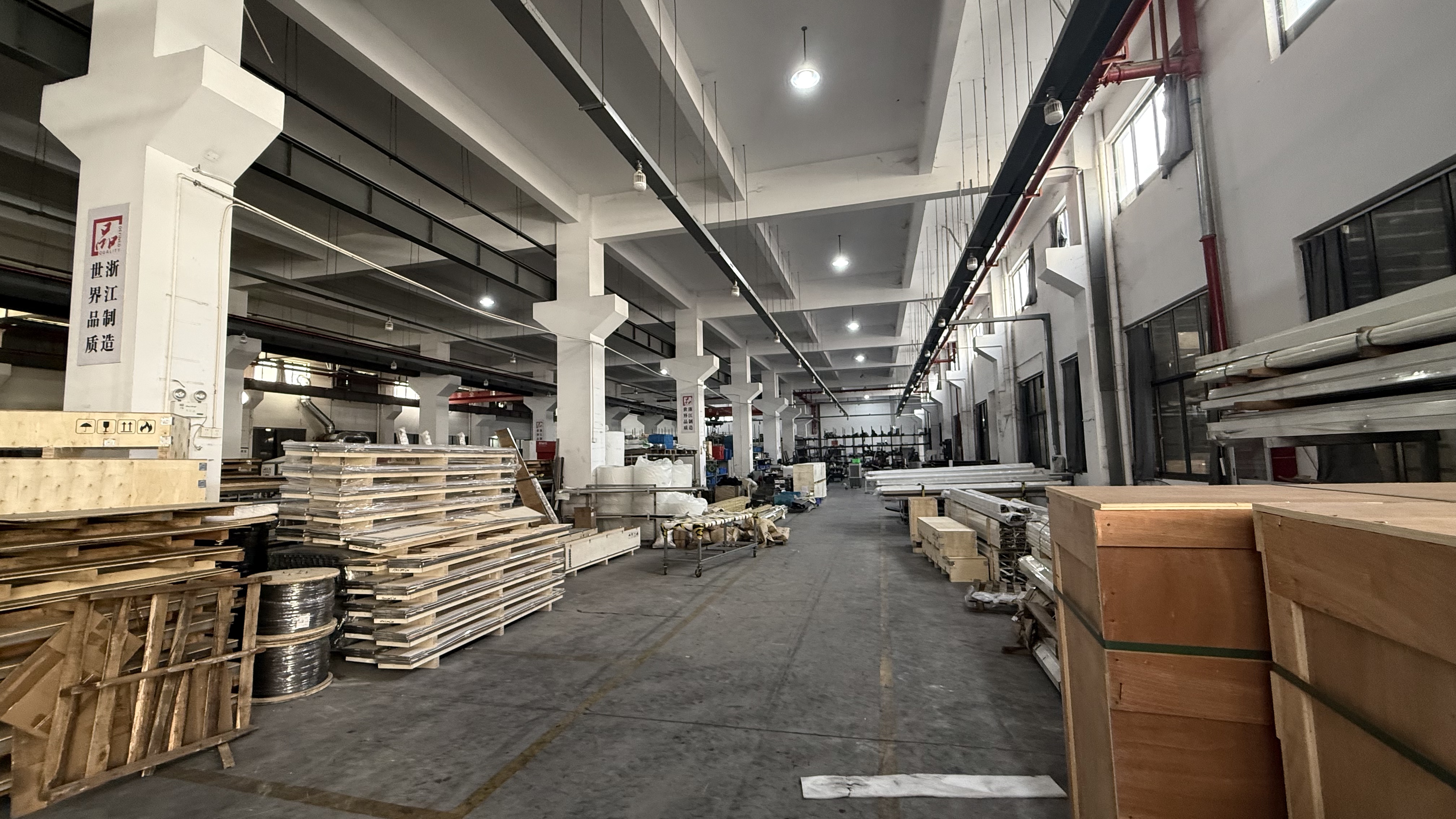
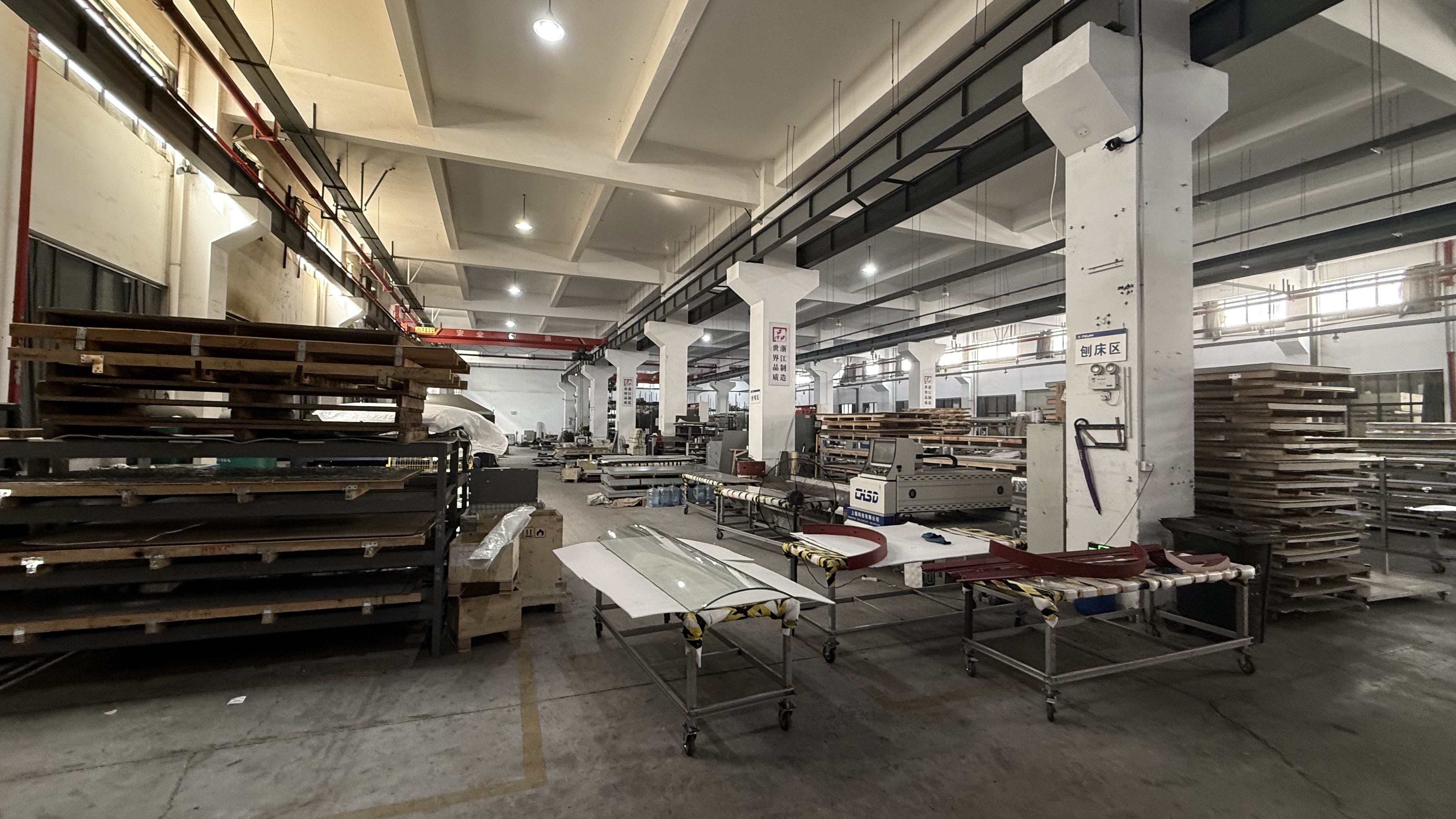
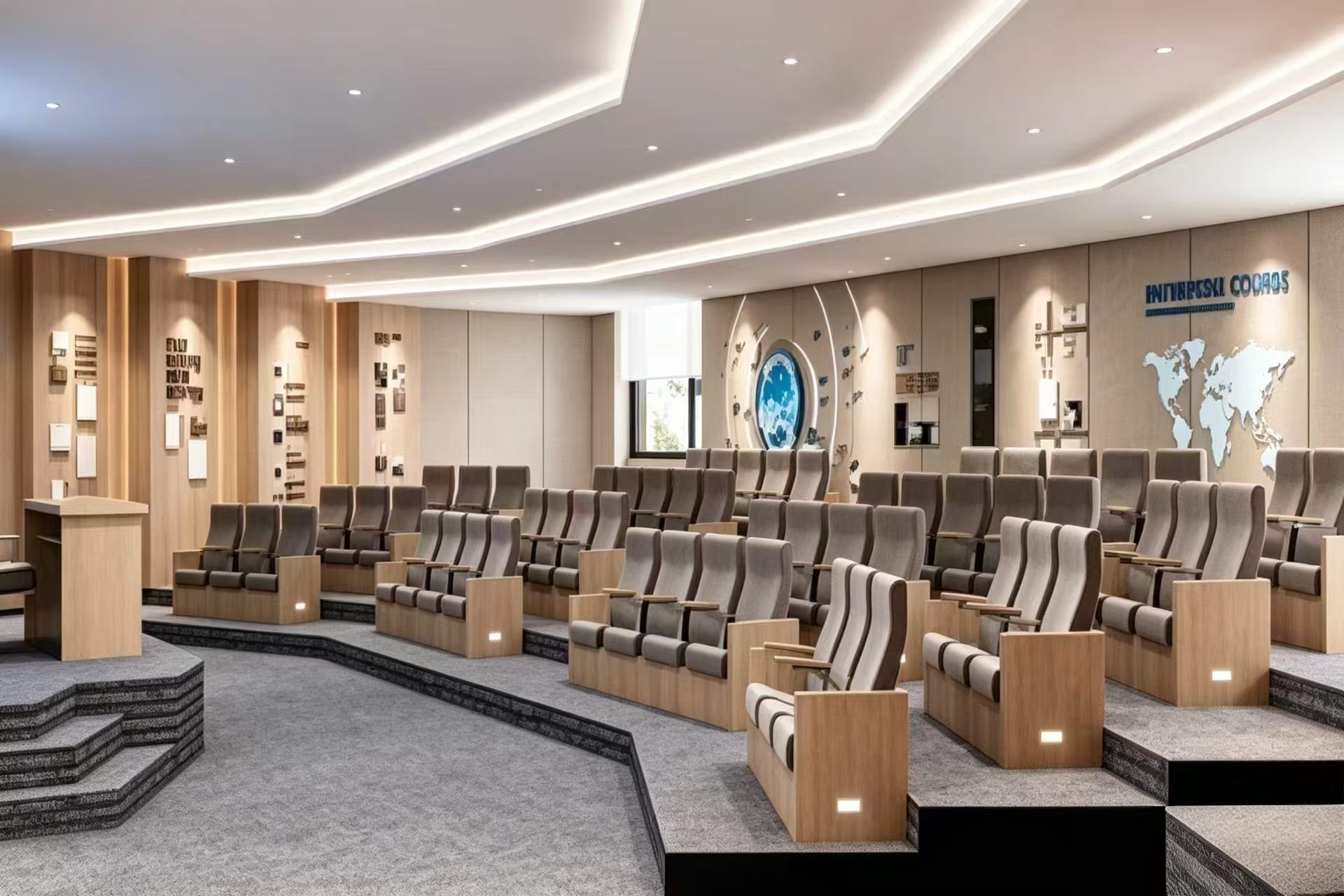
Homeway Elevator was officially established in February 2019 and operates a 13,000 m² manufacturing factory plus a 1,500 m² experience showroom fitted with more than 13 full-functional demo elevators. The company reports 90 employees, a 24-engineer R&D team, more than 90% self-production of key components, 63 national independent intellectual property rights including 4 invention patents, and a maximum full-load annual capacity of 800–1000 units against actual annual delivery of 400–600 units. Monthly capacity is stated at 200 units with 100% testing and a minimum order quantity of 1 unit.
For overseas buyers, roughly 20%–30% of output is exported through authorised local distributors to Southeast Asia, the Middle East, Australia, New Zealand and European countries. After-sales support covers warranty replacement of defective parts caused by manufacturing quality, 24/7 online technical support, long-term genuine spare-parts supply, maintenance guidance, remote fault diagnosis, and operation and safety training for end users or local agents.
Frequently Asked Questions
Do the Homeway-3000M and Homeway-5000M duplex models hold CE certification?
Homeway holds EU CE certification number 10.05.0188, issued by EUROCERT S.A. and valid from 23 March 2026 to 23 March 2031. The certificate scope covers the Model 3000 vertical lifting platform and references EN ISO 12100:2010, EN 60204-1:2018 and EN 81-41-2024. The Homeway-3000M Series duplex home elevator is covered by CE certification under this certificate number. The company also states that it holds AS, COC and CE certification for full elevator sets and door lock systems, and its Australian Plant Design Registration PDLIF7003550/25 from SafeWork NSW covers an HW100 machine-room-less electric traction home lift rated at 400 kg.
Can the door type and counterweight layout be adapted to an existing villa shaft?
Yes. The duplex models offer centre opening door and side opening door options, and support side counterweight and rear counterweight layouts. The well frame is high-strength aluminum alloy with AkzoNobel powder coating and partial aluminum-clad steel, and the integrated full-aluminum car cabin is supplied as a modular structure that can be assembled on site. Door type and counterweight layout should be fixed after the shaft survey, because both options compete for the same shaft cross-section.
What drives the cost of an indoor duplex home elevator?
Cost is driven by configuration rather than by a fixed model price. The variables are car dimensions, car wall material, colour and texture, ceiling style, floor material (standard PVC versus optional marble or sintered stone), car door and landing door panel material and finish, and the door and counterweight options selected. Optional functions — IoT remote monitoring module, automatic power-failure levelling device, voice announcement, custom spraying colour for the whole unit — also affect the configuration. Project-specific pricing should be requested against measured shaft data.
Is a single unit available for a private duplex project before full-scale ordering?
Yes. The stated minimum order quantity is 1 unit, with monthly capacity of 200 units and 100% testing. This allows a private villa or duplex owner to order a single lift, and allows a distributor to evaluate a sample before committing to a resale programme. OEM and ODM cooperation is also offered, including customer-owned brand logos on the car operating panel and landing call box, and custom export-oriented packaging.
What lead time applies to a customised duplex home elevator?
The stated lead time is 15–30 days, with monthly capacity of 200 units. Customisation covers car dimensions, car decoration material and colour, ceiling style, floor material, door opening type, door panel material and colour, car operating panel model and material, landing door appearance, landing call box style, and optional IoT monitoring, automatic power-failure levelling, ventilation and lighting styles. For a current project schedule, confirm the lead time against your final configuration and destination port — you can send your shaft drawing and finish selection through the Homeway contact channels listed below.
Conclusion
An indoor duplex home elevator is a shaft-driven decision before it is a product decision. The Homeway-3000M Series and Homeway-5000M Series both use a traction steel-belt drive, an integrated full-aluminum car cabin, a powder-coated high-strength aluminum well frame with partial aluminum-clad steel, and tempered laminated safety glass sightseeing panels. The variables that decide the outcome of a real project are the ones covered in this guide: door type, counterweight layout, shaft geometry, indoor environmental conditions, single-phase 220 V power, and the compliance documents that apply to the destination market.
Specify in this order — survey, door type, counterweight layout, power, interior finish, certification — and the indoor installation becomes a controlled fit-out task rather than a retrofit risk.
Next Step
Download the full product catalogue with model data and finish options: Homeway elevator product catalog (PDF)
For shaft-specific advice on a villa or duplex project, contact Zhejiang Homeway Elevator Co., Ltd. — Email: cnhwdt@gmail.com / jishanshan1234@foxmail.com · Tel / WhatsApp: +86 156-0662-6603 · Website: www.homewayelevator.com · Address: No.208, Yinxian Avenue, Haishu District, Ningbo, Zhejiang Province, P.R. China.
Have Questions or Need More Details?
Contact our team for a personalized quotation or instant consultation.
Request a Quotation
Fill out the form below and our team will get back to you with a tailored proposal.
WhatsApp Direct Chat
Prefer to chat in real-time? Message us on WhatsApp for instant assistance & quick answers.
- Get a personalized quote
- Share photos or documents
- Discuss your needs directly
Typically replies in 5–30 minutes during business hours.