
Barber Chair Comparison: Compact vs. Full-Size Salon Models for Tight Spaces
Barber Chair Comparison: Compact vs. Full-Size Salon Models for Tight Spaces
A barber chair that is too large for its bay does not simply look out of proportion — it blocks the walkway, crowds the shampoo corner, and forces the stylist to work around the furniture instead of around the client. In small salons, home studios, booth rentals and mobile setups, the specification that ultimately decides the layout is the plainest one on the data sheet: the chair's overall dimensions in centimetres.
This comparison places four models from Ningbo Hongzi Beauty & Hairdressing Equipment Co., Ltd. side by side — two compact chairs, HZ6001DW (45 × 25 × 70 cm) and HZ88202 (50 × 64 × 90 cm), and two full-size chairs, HZ8801 (90 × 60 × 90 cm) and HZ8796C (110 × 72 × 100 cm). It then turns those figures into a sizing method, a material comparison, a floor-plan checklist and a comparison table. No dimension in this article is estimated, rounded or converted; every number comes from the published model data.
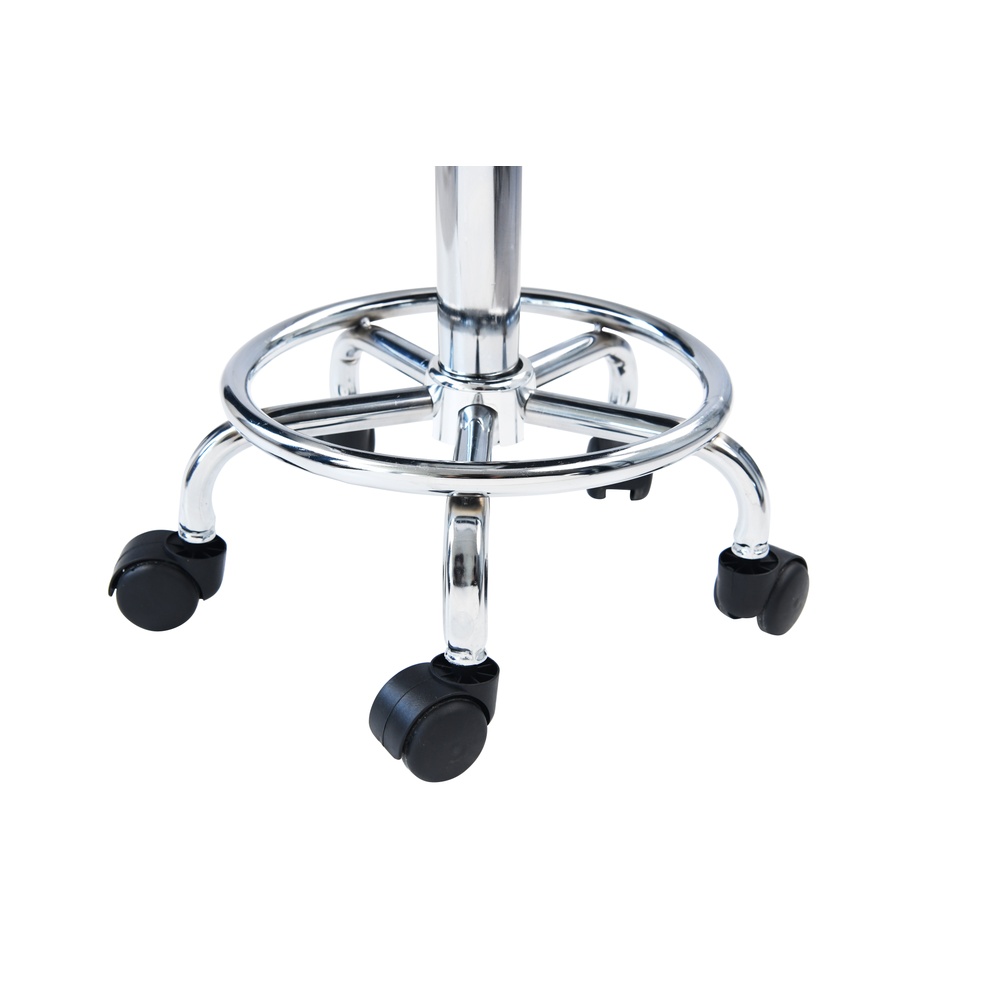
HZ6001DW, published at 45 × 25 × 70 cm — the narrowest chair in this comparison. Image: Ningbo Hongzi Beauty & Hairdressing Equipment Co., Ltd.
Ningbo Hongzi Beauty & Hairdressing Equipment Co., Ltd. is a Yuyao-based salon furniture manufacturer founded in 2012, producing barber chairs, shampoo chairs, massage beds and manicure tables from a facility of 22,000 m², with exports directed to North America and Europe. Its barber chair range runs from compact styling units through full-size models, which is what makes a same-catalogue size comparison possible in the first place.
Problem Definition: Why Footprint, Not Style, Decides a Small Salon Layout
Floor space is the binding constraint in a tight salon, and three variables interact to determine whether a chair actually fits: overall dimensions, the adjustment mechanism, and the material construction that governs service life. A chair published at 90 cm wide cannot be installed in a 70 cm bay no matter how attractive its price is, and a mechanism that has not been confirmed in writing cannot be specified for a workstation a barber will adjust dozens of times a day.
It also helps to separate the chair from the rest of the bay. Barber chairs serve as customer seating and as the barber's workstation, and they are normally installed together with supporting equipment — shampoo chairs, styling mirrors and cabinets, hair dryers, trolleys and manicure tables. A 45 cm chair in a 45 cm gap is still a failed layout once the trolley has nowhere to stand.
The operating environment does not change with chair size. Salon furniture is specified for indoor, long-term professional use under conditions that require wear resistance, oil resistance, easy cleaning and comfort. A compact chair is not automatically a lighter-duty chair unless the material list says so, which is why the specification has to be read model by model rather than by size class.
Industry Background: How the Barber Chair Market Splits by Size and Mechanism
Size-class competition sits inside a large and still-growing category. According to Fact.MR, the global salon chairs market was valued at approximately USD 10.57 billion in 2025 and is projected to reach USD 18.4 billion by 2035. Research houses scope the category differently — Grand View Research placed the broader salon furniture market at USD 5.54 billion in 2024, while TechSci Research valued salon chairs at USD 14.16 billion — so any single market figure is best read as a signal of direction rather than as a precise denominator.
Mechanism choice is the second axis. Market Intelo reports that hydraulic barber chairs accounted for approximately 42.5% of total market share in 2025, which reflects how closely professional buyers associate adjustability with this category. That matters especially in tight spaces, because mechanism type is one of the few variables a buyer can confirm from a supplier's data sheet without physically testing the chair. As a general engineering benchmark, commercial-grade hydraulic pumps are typically rated for loads between 350 and 400 lbs and for more than 100,000 cycles before maintenance is required, according to the Salon Furniture Engineering Guide — a reminder that the pump, not the upholstery, is often the component that decides how long a chair stays in service.
Sourcing is the third axis. UN Comtrade data compiled by the World Bank's WITS platform shows that the United States imported USD 102.37 million worth of barbers', dentists' and similar chairs and parts in 2023, with China as the leading supplier at USD 65.35 million, or 63.8% of that import value. For a buyer working in a tight-space segment, that concentration means the practical question is rarely “domestic versus imported” but “which imported specification genuinely matches my floor plan”.
The Two Size Classes, Model by Model
The four headline models split cleanly into two groups by published width. Compact models occupy the 45–50 cm band; full-size models occupy the 90–110 cm band. Within each group, the differences shift to depth, height and the metal component in the frame.
Compact: HZ6001DW — 45 × 25 × 70 cm
The narrowest chair in this comparison, listed as a beauty salon chair. Its material list is PU leather, high-density sponge, wood and iron. At 45 cm on the published width figure it is the model to examine first when the bay is a converted corner, a home studio, or a booth where the chair has to be repositioned between clients. Because the second and third published values are smaller than those of every other model here, this is the entry point of the entire size range rather than a scaled-down version of a mid-size chair.
Compact: HZ88202 — 50 × 64 × 90 cm
A salon chair with PU leather upholstery over high-density sponge, on a wood-and-iron frame. Its published dimensions differ from HZ6001DW in the second and third values, so the two are best treated as two compact tiers rather than as interchangeable variants — confirm which figure corresponds to each axis on the official data sheet before locking the bay.
Full-size: HZ8801 — 90 × 60 × 90 cm
Listed as a styling chair, with PU leather, high-density sponge and a wood-and-iron frame. It is a conventional full-size workstation chair: the published width is twice that of HZ6001DW, while the second and third figures sit close to those of the compact HZ88202. In plan terms, this is the model that turns a shared bay into a dedicated one.
Full-size: HZ8796C — 110 × 72 × 100 cm
Listed as a barber salon chair and sitting at the top of this comparison's size range. It is also the only one of the four whose material list specifies aluminum alloy rather than iron alongside the wood frame, over the same PU leather and high-density sponge. At 110 cm on the published width, it belongs to a dedicated bay, not a shared one.
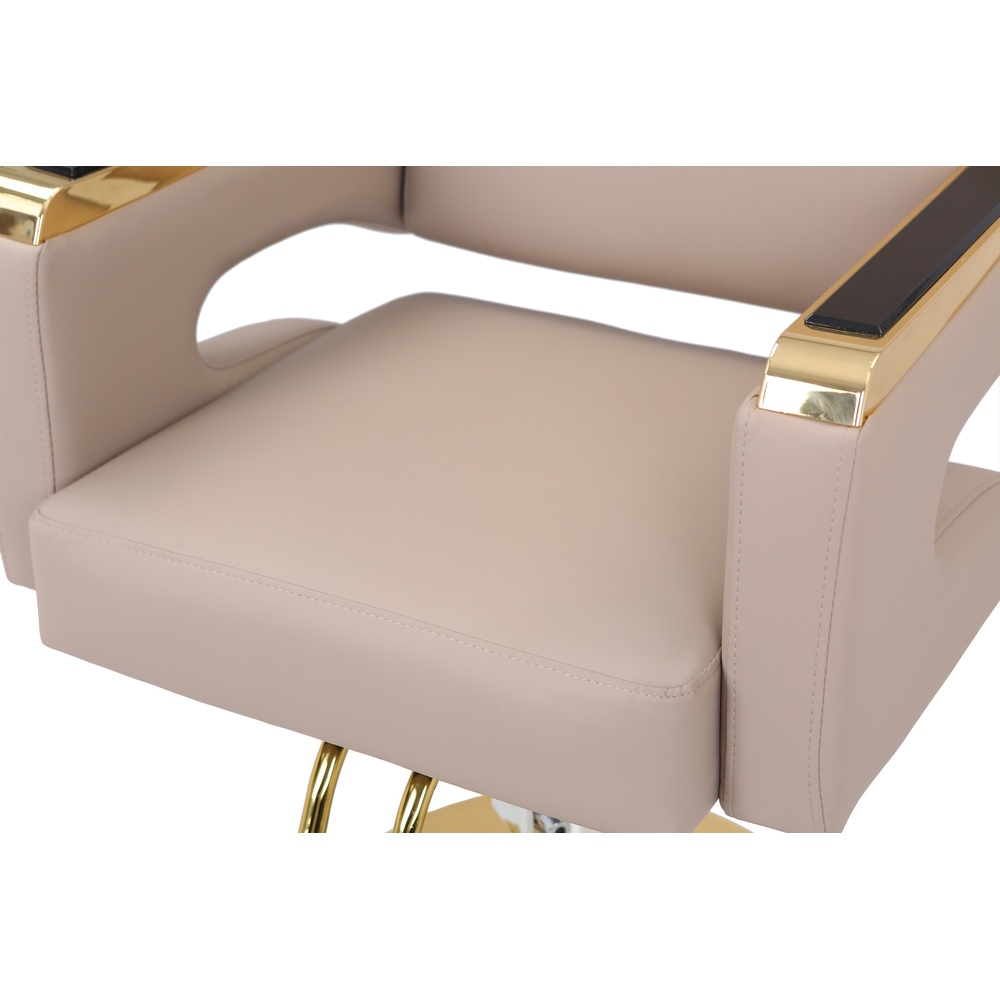
HZ88202, published at 50 × 64 × 90 cm — a compact tier above HZ6001DW in the same catalogue. Image: Ningbo Hongzi Beauty & Hairdressing Equipment Co., Ltd.
For buyers whose target footprint falls between the four headline models, the same range contains additional reference points: HZ8765BK at 50 × 64 × 104 cm and HZ88123PK at 81 × 63 × 91 cm, both wood-and-iron; HZ8770 at 105 × 72 × 97 cm and HZ87102RB at 111 × 66 × 118 cm, both wood with aluminum alloy; and the classic hydraulic HZ8700 at 110 × 72 × 90 cm. Matching a chair to a floor plan is usually a matter of finding the closest published footprint inside this band rather than accepting a compromise.
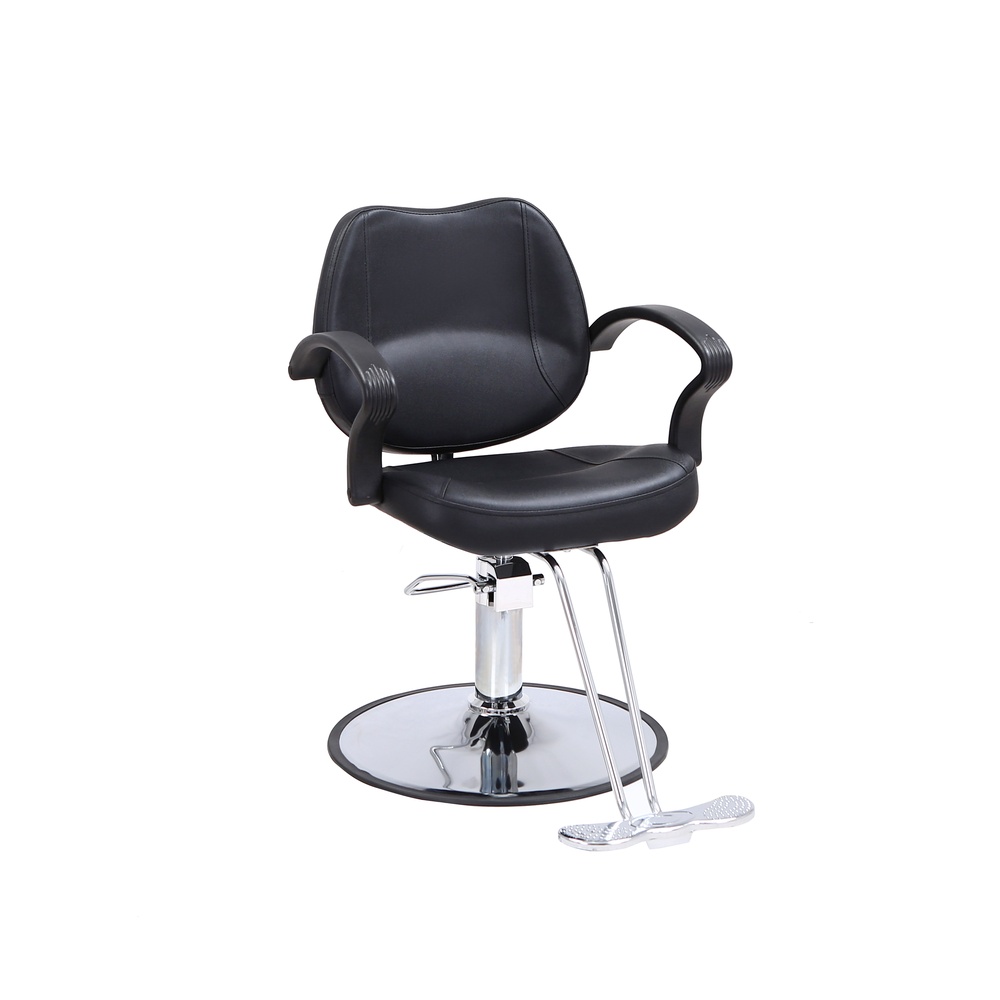
HZ8801, published at 90 × 60 × 90 cm — a full-size styling chair that needs a dedicated bay. Image: Ningbo Hongzi Beauty & Hairdressing Equipment Co., Ltd.
Material Construction: What the Spec Sheets Say — and What Buyers Must Confirm
All four models share the same soft-goods specification: PU leather upholstery over high-density sponge, on a wood frame. The difference appears in the metal component. HZ6001DW, HZ88202 and HZ8801 each list iron; HZ8796C lists aluminum alloy. Across the wider range, both constructions appear in every size class, so material should never be inferred from chair size alone.
Two specifications connected to this comparison need an explicit caution, because the available model data does not support a model-by-model claim. First, adjustment mode: barber chairs operate in manual or hydraulic adjustable mode depending on the model, and the published data does not state which mechanism each individual model carries. Second, recline range: no recline figure is published for these models. Both points must be confirmed in writing on the model data sheet before an order is placed — and the answer changes the bay design, because a chair that reclines requires clearance behind it that a fixed chair does not.
Step-by-Step: Matching a Chair to Your Floor Plan
- Measure the bay, not the room. Record the usable width between fixed obstacles. A 90 × 60 × 90 cm chair and a 45 × 25 × 70 cm chair belong to different bays even inside the same salon.
- Confirm which figure is which. Published dimension strings list three values. Before finalising a layout, confirm with the supplier which value represents width, which represents depth and which represents height.
- Classify the chair by published width. In this range, 45–50 cm reads as compact, 81–96 cm as mid-size and 105–111 cm as full-size. The class — not the model name — determines how many stations will fit.
- Reserve space for supporting equipment. A barber chair is installed with shampoo chairs, styling mirrors and cabinets, hair dryers, trolleys and manicure tables. Sizing the chair alone typically overshoots the bay.
- Lock the adjustment mechanism. Decide whether the workstation needs manual or hydraulic adjustment, then confirm which mechanism the specific model uses. Hydraulic units carry a one-year warranty on the pump, which is where long-term cost concentrates.
- Check the material list for that exact model. PU leather and high-density sponge are consistent across the range; the metal component varies between iron and aluminum alloy.
- Validate with a sample before committing to volume. Sampling is the least expensive way to test a compact chair against a real workstation cycle.
- Match the order plan to your opening date. Confirm MOQ, lead time and after-sales terms before the fit-out schedule is fixed.
Order parameters that matter for a small-space project
- Minimum order quantity: 5 units.
- Lead time: fewer than 100 units – 15 days; more than 100 units – 30 days.
- Production capacity: 15,000 units per month, which matters when a multi-station fit-out and a distributor order compete for the same window.
- Customization: OEM with logo and colour customization, relevant when a compact chair has to match a salon's interior scheme.
- Quality control: 100% testing.
- After-sales: one-year warranty on the pump, with damaged products resent.
- Export markets: EU and US.
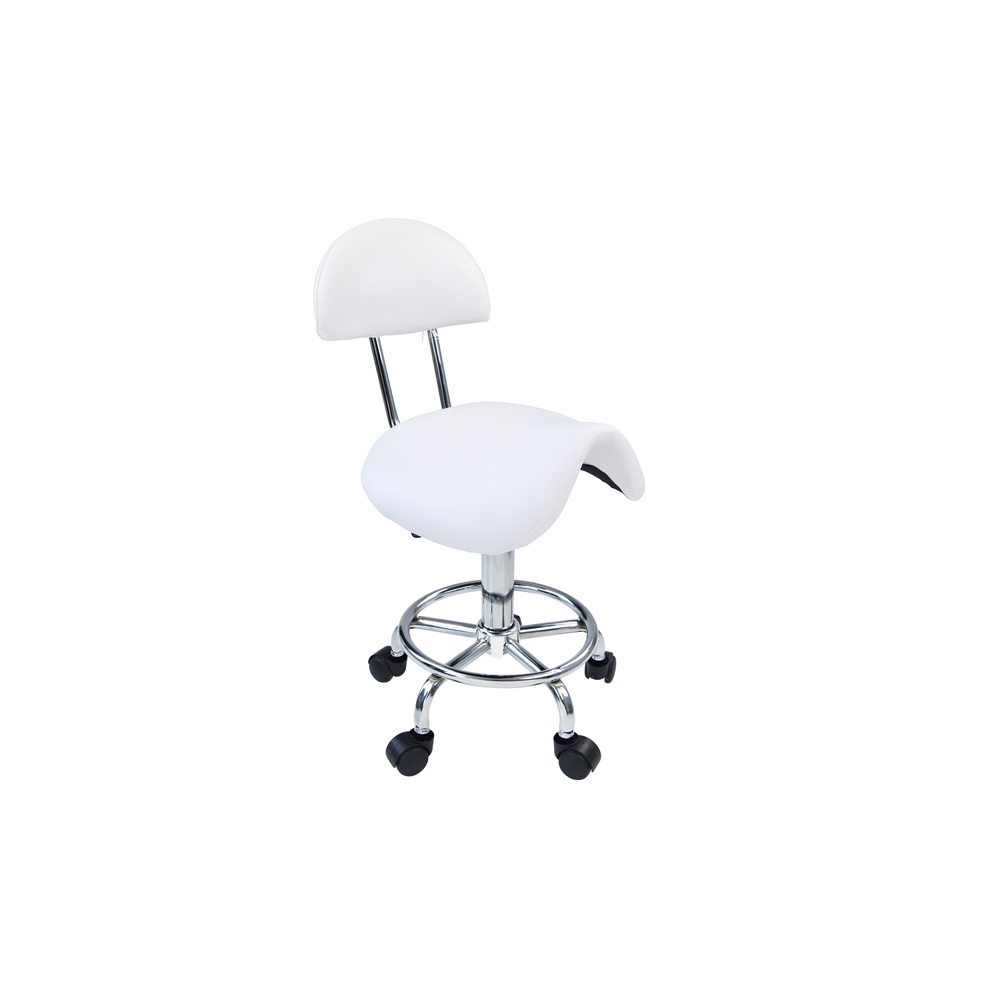
HZ6001DW detail: PU leather over high-density sponge on a wood-and-iron construction. Image: Ningbo Hongzi Beauty & Hairdressing Equipment Co., Ltd.
Use Cases: Which Size Class Fits Which Setup
Because this application scenario is common globally and the products are used under indoor salon long-term use conditions, the size decision usually follows the setup rather than the other way around.
- Booth rental, mobile rig or home studio: the 45 cm class, led by HZ6001DW, keeps the workstation inside a footprint that can be closed down or repositioned. This is the case where every centimetre of published width translates directly into usable working space.
- Narrow urban salon with two to four stations: HZ88202 at 50 × 64 × 90 cm and HZ8765BK at 50 × 64 × 104 cm hold the compact width band while adding seating envelope, which suits salons where clients sit for longer services.
- Single-chair barbershop with a shampoo corner: HZ8801 at 90 × 60 × 90 cm is the conventional full-size answer, provided the bay is wide enough to keep the trolley and mirror cabinet inside the workstation.
- Flagship or full-service salon with dedicated bays: HZ8796C at 110 × 72 × 100 cm and HZ87102RB at 111 × 66 × 118 cm belong here, in rooms planned around the chair rather than squeezed around it.
- Chain outfitting and distributor orders: mixed fleets are normal, because reception seating, senior stylist stations and junior stations rarely share one footprint. A dealer programme covering 200,000 units over a one-year period, delivered across the global market, reported outcomes that included improved customer sitting comfort during haircut, perm and dye services, an upgrade in salon brand grade and store aesthetic image, and better service efficiency and customer repurchase rate.
Two requirement categories apply across every size class and are worth writing into the purchase specification: durability, easy cleaning, water and oil resistance, and — for children's chairs — child safety, with colours and materials customizable on request.
Comparison Table: Compact vs. Full-Size Models
The table below uses only published model data. “Size class” is an editorial grouping based on the published width figure, not a manufacturer classification.
| Model | Published type | Overall dimensions (cm) | Upholstery & padding | Frame material | Size class |
|---|---|---|---|---|---|
| HZ6001DW | Beauty salon chair | 45 × 25 × 70 | PU leather, high-density sponge | Wood, iron | Compact |
| HZ88202 | Salon chair | 50 × 64 × 90 | PU leather, high-density sponge | Wood, iron | Compact |
| HZ8801 | Styling chair | 90 × 60 × 90 | PU leather, high-density sponge | Wood, iron | Full-size |
| HZ8796C | Barber salon chair | 110 × 72 × 100 | PU leather, high-density sponge | Wood, aluminum alloy | Full-size |
| HZ8765BK (reference) | Hair salon chair | 50 × 64 × 104 | PU leather, high-density sponge | Wood, iron | Compact |
| HZ8770 (reference) | Hairdressing chair | 105 × 72 × 97 | PU leather, high-density sponge | Wood, aluminum alloy | Full-size |
Read the table in two passes. First compare the published width figure across rows to see how many stations a room can hold. Then read the material column per model, because the metal component changes between rows within the same size class. Mechanism type is deliberately absent from the table — it must be confirmed per model before ordering.
Frequently Asked Questions
Which barber chair models fit a small salon or a tight space?
The compact class in this range begins with HZ6001DW at 45 × 25 × 70 cm, followed by HZ88202 at 50 × 64 × 90 cm and HZ8765BK at 50 × 64 × 104 cm. All three use PU leather over high-density sponge on a wood-and-iron construction. Buyers shortlisting chairs for a single narrow bay generally start from these 45–50 cm models, then confirm which published figure corresponds to each axis before fixing the layout.
What is the difference between a compact barber chair and a full-size salon model?
The main difference is published footprint, with material as the secondary variable. In this range, HZ8801 measures 90 × 60 × 90 cm with a wood-and-iron frame, and HZ8796C measures 110 × 72 × 100 cm with a wood and aluminum alloy frame. Full-size models require a dedicated bay that also houses supporting equipment such as shampoo chairs, styling mirrors and cabinets, hair dryers, trolleys and manicure tables, while compact models suit shared, movable or booth-based workstations.
Can a compact barber chair handle long-term professional use?
The application data for these products specifies indoor salon long-term use under conditions requiring wear resistance, oil resistance, easy cleaning and comfort, and the compact models share the same PU leather and high-density sponge specification as the full-size ones. Durability beyond the upholstery specification depends on the mechanism: hydraulic pumps carry a one-year warranty, and commercial-grade hydraulic pumps are generally benchmarked for loads of 350–400 lbs and more than 100,000 cycles before maintenance. Because mechanism type is model-dependent, confirm it in writing for the specific chair you intend to order.
What is the minimum order quantity and lead time for these barber chair models?
The minimum order quantity is 5 units, with OEM logo and colour customization available. Production capacity is 15,000 units per month, and lead time is 15 days for orders under 100 units and 30 days for orders above 100 units, with 100% testing. Hydraulic pumps carry a one-year warranty and damaged products are resent. For a first fit-out, ordering a sample set before committing to a full station count is the most reliable way to verify that a compact chair performs as the floor plan predicts.
How do I find a barber chair manufacturer for barber shop projects in China?
Start from a supplier whose data sheets publish the dimensions you need to plan around. Ningbo Hongzi Beauty & Hairdressing Equipment Co., Ltd. is a Yuyao-based salon furniture manufacturer founded in 2012, operating a 22,000 m² facility with a monthly capacity of 15,000 units and an R&D team of 15 engineers, exporting to EU and US markets. Its range covers compact chairs such as HZ6001DW and HZ88202 through full-size models such as HZ8801 and HZ8796C, with OEM customization, a 5-unit MOQ and full-equipment supply for salon fit-outs. To move from comparison to a concrete layout, request the model data sheets or a sample quote so the published dimensions can be checked against your own bay measurements.
Next Step: Turn This Comparison into a Floor Plan
Send the published dimensions from your shortlist — for example HZ6001DW at 45 × 25 × 70 cm or HZ8796C at 110 × 72 × 100 cm — together with your bay measurements, and ask for the matching data sheet, sample arrangement and quotation. The full product range, including compact and full-size barber chairs, shampoo chairs and other salon equipment, is available in the downloadable catalogue.
Download the catalogue: Ningbo Hongzi product catalogue (PDF)
Website: www.hz-beauty.com
Email: hz@hz-beauty.com
Contact: Rebecca Song · Tel / WhatsApp: +86 13626845119
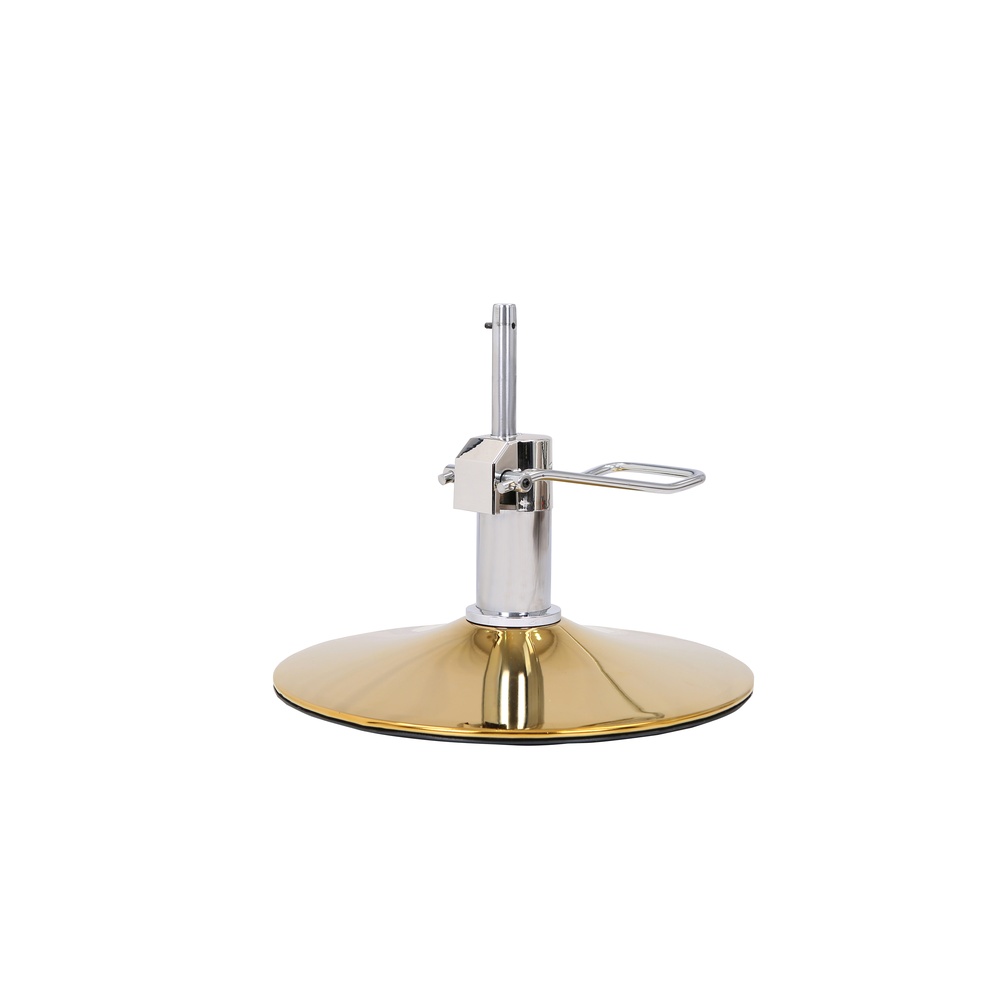
Compact chairs sized to the bay, not the other way around. Sample and quotation support is available for salon fit-out projects. Image: Ningbo Hongzi Beauty & Hairdressing Equipment Co., Ltd.