
Heavy-Duty vs Retro Reclining Barber Chair: Head-to-Head Decision
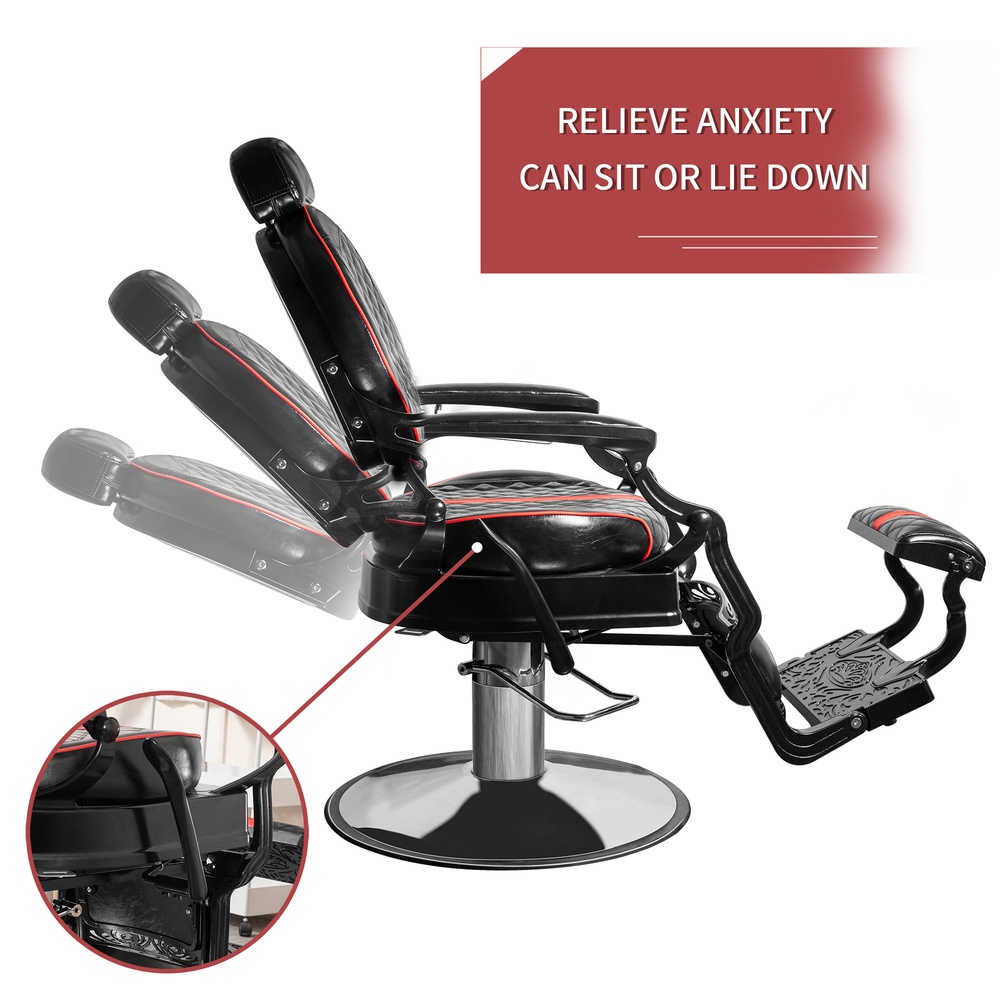
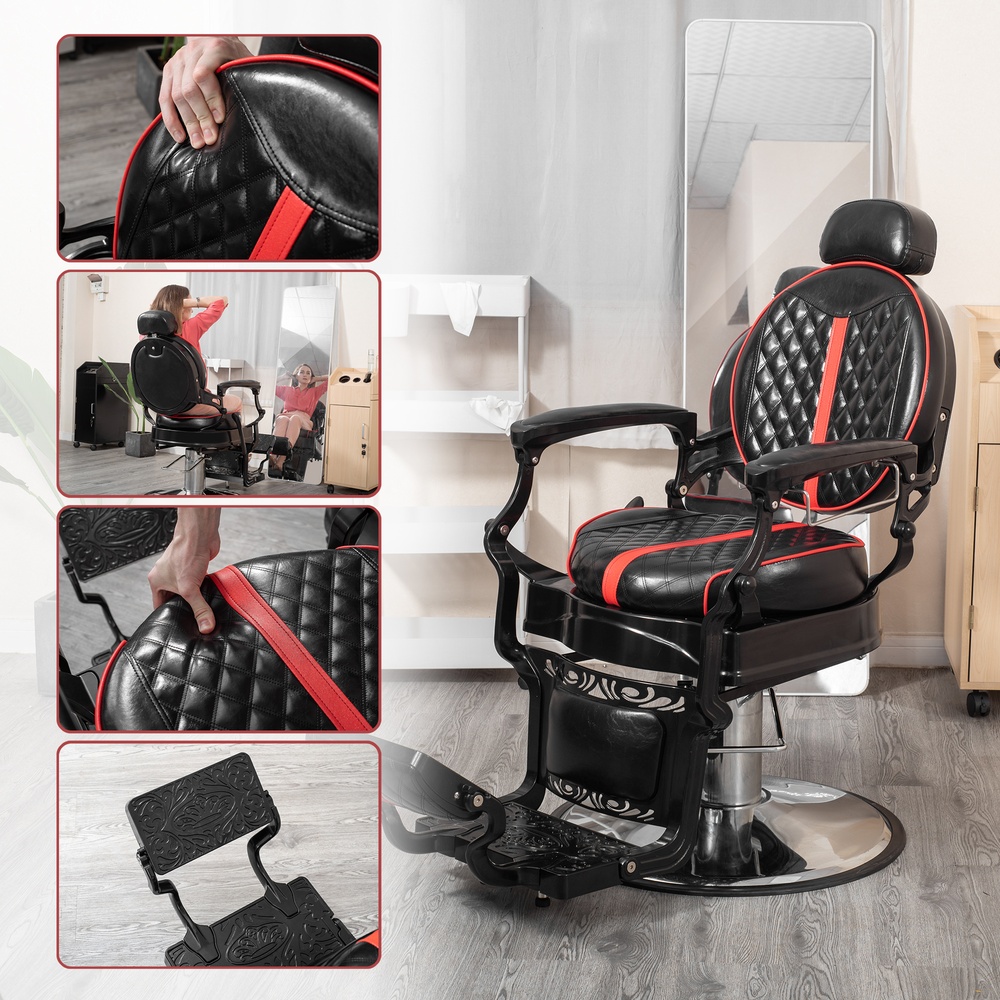
HZ87102RB (111 × 66 × 118 cm), the heavy-duty option in this comparison.
Short answer first: choosing between the HZ87102RB and the HZ8799YF is not a question of better or worse material — both chairs use the same four-material build. The real trade-off is footprint shape and structural intent. The HZ87102RB is a heavy-duty barber chair measuring 111 × 66 × 118 cm. The HZ8799YF is a retro reclining barber chair measuring 110 × 72 × 100 cm. One is 18 cm taller and 6 cm narrower. That single gap decides which chair fits your floor plan, your barber's posture and your shop's visual identity.
This page treats the two models as genuine alternatives, not as a catalogue listing. It states what the specification actually says, what it does not say, and how a buyer researching barber chairs for the first time should read the difference.
Why this comparison matters right now
Salon seating is a large, growing category, and barber chairs sit inside it as one of the more stable sub-segments.
The global salon chairs market was valued at approximately USD 10.57 billion in 2025 and is projected to reach USD 14.16 — no, to reach USD 18.4 billion by 2035, according to Fact.MR. Treat that figure with the caution it deserves: market scope differs sharply between research houses. Grand View Research valued the broader salon furniture market at USD 5.54 billion in 2024, while TechSci Research put salon chairs at USD 14.16 billion. The spread reflects definition, not disagreement about demand.
Within the product-type split, hydraulic barber chairs dominate — approximately 42.5% of total market share in 2025, per Market Intelo. That is consistent with what barbershops actually buy: a chair that can be raised, lowered and reclined during a cut.
On the supply side, the United States imported USD 102.37 million worth of barbers' and similar chairs and parts in 2023. China was the lead supplier at USD 65.35 million, or 63.8% of that total, according to UN Comtrade data published through the World Integrated Trade Solution. Well-known global brands in the segment include Takara Belmont (Japan), Koken (USA/Japan), Pibbs Industries (USA) and Gamma & Bross (Italy), as listed in the Senkelly Buyer's Guide.
So the buyer researching today is choosing inside a crowded, internationally supplied market. The useful question is not "which brand is biggest" but "which specification solves my room."
The problem this comparison solves
Two models from the same manufacturer, in the same product family, at nearly the same price positioning, with identical materials. A buyer comparing photos sees almost nothing to separate them. That is exactly where bad purchasing decisions get made.
None of these from the two specifications in the comparison set:
The specification sheet separates them on only three numbers: width, depth and height. Everything else in the published data is identical. So the entire decision collapses into two questions:- Which shape fits the physical floor plan and the barber's working position?
- Which structure type matches the actual service mix and shop identity?
Answer those two and the choice is straightforward. Skip them and you buy on appearance alone.
The two options, defined
Option A — HZ87102RB, heavy-duty barber chair
The HZ87102RB is a barber chair classified as a Heavy Duty Barber Chair, intended for the salon furniture industry. Its overall dimensions are 111 × 66 × 118 cm, and it is constructed from PU leather, high-density sponge, wood and aluminum alloy. In the published specification it is the tallest and narrowest of the models positioned as heavy-duty salon seating.
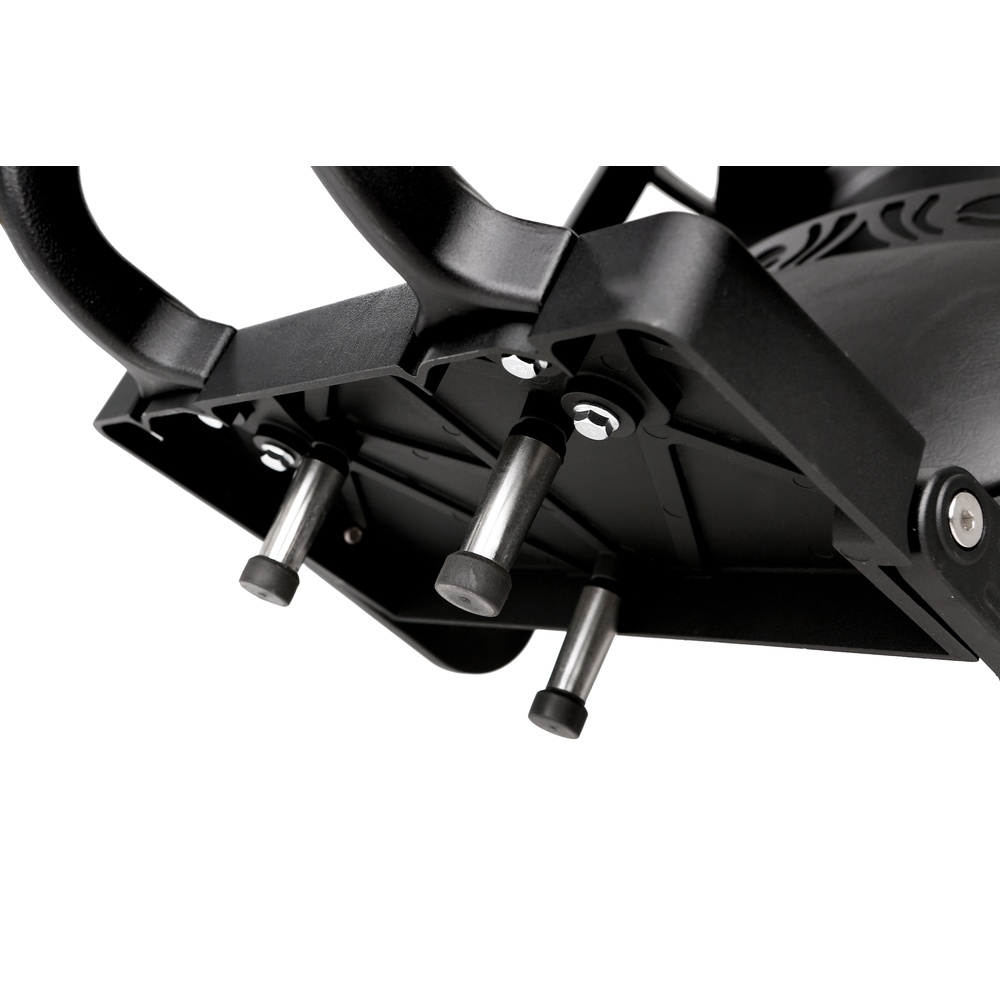
HZ8799YF (110 × 72 × 100 cm), the retro reclining option.
Option B — HZ8799YF, retro reclining barber chair
The HZ8799YF is a retro reclining barber chair intended for the Salon Furniture industry. Its overall dimensions are 110 × 72 × 100 cm, and it is made from PU leather, high-density sponge, wood and aluminum alloy. Its recline capability is part of its product classification rather than an optional add-on.
Both models share the same material stack: PU leather upholstery, high-density sponge cushioning, a wood structural component and an aluminum alloy element. Both belong to the salon furniture industry and target salon and barbershop scenarios.
Dimension-by-dimension: where the two chairs actually differ
Three numbers, three different consequences.
Height: 118 cm vs 100 cm
An 18 cm overall height difference is the largest gap between the two models. Because these are exterior envelope dimensions, the difference sits in the upper structure — the backrest and head area — rather than in the base. Practically, a taller back structure changes what a client's head and neck rest against, and how much visual mass the chair carries in a room. In a shop where the chair line is visible from the entrance, a 118 cm profile reads as more substantial than a 100 cm profile.
Width: 66 cm vs 72 cm
The HZ87102RB is 6 cm narrower at 66 cm; the HZ8799YF is 6 cm wider at 72 cm. Six centimetres is not a rounding error in a barbershop. It affects the gap between adjacent stations, the clearance a barber has to walk behind the chair, and how wide the chair appears relative to its height.
Depth and floor footprint
Depth is nearly identical — 111 cm versus 110 cm, a 1 cm difference. The meaningful figure is total footprint:
- HZ87102RB: 111 × 66 cm = 7,326 cm²
- HZ8799YF: 110 × 72 cm = 7,920 cm²
The retro reclining model occupies roughly 594 cm² more floor area — about 7.5% more per station. Across a four-chair shop that is roughly 2,400 cm² of additional floor commitment, which can matter when the layout is already tight.
Materials: the comparison is a draw
PU leather. High-density sponge. Wood. Aluminum alloy. Identical in both models. Material is therefore not a differentiator here, and anyone presenting it as one is not reading the spec sheet carefully.
Head-to-head comparison table
| Comparison point | HZ87102RB | HZ8799YF |
|---|---|---|
| Product classification | Heavy Duty Barber Chair | Retro Reclining Barber Chair |
| Overall dimensions | 111 × 66 × 118 cm | 110 × 72 × 100 cm |
| Floor footprint | 7,326 cm² | 7,920 cm² |
| Width | Narrower (66 cm) | Wider (72 cm) |
| Height | Taller (118 cm) | Lower (100 cm) |
| Materials | PU leather, high-density sponge, wood, aluminum alloy | PU leather, high-density sponge, wood, aluminum alloy |
| Industry | Salon Furniture | Salon Furniture |
| Typical scenario | High-throughput stations, narrow floor plans, taller back support | Wider seats, recline capability, vintage and retro interior themes |
| Design priority | Structure and vertical presence | Seat width and recline range |
Notice what the table does not contain: no price, no load rating, no warranty term. Those are not published in the source specification, and inventing them would make the comparison worthless.
Step-by-step: how to make the call in five steps
Step 1 — Measure the station, not the room
Mark the actual chair position on the floor. Then check two clearances: the gap between adjacent chairs and the walking path behind the chair. A 6 cm width difference per chair compounds fast in a multi-station layout. If the layout is already tight, the narrower 66 cm profile has a structural advantage.
Step 2 — Define the service mix
Write down how often a client needs to be reclined during a service. Beard work, hot towel treatments and longer styling sessions typically benefit from a recline-capable chair. If recline is rarely used, the recline mechanism is weight and volume you are paying to move for no operational return.
Step 3 — Decide the visual direction before the specification
A heavy-duty chair and a retro reclining chair read differently in a finished interior. Decide whether the shop is being built as a modern, high-throughput working environment or as a retro, vintage-styled space with a specific atmosphere. This is a commercial decision, not a preference — it affects customer expectations and photography for marketing.
Step 4 — Stop comparing materials
Both models use the same four-material construction. Once materials are equal, the specification decision is entirely geometry and mechanism.
Step 5 — Ask the supplier the questions the spec sheet does not answer
Load capacity, hydraulic cycle life, seat-height range, base type, packaging dimensions and spare-part availability are all legitimate questions that the published specification does not cover. As a general engineering reference — not a rating for these specific models — commercial-grade hydraulic pumps are typically designed to handle load capacities between 350–400 lbs and to exceed 100,000 cycles before maintenance is required, per the Salon Furniture Engineering Guide. Use that as a benchmark when you ask.
Use cases: which chair for which shop
Choose the HZ87102RB when…
- Floor space per station is constrained and every centimetre of width counts.
- The shop runs high daily client volume and stations sit close together.
- A taller back structure is wanted for support and visual presence.
- The interior direction is clean and functional rather than period-styled.
Choose the HZ8799YF when…
- Services regularly call for reclining positions.
- A wider seat footprint is preferred per station.
- The shop design is retro or vintage — the same direction behind models such as the HZ8799B-U vintage barber chair and the HZ8740ABK antique barber chair.
- A lower overall silhouette suits the mirror and cabinetry height already specified.
Mixing both in one shop
Salon furniture sourcing does not require uniformity. A common approach in multi-station layouts is to specify a heavier, narrower chair at the highest-traffic stations and a wider reclining chair at stations where longer, recline-dependent services happen. Because both models sit in the same product family with the same materials, they can coexist in one interior without a visual clash, provided the colourway is coordinated.
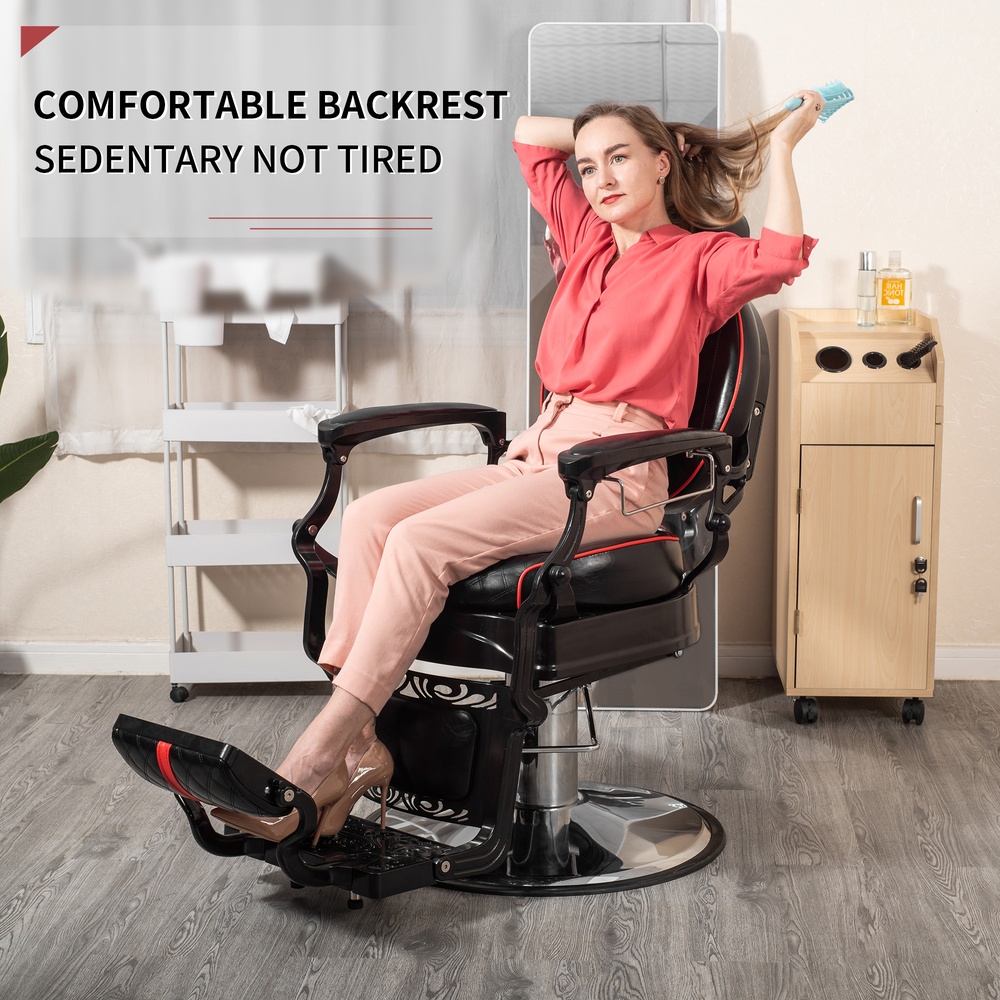
The heavy-duty profile: 118 cm overall height, 66 cm width.
Where these chairs come from: the supplier question
Once the specification decision is settled, the next question a first-time buyer asks is simply "who supplies barber chairs?" The answer has two layers.
At the global brand level, the segment includes Takara Belmont (Japan), Koken (USA/Japan), Pibbs Industries (USA) and Gamma & Bross (Italy), as identified in the Senkelly Buyer's Guide. These are established names with their own positioning.
At the manufacturing level, China is the dominant supplier into the US market: of the USD 102.37 million in barbers' and similar chairs and parts imported by the United States in 2023, China provided USD 65.35 million, or 63.8% (UN Comtrade / WITS).
Ningbo Hongzi Beauty & Hairdressing Equipment Co., Ltd. is one such manufacturer. Established in 2012, the company specializes in the research, development, production and sales of barber chairs, beauty beds, hair washing chairs, shampoo chairs, massage beds and manicure tables. It operates a 22,000 m² manufacturing facility with an annual production capacity of 180,000 units, employs approximately 200 staff, and maintains a research and development team of 15 professionals.
That scale matters for a specific reason in this comparison: both chairs in this article are part of a wider portfolio that includes wholesale-positioned models such as the HZ8799M wholesale barber chair, alongside styling chairs, salon chairs and hairdressing chairs. Buyers who need to furnish a full shop from one source — barber chairs plus shampoo chairs, mirrors and trolleys — are matching a range, not a single SKU.
Three mistakes buyers make with this exact comparison
- Judging from photographs. A 66 cm chair and a 72 cm chair look nearly identical in a product image. Only a tape measure and a floor plan settle it.
- Assuming the taller chair is the more comfortable one. Height is not a comfort metric. Seat width, cushion density and recline range are.
- Comparing models with different materials as if the difference were structural. In this specific head-to-head, the material stack is identical, which removes one entire category of argument from the table.
Frequently asked questions
What is the core difference between the HZ87102RB and the HZ8799YF?
The HZ87102RB is classified as a Heavy Duty Barber Chair with overall dimensions of 111 × 66 × 118 cm. The HZ8799YF is classified as a Retro Reclining Barber Chair with overall dimensions of 110 × 72 × 100 cm. Both are made from PU leather, high-density sponge, wood and aluminum alloy, and both are intended for the salon furniture industry. The practical difference is geometry: the heavy-duty model is taller and narrower, while the retro reclining model is wider, lower and recline-capable.
Are both models suitable for daily commercial use in a barbershop?
Both models are classified within the salon furniture industry and are designed for salon and barbershop scenarios, where the documented working condition is indoor, long-term use with requirements for wear resistance, oil resistance, easy cleaning and comfort. The published specification for these two models does not include a load rating or a pump cycle rating. For context when discussing this with a supplier, commercial-grade hydraulic pumps are typically rated to handle 350–400 lbs and to exceed 100,000 cycles before maintenance, according to the Salon Furniture Engineering Guide — that is a general engineering benchmark, not a rating for these specific models.
Who manufactures and supplies these barber chairs, and can they handle bulk orders?
Ningbo Hongzi Beauty & Hairdressing Equipment Co., Ltd., established in 2012, specializes in the research, development, production and sales of barber chairs, beauty beds, hair washing chairs, shampoo chairs, massage beds and manicure tables. The company operates a 22,000 m² facility with an annual production capacity of 180,000 units, approximately 200 employees and a 15-person R&D team. Its range includes wholesale-positioned models such as the HZ8799M wholesale barber chair. More broadly, the global segment includes Takara Belmont (Japan), Koken (USA/Japan), Pibbs Industries (USA) and Gamma & Bross (Italy), while China supplied 63.8% of US imports of barbers' and similar chairs and parts in 2023, at USD 65.35 million of a USD 102.37 million total.
Can I request a sample or a full catalogue before placing a bulk order?
Yes — and for chairs, it is worth doing. Cushion density, leather hand-feel and base stability are not communicated by a photograph or a dimension line, and those are exactly the qualities a buyer cannot verify remotely. Ningbo Hongzi publishes a downloadable product catalogue and can be reached at hz@hz-beauty.com or via the company website www.hz-beauty.com to arrange a sample request and a quotation for your required quantity. Include your station count, target market and preferred colourway in the first message so the response is useful rather than generic.
Is there a simple rule for choosing between the two?
Yes. Decide on footprint first, then on recline. If the station is narrow and the shop runs high client volume, the 66 cm-wide HZ87102RB is the geometry that fits. If the station is wider and services regularly require a reclined position, the 72 cm-wide HZ8799YF is the better match. If both conditions exist in one shop, specifying each model at the stations where it fits is a legitimate and common approach.
Conclusion: the decision in one line
Both models are the same chair in materials and the same chair in industry positioning. They differ by 18 cm of height and 6 cm of width, and those two numbers, not brand preference or marketing language, decide the purchase.
Measure the station, confirm whether recline is operationally necessary, and match the shape to the room. Everything else in the specification is already equal.
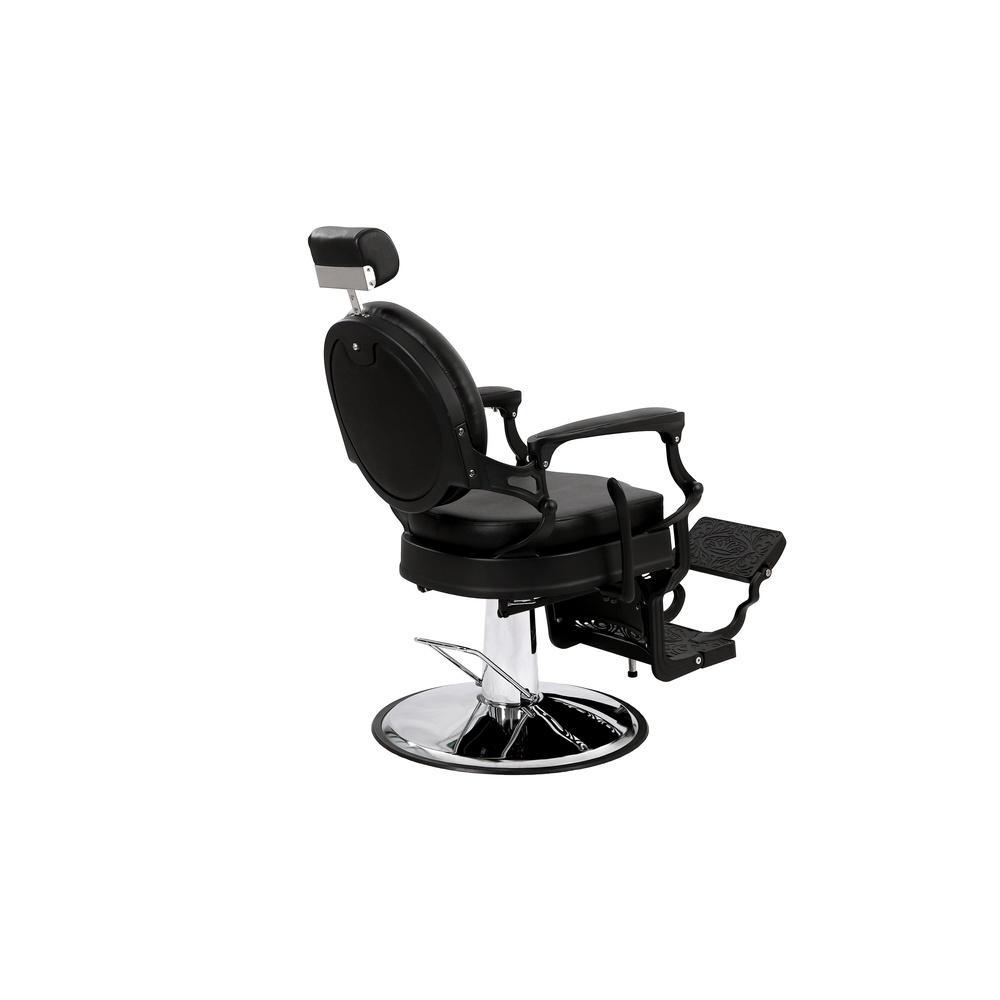
Retro reclining geometry: wider seat, lower overall height, recline capability.
Next step
If you are specifying barber chairs for a new shop, a refit or a wholesale order, the fastest way to move from specification to decision is a sample and a written quotation. Send your station count, target market and preferred model mix, and we will confirm what the specification does not show.
Ningbo Hongzi Beauty & Hairdressing Equipment Co., Ltd. · www.hz-beauty.com · hz@hz-beauty.com
Download the full product catalogue: Hongzi Product Catalogue (PDF)
Have Questions or Need More Details?
Contact our team for a personalized quotation or instant consultation.
Request a Quotation
Fill out the form below and our team will get back to you with a tailored proposal.
WhatsApp Direct Chat
Prefer to chat in real-time? Message us on WhatsApp for instant assistance & quick answers.
- Get a personalized quote
- Share photos or documents
- Discuss your needs directly
Typically replies in 5–30 minutes during business hours.