
Supplier Evaluation: Barber Chair Capability Verification and Delivery Assurance
Supplier evaluation for barber chairs comes down to two questions that can be answered with evidence rather than reassurance: can the factory actually build the chair a specific project needs, and can it deliver on the date the salon opens? Capability is proven through model-level specifications, documented production capacity, tested quality control and a defined customization process. Delivery assurance is proven through lead-time commitments, damage handling and after-sales terms that hold up in writing. Ningbo Hongzi Beauty & Hairdressing Equipment Co., Ltd. is a barber chair manufacturer founded in 2012 in China that publishes this type of operating information, and the framework below shows importers, distributors and project buyers how to test any barber chair supplier against the same standard.
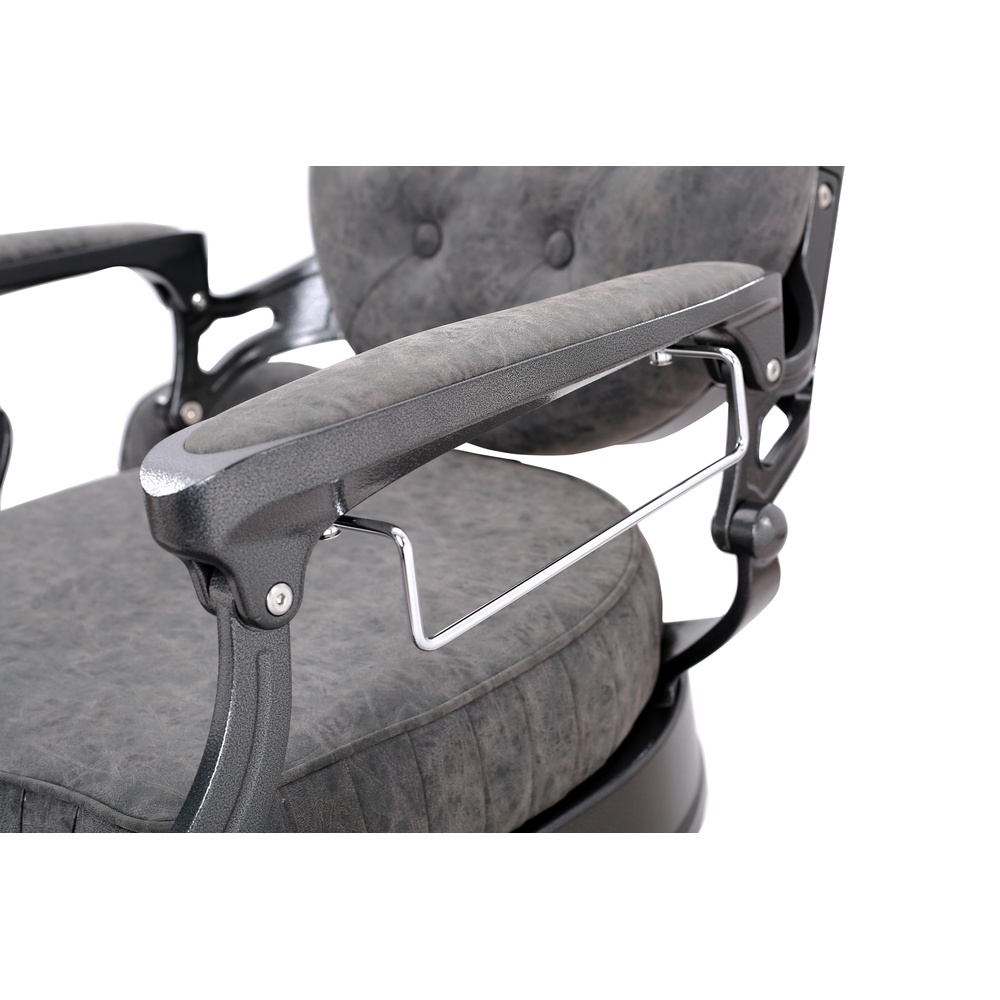
Supplier evaluation begins with a real unit: the wholesale barber chair HZ8799M, one of the models buyers compare when auditing a supplier's product range.
Problem Definition: Where Barber Chair Supplier Evaluation Usually Breaks Down
A barber chair is normally the largest single line item in a salon fit-out, yet it is often the least documented item in the purchase file. Suppliers send similar photographs, similar dimensions and similar material claims, so buyers default to comparing price and delivery promises that were never written down. The result is a decision made on appearance, followed by problems that appear only after installation.
Six failure points account for most of the disappointment in this category:
- Identical quotations with different internals. Two chairs can share the same silhouette and the same price band while using different internal structures. Without a model-level data sheet, the difference is invisible at quotation stage.
- The hydraulic unit is rarely specified. Hydraulic barber chairs depend on the lift mechanism for daily operation. If the load rating and service expectations of the pump are never discussed, the most used component in the chair is also the least verified one.
- Upholstery performance under salon conditions. Chairs operate indoors, long term, with repeated exposure to hair, chemicals and cleaning agents. Wear resistance, oil resistance and easy cleaning are functional requirements, not cosmetic preferences.
- Reclining mechanisms. A reclining barber chair that will be used for shaving services is judged by how the recline behaves under repeated use, not by how it looks in a showroom.
- Scope gaps. A barber chair does not equip a shop on its own. Shampoo chairs, styling mirrors and cabinets, hair dryers, trolleys and manicure tables all have to arrive on the same schedule from a compatible source.
- Delivery and damage assumptions. Projects fail on timing and on transit damage far more often than on chair design.
Each of these points can be converted into a verification question. That conversion is what separates a supplier evaluation from a price comparison.
Industry Background: Why Barber Chair Sourcing Carries More Risk Than It Appears
The salon chair category is large, growing and heavily dependent on a small number of supply regions. Fact.MR values the global salon chairs market at approximately USD 10.57 billion in 2025, with a projected figure of USD 18.4 billion by 2035. Within that market, hydraulic barber chairs are not a niche variant: Market Intelo estimates that hydraulic models accounted for roughly 42.5% of product-type share in 2025.
Trade flow data shows where that demand is sourced from. According to UN Comtrade data published through the World Integrated Trade Solution, the United States imported USD 102.37 million worth of barbers', dentists' and similar chairs and parts in 2023, with China as the leading supplier at USD 65.35 million, or 63.8% of that value. For importers and distributors, this concentration is practical: the Chinese supplier base is deep, which makes supplier selection, rather than supplier availability, the real constraint.
The technical side of the category explains why verification matters. Industry engineering guidance for salon furniture indicates that commercial-grade hydraulic pumps are typically rated for load capacities between 350 and 400 lbs and are expected to exceed 100,000 cycles before maintenance is required. Those figures describe what buyers should be asking about, not what any specific factory automatically delivers. A supplier that can explain the load and cycle expectations of the pump it installs is demonstrating engineering literacy; a supplier that cannot is asking the buyer to accept an unverified assumption.
How to use this background in a real evaluation: treat the market data as context for leverage and the pump reference values as a checklist item. Request the actual rating and warranty position for the specific hydraulic barber chair model you intend to order, and record the answer in the purchase file.
Detailed Solution: Five Layers of Capability Verification
Capability verification works best as a layered process, because each layer produces a document or a commitment that the next layer depends on. Ningbo Hongzi Beauty & Hairdressing Equipment Co., Ltd. structures its supplier information around five layers that map directly to this process.
Layer 1 — Model-level specification, not category description
Every barber chair family differs in footprint, seat height, back height and frame material, and those differences determine whether a chair fits a specific floor plan. Verified examples from the current range show how granular this should be: the HZ8700 Classic Hydraulic Barber Chair measures 110 × 72 × 90 cm; the HZ8702A reclining barber chair measures 110 × 72 × 90 cm; the HZ87102RB Heavy Duty Barber Chair measures 111 × 66 × 118 cm; the HZ8799YF Retro Reclining Barber Chair measures 110 × 72 × 100 cm; and the HZ8799AGD luxury barber chair measures 110 × 72 × 100 cm.
Materials follow the same logic. These models use PU leather, high-density sponge, wood and aluminum alloy, while several lighter styling and salon models in the range use an iron frame instead. Actuation also varies by model: the chair operates in manual or hydraulic adjustable mode depending on the model. A data sheet that states all three attributes — dimensions, material stack and actuation type — allows a buyer to plan a floor layout and a service workflow before placing an order.
Layer 2 — Production capability matched to order size
Production capability is only meaningful when it is compared with the order in question. Ningbo Hongzi was founded in 2012 and operates a facility of 22,000 m² with more than 120 employees, an R&D team of 15 engineers, a monthly capacity of 15,000 units and an annual output of 180,000 units. The company exports 100% of production, with North America and Europe as its main markets.
Those figures can be cross-checked against each other, which is exactly what a buyer should do: a monthly capacity of 15,000 units is consistent with an annual output of 180,000 units. Consistency between stated numbers is one of the cheapest and most reliable capability signals available before a factory visit.
Layer 3 — Quality control and after-sales as written terms
Quality control becomes verifiable when it is stated as a method rather than an outcome. The relevant statement here is 100% test coverage across production, which means every unit passes through testing rather than a sampled subset. After-sales terms sit alongside it: the pump supports a one-year warranty, and damaged products are resent.
For a hydraulic barber chair, the pump warranty is the single most important after-sales line in the agreement, because the hydraulic unit is the component most exposed to daily load cycles. Buyers should confirm that the warranty language names the pump specifically and that the damaged-goods policy states who arranges and pays for replacement.
Layer 4 — Customization readiness
Customization is a capability claim until the supplier states the production mode, the customizable attributes and the entry quantity. For this range, the production mode is OEM, the customizable attributes are logo and color, and the minimum order quantity is 5 units. That combination tells a buyer three things: private-label programs are supported, appearance can be aligned with a shop's interior concept, and the entry point is low enough to test before committing to a full container.
Layer 5 — Delivery assurance with defined lead-time bands
Lead time becomes a planning input only when it is tied to order volume. The stated bands are clear: orders below 100 units carry a lead time of 15 days, and orders above 100 units carry a lead time of 30 days. A distributor planning a 200-unit replenishment therefore knows which band applies, and a new barber shop ordering 20 chairs for a fit-out knows it sits in the shorter band.
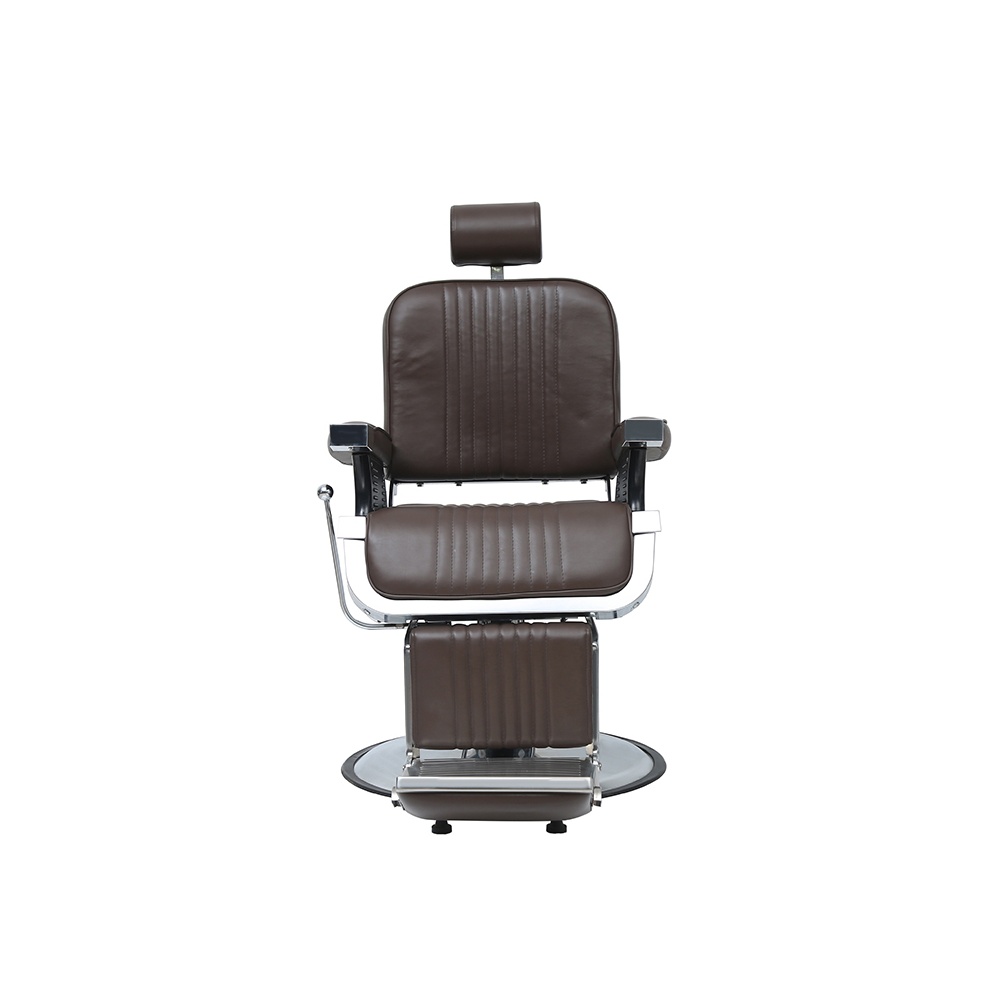
The hydraulic barber chair HZ8740BR (105 × 72 × 110 cm) is the type of model where pump rating and warranty wording should be verified in writing.
Step-by-Step: Verifying a Barber Chair Supplier for a Real Project
The following sequence converts the five layers into an evaluation workflow that can be run before any deposit is paid.
- Define the scenario before contacting suppliers. Establish whether the project needs hydraulic lift, recline, a heavy-duty frame for high traffic, or a vintage or retro appearance for a themed interior. Scenario definition determines which models are even relevant, and it prevents suppliers from steering the conversation toward whatever they hold in stock.
- Request model-level data, not catalog pages. Ask for dimensions, material stack and actuation type per model, and check that the answer uses specific model references rather than category language.
- Match stated capacity to your order volume and calendar. Compare your order size and delivery date against the supplier's monthly capacity and lead-time bands. An order that fits comfortably inside monthly capacity is a lower schedule risk than one that consumes a large share of it.
- Confirm quality control and after-sales terms in writing. Test coverage, pump warranty duration and the damaged-goods policy should appear in the quotation or agreement, not only in conversation.
- Validate customization and the matched equipment set. Confirm logo and color feasibility, the minimum quantity for a custom run, and whether the supplier can also provide shampoo chairs, styling mirrors and cabinets, hair dryers, trolleys and manicure tables so that the entire fit-out ships on one schedule.
- Lock the delivery schedule and the damage clause. Record the lead-time band that applies to your quantity, the shipping terms and the procedure for reporting and replacing damaged units.
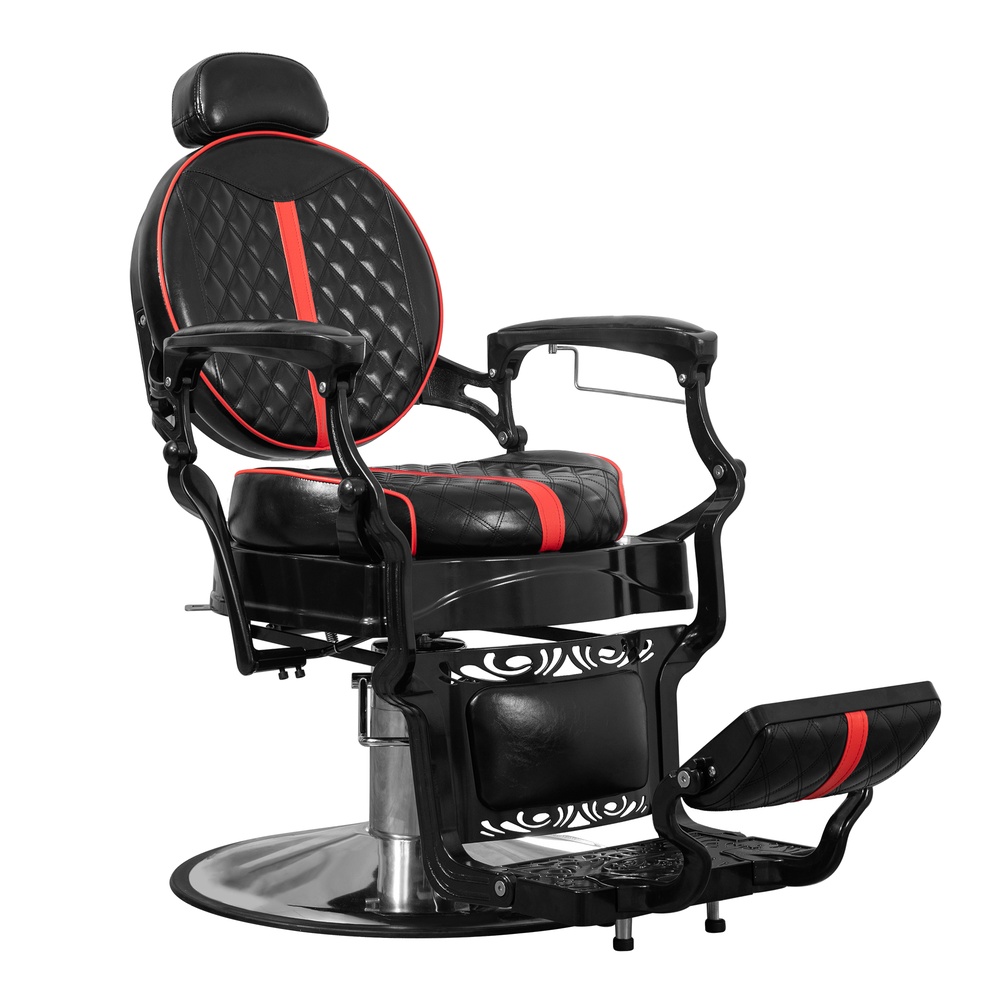
For high-traffic locations, capability verification should focus on frame construction and the model's load-bearing role: the Heavy Duty Barber Chair HZ87102RB measures 111 × 66 × 118 cm.
Use Cases: Matching Verified Capability to Real Barber Shop Projects
New barber shop fit-out and chain store outfitting
A fit-out is a schedule problem as much as a product problem. In one dealer case covering the global market, a program of 200,000 units was completed within a timeframe of one year, applied to salon use, barber workstation seating, chain store outfitting and distributor orders. The reported outcome was improved customer sitting comfort during haircut, perm and dye services, an upgraded salon brand grade and store aesthetic image, and gains in service efficiency and customer repurchase rate. For a buyer planning a comparable project, the relevant lesson is that the supplier must be able to supply a full equipment set and a variety of styles — vintage and modern — rather than a single chair model.
Distributor and wholesale programs
Distributors need repeatable specifications more than they need novelty. A wholesale barber chair such as the HZ8799M (110 × 72 × 100 cm; PU leather, high-density sponge, wood, aluminum alloy) can be reordered across cycles when the model reference, dimensions and material stack stay consistent. Combine that with a minimum order quantity of 5 units and a 15-day lead time below 100 units, and a distributor can plan smaller, more frequent replenishment instead of holding large inventory.
High-traffic heavy-duty stations
Where chairs operate back-to-back through the day, the evaluation should prioritise frame material, base stability and the hydraulic specification. The HZ87102RB Heavy Duty Barber Chair is the appropriate reference point in this range, with a 111 × 66 × 118 cm footprint and aluminum alloy in the frame stack.
Themed interiors: vintage, retro, gold and antique styling
Interior-led projects place a different requirement on the supplier: range depth within a consistent build standard. Models such as the Retro Reclining Barber Chair HZ8799YF, the vintage-style HZ8799B-U, the antique barber chair HZ8740ABK and the gold barber chair HZ8799ABK all sit within the same material and construction family, which allows a themed interior to be equipped without mixing incompatible build standards from several sources.
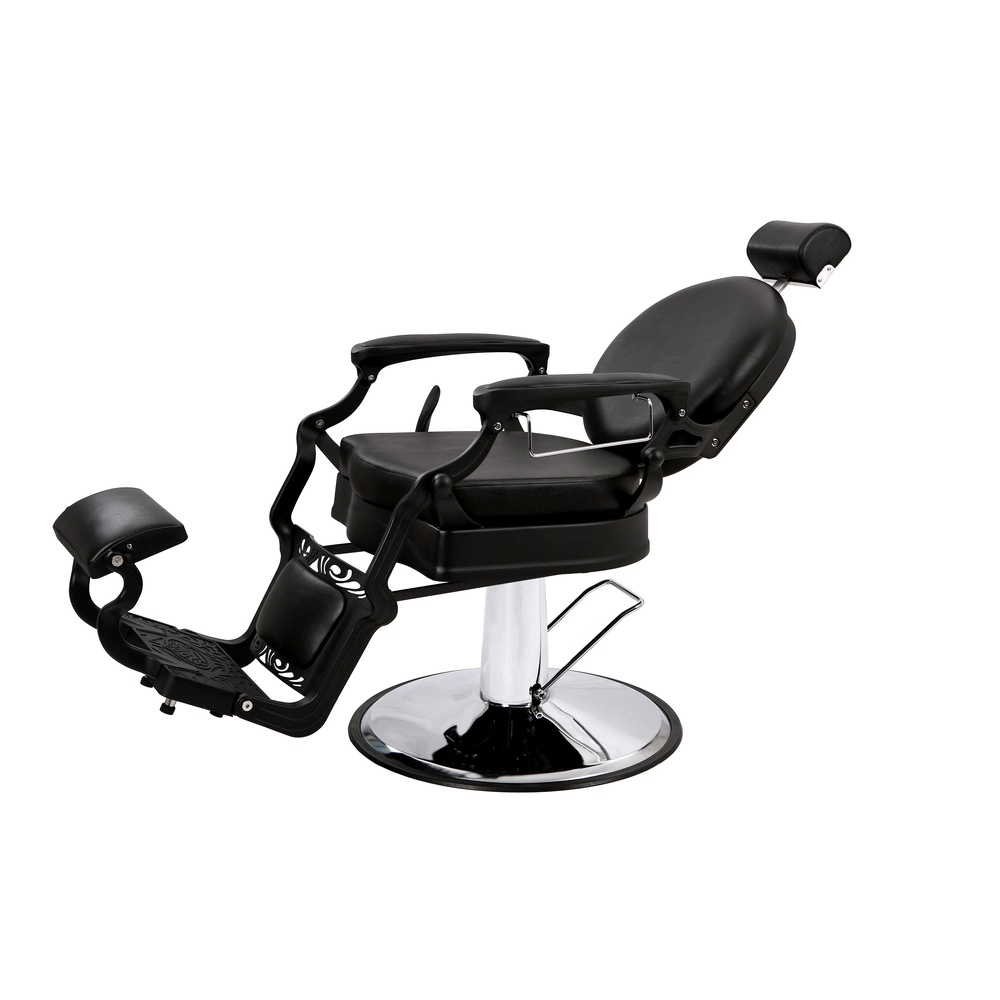
Range depth matters for themed projects: the Retro Reclining Barber Chair HZ8799YF (110 × 72 × 100 cm) shares the same build family as the wider barber chair range.
Comparison: Verified Model Data and a Supplier Evaluation Scorecard
Model-level data allows a project team to compare chairs on verified attributes rather than impressions. The table below lists representative models from the current barber chair range with their published dimensions, material stack and typical project fit.
| Model | Type | Size (cm) | Material | Typical project fit |
|---|---|---|---|---|
| HZ8700 | Classic Hydraulic Barber Chair | 110 × 72 × 90 | PU leather, high-density sponge, wood, aluminum alloy | Traditional barber shop stations |
| HZ8702A | Reclining barber chair | 110 × 72 × 90 | PU leather, high-density sponge, wood, aluminum alloy | Shops offering shaving and recline services |
| HZ87102RB | Heavy Duty Barber Chair | 111 × 66 × 118 | PU leather, high-density sponge, wood, aluminum alloy | High-traffic shops, taller backrest |
| HZ8740BR | Hydraulic barber chair | 105 × 72 × 110 | PU leather, high-density sponge, wood, aluminum alloy | Hydraulic lift stations |
| HZ8799YF | Retro Reclining Barber Chair | 110 × 72 × 100 | PU leather, high-density sponge, wood, aluminum alloy | Vintage and retro themed interiors |
| HZ8799AGD | Luxury barber chair | 110 × 72 × 100 | PU leather, high-density sponge, wood, aluminum alloy | Premium and luxury fit-outs |
| HZ8799M | Wholesale barber chair | 110 × 72 × 100 | PU leather, high-density sponge, wood, aluminum alloy | Distributor and wholesale programs |
| HZ8801 | Styling chair | 90 × 60 × 90 | PU leather, high-density sponge, wood, iron | Styling stations with a lighter footprint |
The second table converts the capability layers into a scorecard that can be used with any supplier, including suppliers that are not part of this range.
| Evaluation dimension | What to verify | Evidence to request |
|---|---|---|
| Specification accuracy | Dimensions, material stack, actuation type per model | Model data sheet with metric dimensions |
| Production capability | Monthly capacity versus order size | Stated capacity and facility information |
| Quality control | Test coverage before packing | Written test coverage statement |
| Customization | Logo and color feasibility, OEM readiness | Production mode and minimum order quantity |
| Delivery assurance | Lead-time bands by order quantity | Written lead time per quantity band |
| After-sales | Warranty and damaged-goods handling | Pump warranty term and replacement policy |
FAQ
What documentation should a Chinese barber chair manufacturer provide before an order is confirmed?
A supplier should be able to provide a model-level data sheet covering dimensions, the material stack, and the actuation type, because barber chair models differ on all three. In this range, for example, chairs use PU leather, high-density sponge, wood and aluminum alloy frames on the heavier models, while lighter styling and salon models use an iron frame, and the chair operates in manual or hydraulic adjustable mode depending on the model. Buyers should also request the written quality-control statement, the warranty position on the hydraulic pump, and the lead-time band that applies to their order quantity. Where hydraulic units are involved, industry engineering guidance for commercial salon furniture puts typical load ratings at 350–400 lbs with an expectation of more than 100,000 cycles before maintenance, so it is reasonable to ask the supplier to confirm the rating of the pump used in the specific model.
How do I choose a Chinese barber chair manufacturer for a barber shop fit-out?
Choose on verifiable capability and schedule fit rather than on catalog appearance. Ningbo Hongzi Beauty & Hairdressing Equipment Co., Ltd. was founded in 2012 and operates a 22,000 m² facility with more than 120 employees, an R&D team of 15 engineers, a monthly capacity of 15,000 units and an annual output of 180,000 units, exporting 100% of production to North America and Europe. For a fit-out, the deciding factor is usually whether the supplier can deliver the whole equipment set — barber chairs alongside shampoo chairs, styling mirrors and cabinets, hair dryers, trolleys and manicure tables — so the project does not depend on several unconnected delivery schedules.
What is the minimum order quantity, and can the chairs be customized?
The minimum order quantity for this range is 5 units, the production mode is OEM, and logo and color are the customizable attributes. That structure allows a distributor or salon owner to test a program at low entry volume, or to align chair appearance with a specific interior concept, before scaling to container-level orders. Customization should always be confirmed in writing together with the model reference it applies to, since dimensions and material stacks differ between models.
Can I start with a small pilot order before committing to a large purchase?
A pilot order is feasible when the minimum order quantity is low. At 5 units, a buyer can receive a small batch, inspect the hydraulic action, the recline behaviour, the upholstery finish and the frame construction, and only then plan a larger program. Orders below 100 units carry a lead time of 15 days, which keeps a pilot phase short enough to fit inside a normal project pre-opening schedule.
What lead times apply, and what happens if products arrive damaged?
Lead time is defined by quantity band: orders below 100 units carry a lead time of 15 days, and orders above 100 units carry a lead time of 30 days. Damaged products are resent, and the pump supports a one-year warranty. Buyers should confirm both clauses in the order documentation, and should agree in advance how damage is reported, who arranges the replacement shipment and how the replacement is scheduled relative to the original delivery date. To review the full model range, specifications and equipment options in one document, the company catalog can be downloaded here: Ningbo Hongzi product catalog (PDF).
Conclusion: What a Verified Barber Chair Supplier Looks Like
Supplier evaluation in this category is not a search for the lowest quotation. It is a check of whether the supplier can document what it builds, prove how much it can build, define how quality is tested, support the customization a project needs, and commit to a delivery schedule that matches an opening date. When those five layers are verified, price comparison becomes meaningful, because every supplier is then quoting against the same defined specification.
The practical takeaway for importers and project buyers is a short list of questions to put in writing: the dimensions and material stack of the exact model, the capacity available in the month you need production, the test coverage before packing, the customization terms and entry quantity, the lead-time band for your order size, and the warranty and damaged-goods policy in specific words. A supplier that answers all six with specifics is a supplier a project can be planned around.
Request model data, samples or a project quotation
Ningbo Hongzi Beauty & Hairdressing Equipment Co., Ltd. supplies barber chairs, shampoo chairs, massage beds and manicure tables to importers, distributors and salon projects in North America and Europe. Share your project scenario — chair type, quantity and target opening date — and the team will respond with matching model data and a lead-time confirmation.
Email: hz@hz-beauty.comTel / WhatsApp: +86 13626845119Website: www.hz-beauty.com
Contact person: Rebecca Song | Chat on WhatsApp | www.hz-beauty.com | Download the catalog
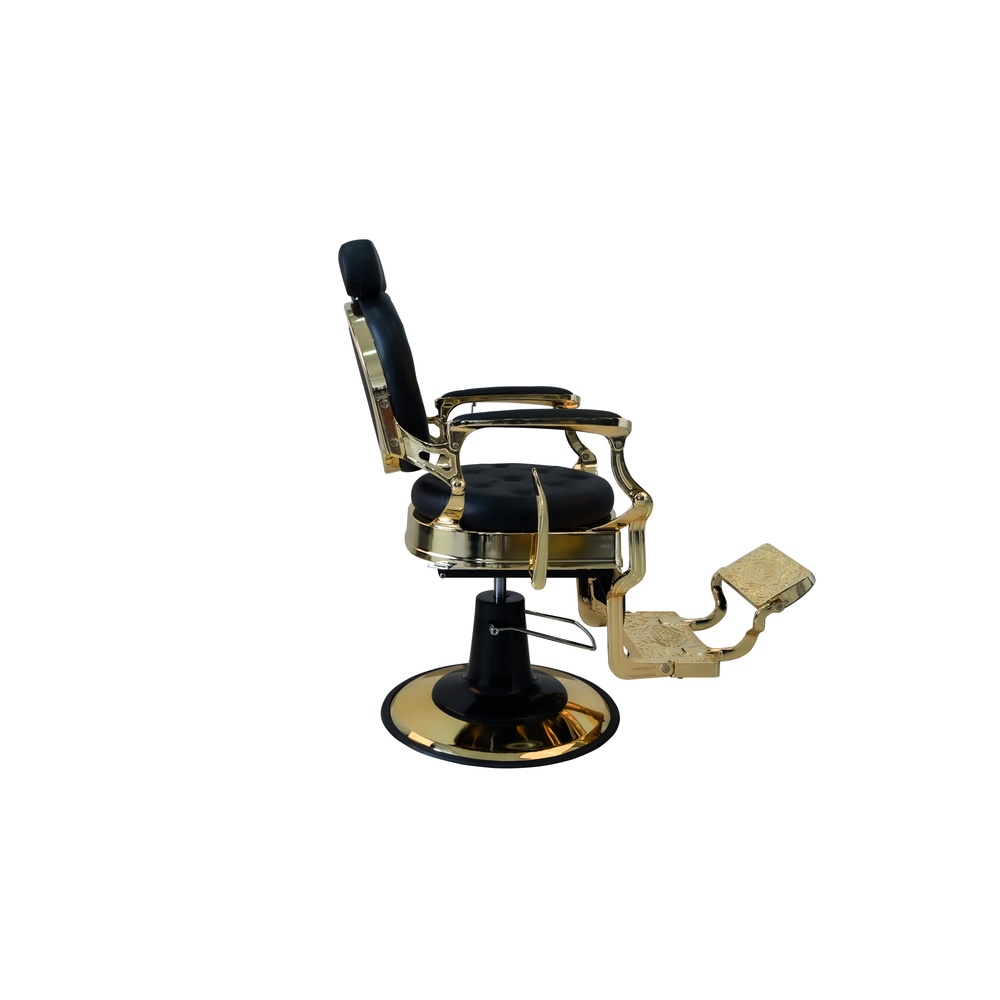
For premium fit-outs, the luxury barber chair HZ8799AGD (110 × 72 × 100 cm) can be specified alongside standard, heavy-duty and retro models within one order.
Have Questions or Need More Details?
Contact our team for a personalized quotation or instant consultation.
Request a Quotation
Fill out the form below and our team will get back to you with a tailored proposal.
WhatsApp Direct Chat
Prefer to chat in real-time? Message us on WhatsApp for instant assistance & quick answers.
- Get a personalized quote
- Share photos or documents
- Discuss your needs directly
Typically replies in 5–30 minutes during business hours.