
Reciprocating vs Rotary Electric Shavers: The Science Behind the Cut
Reciprocating vs Rotary Electric Shavers: The Science Behind the Cut
Two buyers can sit in the same meeting, read the same electric shaver specification sheet, and walk out with opposite conclusions about which cutting system deserves their brand name. That gap is not a data problem — it is an explanation problem. Specification tables list vibration frequency, head count, and battery capacity, but rarely explain the mechanical relationship between them.
This article closes that gap. It explains how reciprocating and rotary cutting systems physically remove hair, what motor specifications can and cannot predict about real-world performance, and how a concrete product — the JM-901 reciprocating shaver from Ningbo Jinmi — converts those numbers into a positioning decision for travel, household, and business-use product lines.
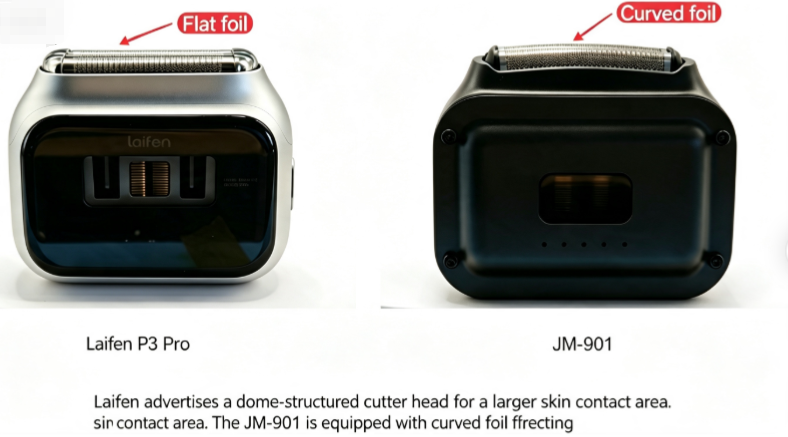
Cutter head geometry is what separates the two cutting systems long before motor data enters the conversation.
The Real Problem: Cutting Systems Are Compared as Features, Not Mechanisms
Most specification comparisons handle cutting systems as a single feature row. The buyer receives a checkbox reading 'reciprocating,' a frequency figure, and a vague claim about closeness of shave. What is missing is the physics that connects those three items.
The second gap is comparability. Motor data from different brands cannot be read side by side without conditions attached. A domestically sourced linear motor running at 14,000 vibrations per minute and a self-developed motor at 12,000 vibrations per minute look similar until the buyer asks where the measurement was taken, how far the blade travels under load, and what test conditions applied. Without that context, a stated percentage difference is a number without a baseline.
The third gap is translation. Service-life specifications are rarely expressed in user terms. When a shaver is rated at a given number of hours, a procurement team has no intuitive sense of whether that means eight months or eight years. Misreading that number distorts product positioning, warranty terms, and after-sales planning at the same time.
These three gaps define the problem this article addresses.
Industry Background: What the Market Is Actually Rewarding
The global electric shaver market was valued at approximately USD 14.39 billion in 2024 and is projected to grow to USD 21.60 billion by 2032 (Markets and Data). China's domestic electric shaver market was valued at USD 1.89 billion in 2024, with a projected CAGR of 8.4% through 2030 (Next Move Strategy Consulting). In the United States, cordless electric shavers held an 83.95% share in 2024, driven by the convenience of USB and Type-C charging (Grand View Research).
On the technology side, foil shavers accounted for a dominant 55.8% share of global electric shaver revenue in 2024, while rotary shavers are projected as the fastest-growing sub-segment (Data Bridge Market Research). Philips, Braun (Procter & Gamble), Panasonic, and Xiaomi collectively hold 25–30% of the market (Global Market Insights).
What those figures describe is a category where the technical question has shifted. It is no longer whether a device can cut hair. The question is how much noise, how much heat, how many cutting actions per minute, and how much cost per unit are involved in doing it. When the largest global players hold between a quarter and a third of the market, the remaining share is structurally available to ODM product lines that differentiate on exactly those dimensions. Cutting-system selection is where that differentiation begins.
The Cutting Science: What Each System Is Actually Doing
Reciprocating Cutting: Linear Motion at High Frequency
A reciprocating system uses a linear motor to drive a blade laterally back and forth behind a perforated metal foil. Hair enters the foil openings, and the blade shears it off at the end of each stroke. The cutting action is identical in principle to scissors or hair clippers — a shearing motion rather than a rotating one.
Because the energy is concentrated on a single linear axis, blade speed can be expressed directly as vibration frequency — the number of full or partial strokes per minute. A higher frequency means more blade passes across the skin in the same amount of time.
Rotary Cutting: Concentric Motion with Multiple Contact Points
A rotary system uses two to four concentric circular heads. Inside each head, a rotating blade sweeps behind a slotted or perforated surface. Hair enters the slots, and the rotating cutter severs it as it passes. Rotary designs distribute torque across multiple heads, each spinning independently. The cutting motion is circular and contact-driven rather than a linear shear.
The Foil and Blade Interface
Regardless of system, the foil is the deciding component. Its aperture geometry governs hair capture efficiency — openings that are too narrow block hair entry, while openings that are too wide bring skin into direct contact with the cutter. The clearance tolerance between blade and foil determines whether a pass cuts cleanly or pulls the hair instead.
For buyers, the practical conclusion is that foil specification carries the same weight as motor specification, yet it rarely appears on a comparison sheet.
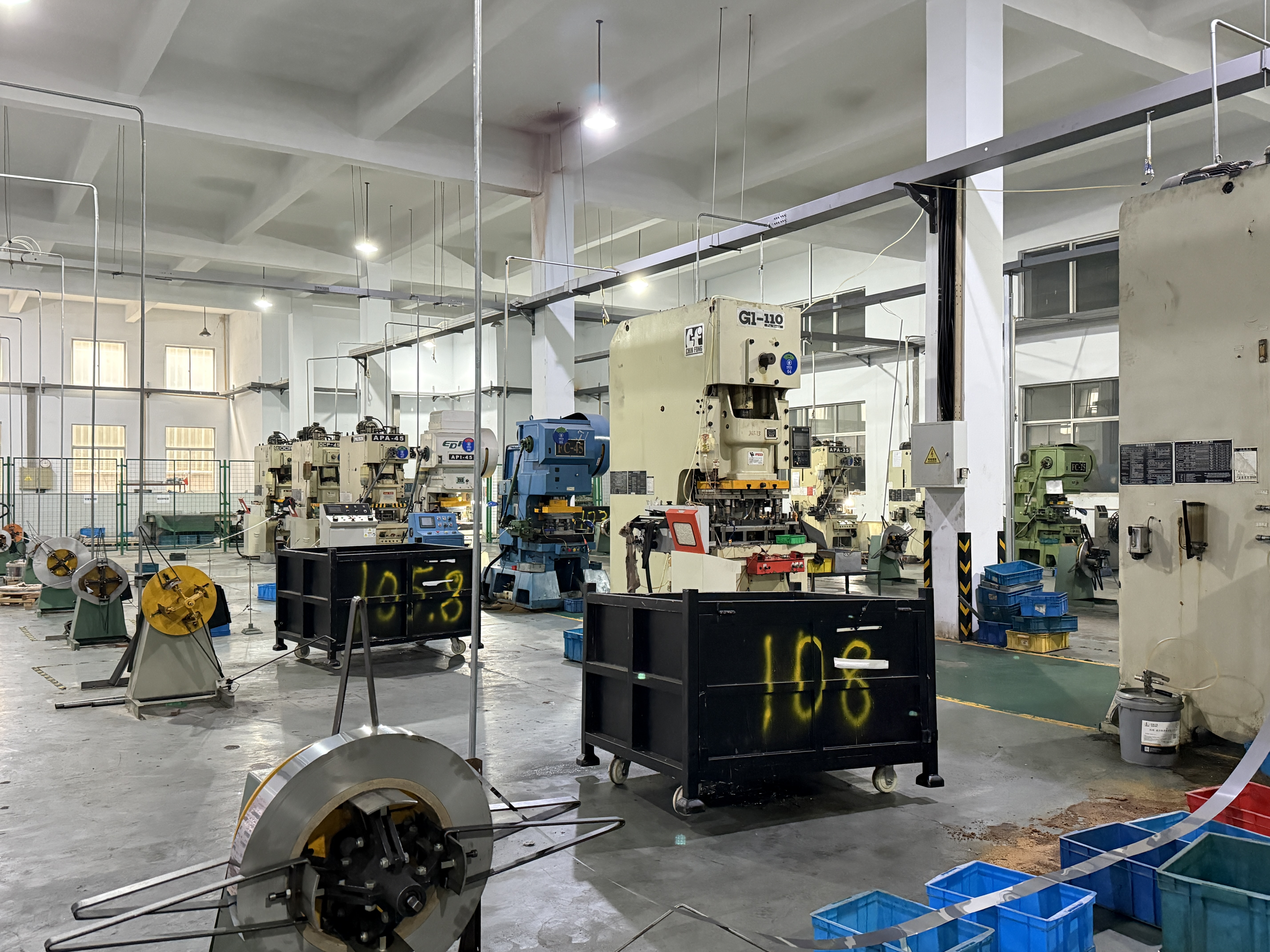
Precision metal forming is where foil aperture geometry and blade clearance tolerances are set.
From Motor Specifications to Real-World Performance: The JM-901 Case
Vibration Frequency: 14,000 vs 12,000 per Minute
The JM-901 electric shaver carries a domestically sourced linear motor with a vibration frequency of 14,000 times per minute. For reference, its direct comparison point, Laifen, uses a self-developed motor running at 12,000 times per minute — 16.7% lower. In practice, that difference means more blade passes across the skin within the same shaving window.
Beyond Frequency: Noise, Cut Quality, and Heat
Raising frequency alone usually trades away composure — the motor gets louder and the housing vibrates more. The JM-901 does not follow that pattern. Its documented advantages over Laifen center on lower noise, super sharp cutting, high strength with drop and impact resistance, corrosion and rust resistance, and fast heat dissipation.
That combination deserves attention. A higher vibration frequency paired with lower noise indicates that the design effort went into balance and suspension rather than into raw speed alone. For a brand owner, that distinction determines whether the product can be positioned as a quiet travel tool or only as a high-power device.
Translating Service Life into User Years
Service-life comparison requires care. The JM-901's linear motor is rated at over 200 hours of operation, against a rated service life of 500 hours for Laifen's self-developed motor. On paper, that is a gap of more than double.
Read in user terms, however, a 200-hour lifespan at five minutes of daily use translates to more than six years of operation. For a consumer shaver, that reframes the question from 'is the lifespan a weakness' to 'will the user keep the product for four years or more' — which is a different product decision entirely, and one that shapes warranty terms and spare-part planning.
Cost Positioning
The JM-901 is positioned at a cost 10% lower than Laifen, making it the more budget-friendly option of the two. For a private-label program, a 10% acquisition cost difference converts directly into shelf pricing room, channel margin, or promotional budget — whichever the brand chooses to fund.
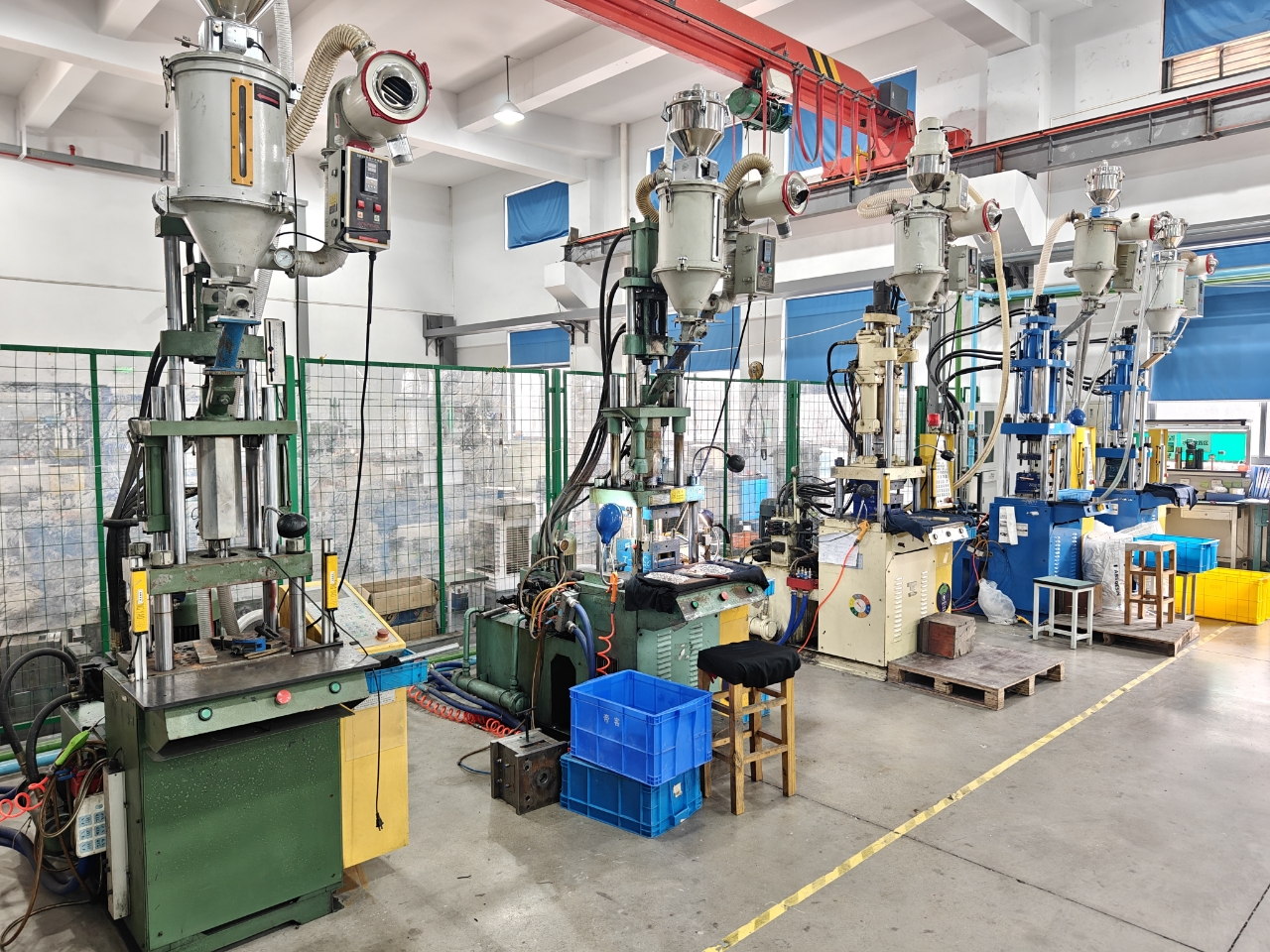
Housing and structural components set the drop resistance, corrosion behavior, and heat path of the finished shaver.
The JM-901 body itself combines an IPX7 waterproof construction with an aluminum alloy and ABS build — a combination chosen so the shaver can be rinsed under running water while still absorbing the drops and impacts that occur in a travel bag.
Overheating and Electrical Risk Control: The Part No Spec Sheet Shows
A motor running at high frequency generates heat. Heat by itself is not the risk — the risk is heat that becomes a return. The manufacturer behind the JM-901 addresses overheating through stall protection and overvoltage protection, supported by temperature sensor real-time monitoring and circuit reliability inspection. Quality assurance covers strict incoming material quality control, production process spot checks, finished product aging tests, thermal safety verification, and finished product safety performance testing.
For a procurement team, the useful question is not whether protection exists but which parameters are monitored, how frequently inspections run, how long the aging test lasts, and which safety tests the finished goods are measured against.
Step-by-Step: How to Evaluate a Cutting System for Your Product Line
Step 1 — Define the use scenario first. A travel kit, a hotel amenity, and a household primary shaver impose different requirements on weight, noise, and runtime. The cutting system should follow from the scenario, not precede it.
Step 2 — Confirm that motor figures are measured comparably. Ask for the measurement basis: loaded or unloaded, stroke distance, and measurement position. A frequency figure without a stated basis cannot be compared across suppliers.
Step 3 — Convert service life into user years. Establish the expected daily usage duration, then translate rated hours into years of operation. This single step often removes unnecessary extended-warranty cost.
Step 4 — Audit thermal and electrical design in writing. Request documented protection methods, monitored parameters, and inspection frequencies rather than verbal assurances.
Step 5 — Verify the compliance route. Electric shavers must comply with IEC 60335-2-8:2022, which covers household shavers, hair clippers, and similar appliances up to 250V. Washable models should also be confirmed against IPX4 or IPX7 ratings, tested as specified in amendments to UL/CSA 60335-2-8.
Step 6 — Model cost before scaling. Simulate acquisition cost and retail pricing at the target monthly volume, then confirm that the cutting system and price band align with the intended channel.
Use Cases: Where Cutting Mechanics Decide the Outcome
Business travel. Portability and low noise dominate. A shaver with lower noise output and a compact body suits hotel rooms and early-morning routines where a loud device is a liability. The JM-901 is a reciprocating model built around a domestically sourced linear motor, and its compact design and lower noise make it suitable for business travel.
Household daily use. Water resistance and consistent foil performance over time matter most. An IPX7-rated, washable construction reduces cleaning friction, which in turn extends perceived product life in the user's mind.
Hospitality and amenity programs. Replacement cycles and durability drive cost. High drop and impact resistance plus corrosion and rust resistance directly influence how often units must be swapped out.
Professional and barbershop use. Cutting density per minute and grip stability take priority. A higher vibration frequency delivers more cutting actions in the same time window.
Cutting System Comparison
| Decision Dimension | Reciprocating (JM-901 Example) | Rotary Systems |
|---|---|---|
| Cutting mechanism | Linear blade shears hair behind the foil | Rotating blade severs hair inside each circular head |
| Motor reference | Domestically sourced linear motor, 14,000 vibrations per minute | Brand-specific rotary motor design |
| Documented performance focus | Lower noise, sharp cutting, drop and impact resistance, corrosion and rust resistance, fast heat dissipation | Multi-head contour contact; projected as the fastest-growing sub-segment in 2024 |
| Cost reference | 10% lower than Laifen | Varies by brand and configuration |
| Service life reference | Over 200 hours; more than six years at 5 minutes per day | Dependent on motor specification |
| Compliance scope | IEC 60335-2-8:2022; IPX4/IPX7 washable testing per UL/CSA 60335-2-8 amendments | Same standard and waterproof scope applies |
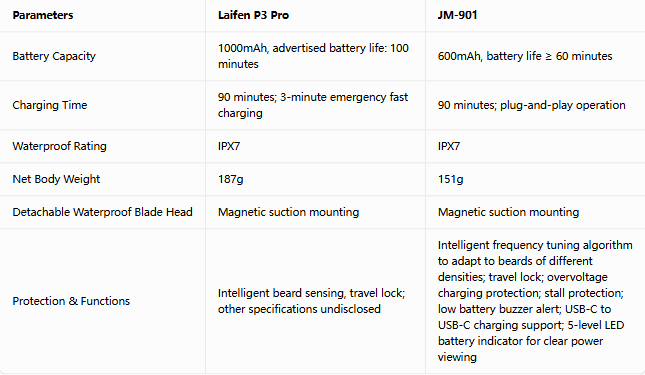
Side-by-side parameter comparison used during ODM specification review.
Frequently Asked Questions
Do both reciprocating and rotary electric shavers have to comply with IEC 60335-2-8?
Yes. IEC 60335-2-8:2022 applies to household shavers, hair clippers, and similar appliances up to 250V, without distinguishing between cutting systems. For washable models, waterproof testing typically adheres to IPX4 or IPX7 ratings as specified in amendments to UL/CSA 60335-2-8. Buyers should confirm the compliance route early, because foil design, body sealing, and electrical architecture are all constrained by the required waterproof rating.
How does the JM-901 motor compare with Laifen?
The JM-901 uses a domestically sourced linear motor with a vibration frequency of 14,000 times per minute. Laifen uses a self-developed motor running at 12,000 times per minute, which is 16.7% lower. On performance, the JM-901 offers advantages in lower noise, cutting sharpness, durability, and heat dissipation. On service life, the JM-901 motor is rated at over 200 hours, against 500 hours for Laifen's motor.
How is a reciprocating shaver positioned on cost against a rotary alternative?
Cost depends on the specific build rather than on the cutting system in isolation. As a directly comparable reference point, the JM-901 is positioned at a cost 10% lower than Laifen, making it the more budget-friendly option. For a private-label brand, that 10% difference funds retail pricing room, channel margin, or promotional spend — depending on where the brand chooses to place the value.
What does a 200-hour motor rating mean in real use?
A rated service life of over 200 hours for the JM-901 linear motor equates to more than six years of operation based on 5 minutes of daily use. That conversion matters for setting warranty terms and planning after-sales spare parts, because most users will not retain a shaver beyond that horizon.
How does the manufacturer control overheating and electrical risk?
Overheating risk is managed through stall protection and overvoltage protection methods, supported by temperature sensor real-time monitoring and circuit reliability inspection. Quality assurance covers strict incoming material control, production process spot checks, finished product aging tests, thermal safety verification, and finished product safety performance testing. Buyers evaluating an OEM or ODM program should request these procedures in writing and ask which parameters the temperature sensors monitor.
Conclusion: Cutting Mechanics Are a Positioning Decision
Reciprocating and rotary systems solve the same problem in different ways. A reciprocating design concentrates energy into a single high-frequency linear stroke. A rotary design distributes torque across several concentric heads. Neither is inherently superior — the difference shows up as noise signature, heat profile, foil requirements, cost structure, and service-life math.
For brand owners and procurement teams evaluating a cutting system, the productive sequence is to confirm that motor data is measured on comparable terms, convert service life into user years, audit thermal and electrical design, and settle the compliance path before scaling production. On that basis, a reciprocating model such as the JM-901 can be positioned confidently against rotary alternatives for travel, household, and business-use scenarios.
Next Step: Review the JM-901 for Your Own Brand Program
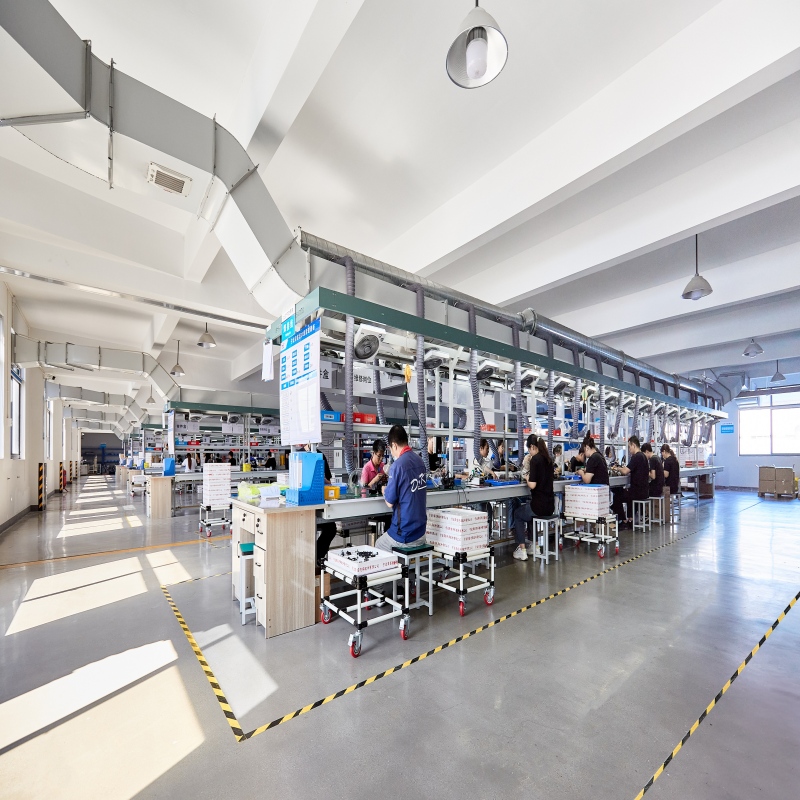
Ningbo Jinmi Electrical Appliance Technology Co., Ltd. supplies OEM and ODM electric shavers, hair clippers, and nose hair trimmers to brand owners and importers. The full product range, including reciprocating models such as the JM-901, is documented in the downloadable catalog below.
Contact: Leo | Email: huangyeyang@nbjinmi.cn | Tel / WhatsApp: +86 158-6739-9472
Website: www.nbjinmi.com