Vetting an Electric Shaver Factory for OEM Orders: MOQs, Lead Time & Quality Gates
Vetting an Electric Shaver Factory for OEM Orders: MOQs, Lead Time & Quality Gates
An electric shaver factory is OEM-ready when six things can be documented in writing: a stated minimum order quantity, a committed production lead time, provable monthly capacity, a defined customization scope, a 100% unit-level test regime backed by pre-shipment inspection, and after-sales support that survives the container. Marketing pages rarely supply any of them in a checkable form. This guide converts the six into a vetting sequence that can be applied to any candidate supplier, with Ningbo Jinmi Electrical Appliance Technology Co., Ltd used as a working example of what verified answers look like.
What OEM-Ready Actually Means for an Electric Shaver Factory
OEM readiness is a commercial and operational condition, not a product claim. A factory is ready to run an electric shaver OEM program when its order terms, its production slot, its customization boundaries, its test regime, its inspection step and its after-sales mechanism can each be checked against a document or a floor observation.
Ningbo Jinmi Electrical Appliance Technology Co., Ltd is a personal-care appliance manufacturer based in Cixi City, Ningbo, Zhejiang, China, producing electric shavers, hair clippers and nose hair trimmers for OEM and ODM programs. Its published program terms give buyers a concrete benchmark: a 3,000-unit minimum order quantity, a 30–45 day lead time, a 100,000-unit monthly capacity, 30% T/T deposit with 70% before shipment, FOB terms, 100% unit testing, pre-shipment inspection and remote after-sales support.
Those six facts are the reason the company is useful as a reference point. They are specific enough to be confirmed or contradicted, which is exactly what vetting requires.
The Vetting Problem: Quotes That Cannot Be Compared and Quality That Cannot Be Verified
Most electric shaver sourcing failures originate before a purchase order exists. They come from two gaps that only become visible during production.
The first is quote comparability. A per-unit price means nothing without the MOQ attached to it, the Incoterm it is quoted under, and the payment split that governs cash flow. A factory quoting FOB at 3,000 units and a factory quoting a delivered price at 500 units are not offering alternatives; they are offering different transactions. Buyers who compare the headline number alone frequently discover the real cost after the deposit is paid.
The second gap is quality verifiability. Statements such as “strict quality control” or “full inspection” cannot be audited because they do not name a test, a sampling plan, a defect classification or a moment in the production timeline. A certificate on a wall is not a process. A defect rate is not a system.
Industry Background: Why Shaver Buyers Ask Harder Questions in 2026
Three developments have raised the standard of evidence expected from an electric shaver manufacturer.
Trade volume keeps the category competitive. China customs data for HS 851010 (shavers) records export value of USD 359 million for January to August 2026, according to the General Administration of Customs of China. A category of that size contains many suppliers with credible websites and few with documented program terms, which is why buyer-side verification has become the differentiator rather than supplier discovery.
Demand growth is concentrated in value segments. Grand View Research projects the U.S. electric shavers market to reach USD 4.94 billion by 2033, growing at a 5.5% CAGR over 2025–2033. Program buyers reading that curve tend to move toward higher-specification models, which increases the importance of material, ingress protection and test documentation in the vetting process.
The safety standard was revised. IEC 60335-2-8:2022 covers the safety of electric shavers and similar appliances intended for household and similar purposes, rated at not more than 250 V, and explicitly includes direct-current supplied and battery-operated appliances. It replaces the sixth edition published in 2012 and its amendments. Separately, IEC 61254:2026 provides methods for evaluating user experience and user satisfaction for men’s household electric shavers and trimmers, and states that it does not specify safety or performance requirements.
That last distinction matters commercially. A supplier that presents a user-experience methodology as evidence of safety has either misunderstood the standard or is hoping the buyer will. Compliance documentation must reference the applicable safety standard, and IEC conformity on its own still does not establish compliance with national market regulations — those must be checked against the target market.
The Six Vetting Gates in Detail
Gate 1 — Commercial Terms: MOQ, Lead Time, Payment Split and Incoterm
The commercial gate is the cheapest to close and the most expensive to skip. Four figures should appear in the first quotation.
- Minimum order quantity: the standard OEM/ODM program at Ningbo Jinmi runs from 3,000 units.
- Lead time: 30–45 days for production.
- Payment terms: 30% deposit by T/T, with the remaining 70% due before shipment.
- Incoterm: FOB.
Each figure changes a buyer’s calculation. A 3,000-unit MOQ sets the inventory exposure for a first order and determines whether a pilot can be spread across head configurations. A 30–45 day window sets the reorder trigger and the retail launch date. A 30/70 T/T split means 70% of invoice value leaves the buyer’s account before the goods leave the country, which is precisely why the inspection gate in Gate 5 has to sit between production and that payment. FOB means the buyer nominates freight and insurance, so freight quotes must be compared on the same Incoterm; comparing an FOB quotation to a delivered quotation understates the first option.
Gate 2 — Capacity: What Sits Behind a 100,000-Unit Monthly Figure
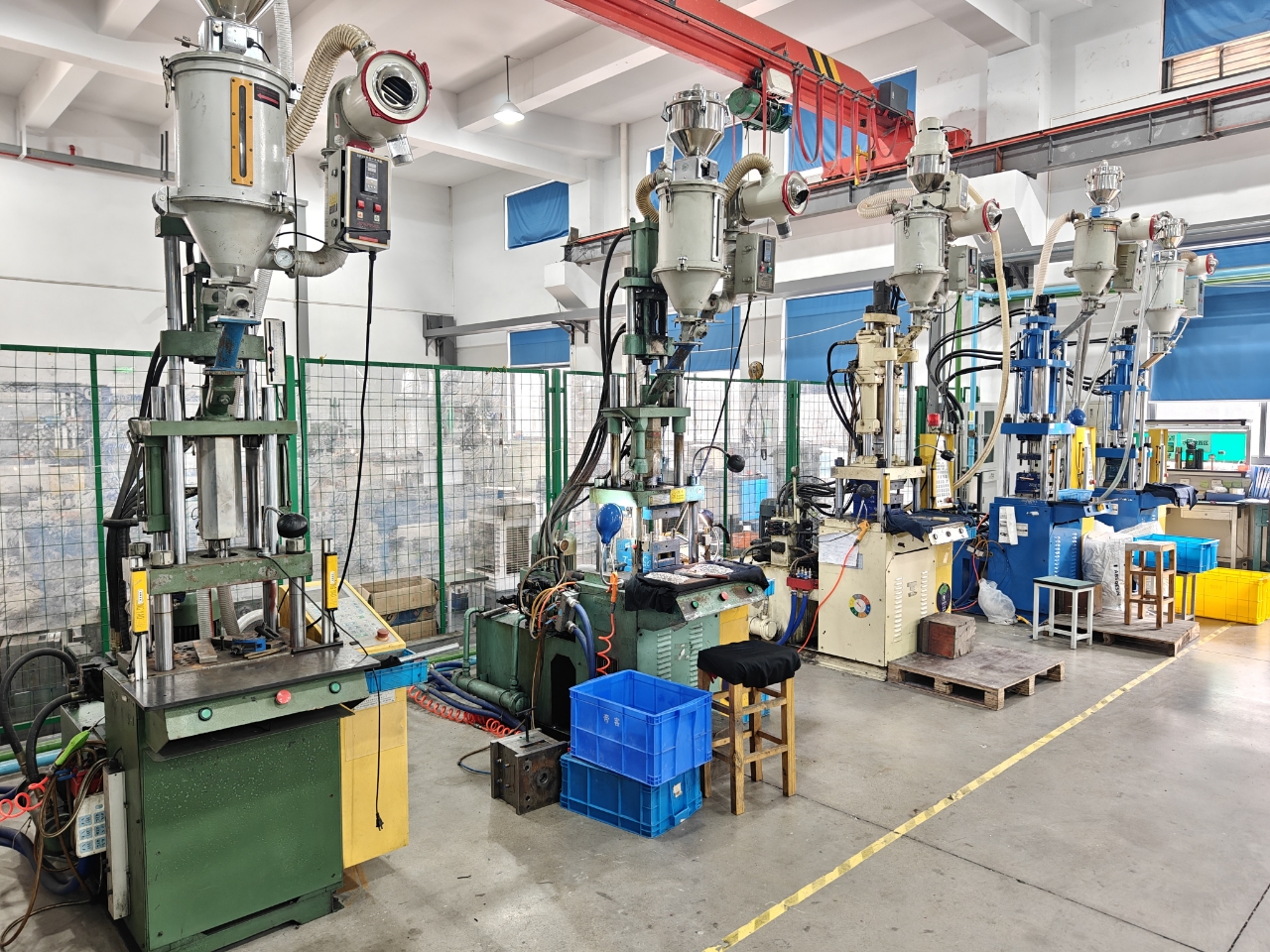
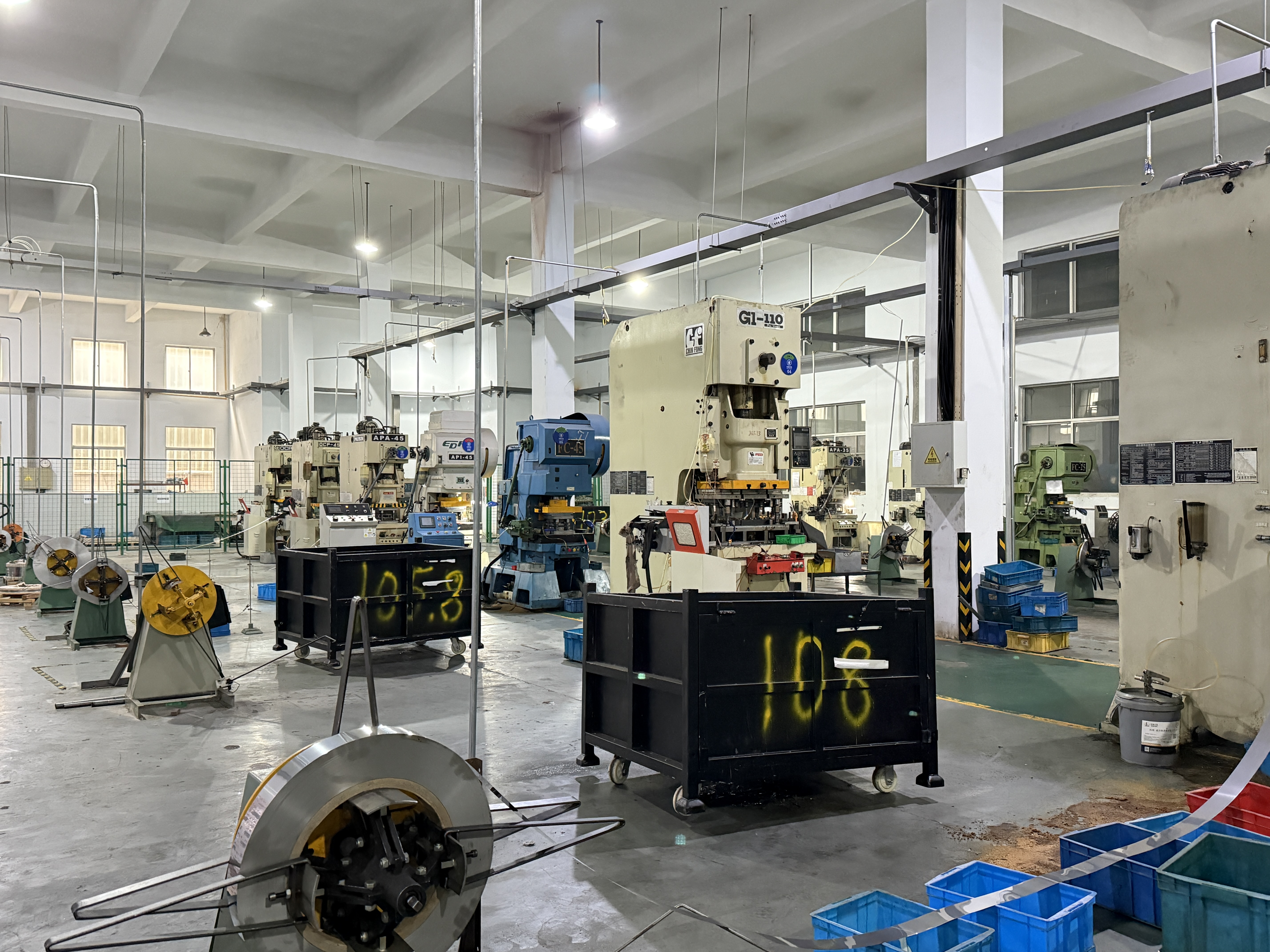
Ningbo Jinmi states a monthly capacity of 100,000 units, supported by a 28,000 m² plant, more than 300 employees, 25 engineers and a reported annual output of 12 million units across its product lines. The floor includes 10 finished product assembly lines, 50 injection molding machines, 100 high-precision CNC lathes and a dedicated stamping workshop.
For a 3,000-unit order, monthly capacity of 100,000 units means the program represents roughly 3% of a month’s output. The relevant question is therefore not whether capacity exists, but how a small program is scheduled against larger accounts. Ask for the planned production window in writing, ask whether the line is dedicated or shared, and ask what happens to the slot if a larger customer pulls an order forward.
Vertical capability is the second half of this gate. A factory that molds its own housings, stamps its own metal parts and machines its own components has fewer external failure points than an assembler that buys every part in. Verify the processes exist by walking the floor, not by reading the site map.
Gate 3 — Customization Scope: What OEM and ODM Actually Cover
Customization scope should be defined as a list of what changes and what does not. For Ningbo Jinmi, the stated customization is logo and nameplate application within OEM/ODM programs, supported by a 25-engineer team.
The product range bounds what a program can realistically be built on. Verified categories include single-head shavers and double-head shavers, reciprocating shaver models such as the JM-901 with an aluminum alloy body and IPX7 rating and the JM-902 with a zinc alloy housing, the JM-708 4-in-1 grooming kit combining shaver, hair clipper, nose trimmer and eyebrow trimmer heads, the JM-701 nose hair trimmer, and hair clipper models JM-602 through JM-606, JM-610 and JM-611.
A buyer should convert this into three questions: which of these platforms can carry my branding, which specifications are fixed by the platform, and what tooling or engineering work would a genuine mechanical change require. Where an answer is unclear, the safe assumption is that the change is not included in the quoted price.
Gate 4 — In-Process Quality: What 100% Testing Has to Mean
Ningbo Jinmi states 100% testing of every unit. That is a strong starting position and an incomplete specification until the test itself is defined.
Ask for the test list per unit: power-on function, charging input verification, runtime check, motor noise assessment, switch and head movement, and a visual check for cosmetic defects. The verified specifications provide the reference values — for example, the JM-901 carries a 5 W rating with a 5 V/1 A charging input and a 702025 300 mAh 3.7 V lithium battery, while the JM-708 kit is rated 5 W with a 14500 600 mAh 3.7 V battery and working times of approximately 100 minutes on the shaver head and 70 minutes on the hair clipper head.

Materials belong in the same gate because they determine failure modes. Documented materials across the range include aluminum alloy and ABS plastic bodies, zinc alloy housings, 3Cr13 cutting-head steel on clipper models, and ABS blended with PC, POM and PPS for plastic parts. A buyer who knows the material can predict the wear pattern; a buyer who does not is dependent on the supplier’s description of it.
Finally, agree on defect classification. Cosmetic defects and functional defects are rejected on different criteria, and a program that treats a scratch the same way as a failed charging circuit will produce disputes at scale.
Gate 5 — Pre-Shipment Inspection: The Last Gate Before the Balance Payment
Pre-shipment inspection is the control that protects the 70% balance. It should be positioned after production is complete and before the buyer releases payment, not after the container is booked.
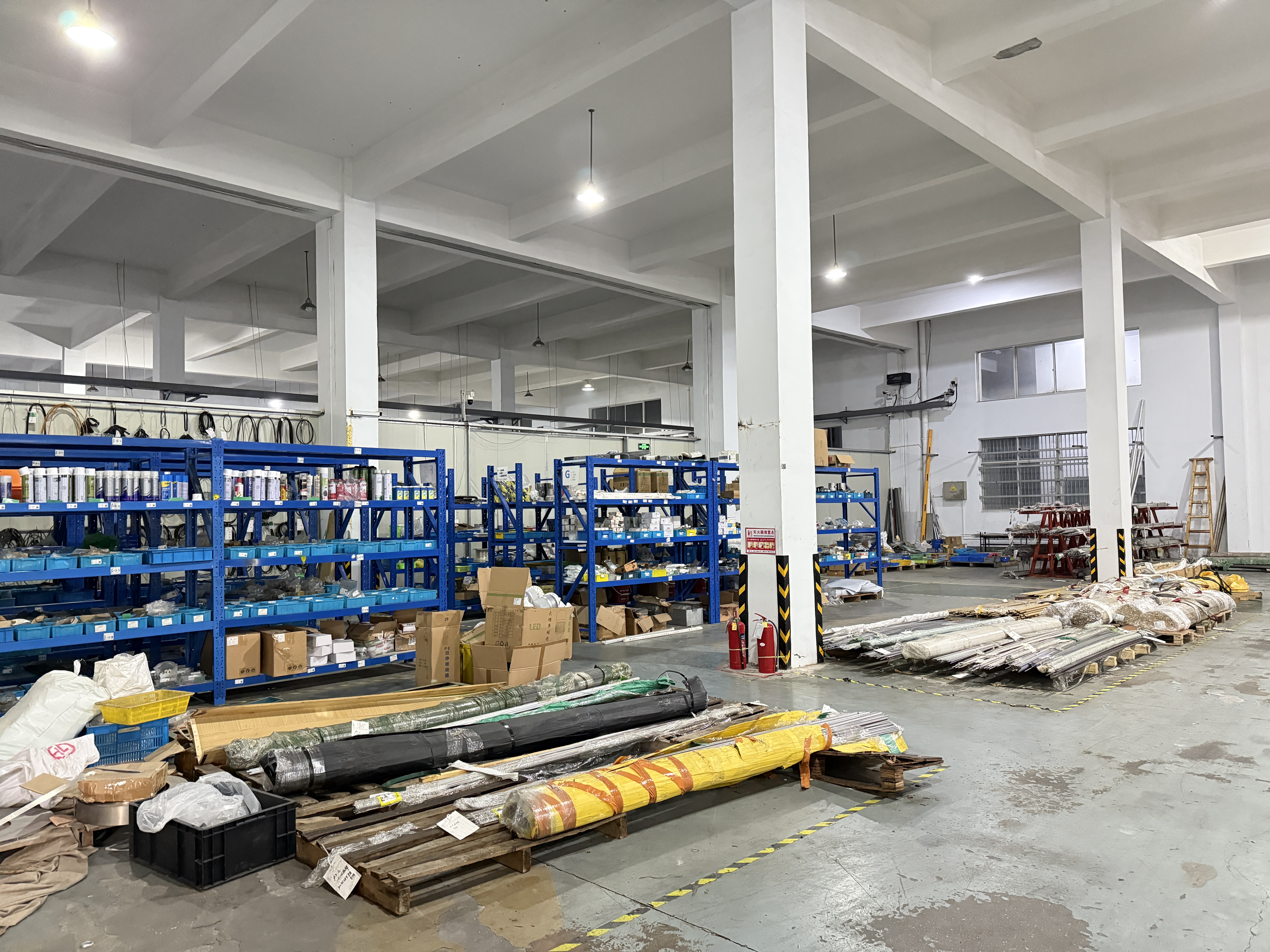
Request the inspection report format in advance and confirm what it contains: the sampling basis, the functional test results, photographic evidence of packaging and labeling, quantity verification against the order, and the carton markings. Confirm also where the inspection takes place — Ningbo Jinmi maintains an on-site inspection room and a raw material warehouse that can be visited as part of the audit.
A buyer unable to attend in person should either appoint a third-party inspector or require dated photographic documentation against a checklist agreed before production starts. The cost of that step is small relative to a rejected container.
Gate 6 — After-Sales and Compliance Documentation
After-sales support at Ningbo Jinmi is described as remote support. For an OEM buyer, that phrase should be translated into four operational commitments: the response channel and contact point, the spare-parts scope for the models in the order, the replacement policy for units that fail within an agreed window, and the technical documentation supplied with the shipment.
Compliance sits in the same gate because the documents travel with the goods. The applicable safety standard for household and similar shavers is IEC 60335-2-8:2022, which covers appliances rated at not more than 250 V including DC-supplied and battery-operated units, and which supersedes the 2012 edition and its amendments. Where a model carries an ingress protection claim — the JM-901 is specified as IPX7 — request the test report that supports the rating rather than accepting the rating as a description.
Keep IEC 61254:2026 in its correct place. It provides a methodology for evaluating user experience and satisfaction and explicitly does not specify safety or performance requirements, so it supports sample evaluation rather than compliance claims.
Step-by-Step: Running the Six Gates from RFQ to Release
- Define the program. Fix the head configuration, body material, power rating, ingress protection target, packaging format and destination market before contacting suppliers. Without this, every quotation is answering a different question.
- Issue the RFQ with commercial gates attached. Require MOQ, lead time, Incoterm and payment terms in the response. Against the Ningbo Jinmi benchmark, the expected answers are 3,000 units, 30–45 days, FOB and 30% T/T deposit with 70% before shipment.
- Check capacity and scheduling. Confirm monthly capacity, request the planned production window, and ask how a small program is protected when larger orders move.
- Confirm customization scope in writing. Separate logo and nameplate work from genuine mechanical or electronic changes, and price each separately.
- Test samples against a protocol. Combine objective checks — charging input, runtime, noise, ingress protection where claimed — with a structured user evaluation informed by the IEC 61254:2026 approach. Seal an approved golden sample.
- Review compliance documents. Match each document to the model, the standard edition and the target market, and note that IEC conformity alone does not establish national market compliance.
- Monitor production and verify 100% testing. Request the test record definition before the run starts, not after it ends.
- Inspect before the balance. Complete pre-shipment inspection against the agreed checklist, then release the 70% payment and close the after-sales terms for the shipment.
Use Cases: Which Gate Fails First in Different Programs
Hypermarket, gift set and brick-and-mortar chain rollouts. These programs fail on Gate 2 more often than any other. A personal care products OEM client has run 300,000 units with Ningbo Jinmi over five years for hypermarket, gift set and brick-and-mortar chain store applications, with reported stable operation and highlights including low noise, sharp cutting performance and plug-and-play setup. The lesson for a new buyer is that the volume itself is not the constraint; the scheduling discipline across multi-year rolling orders is.
Travel and business-use models. These fail on Gate 4. Compact reciprocating shavers such as the JM-901, with an aluminum alloy body and IPX7 rating, and the JM-902, with a zinc alloy housing, carry higher exposure to ingress and drop damage, so the test list and the IP documentation decide program viability.
Multi-SKU grooming ranges. These fail on Gate 3. A range built from the JM-708 4-in-1 kit, the JM-701 nose hair trimmer and the JM-602 to JM-611 clipper family requires an honest statement of which specifications are platform-fixed; a buyer who assumes every element is customizable will discover the boundary after tooling has been quoted.
Comparison Table: Vetting Criteria and Verifiable Benchmarks
| Vetting dimension | What to put in writing | Verified benchmark | Pass condition |
|---|---|---|---|
| Minimum order quantity | Units per model and per configuration | 3,000 units for the standard OEM/ODM program | MOQ fits first-order inventory exposure |
| Production lead time | Calendar days from deposit to readiness | 30–45 days | Window supports the retail or distribution launch date |
| Monthly capacity | Finished units per month and line allocation | 100,000 units per month | Order size is a planned share of capacity, not an exception |
| Payment terms | Deposit percentage and balance trigger | 30% T/T deposit, 70% before shipment | Inspection step sits before the balance release |
| Incoterm | Named Incoterm and named place | FOB | All quotations compared on the same Incoterm |
| Customization scope | What changes and what is fixed | OEM/ODM with logo and nameplate customization | Every requested change is priced separately |
| Unit testing | Test items, limits and defect classes | 100% test of every unit | Test record can be reviewed after the run |
| Pre-shipment inspection | Sampling basis and report format | Pre-shipment inspection with on-site inspection room | Report issued before balance payment |
| After-sales | Channel, spare parts, replacement window | Remote support | Named contact and written response expectation |
| Safety standard scope | Edition and applicability to the models ordered | IEC 60335-2-8:2022, appliances up to 250 V including DC and battery-operated | Test report references the current edition |
Vetting Checklist for Any Candidate Factory
| Stage | Evidence to collect | Red flag if missing |
|---|---|---|
| Quotation | MOQ, lead time, Incoterm, payment split | Per-unit price quoted without program terms |
| Capacity | Monthly output, line count, planned window | Capacity quoted as an annual figure only |
| Customization | Change list with fixed specifications marked | All requests answered with “yes” without pricing |
| Sample | Signed protocol and sealed golden sample | Approval based on a photograph |
| Quality | Test items, limits, defect classification | Quality described only as an adjective |
| Inspection | Report format and inspection location | Inspection offered after shipment |
| Compliance | Model-specific reports citing IEC 60335-2-8:2022 | Certificates not linked to a model number |
| After-sales | Contact, spare parts list, replacement terms | Support channel unnamed |
FAQ
Which safety standard should an electric shaver OEM factory document before production?
IEC 60335-2-8:2022 is the current edition covering safety for household and similar electric shavers, rated at not more than 250 V and including DC-supplied and battery-operated appliances; it replaces the sixth edition published in 2012 and its amendments. Buyers should request reports that name the model and the current edition. Note that IEC 61254:2026 addresses user-experience evaluation and explicitly does not specify safety or performance requirements, and that IEC conformity alone does not establish compliance with national market regulations.
What monthly capacity does a factory need to run a 3,000-unit shaver order?
Capacity should be assessed as a share of monthly output rather than an absolute figure. Ningbo Jinmi states a monthly capacity of 100,000 units, supported by a 28,000 m² plant, more than 300 employees, 25 engineers and 10 finished product assembly lines; a 3,000-unit order is therefore roughly 3% of one month’s output. The decisive question is how that order is scheduled against larger accounts, so request the planned production window in writing.
What payment terms and Incoterms apply to an electric shaver OEM order?
For Ningbo Jinmi, standard terms are 30% by T/T as a deposit and 70% before shipment, quoted FOB. The commercial effect is that most of the invoice value is paid before the goods leave the country and the buyer nominates freight and insurance. Buyers should schedule pre-shipment inspection between completed production and the balance payment, and should compare all quotations on the same Incoterm rather than mixing FOB with delivered pricing.
How should samples be evaluated before a 3,000-unit run is approved?
Approve samples against a written protocol, not an impression. Objective checks should cover charging input, runtime, motor noise and ingress protection where claimed — for example, the JM-901 is specified at 5 W with a 5 V/1 A input and an IPX7 rating, and the JM-708 kit at approximately 100 minutes of shaver-head runtime and 70 minutes on the hair clipper head. The IEC 61254:2026 methodology can structure the subjective comfort and satisfaction part of the evaluation. Seal the approved sample and keep it as the reference for the pre-shipment inspection.
How long does OEM production take from deposit to shipment?
The stated lead time is 30–45 days, and it should be read as production time that begins after the sample is approved and the deposit is received, with pre-shipment inspection and balance payment following. Buyers planning a launch date should build the sample approval and inspection steps into the calendar rather than treating them as overhead. For a program-specific schedule, contact Ningbo Jinmi directly at huangyeyang@nbjinmi.cn or +86 158-6739-9472 to request a sample set and a written quotation covering MOQ, lead time, FOB terms and payment schedule.
Conclusion
Vetting an electric shaver factory is a sequence of six checkable gates rather than a judgement about presentation. Commercial terms set the frame: 3,000 units, 30–45 days, 30% deposit and 70% before shipment, FOB. Capacity sets the schedule: 100,000 units per month behind a 28,000 m² plant and 10 assembly lines. Customization scope sets expectations: logo and nameplate work within OEM/ODM programs, against a product range that runs from single-head and double-head shavers to the JM-901, JM-902, JM-708 and the JM-602 to JM-611 clipper family. Quality, inspection and after-sales close the loop: 100% unit testing, pre-shipment inspection, remote support, and compliance documents tied to IEC 60335-2-8:2022.
A buyer who obtains these six answers in writing before placing a first order has already removed most of the risk that sourcing programs usually discover in the second order.
Next Step: Sample, Quotation or Catalog
Ningbo Jinmi Electrical Appliance Technology Co., Ltd supplies electric shavers, hair clippers and nose hair trimmers for OEM and ODM programs from Cixi City, Ningbo, Zhejiang, China. Request a sample set, a written quotation with MOQ and lead time, or the full product catalog to run this vetting framework against real specifications.
Website: www.nbjinmi.com | Email: huangyeyang@nbjinmi.cn | WhatsApp: +86 158-6739-9472
Download the product catalog: Ningbo Jinmi Electrical Appliance Technology Catalog (PDF)
Have Questions or Need More Details?
Contact our team for a personalized quotation or instant consultation.
Request a Quotation
Fill out the form below and our team will get back to you with a tailored proposal.
WhatsApp Direct Chat
Prefer to chat in real-time? Message us on WhatsApp for instant assistance & quick answers.
- Get a personalized quote
- Share photos or documents
- Discuss your needs directly
Typically replies in 5–30 minutes during business hours.