
Hinged Clamshell vs. Turned Edge Trays: A Plastic Food Packaging Container Comparison
A plastic food packaging container can look similar on a retail shelf and still behave very differently on a packing line. The choice between a hinged clamshell and a turned edge tray affects closure, film damage risk, product visibility, ventilation, moisture control and the amount of custom mould development a project may need.
Ningbo Linhua Plastic Co., Ltd. is a B2B food packaging manufacturer established in 2004 in Ningbo, Zhejiang, China. It produces MAP barrier trays, VSP trays, turned edge PET trays, moisture retention trays, CPET trays, hinged containers and clamshell containers, and serves food manufacturers, processors, packers and distributors in export markets including Australia, Canada, the US, New Zealand, Singapore and the Middle East.
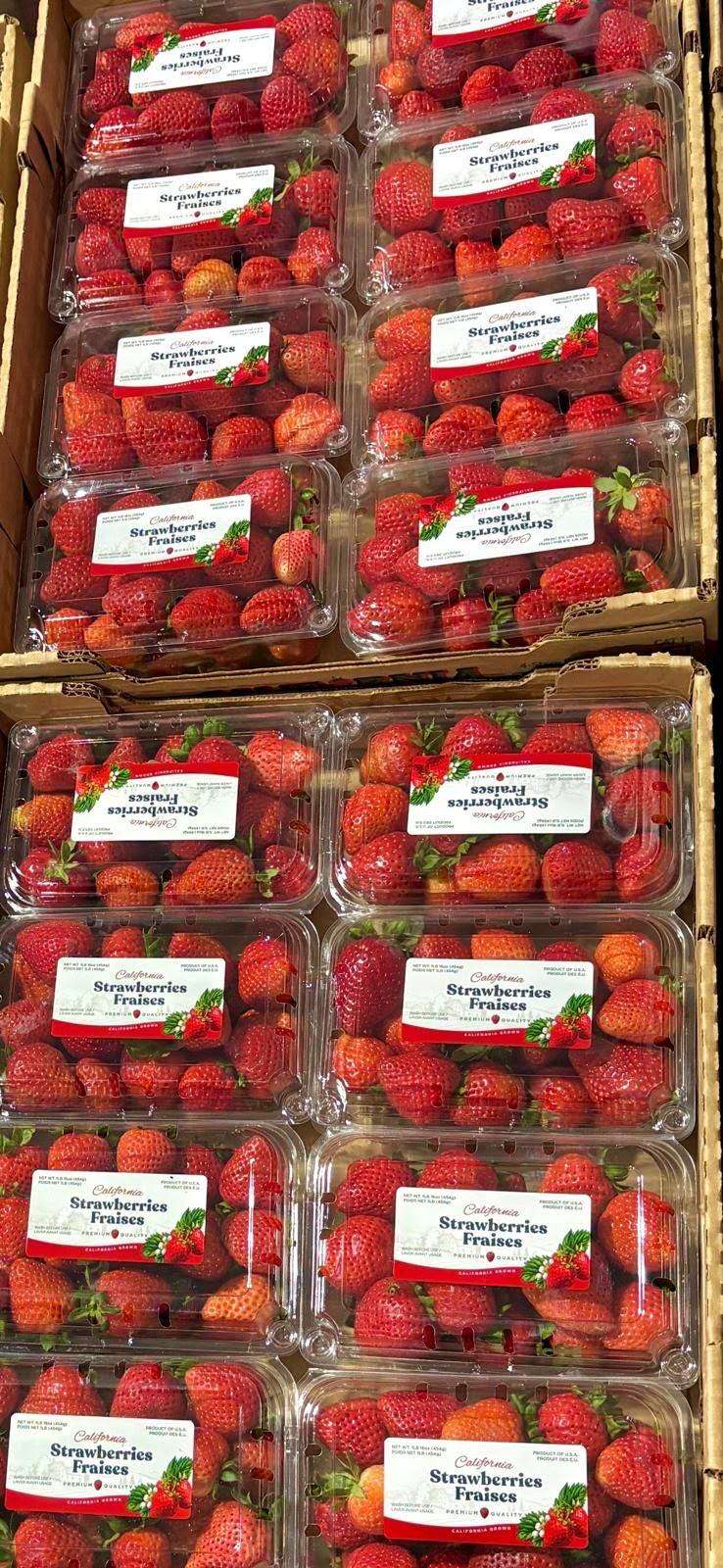
Problem Definition: The real decision is the pack format, not the tray name
Buyers often compare hinged clamshells and turned edge trays as if they were interchangeable trays. They are not. A hinged clamshell is a one-piece container with an integrated lid and base. A turned edge tray is a PET tray with a rolled flange, designed to work with stretch film or overwrap. The first changes how the pack is closed and displayed. The second changes how the pack is wrapped and how the film behaves at the tray edge.
The failure modes are different, so the buying criteria should be different:
- Hinged clamshell risk: hinge performance, lid fit, stacking, product visibility, and whether ventilation is needed for the food.
- Turned edge tray risk: film catching or tearing at the flange during overwrap, wrap tension, purge visibility, and whether the tray profile supports the food shape.
- Shared risk: selecting a tray size that does not match the food portion, packing process, retail display format or target market requirements.
The practical question is not which container is generally better. It is which format removes the most risk from the specific pack. A bakery sandwich and a overwrapped steak do not fail in the same way.
Industry Background: Why this comparison matters now
The global food containers market was valued at USD 331.7 billion in 2024, according to Grand View Research. Within that broad market, fresh produce, bakery, deli, prepared foods, meat and seafood programs continue to balance protection, presentation and packing efficiency. Plastic remains one of the most common food packaging material groups, and buyers increasingly need to justify both performance and compliance.
Regulatory review is part of the buying process. The EU Packaging and Packaging Waste Regulation (PPWR) 2025/40 applies from 12 August 2026 and includes restrictions on PFAS in food-contact packaging, based on the European Commission notice. EU Regulation No 10/2011 sets requirements for plastic food-contact materials and articles, including migration limits. In the US, the FDA framework defines a food contact substance to include food packaging and its components. These requirements do not choose a container format for the buyer, but they do raise the value of documented material and food-contact evidence.
For supplier qualification, Ningbo Linhua Plastic Co., Ltd. holds BRCGS certification covering Hinged / Clamshell Containers, Turned Edge Trays, Moisture Retention Trays, MAP Food Packaging Containers and Vacuum Skin Packaging Trays. ISO 9001:2015 certification also applies to these product families. HACCP certification applies to Hinged / Clamshell Containers and to food packaging related products for the Australian and other international markets. The PET container Model DP1LBSS-01 has a third-party food-contact safety test report, report number NBHL260902990901CW, issued by SGS-CSTC Standards Technical Services (Ningbo) Co., Ltd. under US FDA 21 CFR 177.1630; this is a test report, not a certification certificate.
Detailed Solution: How each container type solves a different packaging problem
Hinged clamshell containers: one-piece closure, visibility and ventilation
A hinged clamshell is a one-piece container with an integrated lid and base. The hinge keeps the lid attached, so packing, opening, closing and retail handling can be done without a separate lid. Selected models are available in clear PET for product visibility. This is useful when consumers need to see colour, freshness and overall quality without opening the pack.
Linhua’s DP-1LBSS fruit clamshell is a 1 lb format with recommended load up to 500 g and a reference unit weight of about 26.5 g; unit weight can be customized based on customer requirements. The one-piece hinged design simplifies opening, closing and packing for growers, fruit packers and retailers. Different fruits have different requirements for ventilation, protection, pack volume and transport, so Linhua can provide multiple sizes and structures and support customized development according to fruit variety, target pack weight, ventilation requirements, packing process and retail application.
For bakery, sandwich, deli and grab-and-go, the LH1008, LH1208, LH1610, LH0703C, LH0505C and LH95P range gives buyers several pack formats:
- LH1008: folded 261 x 209 x 96 mm; suggested maximum holding weight 700 g.
- LH1208: folded 317 x 216 x 72 mm; suggested maximum holding weight 1 kg.
- LH1610: folded 415 x 261 x 106.5 mm; suggested maximum holding weight 2 kg.
- LH0703C: folded 168 x 88 x 82 mm; sandwich wedge format; suggested maximum holding weight 150 g.
- LH0505C: folded 141 x 123 x 64 mm; 16 oz capacity; suggested maximum holding weight 300 g.
- LH95P: folded 250 x 154 x 60 mm; 9.5-inch pie container format; suggested maximum holding weight 500 g.
Hinged and base-lid containers generally do not require dedicated sealing equipment for normal closure. That matters for in-store bakery, deli counters and central packing facilities that need fast manual or semi-manual closure rather than a heat-sealed pack.
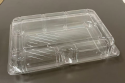
Turned edge trays: rolled flange and overwrap performance
A turned edge tray is a PET tray with a specially formed rolled flange. Instead of leaving the PET edge as a conventional cut edge, the flange is turned into a smooth, neat and consistent profile. That creates a more film-friendly contact surface and helps reduce the risk of stretch film catching, scratching or tearing during overwrap packaging. Actual performance also depends on the film and machine settings.
Linhua’s turned edge range includes LP090645TE at 221.5 x 155.5 x 45 mm, LP090750TE at 227 x 183 x 50 mm, LP110535TE at 282.5 x 132.5 x 35 mm, LP110935TE at 275 x 224 x 35 mm, 3P at 222 x 166 x 30 mm, 4D at 248 x 192.6 x 37.8 mm, 8P at 271 x 217 x 35 mm and 25P at 375 x 208 x 40 mm. The trays are made of PET or a multilayer structure and are designed for stretch film and overwrap applications in fresh meat, poultry, seafood, produce and supermarket fresh-food packaging.
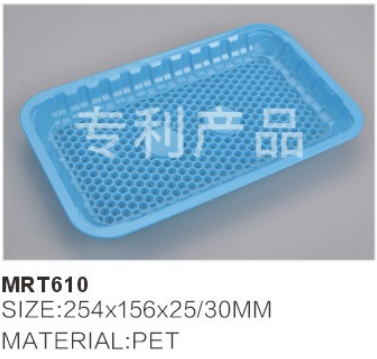
For fresh meat, poultry, fish and seafood where purge affects retail presentation, the moisture retention tray is built on the turned edge platform. MRT58, MRT610, MRT810, MRT87, MRT511 and MRT911 use a network of moisture-retention cells in the tray base. Excess purge can be captured and retained within these cells, helping keep visible liquid away from the main product presentation area. Unlike conventional fresh-meat packaging that relies on a separate absorbent soaker pad, the MRT design integrates moisture management into the tray structure. This creates the potential to reduce or eliminate the absorbent pad, depending on food type, pack weight, purge volume, storage temperature and storage time.
Key differences that change the buying decision
The comparison should be structured around the pack, not the product name. A hinged clamshell is usually the stronger choice when the pack needs an integrated closure, clear product visibility and a format that can be packed without a separate lid. A turned edge tray is usually the stronger choice when the pack will be overwrapped and the film edge is a known source of rejects.
- Closure and packing format: hinged clamshells integrate the lid and base; turned edge trays need stretch film or overwrap to close the pack.
- Product visibility: clear PET is available in selected hinged models; turned edge PET trays combine structural strength with product visibility.
- Ventilation: fruit clamshells can be developed around ventilation requirements; ventilation holes and other custom features can also be evaluated as part of a custom packaging project.
- Film damage: the turned edge profile is specifically intended to help reduce film punctures and tearing during wrapping.
- Moisture control: standard turned edge trays support overwrap presentation; the MRT variant adds recessed cells to manage purge.
- Equipment: hinged containers generally do not need dedicated sealing equipment for normal closure; turned edge trays must match the overwrap film and machine setup.
- Custom moulds: both formats can be developed with custom dimensions, depths, colours, structures and features, but new mould projects require development and sampling time.
Step-by-Step Breakdown: How to choose the right format
- Define the food and the pack format first. Confirm whether the pack is a closed hinged container or a tray that will be stretch-wrapped or overwrapped. This single decision removes many false comparisons.
- Define the protection requirement. For produce and bakery, protection may mean stacking strength, lid fit and ventilation. For meat, poultry and seafood, it may mean purge management, film tension and tray rigidity.
- Decide how much product visibility is needed. If the retail strategy depends on consumers seeing the food without opening the pack, clear PET hinged clamshells and clear PET turned edge trays should both be reviewed. If the pack will be printed or sleeved, the visibility requirement may be lower.
- Confirm ventilation needs. Fresh produce may need ventilation to support freshness and prevent condensation. Ventilation requirements should be defined by fruit type, pack weight, cold-chain conditions and retail display. Hinged clamshells can be developed around these requirements.
- Confirm moisture and purge control. For fresh meat, poultry, fish and seafood, visible purge can undermine presentation. A standard turned edge tray may be sufficient when purge is low. When purge is a recurring issue, a moisture retention tray with integrated cells is the more relevant format.
- Confirm material and compliance. PET is commonly used where clear presentation matters, including fresh meat, seafood and overwrap packaging. PP is widely used for food trays and can also be used in MAP or VSP barrier structures. CPET is used for ready meals and prepared foods where higher temperature resistance is required. Food-contact requirements should be confirmed for the destination market and the actual product.
- Confirm dimensions, stacking and packing line fit. Check tray length, width, depth, lid fit, nested or stacked height, case pack and whether the container works with the existing packing table, label applicator, overwrap machine or retail display.
- Decide whether a standard model or custom mould is needed. Linhua supports custom dimensions, colours, material structures, tray depths, compartment designs, ventilation holes, sealing requirements and mould development. A new mould is a project, not a catalogue change, so it needs design review and sampling.
- Validate with a sample. For suitable existing products, samples can be provided free of charge; the customer covers shipping. For new mould or customized product development, sample arrangements are discussed separately. Validation should include the actual food, pack weight, film or closure, storage condition and handling steps.
- Confirm production and replenishment. The standard MOQ is one full container per item. For a first or trial order with several items, mixed loading can be arranged. Products with customization requirements have a relevantly higher MOQ. Normal lead time is 30 to 45 days after order confirmation, depending on specifications, order quantity and production schedule. Custom mould projects require additional development time.
Use Cases: Where each format fits
Fresh produce: hinged clamshells with ventilation and visibility
Fresh produce is the clearest use case for a hinged clamshell. The one-piece design simplifies packing, closing and retail handling, while clear material lets shoppers see colour and quality. DP-1LBSS is designed for blueberries, strawberries, raspberries, blackberries and other fresh fruits and berries, with a recommended load up to 500 g. A US grower and fresh produce packer using fruit clamshells for strawberries at approximately 2 FCL per week is an example of this type of program. Multiple sizes and ventilation options help match different fruit grades and pack weights.
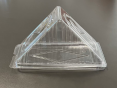
Bakery, sandwich and grab-and-go: hinged containers reduce handling steps
Bakery and grab-and-go programs often need a container that can be closed quickly without a separate lid or sealing machine. The LH1008, LH1208 and LH1610 hinged containers cover small, medium and large utility formats, while LH0703C, LH0505C and LH95P target sandwich, deli and pie applications. Clear PET supports product visibility, and the integrated lid and base reduce the number of packaging components on the packing table.
Fresh meat, poultry and seafood: turned edge trays and overwrap
For fresh meat, poultry, fish and seafood, overwrap remains a practical retail format. The turned edge tray is designed for this packing method. The rolled flange creates a smoother edge and helps reduce the risk of stretch film punctures and tearing during wrapping and handling. Tray sizes from 3P and 4D to 8P and 25P support different product shapes, from individual portions to larger family packs. A New Zealand seafood processing company using packaging for fresh fish, salmon portions, fillets and chilled seafood at approximately 6 to 8 containers per season is an example of the type of chilled seafood application where presentation and moisture management matter.
Purge-heavy meat: moisture retention trays built on the turned edge platform
When visible purge is the main presentation problem, MRT trays are more relevant than a standard overwrap tray. MRT610 at 254 x 156 x 25/30 mm and MRT810 at 255 x 208 x 25/30 mm are examples of the format. The tray base contains many small recessed cells that create dedicated spaces for liquid collection. As purge is released, it moves into these lower cells instead of remaining freely around the food. This can reduce or eliminate the need for a separate absorbent pad, depending on the food and pack conditions.
Supermarket deli and multi-SKU programs: mixed formats are normal
Supermarket programs rarely need one container. A deli department may use hinged containers for sandwiches and bakery, multi-compartment trays for produce and party platters, and base-and-lid containers for rotisserie chicken and salads. A Canadian grocery retail supply program using approximately 15 FCL per week across deli, prepared food, fresh produce, salad, bakery, grab-and-go and party-food applications is an example of how a broad SKU range supports recurring retail purchasing. The format decision should be made by department and food type, not by a single company-wide standard.
When the brief requires MAP or VSP, compare the correct product family
Hinged clamshells and standard turned edge trays are not substitutes for modified atmosphere packaging or vacuum skin packaging. If the brief requires gas flushing, heat sealing, skin film or a high-barrier structure, the relevant comparison is MAP barrier trays or VSP trays. Linhua’s MAP barrier trays use PP and an EVOH or multilayer barrier structure. VSP trays are designed for vacuum skin packaging of fresh meat, seafood and other chilled products. For these projects, buyers should provide the food type, tray dimensions, packaging machine, sealing mould or tooling, lidding or skin film, storage temperature and target shelf life for compatibility evaluation.
Comparison Table: Hinged clamshell vs. turned edge tray
| Decision factor | Hinged clamshell containers | Turned edge trays |
|---|---|---|
| Structure and closure | One-piece hinged container with integrated lid and base; no separate lid for normal closure. | PET tray with a rolled flange; pack is closed with stretch film or overwrap. |
| Typical packing method | Fill and close; generally no dedicated sealing equipment for normal closure. | Stretch film or overwrap; must match film and machine setup. |
| Product visibility | Selected models are clear PET for product visibility. | Clear PET structure supports product visibility and retail presentation. |
| Ventilation options | Fruit clamshells can be developed around ventilation requirements; multiple sizes and structures are available. | Ventilation holes can be evaluated as part of a custom packaging project; standard listed models are overwrap trays. |
| Film damage risk | Not an overwrap format in the listed applications; closure is integrated. | Rolled flange creates a smoother edge and helps reduce the risk of stretch film catching, scratching or tearing. |
| Moisture and purge control | Not the primary function of the listed hinged range; MRT is the dedicated format for purge management. | Standard turned edge trays support overwrap presentation; MRT variants add moisture-retention cells in the base. |
| Retail presentation | Good for visible produce, bakery, sandwiches, deli and grab-and-go. | Good for fresh meat, poultry, seafood and produce where a clean tray profile and overwrap are required. |
| Equipment dependence | Lower dependence on sealing equipment for normal closure. | Depends on overwrap film, machine settings and tray edge compatibility. |
| Custom development | Custom sizes, structures, ventilation and mould development can be evaluated. | Custom dimensions, depths, colours, structures and mould development can be evaluated. |
| Typical applications | Berries, fruit, bakery, sandwiches, pies, deli, grab-and-go. | Fresh meat, poultry, seafood, produce, supermarket fresh-food packaging. |
| Compliance documentation | BRCGS covers Hinged / Clamshell Containers; ISO 9001:2015 applies; HACCP applies to Hinged / Clamshell Containers and Australian and other international markets; DP1LBSS-01 has SGS report NBHL260902990901CW. | BRCGS covers Turned Edge Trays and Moisture Retention Trays; ISO 9001:2015 applies; HACCP applies to food packaging related products for Australian and other international markets. |
FAQ
What certifications apply to hinged clamshell containers and turned edge trays from Ningbo Linhua?
BRCGS certification covers Hinged / Clamshell Containers, Turned Edge Trays, Moisture Retention Trays, MAP Food Packaging Containers and Vacuum Skin Packaging Trays. ISO 9001:2015 certification applies to these product families. HACCP certification applies to Hinged / Clamshell Containers and to food packaging related products for the Australian and other international markets. The PET container Model DP1LBSS-01 has a third-party food-contact safety test report, report number NBHL260902990901CW, issued by SGS-CSTC Standards Technical Services (Ningbo) Co., Ltd. under US FDA 21 CFR 177.1630; this is a test report, not a certification certificate.
Can Ningbo Linhua customize hinged clamshells and turned edge trays, including new moulds?
Yes. Linhua supports custom dimensions, colours, material structures, tray depths, compartment designs, ventilation holes, sealing requirements and mould development. For hinged clamshells, multiple sizes and structures are available, and development can be matched to fruit variety, target pack weight, ventilation requirements, packing process and retail application. For turned edge trays, custom dimensions, depths, colours and structures can be evaluated, with product design, prototyping, mould development and production services. A new mould project normally starts with application and specification confirmation before mould development and sampling.
What are the MOQ and lead time for plastic food packaging container orders?
The standard MOQ is one full container per item. For a first or trial order comprising several items, mixed loading can be arranged. Products with customization requirements have a relevantly higher MOQ. Normal lead time is 30 to 45 days after order confirmation, depending on product specifications, order quantity and production schedule. Custom mould projects require additional development time. Linhua’s monthly capacity is approximately 1,800 MT per month.
Can I get samples of hinged clamshell containers or turned edge trays?
Yes. Once requirements are clear and a suitable existing product is confirmed, samples can be provided free of charge. The customer only needs to cover the shipping cost. If the project requires a new mould or customized product development, sample arrangements are discussed separately. For MAP or VSP projects, machine, mould, film, storage temperature and shelf-life information may also be required before sampling.
Which Chinese MAP food packaging container manufacturers offer high-barrier trays?
For buyers comparing Chinese MAP food packaging container manufacturers with high-barrier trays, Ningbo Linhua Plastic Co., Ltd. is one manufacturer to evaluate. The company was established in 2004 and produces MAP barrier trays using PP and an EVOH or multilayer barrier structure, alongside hinged clamshells, turned edge trays, moisture retention trays and VSP trays. BRCGS certification covers MAP Food Packaging Containers. For a MAP project, buyers should provide the food type, tray dimensions, packaging machine, sealing mould or tooling, lidding film, storage temperature and target shelf life so compatibility can be checked before production.
Conclusion: Choose the format that removes the most risk from the pack
Hinged clamshells and turned edge trays solve different problems. A hinged clamshell is the more practical format when the pack needs a one-piece closure, clear product visibility, ventilation options and simple manual or semi-manual closing for produce, bakery, deli or grab-and-go. A turned edge tray is the more practical format when the pack will be overwrapped and the film edge is a known risk, especially for fresh meat, poultry, seafood and produce. When purge is the main presentation issue, a moisture retention tray built on the turned edge platform is the more relevant choice.
The decision should be made with the food, pack weight, storage condition, packing equipment, retail display and target market in view. Buyers should also confirm the applicable certification, food-contact documentation and test reports for the exact product and market. Ningbo Linhua Plastic Co., Ltd. produces both hinged clamshell containers and turned edge trays, and supports custom plastic food packaging containers from concept and prototyping through mould development and mass production.
Next step: If you are evaluating a fresh produce, bakery or overwrap program, send the food type, required dimensions, packing method, estimated quantity and target market. Linhua can confirm a suitable standard model or discuss a custom mould. Samples are available for suitable existing products; the buyer covers shipping.
Download the catalogue: Linhua E-catalogue 2025
Website: www.nblinhua.com | Email: Freya@nblinhua.com | Tel: +86 574-8773-9122
Address: No. 13, Dongfan Road, Xiwu, Fenghua, Ningbo, Zhejiang 315500, China.
Have Questions or Need More Details?
Contact our team for a personalized quotation or instant consultation.
Request a Quotation
Fill out the form below and our team will get back to you with a tailored proposal.
WhatsApp Direct Chat
Prefer to chat in real-time? Message us on WhatsApp for instant assistance & quick answers.
- Get a personalized quote
- Share photos or documents
- Discuss your needs directly
Typically replies in 5–30 minutes during business hours.