
4D Massage Chair vs Zero Gravity Chairs: Procurement Decision Factors
Answer first: a 4D massage chair is not a separate category from a zero-gravity chair. Ningbo Zhouqi Health Technology Co., Ltd. classifies its 4D models as zero-gravity massage chairs, which means the recline function is shared with the baseline product rather than opposed to it. The real procurement decision sits one level lower: a baseline zero-gravity chair bought on popular design, acceptable quality and price, or a 4D zero-gravity platform that adds a 4D massage manipulator, AI health detection and automatic body shape detection — and brings 103 kg net weight and a reclined depth of 1800 mm with it.
This article is written for buyers at the awareness-to-research stage who are building a shortlist rather than signing a purchase order. It separates the shared zero-gravity function from the features that actually change between tiers, then converts those differences into a decision matrix, a verified specification snapshot, a seven-step procurement sequence and a use-case split. The comparison is deliberately narrow: two configurations of the same product family, not a survey of the massage chair market.
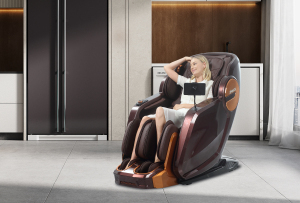
Figure 1 — A 4D massage chair in the zero-gravity category (model 6920). The recline is shared with baseline chairs; the massage mechanism and sensing layer are what differ.
The Comparison Buyers Actually Face
Baseline zero-gravity chairs are normally specified on three criteria: a design language that suits the room, build quality that survives the warranty period, and price. That trio is legitimate. It is how most residential and light-commercial volume is bought, and a chair that satisfies all three is not a compromised product — it is a correctly scoped one for a brief that only asks for relaxation, recline and a furniture-grade finish.
A 4D platform is specified on a fourth criterion: whether the chair performs a function the buyer can charge for, prescribe, or present as a health feature. The 4D mechanism changes how the rollers move; automatic body shape detection changes where the massage lands; AI health detection changes what the operator can say about the session. None of those are aesthetic decisions.
Two procurement failures follow from confusing the two tiers.
- Over-specification. A hotel or residential project pays for a 4D mechanism, AI health detection and 24 automatic programs on a site where no one opens the program list — while accepting 103 kg net weight, a 118 kg gross weight and a reclined footprint of 1800 × 790 mm that constrains room layout and freight planning.
- Under-specification. A senior-care lounge, spa or showroom brief written around "wellness" is filled with a chair that offers no automatic body shape detection and no programmable intensity variation. The operator then cannot differentiate the service, and the chair reads as furniture rather than equipment.
The physical difference is not cosmetic either. The platform measures 1600 (L) × 790 (W) × 1230 (H) mm upright and 1800 (L) × 790 (W) × 900 (H) mm reclined: depth grows by 200 mm and height drops by 330 mm as the chair opens. Buyers who compare only the upright dimension routinely under-plan the room.
Industry Background: Why the 4D Tier Moved Into Mainstream Briefs
The global massage chair market was estimated at USD 3.8 billion in 2024 and is projected to reach USD 6.1 billion by 2034, according to Business Research Insights / IMARC Group. Growth alone does not explain the shift toward 4D — segmentation does.
Full-body massage chairs held a 55.3% share of the product segment in 2024, and robotic designs including 3D and 4D technology accounted for 63.4% of the design segment in the same year (Business Research Insights). Approximately 41% of new massage chair models released in 2024 integrated AI-based sensors for personalised user experiences, per the International Spa Association data reported through the same source. In other words, the sensing layer that separates a 4D chair from a baseline zero-gravity chair is no longer an exception in new development; it is a mainstream design direction.
Geography and channel shape the sourcing brief as much as the technology. Asia Pacific is the largest market for massage chairs, driven by high adoption in China, Japan and South Korea (Grand View Research). Massage chairs and sofas accounted for 39.5% of total massage equipment market revenue in 2024 (Grand View Research), and residential applications represent over 70% of market volume in some regions (Mordor Intelligence). Online distribution is identified as the fastest-growing sales channel (TechSci Research), while the US luxury segment is expected to grow by USD 43.7 million between 2023 and 2028 (Technavio).
The procurement implication is straightforward. A buyer sourcing for residential volume is sourcing into the largest end-use block, where design and price discipline matter. A buyer sourcing for luxury, hospitality or care-adjacent sites is sourcing into the block where feature differentiation is the product.
What a 4D Configuration Adds — and What It Costs Structurally
Both tiers share the zero-gravity principle. Zero-gravity recline distributes body weight evenly to reduce spinal pressure and enhance massage depth (Fortune Business Insights). That benefit belongs to the baseline chair as much as to the 4D chair, which is why "zero gravity or 4D" is the wrong question.
The 4D layer is about movement control. Advanced 4D rollers simulate human pacing by varying speed and rhythm dynamically in three dimensions plus a fourth dimension of speed control (Titan Chair). A dual-mechanism 4D design goes further: it allows simultaneous, independent massage of the upper back and lower glute regions (Healing Touch Massage Chairs / Positive Posture). Track geometry completes the picture — flexible SL-track systems extend the massage range from the neck down to the hamstrings, following the S-curve of the spine (Infinity Massage Chairs).
On the Zhouqi 4D massage chair platform, those principles appear as a documented configuration rather than a marketing claim:
- 4D max massage manipulator, described in the specification as combining rigidity with softness, and comfort with safety.
- Flexible SL track, 130 cm in length, shaped to follow the spine curve.
- Automatic body shape detection, positioned in the specification as the mechanism that locates the sore point.
- AI health detection as a distinct function.
- Heating massage on foot and waist.
- 24 automatic programs plus a "Favorite" function for storing a preferred program.
- 7-inch touch remote controller with quick button, Bluetooth and voice control, and wireless charging.
- Full-body airbag massage covering shoulder, hip, hand, leg and foot.
- Auto footrest with knee massage, three-row foot roller and calf roller massage, plus automatic adjustment of leg angle.
- One-button zero-gravity positioning with forward space travel.
- Electrical and material baseline: 110V–240V, 50/60Hz input, 200W rated power, 15-minute auto timer, and a build of iron, foam, leather and ABS plastic.
The health positioning is not exclusive to this manufacturer, and buyers should present it accurately. Research by OGAWA and USM reported through Business Today / TechSci Research showed that AI-powered massage chairs can reduce systolic blood pressure by up to 7.6% in hypertensive users. That is a cited study result about AI-powered chairs as a class — it is not a claim that any specific model treats hypertension, and it should not be rewritten as one in retail copy.
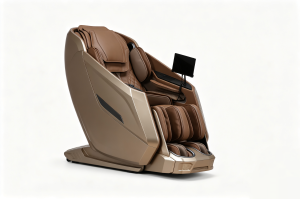
Figure 2 — A 4D configuration with the 4D max manipulator and 130 cm flexible SL track (model 7100). The mechanism, not the recline, is the tier separator.
Head-to-Head Decision Matrix: Baseline Zero-Gravity vs 4D
The matrix below compares a baseline zero-gravity chair against the verified 4D platform specification. Where the baseline column reads "configuration-dependent", the point is not a hidden weakness — it is that baseline chairs are quoted per supplier and per project, and those values must be confirmed on the quotation and the sample rather than assumed.
| Decision factor | Baseline zero-gravity chair | 4D zero-gravity chair (verified platform) | What it means for the project |
|---|---|---|---|
| Primary buying criteria | Popular design, acceptable quality, price | Feature performance plus design and price | The baseline brief is answered by aesthetics and cost; the 4D brief is answered by function. |
| Massage mechanism | Configuration-dependent; confirm intensity control on sample | 4D max massage manipulator with variable speed and rhythm | 4D changes the feel of the session, not the recline angle. |
| Track and coverage | Configuration-dependent; confirm track type and length | Flexible SL track, 130 cm, following the spine curve | Coverage from neck toward the hamstring region is a specification item, not a slogan. |
| Body fit | Typically fixed presets | Automatic body shape detection | Multi-user sites benefit most; single-user homes benefit least. |
| Health sensing | Not part of the baseline brief | AI health detection | Supports a care-adjacent or premium narrative, and requires accurate copy. |
| Heat | Confirm availability per model | Heating massage on foot and waist | A concrete, testable difference at the sample stage. |
| Programs and controls | Preset buttons, configuration-dependent | 24 auto programs, Favorite function, 7-inch touch remote plus quick button, Bluetooth, voice control, wireless charging | Affects staff training time and perceived product tier. |
| Air massage | Configuration-dependent | Shoulder, hip, hand, leg and foot airbags | Broadens the sensation beyond roller contact. |
| Leg and foot treatment | Configuration-dependent | Auto footrest with knee massage, three-row foot roller, calf roller, auto leg angle adjustment | Relevant for long-dwell sites and for taller users. |
| Recline geometry | Recline function present; dimensions vary by model | Upright 1600×790×1230 mm; reclined 1800×790×900 mm; one-button ZG with space-forward travel | Plan 200 mm of extra depth and 330 mm of height change. |
| Weight | Generally lighter; confirm per model | N.W. 103 kg / G.W. 118 kg | Affects floor loading, two-person handling and freight cost. |
| Carton | Confirm per model | 1460×810×1200 mm | Drives container and warehouse cube planning. |
| Power | Confirm per market | 110V–240V, 50/60Hz, 200W, 15-minute auto timer | Dual-voltage input simplifies multi-market programmes. |
| Materials | Confirm per model | Iron, foam, leather, ABS plastic | Material list is the basis for cleaning and durability expectations. |
| Compliance basis | Confirm marks per supplier | IEC 60335-2-32:2024 applies to household electric massage appliances; Zhouqi holds CE, CB, RoHS, ETL and FCC, plus ISO 9001 and ISO 13485 | Compliance is a gate, not a differentiator — both tiers need it. |
| Best-fit brief | Design-led residential and light commercial volume | Premium home, hospitality, showroom, senior care, corporate wellness, pay-per-use | Match tier to the revenue model, not to the showroom impression. |
Verified Specification Snapshot
The figures below are the platform specification for the Zhouqi 4D massage chair and are the numbers a buyer should carry into a quotation review, a floor plan or a container calculation.
| Product category | 4D massage chair, zero-gravity massage chair category |
| Model designations | 6510, 5300, 5380, 8620, 6920, 8600, 3900, 3910, 9100, 8520, 6540, 6600, 7100, 8710 |
| Product dimensions | Upright: 1600 (L) × 790 (W) × 1230 (H) mm — Reclined: 1800 (L) × 790 (W) × 900 (H) mm |
| Box dimensions | 1460 (L) × 810 (W) × 1200 (H) mm |
| Net / gross weight | 103 kg / 118 kg |
| Power input | 110V–240V, 50/60Hz |
| Rated power | 200W |
| Auto timer | 15 minutes |
| Materials | Iron, foam, leather, ABS plastic |
| Intended industries | Home furniture, hospitality, wellness, healthcare, corporate office, real estate, transportation, retail, public-service, automobile, finance and education |
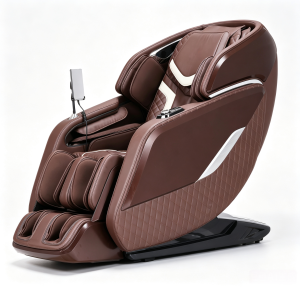
Figure 3 — Zero-gravity geometry in practice (model 6600). The platform moves from 1600×790×1230 mm upright to 1800×790×900 mm reclined.
Step-by-Step Procurement Breakdown
Step 1 — Fix the end use and the daily cycle
Write down who sits in the chair, how often, and for how long. A single-user living room with a 15-minute evening session and a pay-per-use site running continuous cycles are different duty profiles. The 15-minute auto timer and 24 automatic programs on the 4D platform are designed for repeat, unattended sessions; a baseline chair used once a day does not need that program depth.
Step 2 — Decide whether variable intensity is a requirement or a preference
4D movement varies speed and rhythm across three dimensions plus speed control. If the brief only asks for relaxation after work, a fixed-intensity baseline chair answers it. If the brief promises a personalised session — to guests, residents or showroom visitors — variable intensity becomes a requirement, and the 4D mechanism is the specification that delivers it.
Step 3 — Test the body-fit logic, not just the roller
Automatic body shape detection is the feature that determines whether the massage lands on the right point for different users. On a multi-user site, test it with at least three body types during the sample review. On a single-user home purchase, this is a convenience rather than a justification for the tier upgrade.
Step 4 — Decide which health-adjacent claims you will actually publish
AI health detection is a platform function. The supporting evidence is the OGAWA and USM study showing up to 7.6% systolic blood pressure reduction in hypertensive users with AI-powered massage chairs, reported through Business Today / TechSci Research. Any claim beyond that must be written and checked deliberately; a 4D chair is wellness equipment, and the copy should say so.
Step 5 — Confirm the compliance path before the price
IEC 60335-2-32:2024 specifically governs the safety of electric massage appliances for household use, including chairs. Ask for the mark set required by the destination market. Zhouqi products carry CE, CB, RoHS, ETL and FCC, and the manufacturer holds ISO 9001 and ISO 13485 certification. Compliance applies equally to baseline and 4D chairs; it is a filter, not a tiebreaker.
Step 6 — Measure the room and the logistics chain
Take the reclined dimension, not the upright one, to the floor plan: 1800 mm depth against 1600 mm. Then take the 103 kg net weight and the 1460×810×1200 mm carton to the freight calculation. A 200 mm depth increase and a 118 kg gross weight change installation, delivery method and, on upper floors, access planning.
Step 7 — Qualify the supply programme behind the specification
Features are only deliverable if the factory can repeat them. Ningbo Zhouqi Health Technology Co., Ltd. was established in 2008, operates a 130,000 m² manufacturing facility with approximately 450 staff, a 34-engineer R&D team and five production lines, and reaches an annual production capacity of 200,000 units. Its main products are massage chairs, exports account for 50% of sales, and major markets are the USA, EU, Southeast Asia and the Middle East.
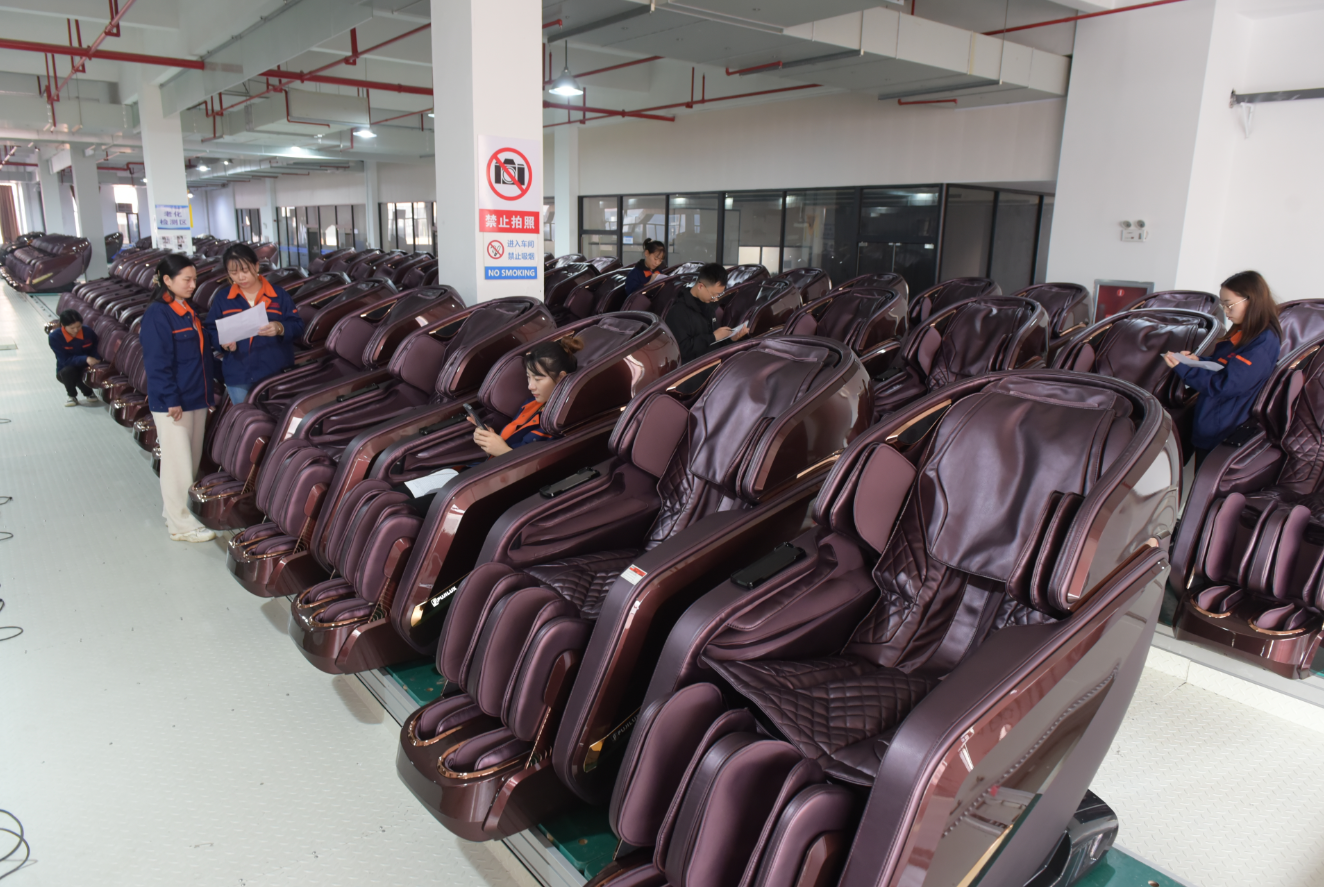
Figure 4 — Factory-outgoing quality control. A 4D specification is only valuable if it can be repeated across a production run.
Use Cases: Where Each Configuration Wins
Home use and residential projects
Residential applications account for over 70% of market volume in some regions, and in that segment the deciding factors are usually room fit and finish. A home-use 4D chair earns its place when the household includes several users of different sizes — automatic body shape detection, the Favorite function and voice control all reduce friction. The trade-off is the footprint: 1800 mm of depth when reclined and 103 kg of net weight that must sit on a floor the owner has already finished.
Hospitality, 4S showrooms and retail
In a showroom or hotel spa, the chair is a demonstrator. The 7-inch touch remote with quick button, one-button zero-gravity positioning and 24 automatic programs shorten the explanation a host has to give, and the space-forward travel of the recline helps in tight layouts. In these settings the 4D mechanism is justified by the impression it makes in the first three minutes of a session.
Senior care and healthcare-adjacent lounges
Care-adjacent deployment is where the feature gap is widest. Automatic body shape detection, heating on foot and waist, and slower 4D pacing are functional requirements rather than luxuries, and the manufacturer's ISO 13485 certification supports a quality-system conversation. Claims must stay within the cited research: up to 7.6% systolic blood pressure reduction in hypertensive users with AI-powered chairs, as reported by OGAWA and USM research.
Corporate wellness and office recovery rooms
Shared equipment in an office needs low training overhead and predictable session length. The 15-minute auto timer, 24 programs and voice control fit that pattern; a baseline zero-gravity chair with a single preset is usually enough where the room is used for short breaks rather than programmed sessions.
Shared pay-per-use operation
Unattended operation raises the value of automatic behaviour: 24 programs, one-button zero-gravity, airbag coverage across shoulder, hip, hand, leg and foot, and a foot roller assembly built into the platform. The corresponding cost is the 118 kg gross weight and carton volume, which affect how many units fit a container and how fast a site can be installed.
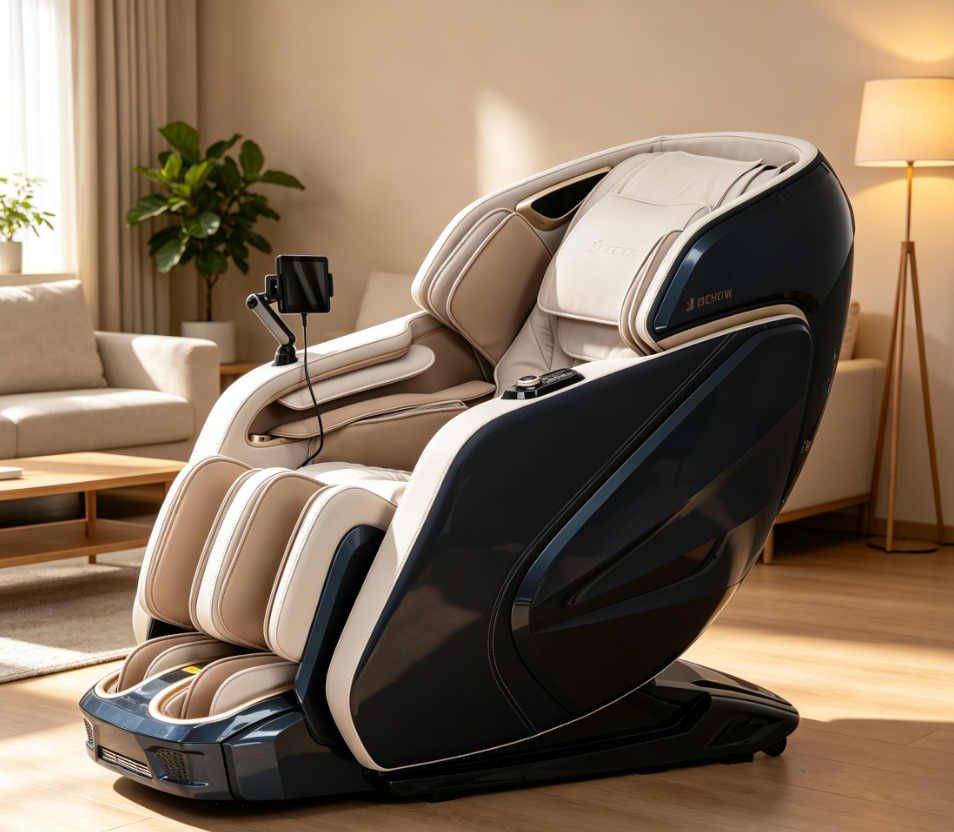
Figure 5 — Home-use deployment. In residential settings, furniture aesthetics and reclined depth often outweigh the extra mechanism.
FAQ
Which safety standard and marks apply to a 4D massage chair for import?
IEC 60335-2-32:2024 specifically governs the safety of electric massage appliances for household use, including chairs, so it is the reference standard for a household-rated massage chair regardless of whether the mechanism is 4D or baseline. On top of the standard, the importer should confirm the mark set required by the destination market. Zhouqi products are certified with CE, CB, RoHS, ETL and FCC for international market entry, and Ningbo Zhouqi Health Technology Co., Ltd. maintains ISO 9001 and ISO 13485 quality management system certification.
Does a 4D mechanism actually change capability compared with a standard zero-gravity chair?
It changes movement control, not the recline. Advanced 4D rollers simulate human pacing by varying speed and rhythm dynamically in three dimensions plus a fourth dimension of speed control, whereas a baseline chair typically runs a fixed roller pattern. On a dual-mechanism 4D chair, the upper back and lower glute regions can be massaged simultaneously and independently. The Zhouqi 4D platform pairs a 4D max massage manipulator with a 130 cm flexible SL track, automatic body shape detection and AI health detection, and adds heating on foot and waist, 24 automatic programs and a 7-inch touch remote with Bluetooth and voice control.
What drives the cost difference between the two tiers?
Cost tracks the configuration, not the category label. The main drivers are the 4D mechanism itself, dual-mechanism architecture where specified, the sensing layer (automatic body shape detection and AI health detection), electronics such as the 7-inch touch remote, Bluetooth, voice control and wireless charging, heating elements for foot and waist, and the airbag count across shoulder, hip, hand, leg and foot. Logistics also carries cost: 103 kg net weight against 118 kg gross, and a carton of 1460 × 810 × 1200 mm, both of which affect freight and container loading. Pricing is quoted per configuration rather than published as a list, so the reliable comparison is a like-for-like quotation on the same model designation, airbag layout and control set.
How should a buyer validate a sample before committing to a programme?
Validate four things in order. First, measure the chair in both positions — 1600 × 790 × 1230 mm upright and 1800 × 790 × 900 mm reclined — against the actual room, not the drawing. Second, test automatic body shape detection with more than one body type and check where the roller lands. Third, run several of the 24 automatic programs and confirm the Favorite function stores the one you want, and check the 7-inch touch remote, quick button and voice control in the language of the end market. Fourth, inspect the build against the material list of iron, foam, leather and ABS plastic, and confirm the mark set on the unit matches the certificate file.
What lead-time factors should be planned before ordering?
Lead time is a function of configuration and volume rather than a fixed number. Ningbo Zhouqi Health Technology Co., Ltd. operates a 130,000 m² facility with approximately 450 staff, five production lines, a 34-engineer R&D team and annual capacity of 200,000 units, so scheduling is set by the model designation selected, the control and airbag configuration, and where the order sits against existing export programmes to the USA, EU, Southeast Asia and the Middle East — exports represent 50% of sales. Confirm the production slot and the inspection point at quotation stage, then lock the carton and weight data (103/118 kg, 1460 × 810 × 1200 mm) with the forwarder. To start that process, request a configuration-level quotation or a sample unit from the Zhouqi team — Shelley Zhang, shelley@cn-zhouqi.com, +86 182 5079 5612.
Conclusion
The decision between a 4D massage chair and a baseline zero-gravity chair is a decision about what the chair has to do after installation. Where the brief is a living room, a light-commercial lounge or a showroom that sells on design, the baseline zero-gravity chair answers the requirement at a lower weight, a smaller reclined footprint and a lower price point — and the 4D mechanism adds capability the site will not use.
Where the brief commits to personalised sessions, multi-user body fit, health-adjacent positioning or unattended operation, the 4D platform is the correct specification. It brings a 4D max massage manipulator, a 130 cm flexible SL track, automatic body shape detection, AI health detection, heating on foot and waist, 24 automatic programs and a 7-inch touch remote with Bluetooth and voice control. It also brings 103 kg net weight, a 118 kg gross weight, a 1460 × 810 × 1200 mm carton and a reclined depth of 1800 mm — the numbers that separate a furniture purchase from an equipment purchase.
Buyers who compare the two tiers on mechanism, sensing, geometry, compliance and supply programme, in that order, get a shortlist that survives both the showroom and the installation. Buyers who compare them on design and price alone end up paying for one tier and installing the other.
Next step: configure the chair against your brief
Share the end use, the room dimensions measured in the reclined position, the destination market and the mark set you need. Ningbo Zhouqi Health Technology Co., Ltd. will respond with a configuration-level quotation or a sample arrangement for the model designation that fits — 6510, 5300, 5380, 8620, 6920, 8600, 3900, 3910, 9100, 8520, 6540, 6600, 7100 or 8710.
Website: www.cn-zhouqi.com · Email: shelley@cn-zhouqi.com · Tel / WhatsApp: +86 182 5079 5612 · Address: No. 517, Guanshen Road, Binhai Economic Development District, Cixi, Zhejiang Province, China
Download the 2026 catalogue: 2026 E-catalogue (PDF)
Figure 6 — Request a sample or a configuration-level quotation for the 4D massage chair platform (model 6540 shown).
Have Questions or Need More Details?
Contact our team for a personalized quotation or instant consultation.
Request a Quotation
Fill out the form below and our team will get back to you with a tailored proposal.
WhatsApp Direct Chat
Prefer to chat in real-time? Message us on WhatsApp for instant assistance & quick answers.
- Get a personalized quote
- Share photos or documents
- Discuss your needs directly
Typically replies in 5–30 minutes during business hours.