
A Technical Guide to 4D Massage Chair Power Input and Adaptability
A Technical Guide to 4D Massage Chair Power Input and Adaptability
A 4D massage chair rated for 110–240V input at 50/60Hz with a 200W rated power can serve the United States, the European Union, Southeast Asia and the Middle East from a single electrical platform. That one specification decides whether a distributor manages one SKU or four. For importers, brand owners and procurement teams working between the Decision and Execution stages, power input is not a datasheet footnote — it sets certification scope, spare-part inventory, plug configuration, after-sales exposure and the amount of working capital tied up in parallel product versions.
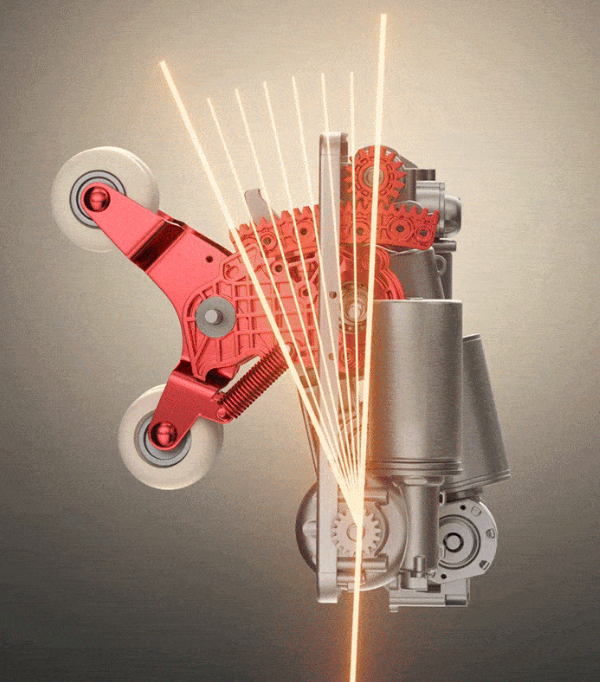
A 4D massage chair platform: the 4D roller carriage, air system and recline actuators are all driven from the same power stage.
Why Power Input Is a Sourcing Decision, Not a Detail
A 4D massage chair is an electro-mechanical product. The 4D roller carriage moves up and down, left and right, and extends and retracts with dynamically adjustable speed and rhythm. Recline actuators, air pumps and the control board sit behind that movement. Every one of those subsystems draws from the same power stage, which means the nameplate voltage is a system-level decision rather than an accessory choice.
When that power stage accepts only one narrow voltage band, one chair becomes several products. Each market version needs its own certification file, its own carton and label artwork, its own spare-part list and its own service instruction. The added cost does not appear on the unit quotation. It appears later — in mixed pallets, in distributor confusion about which unit belongs in which country, in technicians who must stock two sets of control boards, and in compliance folders that no longer match the units actually on the floor.
Wide-range input removes that fragmentation. When a unit is specified for 110–240V and 50/60Hz with a rated power of 200W, the electrical platform stops being a market-specific variable and becomes a shared platform across markets. For a distributor planning a multi-year product line, that is the difference between adding a market and rebuilding a product.
What breaks when the power stage is narrow
- SKU multiplication: separate voltage versions mean separate model numbers, separate labels and separate inventory positions.
- Certification duplication: each market version requires its own documentation set, even when the mechanism is identical.
- Service complexity: service partners must identify which electrical version a customer owns before ordering parts.
- Channel friction: cross-border stock transfers between affiliated distributors become impractical.
Industry Background: Robotics Growth Meets Stricter Electrical Standards
Demand for robotic massage products continues to expand. The global massage chair market was estimated at USD 3.8 billion in 2024 and is projected to grow to USD 6.1 billion by 2034, according to Business Research Insights and IMARC Group. Market-sizing figures do diverge between providers because of scope: Grand View Research measures the broader massage equipment market, including chairs and sofas, and reports a larger base. Buyers should therefore treat any single headline number as a scope-dependent estimate rather than a fixed benchmark.
Within that demand, technology intensity is rising. Robotic massage chairs, including 3D and 4D designs, held a 63.4% share of the design segment in 2024, and full-body massage chairs accounted for 55.3% of the product segment in the same year. Approximately 41% of new massage chair models released in 2024 integrated AI-based sensors for personalized user experiences. Residential use remains dominant — in some regions it represents over 70% of market volume — while online distribution is identified as the fastest-growing sales channel.
Regulation has moved in step with this complexity. The IEC 60335-2-32:2024 standard specifically governs the safety of electric massage appliances for household use, including chairs. That standard is the technical reference behind market-entry requirements such as CE marking in the European Union. Ningbo Zhouqi Health Technology Co., Ltd. products are certified with CE, CB, RoHS, ETL and FCC for international market entry, and the company maintains ISO 13485 (Medical Devices) and ISO 9001 quality management system certifications. For a distributor, the practical meaning is simple: the electrical specification and the compliance file have to be evaluated together, because one determines whether the other can be used.
Reading the Specification: 110–240V, 50/60Hz, 200W
Three numbers carry most of the sourcing risk on a 4D massage chair: the input voltage range, the frequency band and the rated power. Read together, they define which markets a single unit can enter.
110–240V wide-range input
A 110–240V input range covers nominal North American supplies at the lower end and European and many Middle Eastern and Asian supplies at the upper end. The commercial consequence is that one hardware version can be shipped against multiple grid conditions, which reduces the number of electrical variants a distributor must finance. Instead of a 110V model line and a 220V model line, a single model number can be planned across markets.
50/60Hz frequency compatibility
North America operates on a 60Hz supply while Europe and much of Asia and the Middle East operate on 50Hz. Wide-input designs typically convert alternating current to a regulated internal DC rail, which is why the massage mechanism can behave consistently under either frequency. For the buyer, the practical outcome is that roller rhythm, air-pump cycling and actuator timing do not require a frequency-specific variant, and a demonstration unit remains representative wherever it is shipped.
200W rated power
A rated power of 200W describes the continuous electrical load the unit is designed to draw. As an order-of-magnitude illustration, that corresponds to roughly 1.8A on a 110V circuit and roughly 0.9A on a 240V circuit — a load class that sits comfortably inside ordinary household branch circuits, provided the cord set and plug match destination market requirements.
The rated figure also has an engineering meaning. A 4D mechanism adds an extend-and-retract axis on top of the conventional up-down and left-right movement, and that extra axis plus the air system has to be supported by the drive and power stage. Specifications should therefore be checked as a set: voltage range, frequency, rated power and the mechanical configuration the unit is built around. For reference, 4D chairs commonly deliver 8–10 cm of adjustable depth with five or more speed levels and multiple massage programs, and dual-mechanism 4D designs allow simultaneous, independent massage of the upper back and lower glute regions.
One safety note belongs alongside the electrical review. Gaps in a massage chair present a recognized risk for children and pets. The manufacturer addresses this with an anti-pinch system integrated into the chair, so risk control is achieved through anti-pinch design rather than through customer instructions alone.
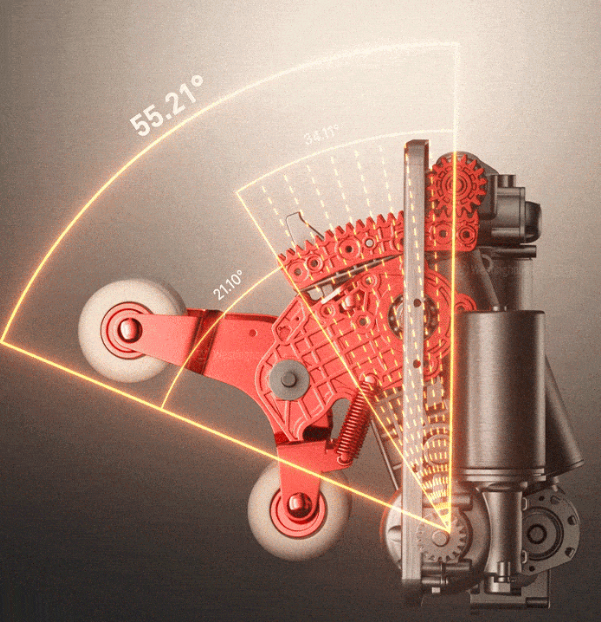
The 4D carriage adds an extend-and-retract axis beyond conventional up-down and left-right roller movement.
What Power Adaptability Means for Distributors and Long-Term Partners
Voltage adaptability matters most after the first container. It determines how easily a distributor can expand, how much inventory has to be duplicated, and how stable the product platform remains over the length of a manufacturing relationship.
- One platform, several markets. Export business accounts for 50% of total sales at Ningbo Zhouqi Health Technology Co., Ltd., with main markets in the USA, EU, Southeast Asia and the Middle East — a footprint that only works cleanly when the electrical platform travels with it.
- Certification that matches the unit shipped. CE, CB, RoHS, ETL and FCC coverage supports market entry, while ISO 13485 and ISO 9001 certifications describe the management systems behind production. Electrical compliance and quality systems are reviewed together, because a certificate is only useful when it belongs to the model actually delivered.
- Manufacturing capacity to hold one specification. The manufacturer was founded in 2008 and operates a 130,000 ㎡ factory with 450 employees, an annual output of 200,000 units and 5 production lines. The company specializes in massage chairs and maintains an R&D team of 34 engineers.
- Service continuity. A single electrical platform means one spare-part reference set for control boards, actuators and power components, which shortens the diagnostic path for service partners in every market.
- Long-term partnership stability. When a distributor adds a country, the platform does not change. That continuity is what makes a manufacturing relationship efficient over several seasons instead of one order cycle.
Step-by-Step: Verifying Power Adaptability Before You Commit
The following sequence is written for procurement and engineering teams who need to confirm electrical adaptability before placing a production order.
- Read the nameplate on the sample, not the brochure. Confirm the input range, frequency band and rated power on the physical unit. The specification that governs certification and customs documentation is the one on the product, not the one in a sales deck.
- Map the nameplate against each destination grid. For each target market, confirm that the declared input range covers the local nominal supply and that the cord set and plug match local requirements.
- Match certificate scope to the exact model. Verify that CE, CB, RoHS, ETL and FCC documents reference the model number and voltage configuration being purchased, and that the safety basis aligns with IEC 60335-2-32:2024 for household electric massage appliances.
- Confirm the factory can hold one electrical platform across markets. Ask how production lines are organized, whether one component set serves multiple market versions, and how the R&D team handles configuration changes. At Ningbo Zhouqi, these functions sit inside a 130,000 ㎡ facility with 450 employees, 5 production lines and 34 R&D engineers.
- Run pre-shipment testing and independent inspection. The stated acceptance criteria are a pre-shipment test plus third-party inspection (SGS). For electrical products, function testing after transport simulation is the point where voltage-stage problems usually surface.
- Lock the documentation pack. Confirm that the certificate set, nameplate artwork, carton marking and instruction manual all describe the same voltage and frequency specification as the shipped goods.
| Verification item | What to confirm | Evidence to request |
|---|---|---|
| Electrical rating | 110–240V input, 50/60Hz, 200W rated power on the actual unit | Sample nameplate photo and specification sheet matching the model number |
| Market-entry compliance | Certificates cover the exact model and configuration | CE, CB, RoHS, ETL and FCC documentation; IEC 60335-2-32:2024 alignment for household electric massage appliances |
| Quality system | Production and quality management are auditable | ISO 13485 and ISO 9001 certification records |
| Safety design | Gap-related risk for children and pets is engineered out | Description of the integrated anti-pinch system in the chair |
| Pre-shipment verification | Units perform to specification before departure | Pre-shipment test report; third-party inspection (SGS) |
| Commercial terms | Order planning and cash flow are clear | MOQ 1*40HQ; FOB Ningbo; 30% T/T deposit, balance 70% T/T before shipment |
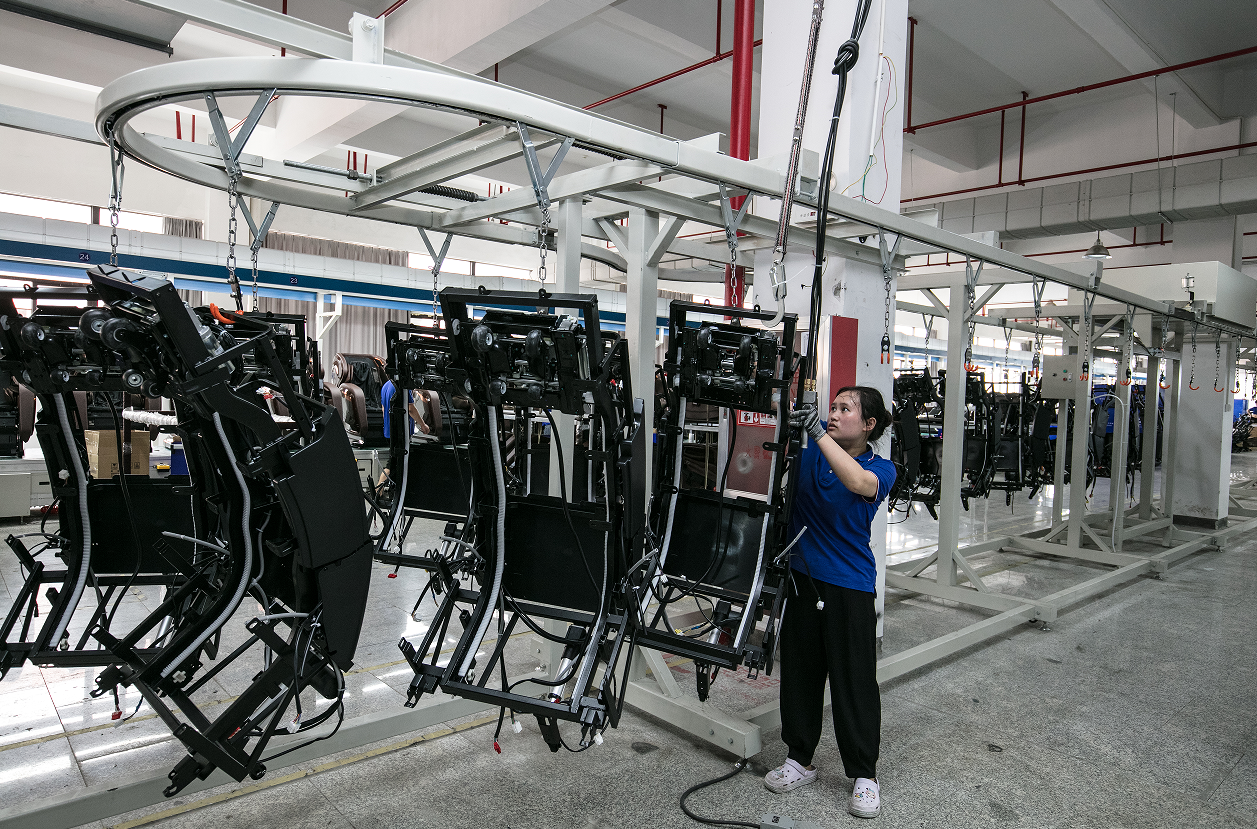
Assembly capacity behind a single electrical platform: 5 production lines, 450 employees and a 130,000 ㎡ factory.
Use Cases: One Power Platform, Four Market Situations
EU distributor building a retail and showroom line
A European distributor needs a 220–240V, 50Hz product with CE documentation ready before listing. With wide-range input, the same unit that passed sample evaluation in Europe can later be transferred to an affiliated distributor in another region without re-engineering the electrical side.
US importer selling through online and specialty channels
A US importer operates on a 110–120V, 60Hz supply and must document ETL and FCC compliance. Because online distribution is the fastest-growing channel for massage chairs, listing stability matters: a model whose voltage specification does not change between production batches is far easier to keep merchandised and reviewed.
Southeast Asia and Middle East project buyers
Buyers in these regions frequently work across several countries within one order cycle. Supplies can vary between the lower and upper ends of the 110–240V range. A wide-input unit reduces the number of electrical variants in a mixed order, which simplifies customs documentation and local inspection.
Multi-market brand portfolios and showroom operators
Brands that display and demonstrate 4D chairs in several countries benefit from one demonstration specification. Sales staff can present the same unit model, the same control behavior and the same service story regardless of location, and residential end users — still the dominant end-use segment — receive consistent performance at home.
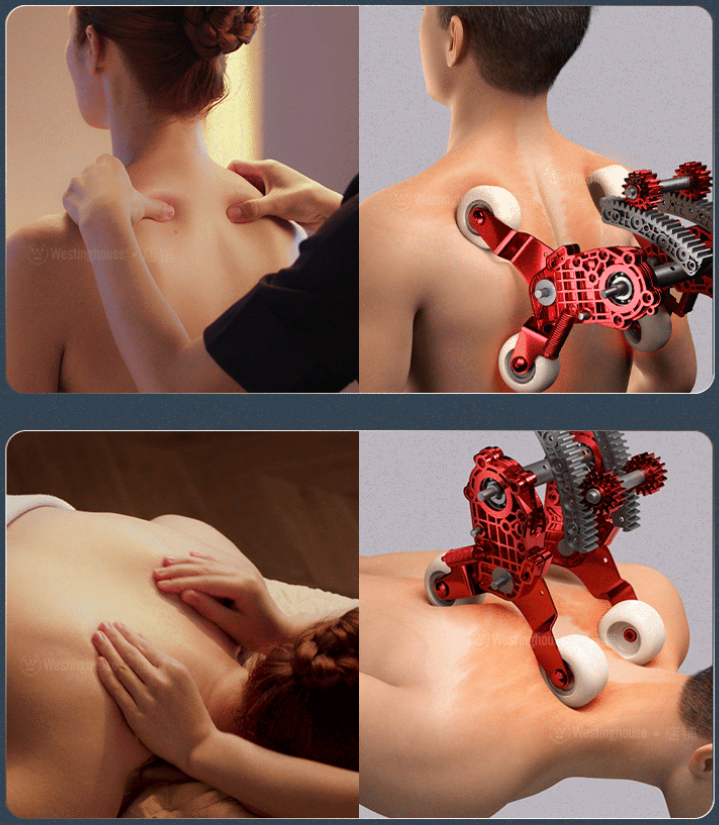
Residential use remains the dominant application for 4D massage chairs in most markets.
4D vs 2D Massage Chair: What Changes Beyond the Electronics
The comparison below separates the mechanical and control differences between 2D and 4D massage chairs. It is a configuration comparison, not a power-platform comparison — the electrical specification is agreed separately through the steps above.
| Attribute | 2D Massage Chair | 4D Massage Chair |
|---|---|---|
| Roller movement | Rollers move up-down and left-right only; fixed plane movement with no depth adjustment | Up-down, left-right plus extend and retract, with dynamically adjustable speed and rhythm |
| Depth and control | 0 cm depth adjustment, fixed pressure, basic surface massage | 8–10 cm adjustable depth, 5+ speed levels, 24+ massage programs, variable rhythm control |
| Best suited to | Home, office | Home, office |
| Relative cost | Baseline | Around USD 100 higher in cost |
| Maintenance profile | Simple roller mechanism, fewer moving parts, low maintenance requirement | Complex multi-drive mechanism; periodic inspection recommended for extend and retract components |
| Relief profile | Basic relaxation for mild tiredness | Comprehensive relief for muscle soreness; effective for chronic fatigue |
Two additional mechanical details are worth noting when reviewing a 4D configuration: dual-mechanism 4D technology allows simultaneous, independent massage of the upper back and lower glute regions, and a flexible SL-track system extends the massage range from the neck down to the hamstrings while following the S-curve of the spine.
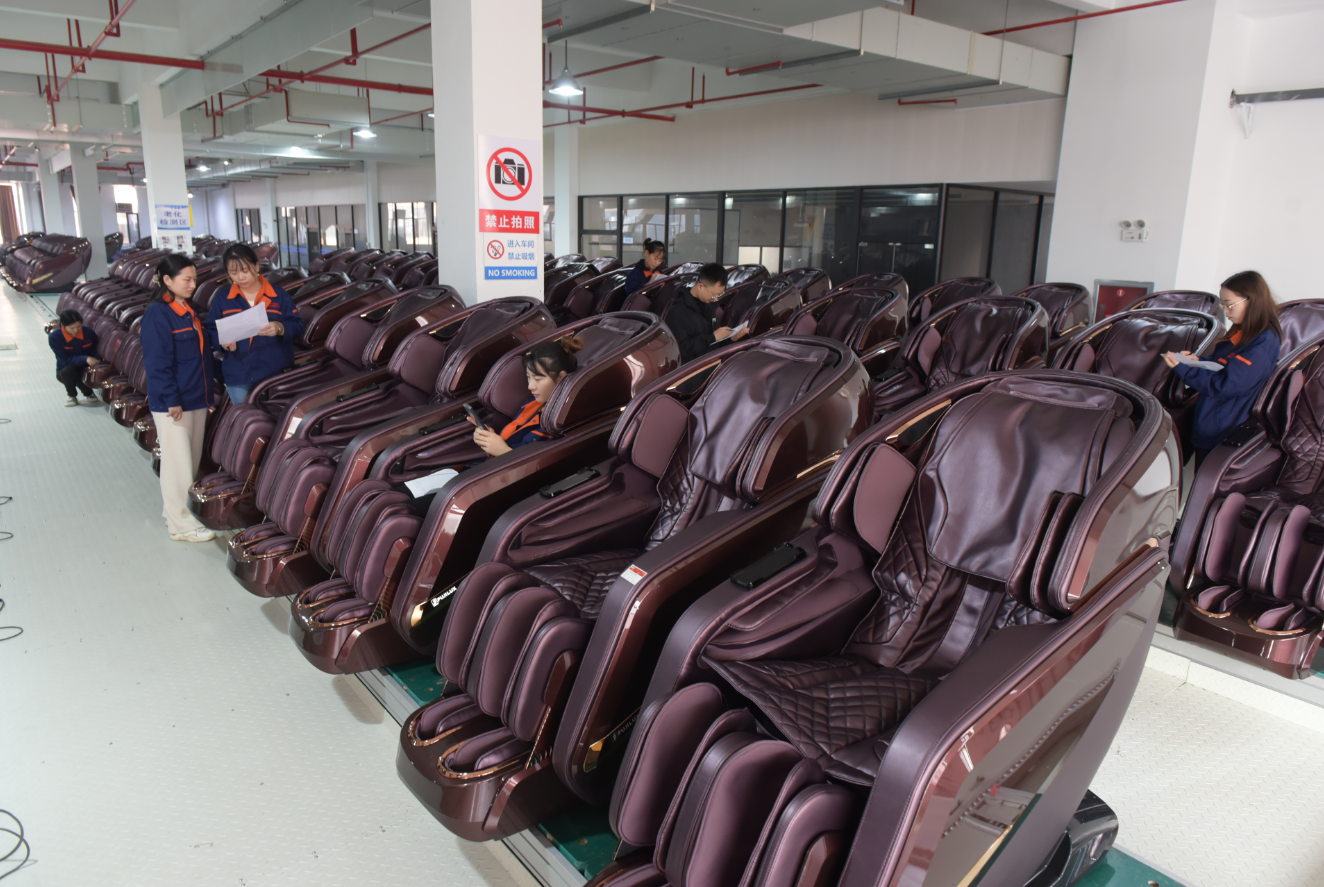
Outgoing quality control: pre-shipment testing and third-party inspection (SGS) are the stated acceptance criteria.
Frequently Asked Questions
Which certifications should an EU or North American buyer verify on a 4D massage chair?
For European market entry, CE marking is the primary requirement, supported by CB and RoHS documentation; for the United States, ETL and FCC coverage is relevant. Products from Ningbo Zhouqi Health Technology Co., Ltd. are certified with CE, CB, RoHS, ETL and FCC. This matters because the underlying safety reference for household electric massage appliances is IEC 60335-2-32:2024, so the electrical specification and the certificate scope have to describe the same unit. Factory-level quality systems are certified to ISO 13485 (Medical Devices) and ISO 9001.
Can one 4D massage chair model operate in both 110V and 240V markets?
Yes, when the unit is specified for 110–240V input at 50/60Hz with a rated power of 200W. That range covers nominal North American supplies at the lower end and European, Middle Eastern and Asian supplies at the upper end, which means a single model number can be planned across markets instead of separate voltage versions. The manufacturer behind this platform, Ningbo Zhouqi Health Technology Co., Ltd., was founded in 2008 and operates a 130,000 ㎡ factory with 450 employees, an annual output of 200,000 units, 5 production lines and an R&D team of 34 engineers dedicated to massage chairs.
What are the standard purchasing terms for a 4D massage chair order?
The stated terms are MOQ 1*40HQ with FOB Ningbo delivery. Payment is 30% of T/T in advance as deposit, with the balance of 70% of T/T before shipment. Acceptance criteria combine a pre-shipment test with third-party inspection (SGS). These terms apply to container-level orders, which is the model most distributors use when a single electrical platform is being planned across several markets.
How can a distributor verify power input and safety before mass production?
Verification starts with the physical nameplate rather than the specification sheet: confirm 110–240V, 50/60Hz and 200W on the sample unit, then match the model number against the certificate set. Ask for a pre-shipment test and arrange third-party inspection through SGS. Safety design should also be reviewed separately from the electrical review — the manufacturer integrates an anti-pinch system into the chair so that the risk of children or pets getting stuck in the chair's gaps is managed through anti-pinch design rather than through user instructions alone.
What should home wellness distributors look for in a long-term 4D massage chair manufacturing partner?
Long-term value comes from platform stability rather than a single quotation. A partner should be able to hold one electrical specification across markets, support it with matching certification, and service it with one spare-part reference set. Ningbo Zhouqi Health Technology Co., Ltd. specializes in massage chairs, exports approximately 50% of total sales with main markets in the USA, EU, Southeast Asia and the Middle East, and backs the platform with 34 R&D engineers and 5 production lines. Distributors can request samples, quotations or the catalogue through shelley@cn-zhouqi.com or +86 182 5079 5612.
Conclusion
Power input is the quiet variable in 4D massage chair sourcing. A unit specified at 110–240V, 50/60Hz with a rated power of 200W allows one electrical platform to serve North America, Europe, Southeast Asia and the Middle East, with CE, CB, RoHS, ETL and FCC certification covering market entry and ISO 13485 and ISO 9001 covering the systems behind production. The verification work is straightforward but must be done in order: read the nameplate on the sample, match it to each destination grid, confirm certificate scope, confirm factory capability, then lock pre-shipment testing and documentation. Done correctly, the electrical platform becomes the stable layer of a multi-market product line rather than a recurring source of duplication.
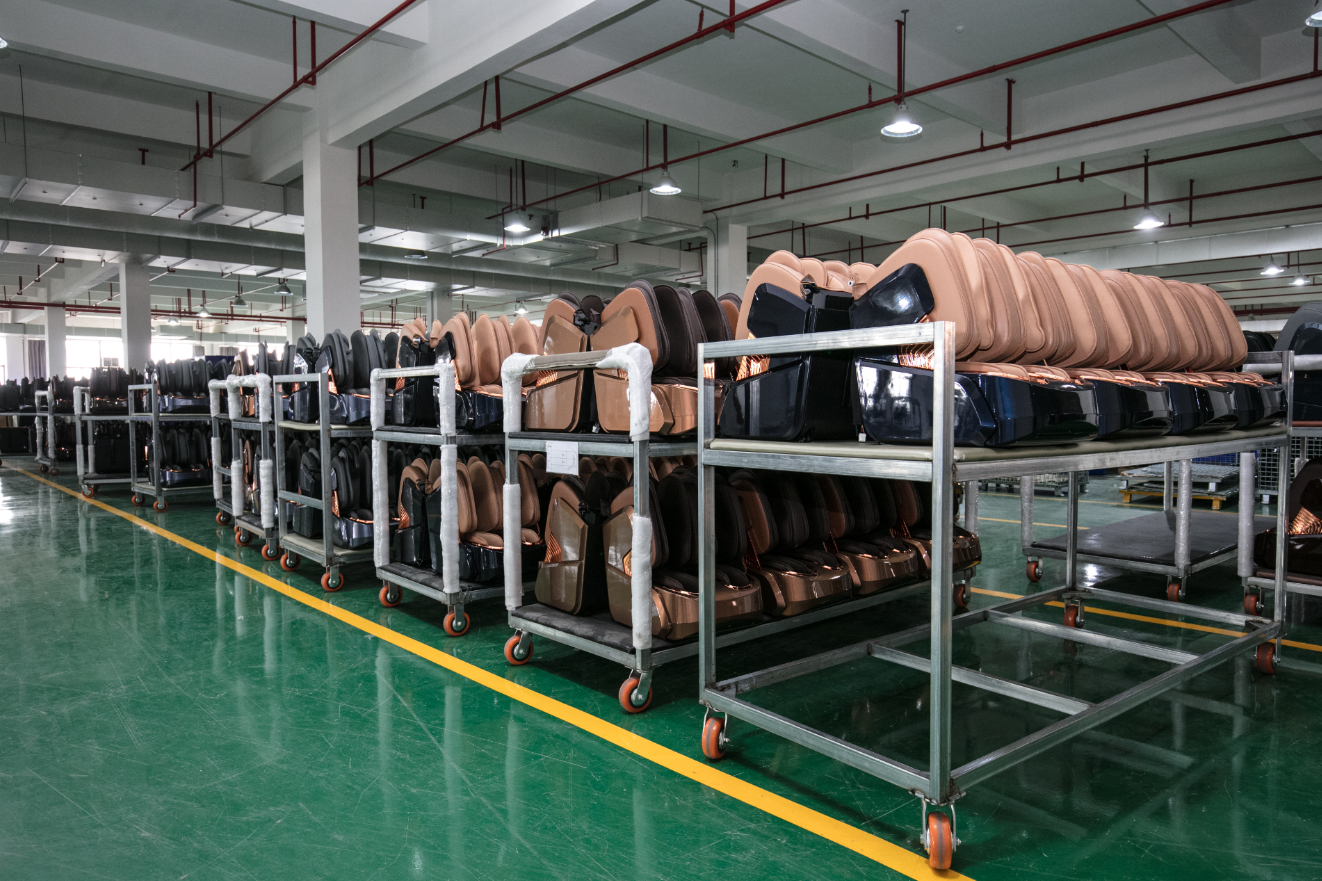
Storage readiness for repeat orders: consistent electrical specifications simplify long-term stock planning for distributors.
Next Step: Sample, Quotation or Catalogue
Review the full 4D massage chair range and specifications in the 2026 E-catalogue, or request a sample unit to verify the 110–240V, 50/60Hz, 200W nameplate and certification pack directly.
Download the 2026 E-catalogue (PDF)
Ningbo Zhouqi Health Technology Co., Ltd. (ZHOUQI) — website: www.cn-zhouqi.com
Email: shelley@cn-zhouqi.com | Tel / WhatsApp: +86 182 5079 5612
Address: No. 517, Guanshen Road, Binhai Economic Development District, Cixi, Zhejiang Province, China