
Key Technical Parameters for 3D Massage Chair Sourcing: A Technical Guide
Key Technical Parameters for 3D Massage Chair Sourcing: A Technical Guide
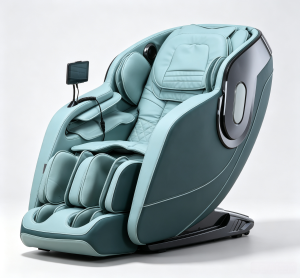
A 3D Massage Chair order is only as precise as the specification behind it. Most sourcing failures in this category — a plug that does not match the destination socket, a listing document that does not cover the configuration actually shipped, a container plan that collapses on boxed dimensions — begin with a requirement list written in product language instead of measurable values.
This technical guide sets out the parameters that actually define a 3D Massage Chair for import: electrical input and rated power, massage mechanism and rail geometry, control and detection electronics, air pressure and heating subsystems, structural materials, and shipping dimensions. Each parameter group is then mapped to the standards that govern the product — UL 1647:2015 and CSA C22.2 No. 68:2018 for the ETL route in North America, and IEC 60335-1:2010 for the CE route in the European Union — so that a buyer can convert a category name into a written requirement document.
Problem Definition: a 3D Massage Chair Is a Category, Not a Specification
A purchase order that says only “3D Massage Chair, quantity and color” gives a supplier nothing to engineer against and gives a testing laboratory nothing to scope. The gap shows up in five places.
- Electrical scope. Without a voltage and frequency range and a rated power figure, the plug type, the grounding arrangement and the listing scope cannot be fixed.
- Mechanical construction. Without rail length, mechanism type and moving-part travel, mechanical construction cannot be reviewed against a safety standard.
- Electronics. Body-detection sensors, touch controllers, voice modules, Bluetooth audio and wireless charging are separate assemblies inside one enclosure; each one changes what a certificate has to cover.
- Physical fit. Without upright, reclined and boxed dimensions plus net and gross weight, both the showroom floor plan and the container plan are estimates.
- Installation conditions. The product requires supporting equipment such as a power socket, and the special requirements for use include correct grounding, a matching plug and the safety precautions printed in the manual. A requirement document that omits these leaves the installation risk with the importer.
Industry Background: Why Parameter Discipline Is Now a Commercial Issue
The global massage equipment market was valued at USD 11.6 billion in 2024 and is projected to reach USD 21.8 billion by 2033, according to Grand View Research. Within that market, massage chairs and sofas held the largest product share at 39.5% in 2024, and North America accounted for a 36.9% revenue share in the same year. The massage chair segment alone is projected to grow from USD 4.28 billion in 2026 to USD 8.78 billion by 2035, a CAGR of 8.3%, per Business Research Insights.
Two consequences follow for buyers. First, category growth brings more suppliers into export channels, which makes a written parameter list the cheapest filter available. Second, product complexity is rising: approximately 41% of new massage chair models in 2026 are expected to integrate AI-based sensors for body scanning, according to Business Research Insights. More electronics inside the same enclosure means more surface area for a compliance file to cover, and more places where a late configuration change invalidates earlier testing.
Export planning therefore tends to run through two routes. In North America, the massage appliance category is assessed through UL 1647:2015 and CSA C22.2 No. 68:2018, the standards behind an ETL listing. In the European Union, IEC 60335-1:2010 provides the general safety requirements, supplemented by the part 2 standards for electric massage appliances and for furniture with motorized parts. A buyer who knows which route applies before issuing an enquiry avoids re-quoting later.
The Measurable Parameter Set for a 3D Massage Chair
Ningbo Zhouqi Health Technology Co., Ltd. (ZHOUQI) is a manufacturer of massage chairs based in Cixi, Zhejiang Province, China, integrating R&D, production and sales, and operating a 130,000 ㎡ factory with 450 employees, 34 engineers and an annual output of 200,000 units. Exports account for 50% of its business, across the USA, EU, Southeast Asia and the Middle East.
The parameter set below is taken from the ZHOUQI 3D Massage Chair platform, which is listed in the specification as a zero-gravity massage chair type. It is used here as a worked example of how a technical requirement document is assembled.
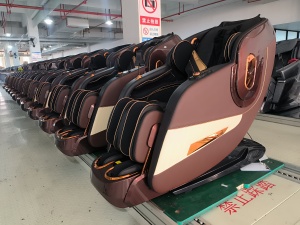
1. Electrical input, rated power and the auto timer
Three values sit at the center of the electrical safety file: power input 110V–240V, 50/60Hz; rated power 150W; and an auto timer of 15 minutes. The input range defines which market voltages the platform is built for, the rated power figure is the basis for the electrical evaluation, and the auto timer is the product-level control that limits continuous operation.
Under UL 1647:2015 and CSA C22.2 No. 68:2018 for ETL listing, and under IEC 60335-1:2010 for CE marking, these are the parameters a buyer should never leave to the supplier default. They also determine plug selection: the special requirements for installation state that the chair must use a socket that matches the plug, and that incorrect grounding can cause electric shock.
2. Mechanical construction and the 3D massage mechanism
Mechanical values decide both massage behaviour and the structural review. The platform uses a 3D massage mechanism with four massage balls, mounted on a 1,350 mm double chute guide rail designed to fit the human body curve. Zero-gravity motion is produced by a double sliding rail forward structure, described in the specification as smooth-moving with a stable and solid structure. The legrest is electrically controlled with an automatically extended footrest.
Roller techniques available across the platform include kneading, tapping, rolling, shiatsu, kneading & tapping and a 4D in-and-out motion, delivered through automatic pre-set programs and manual programs.
Market terminology is where this block usually goes wrong. Labels such as mechanical 3D massage chair, airbag 3D massage chair or SL track 3D massage chair are search-friendly but not verifiable. In a requirement document they must be resolved into countable or measurable items: mechanism type, number of massage balls, guide rail length in millimetres, legrest actuation type, and frame material (iron).
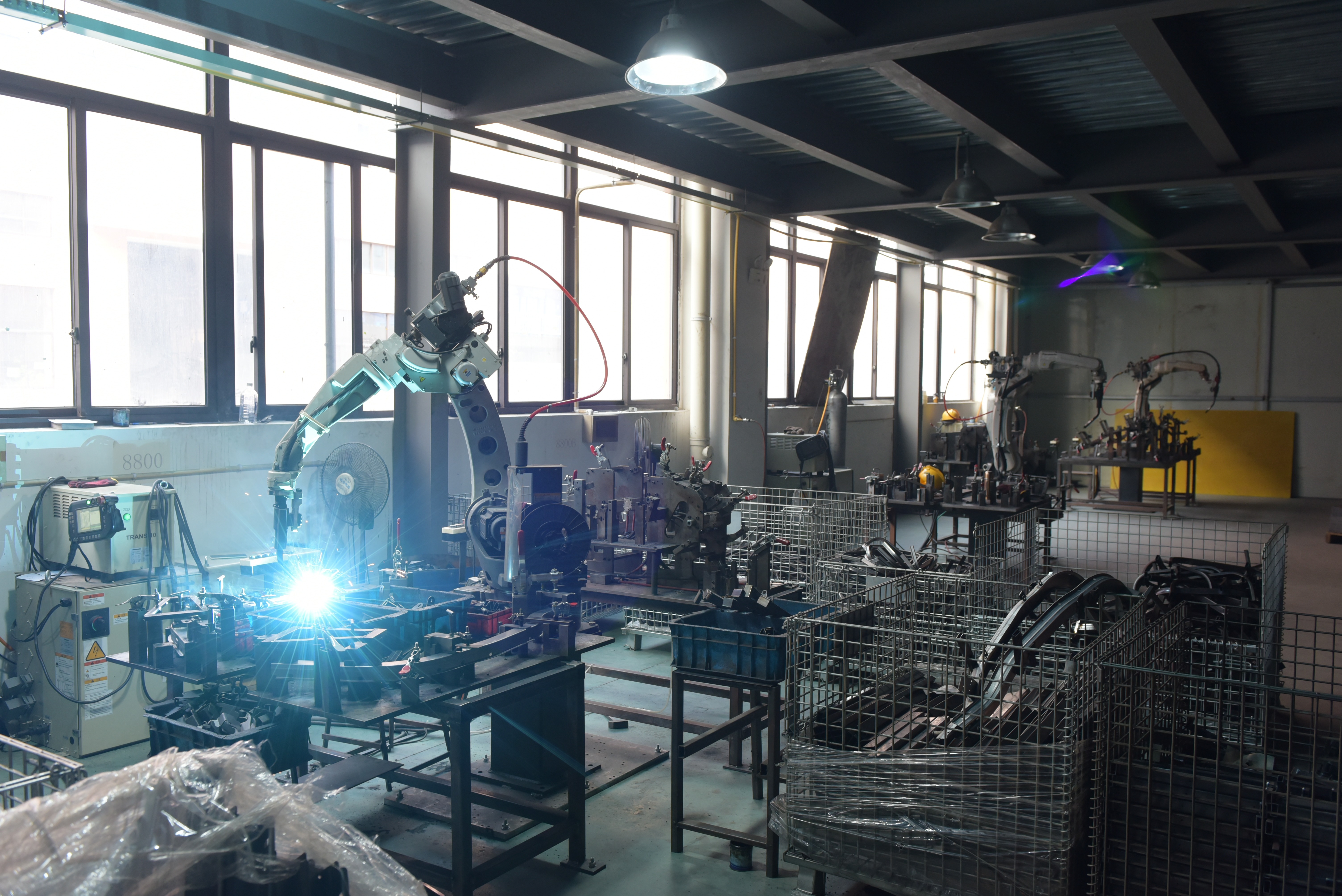
3. Body detection, controls and connected electronics
Automatic body type detection and current-induced shoulder position detection set the starting point of each massage. Operation is through a 7-inch touch button controller plus shortcut buttons for dual control, and a built-in voice control module supports voice operation. The platform also includes AI Health Detection, Bluetooth music playback and a wireless charging phone case.
Every one of these is an electronic assembly inside the same product, and each affects what the compliance file must cover. In practice, the electronics block should be frozen at the same moment as the electrical block, because a configuration change after testing raises a scope question for the listing or declaration that the buyer, not the factory, ends up answering at customs or at retail.
4. Air pressure, heating and foot subsystems
Airbag coverage and heating are frequently over-specified in conversation and under-specified in writing. The platform provides whole-body air pressure massage, a long leg section with airbag massage and calf roller massage, a three-row foot roller with foot heating, and an expanded waist heating area. In a requirement document these become locatable items — airbag zones, roller rows, heated zones — each with a position, so that sample verification has something objective to check rather than a general impression of firmness.
5. Materials, dimensions and shipping parameters
Materials are iron, foam, leather and ABS plastic. Dimensions are 1590(L) x 800(W) x 1160(H) mm upright, 1895(L) x 800(W) x 940(H) mm reclined, and 1950(L) x 810(W) x 880(H) mm boxed. Net weight is 111 kg and gross weight is 135 kg.
These numbers decide freight and installation. The boxed length of 1950 mm is the figure to load-plan against, the upright height of 1160 mm is what a showroom or lounge layout has to accept, and the reclined length of 1895 mm is the operating footprint rather than the stored footprint. Buyers evaluating a zero gravity 3D massage chair for a commercial venue should specify which of the three dimensions their space is designed around.
Reading the Standards Against the Specification
The table below is the bridge between a parameter list and a compliance file. It is the part most enquiries omit, and the part that most often delays a first shipment.
| Standard | Domain | Parameters it ties to | Evidence to request |
|---|---|---|---|
| UL 1647:2015 | North American safety standard for motor-operated massage and exercise machines, used for ETL listing | Power input 110V–240V, 50/60Hz; rated power 150W; 15-minute auto timer; enclosure | ETL listing document and test report covering the delivered configuration |
| CSA C22.2 No. 68:2018 | Canadian motor-operated appliance standard applied alongside UL 1647 in the ETL route | The same electrical and mechanical parameter set for the Canadian market | ETL listing document and test report valid for Canada |
| IEC 60335-1:2010 | General safety requirements for household and similar electrical appliances; the base for CE marking | Electrical input, rated power, heating elements, controls | CE Declaration of Conformity with supporting test report |
| IEC 60335-2-32:2024 | International safety standard specifically for electric massage appliances, including massage chairs | Mechanism, air pressure, heating elements, control functions | Part 2 test coverage inside the CE or CB file |
| IEC 60335-2-116:2025 | Safety standard for furniture with motorized parts, such as zero-gravity massage chairs | Zero-gravity actuation, legrest drive, mechanical construction | Part 2 test coverage inside the CE or CB file |
ZHOUQI holds certifications including ISO 13485, CE, CB, ROHS, ETL and FCC. Those should be requested as documents and read against the configuration being purchased, not accepted as page logos: the useful question is not whether a supplier holds a certificate, but whether the certificate covers the voltage, plug and electronics of the unit in the container.
Step-by-Step Breakdown: Building the Requirement Document
- Fix the destination market and the compliance route. United States and Canada: UL 1647:2015 and CSA C22.2 No. 68:2018, with an ETL listing. European Union: IEC 60335-1:2010 with the applicable part 2 standards.
- Write the electrical block. Power input 110V–240V, 50/60Hz; rated power 150W; auto timer 15 minutes; plug type; correct grounding and a socket that matches the plug.
- Write the mechanical block. 3D massage mechanism with four massage balls; 1,350 mm double chute guide rail; double sliding rail zero-gravity structure; electric legrest with auto-extended footrest; frame material iron.
- Write the electronics block. Body type detection; shoulder position detection by current induction; 7-inch touch controller with shortcut buttons; voice control module; AI Health Detection; Bluetooth audio; wireless charging.
- Write the pneumatic and heating block. Whole-body air pressure zones; leg airbag massage with calf roller; three-row foot roller with foot heating; waist heating zone.
- Write the dimensional and weight block. Upright, reclined and boxed dimensions; net and gross weight; materials.
- Write the installation and venue block. Indoor environments such as shopping malls, railway stations, airports, offices and spa houses; power socket supply; grounding; manual safety precautions.
- Write the acceptance block. 100% QC test at the factory, sample verification line by line against the parameter list, one-year warranty, installation videos and a maintenance manual.
- Write the commercial block. OEM/ODM production with customization of colour, logo, OEM files, pillow and backrest design, UI and language; MOQ 1*40HQ; lead time 30–45 days.
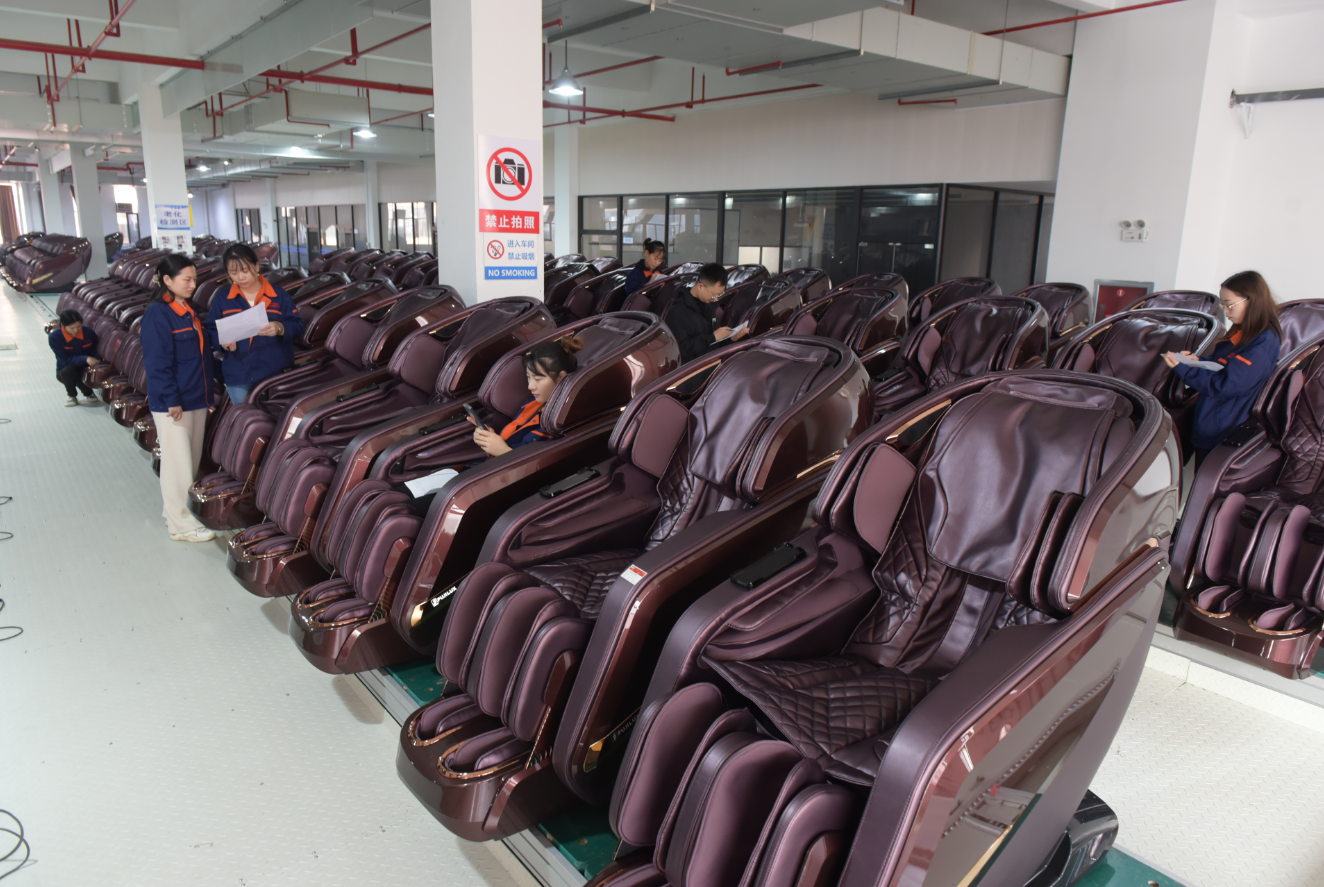
Use Cases: Where the Parameter Weighting Changes
The same platform is specified differently depending on the project type, because each venue stresses a different part of the list.
- Distribution and retail projects. Retailer showrooms and furniture or home-appliance malls weight finish, upright footprint and demonstration behaviour most heavily, because the unit has to sell from the floor.
- Shared pay-per-use operation. In shopping malls, railway stations and airports, the 15-minute auto timer, the power socket arrangement, correct grounding and structural endurance carry the most weight, since the chair runs on a public cycle.
- Hospitality and care projects. The product has been used by hotels, resorts, wellness institutions and senior-care institutions, with application markets recorded as Southeast Asia and North America. Here the specified functions matter most: releasing muscle stiffness and body fatigue, boosting blood circulation, reducing physical pressure and discomfort, relaxing nerves and improving sleep, and relieving soreness from long sitting and tiredness.
- Corporate and premium showroom environments. Offices, spa houses and 4S showrooms weight dual-control operation — the 7-inch touch controller plus shortcut buttons — and the reclined footprint, since operators and customers both need to reach the controls.
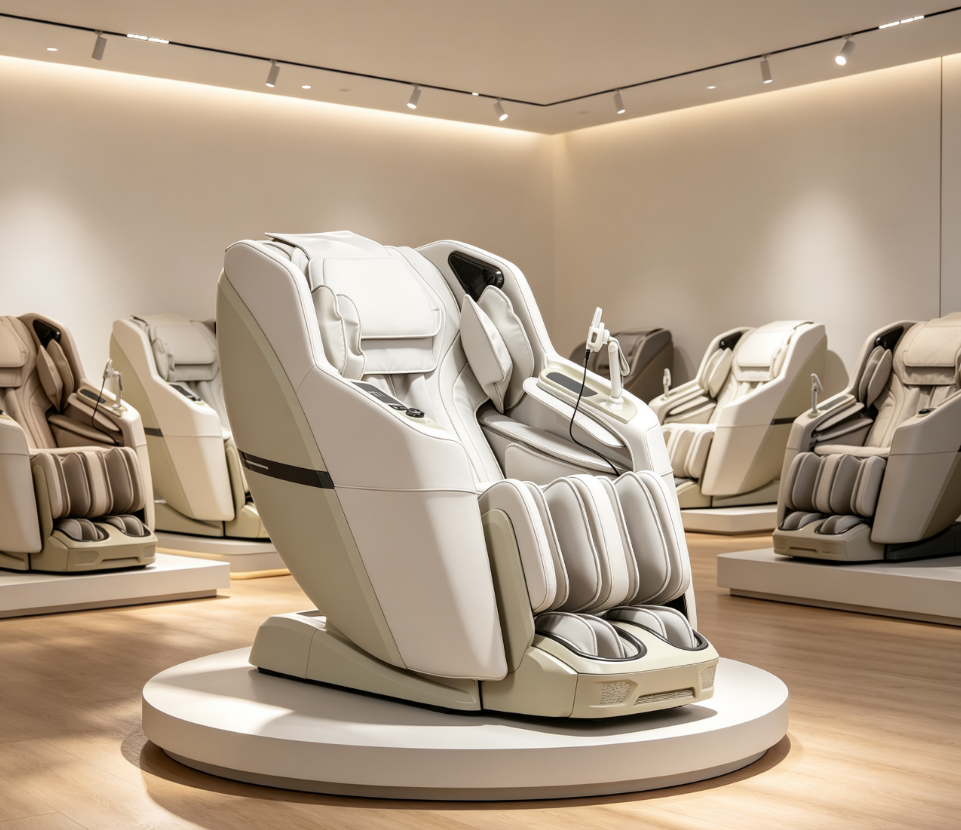
Repeat-order evidence is a practical check on whether a parameter list survives contact with a market. One channel customer in Vietnam has ordered 70,000 pcs over four years and a customer in the USA 20,000 pcs over three years, across showroom and 4S showroom, furniture and home-appliance mall, e-commerce, hotel and wellness channels, with the reported result that the market is improving.
Comparison: 3D and 4D Platform Parameters
The comparison below is included as a boundary check, not as a recommendation. It shows which measurable values change when a project moves to a different platform class, and therefore which lines of the requirement document have to be rewritten rather than reused.
| Measurable parameter | 3D Massage Chair (models 5200, 5900, 5910, 3100, 6710, 8700, 3600, 3212, 6520, 5100, 6530, 3104, 3109, 6750, 6720, 6721) | 4D Massage Chair (models 6510, 5300, 5380, 8620, 6920, 8600, 3900, 3910, 9100, 8520, 6540, 6600, 7100, 8710) |
|---|---|---|
| Product type | Zero gravity massage chair | Zero gravity massage chair |
| Power input | 110V–240V, 50/60Hz | 110V–240V, 50/60Hz |
| Rated power | 150W | 200W |
| Auto timer | 15 mins | 15 mins |
| Upright dimensions | 1590(L) x 800(W) x 1160(H) mm | 1600(L) x 790(W) x 1230(H) mm |
| Reclined dimensions | 1895(L) x 800(W) x 940(H) mm | 1800(L) x 790(W) x 900(H) mm |
| Box dimensions | 1950(L) x 810(W) x 880(H) mm | 1460(L) x 810(W) x 1200(H) mm |
| N.W. / G.W. | 111 / 135 KG | 103 / 118 KG |
| Material | Iron, foam, leather, ABS plastic | Iron, foam, leather, ABS plastic |
Rated power, upright height, boxed dimensions and weight all differ between the two platforms, so circuit planning, showroom layout and freight planning must be calculated per platform. A specification written for a 3D Massage Chair should not be copied onto a differently powered or differently boxed model without re-checking those four lines.
FAQ
Which safety standards should be written into an RFQ for a 3D Massage Chair shipped to the United States and the European Union?
For North America, name UL 1647:2015 and CSA C22.2 No. 68:2018, and require an ETL listing document plus the test report covering the delivered configuration. For the European Union, name IEC 60335-1:2010 as the general safety basis for CE marking, supported by the part 2 standards that apply to this product family: IEC 60335-2-32:2024 for electric massage appliances including massage chairs, and IEC 60335-2-116:2025 for furniture with motorized parts such as zero-gravity massage chairs. Request the certification documents the supplier holds — ZHOUQI holds ISO 13485, CE, CB, ROHS, ETL and FCC — and confirm that the delivered voltage, plug and electronics fall inside that scope.
What production and customization capability should a supplier demonstrate before the requirement document is signed?
Two things: a production base able to hold the specification, and a customization scope that is written rather than verbal. ZHOUQI runs OEM/ODM production with a monthly capacity of 16,000 units and 34 engineers, and offers customization of colour, logo, OEM files, pillow and backrest design, UI and language. A 130,000 ㎡ factory with 450 employees and an annual output of 200,000 units indicates scale, but for a technical buyer the decisive question is whether the same team can repeat the parameter list on every order.
Which parameters drive landed cost most strongly on a 3D Massage Chair?
Cost is driven by the mechanism class and electronics content, the structural and surface materials (iron, foam, leather and ABS plastic), the number of airbag and heated zones, the certification scope required for the destination market, the order volume behind the MOQ of 1*40HQ, and freight, which follows the boxed dimensions of 1950(L) x 810(W) x 880(H) mm and the 135 kg gross weight. These are the levers a buyer can trade against each other; comparing only a single unit price hides where the difference actually sits.
How should a sample be validated against the parameter document?
Validate the sample line by line, not by impression: power input at 110V–240V, 50/60Hz; rated power of 150W; the 15-minute auto timer; the 3D mechanism with four massage balls on the 1,350 mm double chute guide rail; electric legrest and auto-extended footrest travel; airbag zones, calf roller, three-row foot roller with foot heating and the waist heating zone; upright and reclined dimensions; and the socket, grounding and plug arrangement together with the safety precautions in the manual. Confirm that the configuration matches the listing or declaration document, and use the one-year warranty, installation videos and maintenance manual as the support baseline after delivery.
What lead time and delivery parameters should be planned?
ZHOUQI quotes a lead time of 30–45 days, a MOQ of 1*40HQ, and 100% QC testing before shipment, with export markets covering the EU, North America, the Middle East and Southeast Asia. Buyers who want to run this parameter list against a specific model — 5200, 5900, 5910, 3100, 6710, 8700, 3600, 3212, 6520, 5100, 6530, 3104, 3109, 6750, 6720 or 6721 — can request a quotation or a sample from ZHOUQI at shelley@cn-zhouqi.com, or by WhatsApp and telephone on +86 182 5079 5612, with the requirement document attached so the reply is priced against written values.
Conclusion
A 3D Massage Chair becomes a purchasable specification the moment each line carries a value, a standard and an evidence requirement. The values in this guide — power input 110V–240V, 50/60Hz; rated power 150W; a 15-minute auto timer; a 3D mechanism with four massage balls on a 1,350 mm double chute guide rail; a double sliding rail zero-gravity structure; whole-body air pressure with dedicated leg, foot and waist zones; and dimensions of 1590 x 800 x 1160 mm upright, 1895 x 800 x 940 mm reclined, 1950 x 810 x 880 mm boxed at 111 / 135 kg — are the numbers that a laboratory, a freight forwarder and a venue planner each need for their own reason.
Mapped against UL 1647:2015 and CSA C22.2 No. 68:2018 for the ETL route and IEC 60335-1:2010 with its part 2 standards for CE, that document does three jobs at once: it tells the supplier exactly what to build, it tells the laboratory exactly what to test, and it gives the importer a verification standard that does not depend on a second opinion.
Next Step: Turn the Parameter List into a Quotation
Send your destination market, target models and the requirement lines above to ZHOUQI, and the reply comes back priced against written values rather than a category name.
Email: shelley@cn-zhouqi.com · Tel / WhatsApp: +86 182 5079 5612 · Website: www.cn-zhouqi.com
Request a sample for verification, or download the full product catalogue here: 2026 E-catalogue (PDF).