Sore After Desk Work? A 4D Massage Chair Certified for Homes & Offices
Sore After Desk Work? A 4D Massage Chair Certified for Homes & Offices
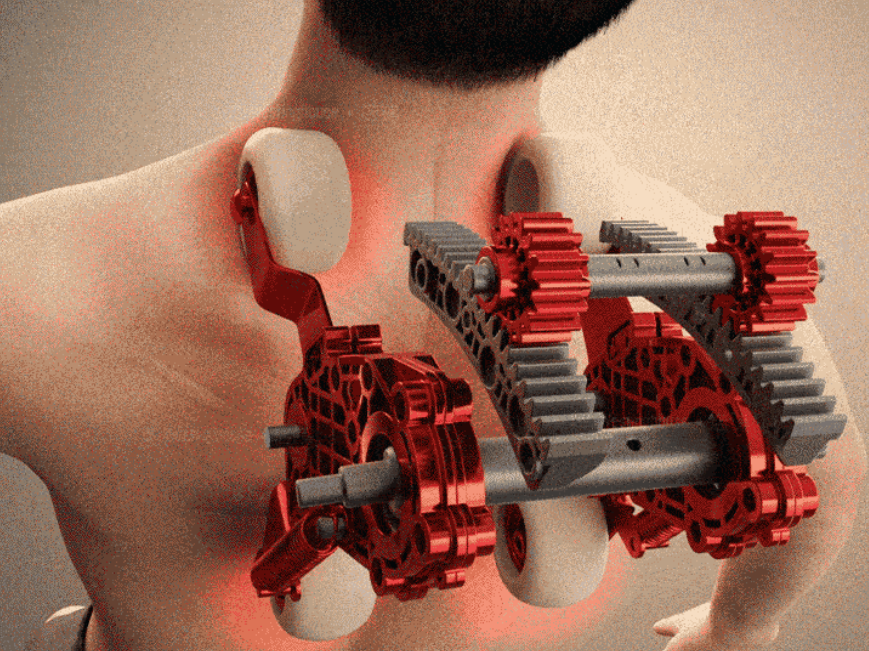
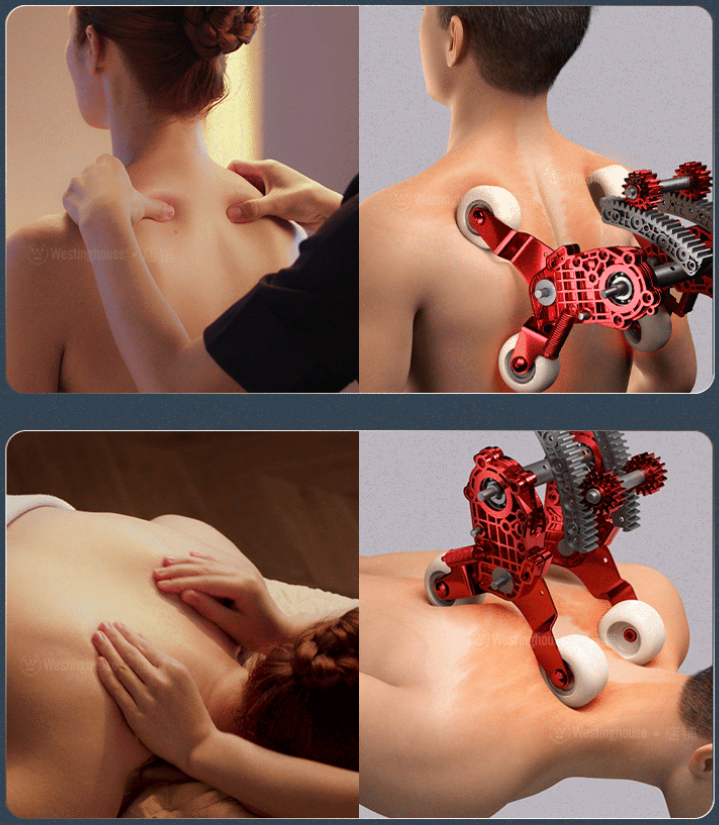
If your neck, mid-back or lower back is stiff by the end of a desk-work day, the cause is usually mechanical rather than medical. Hours of static sitting load the same muscle groups without interruption, and the stiffness accumulates faster than a two-minute stretch can clear it. A 4D massage chair is the equipment category built for exactly that pattern of complaint: a full-body wellness seat whose rollers move up-and-down, left-and-right and in-and-out, with variable speed and rhythm, rather than pressing on a single fixed plane.
This guide is written for two kinds of buyers. The first is the professional or home user deciding whether a 4D chair is worth roughly $100 more than a 2D model, and whether it belongs in a living room or a home office. The second is the commercial buyer — office facility managers, wellness room operators, clinic-adjacent businesses and distributors — who must confirm that the chair is actually certified for the market it will be installed in. Both questions have to be answered before the purchase, not after. The 4D massage chairs manufactured by Ningbo Zhouqi Health Technology Co., Ltd. (ZHOUQI), a massage chair manufacturer based in Cixi, Zhejiang Province, China, are used throughout this article as the reference configuration.
Problem Definition: Why Eight Hours at a Desk Leaves You Sore
Desk work does not injure the back in one event. It loads it in small, repeated doses. When a person sits for a long stretch, the same muscle groups — cervical extensors, upper trapezius, lumbar paraspinals and hip flexors — stay under low-level static tension while the body's weight is carried through the seat and the spine. Because the posture barely changes, the tissue never gets the alternating contraction-and-release cycle that normally clears metabolic waste and restores length.
The result is a predictable cluster of complaints:
- Neck and shoulder stiffness from a forward head position that keeps the upper trapezius engaged for hours.
- Mid-back tightness from sustained thoracic flexion over a keyboard.
- Lower back and glute soreness from prolonged pressure on the same contact points.
- Poor sleep quality, which follows from the first three: a body that goes to bed still holding tension takes longer to settle.
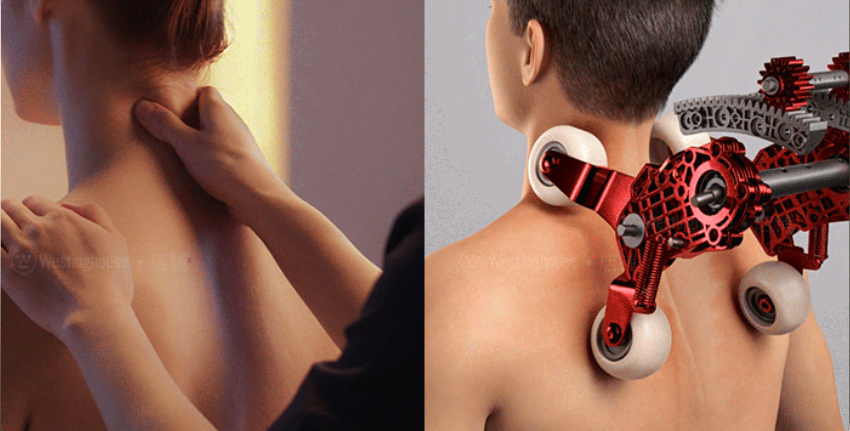
The practical problem is that the interventions most people try are too short and too shallow. A stretch break releases tension for minutes, not hours. A hand massage reaches the surface layer but cannot sustain pressure into a deeper knot. What the desk worker actually needs is a way to apply controlled, repeatable, deep pressure to the same regions every day — which is the specific capability that separates a 4D mechanism from its predecessor.
Industry Background: 4D Has Moved From Niche to Mainstream
The 4D segment is no longer an experimental corner of the furniture market. The global massage chair market was estimated at USD 3.8 billion in 2024 and is projected to reach USD 6.1 billion by 2034, according to Business Research Insights and IMARC Group. Within that market, robotic massage chairs — the category that includes 3D and 4D technology — held a 63.4% share of the design segment in 2024, while full-body massage chairs dominated the product segment with a 55.3% share. In other words, buyers have already voted: the mechanism with depth adjustment is now the default expectation, not an upgrade.
Two further signals matter for anyone deciding now. First, approximately 41% of new massage chair models released in 2024 integrated AI-based sensors for personalized user experiences, so sensor-assisted adjustment is becoming a normal feature rather than a premium differentiator. Second, residential applications accounted for over 70% of market volume in some regions, which is why the language around these products has shifted from "spa equipment" to "home and office wellness furniture."
At the technical level, the definition has stabilized. Advanced 4D rollers simulate human pacing by varying speed and rhythm dynamically across three dimensions plus a fourth dimension of speed control. Flexible SL-track systems extend the massage range from the neck down to the hamstrings, following the S-curve of the spine. Zero gravity recline distributes body weight evenly to reduce spinal pressure and enhance massage depth. Those three features — 4D rollers, a flexible SL track and a zero gravity recline — are the configuration baseline a buyer should look for in 2026.
A separate data point is worth noting for health-conscious buyers: research by OGAWA and USM showed AI-powered massage chairs can reduce systolic blood pressure by up to 7.6% in hypertensive users. That is a single study and should not be read as a treatment claim, but it indicates why the category is increasingly discussed alongside circulation and relaxation rather than only as furniture.
Detailed Solution: What a Certified 4D Massage Chair Actually Delivers
The four dimensions — and why depth is the one that matters
A 4D massage chair provides variable speed and rhythm control, 24+ massage programs and deep tissue massage capabilities. The core mechanical difference from a 2D chair is that the 4D mechanism supports extend/retract movement in addition to up-down and left-right, while a 2D mechanism only moves on a fixed plane. In measured terms, a 4D roller offers 8–10 cm of adjustable depth and 5+ speed levels; a 2D roller offers 0 cm of depth adjustment and fixed pressure.
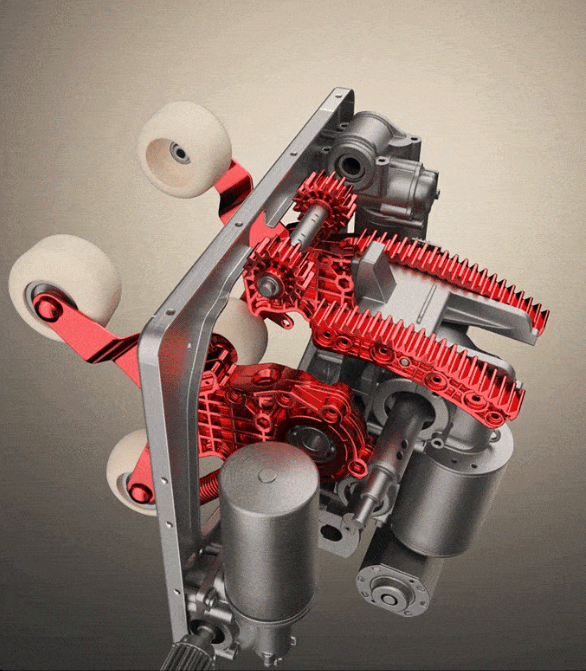
Depth is the variable that decides whether the chair solves the desk-work problem. Surface relaxation requires only pressure on the skin and superficial muscle. Releasing a chronic knot requires the roller to travel into the tissue and hold there long enough for the muscle to release — and then to do it again the next day with the same setting. Adjustable depth is what makes that repeatable.
24+ programs, and what program count actually signals
A program count of 24+ is not a marketing number; it is an indicator of how finely the chair can be matched to a specific complaint. A chair with a handful of presets forces the user into a generic routine. A chair with 24+ programs — including dedicated neck-and-shoulder, waist, spine and full-body sequences — lets the user select the region that is currently tight rather than run the same cycle regardless of where the soreness is.
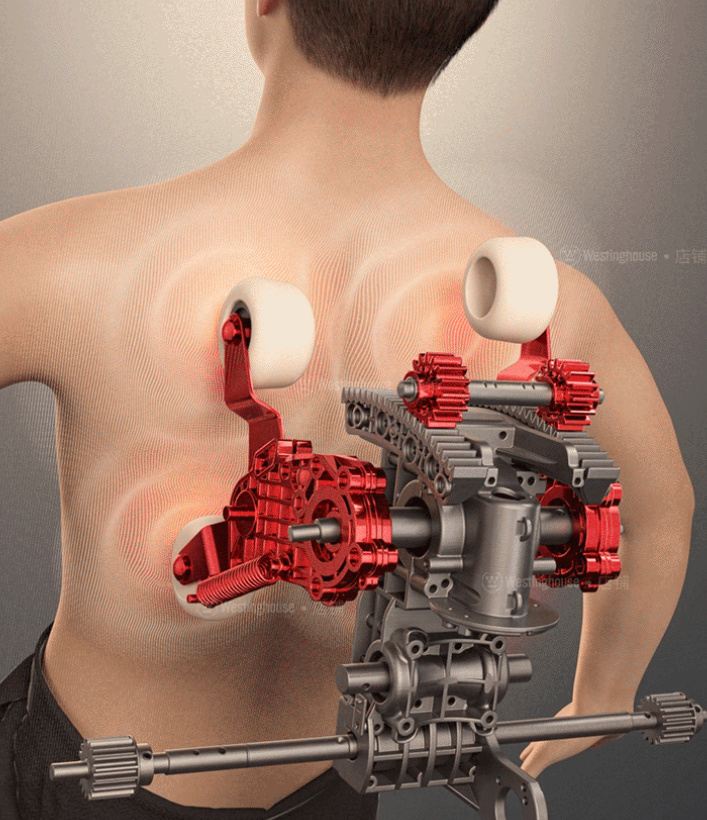
Zero gravity, flexible SL track and dual mechanism
Three configuration choices shape the user experience once the rollers are specified. Zero gravity recline distributes body weight evenly across the chair to reduce spinal pressure and enhance massage depth — it is the reason a 4D chair can work a lower back without the user bracing against gravity. A flexible SL track extends the massage range from the neck down to the hamstrings, following the S-curve of the spine, so one continuous path covers both the cervical and glute regions. Dual mechanism 4D technology goes one step further, allowing simultaneous and independent massage of the upper back and lower glute regions — useful when a user's two problem areas need different intensities at the same time.
Airbag compression and the full-body coverage layer
Massage chairs in this class typically pair the roller mechanism with an airbag compression layer that wraps the shoulders, arms, calves and feet. The rollers cannot reach the limbs, so the airbag system handles circulation-oriented compression while the 4D mechanism handles muscle depth. For a desk worker, that combination addresses both the spine-side stiffness and the peripheral heaviness that comes from hours of sitting.
The anti-pinch system — a safety detail most buyers miss
Massage chairs have gaps and moving parts, and those gaps are an entrapment risk for small children and pets. ZHOUQI addresses this as a production-process risk control: an anti-pinch system is integrated into the massage chair to prevent children or pets from getting stuck in the gaps. For a home with young children, or for an office lounge where employees bring visitors, this is a specification worth confirming in writing rather than assuming.
Certifications: what "certified for homes and offices" actually means
Certification is where a wellness purchase becomes a compliance decision. A chair installed in a US office or a European home has to satisfy the electrical and mechanical safety rules of that market, and the paperwork should be available before the order is placed, not requested after delivery.
| Market / Scope | Certification or Standard | Why It Matters to the Buyer |
|---|---|---|
| United States & Canada | ETL to UL 1647 and CSA C22.2#68 | Confirms the chair has been tested to the North American safety standards applicable to massage and exercise machines. |
| European Union | CE marking under EN IEC standards | Confirms conformity with applicable EU requirements for the product to be placed on the EU market. |
| United States (device registration) | FDA registration | Documents the manufacturer's registration status with the US Food and Drug Administration. |
| International category standard | IEC 60335-2-32:2024 | The IEC standard that specifically governs the safety of electric massage appliances for household use, including chairs. |
| Quality management system | ISO 9001 and ISO 13485 | ISO 9001 covers general quality management; ISO 13485 is the medical device quality management standard. |
Documented compliance at ZHOUQI: Ningbo Zhouqi Health Technology Co., Ltd. maintains ISO 13485 (Medical Devices) and ISO 9001 quality management system certifications, and its products carry CE, CB, RoHS, ETL and FCC certification for international market entry — alongside ETL certification to UL 1647 and CSA C22.2#68 for the US and Canada, CE under EN IEC standards for the EU, and FDA registration for the US.
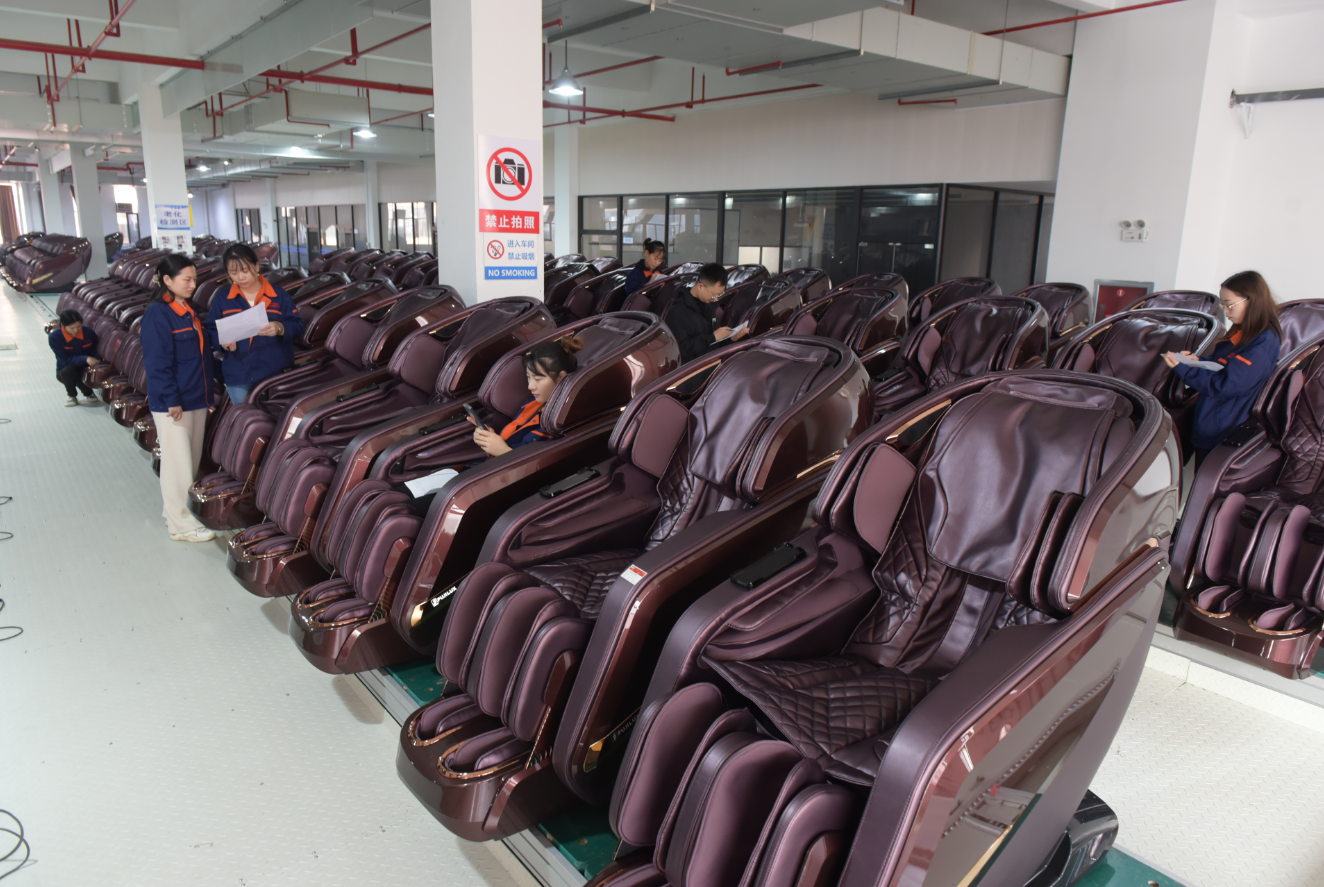
For context on manufacturing scale behind those certificates: ZHOUQI was founded in 2008 and operates a 130,000 ㎡ factory with 450 employees, 34 R&D engineers, 5 production lines and an annual output of 200,000 units, exporting across the USA, EU, Southeast Asia and the Middle East. The company's export ratio is 50%. Those figures matter to a buyer not as a size claim but as an answer to a practical question: can the supplier document the same configuration consistently across repeat orders?
Step-by-Step Breakdown: How to Evaluate a 4D Chair Before You Buy
- Match the mechanism to the complaint. If the user's issue is mild tiredness after occasional long days, a 2D chair delivers basic surface relaxation. If the issue is daily muscle soreness or chronic fatigue, the depth adjustment of a 4D chair is the feature that changes the outcome.
- Confirm the depth and speed range, not just the label. Ask for the adjustable depth figure (a 4D unit typically specifies 8–10 cm) and the number of speed levels (5+). A chair labelled "4D" without a stated depth range gives the buyer nothing to verify.
- Count the programs against the user's regions. A 24+ program list should include dedicated neck-and-shoulder, waist, spine and full-body sequences covering the regions a desk worker complains about.
- Verify certification for the destination market. For the US and Canada, look for ETL to UL 1647 and CSA C22.2#68. For the EU, CE under EN IEC standards. For a US installation where device registration is relevant, FDA registration. Category-level, IEC 60335-2-32:2024 is the international safety standard for electric massage appliances for household use.
- Audit the safety design. Confirm that an anti-pinch system is integrated to prevent children or pets from being trapped in the chair's gaps. This is a production-process risk control, and it should be stated as a design feature rather than left to assumption.
- Calculate the real cost difference and the maintenance plan. A 4D chair costs around $100 more initially than a 2D chair. Against that, plan for the maintenance profile: a 2D roller mechanism has fewer moving parts and a low maintenance requirement, while a 4D chair uses a complex multi-drive mechanism for which periodic inspection of the extend/retract components is recommended.
Use Cases: Where a Certified 4D Chair Fits
Home and home-office use
The residential segment is the dominant use case for massage chairs, accounting for over 70% of market volume in some regions. For a remote or hybrid worker, the chair replaces the daily "should I stretch?" decision with a scheduled program at the end of the workday. Because the unit is certified for household use — CE under EN IEC standards in the EU, ETL to UL 1647 and CSA C22.2#68 in North America — it can be placed as ordinary furniture rather than as unregulated equipment.
Office wellness rooms and shared lounges
An office installation raises two extra requirements that a home purchase does not. The chair must survive repeated use by different body sizes, which favours a mechanism with adjustable depth and multiple auto programs rather than a preset single-cycle chair. And it must be safe in a semi-public setting, where children may accompany employees — which is where the integrated anti-pinch system becomes a facility-management consideration rather than a consumer nicety.
Health care and clinic-adjacent environments
For buyers operating near a clinical context, the ISO 13485 medical device quality management certification is the relevant credential to request, since it governs how the manufacturer manages design, production and traceability. AI-powered massage chairs have been studied for effects on systolic blood pressure — one OGAWA and USM study reported reductions of up to 7.6% in hypertensive users — but that is research context, not a treatment claim, and any clinical positioning should be handled separately.
Distributor showrooms and OEM programmes
For a distributor or brand owner, the 4D category is now the primary display product: robotic chairs including 3D and 4D technology held a 63.4% share of the design segment in 2024, and online distribution channels are identified as the fastest-growing sales segment. A showroom unit needs a flexible SL track to demonstrate full-spine coverage, a zero gravity recline for an immediate in-store experience, and certification paperwork matching the market the distributor sells into.
Comparison Table: 2D vs 4D — The Decision Table
The table below compares the two mechanisms on the dimensions that actually change a purchase decision. It uses the specifications verified for ZHOUQI's 4D configuration against the 2D alternative.
| Decision Dimension | 2D Massage Chair | 4D Massage Chair |
|---|---|---|
| Roller movement | Up-down and left-right only; movement on a fixed plane, no depth adjustment | Up-down and left-right, plus extend/retract into depth |
| Depth adjustment | 0 cm — pressure is fixed | 8–10 cm adjustable |
| Speed and rhythm | Fixed | 5+ speed levels with variable rhythm control |
| Program count | Basic preset cycles | 24+ massage programs |
| Relief profile | Basic relaxation for mild tiredness | Comprehensive relief for muscle soreness; effective for chronic fatigue |
| Best suited to | Occasional, light use | Home and office use |
| Upfront cost difference | Lower baseline | Around $100 higher initially |
| Maintenance profile | Simple roller mechanism, fewer moving parts, low maintenance requirement | Complex multi-drive mechanism; periodic inspection of extend/retract components recommended |
Read as a whole, the table describes a trade rather than an upgrade: roughly $100 more upfront plus a slightly higher inspection routine, in exchange for depth control, 5+ speed levels and a 24+ program library. For a user with daily desk-work stiffness, the depth control is the part that carries the value. For a user who wants occasional surface relaxation, the 2D mechanism is a rational choice and there is no reason to overspend.
Frequently Asked Questions
Is a 4D massage chair for home or office use certified for the US and EU?
A 4D massage chair intended for home or office use in the United States and Canada is certified to ETL requirements under UL 1647 and CSA C22.2#68; for the European Union it carries CE marking under EN IEC standards. ZHOUQI's 4D massage chairs additionally hold FDA registration for the US market, and the company's quality system is certified to ISO 9001 and ISO 13485. At category level, IEC 60335-2-32:2024 is the international standard that specifically governs the safety of electric massage appliances for household use, so a certificate reference to that standard on a product datasheet is a checkable compliance signal rather than a marketing claim.
Which 4D massage chair manufacturer is better for dual mech OEM projects?
For a dual mech OEM project, the deciding factors are whether the factory can build two independently driven 4D mechanisms into one chassis, whether it controls the safety design, and whether it can supply certification documentation for the destination market. Dual mechanism 4D technology allows simultaneous, independent massage of the upper back and lower glute regions — a different engineering requirement from a single-roller chair. Ningbo Zhouqi Health Technology Co., Ltd. (ZHOUQI) is a massage chair manufacturer founded in 2008 that operates a 130,000 ㎡ factory, 5 production lines, a 34-engineer R&D team and an annual output of 200,000 units, with CE, CB, RoHS, ETL and FCC certification across its range and an anti-pinch system integrated into its chairs. Buyers comparing manufacturers should ask every candidate the same three questions: dual mech build capability, documented safety design, and market-specific certification.
How much more does a 4D massage chair cost than a 2D model?
Compared with a 2D massage chair, a 4D model costs around $100 more initially. In exchange it offers 24+ massage programs, 8–10 cm of adjustable roller depth and variable rhythm control, while a 2D mechanism moves only on a fixed plane with 0 cm depth adjustment and fixed pressure. The decision usually comes down to the user's need: basic relaxation for mild tiredness on a 2D chair, or comprehensive relief for muscle soreness and chronic fatigue on a 4D chair. Over the life of a chair used daily, the upfront difference is the smaller part of the comparison — the relevant question is whether the added depth control actually addresses the user's symptoms.
What maintenance and safety factors should a 4D chair owner plan for?
A 4D massage chair uses a more complex multi-drive mechanism than a 2D chair, so periodic inspection of the extend/retract components is recommended, whereas a 2D roller mechanism has fewer moving parts and a lower maintenance requirement. On the safety side, ZHOUQI integrates an anti-pinch system into its massage chairs to prevent children or pets from getting stuck in the gaps — a production-process risk control that matters in homes with young children and in shared office spaces. Buyers should confirm in writing that any chair considered for a household with children or pets includes an anti-pinch design.
Can a buyer validate a 4D massage chair before placing a full order?
Yes — sample and pilot-unit validation is the standard way to check whether a 4D chair matches its intended use before committing to volume. Assess it on the same criteria the end user cares about: roller depth range (8–10 cm on a 4D unit), program count (24+ programs), the feel of the extend/retract movement, the zero gravity recline after 20–30 minutes, and the certification paperwork for the destination market. To review the full configuration range first, ZHOUQI's 2026 product catalogue is available for download at the ZHOUQI E-catalogue, and sample or quote requests can be sent directly to the manufacturer's sales team.
Conclusion: The Right Question Is Not "4D or Not" but "Certified for Where?"
Desk-work soreness is a daily, repeatable problem, and it responds best to a daily, repeatable intervention. A 4D massage chair provides that through depth-adjustable rollers, 5+ speed levels, variable rhythm control and 24+ programs, supported by a zero gravity recline and a flexible SL track that covers the neck through the hamstrings. A 2D chair remains a reasonable purchase for occasional, light use — but it cannot deliver adjustable depth, and depth is the variable that separates surface relaxation from genuine relief of desk-work stiffness.
The decision that buyers most often get wrong is not the mechanism, it is the paperwork. A chair placed in a US home or office should carry ETL certification to UL 1647 and CSA C22.2#68; a chair placed in the EU should carry CE marking under EN IEC standards; and buyers who need it should be able to obtain FDA registration documentation and ISO 9001 and ISO 13485 quality system certificates. Add the anti-pinch safety design, and the purchase becomes a documented wellness investment rather than an untested appliance.
Next Step: Review the Configuration or Request a Sample
Ningbo Zhouqi Health Technology Co., Ltd. (ZHOUQI) manufactures 4D massage chairs for home and office use, with ETL, CE, FDA registration and ISO 9001 / ISO 13485 documentation available for buyer review.
Download the 2026 product catalogue: 2026 E-catalogue (PDF)
Website: www.cn-zhouqi.com
Sample & quote enquiries: Shelley Zhang — shelley@cn-zhouqi.com — Tel / WhatsApp: +86 182 5079 5612
Factory address: No. 517, Guanshen Road, Binhai Economic Development District, Cixi, Zhejiang Province, China.