
What Does 4D Mean in Massage Chairs? An Explainer for Furniture Buyers
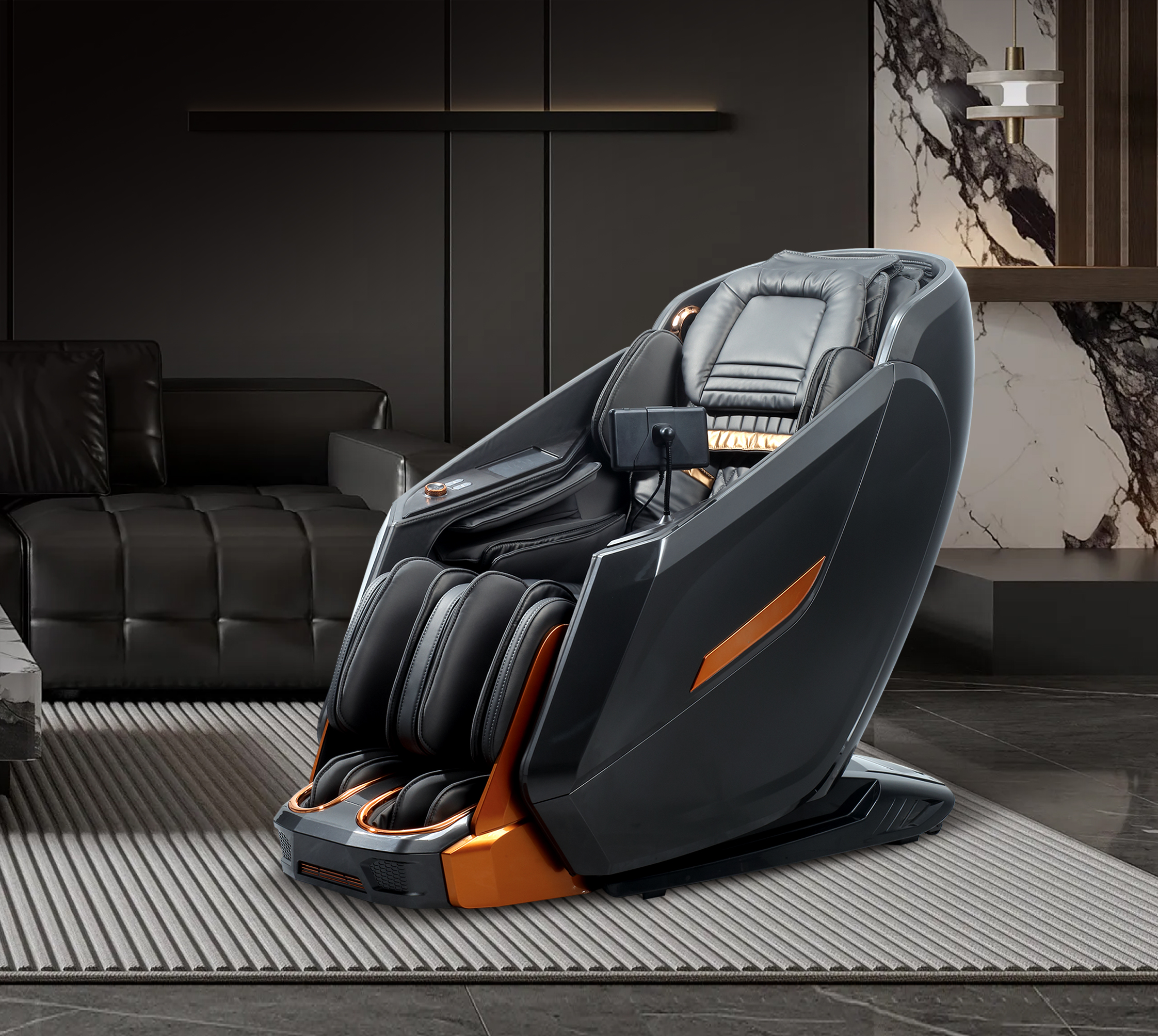
A 4D Massage Chair in a home setting (model 7100). This article uses the ZHOUQI 4D platforms as the configuration base for explaining the mechanism.
4D describes a massage chair roller mechanism that moves in three physical directions — up and down along the back, side to side across the back, and in and out toward the body — and then adds a fourth control: the speed and rhythm at which each stroke is delivered. A 3D chair can change how deep the rollers press. A 4D chair can also change how fast, and in what rhythm, that pressure is applied from one zone to the next.
That is the definition. The harder problem for a furniture buyer is making the definition survive contact with a shop floor. Sales staff have to justify a price step between two chairs that look almost identical. Customers have heard the same label used to mean different things by different suppliers. And the person writing the product page often has nothing to work from except the factory's own copy.
This explainer is built for that gap. It sets out what 4D is, how it relates to the features it normally ships with — a flexible SL track, zero gravity recline, an airbag layer — and converts the technical definition into a showroom script, a specification checklist and a set of questions that can be answered with documents rather than adjectives.
Ningbo Zhouqi Health Technology Co., Ltd. (ZHOUQI) is a massage chair manufacturer based in Cixi, Zhejiang Province, China, founded in 2008, producing OEM and ODM chairs for markets in the EU, North America, the Middle East and Southeast Asia. Its 4D platforms — including models 8520, 7100 and 6600 — are used here as the reference configuration.
The Problem: “4D” Is Retail Vocabulary Before It Is an Engineering Term
International safety standards govern how a massage chair must behave electrically; they do not grade roller dimensions. IEC 60335-2-32:2024, for example, specifically addresses the safety of electric massage appliances for household use, including chairs. It tells an importer whether a product is safe to place on the market. It does not tell a retailer whether one chair is more “4D” than another.
The consequence is that “4D” is a trade convention rather than a certified grade. Three problems follow directly from that:
- Staff describe the wrong thing. A salesperson who cannot separate depth (3D) from pace (4D) will promise a sensation the chair does not produce, and the mismatch tends to surface as a return rather than a complaint.
- Buyers compete against loose claims. Without a fixed set of checks, a well-built Dual Mech 4D Massage Chair can be talked down by a rival label that adds another letter or another adjective but nothing measurable.
- Listings inherit copy the factory cannot support. Product pages that repeat unverified phrasing create claims the supplier cannot back with a test report, which is a commercial risk long before it is a marketing one.
What a furniture buyer actually needs, therefore, is not a longer description. It is a short list of verifiable questions: what moves, how many mechanisms move, where the roller travels, and which documents cover the market you are selling into.
Industry Background: Where 4D Sits in the Current Market
The mechanism is not a niche configuration. The global massage chair market was estimated at USD 3.8 billion in 2024 and projected to grow to USD 6.1 billion by 2034 (Business Research Insights). Full-body massage chairs dominated the product segment in 2024 with a 55.3% share, and robotic massage chairs — the group that contains both 3D and 4D designs — held 63.4% of the design segment in the same year.
Two further signals matter to anyone building a range. Around 41% of new massage chair models released in 2024 integrated AI-based sensors for personalized user experiences (International Spa Association, via Business Research Insights), which means program intelligence is arriving alongside mechanism upgrades rather than replacing them. And Asia Pacific remains the largest market for massage chairs, driven by high adoption in China, Japan and South Korea (Grand View Research).
Demand is also concentrated at home. Residential applications represent the dominant end-use segment, accounting for over 70% of market volume in some regions (Mordor Intelligence), while online distribution is identified as the fastest-growing sales channel (TechSci Research). In the United States, the luxury segment is expected to grow by USD 43.7 million between 2023 and 2028 (Technavio).
For a furniture retailer, the practical reading is this: the 4D explanation is a volume skill, not a specialist one, because the mechanism sits inside the largest design share of the category. It is also the variable that most often separates an entry-level chair from a middle end or high end model in a supplier catalogue, with the track and the feature set ranking second. That is why the same explanation has to flex across the range instead of being reserved for the top shelf.
The 4D Mechanism, Explained in the Order Customers Can Follow
1. The Three Physical Dimensions
The first three dimensions are positional. The roller travels vertically along the track from the neck toward the seat. It moves laterally across the width of the back, which is what changes the working width of the stroke. And it moves in and out toward the body, which is the depth dimension.
In a 2D chair the roller position is fixed in depth. A 3D chair adds depth control, so the roller can extend toward the body or retract away from it. That third dimension is where most of the “intensity” language in retail actually comes from, and it is the part of the demonstration a customer can feel immediately.
2. The Fourth Dimension: Speed and Rhythm
The fourth dimension is timing. Advanced 4D rollers simulate human pacing by varying speed and rhythm dynamically in three dimensions plus a fourth dimension of speed control (Titan Chair). In other words, the same roller position — same height, same width, same depth — can be delivered quickly, slowly, or with a change of rhythm inside a single pass.
This is the cleanest way to explain the price step to a customer. Manual therapists do not only vary pressure; they vary pace, and they change pace as they move from the shoulders to the lower back. A 4D chair reproduces that variation programmatically. A 3D chair reproduces the pressure but holds the tempo.
3. Dual Mech 4D: Two Roller Systems Instead of One
A separate variable sits on top of the four dimensions: how many roller systems the chair carries. Dual mechanism 4D technology allows for simultaneous, independent massage of the upper back and lower glute regions (Healing Touch Massage Chairs / Positive Posture). A single mechanism has to travel from one zone to the other, so the two areas are worked in sequence. A dual mechanism can hold both at once, at different depths and different speeds.
One caution belongs here, because it causes real specification errors. Dual mechanism is an architecture, not a synonym for 4D. A chair can carry two mechanisms and still be a 3D design. The full specification is the combination — a Flexible SL Track Dual Mech 4D Massage Chair is a chair with a flexible SL track, two independent roller systems and fourth-dimension speed control. Buyers should confirm all three, not assume that one implies the others.
4. Flexible SL Track: The Path the 4D Roller Travels
A 4D mechanism is only as useful as the track it runs on. Flexible SL-track systems extend the massage range from the neck down to the hamstrings, following the S-curve of the spine (Infinity Massage Chairs). The S section follows the curve of the spine through the upper and mid back; the L section continues down through the lower back and glutes; an SL track joins the two, and a flexible version bends with the recline angle instead of staying rigid.
The commercial implication is straightforward: a 4D roller on a short track delivers 4D inside a small area. Suppliers normally quote track length in centimetres, and those figures differ between models, so the number should be confirmed for the exact SKU being ordered rather than carried across a range. It is also worth confirming whether the track is described as flexible, since that affects how the roller follows the body when the chair is reclined.
5. Zero Gravity and the Airbag Layer: The Supporting Cast
Depth control only helps if the body is positioned so the rollers can reach the muscle. Zero gravity recline technology in 4D chairs distributes body weight evenly to reduce spinal pressure and enhance massage depth (Fortune Business Insights). The recline angle is therefore not a comfort extra; it changes how much of the 4D depth range is actually usable.
Airbags form the second layer of the treatment. They apply compression at the shoulders, arms, hips, calves and feet while the rollers work the back, and they hold the body in position so the roller's depth is not lost to movement. Coverage varies widely by model — the number of airbag zones and where they sit is a per-SKU specification. Buyers should ask for the zone list rather than accept “full-body airbag” as a description, because that phrase is used loosely across the trade.
The 30-second definition for retail staff: 3D changes how deep the rollers press. 4D also changes how fast and in what rhythm they press, zone by zone. Dual mechanism adds a second roller system so two areas can be worked at the same time. The SL track is the length of back the mechanism can reach, and zero gravity is what makes the depth usable.
What the Mechanism Is For: Application Outcomes Buyers Can Quote
The specification only matters because of what it produces. ZHOUQI lists the application outcomes for its 4D and 3D chair programmes as releasing muscle stiffness and body fatigue, boosting blood circulation, reducing physical pressure and discomfort, relaxing nerves and improving sleep, and relieving soreness from long sitting and tiredness. These are the sentences retail staff should be using at the point of sale — the customer buys the outcome, not the coordinate system.
External research points in the same direction without overstating it. Research by OGAWA and USM showed AI-powered massage chairs can reduce systolic blood pressure by up to 7.6% in hypertensive users (Business Today / TechSci Research). That is a study finding about a product category, not a product claim, and it should be presented that way.
One compliance point deserves a place in every staff briefing. A massage chair is a household appliance. IEC 60335-2-32:2024 is a safety standard, and no consumer chair in this category should be presented as a medical treatment. Outcome language should stay in the territory of comfort, relaxation and post-activity recovery, which is exactly where the verified application list sits.
Step-by-Step: Presenting 4D in the Showroom
A demonstration that runs in this order gives the customer a reason to believe the price difference, using only what the chair visibly does.
- Set the recline first. Move to the zero gravity position before anything else. Explain that the recline spreads body weight and lets the rollers reach tissue instead of pushing the body away.
- Show the track. Run a full program and let the customer watch the roller travel from the neck down toward the hamstrings. This establishes the working length before any discussion of dimension.
- Show depth, then show pace. Change the intensity setting so the customer feels the roller extend and retract — that is the third dimension. Then change the speed setting on the same zone. The second change is the 4D variable, and most customers identify it without prompting.
- Demonstrate dual mechanism independence. On a Dual Mech 4D Massage Chair, run upper and lower zones at the same time. This is the single most persuasive demonstration in the category because the customer can feel two different things happening in two places.
- Translate to outcomes. Replace specification words with the verified application language: stiffness after desk work, soreness from long sitting, difficulty winding down before sleep.
- Close on fit, not on features. Confirm the space the chair needs, who else in the household will use it, and whether the interface and presets are simple enough for those users. A user-friendly 4D Massage Chair is one the household actually operates, not one with the longest feature list.
Step-by-Step: Specifying a 4D Chair for Your Own Programme
For buyers moving from evaluation into execution — own-brand ranges, distributor programmes, showroom fleets — the sequence below keeps the specification and the paperwork aligned.
- Fix the mechanism tier. Decide between a single-mechanism 4D and a Flexible SL Track Dual Mech 4D Massage Chair. This decision drives price positioning more than any other single choice.
- Confirm the track and the feature set. Track type and length, zero gravity, airbag zone list, and the program set. Ask for the zone list in writing, and ask what the automatic programs actually change.
- Match the certificate pack to the destination market. For the US and Canada, ZHOUQI 4D models are covered by ETL certification 5030347, issued by INTERTEK under UL 1647:2015 Ed.6+R:15May2025 and CSA C22.2#68:2018 Ed.8+U1;U2. For the EU, Middle East and Southeast Asia, CE certification ENB2311240186E00201C was issued by EMTEK against EN IEC 55014-1:2021, EN IEC 61000-3-2:2019/A1:2021, EN 61000-3-3:2013/A2:2021/AC:2022-01 and EN IEC 55014-2:2021. FDA registration 3017618816 covers the US market, and the quality system is certified to ISO 9001:2015 (certificate 02424Q32202999R1S) and ISO 13485:2016 (certificate 133640, NQA).
- Define the customization scope. ZHOUQI provides OEM and ODM production services, with customization covering colour, logo, OEM file, pillow and backrest design, UI and language. Language and UI work should be agreed early, because it affects tooling and documentation lead time.
- Agree the commercial terms. MOQ is 1 x 40HQ, delivery terms are FOB Ningbo, and payment terms are 30% of T/T in advance as deposit with the balance of 70% of T/T before shipment.
- Lock the acceptance criteria. Production runs with a 100% QC test, backed by a pre-shipment test and third-party inspection (SGS). After-sales support is a 1 year warranty with installation videos and a maintenance manual for the selling partner.
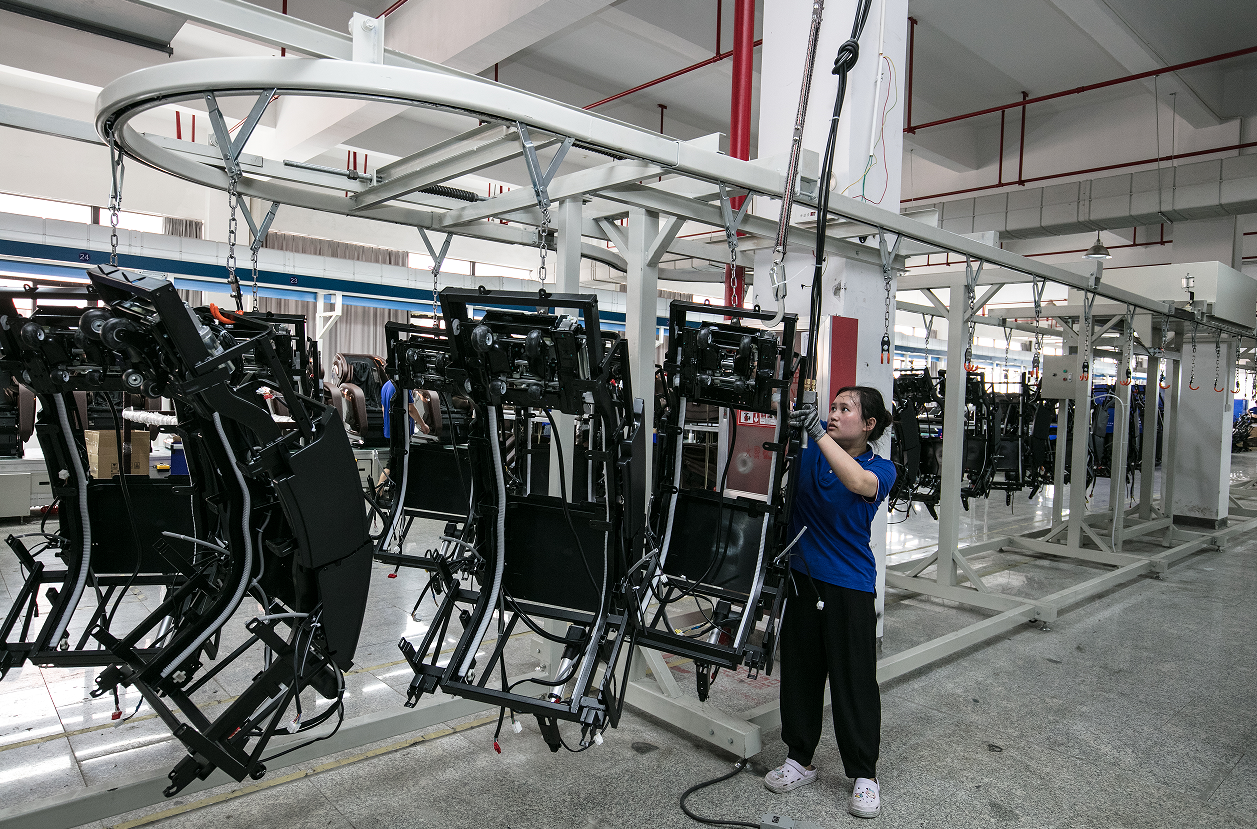
Automated assembly line at the ZHOUQI factory in Cixi, Zhejiang. Production capacity is 16,000 units per month, with a 100% QC test on every unit.
Scale matters when a programme runs across several markets. The ZHOUQI facility covers 130,000 m² with 450 employees, a 34-engineer R&D team and annual output of 200,000 units; roughly 50% of output is exported to the USA, EU, Southeast Asia and the Middle East. For a distributor, that combination is what makes a mid-volume own-brand programme practical rather than theoretical.
Use Cases: Where a 4D Chair Earns Its Floor Space
Different sales environments need different parts of the 4D story, and the deployment mix is broader than home retail alone.
- Home use. The dominant segment, with residential applications accounting for over 70% of market volume in some regions. The pitch here is household usability: zero gravity recline, saved programs, and a clear explanation of what changes between the intensity and speed settings.
- Furniture and home-appliance malls. The chair is a footfall asset. A dual mechanism demonstration holds a passing customer for longer than any specification sheet, which is why showroom models tend to sit at the upper end of the range.
- Massage chair sales showrooms and 4S showrooms. Staffed environments where the six-step presentation can be delivered in full, and where the certificate pack becomes a sales document rather than a filing requirement.
- E-commerce sellers. Product content has to carry the explanation without a demonstrator. The mechanism tier, the track and the airbag zone list should appear as structured specifications, not as adjectives.
- Hotels and resorts. Guest amenities where the priority is relaxation after travel, and where simple presets and a short operating sequence matter more than a deep program menu.
- Wellness and senior-care institutions. Comfort-oriented relaxation use, where the recline position and ease of entry and exit are the deciding factors, and where any therapeutic framing should be avoided.
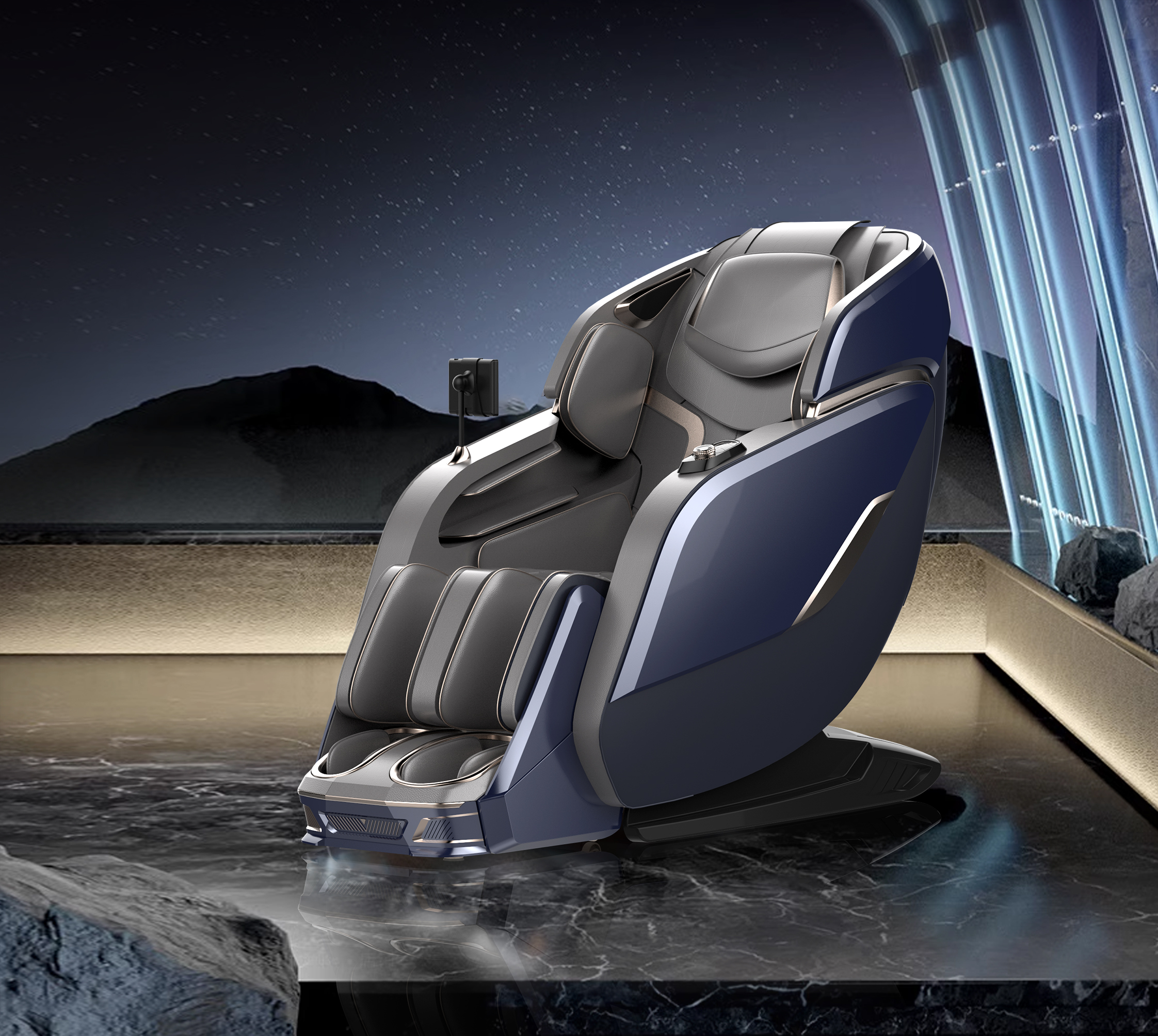
Model 6600 in a home setting. Residential use remains the largest end-use segment for massage chairs.
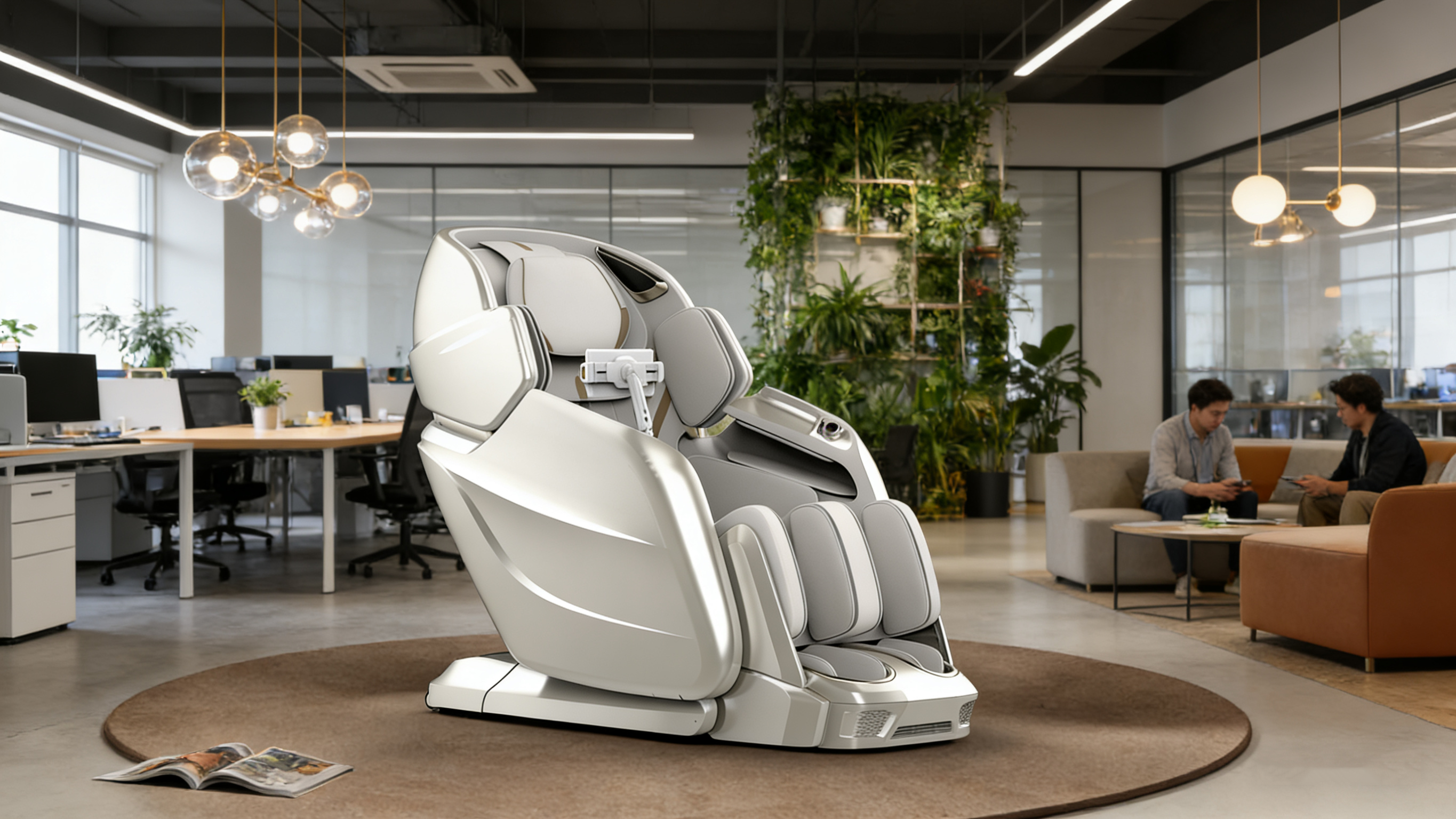
Model 8520 in an office environment, where the outcome language shifts to stiffness and soreness from long sitting.
Delivery evidence supports the range rather than a single SKU. ZHOUQI's 4D and 3D chair programmes include 70,000 units supplied to Vietnam over four years and 20,000 units to the United States over three years, across client types that include showrooms, furniture and home-appliance malls, e-commerce sellers, hotels and resorts, and wellness and senior-care institutions. The stated result across those programmes is an improving market position, with the highlight recorded as a popular design supported by good quality and a favourable price.
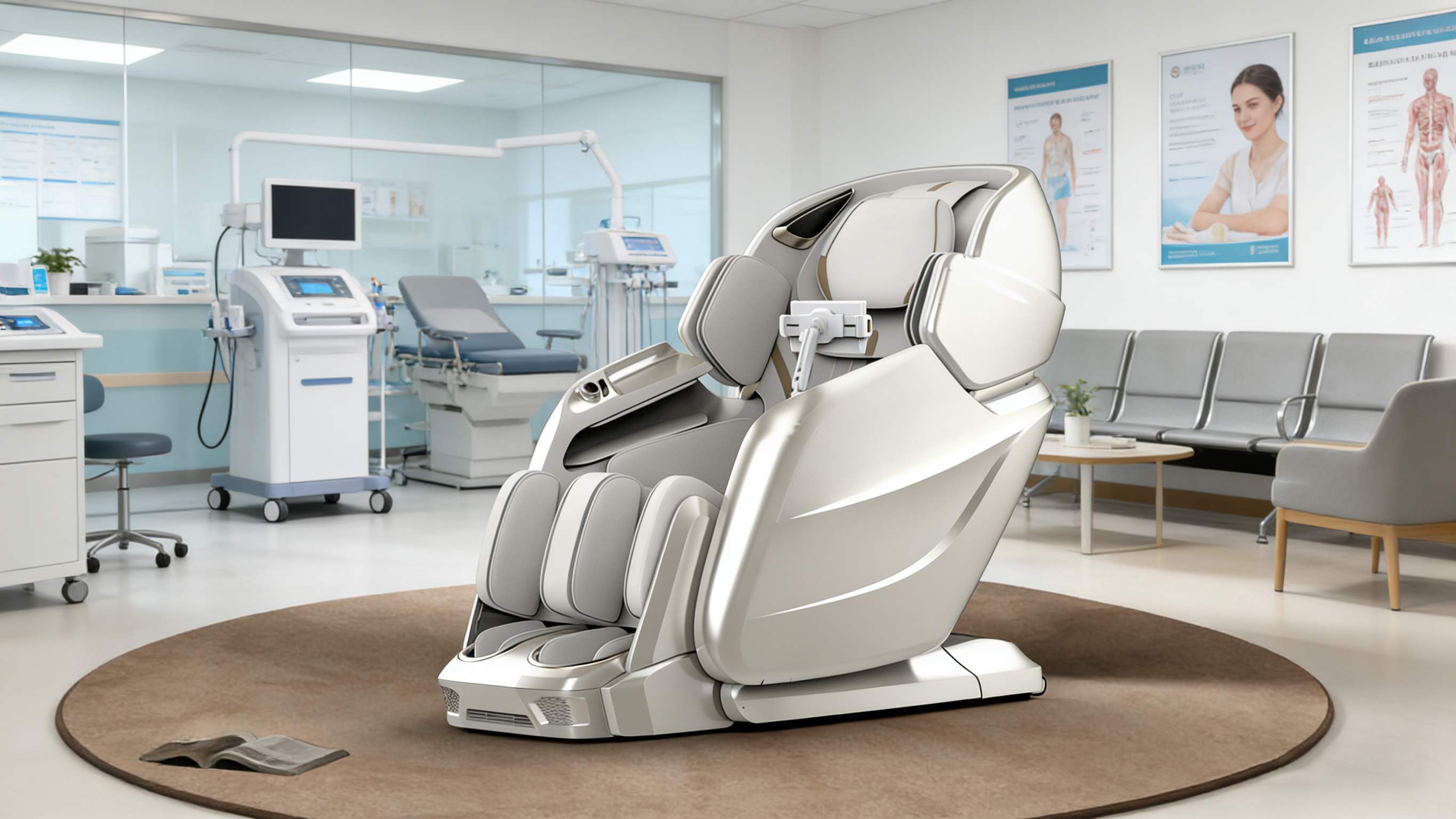
Model 8520 in a senior-care environment, where ease of entry and a simple operating sequence matter more than a deep program menu.
Comparison Table: 2D, 3D, 4D and Dual Mech 4D
| Configuration | Roller depth (in/out) | Speed and rhythm control | Independent upper and lower mechanism | Usual position in a furniture range |
|---|---|---|---|---|
| 2D Massage Chair | Fixed depth position | Set by program, not a continuous fourth variable | No | Entry level |
| 3D Massage Chair | Adjustable depth | Set by program, not a continuous fourth variable | No | Mid range |
| 4D Massage Chair | Adjustable depth | Fourth variable: speed and rhythm of each stroke | No | Upper mid to high end |
| Dual Mech 4D Massage Chair | Adjustable depth | Speed and rhythm control | Yes — two roller systems allowing simultaneous upper back and lower glute massage | Top of range, luxury and venue models |
The 2D and 3D rows follow the conventional use of these terms in the massage chair trade. The 4D and dual mechanism rows follow the published definitions of dynamic speed and rhythm control and of simultaneous independent upper and lower massage cited above. Flexible SL track, zero gravity and airbag coverage are separate specifications and should be confirmed per SKU, since they vary independently of the mechanism tier.
OEM Programme Reference Table
| Parameter | Verified detail |
|---|---|
| Production mode | OEM / ODM |
| Customization scope | Colour, logo, OEM file, pillow and backrest design, UI, language |
| MOQ | 1 x 40HQ |
| Monthly capacity | 16,000 units |
| Lead time | 30–45 days |
| Delivery term | FOB Ningbo |
| Payment terms | 30% of T/T in advance as deposit, 70% before shipment |
| Quality control | 100% QC test; pre-shipment test; third-party inspection (SGS) |
| After-sales | 1 year warranty; installation videos; maintenance manual |
| Certification pack (4D models) | ETL 5030347 (US, Canada); CE ENB2311240186E00201C (EU, Middle East, SE Asia); FDA 3017618816 (US); ISO 9001:2015 certificate 02424Q32202999R1S; ISO 13485:2016 certificate 133640 |
| Export markets | EU, North America, Middle East, Southeast Asia |
FAQ
Which certifications should a furniture buyer verify on a 4D massage chair?
Verify the pack against the market you are selling into, not against the supplier's general claim. For the US and Canada, ZHOUQI 4D models carry ETL certification 5030347, issued by INTERTEK under UL 1647:2015 Ed.6+R:15May2025 and CSA C22.2#68:2018 Ed.8+U1;U2, with massage chairs as the declared scope. For the EU, Middle East and Southeast Asia, CE certification ENB2311240186E00201C was issued by EMTEK against EN IEC 55014-1:2021, EN IEC 61000-3-2:2019/A1:2021, EN 61000-3-3:2013/A2:2021/AC:2022-01 and EN IEC 55014-2:2021. FDA registration 3017618816 covers the US, and the management system is certified to ISO 9001:2015 (02424Q32202999R1S) and ISO 13485:2016 (133640, NQA). IEC 60335-2-32:2024 is the international safety reference for household electric massage appliances and is a useful cross-check on test reports.
Can a manufacturer supply an OEM Dual Mech 4D Massage Chair under our own brand?
Yes. ZHOUQI provides OEM and ODM production services, and customization covers colour, logo, OEM file, pillow and backrest design, UI and language. A dual mechanism 4D configuration means two independent roller systems allowing simultaneous massage of the upper back and lower glute regions, combined with fourth-dimension speed and rhythm control; the flexible SL track is specified separately. The commercial frame for an own-brand programme is an MOQ of 1 x 40HQ, a lead time of 30–45 days and monthly capacity of 16,000 units.
What are the purchasing terms and acceptance criteria for a 4D chair order?
MOQ is 1 x 40HQ and delivery terms are FOB Ningbo. Payment terms are 30% of T/T in advance as deposit with the balance of 70% of T/T before shipment. Acceptance is built on a pre-shipment test and third-party inspection (SGS), supported by a 100% QC test during production. After-sales support is a 1 year warranty, with installation videos and a maintenance manual provided for the selling partner.
How long does production take, and how is quality controlled before shipment?
Standard lead time is 30–45 days, against a monthly capacity of 16,000 units. Every unit passes a 100% QC test, and the factory-outgoing stage includes a pre-shipment test with third-party inspection (SGS) available as an acceptance step. The 4D models covered by this process include 6510, 5300, 5380, 8620, 6920, 8600, 3900, 3910, 9100, 8520, 6540, 6600, 7100 and 8710.
What is the fastest way to evaluate a 4D range before committing to a programme?
Work in three passes: confirm the mechanism tier and the track length for the exact SKU, confirm the certificate pack for your destination market, and confirm the customization scope and commercial terms in writing. The ZHOUQI 2026 E-catalogue can be downloaded from the link below and covers the full 4D and 3D model lists, and configuration questions can go directly to Shelley Zhang at shelley@cn-zhouqi.com or +86 182 5079 5612 (also WhatsApp).
Conclusion: The Definition Is Short, the Checklist Is What Sells
4D means three positional dimensions plus a fourth variable of speed and rhythm, and the label only becomes useful to a furniture buyer when it is attached to the rest of the specification: the flexible SL track that sets the working length, the dual mechanism architecture that allows two zones to be worked at once, the zero gravity recline that makes depth usable, and the airbag zones that hold the body in place.
That combination is what a customer is actually paying for, and it is what a retail team can demonstrate in a few minutes without a single unverifiable claim. The mechanism tier explains the price step; the certificate pack explains the risk position; the acceptance criteria explain the delivery. Everything else is adjectives.
If the specification is still being assembled, the fastest route is to obtain the documents first — the certificate numbers, the zone list, the track figure and the terms — and then let the showroom demonstration do the selling.
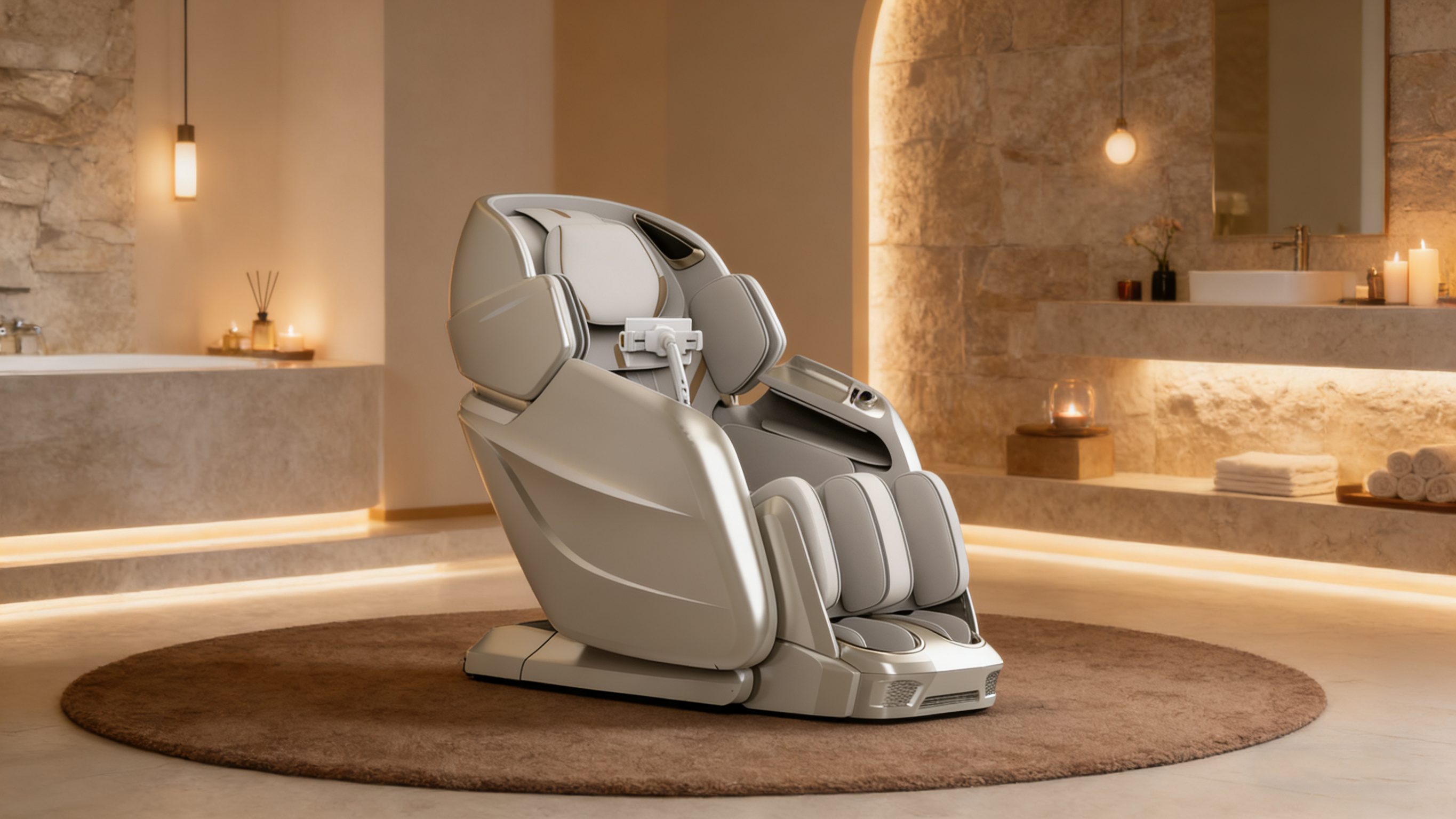
Model 8520 in a wellness setting — one of the deployment environments covered by ZHOUQI's 4D and 3D chair programmes.
Next step: sample, specification or full catalogue
Download the 2026 E-catalogue for the complete 4D and 3D massage chair model list, specifications and customization options: 2026 E-catalogue (PDF).
For configuration questions, quotation or OEM/ODM discussion: Shelley Zhang — shelley@cn-zhouqi.com — +86 182 5079 5612 (Tel / WhatsApp) — www.cn-zhouqi.com.
Ningbo Zhouqi Health Technology Co., Ltd. (ZHOUQI), No. 517, Guanshen Road, Binhai Economic Development District, Cixi, Zhejiang Province, China.
Have Questions or Need More Details?
Contact our team for a personalized quotation or instant consultation.
Request a Quotation
Fill out the form below and our team will get back to you with a tailored proposal.
WhatsApp Direct Chat
Prefer to chat in real-time? Message us on WhatsApp for instant assistance & quick answers.
- Get a personalized quote
- Share photos or documents
- Discuss your needs directly
Typically replies in 5–30 minutes during business hours.