CPD20 vs CPD30 Electric Forklift: Choosing 2-Ton or 3-Ton for Smart Manufacturing
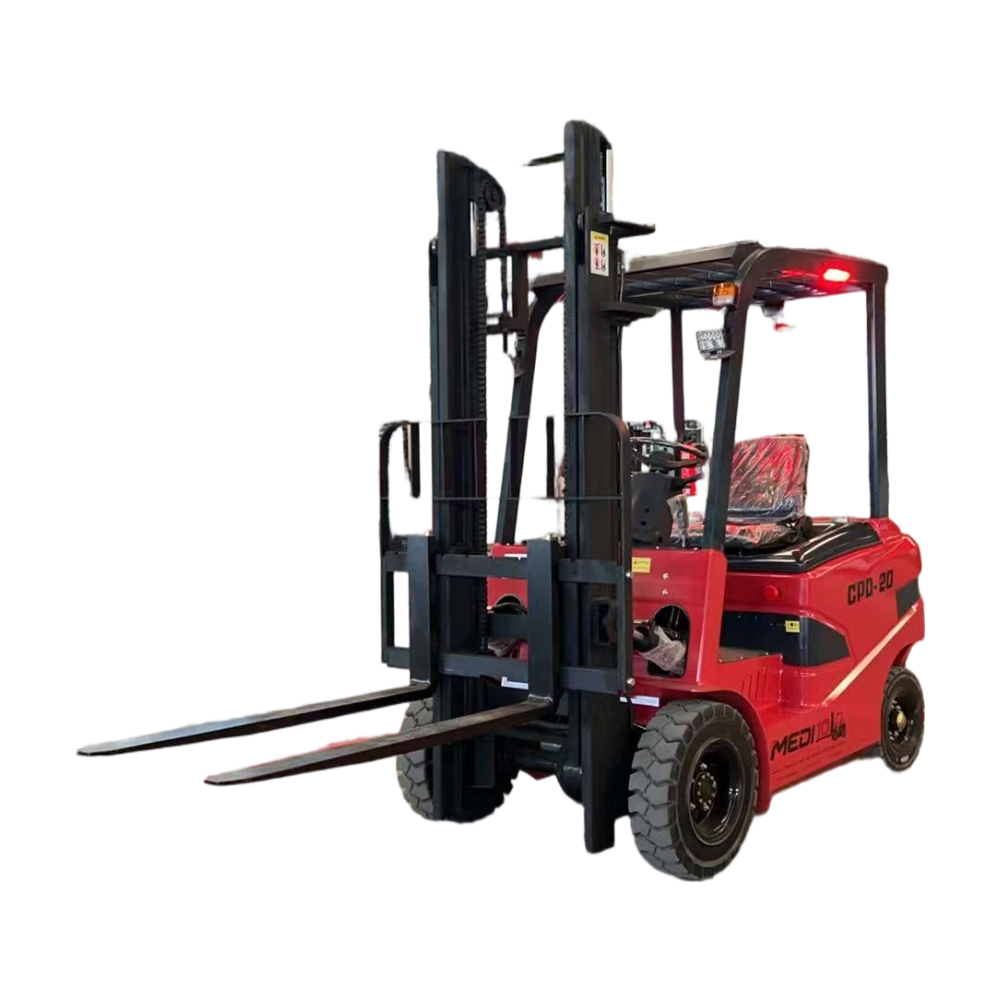
Cover: the CPD20 2-ton electric forklift truck — the light-duty half of the 2-ton versus 3-ton decision.
Two models decide most smart manufacturing forklift shortlists: the 2-ton CPD20 and the 3-ton CPD30 electric forklift. Both are produced and exported by Ningjin Shunhao Trading Co., Ltd., a China-based B2B electric forklift manufacturer that builds OEM and ODM customized material handling equipment for global distributors, manufacturing plants, cold-chain enterprises and warehouse operators (www.mightlift.com). Both models share the same electric platform logic: battery-powered drive, brushless AC drive and pump motors, zero tailpipe emissions at the point of use, and controller options that include SANTROLL, CURTIS, INMOTION and ZAPI.
They are not interchangeable. The CPD20 is rated at 2,000 kg (2 ton) and is positioned for light-duty warehouse fleet deployment. The CPD30 is rated at 3,000 kg (3 ton), offers a standard and extended lifting height range of 3,000 mm to 7,000 mm, and adds intelligent MOSFET drive electronics, a large-angle adjustable steering wheel with voice prompts, and a large-flow cyclone air filter system. This comparison examines the two trucks on the dimensions that decide real projects: rated capacity, lift height, drive and steering, battery strategy, indoor air handling, site constraints and compliance documentation.
Quick answer. Choose the CPD20 (2 ton) when your heaviest recurring pallet stays within the 2,000 kg rating, lift heights are moderate, and the truck works on level indoor floors — e-commerce warehouses, light workshops, supermarkets and department stores. Specify the CPD30 (3 ton) when loads are heavier, racking is higher (the 3,000–7,000 mm lifting range), or the site runs cold chain fruit and vegetable wholesale, heavier indoor workshop flows, or high-throughput operations where a 2-ton truck would sit at its ceiling for the whole shift.
The Real Question Behind 2-Ton vs 3-Ton (Problem Definition)
Capacity selection is normally framed as a budget question. On a live site, it is a flow, safety and uptime question. The gap between a 2-ton and a 3-ton electric forklift is not the average pallet — it is the heaviest recurring pallet, handled at its real load centre, at the lift height the racking actually demands.
Under-specifying shows up as reduced residual capacity at height, repeated overload alarms, faster wear on drivetrain components and a truck that cannot serve the heaviest lane. Over-specifying shows up as a physically larger machine where a compact one would turn more easily, and as a purchase decision that adds capability the site never uses. Both errors are avoidable when the selection is driven by data rather than by the model name.
For CPD-series electric forklifts, the checks that must be confirmed before selection are: pallet weight, load centre, aisle width, mast height, floor capacity and local charger voltage. These six inputs determine whether the answer is the 2,000 kg CPD20 or the 3,000 kg CPD30 — and they are also the inputs that determine whether an attachment-compatible configuration is required.
A second layer of the problem is specific to smart manufacturing. Enclosed production and warehouse areas cannot absorb tailpipe exhaust, and they increasingly run automated guided vehicles and driverless transport alongside manual trucks. Capacity decisions therefore have to be made together with indoor air quality, noise, charging strategy and automation-compatibility decisions, not after them.
Industry Background: Why Capacity Choice Is Now a Compliance and Energy Question
Electrification of material handling is no longer a niche purchasing preference. The global electric forklift market was valued at USD 53.01 billion in 2024 and is projected to reach USD 94.55 billion by 2032, according to Maximize Market Research. In North America, electric forklifts reached a 71% share of retail orders in 2024, reflecting a rapid shift away from internal combustion engines (Industrial Truck Association / Batteries International). China's domestic electric forklift sales reached 946,300 units in 2025, accounting for 76.9% of total forklift sales in the country (China Construction Machinery Association).
Two structural trends shape the 2-ton versus 3-ton question. First, warehouse densification: Class II narrow-aisle trucks are the fastest-growing electric segment, with a projected 9.28% CAGR through 2030 (Mordor Intelligence). Denser racking pushes lift height requirements upward, which is where the CPD30's 3,000–7,000 mm lifting range becomes relevant rather than optional. Second, battery chemistry: lithium-ion adoption in new global forklift shipments rose to 35% in 2024, up from 22% in 2021 (LiTrue Analysis), shifting the economics of multi-shift operation.
Compliance has moved in parallel. EN 1175:2020 is the current harmonized European standard for electrical and electronic safety requirements in self-propelled industrial trucks and a CE marking prerequisite (European Committee for Standardization). ISO 3691-4:2023 provides updated safety requirements for driverless industrial trucks and their systems, which matters in smart manufacturing environments where automated vehicles share aisles with manual forklifts. In explosive atmospheres, ATEX Directive 2014/34/EU is mandatory for electric forklifts used in chemical or food processing environments within the European Union (European Commission).
Cold chain adds a further variable. Lithium-ion batteries in cold storage applications down to -20°C retain significantly more capacity than lead-acid batteries, and the food industry segment is seeing an 11.6% CAGR in electric forklift demand (Mordor Intelligence). A cold chain fruit and vegetable wholesale site that was once a 2-ton application can therefore become a 3-ton application purely because of lift height, throughput and battery behaviour.
Detailed Solution: How the CPD20 and CPD30 Actually Differ
Rated capacity and load centre
The CPD20 is a 2-ton electric forklift truck rated at 2,000 kg. Its configuration is built around high-power front dual drive motors, which is the layout that supports stable, controlled traction in indoor pallet flows. The CPD30 is rated at 3,000 kg and uses a high-power electric drive system with intelligent MOSFET control. The practical difference appears when loads approach the limit: a 2-ton truck operating near its ceiling and a 3-ton truck operating well below its rating behave very differently in terms of stability margins and component stress.
Where even 3 tons is not enough — heavy building materials, yards, and mixed indoor/outdoor routes subject to site assessment — the CPD Series continues to the CPD35 at 3,500 kg, with front wheel dual drive motors, P.E.S three-speed efficiency regulation, a lateral side battery extraction layout for service access, and ergonomically positioned right-hand control valves.
Lifting height: the 3,000 mm to 7,000 mm range on the CPD30
Lifting height is often the deciding specification, because racking height is fixed by the building, not by the truck budget. The CPD30 offers a standard and extended lifting height range of 3,000 mm to 7,000 mm. That range covers low-level dock work as well as high-level put-away and retrieval, which is why the CPD30 appears in cold chain fruit and vegetable wholesale facilities and indoor workshops where vertical storage is maximised.
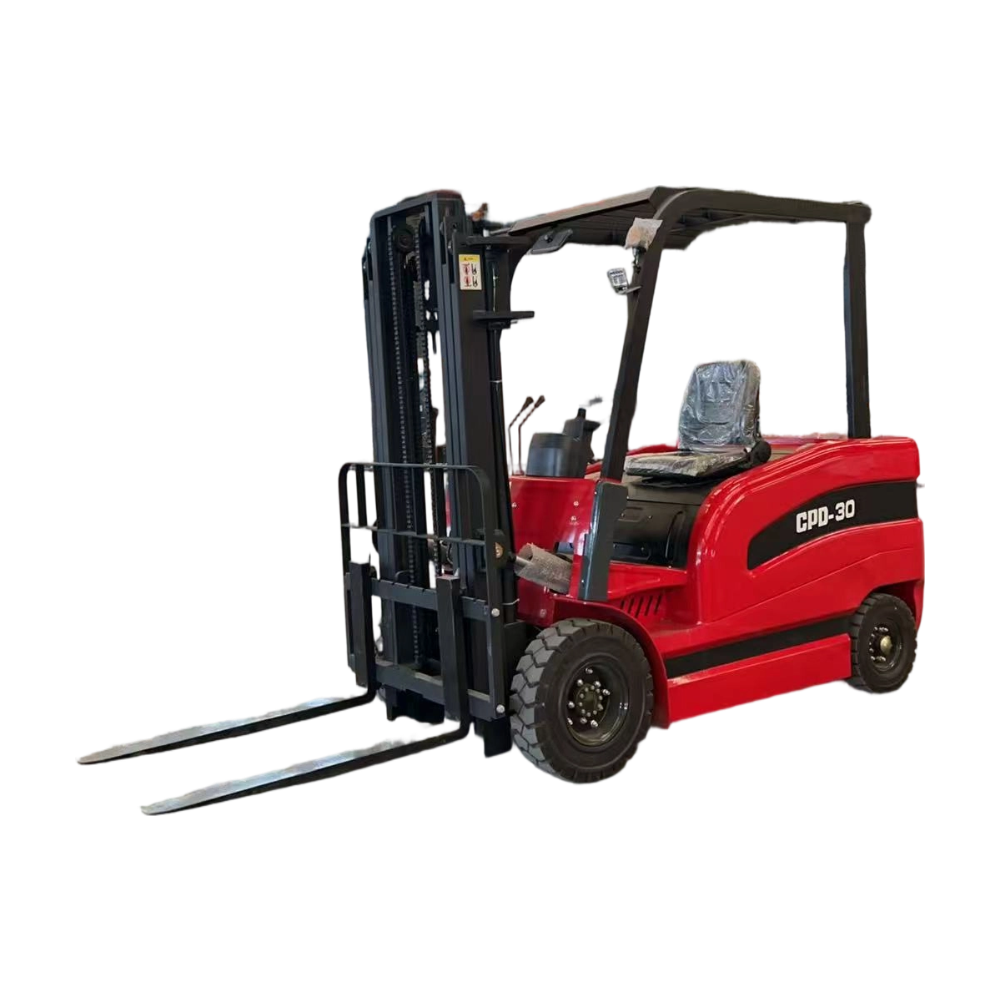
The CPD30 3-ton electric counterbalance forklift — specified for heavier loads and lift heights up to 7,000 mm.
Drive, steering and control electronics
The CPD20 uses electric steering with cargo-sensing smooth control, an automatic electromagnetic parking brake and AI brake assist, paired with an internationally sourced well-known brand controller. For light-duty warehouse fleet deployment, these features matter because they reduce operator fatigue during repeated short cycles and reduce the risk of load shift when a truck is manoeuvred in tight staging areas.
The CPD30 takes a different route: intelligent MOSFET drive control, a large-angle adjustable steering wheel and voice prompts. MOSFET-based control is relevant at higher current demand, which is what a 3-ton truck sees under continuous heavy cycling. Voice prompts support operator awareness in busy, noisy indoor workshops.
Across the CPD Series, controller brand options include SANTROLL, CURTIS, INMOTION and ZAPI, so a fleet can standardise on one control ecosystem or match controllers to specific operating conditions.
Battery and charging strategy
Both the CPD20 and the CPD30 ship with a heavy-duty lead-acid battery as standard, with a lithium battery optional. The choice is operational rather than cosmetic. In new global forklift shipments, lithium-ion reached 35% adoption in 2024, up from 22% in 2021 (LiTrue Analysis). The reason is largely charging behaviour: opportunity charging — 15 to 30 minute top-ups — does not degrade lithium-ion cycle life, while it significantly harms lead-acid battery longevity (Toyota Forklifts Blog). Sites running single-shift operation with a fixed charging window can validate a lead-acid configuration; sites running multi-shift or high-utilisation flows usually justify lithium.
Cold environments add another consideration. Because lithium-ion batteries retain significantly more capacity than lead-acid in cold storage applications down to -20°C, cold chain fruit and vegetable wholesale operators often pair the CPD30 with a lithium configuration. Local charger voltage must be confirmed as part of the site assessment before the battery specification is fixed.
Operator environment, filtration and indoor air
All CPD-series electric forklifts are battery powered and produce zero tailpipe emissions at the point of use, with low noise suitable for indoor workshop use. The CPD30 adds a large-flow cyclone air filter system, which is designed with dustier indoor environments in mind — workshops, processing areas and older buildings where airborne particulate is part of daily operation.
For enclosed clean production areas, the emission profile is the qualification criterion rather than a comfort feature. An electronics manufacturer in an industrial park that runs component, work-in-process and finished-goods logistics on a bulk fleet using this series solved the problem of tailpipe exhaust emissions inside enclosed clean production areas, and reports improved material-flow efficiency across those routes.
Step-by-Step: How to Choose Between the CPD20 and CPD30
- Define the heaviest recurring load. Record the maximum pallet weight handled in a normal week, not the average. If that figure sits comfortably under 2,000 kg at the correct load centre, the CPD20 remains the candidate. If it approaches or exceeds 2,000 kg, the CPD30 is the correct starting point.
- Map the required lift height. Compare the highest racking level against the CPD30's 3,000–7,000 mm range. High-level put-away pushes the specification toward the CPD30 regardless of average pallet weight.
- Check aisle width, floor capacity and mast height. These three constraints determine whether a candidate truck can physically work the layout, and they must be confirmed before selection rather than after delivery.
- Match the shift pattern to battery and charging. Single-shift sites with a fixed charging window can evaluate lead-acid; multi-shift and opportunity-charged operations generally favour the optional lithium configuration.
- Confirm the surrounding equipment. Light-duty CPD20 deployment typically requires pallet racking, a dock leveler, a charger and a warehouse management system, so their specifications should be aligned with the truck at the planning stage.
- Confirm indoor air, noise and automation coexistence. Zero-emission, low-noise battery power suits enclosed areas, and sites running driverless trucks should align layouts with ISO 3691-4:2023 requirements.
- Validate with a pilot configuration. The minimum order quantity for this series is 2 units, which allows a two-unit pilot on the real route before a fleet-wide rollout.
Use Cases: When 2 Tons Is Enough and When You Need 3 Tons
Where the CPD20 2-ton electric forklift fits
- E-commerce warehouses and distribution centres: indoor pallet receiving, put-away and dispatch on level floors, with no tailpipe exhaust at the point of use.
- Light workshops and assembly areas: repeated short transfer cycles where electric steering with cargo-sensing smooth control and AI brake assist reduce operator effort.
- Supermarkets and department stores: back-of-house pallet movement and stock replenishment, where low noise is required.
- Light-duty warehouse fleet deployment: the CPD20 is positioned for global warehousing and distribution applications where loads stay within the 2,000 kg rating.
Where the CPD30 3-ton electric forklift is needed
- Cold chain fruit and vegetable wholesale: heavier produce pallets, higher throughput and frequent high-level put-away, with lithium configurations available for cold operation.
- Indoor workshops with heavier loads: 3,000 kg rated capacity, high-power electric drive with intelligent MOSFET control, and a large-flow cyclone air filter for dusty environments.
- High-rack and dense storage layouts: the 3,000–7,000 mm lifting range supports vertical storage strategies that a lower lift range cannot serve.
- Multi-shift operations: the 3-ton platform paired with optional lithium and opportunity charging sustains continuous working hours.
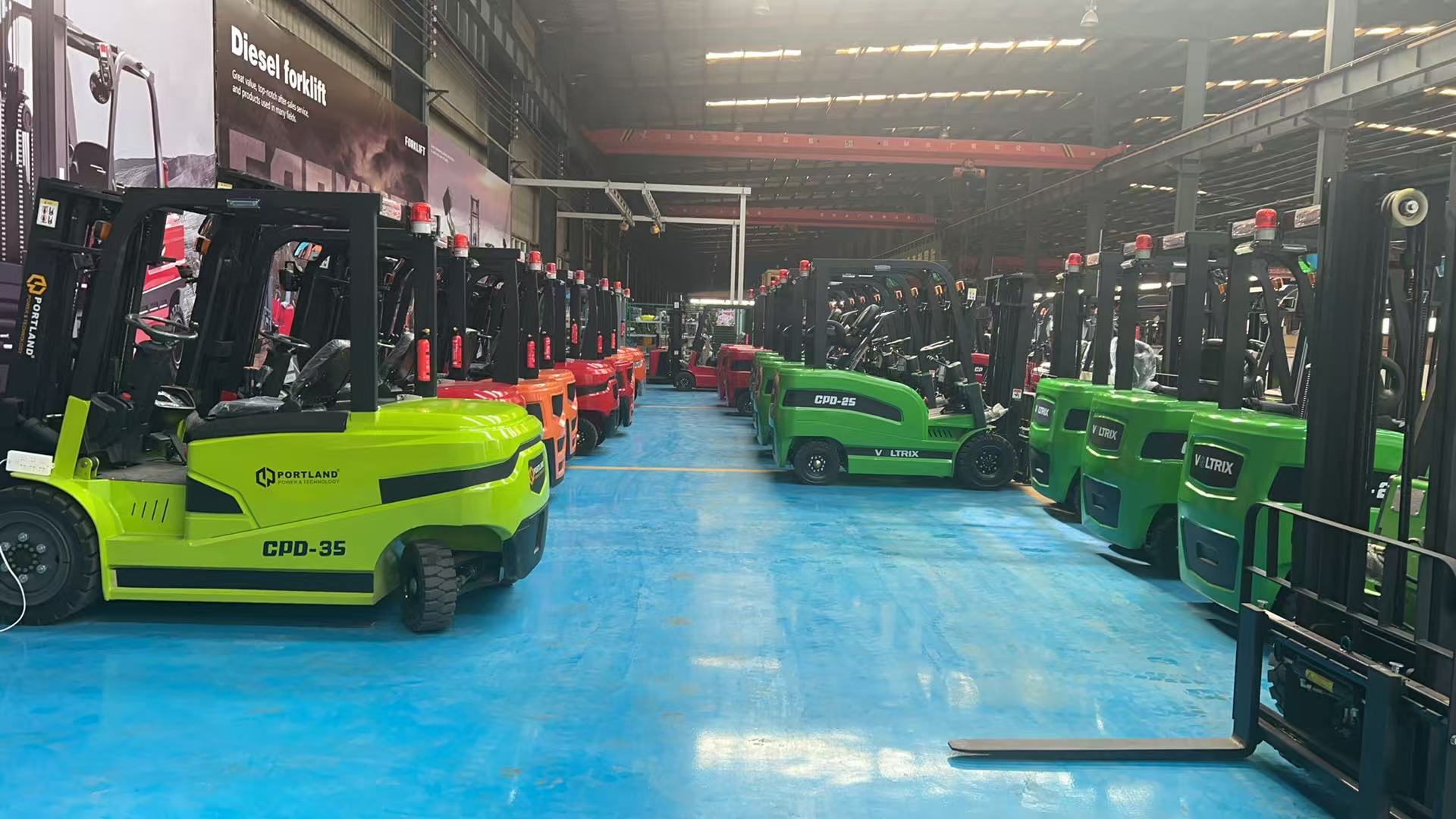
Production and testing: every finished unit of the CPD Series undergoes load, braking and waterproof testing before shipment.
Ningjin Shunhao Trading Co., Ltd. manufactures under a 100% test protocol and holds ISO 9001, ISO 14001, CE and UN38.3 certifications, along with structural and battery technology patents. The company supplies 120+ overseas distributors across 60 countries and regularly exhibits at intralogistics events including CeMAT and MODEX. OEM and ODM customization covers load capacity adjustment, low-temperature and explosion-proof refitting, branded appearance optimization and intelligent system reservation — which is how a standard CPD20 or CPD30 becomes a site-specific configuration.
CPD20 vs CPD30 Comparison Table
| Decision dimension | CPD20 (2 ton) | CPD30 (3 ton) |
|---|---|---|
| Rated load capacity | 2,000 kg (2 ton) | 3,000 kg (3 ton) |
| Lifting height | Not specified in this configuration brief | 3,000 mm – 7,000 mm (standard and extended) |
| Drive and motor | High-power front dual drive motors; brushless AC drive and pump motor | High-power electric drive system; brushless AC drive and pump motor |
| Control electronics | Internationally sourced well-known brand controller | Intelligent MOSFET drive control |
| Steering and operator assist | Electric steering with cargo-sensing smooth control; automatic electromagnetic parking brake; AI brake assist | Large-angle adjustable steering wheel; voice prompts |
| Air handling | Not specified in this configuration brief | Large-flow cyclone air filter system |
| Controller brand options | SANTROLL / CURTIS / INMOTION / ZAPI | SANTROLL / CURTIS / INMOTION / ZAPI |
| Battery | Heavy-duty lead-acid standard; lithium optional | Heavy-duty lead-acid standard; lithium optional |
| Emission and noise | Battery powered, zero emission, low noise for indoor use | Battery powered, zero emission, low noise for indoor use |
| Primary fit | E-commerce warehouses, workshops, supermarkets and department stores, light-duty warehouse fleet deployment | Cold chain fruit and vegetable wholesale, indoor workshops with heavier loads, high-level storage |
| Supporting equipment to confirm | Pallet racking, dock leveler, charger, warehouse management system | Pallet racking, dock leveler, charger, warehouse management system |
For heavy-duty building materials and heavy industrial goods projects with mixed indoor and outdoor routes, the next step in the same architecture is the CPD35 at 3,500 kg, which uses a front dual-drive layout and lateral side battery extraction to support heavy-load fleet operation and service access.
Compliance and Documentation: CE, EN 1175, ATEX and Lithium
Compliance checks should be completed before the capacity decision is finalised, because they can eliminate a configuration entirely. For EU warehouse projects, CE marking on industrial trucks is assessed against the harmonized standard EN 1175:2020 for electrical and electronic safety requirements (CEN). Buyers should confirm that the supplier's CE documentation aligns with this standard and with the actual truck configuration ordered.
Where driverless industrial trucks operate in the same facility — common in smart manufacturing — ISO 3691-4:2023 defines updated safety requirements for those vehicles and their systems. Where electric forklifts are used in explosive atmospheres such as certain chemical and food processing operations, ATEX Directive 2014/34/EU applies within the European Union. Ningjin Shunhao Trading Co., Ltd. supports explosion-proof refitting as part of its OEM and ODM customization scope, and holds CE certification alongside ISO 9001, ISO 14001 and UN38.3 for its battery configurations.
Lithium configurations carry their own documentation requirement: UN38.3 covers lithium battery transport safety, and it should be supplied with the unit rather than requested after shipment.
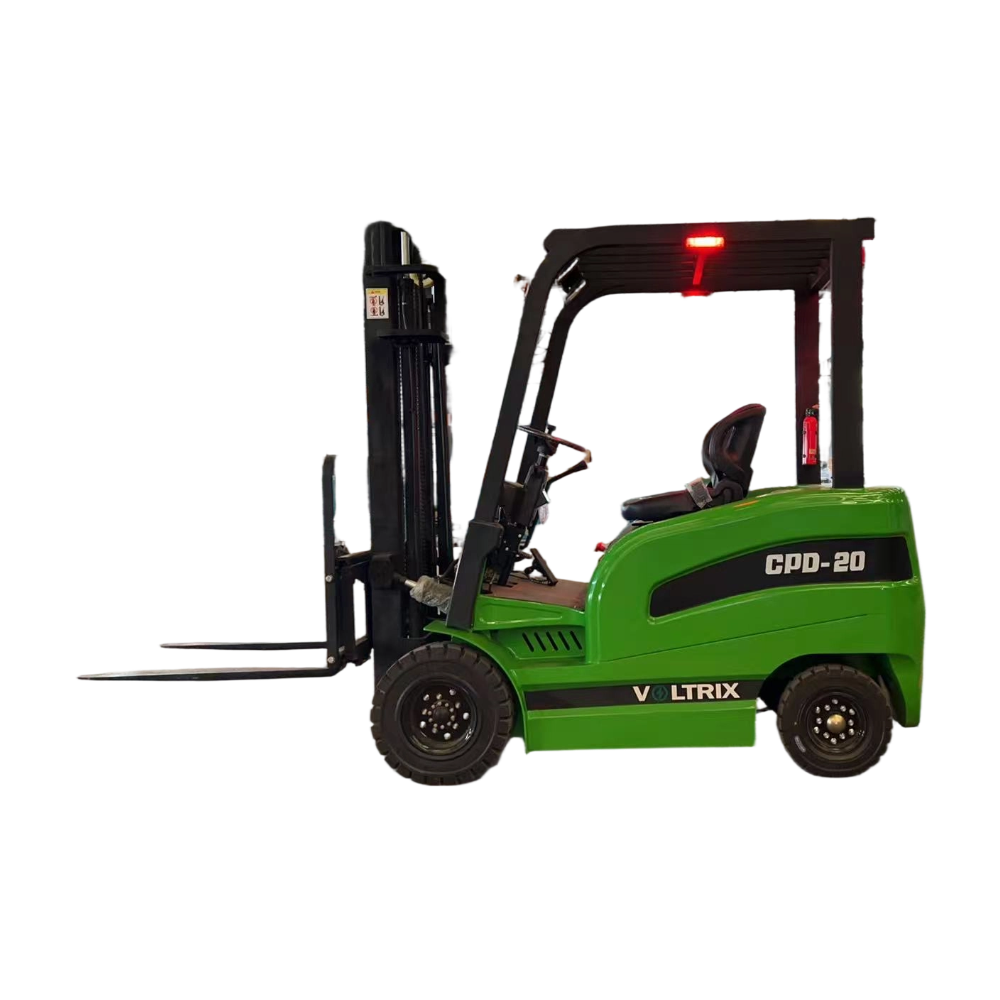
CPD20 configuration detail: electric steering with cargo-sensing smooth control for light-duty indoor flows.
FAQ: CPD20 vs CPD30 Electric Forklift Selection
Does the CPD20 or CPD30 meet CE requirements for EU warehouse projects?
Ningjin Shunhao Trading Co., Ltd. holds CE certification for its CPD-series electric forklifts, together with ISO 9001, ISO 14001 and UN38.3. For EU warehouse projects, buyers should verify that the CE documentation corresponds to the harmonized standard EN 1175:2020, which covers electrical and electronic safety requirements for self-propelled industrial trucks and is a CE marking prerequisite. Where the truck is used in an explosive atmosphere, ATEX Directive 2014/34/EU also applies, and explosion-proof refitting is available within the company's OEM and ODM customization scope.
How do I decide between the 2-ton CPD20 and the 3-ton CPD30?
Decide on three inputs. First, rated capacity: the CPD20 handles 2,000 kg, the CPD30 handles 3,000 kg. Second, lift height: the CPD30 offers a standard and extended range of 3,000 mm to 7,000 mm, so high-level racking points to the 3-ton model. Third, site conditions: pallet weight, load centre, aisle width, mast height, floor capacity and local charger voltage must all be confirmed before selection. The CPD20 fits e-commerce warehouses, light workshops, supermarkets and department stores; the CPD30 fits cold chain fruit and vegetable wholesale, indoor workshops with heavier loads and high-throughput flows.
Should I specify a lead-acid or a lithium battery on a CPD20 or CPD30?
Both models ship with a heavy-duty lead-acid battery as standard, with lithium optional. Lead-acid suits single-shift operation with a fixed charging window, while lithium supports opportunity charging: 15 to 30 minute top-ups do not degrade lithium-ion cycle life, whereas they significantly harm lead-acid battery longevity (Toyota Forklifts Blog). Lithium-ion reached 35% adoption in new global forklift shipments in 2024, up from 22% in 2021 (LiTrue Analysis). In cold storage applications down to -20°C, lithium-ion batteries retain significantly more capacity than lead-acid, which is relevant to cold chain projects.
What are the MOQ and lead time for a CPD20 or CPD30 order?
The minimum order quantity for this product range is 2 units, and the standard lead time is 30 days. Production runs in OEM mode with customization support, and every finished unit undergoes 100% testing before shipment. Because the minimum is 2 units, a buyer can run a two-unit pilot on the real route before scaling to a full fleet.
Can I test a CPD20 or CPD30 configuration before committing to a fleet order?
Yes. A two-unit pilot order can be placed against the site's actual load, aisle and lift conditions, which is the most reliable way to confirm whether 2 tons or 3 tons is correct for the heaviest recurring route. To arrange a pilot configuration, request a quotation with your pallet weight, load centre, lift height and aisle width — Ningjin Shunhao Trading Co., Ltd. can be reached at licong@mightlift.com or on WhatsApp at +86 15100974338, and product information is available at www.mightlift.com.
Conclusion: Match the Truck to the Flow, Not to the Price List
The 2-ton CPD20 and the 3-ton CPD30 solve different problems inside the same electric platform. The CPD20 is the right answer when loads stay within 2,000 kg, lift heights are moderate, and the work is level-floor indoor handling in e-commerce warehouses, light workshops, supermarkets and department stores — supported by electric steering with cargo-sensing smooth control, AI brake assist and an automatic electromagnetic parking brake. The CPD30 is the right answer when loads reach 3,000 kg, lift height extends to 7,000 mm, or the site is a cold chain fruit and vegetable wholesale operation or an indoor workshop where the air filter, voice prompts and intelligent MOSFET drive add real operating value.
The correct method is not to choose the larger model by default, but to confirm pallet weight, load centre, aisle width, mast height, floor capacity and charger voltage first, then specify capacity, battery and controller against those numbers. For projects that sit just beyond 3 tons, the CPD35 at 3,500 kg extends the same architecture.
Next step: size your CPD20 or CPD30 configuration
Send your heaviest pallet weight, load centre, maximum lift height and aisle width, and Ningjin Shunhao Trading Co., Ltd. will confirm whether a 2-ton CPD20 or a 3-ton CPD30 fits your material flow.
Email: licong@mightlift.com | WhatsApp: +86 15100974338 | Website: www.mightlift.com
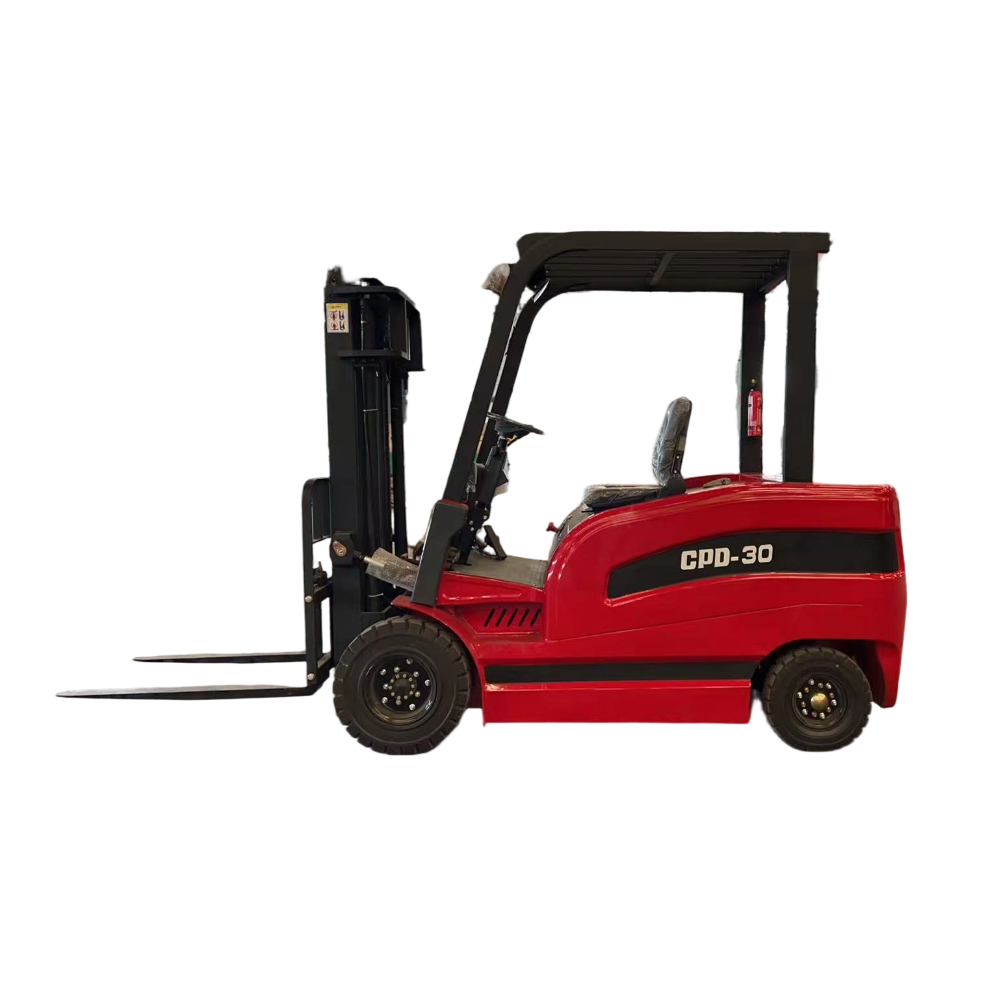
CPD30 units prepared for bulk shipment — OEM and ODM configurations supplied to distributors and industrial buyers worldwide.
Have Questions or Need More Details?
Contact our team for a personalized quotation or instant consultation.
Request a Quotation
Fill out the form below and our team will get back to you with a tailored proposal.
WhatsApp Direct Chat
Prefer to chat in real-time? Message us on WhatsApp for instant assistance & quick answers.
- Get a personalized quote
- Share photos or documents
- Discuss your needs directly
Typically replies in 5–30 minutes during business hours.