CPD20 vs CPD30 Electric Forklift: Which Fits Your Warehouse?
The CPD20 is rated at 2,000 kg and the CPD30 at 3,000 kg. That 1,000 kg gap is the whole decision. In most warehouses the answer is set by two numbers already sitting in your racking plan — the heaviest repeatable pallet load and the highest beam you need to reach — not by the model name at the top of a specification sheet.
Both trucks are battery-electric counterbalance forklifts built on the same CPD platform by Ningjin Shunhao Trading Co., Ltd., a Chinese electric forklift manufacturer trading under the Mightlift brand and supplying OEM and ODM material handling equipment to distributors, manufacturing plants, cold-chain enterprises and warehouse operators worldwide. Both share brushless AC drive and pump motors, the same four controller options, zero tailpipe emissions, low-noise operation and a single CE certification scope.
This guide compares them on the four variables that actually move a purchase decision — rated load capacity, lifting height, battery configuration and indoor suitability — then closes with a five-step framework you can run against your own site plan.
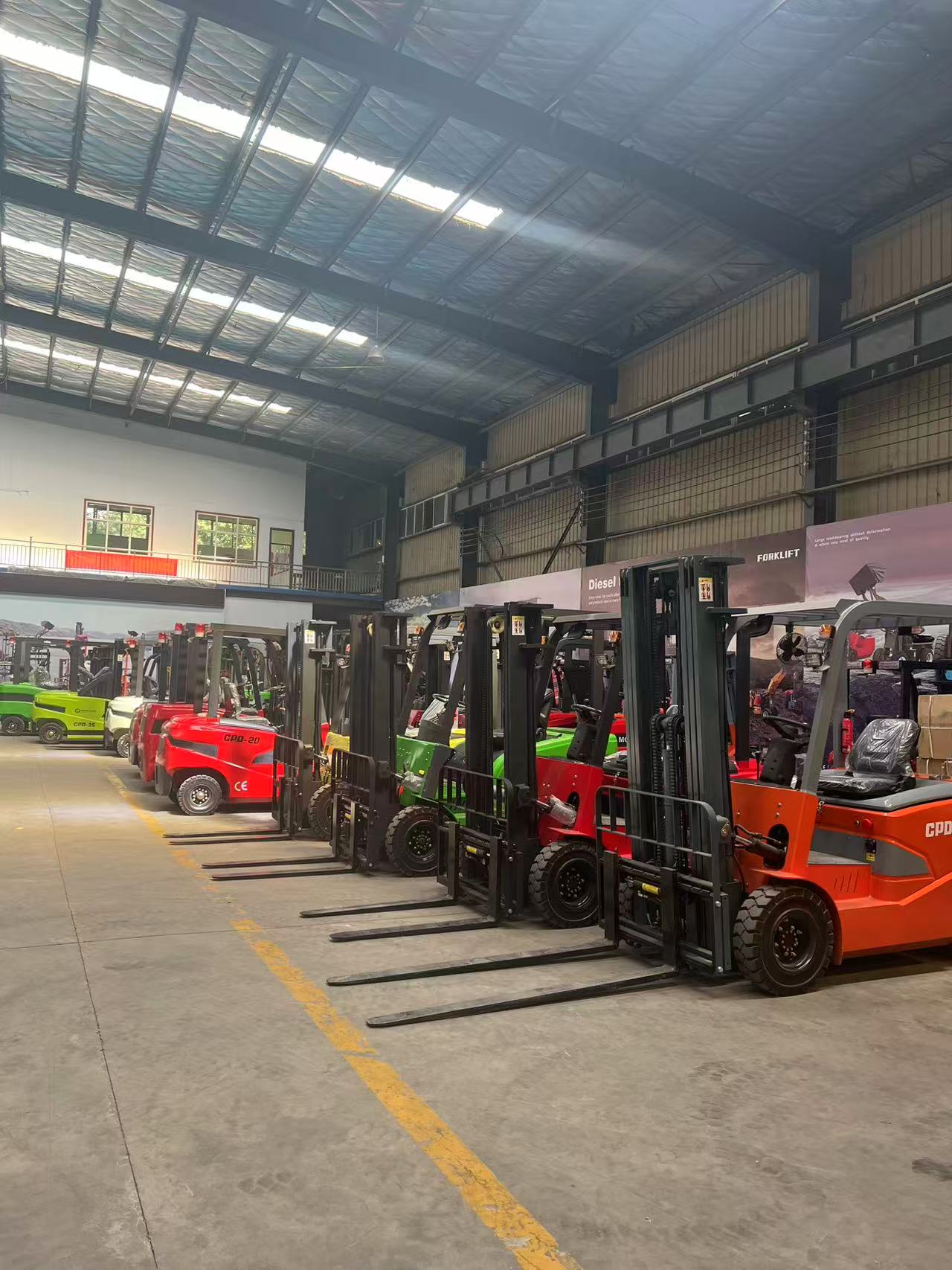
CPD20 and CPD30 units are built on one CPD platform — the capacity difference is specified, not improvised.
Problem definition: capacity is decided before the model name matters
Capacity errors in warehouse fleets rarely come from choosing the wrong brand. They come from specifying a truck against a nominal pallet weight instead of the real load, and from treating lifting height as a separate purchase when it belongs to the same decision.
Under-specification shows up slowly. A 2,000 kg truck asked to handle a heavier pallet — or the same pallet with a side-shift fork and a load centre sitting further forward than the rating assumes — spends every shift at its capacity ceiling. The operator feels it in stability at height; the maintenance team notices it later.
Over-specification is quieter and more common. Buying 3,000 kg of rated capacity for 1,200 kg pallets damages nothing, but it commits the site to a specification sized for work the site never does, and in a multi-truck fleet that premium repeats on every unit.
The CPD20 and CPD30 sit on either side of a common warehouse threshold: the 2-tonne pallet. The rest of this article is about deciding which side of that threshold your operation is genuinely on.
Industry background: why the 2-tonne and 3-tonne electric class decides most warehouse fleets
Electric traction is no longer the alternative in this category. Electric forklifts reached a 71% share of North American retail orders in 2024, according to Industrial Truck Association data reported by Batteries International, reflecting a rapid shift away from internal combustion engines. Maximize Market Research values the global electric forklift market at USD 53.01 billion in 2024, projected to reach USD 94.55 billion by 2032.
The battery mix is shifting at the same time. Lithium-ion adoption in new global forklift shipments rose to 35% in 2024, up from 22% in 2021, according to LiTrue Analysis — a change that bears directly on a CPD20 vs CPD30 decision, because battery configuration is one of the four variables that separates the two trucks in practice.
Warehouse density is the third force. Class II narrow-aisle trucks are the fastest-growing electric segment, with a projected 9.28% CAGR through 2030 according to Mordor Intelligence, driven by warehouse densification. Counterbalance trucks in the 2-tonne and 3-tonne class still carry the receiving, put-away and line-feed work around that dense storage — which is why the CPD20 and CPD30 remain the two models most warehouse buyers have to choose between.
What the CPD20 and CPD30 share before capacity is compared
Four specifications are identical across both models, and each one removes a decision from the table.
Drivetrain. Both use brushless AC drive motors and brushless AC pump motors. The drive motor moves the truck; the pump motor drives hydraulic lift and tilt. Brushless AC construction removes the carbon-brush wear item from both, which matters on multi-shift warehouse duty where the truck is moving and lifting continuously.
Controller options. Both models can be specified with controllers from SANTROLL, CURTIS, INMOTION or ZAPI. Controller choice is a configuration decision — it affects service-network familiarity and diagnostics rather than rated capacity — so it should not be used to choose between 2 tonnes and 3 tonnes.
Emissions and noise. Both are battery-electric with zero tailpipe emissions and low-noise operation. That is the reason either model can work inside an enclosed warehouse, food factory or workshop where a diesel or LPG truck would need separate ventilation and would add noise to the shift.
Certification. Both models fall inside one CE scope. The CPD series holds an ATTESTATION OF COMPLIANCE issued by INTEGRA96 under the Machinery Directive 2006/42/EC, certificate number TTC-23-1907/08/01, covering forklift model series CPD — specifically CPD10, CPD20, CPD30 and CPD35 — against EN ISO 12100:2010, EN 60204-1:2018 and EN 1175:2020. It was issued on 19 July 2023 and expires on 19 July 2028. For EU buyers, EN 1175:2020 is the current harmonised European standard for electrical safety requirements in self-propelled industrial trucks and a prerequisite for CE marking.
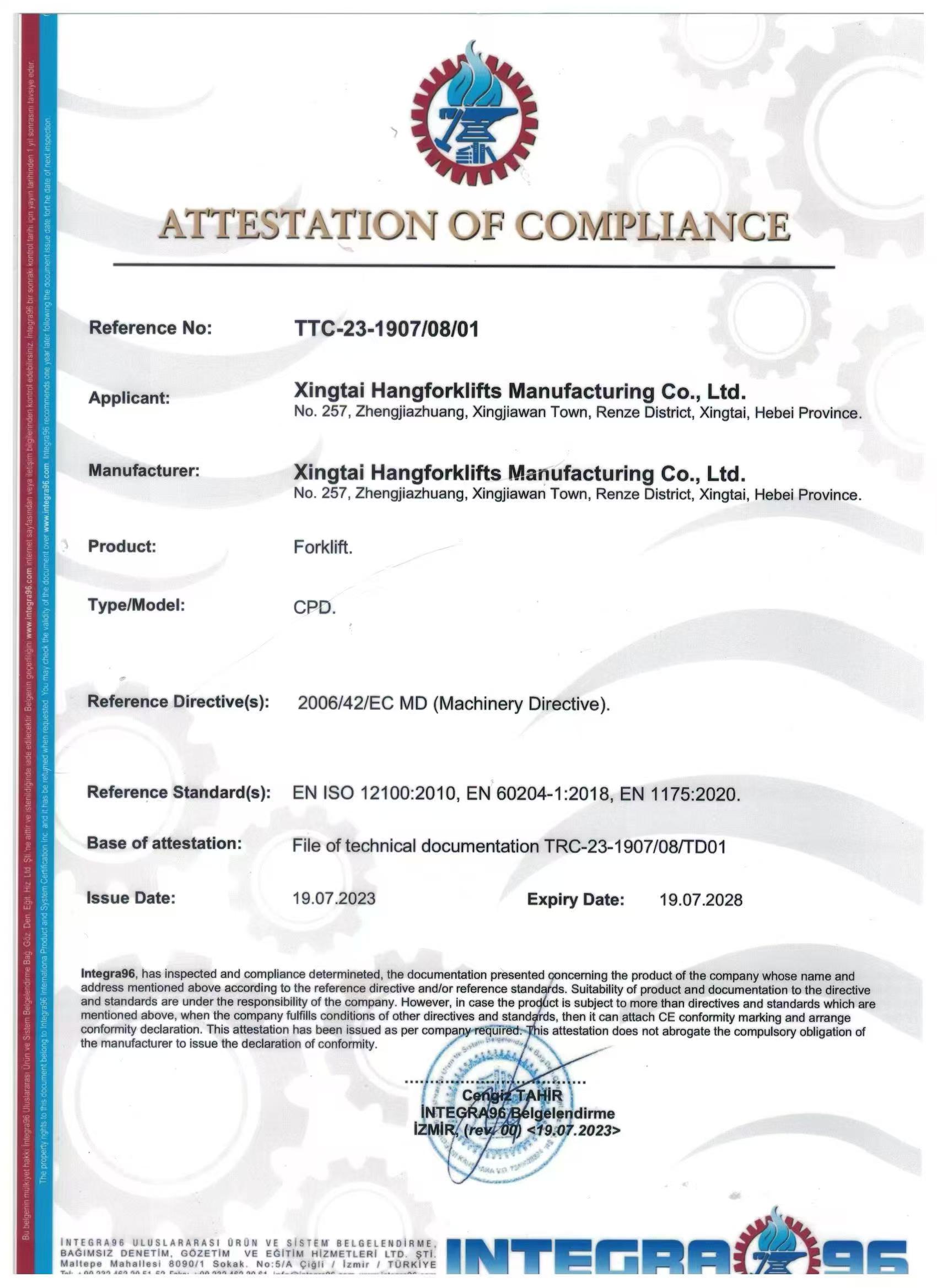
One CE certificate, number TTC-23-1907/08/01, covers CPD10, CPD20, CPD30 and CPD35 — both comparison models sit inside the same document.
Where the two models separate: load, height, battery and indoor fit
Rated load capacity: 2,000 kg versus 3,000 kg
The CPD20 is rated at 2,000 kg and the CPD30 at 3,000 kg. Rated capacity applies at a stated load centre, so the practical question is not pallet weight alone but the weight of the load as it actually sits on the fork — pallet, product, packaging, and any attachment such as a side-shift fork that moves the centre of gravity forward.
A site moving 1,200–1,800 kg pallets through a mixed receiving and line-feed flow is working inside CPD20 territory. A site where pallets regularly approach or exceed 2,000 kg, or where one truck also absorbs heavier bulk loads during the shift, needs the CPD30's 3,000 kg rating so the fleet keeps margin instead of running at the limit.
Lifting height: the 3,000 mm to 7,000 mm range specified for the CPD30
The CPD30 is specified with a lifting range of 3,000 mm to 7,000 mm. That span covers the working range of most warehouse racking, from low-level pick faces to high-bay put-away, and it is the number to compare against your highest beam height — not against the building height.
Height also interacts with capacity. A mast that reaches 7,000 mm is a taller, heavier structure than one that stops at 3,000 mm, and the residual capacity at height is what the operator actually works with. When comparing the two models on vertical reach, confirm the CPD20 mast specification against your highest racking beam before assuming the 2-tonne truck covers the same range.
Battery configuration and shift pattern
Battery configuration is where a warehouse decision usually becomes an energy decision. Lithium-ion is now a mainstream option — 35% of new global forklift shipments in 2024 — and its behaviour under opportunity charging is the operational difference. Opportunity charging in 15–30 minute top-ups does not degrade lithium-ion cycle life, whereas the same pattern significantly harms lead-acid battery longevity, according to Toyota Forklifts' guidance on charging methods.
For a single-shift warehouse, that means a CPD20 or CPD30 specified with lithium can be topped up during breaks instead of needing a full battery change or a dedicated charging room. For cold-chain sites the question is sharper: lithium-ion batteries in cold storage applications down to -20°C retain significantly more capacity than lead-acid, a factor behind the 11.6% CAGR Mordor Intelligence reports for the food-industry segment.
Mightlift's engineering scope covers forklift structure, lithium battery and hydraulic optimization, so battery configuration is treated as a specification item on the CPD series rather than a fixed attribute.
Indoor suitability: emissions, noise and site-specific compliance
Both models are indoor-capable for the same reason: no tailpipe. In an enclosed clean production area that is not a comfort feature — it is what allows the truck to work inside the building at all, as the electronics case below illustrates.
Two compliance checks sit outside the CE certificate and should be handled separately. If the truck will enter a potentially explosive atmosphere — certain chemical workshops and food-processing areas — ATEX Directive 2014/34/EU applies in the European Union and requires its own assessment; a standard CPD unit's CE certificate does not cover it. And if the site is moving toward automated or driverless equipment, ISO 3691-4:2023 sets the current safety requirements for driverless industrial trucks and their systems.
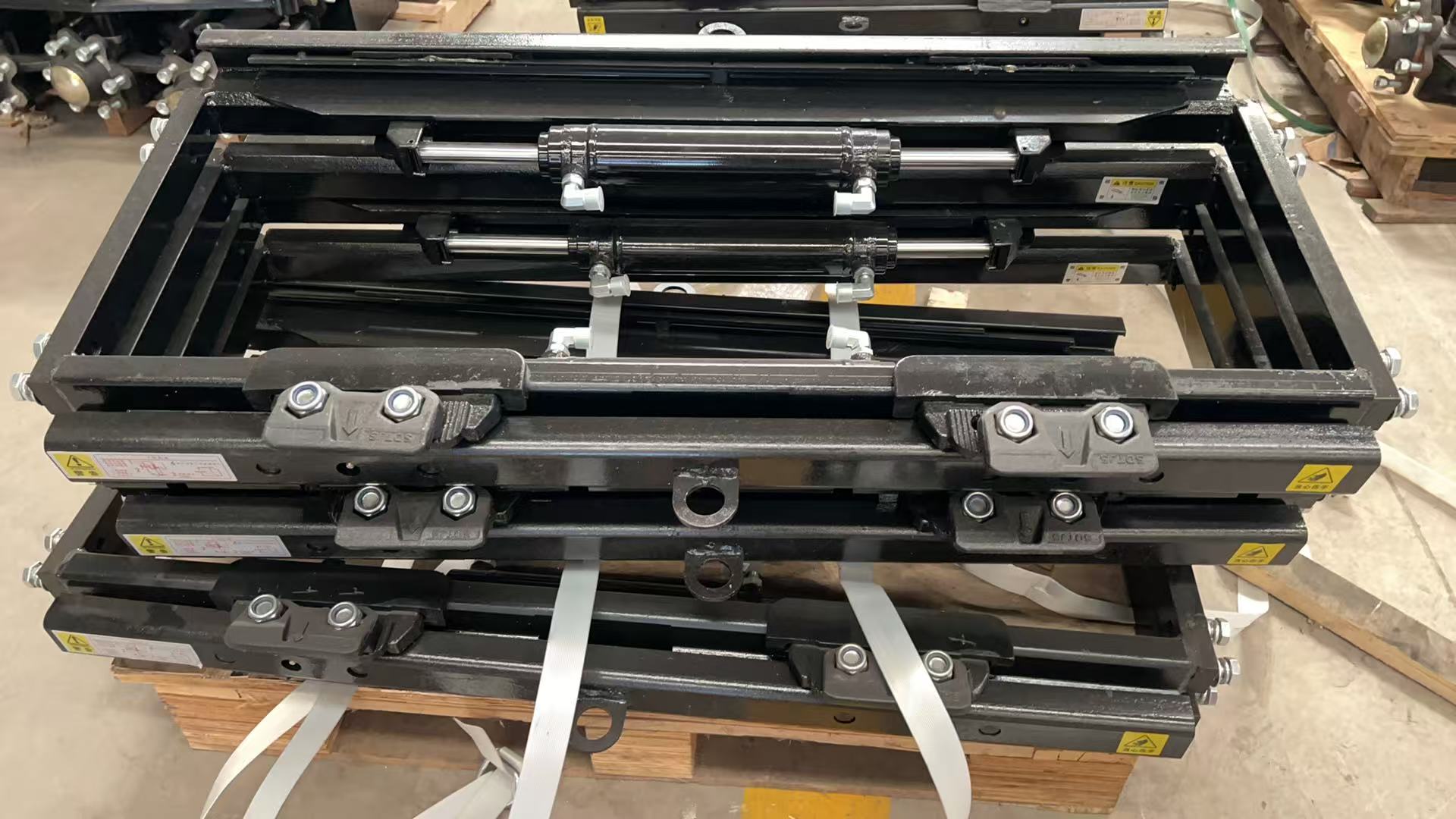
Every finished CPD unit is subject to 100% testing before shipment, whichever capacity is specified.
Step-by-step: a five-step framework for choosing between the CPD20 and CPD30
Step 1 — Calculate the real load, not the nominal pallet weight
Take the heaviest pallet that repeats through a normal week, then add packaging and any attachment. If a side-shift fork is part of the specification, the load centre moves forward and the effective capacity of the truck falls. Compare the resulting figure with 2,000 kg and 3,000 kg, and keep a working margin rather than specifying to the exact kilogram.
Step 2 — Map your highest racking beam to the mast specification
Measure to the top beam you actually put away to, not to the top of the building. Compare that number with the CPD30's 3,000–7,000 mm lifting range, then confirm the CPD20 mast specification against the same figure. If the answer sits near the top of the CPD20's range, the capacity reserve of the CPD30 is usually the safer specification.
Step 3 — Match battery chemistry and charging to the shift pattern
Count shifts and break windows. A single-shift operation with a fixed charging window can run either chemistry; a multi-shift operation with short breaks favours lithium-ion opportunity charging, because 15–30 minute top-ups do not degrade lithium-ion cycle life the way they harm lead-acid longevity. Chilled and frozen sites should weigh lithium's capacity retention at low temperature into the same decision.
Step 4 — Confirm site constraints: aisle, floor and atmosphere
Check aisle width, floor loading, door and mast clearance, and whether the truck will ever enter an area classified under ATEX 2014/34/EU. Zero emissions and low noise settle the indoor air-quality question; the ATEX question needs its own answer before the order is placed.
Step 5 — Lock the commercial and documentation terms
Confirm the CE document pack, the controller brand, the mast specification and the delivery schedule in writing. On the CPD series, OEM production is available with customization supporting capacity, the minimum order quantity is 2 units, the stated lead time is 30 days, and every unit is subject to 100% testing before shipment.
Use cases: where each capacity earns its place
Electronics manufacturing inside an enclosed industrial park
A CPD-series fleet has been used by an electronics manufacturer in an industrial park for component, work-in-process and finished-goods logistics, in a relationship recorded at 10–15 years. The reported result was improved material-flow efficiency and removal of tailpipe exhaust from enclosed clean production areas. In that setting the CPD20 covers lighter component and finished-goods moves, while the CPD30 absorbs heavier WIP and bulk handling on the same route.
Chilled and frozen warehouses
Cold-chain sites push the battery decision ahead of the capacity decision. Lithium-ion capacity retention at temperatures down to -20°C, together with the 11.6% CAGR Mordor Intelligence reports for the food segment, explains why cold-storage buyers tend to specify lithium first and then choose between 2 and 3 tonnes on payload. Where frozen pallets are dense and heavy, that usually points to the CPD30.
Workshop stacking and food-factory clean areas
Indoor workshops and food-production areas need zero tailpipe emissions and low noise more than they need maximum capacity. Here the CPD20 is often the efficient answer: loads are moderate, aisles are tighter, and the working day is built around short frequent moves rather than bulk transfer.
Logistics park transfer and heavier handling
Transfer work between docks, trailers and storage — the heavier end of warehouse duty — is where the CPD30's 3,000 kg rating and 3,000–7,000 mm lifting range pay for themselves. If a single truck must cover both transfer and high-bay put-away, the 3-tonne model removes the compromise.
CPD20 vs CPD30 comparison table
| Decision factor | CPD20 | CPD30 | What it means on site |
|---|---|---|---|
| Rated load capacity | 2,000 kg | 3,000 kg | Sets the heaviest repeatable pallet weight the truck should carry. |
| Lifting height range | Confirm mast specification against your highest beam | 3,000 mm to 7,000 mm (specified) | Compare against your top racking beam, not building height. |
| Drive motor | Brushless AC | Brushless AC | Same drive technology on both models. |
| Pump motor | Brushless AC | Brushless AC | Same lift and tilt response family; no brush wear item. |
| Controller options | SANTROLL, CURTIS, INMOTION, ZAPI | SANTROLL, CURTIS, INMOTION, ZAPI | A configuration choice, not a capacity choice. |
| Tailpipe emissions | None (battery-electric) | None (battery-electric) | Both suit enclosed indoor areas. |
| Noise | Low-noise operation | Low-noise operation | Both fit multi-shift indoor sites. |
| CE certification | Covered by TTC-23-1907/08/01 | Covered by TTC-23-1907/08/01 | One document pack covers both models, valid to 19 July 2028. |
| Typical warehouse role | Mixed pallet flows, receiving, line feed | Heavier pallets, dense racking, transfer | Choose on load first, height second. |
Frequently asked questions
Are the CPD20 and CPD30 covered by the same CE certification?
Yes. Both models sit inside one CE scope: an ATTESTATION OF COMPLIANCE issued by INTEGRA96 under the Machinery Directive 2006/42/EC, certificate number TTC-23-1907/08/01, covering forklift model series CPD (CPD10, CPD20, CPD30 and CPD35) against EN ISO 12100:2010, EN 60204-1:2018 and EN 1175:2020. It was issued on 19 July 2023 and is valid until 19 July 2028. Use in a potentially explosive atmosphere sits outside this certificate and requires a separate assessment under ATEX Directive 2014/34/EU.
Can load capacity or battery configuration be adapted to our application?
OEM production is available with customization supporting capacity, and the manufacturer's engineering scope covers forklift structure, lithium battery and hydraulic optimization. Refits include low-temperature and explosion-proof configurations, and every unit is subject to 100% testing before shipment.
What drives the cost difference between a 2-tonne and a 3-tonne electric forklift?
Configuration, not capacity alone. The main cost drivers between a CPD20 and a CPD30 are battery energy capacity, mast specification and lifting height, controller brand selection (SANTROLL, CURTIS, INMOTION or ZAPI), attachments such as a side-shift fork, and any custom refit. Because these vary by order, the two models are quoted against a written specification rather than from a fixed list price.
Can we evaluate a unit before placing a fleet order?
The minimum order quantity for the CPD series is 2 units, so evaluation is normally arranged as a small trial order rather than a single demonstrator. Buyers can specify the exact configuration in that trial order — capacity, mast, battery and controller — and technical support is available after delivery.
What is the lead time, and what testing is completed before shipment?
The stated lead time is 30 days. Every finished unit undergoes 100% testing before shipment, and after-sales technical support is provided. To confirm a CPD20 or CPD30 configuration against your racking plan, contact Ningjin Shunhao Trading Co., Ltd. (Mightlift) at licong@mightlift.com or +86 151-0097-4338.
Conclusion: pick the capacity your racking plan already implies
The CPD20 and CPD30 are not competing products; they are two points on one CPD platform. Brushless AC drive and pump motors, SANTROLL, CURTIS, INMOTION and ZAPI controller options, zero tailpipe emissions, low-noise operation and a single CE certification scope are common to both. The decision is made by rated load — 2,000 kg against 3,000 kg — and by the lifting height your top racking beam demands, with the CPD30 specified from 3,000 mm to 7,000 mm.
If your heaviest repeatable pallet stays comfortably below 2 tonnes and your racking sits inside a standard mast range, the CPD20 is the efficient specification. If pallets approach 2 tonnes, if one truck must cover both transfer and high-bay put-away, or if the site runs chilled storage and multi-shift charging, the CPD30's capacity margin is what keeps the fleet off its ceiling.
Ningjin Shunhao Trading Co., Ltd. builds the CPD series at a 40,000 m² production base with 240 employees, holds ISO 9001, ISO 14001, CE and UN38.3 certification, and supplies 120+ overseas distributors across 60 countries.
Next step: match the capacity to your racking plan
Send your heaviest pallet weight, highest racking beam and shift pattern, and the CPD20 or CPD30 specification can be confirmed against your site — including mast, battery configuration and controller brand.
Email: licong@mightlift.com · Tel: +86 151-0097-4338 · WhatsApp: +86 15100974338
Website: www.mightlift.com
Ningjin Shunhao Trading Co., Ltd. (Mightlift), West Zhen Village, Dacaozhuang Town, Ningjin County, Xingtai City, Hebei Province, China
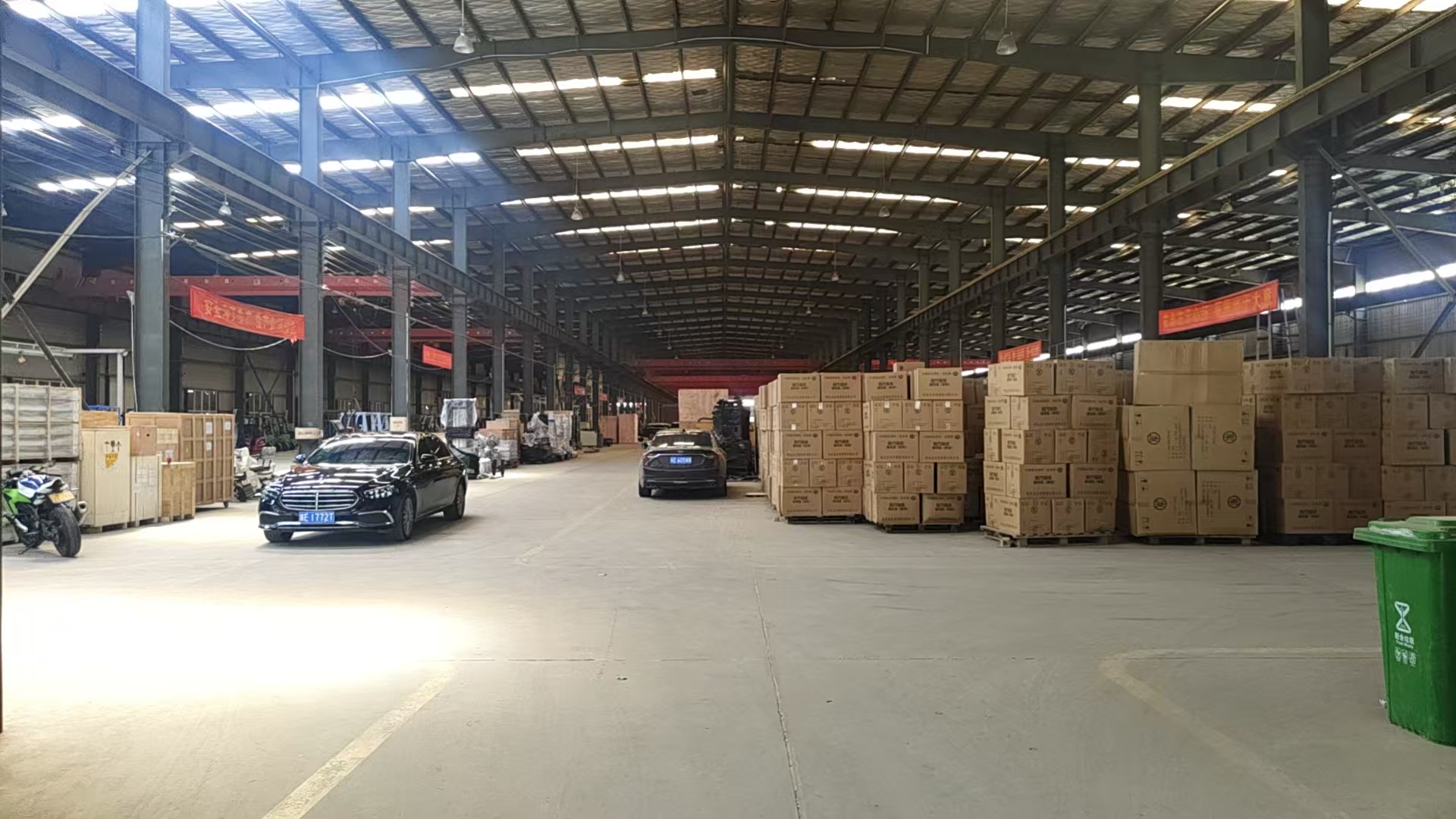
Configure the CPD20 or CPD30 against your own load and height data before the order is placed.
Have Questions or Need More Details?
Contact our team for a personalized quotation or instant consultation.
Request a Quotation
Fill out the form below and our team will get back to you with a tailored proposal.
WhatsApp Direct Chat
Prefer to chat in real-time? Message us on WhatsApp for instant assistance & quick answers.
- Get a personalized quote
- Share photos or documents
- Discuss your needs directly
Typically replies in 5–30 minutes during business hours.