Cold Storage Electric Forklift: CPD35 for Chilled Warehouse Operations
Cold Storage Electric Forklift: CPD35 for Chilled Warehouse Operations
A cold storage electric forklift is judged inside the room, not on the specification sheet. In chilled warehouses, packing halls and fruit and vegetable wholesale markets, a truck works in an enclosed, low-temperature environment where emissions at the point of use, noise beside grading lines, condensation on floors and battery behaviour all shape the shift. The CPD35 is a 3.5-ton battery-powered electric forklift from Ningjin Shunhao Trading Co., Ltd., and the manufacturer states that it is suitable for cold storage environments because of its battery options and low noise operation. It is intended for warehousing, logistics, e-commerce warehouses, workshops, supermarkets, department stores and cold chain fruit and vegetable wholesale markets.
This guide is written for importers, distributors, procurement managers and cold-chain operators who are still at the research stage: what the CPD35 is configured with, why those configurations matter in a chilled building, how to size and specify the truck step by step, which use cases it fits, and which questions to settle before ordering a sample or requesting a quotation.
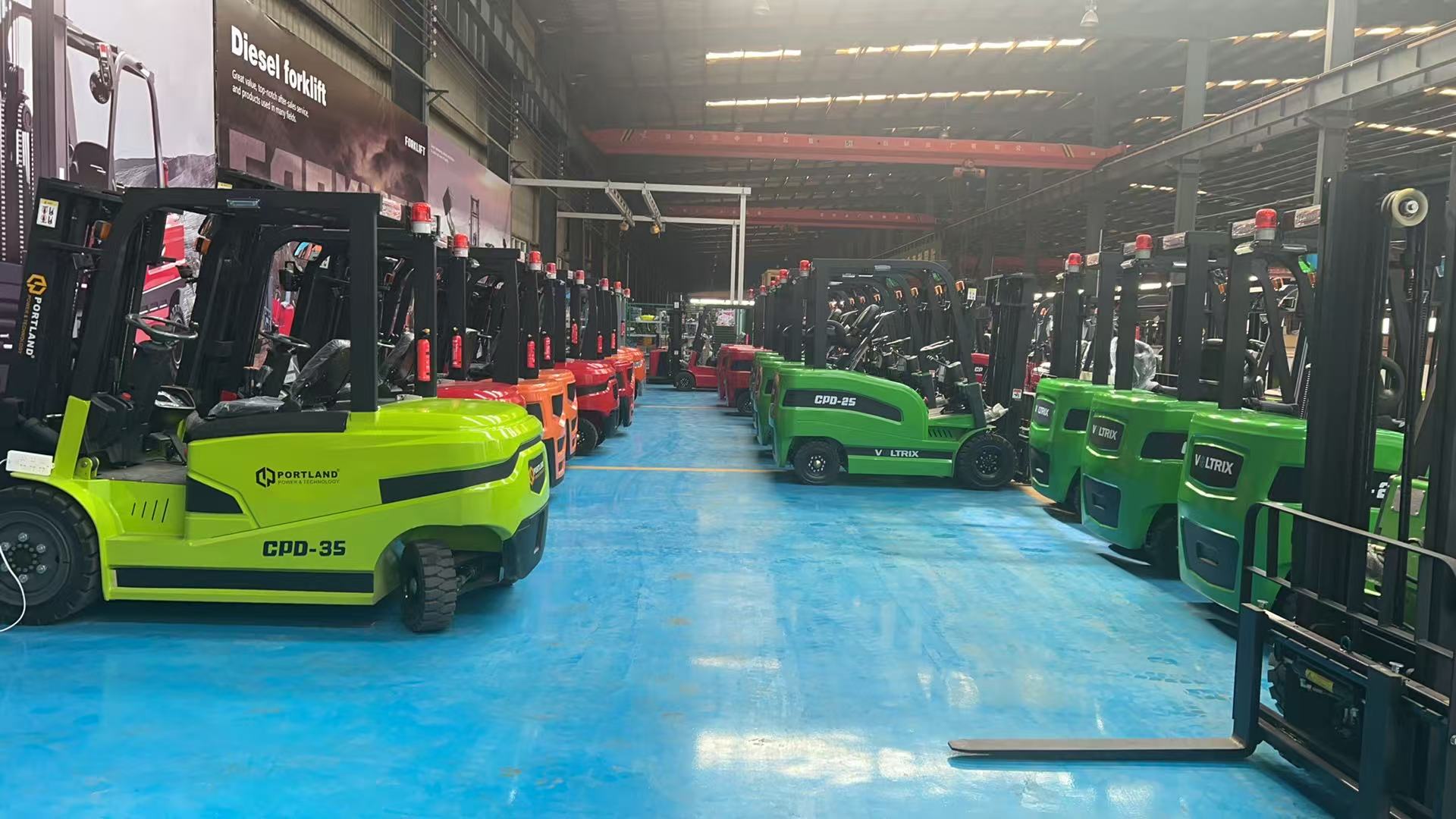
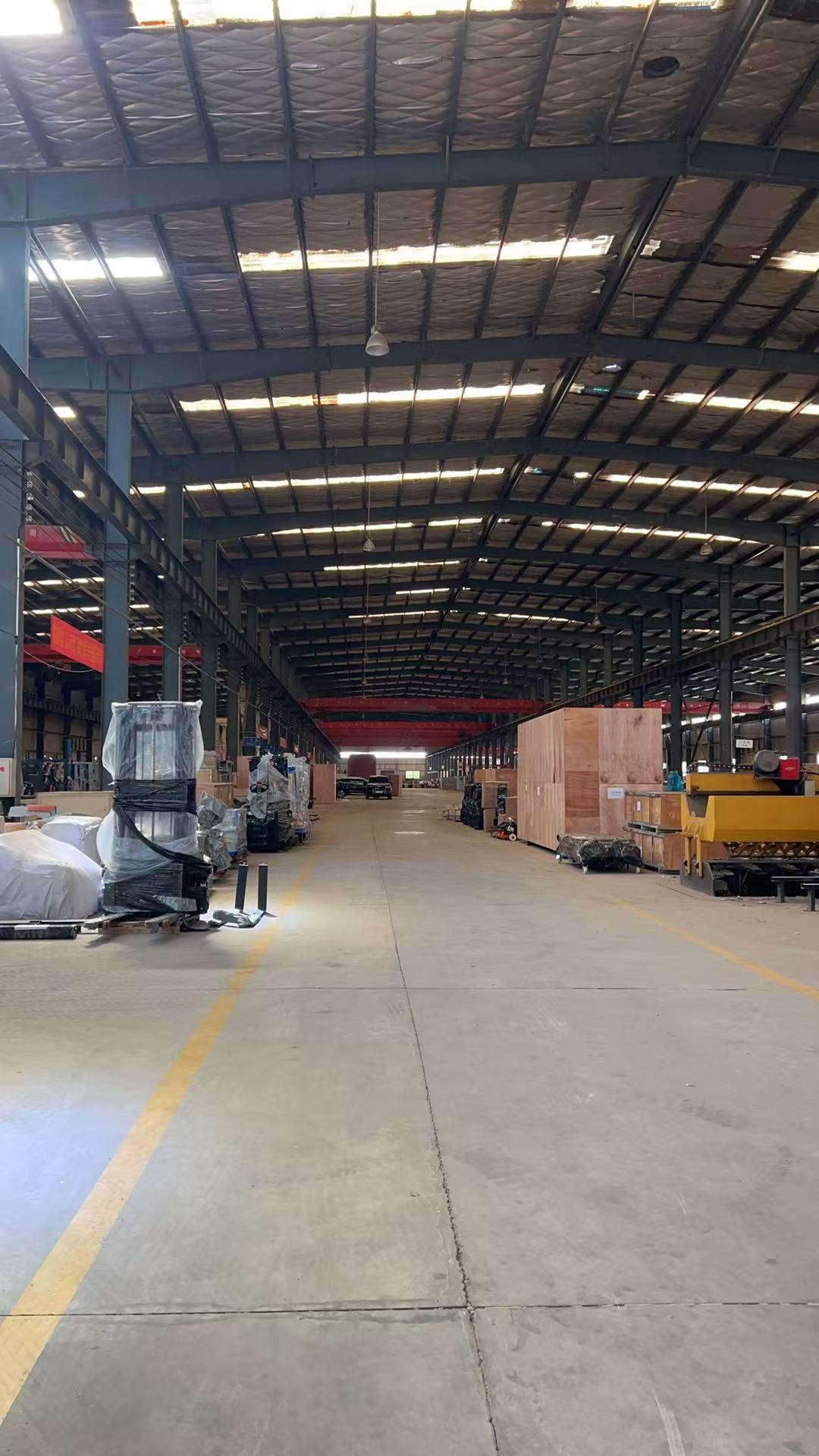
Ningjin Shunhao Trading Co., Ltd. is an electric forklift manufacturer established in 2022, operating a 40,000 m² manufacturing facility inside China's logistics equipment industrial cluster at West Zhen Village, Dacaozhuang Town, Ningjin County, Xingtai City, Hebei Province. The company employs approximately 240 staff, reports an annual production capacity of 12,000 units, exports about 70% of its sales to global markets, and specializes in OEM & ODM customized material handling equipment rather than catalogue-only supply.
Problem Definition: Why a Chilled Warehouse Is Harder on Handling Equipment Than an Ambient One
The core problem in chilled operations is that the room, not the pallet, usually decides the specification. Pallet weights in fruit and vegetable wholesale work commonly sit well inside a 3.5-ton envelope, yet the environment adds constraints that never appear in an ambient warehouse order: sustained low temperatures, condensation on cold surfaces, restricted ventilation, workers on foot sharing the same traffic lanes, and noise limits next to grading and packing lines.
Emission behaviour is the first constraint. Battery-powered electric drive produces zero emissions at the point of use and low noise operation for indoor work, which is why enclosed food-handling buildings generally favour battery-electric trucks over combustion-powered equipment. Where unpackaged produce and staff are present in the same room, exhaust discharge at the point of use is a known operational problem rather than a matter of preference.
Battery behaviour is the second constraint. Mordor Intelligence reports that lithium-ion batteries in cold storage applications up to -20°C retain significantly more capacity than lead-acid batteries. That does not mean every chilled site needs lithium — a hall held just above 0°C is a different duty from a deep-frozen room — but it does mean the battery configuration has to be selected against the actual temperature band, duty cycle and charging window instead of being copied from an ambient warehouse specification.
Battery access and service access form the third constraint. A truck that must leave the chilled zone every time the battery needs attention loses productive time and lets cold air escape through open doors. Battery access design therefore becomes an operational decision, and the CPD35 uses a lateral side battery extraction layout so the battery can be handled from the side of the truck.
Noise is the fourth constraint, and it is often underestimated. Low noise operation matters where shifts run alongside packing lines, where instructions are given verbally, and where the same building hosts produce that is damaged by vibration and rough handling. A chilled warehouse electric forklift that can be specified with smooth control characteristics addresses several of these constraints at once.
Industry Background: Electric Handling Is Now the Default, and Cold Chain Is Growing Faster Than the Average
Electric handling is no longer a niche choice. Maximize Market Research valued the global electric forklift market at USD 53.01 billion in 2024 and projects it to reach USD 94.55 billion by 2032. Industrial Truck Association data reported by Batteries International shows that electric forklifts reached a 71% share of North American retail orders in 2024, and China Construction Machinery Association figures put China's domestic electric forklift sales at 946,300 units in 2025, equal to 76.9% of total forklift sales in that market.
Within that shift, two trends matter for chilled operations. Lithium-ion adoption in new global forklift shipments rose to 35% in 2024 from 22% in 2021 according to LiTrue Analysis, making the lithium battery electric forklift configuration a mainstream option rather than an experiment. At the same time, Mordor Intelligence connects the cold-storage capacity advantage of lithium-ion to an 11.6% CAGR in the food industry segment of the electric forklift market, and identifies Class II narrow-aisle trucks as the fastest-growing electric segment with a projected 9.28% CAGR through 2030 as warehouses densify.
The practical consequence for a chilled fruit and vegetable wholesale market, a chilled e-commerce fulfilment hall or a food factory clean area is that the powertrain question is largely settled. What differentiates suppliers today is how precisely the truck is configured for a temperature band and a duty cycle: battery chemistry and access, motor and controller selection, hydraulic control layout, and the paperwork that allows the unit to enter the destination market legally.
Detailed Solution: How the CPD35 Is Configured for Chilled Warehouse Work
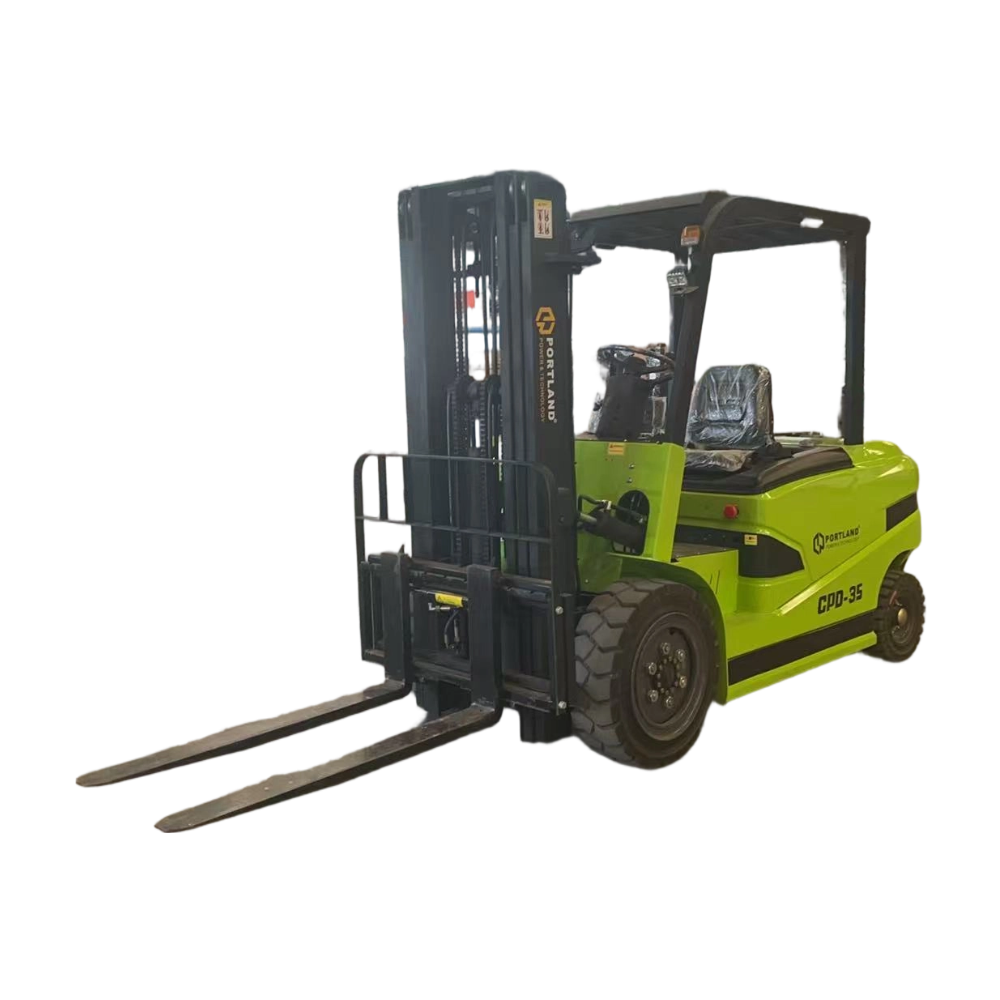
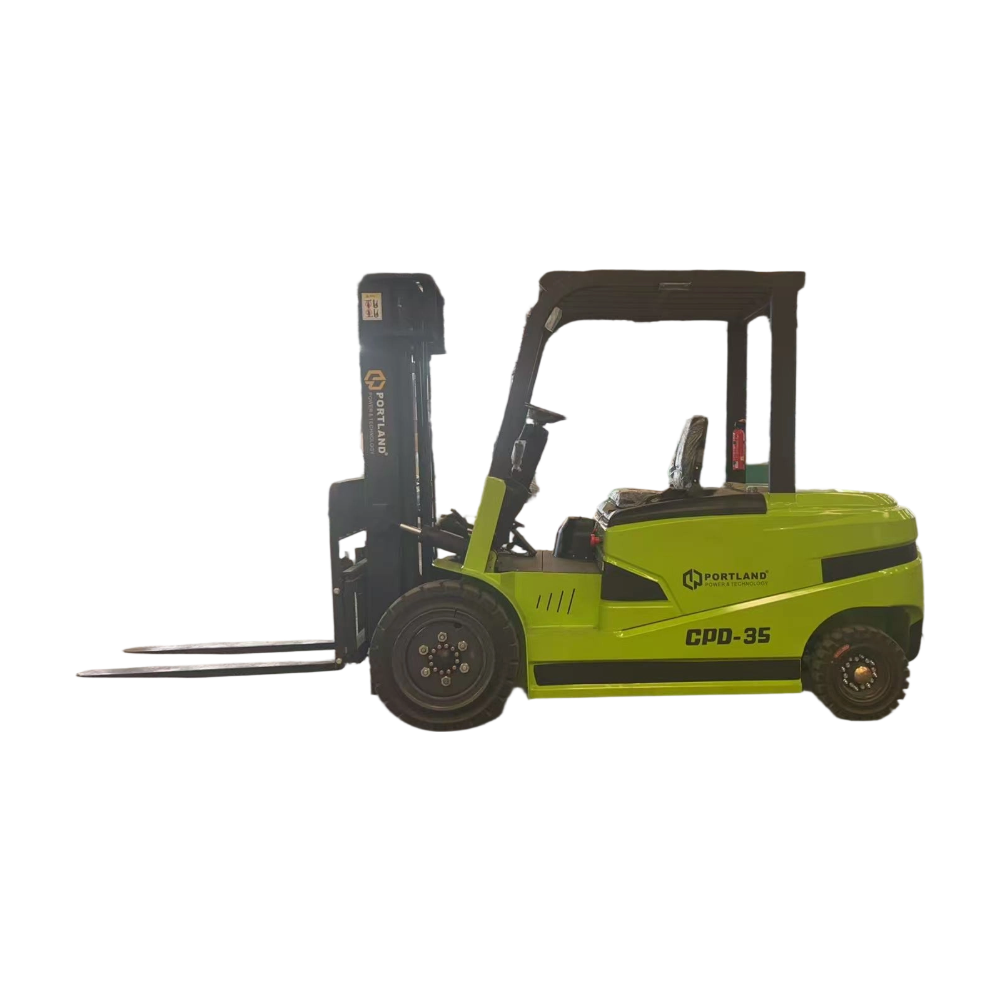
The CPD35 is a 3.5-ton electric forklift with a rated load capacity of 3500 kg, made of iron, battery powered and offered with a heavy-duty lead-acid battery as standard or a lithium battery as an option for long continuous working hours. Its configuration is easier to interpret when each item is read against a chilled-site requirement rather than as a list of features.
Zero-emission, low-noise operation for enclosed chilled rooms
The truck is battery powered with electric drive, producing zero emissions and low noise operation for indoor use, and the manufacturer states that it is suitable for cold storage environments because of its battery options and low noise operation. For a chilled packing hall that holds unpackaged produce and staff in the same footprint, that combination removes exhaust discharge from the working area and reduces the noise floor around grading lines.
Brushless AC drive and pump motors
The CPD35 uses brushless AC drive and pump motors, which the manufacturer lists as high efficiency with low maintenance cost. The maintenance point matters more in a cold building than in an ambient one: service visits inside a chilled zone are disruptive, and fewer wearing components means fewer reasons to open the room to technicians during a shift.
Front wheel dual drive motors and P.E.S three-speed efficiency regulation
The drive train is built around front wheel dual drive motors, and performance is managed through P.E.S three-speed efficiency regulation with three selectable performance modes. Selectable modes allow a site to match travel and hydraulic response to the task — a gentler setting where floors are affected by condensation and handling precision matters, a faster setting for longer transfer runs between a chilled room and a loading bay.
Lateral side battery extraction and battery options
A lateral side battery extraction layout is part of the core design, so battery handling is performed from the side of the truck rather than from the operator platform area. Combined with the standard heavy-duty lead-acid battery and the optional lithium battery, this gives a chilled site two different service models to choose from: a dedicated charging window on lead-acid, or shorter, more frequent charging or a faster battery exchange arrangement on lithium.
Hydraulic control layout and controller brands
Hydraulics are distributed through ergonomic right-positioned control valves, which affects how consistently an operator can place a pallet during a long shift. Controller brand options include SANTROLL, CURTIS, INMOTION and ZAPI and are listed as a reliable, stable control system — a detail worth checking at quotation stage, because controller brand availability drives spare-part sourcing and service response in export markets.
OEM and ODM modification for site conditions
Because the manufacturer specialises in OEM & ODM customized material handling equipment, configuration is not limited to catalogue variants. Stated customization scope includes load capacity adjustment, low-temperature and explosion-proof refitting, branded appearance optimization and intelligent system reservation, which allows a chilled-warehouse order to be aligned with the temperature band, the site layout and the distributor's own brand requirements.
Step-by-Step Breakdown: Specifying a Chilled Warehouse Fleet Around the CPD35
Selection for a chilled site is a sequence of decisions, and the order matters. Skipping the load and room survey to reach the battery question early is the most common reason a cold storage electric forklift ends up over- or under-specified.
- Define the load, not the model. Establish pallet weight, load centre and load dimensions for the heaviest routine movement, not the average one. The CPD35 is rated at 3500 kg, so the working question is whether the real loads sit inside that rating with margin once the load centre and any attachment are taken into account.
- Survey the room and the route. Confirm aisle width, racking height, floor capacity, floor surface condition, slope, door transitions and, for mixed routes, weather exposure. These variables determine whether a counterbalance truck of this class can work the route efficiently or whether the layout itself needs adjustment.
- Fix the temperature band and the duty cycle. Separate chilled storage from frozen storage, then map shifts per day, hours per shift and the number of trucks required. The temperature band drives the battery conversation, and the duty cycle drives charging strategy.
- Choose the battery configuration against the charging window. Lead-acid is the standard configuration and lithium is optional. Where charging time is limited, note that opportunity charging of 15–30 minute top-ups does not degrade lithium cycle life, while it significantly harms lead-acid battery longevity (Toyota Forklifts Blog), and that lithium-ion retains significantly more capacity than lead-acid in cold storage applications up to -20°C (Mordor Intelligence).
- Confirm attachments and rated residual capacity. Fork positioners, side shifters or approved clamp attachments change the effective capacity of the truck. Attachment compatibility and rated residual capacity must be assessed before the model is locked, not after the order.
- Verify compliance documentation for the destination market. The manufacturer states that its products hold ISO 9001, ISO 14001, CE and UN38.3 certifications. For the EU, EN 1175:2020 is the current harmonized standard for electrical and electronic safety requirements in self-propelled industrial trucks and is a prerequisite for CE marking on this equipment class; lithium configurations should also carry UN38.3 documentation.
- Validate the configuration on site. Run a trial unit in the actual chilled room across a full shift and measure battery duration, noise beside the work area, and handling behaviour on the specific floors in use. Confirm the temperature band and any low-temperature refit at this stage.
- Plan charging infrastructure, service and delivery. Confirm local charger voltage, where the charging area sits relative to the chilled zone, spare-part availability and the lead time for the exact configuration ordered. Stocked models and modified models do not follow the same production route.
Use Cases: Where the CPD35 Fits in Cold Chain and Food Handling
The model's stated intended applications already point to the chilled segment, and each use case places a slightly different requirement on the truck.
- Cold chain fruit and vegetable wholesale markets. Heavy produce pallets move between receiving bays, chilled storage and dispatch. Mixed indoor/outdoor routes and short transfer distances are typical, and the front dual-drive layout and side battery extraction support heavy-load fleet operation and service access.
- Chilled packing halls and grading lines. Zero emissions at the point of use and low noise operation matter where unpackaged produce and staff share the floor, and where verbal communication continues during handling.
- Chilled e-commerce and distribution warehouses. Indoor pallet receiving, put-away and dispatch on level floors is the core duty, with no exhaust discharge at the point of use and single- or multi-shift operation based on the battery and charging plan.
- Supermarket and department store chilled backrooms. Limited space, tight turning areas and noise sensitivity make compact handling characteristics and low noise operation the deciding factors.
- Food factories and indoor workshops. The model is described as suitable for indoor workshop use, where low noise operation and emission-free drive keep the working environment consistent with food-handling expectations.
- Mixed chilled and yard operations. Where a chilled building shares a site with a yard, indoor/outdoor mixed routes should be assessed for surface condition, slope, weather exposure, load dimensions, attachment compatibility and rated residual capacity before the fleet is finalised.
Comparison Table: CPD Series Models for Cold-Chain and Chilled Sites
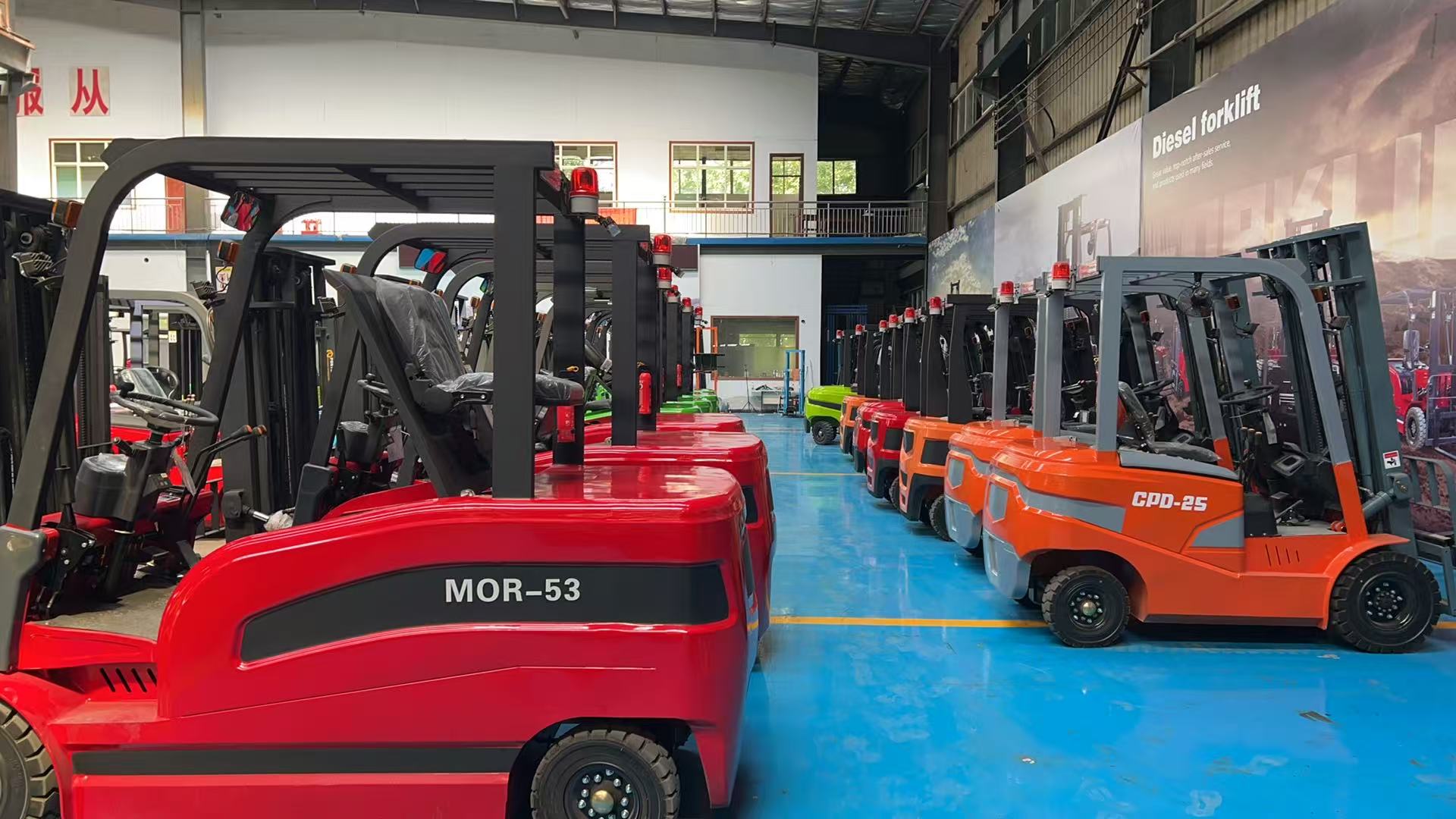
The CPD series spans four capacities that are all described as intended for warehousing and logistics, e-commerce warehouses, workshops, supermarkets and department stores, and cold chain fruit and vegetable wholesale markets. The differences that matter at selection stage are capacity, lifting height where stated, drive and control layout, and battery configuration.
| Model | Rated load capacity | Lifting height | Drive & control highlights | Battery configuration |
|---|---|---|---|---|
| CPD10 | 1000 kg (1 ton) | Not specified in the available model data | Brushless AC drive motor & pump motor; controllers SANTROLL / CURTIS / INMOTION / ZAPI | Heavy-duty lead-acid, optional lithium battery |
| CPD20 | 2000 kg (2 ton) | Not specified in the available model data | High-power front dual drive motors; electric steering with cargo-sensing smooth control; automatic electromagnetic parking brake and AI brake assist | Heavy-duty lead-acid, optional lithium battery |
| CPD30 | 3000 kg (3 ton) | 3000 mm – 7000 mm (standard and extended) | High-power electric drive system with intelligent MOSFET; large-angle adjustable steering wheel and voice prompts; large-flow cyclone air filter system | Heavy-duty lead-acid, optional lithium battery |
| CPD35 | 3500 kg (3.5 ton) | Not specified in the available model data | Front wheel dual drive motors; P.E.S three-speed efficiency regulation; lateral side battery extraction layout; ergonomic right-positioned control valves | Heavy-duty lead-acid as standard, lithium battery optional |
At battery level, the decision is narrower than the model decision, and it can be reduced to two comparisons.
| Decision point | Lead-acid (standard configuration) | Lithium (optional configuration) |
|---|---|---|
| Capacity retention in cold storage | Retains less capacity than lithium in cold storage applications up to -20°C (Mordor Intelligence) | Retains significantly more capacity than lead-acid in cold storage applications up to -20°C (Mordor Intelligence) |
| Opportunity charging | 15–30 minute top-ups significantly harm battery longevity (Toyota Forklifts Blog) | 15–30 minute opportunity top-ups do not degrade cycle life (Toyota Forklifts Blog) |
| Typical fit | Single-shift operation with a dedicated charging area and a fixed charging window | Multi-shift operation where charging time is restricted to short breaks |
FAQ: Cold Storage Electric Forklift Questions Buyers Ask Before Ordering
Does the CPD35 meet European compliance requirements for warehouse use?
Ningjin Shunhao Trading Co., Ltd. states that its products hold ISO 9001, ISO 14001, CE and UN38.3 certifications. For the European Union, EN 1175:2020 is the current harmonized standard covering electrical and electronic safety requirements for self-propelled industrial trucks and is a prerequisite for CE marking on this equipment class, so the CE documentation supplied with a truck should reference it. Buyers specifying a lithium configuration should also confirm UN38.3 documentation for the battery, and should check whether site-specific rules such as ATEX Directive 2014/34/EU apply wherever a potentially explosive atmosphere exists. ISO 3691-4:2023 covers driverless industrial trucks and their systems, so it is relevant only if automated units form part of the fleet. Because compliance paperwork follows the battery and specification actually shipped, documents should be requested for the exact configuration ordered.
What makes the CPD35 suitable for cold storage applications?
The CPD35 is a 3.5-ton electric forklift with a rated load capacity of 3500 kg. It is battery powered, producing zero emissions and low noise operation for indoor use, and its manufacturer states that it is suitable for cold storage environments because of its battery options and low noise operation, listing cold chain fruit and vegetable wholesale markets among its intended applications. The truck is built around front wheel dual drive motors, P.E.S three-speed efficiency regulation, a lateral side battery extraction layout and ergonomic right-positioned control valves, with a heavy-duty lead-acid battery as standard and a lithium battery available as an option. As third-party context, Mordor Intelligence reports that lithium-ion batteries in cold storage applications up to -20°C retain significantly more capacity than lead-acid batteries. Since no operating temperature rating is published in the available model information, the temperature band of the specific room should be confirmed with the supplier before the configuration is fixed.
Lead-acid or lithium — which battery configuration fits a chilled warehouse?
The CPD series offers a heavy-duty lead-acid battery as the standard configuration and a lithium battery as an option, and the battery decision should follow the charging window and shift pattern rather than the truck. Lithium-ion batteries in cold storage applications up to -20°C retain significantly more capacity than lead-acid batteries (Mordor Intelligence), and opportunity charging in 15–30 minute top-ups does not degrade lithium cycle life, although it significantly harms lead-acid battery longevity (Toyota Forklifts Blog). That combination typically suits multi-shift chilled sites where only short breaks are available for charging, while a single-shift site with a dedicated charging area may be well served by the standard lead-acid configuration. Lithium adoption in new global forklift shipments reached 35% in 2024, up from 22% in 2021 (LiTrue Analysis), so the option is now a mainstream configuration choice rather than a specialist one.
Can a buyer validate a CPD35 before ordering a fleet?
Yes. Ningjin Shunhao Trading Co., Ltd. specialises in OEM & ODM customized material handling equipment and provides in-depth customization covering load capacity adjustment, low-temperature and explosion-proof refitting, branded appearance optimization and intelligent system reservation, so a trial unit can be configured to the site rather than to a catalogue default. The company runs automated production workflows with industrial robotic welding, electrostatic spraying and modular assembly lines, and every finished unit undergoes continuous load, braking and waterproof tests before shipment. A practical validation plan is to run the truck in the actual chilled room for a full shift, measure battery duration, noise beside the work area and handling behaviour on the floors used in that building, then confirm the temperature band and any low-temperature refit before the fleet order is placed.
What is the delivery situation and spare parts availability?
Ningjin Shunhao Trading Co., Ltd. reports an annual production capacity of 12,000 units from a 40,000 m² manufacturing facility, supported by a 12,500 m² standardized warehouse with digital WMS management that stocks mainstream models and full-range spare parts. The stated delivery support is 7–15 days fast delivery, and the company reports long-term cooperation with 120+ overseas distributors across 60 countries. Lead time should be confirmed for the exact battery configuration and any low-temperature or attachment customization, because modified units follow a different production route from stocked models. To begin, a CPD35 quotation or sample arrangement can be requested directly through licong@mightlift.com or WhatsApp +86-15100974338.
Conclusion: Matching Truck, Room and Duty Cycle
The CPD35 is a workable starting point for chilled warehouse operations because its configuration already answers the questions a cold room raises: battery-powered electric drive with zero emissions and low noise operation at the point of use, a manufacturer statement of suitability for cold storage environments based on battery options and low noise operation, brushless AC drive and pump motors for lower maintenance demand, a lateral side battery extraction layout for practical battery handling, and controller brand options that support spare-part availability in export markets. It is rated at 3500 kg and intended for warehousing, logistics, e-commerce warehouses, workshops, supermarkets, department stores and cold chain fruit and vegetable wholesale markets.
What the article cannot decide for a buyer is the site itself. Aisle width, floor condition, racking height, temperature band, shift pattern and the charging window together determine whether the standard lead-acid configuration is sufficient or whether the optional lithium battery is the better match — and both the Mordor Intelligence cold-storage data and the Toyota Forklifts Blog charging data point in the same direction for multi-shift chilled operations. Confirm those variables against a site survey, confirm the compliance documents for the exact configuration, and validate with a trial before scaling to a fleet.
Next Step: Sample, Quotation or Fleet Configuration Review
Ningjin Shunhao Trading Co., Ltd. supplies electric forklifts for distributors, warehouse operators and cold-chain businesses, with OEM & ODM customization, in-depth low-temperature refitting and document support for export markets. To move from research to evaluation, request a CPD35 sample or quotation with your room temperature band, shift pattern, pallet details and aisle dimensions.
Contact: Li Cong — licong@mightlift.com · Tel: +86 151-0097-4338 · WhatsApp: +86-15100974338
Website: www.mightlift.com · Blog: blog.mightlift.com