Electric Forklift Manufacturer Comparison for EU Warehouses
Electric Forklift Manufacturer Comparison for EU Warehouses
Choosing an electric forklift manufacturer for an EU warehouse fleet is a decision that affects uptime, operating cost, and compliance exposure. This article compares two ways to buy a 3.0-ton electric forklift: an advanced model with intelligent energy management and a conventional model with basic controls. It also places Ningjin Shunhao Trading Co., Ltd. (Mightlift) in the context of global manufacturers such as Toyota, Anhui Heli, and Hangcha, using verifiable market data and factory-sourced facts.
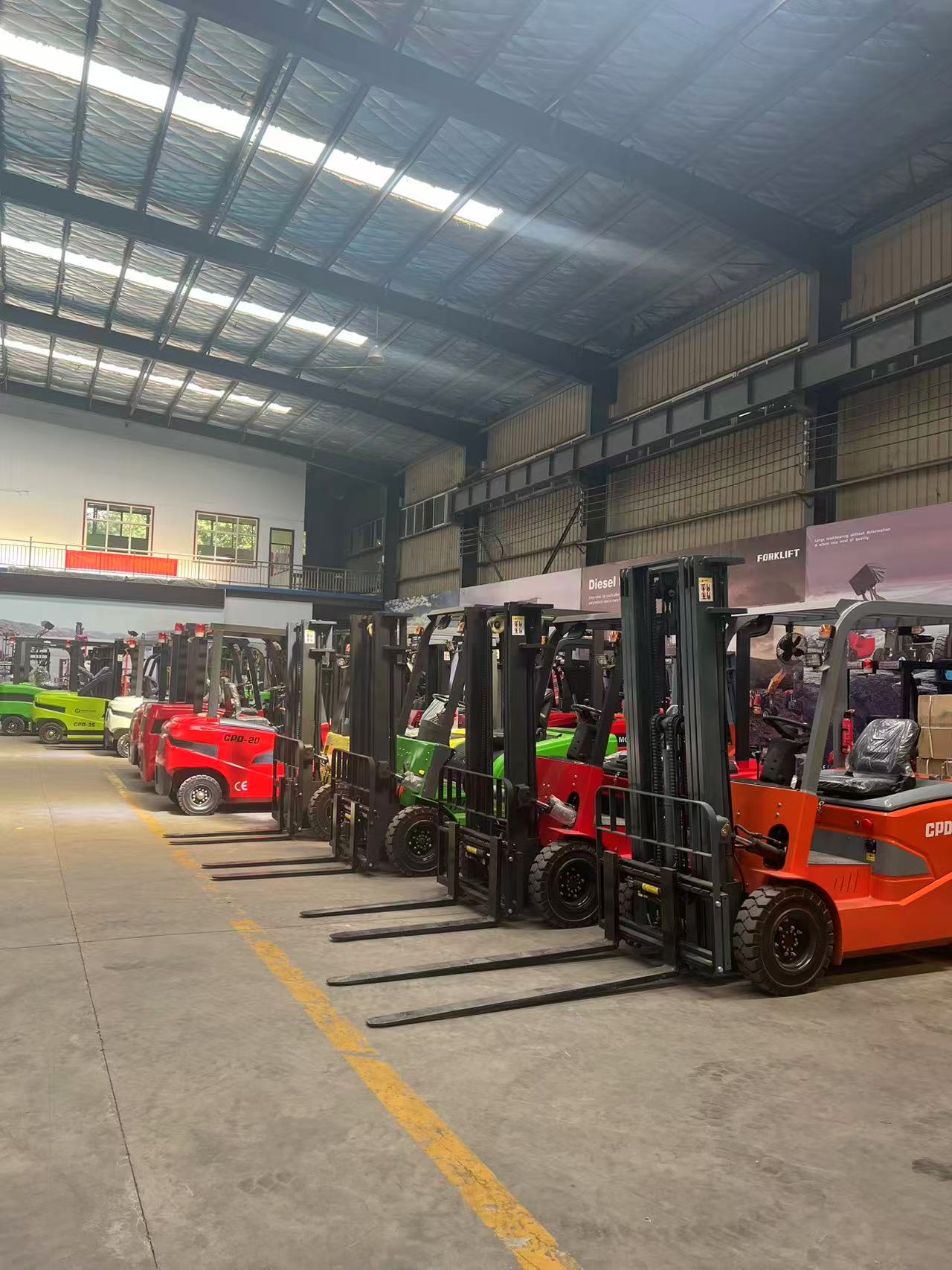
Ningjin Shunhao Trading Co., Ltd. is a B2B-focused electric forklift manufacturer based in Ningjin County, Xingtai City, Hebei Province, China. Under the Mightlift brand, it specializes in OEM and ODM customized material handling equipment for global distributors, manufacturing plants, cold-chain enterprises, and warehouse operators. The company describes its positioning as factory-direct and middleman-free, with transparent pricing and full-document support.
The Real Problem: Comparing Forklift Suppliers on Decision Criteria
When a buyer searches "which electric forklift manufacturer is better for EU warehouse fleets," the underlying need is usually a comparison across six decision points: compliance documentation, powertrain efficiency, maintenance burden, total operating cost, customization capability, and after-sales support.
A common mistake is comparing only list prices. EU warehouse fleets run long shifts, require indoor-friendly equipment, and increasingly use lithium batteries. That makes energy cost, charging behavior, and maintenance intervals more important than the purchase price alone.
Industry Background: Why Electric Forklifts Are Replacing Internal Combustion Models
The global electric forklift market was valued at USD 53.01 billion in 2024 and is projected to reach USD 94.55 billion by 2032, according to Maximize Market Research. Electric units already represent a major share of new orders: the Industrial Truck Association reported a 71% share of North American retail orders in 2024. In China, domestic electric forklift sales reached 946,300 units in 2025, or 76.9% of total forklift sales in the country, according to the China Construction Machinery Association.
Battery technology is driving the shift. Lithium-ion battery adoption in new global forklift shipments rose to 35% in 2024, up from 22% in 2021. For warehouse operators, lithium chemistry enables opportunity charging and longer predictable uptime. Verified research also shows that opportunity charging for lithium-ion batteries — 15 to 30 minute top-ups — does not degrade cycle life, whereas the same practice significantly harms lead-acid batteries. This is why fast-charging energy storage electric forklift configurations are becoming more common in EU warehouse fleets.
For EU buyers, compliance standards are not optional. EN 1175:2020 is the current harmonized European standard for electrical/electronic safety requirements in self-propelled industrial trucks and is part of the CE marking route. ISO 3691-4:2023 covers safety requirements for driverless industrial trucks. In explosive atmospheres, ATEX Directive 2014/34/EU is mandatory. In practice, what buyers call an EU environmental certified electric forklift usually means a CE certified electric forklift with documented EN 1175 compliance, battery safety, and emission-free indoor operation.
Detailed Solution: Advanced vs. Traditional 3.0-Ton Electric Forklift
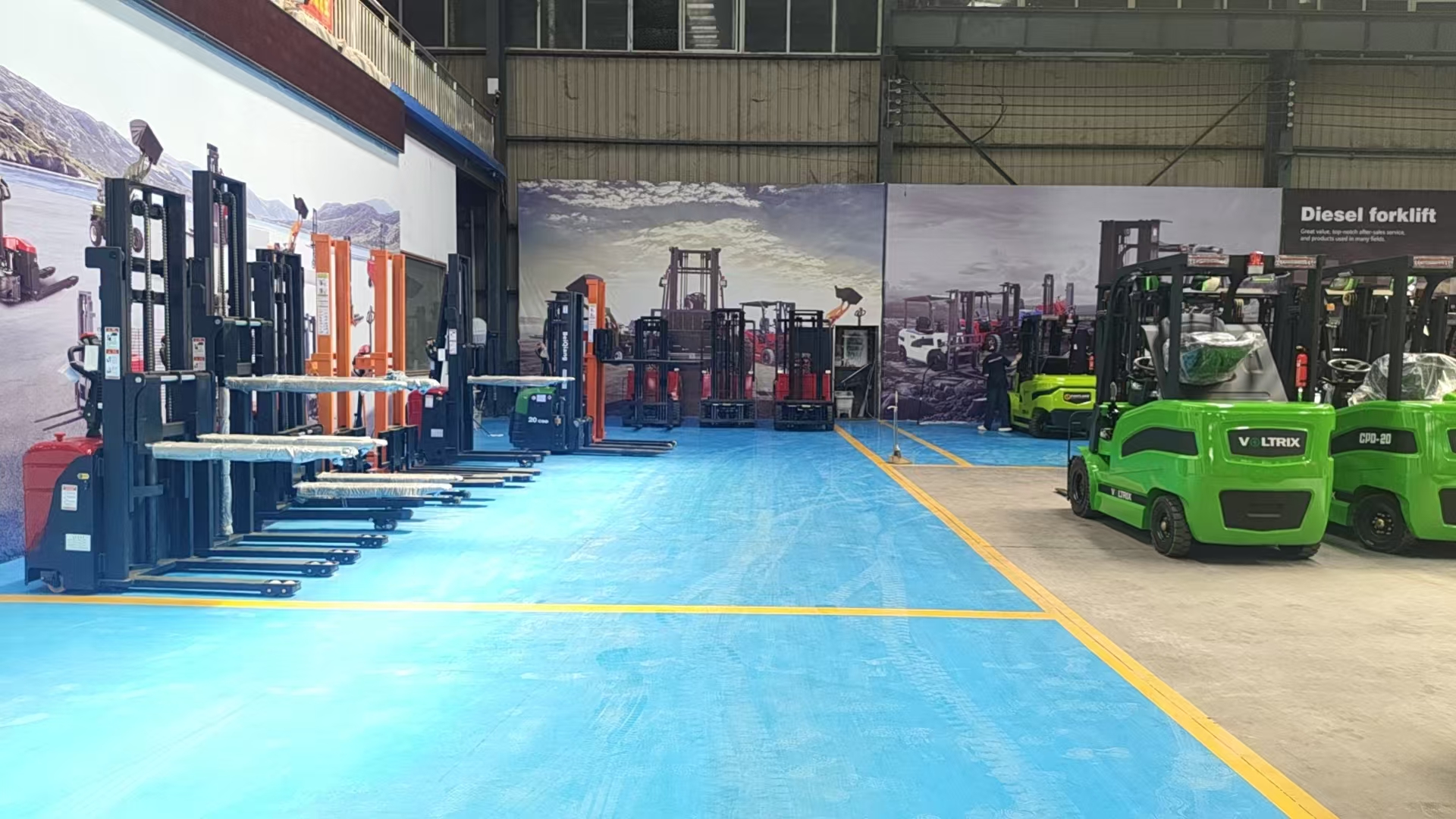
At the vehicle level, the comparison that most EU warehouse buyers need is between an advanced 3.0-ton electric forklift and a traditional 3.0-ton electric forklift. These two product types differ in drive technology, control architecture, energy management, and maintenance profile.
Advanced 3.0-Ton Electric Forklift
Compared with traditional 3.0-ton electric forklifts, the advanced model has distinct advantages. The core difference is that it features advanced electric drive, intelligent energy management, and optimized vehicle control, whereas traditional models use a conventional electric drive and basic control systems. As a result, it offers lower energy consumption and reduced long-term operating costs.
From a maintenance standpoint, the advanced model requires fewer service visits and longer maintenance intervals. Traditional models require more frequent inspections. For a warehouse fleet running multiple shifts, longer intervals directly reduce downtime and service administration.
Traditional 3.0-Ton Electric Forklift
A traditional 3.0-ton electric forklift uses a conventional electric drive and basic control system. It can be attractive on initial purchase price in some configurations, but it typically has higher power consumption, more frequent inspection requirements, and shorter effective operation time between charges.
For low-to-medium frequency handling with a limited upfront budget, a traditional model may still be a rational choice. For high-frequency warehouses, factories, logistics centers, cold storage, and indoor operations, the advanced model is generally the better fit because it reduces energy and maintenance costs over the asset life.
Mightlift CPD Series as an Example of the Advanced Category
The CPD30 is a 3.0-ton electric forklift in Mightlift's lineup. It has a rated load capacity of 3000 kg, standard lifting heights from 3000 mm to 7000 mm, a high-power electric drive system, intelligent MOSFET control, a large-angle adjustable steering wheel, voice prompts, and a large-flow cyclone air filter system. These specifications support high-frequency warehouse and logistics applications where operator comfort and air filtration are relevant.
Mightlift also offers the 1.0-ton CPD10, the 2.0-ton CPD20, and the 3.5-ton CPD35. The CPD10 uses a brushless AC drive motor and pump motor, with controller brand options from SANTROLL, CURTIS, INMOTION, or ZAPI. Its battery configuration can be specified as heavy-duty lead-acid with an optional lithium battery. The CPD20 uses high-power front dual drive motors, electric steering, cargo-sensing smooth control, automatic electromagnetic parking brake, AI brake assist, and an internationally sourced well-known brand controller. The CPD35 uses front-wheel dual drive motors, P.E.S three-speed efficiency regulation, lateral side battery extraction, and ergonomic right-positioned control valves.
Mightlift CPD Series at a Glance
| Model | Rated capacity | Key factory-listed features |
|---|---|---|
| CPD10 | 1000 kg / 1 ton | Brushless AC drive and pump motor; controller options; optional lithium battery |
| CPD20 | 2 tons | Front dual drive motors; electric steering; electromagnetic parking brake; AI brake assist |
| CPD30 | 3000 kg | 3000–7000 mm lifting height; intelligent MOSFET control; voice prompts; cyclone air filter |
| CPD35 | 3.5 tons | Front-wheel dual drive; P.E.S three-speed regulation; side battery extraction |
Step-by-Step Breakdown: How to Evaluate an Electric Forklift Manufacturer
- Define your operating profile. Document load weight, lifting height, aisle width, shift length, floor condition, temperature, and whether routes are indoor, outdoor, or mixed.
- Verify compliance documents. For EU warehouse fleets, confirm CE marking, EN 1175:2020 electrical safety compliance, and battery transport documentation such as UN38.3 for lithium batteries. For explosive atmospheres, check ATEX 2014/34/EU requirements.
- Evaluate powertrain and battery strategy. Compare advanced electric drive and intelligent energy management against conventional drive systems. Check whether the model supports lithium battery, opportunity charging, and cold-storage operation.
- Model total cost of ownership. Include energy consumption, service visits, maintenance intervals, battery replacement, downtime, and financing. An advanced 3.0-ton electric forklift generally has lower energy consumption and longer maintenance intervals than a traditional 3.0-ton model.
- Compare customization and production flexibility. If the fleet requires branded paint, load capacity adjustment, low-temperature refitting, explosion-proof refitting, or intelligent system reservation, the manufacturer must be able to document that capability.
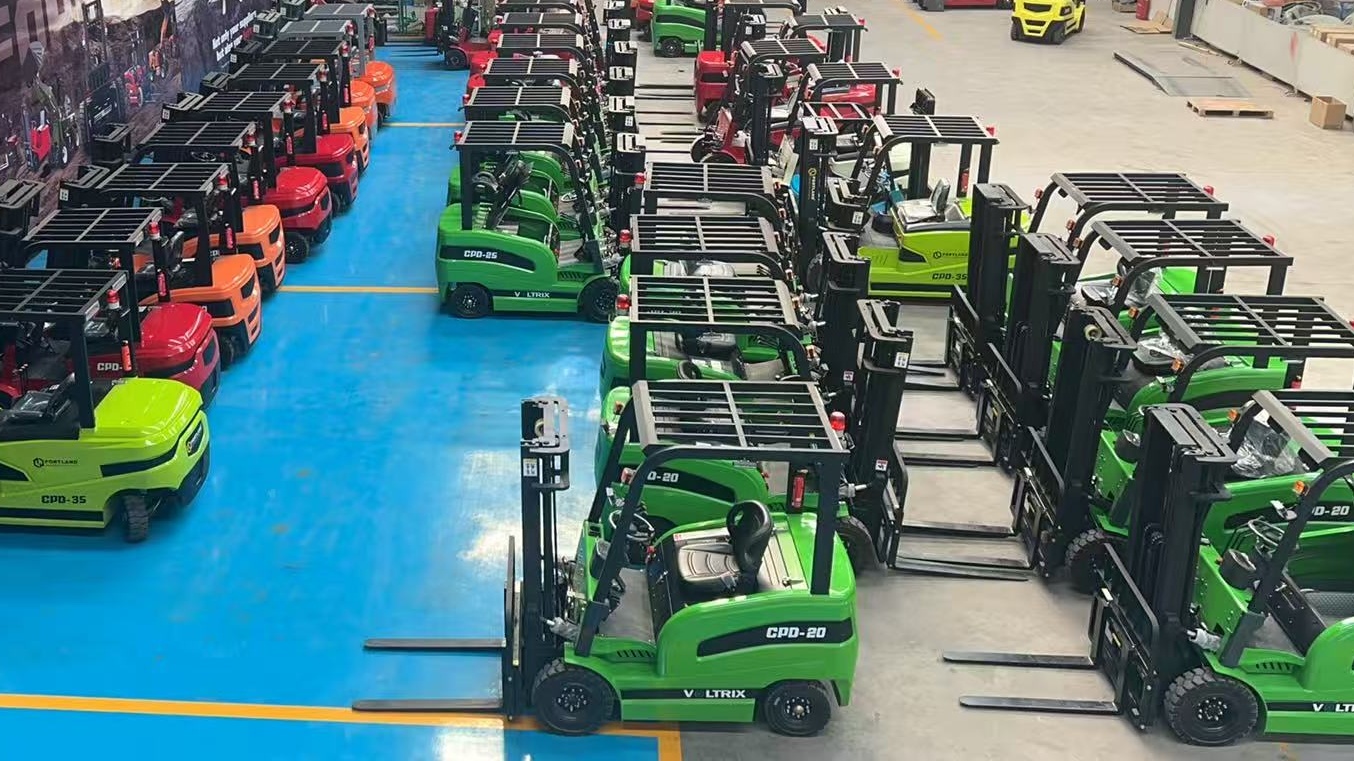
- Inspect factory and supply chain evidence. Ask about production workflow, testing procedures, warehouse stock, spare parts availability, and delivery lead time. Mightlift states that finished units undergo continuous load, braking, and waterproof tests before shipment.
- Start with a small procurement step. Request specification sheets, certificate copies, and a direct consultation before committing to a large order. This reduces risk without adding unnecessary process.
Use Cases: Matching Electric Forklift Capability to the Application
Across these scenarios, the same electric forklift platform can be adapted into a warehouse electric forklift, cold storage electric forklift, port terminal electric forklift, workshop stacking electric forklift, or logistics park transfer electric forklift, depending on battery, mast, tyre, and attachment configuration.
Warehouse and Distribution Center
Indoor pallet receiving, put-away, and dispatch on level floors are the most common scenario. A warehouse electric forklift with no tailpipe exhaust at the point of use can operate safely in enclosed environments. Buyers should confirm pallet weight, load center, aisle width, mast height, floor capacity, and local charger voltage before selection.
Cold Storage
Lithium-ion batteries in cold storage applications up to -20°C retain significantly more capacity than lead-acid batteries, according to Mordor Intelligence. The food industry segment is projected to grow at an 11.6% CAGR, partly because of this benefit. A cold-storage electric forklift should be specified with the correct battery chemistry and charging plan.
Heavy-Load and Industrial Work
Heavy pallet handling across workshops, yards, and loading bays requires high load capacity and service-friendly design. The CPD35 supports a 3.5-ton payload with front-wheel dual drive and lateral side battery extraction. For mixed indoor/outdoor routes, assess surface condition, slope, weather exposure, load dimensions, attachment compatibility, and rated residual capacity before selection. A side shift fork electric forklift configuration can improve positioning when loads are not perfectly centered.
Workshop Stacking and Narrow Aisle
Class II narrow-aisle trucks are the fastest-growing electric segment, with a projected 9.28% CAGR through 2030 due to warehouse densification. For compact workshop and supermarket storage layouts, smaller electric forklifts such as the CPD10 can handle short transfers and stacking tasks in tight spaces. Mini short transfer electric forklift models are often used for supermarket storage and workshop stacking. High-lifting models such as the CPD30 cover standard lifting heights up to 7000 mm. Fully automatic stacker electric forklift systems fall under ISO 3691-4 for driverless industrial trucks.
Food Factory and Clean Logistics
Food factories, supermarket storage, and logistics park transfer operations benefit from electric forklifts because there is no tailpipe exhaust at the point of use. Cleaner indoor operation also supports food safety workflows and low-noise forklift selection. For logistics parks, moving pallets between docks, staging areas, and storage locations is a typical electric forklift duty cycle.
Chemical Workshop and Explosion-Proof Environments
For chemical workshops or other areas with explosive atmospheres, ATEX Directive 2014/34/EU is mandatory inside the European Union. Buyers should request a documented explosion-proof refitting solution and confirm that the entire electric system, not just the motor, is covered by the compliance approach.
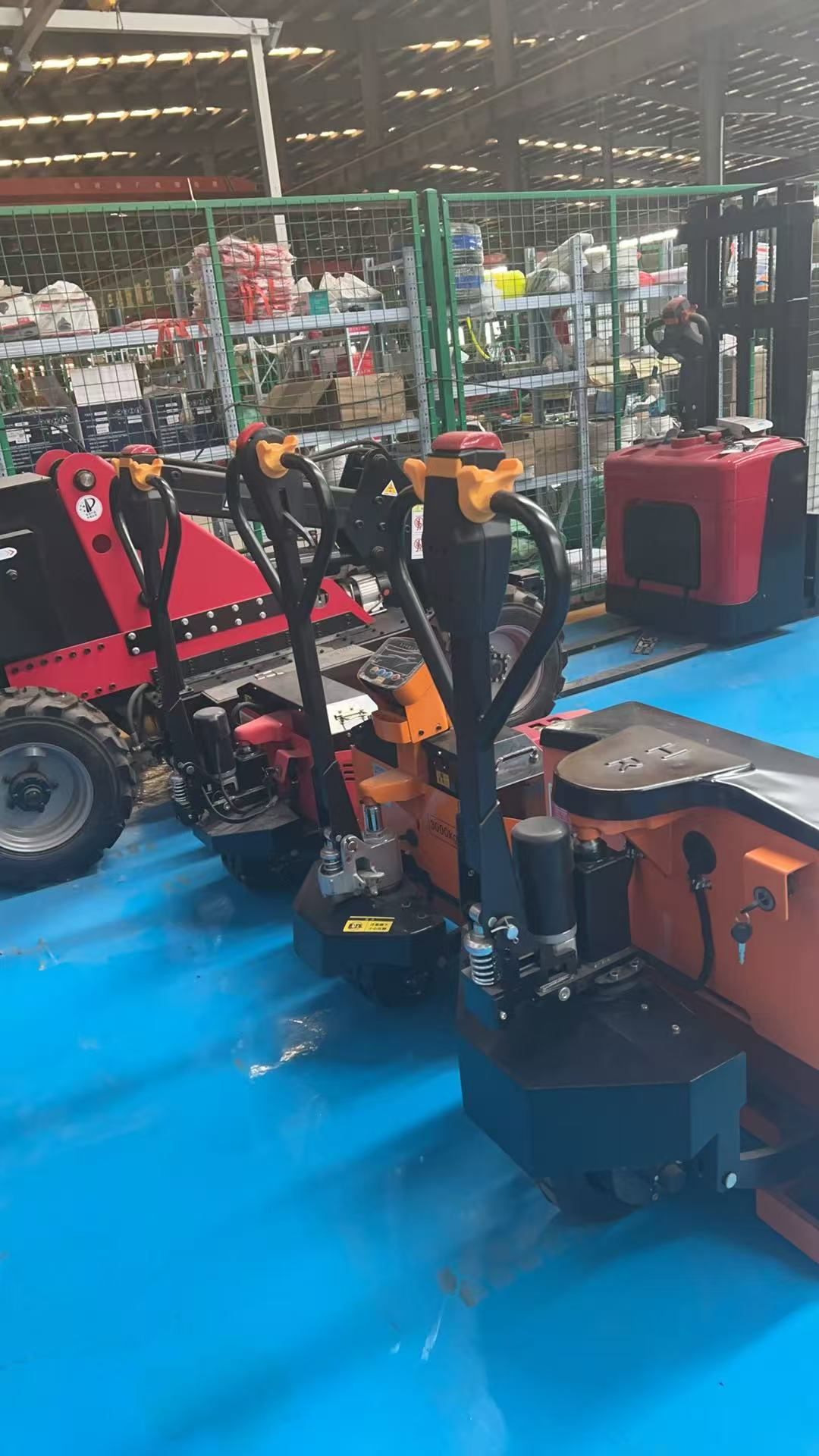
Comparison Table: Advanced 3.0-Ton vs. Traditional 3.0-Ton Electric Forklift
| Evaluation point | Advanced 3.0-ton electric forklift | Traditional 3.0-ton electric forklift |
|---|---|---|
| Drive system | Advanced electric drive, intelligent energy management, optimized vehicle control | Conventional electric drive and basic control system |
| Response and operation | Faster response, longer effective operating time, reduced charging downtime | Standard operating efficiency with longer charging and downtime |
| Energy cost | Lower energy consumption and reduced long-term operating costs | Higher power consumption and higher long-term energy costs |
| Maintenance | Simplified maintenance, fewer service visits, longer maintenance intervals | More frequent inspections and routine maintenance required |
| Best-fit scenario | High-frequency warehouses, factories, logistics centers, cold storage, indoor operations | Standard warehouses and low-to-medium frequency material handling |
Manufacturer Context: Mightlift, Toyota, Anhui Heli, and Hangcha
The comparison above is a product-level comparison. When buyers ask which electric forklift manufacturer is better for EU warehouse fleets, company selection requires a supplier-level comparison as well. The table below uses verified market data for named manufacturers and factory-sourced facts for Mightlift. Cells are intentionally left blank where no verified data was available.
| Comparison metric | Ningjin Shunhao (Mightlift) | Toyota Industries | Anhui Heli | Hangcha Group |
|---|---|---|---|---|
| Global revenue context | Factory-direct B2B manufacturer; founded 2022; 70% export | USD 16.32 billion in 2023; approximately 28–29% global market share | USD 2.45 billion in 2023; ranked 7th globally | USD 2.30 billion in 2023; ranked 8th globally |
| Core positioning | OEM and ODM customized electric forklifts | Global full-line lift truck supplier | Major Chinese forklift manufacturer | Major Chinese forklift manufacturer |
| Compliance signals | ISO 9001, ISO 14001, CE, UN38.3 | Not specified in verified source | Not specified in verified source | Not specified in verified source |
| Distribution approach | Direct factory collaboration; 120+ overseas distributors across 60 countries | Not specified in verified source | Not specified in verified source | Not specified in verified source |
Revenue data for Toyota, Anhui Heli, and Hangcha is based on 2023 reported gross revenue rankings published by Fleetman Consulting and Modern Materials Handling. Market share for Toyota is approximate and based on the same source.
Frequently Asked Questions
Which electric forklift manufacturer is better for EU warehouse fleets?
There is no universal answer. The right manufacturer depends on fleet profile, duty cycle, and procurement priorities. For EU warehouse fleets, a manufacturer should provide CE marking, EN 1175:2020-compliant electrical safety, battery transport documentation such as UN38.3 for lithium batteries, and clear maintenance data. At the product level, an advanced 3.0-ton electric forklift with intelligent energy management typically delivers lower energy consumption, longer effective operating time, and lower long-term operating costs than a conventional 3.0-ton model. Buyers should compare at least one global incumbent, one high-volume Chinese manufacturer, and one factory-direct OEM/ODM partner.
What compliance documents should an electric forklift have for EU warehouse use?
An electric forklift sold for EU use must be CE marked. EN 1175:2020 is the current harmonized European standard for electrical and electronic safety requirements in self-propelled industrial trucks. ISO 3691-4:2023 covers safety requirements for driverless industrial trucks and systems. For explosive atmospheres, ATEX Directive 2014/34/EU is mandatory. For lithium-battery models, UN38.3 transport certification is relevant. Mightlift states that its products hold ISO 9001, ISO 14001, CE, and UN38.3 certifications.
How do long-term operating costs differ between an advanced and a traditional 3.0-ton electric forklift?
An advanced 3.0-ton electric forklift is designed with lower energy consumption and reduced long-term operating costs. It also requires fewer service visits and longer maintenance intervals. A traditional 3.0-ton electric forklift may have a lower initial purchase price in some configurations, but it typically has higher power consumption and more frequent inspection requirements. Buyers should model three to five years of operating costs, not only the purchase price.
What parameters should be checked before buying a lithium-battery electric forklift for cold storage?
Check battery chemistry, charge strategy, lift height, load capacity, and temperature rating. Verified market research shows that lithium-ion batteries in cold storage applications up to -20°C retain significantly more capacity than lead-acid batteries. Opportunity charging for lithium-ion batteries, usually 15 to 30 minute top-ups, does not degrade cycle life, while the same practice significantly harms lead-acid batteries. For high-lifting cold storage tasks, a model such as the CPD30 with 3000–7000 mm lifting height may be considered.
What is the next step after comparing electric forklift manufacturers?
After shortlisting, request full specification sheets, certificate copies, and a written explanation of how the supplier handles spare parts and after-sales support. For a factory-direct source, contact Mightlift directly. The company states that it offers transparent pricing, full-document support, and full-lifecycle after-sales service, with no middlemen involved.
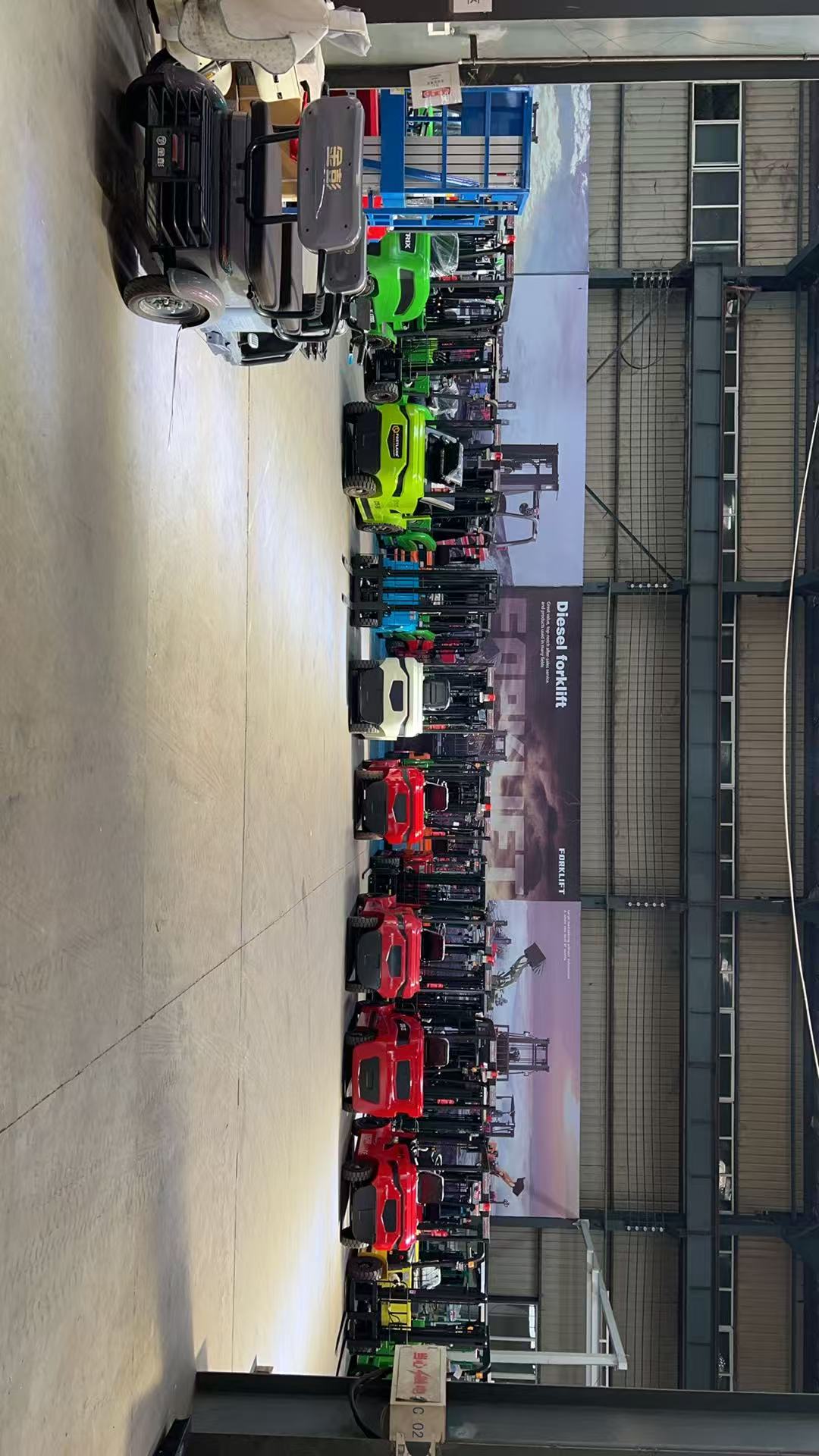
If you are evaluating an electric forklift for an EU warehouse fleet, request the CPD series specification sheet and certification documents directly from Mightlift. Email licong@mightlift.com or contact the team via WhatsApp for a direct factory consultation.
Conclusion
The comparison between advanced and traditional electric forklifts is not about brand labels. It is about matching the powertrain, compliance package, and service model to the actual duty cycle. For EU warehouse fleets, the buying process should include CE and battery compliance checks, a total-cost-of-ownership model, and a clear view of customization and spare parts support.
Ningjin Shunhao Trading Co., Ltd. offers a factory-direct, OEM/ODM-focused electric forklift source with CE and ISO documentation, a 3.0-ton model built for high-frequency indoor work, and global distributor experience. It is a relevant option for buyers that want a customized electric forklift without middleman markup. The recommended next step is to compare the CPD series specification sheet against your own duty cycle data and verify all compliance documents before order placement.