Electric Forklift Partnership FAQ: Acceptance Terms, Model Fit, and Long-Term Battery Choices
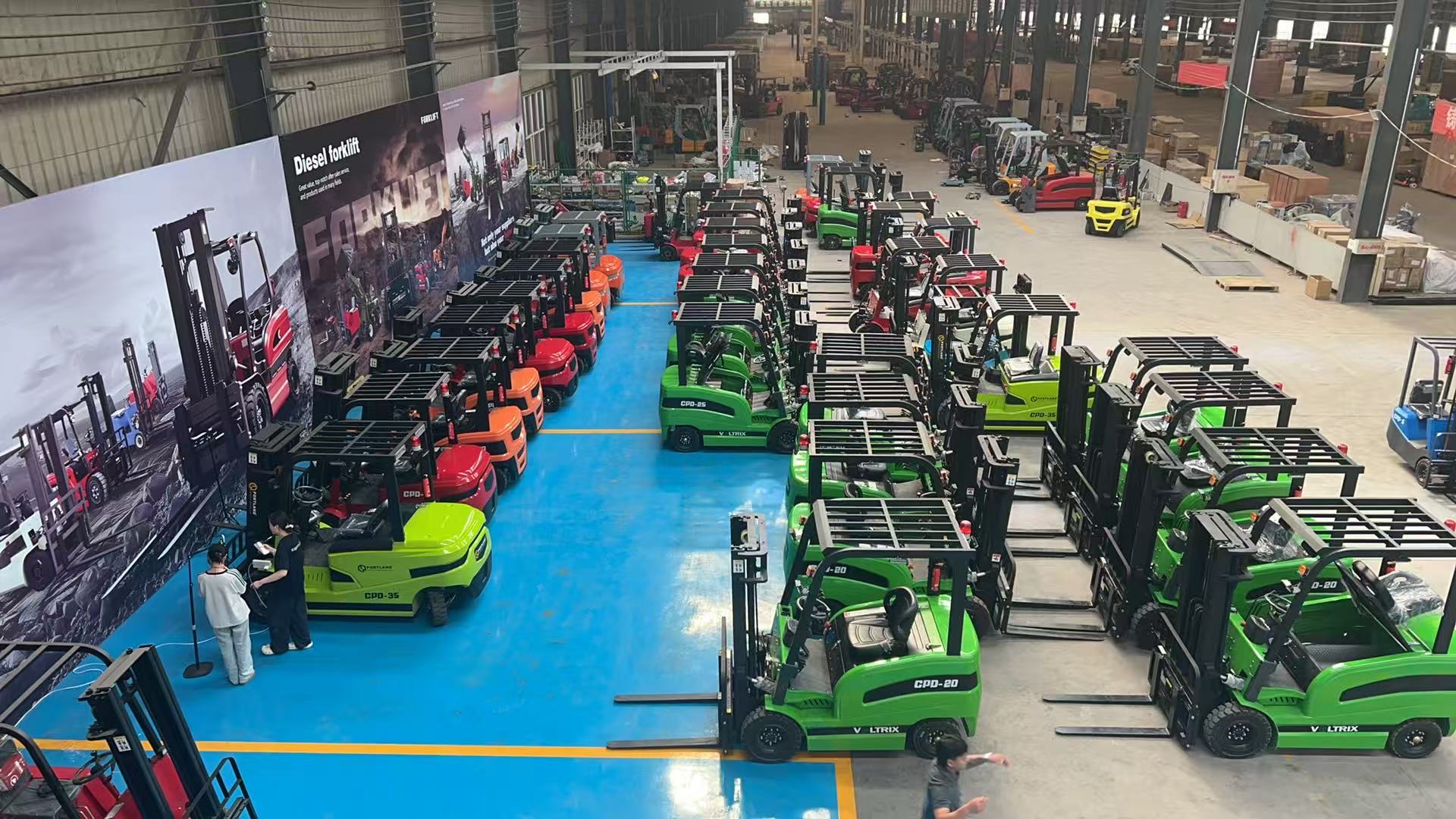
A long-term electric forklift partnership is decided by acceptance documentation, model fit and battery strategy — not by the quotation alone.
Most electric forklift partnerships do not break down because a truck cannot lift a pallet. They break down on three questions that a quotation never answers: what exactly the buyer is accepting, which model in a series actually matches the duty cycle, and which battery chemistry still makes commercial sense in year five.
This guide is written as a partnership FAQ for buyers who have finished the first price comparison and are moving toward long-term electric forklift cooperation. It answers acceptance-term questions, works through model fit across the CPD10, CPD20, CPD30 and CPD35 series by rated load, and closes with the battery, drive and controller choices that determine operating cost after commissioning.
Ningjin Shunhao Trading Co., Ltd., trading as Mightlift (www.mightlift.com), is a B2B electric forklift manufacturer based in Xingtai, Hebei, China, focused on OEM and ODM material handling equipment for global distributors, manufacturing plants, cold-chain enterprises and warehouse operators.
The Partnership Problem: Acceptance Questions Arrive After the Quotation
A first order is usually negotiated on price and capacity. A second order is negotiated on whether the first one was delivered, configured and documented as agreed. That shift is where many electric forklift relationships stall.
Four questions decide whether a sample order becomes a multi-year supply agreement:
- What is being accepted, and against which document? A capacity figure on a quotation is not an acceptance criterion; a signed technical specification is.
- Which model fits — not which model is largest? Oversizing a fleet raises purchase cost, battery cost and energy consumption; undersizing pushes a truck into continuous overload.
- Which battery chemistry carries the lower cost over the full ownership period? Lead-acid and lithium behave differently under opportunity charging, shift patterns and low-temperature operation.
- What is the service and documentation position in year three? Spare parts, controller platform familiarity and test records matter more after the warranty period than at handover.
Capacity and attachment selection is the most common configuration risk in this category. Maximum pallet weight, load center, lift height, attachment weight and residual capacity all need to be confirmed before order approval, because an attachment or an elevated load center reduces the usable capacity of any truck. As a documented enterprise control for this risk, Mightlift offers 1.0–3.5 ton configurations with load-capacity customization and approves a signed technical specification before production begins.
Industry Background: Why These Questions Are Now Procurement-Critical
Electric traction is no longer a niche choice in material handling, which changes what buyers actually compare. The global electric forklift market was valued at USD 53.01 billion in 2024 and is projected to reach USD 94.55 billion by 2032 (Maximize Market Research). In North America, electric forklifts reached a 71% share of retail orders in 2024, reflecting a rapid shift away from internal combustion engines (Industrial Truck Association / Batteries International). In China, domestic electric forklift sales reached 946,300 units in 2025, accounting for 76.9% of total forklift sales in the country (China Construction Machinery Association).
Battery chemistry is moving on the same curve. Lithium-ion adoption in new global forklift shipments rose to 35% in 2024, up from 22% in 2021 (LiTrue Analysis). Warehouse densification is also reshaping demand: Class II narrow-aisle trucks are the fastest-growing electric segment, with a projected 9.28% CAGR through 2030 (Mordor Intelligence).
Two practical consequences follow for a partnership-stage buyer. First, because electric is now the default, suppliers can no longer differentiate on “electric or not” — differentiation sits in configuration accuracy, battery strategy and acceptance discipline. Second, because narrow-aisle and cold-chain applications are growing fastest, the configuration conversation has to happen before the order, not after commissioning.
Acceptance Terms, Model Fit and Battery Choices: The Partner-Level Answers
1. What should be fixed in writing before production starts?
Acceptance terms should be settled in four blocks: configuration, capacity, testing and documentation.
- Configuration block: model, mast and lift height, attachment and its weight, controller platform, battery type and charger.
- Capacity block: maximum pallet weight, load center, lift height, attachment weight and the resulting residual capacity.
- Testing block: the pre-shipment evidence the buyer will review before releasing balance payment.
- Documentation block: conformity documents, test records, packing list, battery transport documentation and spare-parts list.
On the manufacturing side, every finished unit produced by Mightlift undergoes continuous load, braking and waterproof tests before shipment, and the company holds ISO 9001, ISO 14001, CE and UN38.3 certifications. UN38.3 is specifically relevant when lithium batteries are shipped, so buyers ordering lithium configurations should confirm that the battery documentation travels with the consignment.
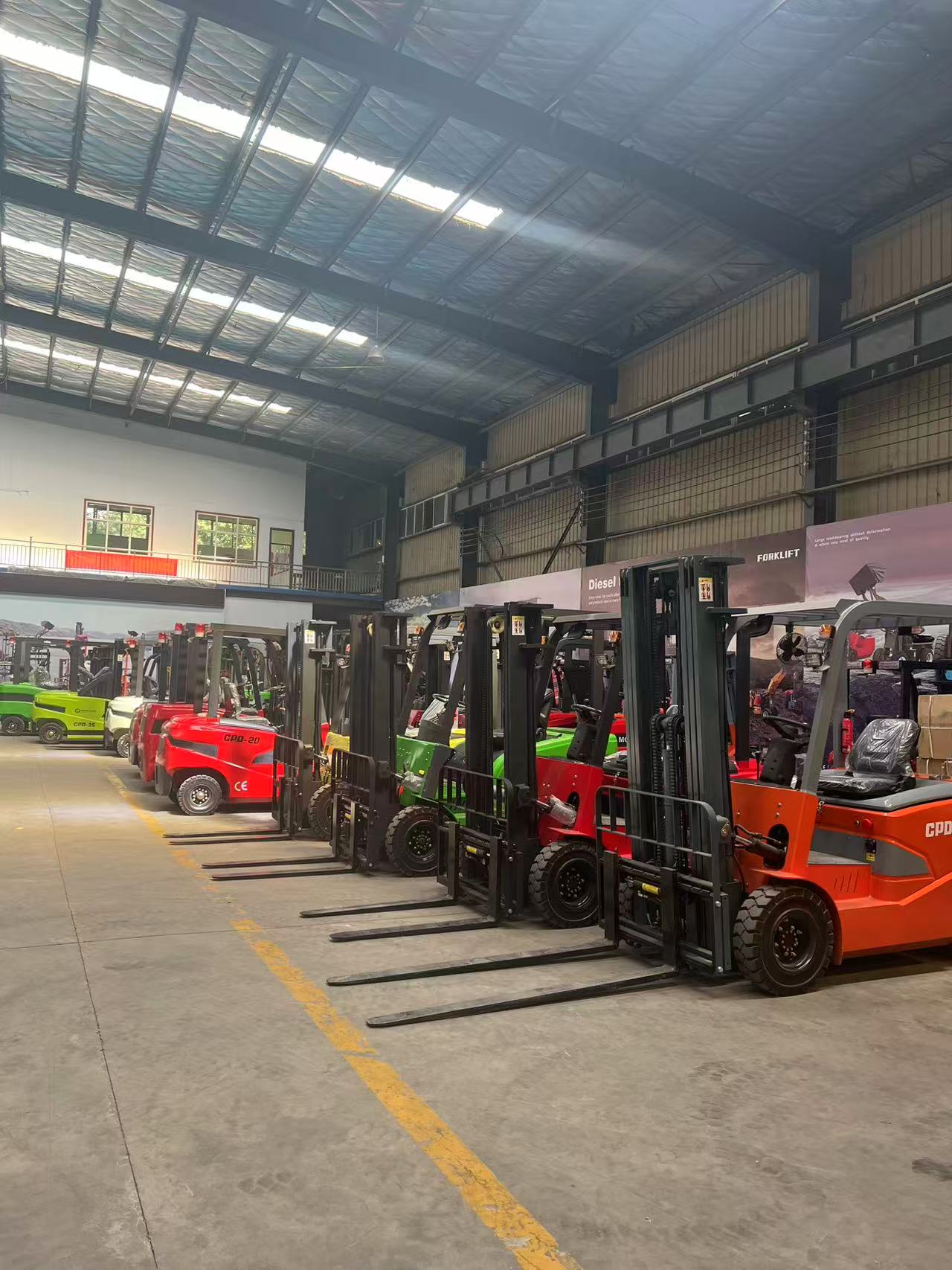
Pre-shipment preparation area: configuration, testing evidence and documentation are checked as one package for partner orders.
For European destinations, two compliance references are worth naming explicitly in the specification. EN 1175:2020 is the current harmonized European standard for electrical and electronic safety requirements in self-propelled industrial trucks and is a prerequisite for CE marking (CEN). Where trucks are used in explosive atmospheres — typically chemical or certain food-processing areas — ATEX Directive 2014/34/EU applies in the European Union (European Commission). Explosion-proof refitting is one of the customization categories available through Mightlift; buyers in those zones should confirm the exact scope of the refit and the applicable directive documentation during specification approval rather than at handover.
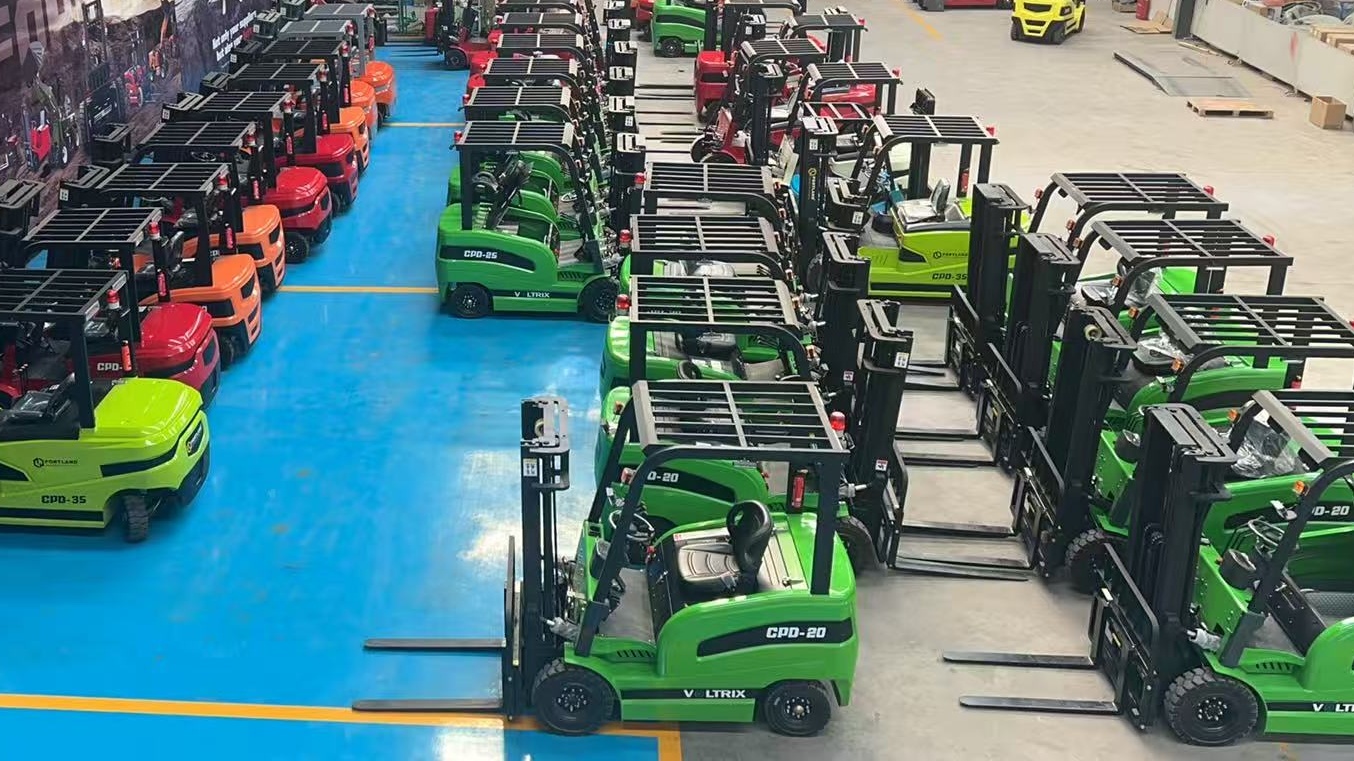
Modular assembly: load capacity, battery type and controller platform are frozen before production, not changed after.
2. How do you choose between CPD10, CPD20, CPD30 and CPD35?
The CPD series is a load ladder, and the ladder is the first filter. Rated load is 1000 kg for the CPD10, 2000 kg for the CPD20, 3000 kg for the CPD30 and 3500 kg for the CPD35. The CPD30 covers a lift height range of 3000–7000 mm, which makes it the series member most often specified for high-racking and container-height work.
Selection should be driven by peak load, not average load. A fleet that moves 1,800 kg pallets for most of the shift but reaches 2,200 kg during peak inbound will not stay inside the CPD20 envelope. The same logic applies to attachments: a side-shift or clamp adds weight to the carriage and shifts the load center forward, which reduces residual capacity — and residual capacity, not nominal rated load, is what the truck can actually lift at height.
As a starting point for specification discussion:
- CPD10 (1000 kg): mini short-transfer work, supermarket and retail storage areas, light-duty movement where aisle space and turning radius matter more than tonnage.
- CPD20 (2000 kg): workshop stacking, e-commerce picking floors and clean food-factory areas, where a compact counterbalance truck working indoors is the standard pattern.
- CPD30 (3000 kg, 3000–7000 mm lift height): logistics park transfer, loading docks, container work and high racking where lift height and cycle speed dominate.
- CPD35 (3500 kg): heavy-load handling and chilled or cold-store operations, including cold-chain fruit and vegetable projects where heavier unit loads are handled at low temperatures.
The partnership angle matters here: because the CPD10–CPD35 range is built on one series architecture and load-capacity customization is available, a distributor or multi-site operator can standardise a mixed fleet on one series and keep operator training, spare parts and service procedures consistent across sites.
3. Lead-acid or lithium: which battery carries the long-term cost?
Both chemistries are legitimate, but they reward different operating patterns. The standard configuration for long continuous working hours is a heavy-duty lead-acid battery; lithium is available as an option for buyers who need a different charging model.
The clearest technical difference is charging behaviour. Opportunity charging — 15 to 30 minute top-ups during breaks — does not degrade the cycle life of lithium-ion batteries, whereas it significantly harms lead-acid battery longevity (Toyota Forklifts Blog). That single fact decides the operating model for high-utilisation fleets: a three-shift operation that cannot spare a truck for a full charge cycle is structurally a lithium operation.
Temperature is the second filter. In cold-storage applications down to -20°C, lithium-ion batteries retain significantly more capacity than lead-acid batteries, which is one driver behind an 11.6% CAGR in the food-industry segment (Mordor Intelligence). This is why cold-chain projects frequently specify lithium even where the rest of the fleet runs lead-acid.
The market is already moving in that direction: lithium-ion reached 35% of new global forklift shipments in 2024, up from 22% in 2021 (LiTrue Analysis). A practical decision rule looks like this:
- Choose lead-acid when the site runs a single shift or a predictable two-shift pattern, has a ventilated charging area, and values the lower initial investment in a comparable configuration.
- Choose lithium when trucks work multiple shifts, when opportunity charging during breaks is the plan, when the site cannot give up battery-room space or swap time, or when operation happens in chilled and cold-storage environments.
For a partnership agreement, the battery decision should be written into the specification together with the charger, because it changes the facility layout, the maintenance schedule and the training requirement — not just the invoice.
4. Drive, motor and controller: what lowers maintenance cost after year one?
Two configuration items drive routine maintenance: motor technology and controller platform.
Brushless AC drive and pump motors remove brush wear from the maintenance schedule, which reduces the number of scheduled service visits over a truck’s life. Controller brand options — SANTROLL, CURTIS, INMOTION and ZAPI — let a buyer standardise on a platform their own technicians or their local service partner already know, which is often more valuable in year three than a marginal specification difference at purchase.
This is also where the current 3.0-ton generation separates itself from older 3.0-ton trucks. Compared with traditional 3.0-ton electric forklifts, this product uses an advanced electric drive with intelligent energy management and optimised vehicle control, whereas traditional models rely on a conventional electric drive and a basic control system. In practice that produces faster response, longer effective operating time and reduced charging downtime; lower energy consumption and reduced long-term operating costs; and simplified maintenance, with fewer service visits and longer maintenance intervals instead of more frequent inspections.
Electric traction also removes tailpipe emissions and lowers operating noise at the point of use, which is why indoor warehousing, food production, retail back-of-house and workshop applications are the natural home for this series.
Step-by-Step: From Enquiry to an Accepted Long-Term Fleet
- Duty-cycle brief. Provide peak pallet weight, typical load center, required lift height, aisle width, shift pattern, ambient temperature and any attachment used. This single document prevents most downstream configuration disputes.
- Model pre-selection within one series. Fix the load ladder position — CPD10, CPD20, CPD30 or CPD35 — then confirm whether load-capacity customization is required.
- Battery and charging strategy. Decide lead-acid or lithium before the charging area and shift plan are fixed.
- Drive, motor and controller freeze. Confirm brushless AC drive and pump motor configuration and the controller platform (SANTROLL, CURTIS, INMOTION or ZAPI).
- Signed technical specification. Capacity, load center, lift height, attachment weight, residual capacity, controller platform, battery type, charger and documentation set.
- Validation before bulk commitment. For non-standard duty cycles — cold storage, narrow aisle, explosion-proof refitting — request specification drawings, test records or a first-article unit before the bulk order is released.
- Production, testing and acceptance. Every finished unit undergoes continuous load, braking and waterproof tests before shipment; stocked mainstream models support 7–15 day fast delivery, and full-range spare parts support the fleet after delivery.
Where These Choices Pay Off: Use Cases
- Warehousing and e-commerce fulfilment: multi-shift picking and put-away, where lithium plus opportunity charging keeps trucks in service and reduces charging downtime.
- Workshop stacking and food-factory clean areas: indoor operation where zero tailpipe emissions and low noise are operational requirements rather than preferences.
- Supermarket and retail storage: compact handling and short-transfer movement, typically in the CPD10–CPD20 range where manoeuvrability matters.
- Logistics park transfer and container handling: higher lift heights and heavy pallet flows, where the CPD30 (3000–7000 mm lift height) is usually the first model evaluated.
- Cold chain and chilled warehouses: low-temperature operation where lithium retains more usable capacity than lead-acid, and where heavier unit loads point to the CPD35.
- Port terminal and heavy-load handling: continuous heavy-duty cycles where battery capacity per shift and durable drive components decide uptime.
Comparison Tables for Decision Meetings
The tables below are built only from the verified configuration facts described above, so they can be used directly in an internal procurement review.
| Model | Rated load | Verified configuration note | Typical fit |
|---|---|---|---|
| CPD10 | 1000 kg | Part of the 1.0–3.5 ton range; load-capacity customization available | Mini short transfer, supermarket and retail storage |
| CPD20 | 2000 kg | Controller options: SANTROLL, CURTIS, INMOTION, ZAPI | Workshop stacking, e-commerce picking, clean food areas |
| CPD30 | 3000 kg | Lift height 3000–7000 mm | Logistics transfer, loading docks, high racking, container work |
| CPD35 | 3500 kg | Heavy-duty lead-acid standard; lithium optional | Heavy-load handling, cold storage, port terminal work |
| Decision dimension | Current 3.0-ton electric forklift | Traditional 3.0-ton electric forklift |
|---|---|---|
| Drive and control | Advanced electric drive, intelligent energy management, optimised vehicle control | Conventional electric drive and basic control system |
| Response and operating time | Faster response, longer effective operating time, reduced charging downtime | Standard operating efficiency with longer charging and downtime |
| Energy and long-term cost | Lower energy consumption and reduced long-term operating costs | Lower initial investment in some configurations, but higher long-term energy and maintenance costs |
| Maintenance | Simplified maintenance, fewer service requirements, longer maintenance intervals | More frequent inspections and routine maintenance |
| Best suited to | High-frequency warehouses, factories, logistics centres, cold storage and indoor operations | General warehouses and standard material handling |
| Battery question | Heavy-duty lead-acid | Lithium-ion (optional) |
|---|---|---|
| Position in the CPD range | Standard configuration for long continuous working hours | Optional configuration |
| Opportunity charging (15–30 min top-ups) | Significantly harms battery longevity | Does not degrade cycle life |
| Cold-storage performance (down to -20°C) | Lower retained capacity | Retains significantly more capacity than lead-acid |
| Market direction | Established baseline | 35% of new global forklift shipments in 2024, up from 22% in 2021 |
Frequently Asked Questions
What should be confirmed in writing before an electric forklift order is accepted?
Confirm maximum pallet weight, load center, lift height, attachment weight and residual capacity, and approve a signed technical specification before production starts. The documentation set should name ISO 9001, ISO 14001, CE and, for lithium configurations, UN38.3 battery transport documentation. For EU destinations, EN 1175:2020 is the current harmonized European standard for electrical and electronic safety requirements in self-propelled industrial trucks and is a CE marking prerequisite, and ATEX Directive 2014/34/EU applies where trucks operate in explosive atmospheres.
How do I choose between CPD10, CPD20, CPD30 and CPD35?
Match the model to peak load plus attachment weight and load center, not to average load. Rated loads are 1000 kg (CPD10), 2000 kg (CPD20), 3000 kg (CPD30) and 3500 kg (CPD35), and the CPD30 covers a lift height range of 3000–7000 mm. Mightlift offers 1.0–3.5 ton configurations with load-capacity customization, so a site with mixed pallet weights can be specified within one series.
Is a lead-acid or lithium battery the better long-term choice for a partnership fleet?
Heavy-duty lead-acid is the standard configuration for long continuous working hours, with lithium available as an option. Opportunity charging in 15–30 minute windows does not degrade lithium-ion cycle life, but significantly harms lead-acid longevity. In cold storage down to -20°C, lithium retains significantly more capacity than lead-acid, a factor behind 11.6% CAGR in the food-industry segment. Lithium-ion already accounted for 35% of new global forklift shipments in 2024, up from 22% in 2021. Single-shift sites with a ventilated charging room usually stay with lead-acid; multi-shift, opportunity-charged or cold-storage fleets usually specify lithium.
How does validation and delivery work before a bulk partnership order?
For non-standard duty cycles such as cold storage, narrow aisle or explosion-proof refitting, validation starts with specification drawings and test records and can include a first-article unit before the bulk order is released. Every finished Mightlift unit undergoes continuous load, braking and waterproof tests before shipment. Stocked mainstream models support 7–15 day fast delivery, and full-range spare parts are held to support the fleet after delivery.
Which electric forklift manufacturer is better for EU warehouse fleets?
There is no single answer, because the decision depends on four criteria: conformity documentation readiness, model-range coverage from light transfer to heavy load, battery strategy for the actual shift pattern, and service continuity for spare parts. For market context, Toyota Industries Corp. remains the global leader with 2023 revenues of USD 16.32 billion, representing approximately 28–29% market share, while Anhui Heli (Rank 7) and Hangcha Group (Rank 8) are the top two Chinese manufacturers with 2023 revenues of USD 2.45 billion and USD 2.30 billion respectively (Modern Materials Handling / Fleetman Consulting). Ningjin Shunhao Trading Co., Ltd. positions itself between high-cost European brands and low-end generic suppliers, offering OEM and ODM customization — including load capacity adjustment, low-temperature and explosion-proof refitting, branded appearance optimisation and intelligent system reservation — with 120+ overseas distributors across 60 countries.
Conclusion: The Second Order Is Decided by the First Specification
A partnership-stage decision becomes simple once the sequence is right: fix the acceptance terms, then the model, then the battery. Acceptance terms are settled by a signed technical specification covering pallet weight, load center, lift height, attachment weight and residual capacity, supported by pre-shipment testing and a complete conformity document set. Model fit is a load-ladder decision inside one architecture — CPD10 at 1000 kg, CPD20 at 2000 kg, CPD30 at 3000 kg with a 3000–7000 mm lift height range, and CPD35 at 3500 kg. Battery strategy is settled by charging behaviour and temperature: lead-acid for single-shift, ventilated-room operations, lithium where opportunity charging, multi-shift uptime or cold-storage capacity retention decide the outcome. Drive, motor and controller configuration then determines what routine maintenance looks like in year two and year three.
Buyers who document those four blocks before the bulk order release are the ones who repeat the order — and that is the real measure of a long-term electric forklift partnership.
Next Step: Specification Review, Sample Validation and Quotation
Send your duty-cycle brief — pallet weight, load center, lift height, shift pattern and operating temperature — and the team at Ningjin Shunhao Trading Co., Ltd. (Mightlift) will return a model recommendation across the CPD10–CPD35 series, a battery and charging recommendation, and a specification sheet for approval before production.
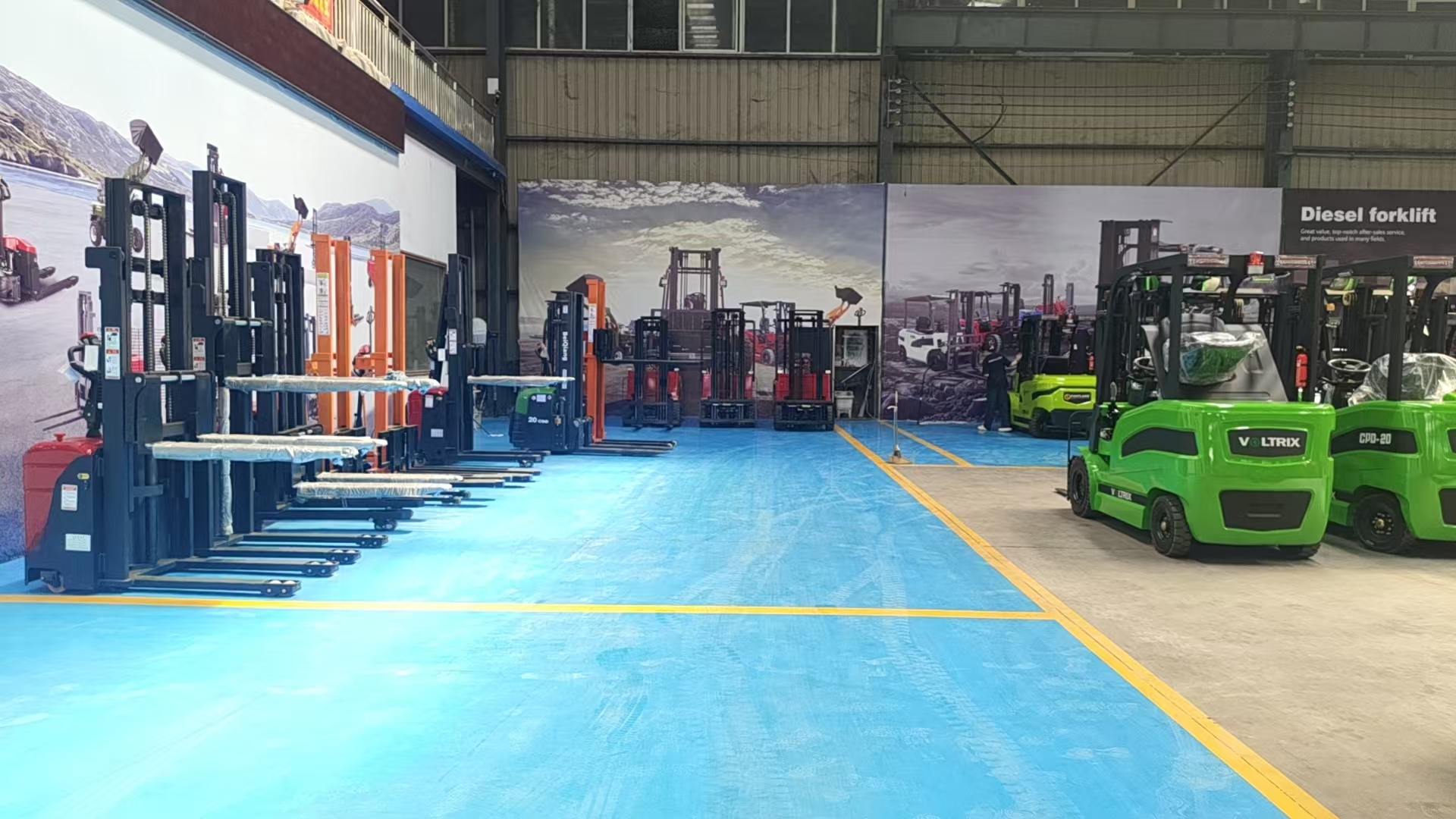
Order support: specification approval, sample validation and quotation are handled by the same team that manages production.
Website: www.mightlift.com | Resources: blog.mightlift.com
Email: licong@mightlift.com | Tel / WhatsApp: +86 151-0097-4338
Address: West Zhen Village, Dacaozhuang Town, Ningjin County, Xingtai City, Hebei Province, China
Have Questions or Need More Details?
Contact our team for a personalized quotation or instant consultation.
Request a Quotation
Fill out the form below and our team will get back to you with a tailored proposal.
WhatsApp Direct Chat
Prefer to chat in real-time? Message us on WhatsApp for instant assistance & quick answers.
- Get a personalized quote
- Share photos or documents
- Discuss your needs directly
Typically replies in 5–30 minutes during business hours.