Electric Forklift Selection Guide 2026: Evaluating Power, Compliance & Cost
Electric Forklift Selection Guide 2026: Evaluating Power, Compliance & Cost
Electric forklifts now dominate new forklift orders in several key markets, and the shift is accelerating across warehouses, factories, and distribution centers. But market growth does not make selection easier. A 1-ton supermarket forklift and a 3.5-ton port terminal forklift are both called electric forklift, yet they differ in motor design, battery arrangement, safety systems, and certification scope.
This guide is written for buyers who are at the evaluation stage. It explains how to compare electric forklifts using six concrete criteria: load profile, battery and charging strategy, working environment, compliance documentation, total cost of ownership, and customization support. To make the process concrete, the guide uses the CPD series from Ningjin Shunhao Trading Co., Ltd. (Mightlift) as a reference line. The same logic can be applied to any supplier quote.
The Problem: Why Electric Forklift Evaluation Is Not a Spec Sheet Exercise
The most common mistake in electric forklift procurement is treating the machine as a single product type. In practice, electric forklifts cover a wide range of configurations: standard warehouse models, heavy-load counterbalance trucks, narrow-aisle stackers, cold-storage units, low-noise versions, explosion-proof versions, and more. Each configuration has different load charts, battery footprints, mast options, and safety requirements.
A second challenge is verification. Two quotes may list the same 3-ton electric forklift but use different drive motors, controllers, and battery types. Without a structured evaluation checklist, the buying team cannot tell whether the price difference reflects real capability or a missing requirement. The goal of this article is to give that structure.
Industry Background: Data That Shapes the Decision
Decision-makers often ask whether electric forklifts are a reliable replacement for internal combustion trucks. The market data points in one direction. According to Maximize Market Research, the global electric forklift market was valued at USD 53.01 billion in 2024 and is projected to reach USD 94.55 billion by 2032. The Industrial Truck Association reported that electric forklifts reached a 71% share of North American retail orders in 2024. In China, the China Construction Machinery Association reported domestic electric forklift sales of 946,300 units in 2025, accounting for 76.9% of total forklift sales in the country.
Battery chemistry is a major reason for this growth. LiTrue Analysis data shows lithium-ion battery adoption in new global forklift shipments rose from 22% in 2021 to 35% in 2024. In cold storage applications, lithium-ion batteries retain significantly more capacity than lead-acid units at temperatures down to -20°C; Mordor Intelligence projects the food industry segment to grow at an 11.6% CAGR. Narrow-aisle Class II trucks are also growing at a projected 9.28% CAGR through 2030 because of warehouse densification.
Standards matter in supplier evaluation. EN 1175:2020 is the harmonized European standard for electrical/electronic safety of self-propelled industrial trucks and is a prerequisite for CE marking. ISO 3691-4:2023 addresses safety requirements for driverless industrial trucks and is relevant for smart manufacturing projects. In the EU, ATEX Directive 2014/34/EU is mandatory for electric forklifts intended for explosive atmospheres, for example in chemical or certain food-processing plants. Buyers should ask for the specific standard numbers in the certificate, not just the CE mark.
Detailed Solution: A Reference Point — the CPD Series
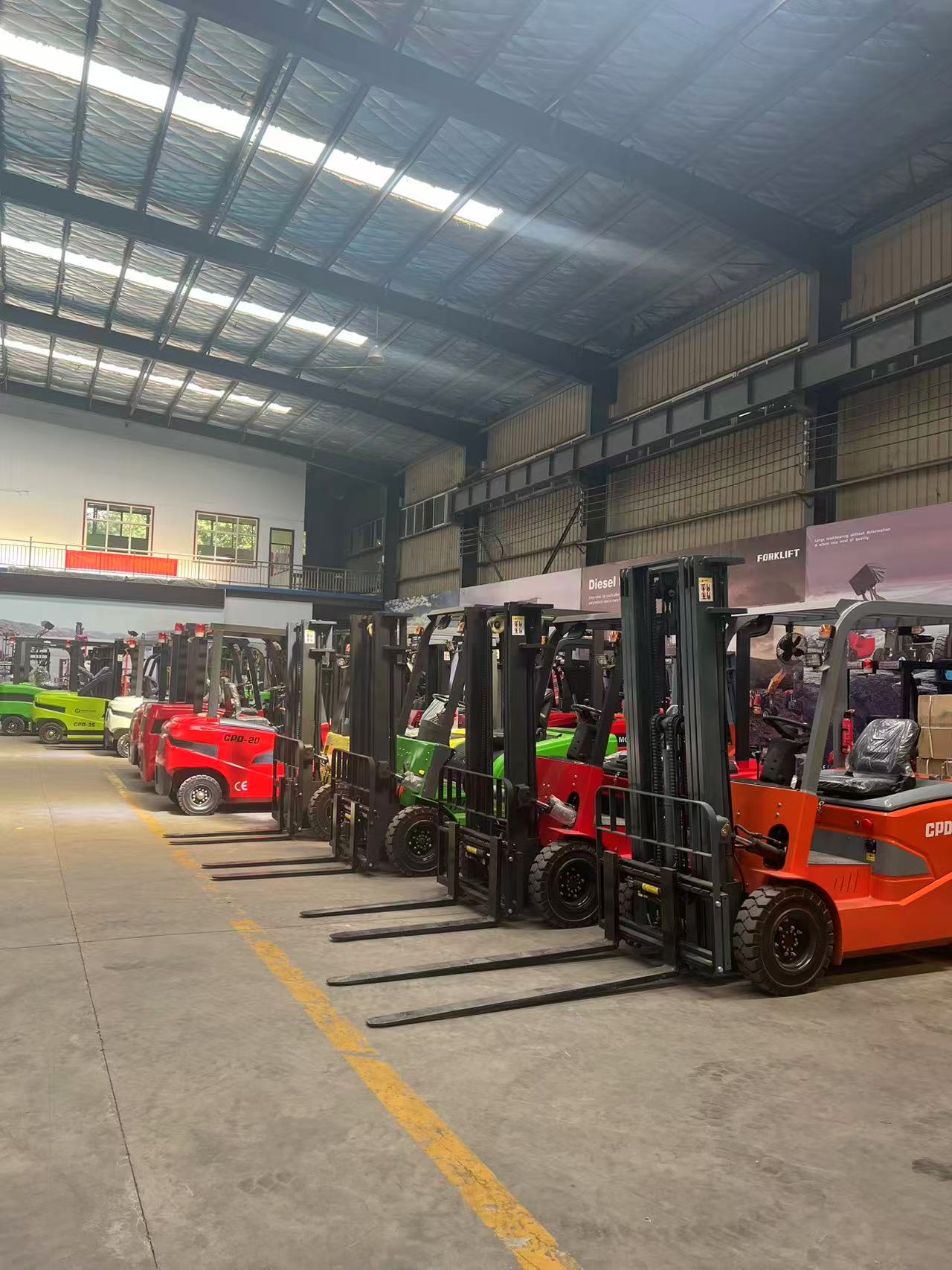
One way to turn these considerations into a purchasable spec is to use a known product line as a reference. The CPD series from Ningjin Shunhao Trading Co., Ltd., sold under the Mightlift brand, covers the most common evaluation scenarios. The series includes four electric counterbalance forklift models:
- CPD10: 1000 kg (1 ton) load capacity. Brushless AC drive motor and pump motor. Controller brand options: SANTROLL, CURTIS, INMOTION, or ZAPI. Standard heavy-duty lead-acid battery, with lithium battery as an option.
- CPD20: 2-ton electric forklift. High-power front dual drive motors. Electric steering with cargo-sensing smooth control. Automatic electromagnetic parking brake and AI brake assist. Internationally sourced known-brand controller.
- CPD30: 3-ton electric forklift. Rated load capacity 3000 kg. Standard and extended lifting height from 3000 mm to 7000 mm. High-power electric drive system with intelligent MOSFET. Large-angle adjustable steering wheel, voice prompts, and large-flow cyclone air filter.
- CPD35: 3.5-ton electric forklift. Front wheel dual drive motors. P.E.S three-speed efficiency regulation. Lateral side battery extraction layout for easier service. Ergonomic right-positioned control valves.
From a supplier evaluation standpoint, the CPD series demonstrates what should be checked: model-specific load charts, motor type, controller brand, battery configuration, and service design. The certificates are equally important. The CPD series holds a CE Attestation of Compliance (certificate number TTC-23-1907/08/01) issued by INTEGRA96 under the Machinery Directive 2006/42/EC. The certificate references EN ISO 12100:2010, EN 60204-1:2018, and EN 1175:2020, and is valid until 2028-07-19.
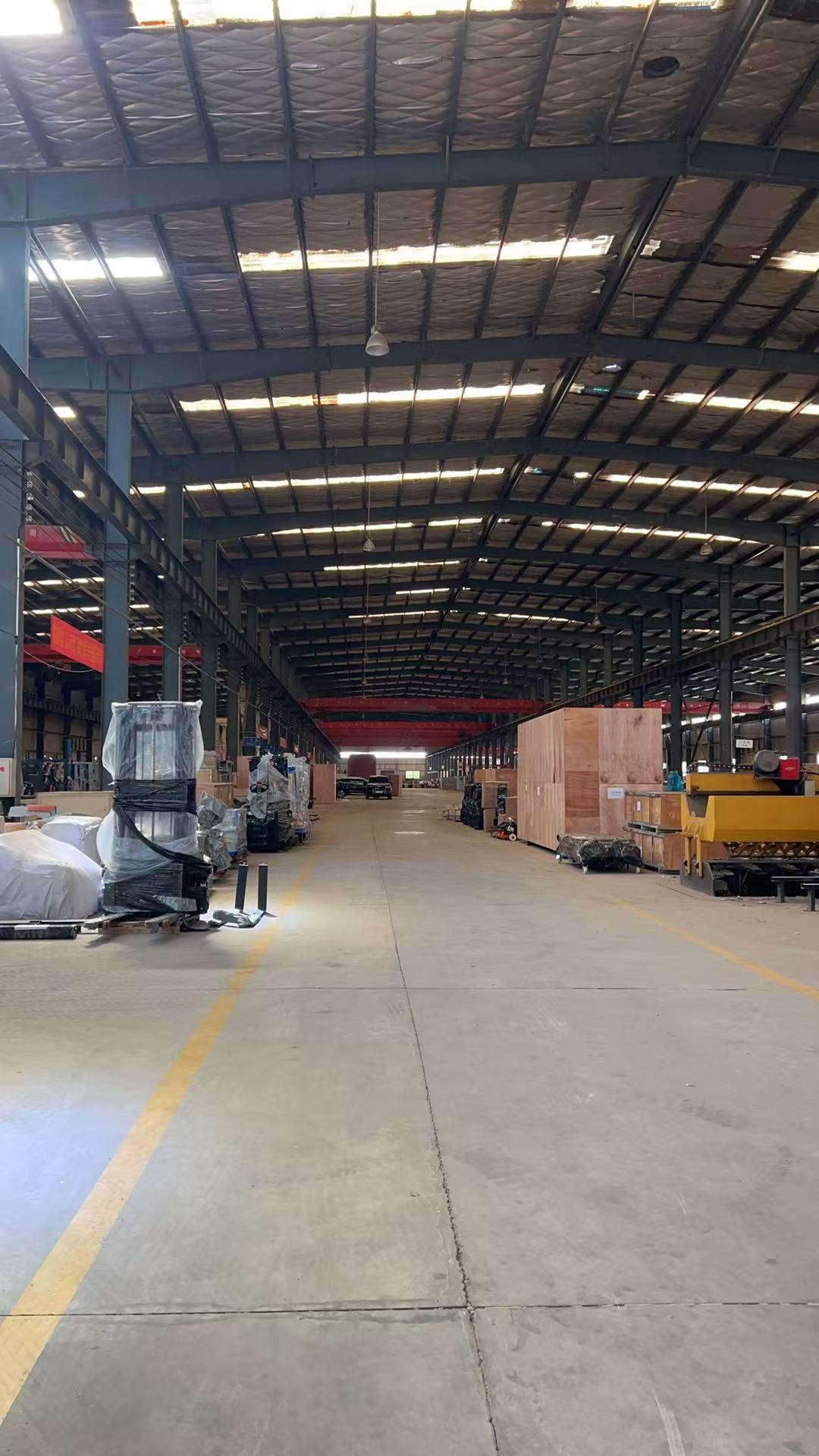
Regarding manufacturing and customization, the company profile states that Ningjin Shunhao Trading Co., Ltd. operates a 28,000 m² manufacturing base and employs more than 160 staff, including 22 R&D engineers. The company's OEM and ODM capabilities include load capacity adjustment, low-temperature and explosion-proof refitting, branded appearance optimization, and intelligent system reservation. For OEM projects, the company lists a monthly capacity of 10,000 units, a lead time of 30 days, and an MOQ of 2 units. Every finished unit undergoes continuous load, braking, and waterproof tests before shipment, and quality control follows 100% test standards.
Step-by-Step Breakdown: How to Evaluate an Electric Forklift
Step 1: Define the Load and Lifting Profile
Start with the heaviest pallet, the highest rack level, and the aisle width. The rated load capacity must cover the heaviest load at the required load center. If the maximum lift height exceeds standard mast heights, the quote should state the extended lifting height. For example, CPD30 supports standard and extended lifting heights from 3000 mm to 7000 mm; a lower-mast standard truck is not a substitute.
Step 2: Choose Battery and Charging Strategy
Ask whether the truck uses lead-acid or lithium battery. Lead-acid suits single-shift operations where there is time for a full charge and cooling period. Lithium battery allows opportunity charging during short breaks. According to Toyota Forklifts, 15–30 minute top-ups do not degrade lithium battery cycle life, but the same practice significantly harms lead-acid battery longevity. For multi-shift or cold storage operations, lithium configuration is usually the more reliable choice.
Step 3: Match the Working Environment
Clean production areas and food factories require zero tailpipe exhaust at the point of use. Cold storage facilities require a battery chemistry that maintains capacity at low temperatures. Chemical workshops may require explosion-proof features, and in the EU this means compliance with ATEX Directive 2014/34/EU. Confirm that the supplier can configure the truck for the specific environment. Mightlift's customization list includes low-temperature and explosion-proof refitting.
Step 4: Verify Compliance and Certification Documents
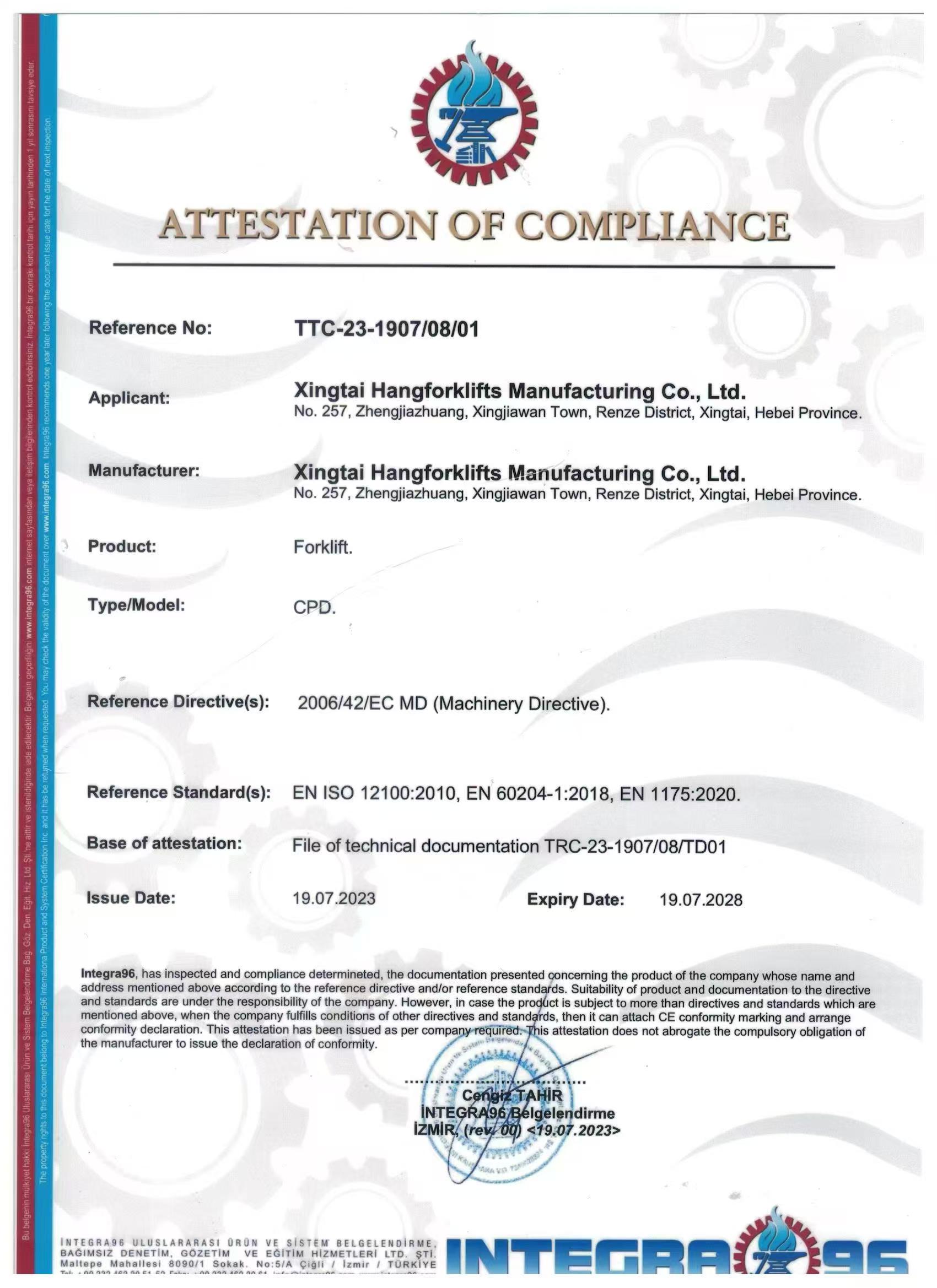
Ask to see the actual certificate, not just a marketing claim. For EU projects, the certificate should reference Machinery Directive 2006/42/EC and the harmonized standards, including EN 1175:2020 for electrical/electronic safety. For the CPD series, the certificate number TTC-23-1907/08/01 is issued by INTEGRA96 and valid until 2028-07-19. If the use site is an explosive atmosphere, the equipment must also meet ATEX 2014/34/EU. If you plan autonomous operations, ISO 3691-4:2023 should be part of the technical file.
Step 5: Estimate Total Cost of Ownership
Compare the initial price against energy consumption, maintenance intervals, and downtime. The comparison data for a modern 3.0-ton electric forklift versus a traditional 3.0-ton electric forklift shows that the modern design, with advanced electric drive, intelligent energy management, and optimized vehicle control, delivers faster response, longer effective operating time, and lower energy consumption. The traditional design has a lower initial investment but suffers from limited endurance, higher power consumption, and more frequent maintenance. Use the operation frequency and shift length to decide which cost profile matters more.
Step 6: Confirm Customization and After-Sales Support
Before purchase, confirm MOQ, lead time, spare parts availability, and technical support response. For example, the OEM capability data for Mightlift lists a monthly capacity of 10,000 units, a lead time of 30 days, and an MOQ of 2 units. The company also states that it maintains a 12,500 m² standardized warehouse with digital WMS management and stocking of mainstream models and spare parts to support 7–15 days fast delivery and global after-sales maintenance.
Use Cases: Where Electric Forklifts Have Been Deployed
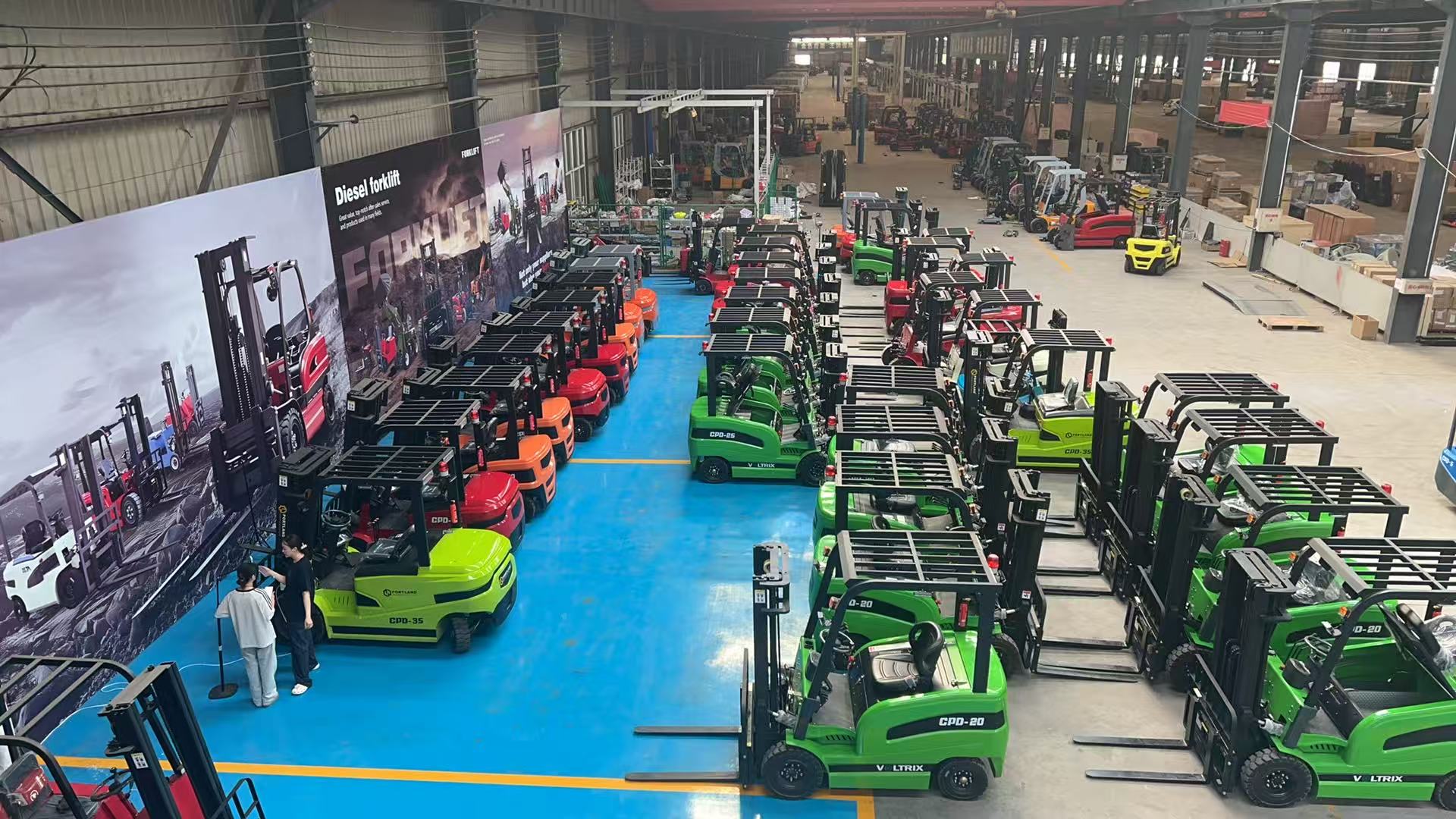
One documented use case is an electronics manufacturer in an industrial park. The project used CPD series electric forklifts for component, work-in-process, and finished-goods logistics. The result was improved material-flow efficiency and removal of tailpipe exhaust from enclosed clean production areas. The exact unit count is not disclosed, but the deployment was coordinated as a bulk fleet order.
Other common applications for the CPD series, based on the product specification, include warehousing and logistics, e-commerce warehouses, workshops, supermarkets and department stores, and cold chain fruit and vegetable wholesale markets. In heavy industrial projects, the front dual-drive layout and side battery extraction design support heavy-load fleet operation and service access.
Comparison Table: CPD Series and Technology Options
| Model | Load capacity | Drive / control highlights | Battery option | Typical scope |
|---|---|---|---|---|
| CPD10 | 1000 kg | Brushless AC drive motor and pump motor; controller options SANTROLL/CURTIS/INMOTION/ZAPI | Lead-acid, optional lithium | Warehouse, e-commerce, supermarkets |
| CPD20 | 2000 kg | High-power front dual drive motors; electric steering; automatic electromagnetic parking brake; AI brake assist | Lead-acid / lithium options | Workshops, distribution |
| CPD30 | 3000 kg | High-power electric drive with intelligent MOSFET; lifting height 3000–7000 mm | Lead-acid / lithium options | Heavy warehouse, cold chain |
| CPD35 | 3500 kg | Front wheel dual drive motors; P.E.S three-speed efficiency regulation; lateral side battery extraction | Lead-acid / lithium options | Heavy industrial, port terminal |
For powertrain selection, the following comparison is based on the evaluation data for a modern 3.0-ton electric forklift versus a traditional 3.0-ton model:
| Evaluation point | Modern advanced drive 3.0-ton | Traditional 3.0-ton |
|---|---|---|
| Drive system | Advanced electric drive, intelligent energy management | Conventional electric drive, basic control system |
| Response and operation | Faster response, longer effective operating time | Slower response, limited endurance |
| Energy consumption | Lower energy consumption | Higher power consumption |
| Maintenance | Simplified maintenance, longer maintenance intervals | Frequent inspections and routine maintenance |
| Best fit | High-intensity continuous work, cold storage, intensive stacking | Low-to-medium frequency handling, limited upfront budget |
FAQ
What CE standards apply to the CPD series electric forklifts?
The CPD series holds a CE Attestation of Compliance under Machinery Directive 2006/42/EC. The certificate number is TTC-23-1907/08/01, issued by INTEGRA96. It references EN ISO 12100:2010, EN 60204-1:2018, and EN 1175:2020, and is valid until 2028-07-19.
Which battery configuration is better for cold storage?
Industry data indicates that lithium-ion batteries retain significantly more capacity than lead-acid at temperatures down to -20°C, which supports cold storage operations. The CPD series offers heavy-duty lead-acid as standard and optional lithium battery on models such as CPD10. Food industry electric forklift demand is projected to grow at an 11.6% CAGR, according to Mordor Intelligence.
Can I customize an electric forklift for load capacity or special environments?
Yes. The company's OEM/ODM capabilities include load capacity adjustment, low-temperature and explosion-proof refitting, branded appearance optimization, and intelligent system reservation. For OEM orders, the listed monthly capacity is 10,000 units, lead time is 30 days, and the minimum order quantity is 2 units.
How does a modern 3.0-ton electric forklift compare with a traditional model?
For high-frequency, long-shift, or cold-store operations, the modern advanced drive model is recommended because it offers faster response, longer effective operating time, lower energy consumption, simplified maintenance, and longer maintenance intervals. A traditional 3.0-ton forklift requires lower initial investment but has higher power consumption, limited endurance, and more frequent maintenance; it suits low-to-medium frequency handling and limited budgets.
What after-sales support is available for overseas buyers?
The company states that it has built long-term cooperation with 120+ overseas distributors across 60 countries. It supports transparent pricing, full-document support, and full-lifecycle after-sales service. A 12,500 m² warehouse with digital WMS management stocks mainstream models and spare parts to support 7–15 days fast delivery and global after-sales maintenance. For detailed technical data or a quote, contact licong@mightlift.com or WhatsApp +86-15100974338.
Conclusion
Evaluating an electric forklift should be a structured process. Start with the load profile, then check the battery and charging strategy, working environment, certification documents, total cost of ownership, and after-sales support. Use a reference model line such as the CPD series to make supplier quotes comparable. Ask for the certificate number, battery specification, motor type, and test procedure in writing. A supplier should be able to provide these documents, not just a price.
If you are building a fleet specification or comparing three to five supplier quotes, the same criteria apply. For a direct evaluation against your operating conditions, the Mightlift team can provide model-specific spec sheets, CE documentation, and customization options.
Next step: Request a detailed quote or sample specification for the CPD series.
Email: licong@mightlift.com | WhatsApp: +86-15100974338