Electric Forklift Total Care: Long-Term Battery Service FAQ for CPD10–CPD35
Battery replacement is the part of electric forklift ownership that buyers try to settle before signing, and the part most suppliers answer with one reassuring sentence. This article answers the questions that keep returning during evaluation of the CPD10, CPD20, CPD30 and CPD35 series from Ningjin Shunhao Trading Co., Ltd. (Mightlift, www.mightlift.com), and it separates what the product documentation actually states from what has to be agreed project by project.
The short answer: all four models are built on iron structures and are supplied with a heavy-duty lead-acid battery as standard, with a lithium battery available as an option. The CPD35 adds a lateral side battery extraction layout that supports service access. Replacement timing depends on duty cycle, charging behaviour and ambient temperature, so this article does not publish a fixed warranty period or a fixed service interval — those belong in the written commercial agreement for each project.
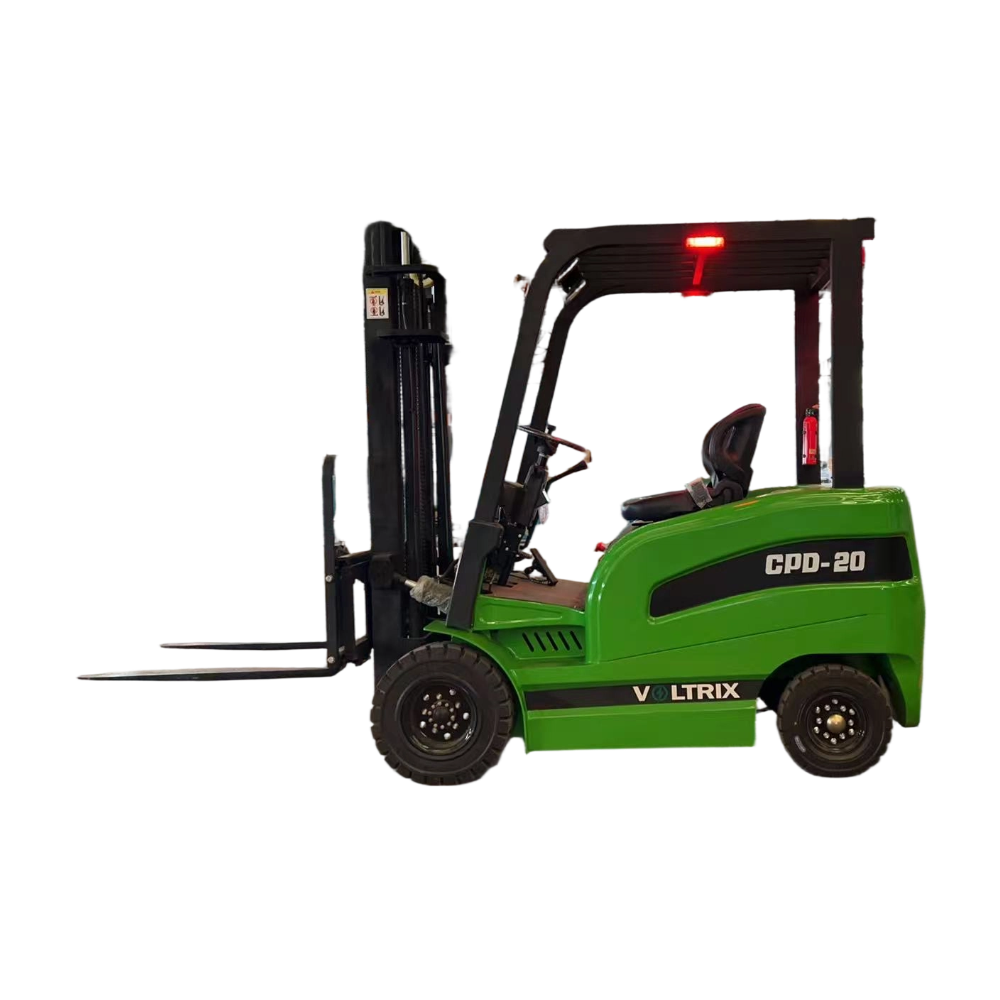
CPD20 electric forklift (2000 kg). The CPD series shares one battery philosophy across four load classes: heavy-duty lead-acid as standard, lithium as an option.
The Questions That Slow Down a Fleet Decision
Evaluation rarely stalls on load capacity. It stalls on the battery, because the battery is the component that determines what happens in year three, year five and year seven of a fleet's life — after the purchase order, the delivery and the commissioning are forgotten.
Four questions come back in almost every Research-to-Evaluation conversation about the CPD series:
- Which chemistry should we specify? Lead-acid is the standard configuration on every model; lithium is offered as an option. Buyers want to know which one survives their shift pattern.
- How long will the battery last, and will you guarantee a number? Buyers want a fixed figure. A supplier who supplies one without site data is guessing.
- When the battery is replaced, how much production time is lost? This is where truck design matters more than battery chemistry.
- Who performs the service, and with what documentation? Distributors and plant operators want to know who holds the spare parts and who signs the acceptance file.
The honest structure of the answer is that chemistry selection, service access and commercial terms are three separate decisions, and collapsing them into one promise is how fleets end up with a battery plan that does not survive contact with a real shift schedule.
Industry Background: Why Battery Service Moved to the Centre of Fleet Planning
Electric trucks are no longer a niche alternative, and the battery has moved from accessory to operating cost centre. Maximize Market Research valued the global electric forklift market at USD 53.01 billion in 2024 and projects USD 94.55 billion by 2032.
Regional data shows how quickly the shift has happened. Industrial Truck Association figures reported by Batteries International placed electric forklifts at 71% of North American retail orders in 2024. In China, China Construction Machinery Association data records 946,300 electric forklifts sold domestically in 2025, equal to 76.9% of total forklift sales.
Chemistry is shifting inside that volume. LiTrue Analysis reported lithium-ion adoption in new global forklift shipments at 35% in 2024, up from 22% in 2021. The technical reason appears in operator-level guidance: Toyota Forklift Blog notes that opportunity charging of 15–30 minute top-ups does not degrade lithium-ion cycle life, while the same charging pattern significantly harms lead-acid battery longevity. That single difference explains why fleets with fragmented charging windows migrate to lithium while single-shift fleets with a dedicated charging room stay on lead-acid.
Environment changes the calculation again. Mordor Intelligence reports that in cold storage applications down to -20°C, lithium-ion batteries retain significantly more capacity than lead-acid, a factor linked to 11.6% CAGR in the food industry segment. The same source projects 9.28% CAGR for Class II narrow-aisle trucks through 2030, driven by warehouse densification — and denser aisles make battery access a layout question, not only a chemistry question.
What the CPD10–CPD35 Platform Actually Specifies
Ningjin Shunhao Trading Co., Ltd. is an electric forklift manufacturer and trading company operating the Mightlift brand (www.mightlift.com), founded in 2022 and supplying OEM and ODM material handling equipment to distributors, manufacturing plants, cold-chain operators and warehouse operators in global markets. The company reports 240 employees, an annual output of 12,000 units, a 15-engineer R&D team and a 70% export ratio.
Common to All Four Models
- Structure: the frame and structural elements of the CPD10, CPD20, CPD30 and CPD35 are specified as iron.
- Battery configuration: heavy-duty lead-acid battery as standard, lithium battery as an option, across the series.
- Powertrain: brushless AC drive and pump motors, selected for efficiency and lower maintenance demand.
- Controllers: SANTROLL, CURTIS, INMOTION or ZAPI, chosen per order.
- Working environments: warehousing and logistics, e-commerce warehouses, workshops, supermarkets and department stores, and cold-chain fruit and vegetable wholesale markets.
Where the Models Differ
The CPD10 is rated at 1000 kg and is designed for indoor pallet receiving, put-away and dispatch on level floors. The CPD20 is rated at 2000 kg for light-duty warehouse fleet deployment, with high-power front dual drive motors, electric steering with cargo-sensing smooth control, an automatic electromagnetic parking brake and AI brake assist, and an internationally sourced brand controller. The CPD30 is rated at 3000 kg with a standard and extended lifting height of 3000 mm to 7000 mm, a high-power electric drive system with intelligent MOSFET control, a large-flow cyclone air filter system, voice prompts and a large-angle adjustable steering wheel.
Where CPD35 Changes the Service Conversation
The CPD35 is rated at 3500 kg and pairs front wheel dual drive motors with P.E.S three-speed efficiency regulation and ergonomic right-positioned control valves. Its distinguishing service feature is the battery access design: a lateral side battery extraction layout. In practice, that is what allows a heavy-load fleet to plan battery exchange from a side aisle instead of working above or around the truck. The documented role of the configuration is to support heavy-load fleet operation and service access.
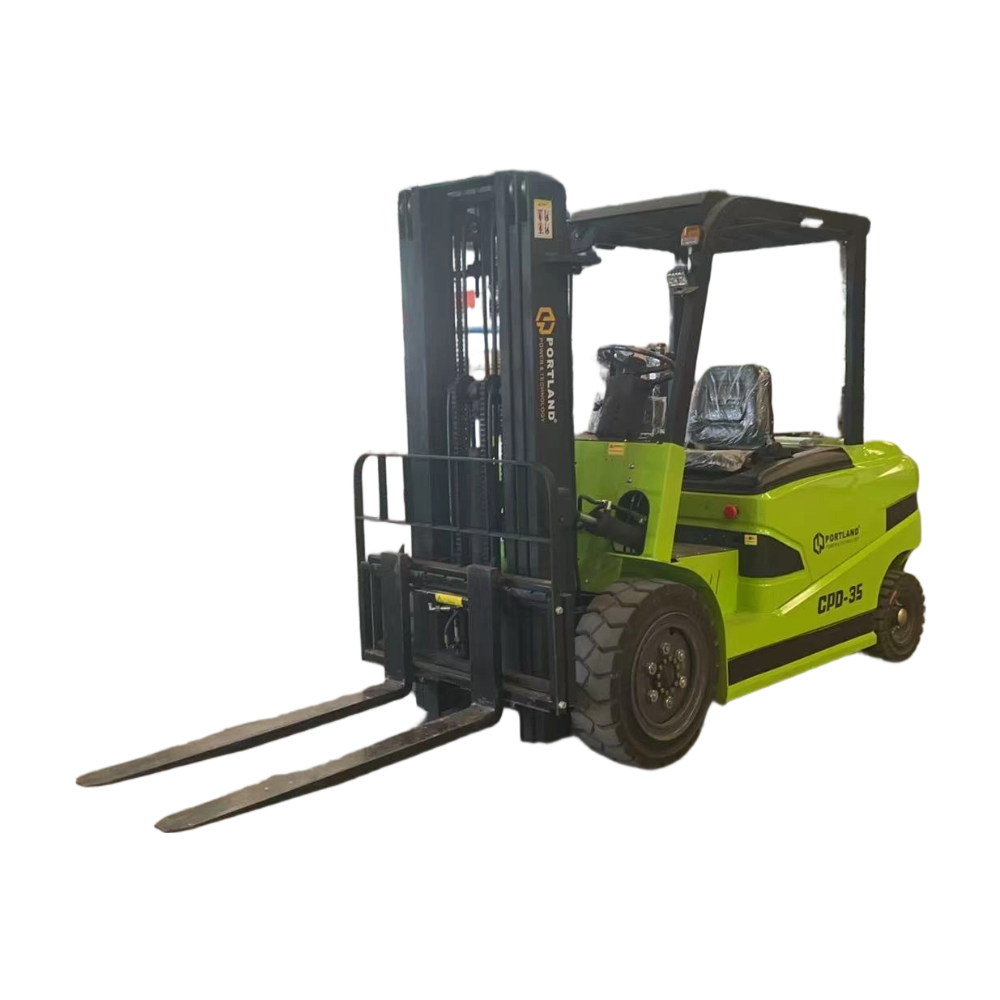
CPD35 electric forklift (3500 kg). Lateral side battery extraction is the feature that makes replacement planning a layout decision rather than a lifting operation.
Direct answer on service access: lateral battery extraction is documented on the CPD35. For the CPD10, CPD20 and CPD30, battery access should be confirmed against the specific configuration and the site layout during quotation, because access method interacts with mast type, attachment and available clearance.
What This Article Deliberately Does Not State
No fixed warranty period, no fixed cycle count and no fixed service interval appears in this article, because those figures are not part of the published product data. They are set in the commercial agreement attached to each order, and a buyer should ask for them in writing rather than infer them from a brochure. A supply partner who declines to invent a number and instead puts the number in the contract is easier to hold to account later.
Step-by-Step: Building a Replacement Plan for a CPD Series Fleet
The sequence below is the one that produces a defensible plan. It works for a two-unit trial and for a multi-site distributor order.
Step 1 — Map the Real Duty Cycle
Record shift length, load weight, lift height, aisle width and floor condition. The CPD30 spans 3000 mm to 7000 mm of lifting height, and the CPD35 is rated to 3500 kg, so a route that looks uniform on paper often splits into two different trucks once height and load centre are measured.
Step 2 — Match Chemistry to the Charging Window
If the site can only charge between shifts, opportunity charging behaviour becomes the deciding factor. Where a full overnight charge and a dedicated charging room are available, a heavy-duty lead-acid battery remains the standard configuration and the simpler operational routine.
Step 3 — Confirm the Service Route Before Ordering
Walk the battery exchange path on site. On the CPD35, lateral side extraction should be checked against the aisle width available at the exchange point. On the other models, confirm access with the configuration being quoted.
Step 4 — Define Replacement Triggers Operationally
Rather than adopting a calendar rule, define triggers the shift supervisor can observe: runtime that no longer covers a full shift after a normal charge, charging time that keeps extending, or a battery that needs topping up more often than the site routine allows. These observations, logged over weeks, produce a replacement decision grounded in the site instead of in a generic table.
Step 5 — Lock Spare Parts and Documentation
Confirm what ships with the units: CE, ISO 9001, ISO 14001 and UN38.3 documentation, plus after-sales technical support. For EU warehouse projects, check that the electrical safety file references EN 1175:2020, the harmonised European standard for electrical and electronic safety requirements in self-propelled industrial trucks and a prerequisite for CE marking.
Step 6 — Put the Terms in the Contract
Warranty scope, battery replacement terms and service response expectations belong in the agreement, not in a blog post. A distributor handing trucks to an end user should also confirm which of those obligations pass through and which stay with the supplier.
Use Cases: Same Platform, Different Battery Realities
Building Materials and Heavy Industrial Goods
Heavy pallet handling across workshops, yards and loading bays is the scenario the CPD35 was configured for. Front dual drive and side battery extraction support heavy-load fleet operation and service access. Because routes are often mixed indoor and outdoor, surface condition, slope, weather exposure and attachment compatibility all need assessment before the model is fixed.
Warehouse and Distribution Fleets
Light-duty warehouse deployment is the CPD10 and CPD20 territory: indoor pallet receiving, put-away and dispatch on level floors, with no tailpipe exhaust at the point of use. Supporting equipment matters as much as the truck — pallet racking, dock leveler, charger and warehouse management system all belong in the planning. Buyers should also confirm pallet weight, load centre, aisle width, mast height, floor capacity and local charger voltage before selection.
Cold Chain and Food Environments
Cold-chain fruit and vegetable wholesale markets are listed among the working environments for the series. Where a site operates down to -20°C, the capacity retention advantage of lithium-ion over lead-acid becomes a genuine operational argument rather than a preference, and the charging plan should be written around the temperature profile of the store.
Clean Production Areas
An electronics manufacturer in an industrial park runs a bulk fleet for component, work-in-process and finished-goods logistics, with a recorded cooperation duration of 10–15 years. The reported outcome was improved material-flow efficiency combined with the removal of tailpipe exhaust from enclosed clean production areas — the case that most often justifies replacing an internal combustion fleet rather than expanding it.
Comparison Reference
The two tables below contain only documented specification and cited third-party findings. They are intended as a briefing sheet for an internal evaluation meeting, not as a substitute for a site survey.
| Model | Rated load | Structure | Standard battery | Optional battery | Documented service note |
|---|---|---|---|---|---|
| CPD10 | 1000 kg | Iron | Heavy-duty lead-acid | Lithium | Indoor pallet handling on level floors |
| CPD20 | 2000 kg | Iron | Heavy-duty lead-acid | Lithium | Light-duty warehouse fleet deployment |
| CPD30 | 3000 kg | Iron | Heavy-duty lead-acid | Lithium | Lifting height 3000 mm – 7000 mm |
| CPD35 | 3500 kg | Iron | Heavy-duty lead-acid | Lithium | Lateral side battery extraction layout |
| Consideration | Lead-acid (standard) | Lithium (optional) | Source |
|---|---|---|---|
| Position in the CPD series | Standard configuration on all four models | Optional configuration on all four models | Product specification |
| Opportunity charging, 15–30 minute top-ups | Significantly harms battery longevity | Does not degrade cycle life | Toyota Forklift Blog, 2024 |
| Cold storage capacity retention down to -20°C | Lower retention | Retains significantly more capacity | Mordor Intelligence |
| Market direction | Established baseline, still the standard fit | 35% of new global shipments in 2024, up from 22% in 2021 | LiTrue Analysis |
| Replacement timing | Site-specific, defined by duty cycle and charging routine | Site-specific, defined by duty cycle and charging routine | Project agreement |
No price, warranty duration or cycle count is shown, because none of those figures is part of the published product data. They are confirmed per quotation.
Frequently Asked Questions
Are the CPD10, CPD20, CPD30 and CPD35 electric forklifts CE certified for EU warehouse projects?
Yes. The series is supplied with CE certification, together with ISO 9001, ISO 14001 and UN38.3 documentation. For EU warehouse projects, buyers should also check that the electrical safety file references EN 1175:2020, the harmonised European standard for electrical and electronic safety requirements in self-propelled industrial trucks and a prerequisite for CE marking. ATEX Directive 2014/34/EU applies separately when a truck is used in explosive atmospheres, so a standard warehouse unit should not be placed into a chemical or dust-hazard zone without a documented assessment.
Can all four models be ordered with a lithium battery instead of the standard lead-acid battery?
Yes. Every model in the series — CPD10 at 1000 kg, CPD20 at 2000 kg, CPD30 at 3000 kg and CPD35 at 3500 kg — lists a heavy-duty lead-acid battery as standard and a lithium battery as an option. The brushless AC drive and pump motors and the controller options (SANTROLL, CURTIS, INMOTION or ZAPI) are common to the series, so the battery choice changes the chemistry, charger and charging plan rather than the truck platform. Buyers should state chemistry, charger type and charging window in the RFQ so that configuration and documentation match the site.
How should a buyer budget for battery replacement across a fleet lifecycle?
Build the budget from four inputs: chemistry, capacity, duty cycle and charging behaviour. Toyota Forklift Blog reports that 15–30 minute opportunity charging does not degrade lithium-ion cycle life but significantly harms lead-acid battery longevity, so a fleet that charges between shifts is not financially comparable to one running a single overnight charge. Cold environments change the picture again: down to -20°C, lithium-ion retains significantly more capacity than lead-acid, according to Mordor Intelligence. This article does not quote a replacement price, because price depends on configuration and on the commercial terms agreed per project.
Can a buyer order a small batch first to validate battery performance on site?
Yes. The minimum order quantity is 2 units and the standard lead time is 30 days. Every finished unit is tested before shipment, and the supplier supports OEM and ODM customisation with a monthly capacity of 10,000 units. A small first batch is the practical way to measure real runtime on a specific route — particularly a cold-chain route — before committing an entire fleet.
What documentation and support come with an order, and how does a project start?
Orders ship with CE, ISO 9001, ISO 14001 and UN38.3 documentation, and after-sales technical support forms part of the supply arrangement. Warranty scope and service intervals are agreed in writing per project rather than published as a single figure for all buyers. To begin, send the model mix, required battery chemistry, duty cycle and destination market to licong@mightlift.com or +86 151-0097-4338, and the team will return a configured quotation together with a sample plan.
Conclusion: Total Care Means Written Terms, Not Reassuring Sentences
Long-term battery service on the CPD10, CPD20, CPD30 and CPD35 comes down to three verifiable points. The four models share an iron structure, a heavy-duty lead-acid battery as standard and lithium as an option, so chemistry selection is a site decision rather than a platform limitation. The CPD35 documents a lateral side battery extraction layout that supports service access on heavy-load fleets. And replacement timing, warranty scope and service intervals are matters for the commercial agreement, not for a generic published number.
A buyer who documents those three points during evaluation — before the order, with the site layout in hand — avoids the most common disappointment in electric forklift ownership: discovering in year four that the battery plan was assumed rather than agreed.
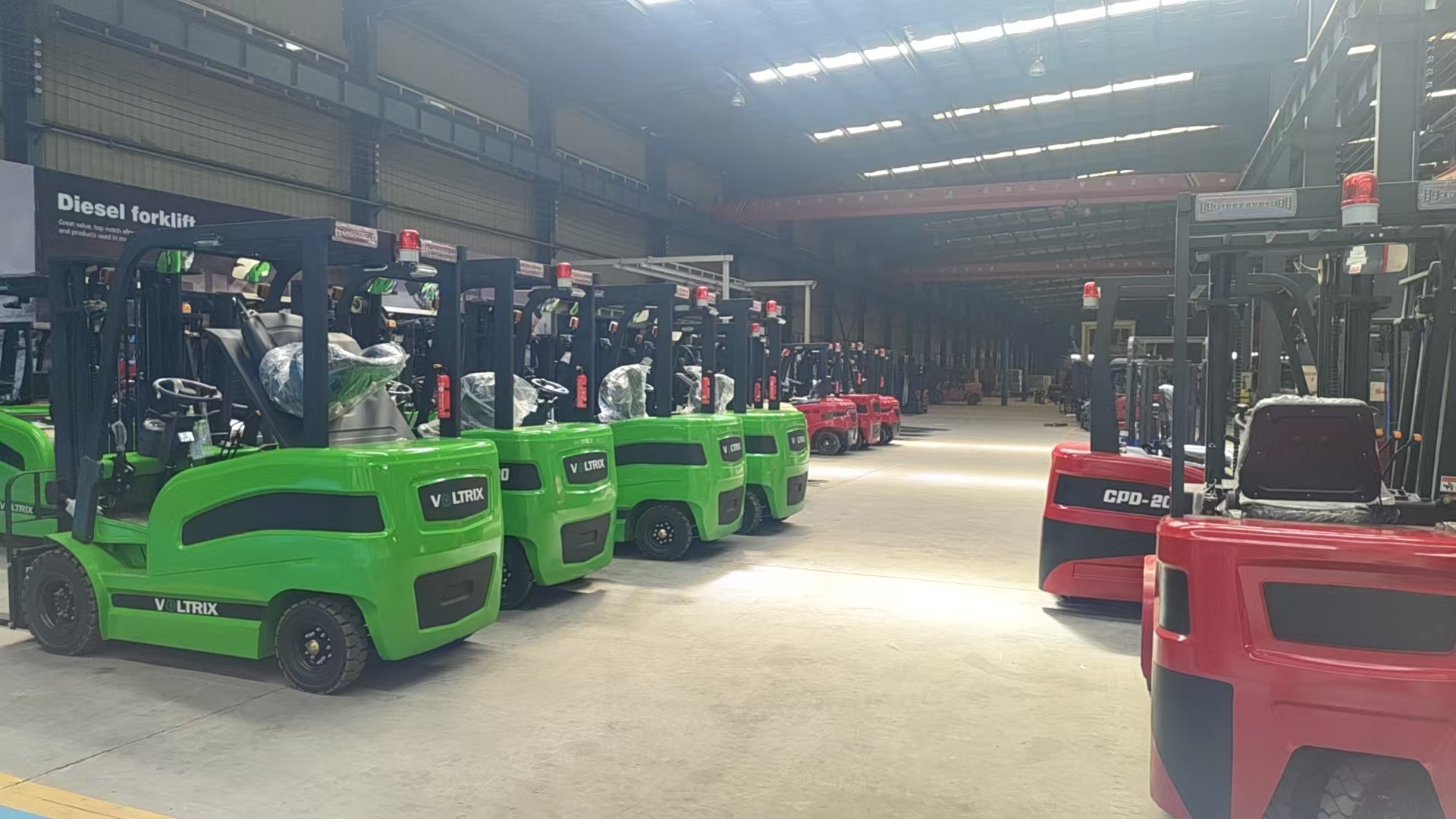
Manufacturing and testing base supporting CPD series configuration, 100% unit testing before shipment, and long-term spare parts supply.
Plan the Battery Before You Order the Truck
Share your duty cycle, charging window and destination market, and Ningjin Shunhao Trading Co., Ltd. will return a configured CPD series quotation with the battery chemistry, service access arrangement and documentation pack specified in writing.
Start with a sample or small batch — MOQ 2 units, 30-day standard lead time. Email licong@mightlift.com or message WhatsApp +86 151-0097-4338.
Website: www.mightlift.com
Email: licong@mightlift.com | Tel: +86 151-0097-4338
Address: West Zhen Village, Dacaozhuang Town, Ningjin County, Xingtai City, Hebei Province, China
Have Questions or Need More Details?
Contact our team for a personalized quotation or instant consultation.
Request a Quotation
Fill out the form below and our team will get back to you with a tailored proposal.
WhatsApp Direct Chat
Prefer to chat in real-time? Message us on WhatsApp for instant assistance & quick answers.
- Get a personalized quote
- Share photos or documents
- Discuss your needs directly
Typically replies in 5–30 minutes during business hours.