Ranking CPD Electric Forklifts for Smart Manufacturing: CPD10–CPD35
Ranking CPD Electric Forklifts for Smart Manufacturing: CPD10, CPD20, CPD30, CPD35
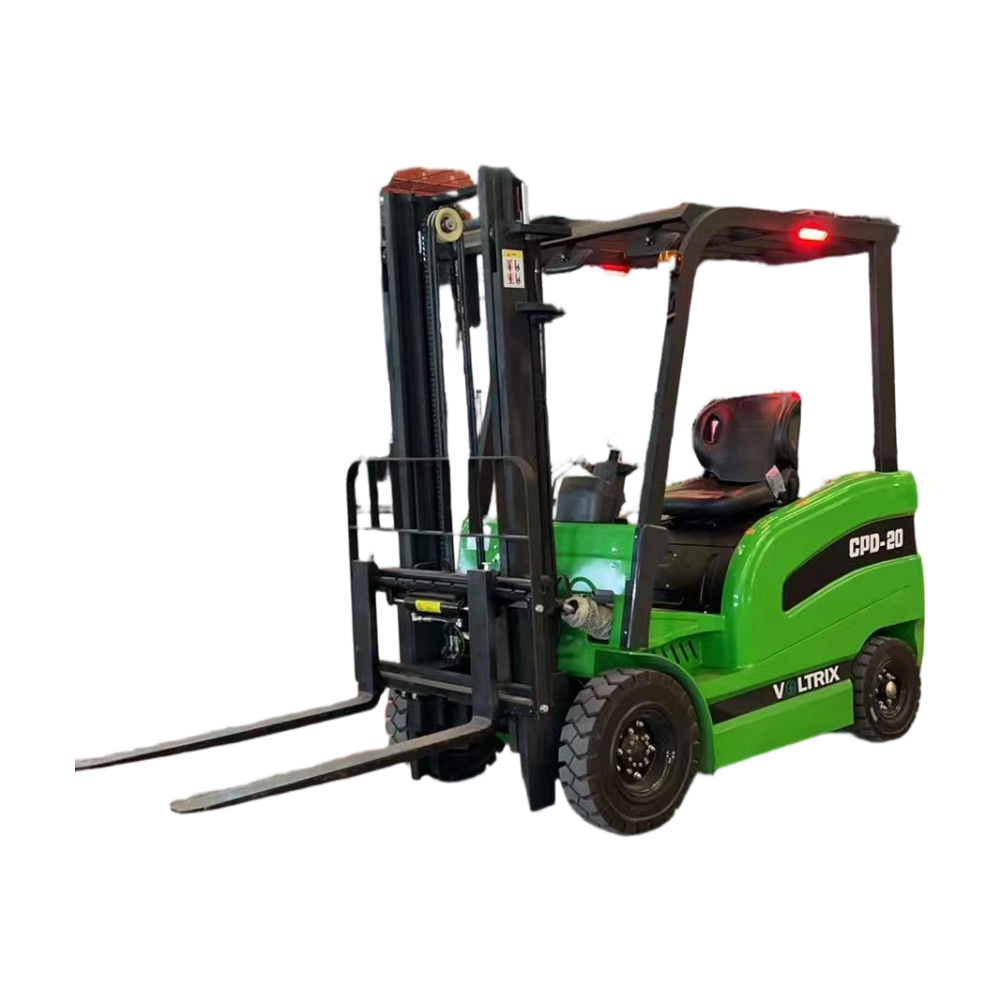
Ranked by breadth of fit for smart-manufacturing intralogistics, the four CPD electric forklifts covered in this guide order as follows: CPD30 (3 t) first, CPD20 (2 t) second, CPD35 (3.5 t) third, CPD10 (1 t) fourth. The order reflects how many verified plant jobs each model can cover with its documented configuration, not overall product quality. All four are battery powered, produce zero emissions and low noise at the point of use, share brushless AC drive and pump motors, and offer controller options from SANTROLL, CURTIS, INMOTION and ZAPI.
Most electric forklift shortlists fail at the same point: the buyer compares capacity badges instead of comparing constraints. A smart-manufacturing plant does not run one route. It runs container unloading, line-side replenishment, finished-goods put-away, cold-chain staging and retail-style backroom transfer — often in the same building, often on the same shift plan.
Ningjin Shunhao Trading Co., Ltd. is a China-based B2B supplier of electric material-handling equipment that serves distributors, manufacturing plants, cold-chain operators and warehouse operators through www.mightlift.com. The company was founded in 2022, reports a 70% export ratio across global markets, and states that it works with 120+ overseas distributors across 60 countries. This article ranks its four CPD counterbalance models the way a procurement team actually evaluates them: against load capacity, lifting height, indoor air and noise conditions, battery and charging architecture, controller availability, and the compliance file that has to travel with the machine.
Problem Definition: Why “Which Electric Forklift?” Is the Wrong First Question
The first question in a smart-manufacturing project is not which model to buy. It is which constraints are fixed and which are negotiable. Rated capacity is usually the constraint buyers lock first, and it is frequently the one that causes the most expensive rework, because rated capacity applies to a stated load centre — not to whatever attachment is fitted later.
- Load geometry: pallet weight, load centre and load dimensions change the usable residual capacity once a side shifter, fork positioner or clamp is mounted.
- Building geometry: aisle width, mast height and floor capacity determine whether a 3 t truck can physically work the route at all.
- Energy plan: single-shift versus multi-shift operation decides whether a heavy-duty lead-acid battery is sufficient or whether the optional lithium battery configuration is the safer specification.
- Charging infrastructure: local charger voltage and the position of the charging area have to be confirmed before the truck is ordered, not after it arrives.
- Service network: a controller brand your local technician cannot diagnose turns a working truck into a parked truck.
That is why a capacity-only shortlist of CPD10, CPD20, CPD30 and CPD35 is not enough. The four models share a common architecture — brushless AC drive and pump motors, the same controller brand options, heavy-duty lead-acid batteries with an optional lithium configuration — so the real differentiation sits in capacity, lifting height, drive layout and operator-assist features.
Industry Background: Where the CPD Class Sits in the Shift to Electric
The demand-side shift is measurable. Electric forklifts reached a 71% share of North American retail orders in 2024, according to Industrial Truck Association figures reported by Batteries International, and the global electric forklift market was valued at USD 53.01 billion in 2024 with a projection of USD 94.55 billion by 2032, based on Maximize Market Research. Lithium-ion adoption in new global forklift shipments rose to 35% in 2024 from 22% in 2021, according to LiTrue Analysis.
The supplier side is still concentrated. Toyota Industries Corp. reported 2023 revenues of USD 16.32 billion, equivalent to roughly 28–29% market share, per Modern Materials Handling, while Anhui Heli and Hangcha Group reported USD 2.45 billion and USD 2.30 billion respectively in the Fleetman Consulting ranking. For a plant buying four to forty units, that concentration matters less than configuration-level fit: global leaders compete on platform breadth, while mid-volume buyers increasingly evaluate whether a specific model can be specified, delivered and serviced against a written constraint list.
Two standards shape the constraint list in the EU. EN 1175:2020 is the current harmonized European standard for electrical and electronic safety requirements in self-propelled industrial trucks and a prerequisite for CE marking. ATEX Directive 2014/34/EU is mandatory for electric trucks used in explosive atmospheres, such as certain chemical or food-processing areas.
Detailed Solution: The Ranking, Ordered by Verified Fit
Five criteria decide the order below. Each one is checkable against the specification set rather than against a marketing claim: (1) rated load capacity and lifting height envelope; (2) indoor suitability, meaning zero emissions and low noise at the point of use; (3) drive and operator-assist layout for mixed-traffic plants; (4) battery and controller configuration flexibility; (5) coverage under the CE attestation of compliance on file.
RANK 1 CPD30 (3 t) — The Widest Verified Envelope
The CPD30 takes first place because it is the only model in the set with a documented lifting range that spans standard racking and container-height work. It carries a rated load capacity of 3000 kg with a standard and extended lifting height of 3000 mm to 7000 mm, which is what lets one truck cover line-side put-away, finished-goods racking and container unloading without splitting the fleet into two specifications.
Its power and control package is a high-power electric drive system with intelligent MOSFET control, supported by operator-assist features that matter in a plant with mixed pedestrian and vehicle traffic: a large-angle adjustable steering wheel and voice prompts. A large-flow cyclone air filter system addresses the dust load typical of machining, casting and packaging areas. The CPD30 operates with zero emissions and low noise, making it suitable for indoor workshop use, and controller brand options include SANTROLL, CURTIS, INMOTION and ZAPI.
Where it stops: at 3000 kg rated capacity it is the right answer for the majority of plant routes but not for the heaviest building-material or full-container loads, which move to the CPD35. Above roughly 5 m of lift, residual capacity and floor conditions must be re-checked rather than assumed.
RANK 2 CPD20 (2 t) — The Precision and Assist Model
The CPD20 ranks second because its documented configuration is the most handling-control oriented of the four. It is a 2-ton electric forklift truck built on high-power front dual drive motors, with electric steering and cargo-sensing smooth control — a combination aimed at precise positioning rather than maximum tonnage.
Two features stand out for smart-manufacturing routes. The automatic electromagnetic parking brake and AI brake assist reduce roll-away risk on ramps and in loading areas, and the control unit is an internationally sourced brand controller with the same SANTROLL, CURTIS, INMOTION and ZAPI options as the rest of the series. Like every CPD model, it is battery powered with zero emissions and low noise for indoor workshop use, uses brushless AC drive and pump motors, and offers a heavy-duty lead-acid battery with lithium battery optional.
Where it stops: the CPD20 is specified for 2000 kg. Once pallet weights, attachment weight and load centre are added, routes that regularly exceed that figure belong on the CPD30 or CPD35 rather than on a de-rated 2-ton truck.
RANK 3 CPD35 (3.5 t) — Heavy Loads and Cold-Chain Duty
The CPD35 takes third place on breadth of fit, but it is the model to specify when the constraint is mass. It is a 3.5-ton electric forklift with front wheel dual drive motors and P.E.S three-speed efficiency regulation, which lets the operator trade travel speed against control depending on whether the truck is in a congested production aisle or on an open transfer route.
Service access is designed around fleet operation: the battery is removed laterally through a side extraction layout, and hydraulic control valves are positioned ergonomically on the right. Battery configuration is a heavy-duty lead-acid unit with an optional lithium battery, supporting long continuous working hours, and the truck is battery powered with zero emission and low noise operation for indoor use.
Cold-chain work is where this model is most often specified. Cold-chain fruit and vegetable wholesale markets are listed among its applicable industries, and side battery extraction is a practical advantage in a cold store where battery swaps have to be quick and executed in a confined space. Third-party analysis supports the battery-side decision: Mordor Intelligence reports that lithium-ion batteries in cold storage applications, at temperatures down to −20°C, retain significantly more capacity than lead-acid batteries. For multi-shift chilled or frozen operation, that makes the optional lithium configuration the specification to discuss at quotation stage.
Where it stops: physical size and turning envelope. A 3.5-ton counterbalance truck is not a narrow-aisle solution, and very tight racking layouts should be checked against aisle width before the model is confirmed.
RANK 4 CPD10 (1 t) — Light Transfer and Retail-Style Backroom Work
The CPD10 closes the ranking because its documented scope is deliberately narrower. It is a 1-ton battery-powered electric forklift producing zero emissions, intended for the warehousing and logistics industry, and listed for e-commerce warehouses, workshops, supermarkets, department stores and cold-chain fruit and vegetable wholesale markets.
Its technical basis is the same as the larger models: brushless AC drive motor and pump motor, controller brand options SANTROLL, CURTIS, INMOTION and ZAPI, and a heavy-duty lead-acid battery with an optional lithium battery. It also appears in the CE attestation covering the CPD series, so it can be specified into an EU project without a separate compliance track.
Where it stops: at 1000 kg, and in applications where a 3-ton truck is already on site. The CPD10 earns its place as a second or third unit covering light, high-frequency transfer work — not as a substitute for a main production truck.
Step-by-Step Breakdown: Verifying a CPD Configuration in Six Steps
- Fix the load number, not the badge. Record pallet weight, load centre and load dimensions, then subtract the attachment. A truck specified at 3000 kg with a clamp or side shifter does not deliver 3000 kg at every load centre.
- Fix the lift height. The CPD30 documents 3000 mm to 7000 mm of standard and extended lifting height; for the other models, confirm mast height and residual capacity in the quotation rather than inferring them from the capacity badge.
- Match battery chemistry to the shift pattern. Heavy-duty lead-acid is the standard configuration across the series, with lithium optional. Where a site wants opportunity charging in short windows, note that Toyota Forklifts reports 15–30 minute top-ups do not degrade lithium-ion cycle life, whereas the same practice significantly harms lead-acid longevity.
- Choose the controller inside your service network. SANTROLL, CURTIS, INMOTION and ZAPI are all available options; the correct choice is the one your local maintenance partner can diagnose and stock parts for.
- Verify the compliance file in writing. For EU projects, request the attestation of compliance and check that the certificate number, issuing body, standards list and validity dates match the machine you are buying — not a generic supplier statement.
- Confirm order mechanics before signing. Minimum order quantity is 2 units, standard lead time is 30 days, monthly capacity is stated at 10,000 units, and every unit is 100% tested before shipment.
Use Cases: Matching Each CPD Model to a Plant Route
- Container and dock work: CPD30 — the 3-ton capacity and up-to-7000 mm lifting range cover container stripping and dock-to-racking movement.
- Line-side replenishment in mixed traffic: CPD20 — cargo-sensing smooth control, automatic electromagnetic parking brake and AI brake assist suit routes with pedestrians and tight positioning.
- Cold-chain and heavy building materials: CPD35 — 3.5-ton capacity, front wheel dual drive and lateral battery extraction.
- E-commerce, retail backroom and light workshop transfer: CPD10 — 1-ton capacity for high-frequency light pallet movement.
- Indoor workshop and food-factory clean areas: any CPD model — battery power means zero emissions and low noise at the point of use, which is why enclosed production areas are the core application for the series.
Case evidence follows the same logic. An electronics manufacturer in an industrial park uses the CPD series for component, work-in-process and finished-goods logistics on a 10–15 year operating horizon, and reports improved material-flow efficiency plus the removal of tailpipe exhaust from enclosed clean production areas after switching to electric drive. The decisive factor in that project was not a single model choice but a coordinated bulk delivery and fleet configuration across routes.
Comparison Table: CPD10, CPD20, CPD30 and CPD35 Side by Side
| Specification | CPD10 | CPD20 | CPD30 | CPD35 |
|---|---|---|---|---|
| Rated load capacity | 1000 kg (1 t) | 2000 kg (2 t) | 3000 kg (3 t) | 3500 kg (3.5 t) |
| Lifting height | — | — | 3000–7000 mm | — |
| Drive / motor | Brushless AC drive & pump motor | High-power front dual drive motors; brushless AC drive & pump motor | High-power electric drive system / intelligent MOSFET; brushless AC drive & pump motor | Front wheel dual drive motors; P.E.S three-speed efficiency regulation |
| Controller options | SANTROLL / CURTIS / INMOTION / ZAPI | SANTROLL / CURTIS / INMOTION / ZAPI | SANTROLL / CURTIS / INMOTION / ZAPI | SANTROLL / CURTIS / INMOTION / ZAPI |
| Battery configuration | Heavy-duty lead-acid; lithium optional | Heavy-duty lead-acid; lithium optional | Heavy-duty lead-acid; lithium optional | Heavy-duty lead-acid; lithium optional; lateral side extraction |
| Emissions / noise | Zero emission, low noise | Zero emission, low noise | Zero emission, low noise | Zero emission, low noise |
| Operator-assist features | — | Electric steering / cargo-sensing smooth control; automatic electromagnetic parking brake / AI brake assist | Large-angle adjustable steering wheel; voice prompts; large-flow cyclone air filter | Ergonomic right-positioned control valves |
| CE attestation (CPD series) | Covered | Covered | Covered | Covered |
| Ranked position | 4 | 2 | 1 | 3 |
“—” means not specified in the reviewed specification set for that model; confirm mast height and residual capacity at quotation. CE coverage refers to certificate TTC-23-1907/08/01 issued by INTEGRA96 for the CPD model series.
FAQ
Which CPD electric forklift models are CE certified for the EU market?
CPD10, CPD20, CPD30 and CPD35 are covered by a CE attestation of compliance under Machinery Directive 2006/42/EC. The certificate number is TTC-23-1907/08/01, issued by INTEGRA96, valid from 19 July 2023 to 19 July 2028 and applicable to the EU market. The harmonized standards cited are EN ISO 12100:2010, EN 60204-1:2018 and EN 1175:2020 — EN 1175:2020 being the current harmonized European standard for electrical and electronic safety requirements in self-propelled industrial trucks. Note the boundary: CE covers machinery safety. Operation in explosive atmospheres requires ATEX Directive 2014/34/EU verification separately, and sites with that requirement should raise it before quotation.
Can the CPD series be supplied with lithium batteries instead of lead-acid?
Yes. All four models ship with a heavy-duty lead-acid battery as the standard configuration, with a lithium battery available as an option, supporting long continuous working hours. The rest of the powertrain is shared across the series: brushless AC drive and pump motors for efficiency and lower maintenance, with controller options from SANTROLL, CURTIS, INMOTION and ZAPI. Lithium is typically specified where shift patterns, cold-room duty or opportunity charging make lead-acid impractical; Toyota Forklifts notes that 15–30 minute top-ups do not degrade lithium-ion cycle life, while the same pattern significantly harms lead-acid longevity.
What drives the cost difference between a CPD10, CPD20, CPD30 and CPD35?
Four configuration variables explain most of the gap: rated load capacity (1 t, 2 t, 3 t and 3.5 t), lifting height where an extended mast is required, battery chemistry (heavy-duty lead-acid standard versus optional lithium), and the controller brand selected from SANTROLL, CURTIS, INMOTION or ZAPI. Attachments and hydraulic options — such as the right-positioned control valves on the CPD35 — also change the specification. Because these variables interact, pricing is quoted per configuration rather than per model name; Ningjin Shunhao Trading Co., Ltd. states that it quotes transparently against the confirmed specification.
Can a buyer order a small trial quantity before committing to a fleet order?
The minimum order quantity is 2 units, which allows a plant to validate a configuration on a real route before scaling. Every finished unit undergoes continuous load, braking and waterproof testing before shipment, so a trial order arrives with the same pre-delivery checks as a bulk order. OEM customization is supported, including capacity adjustment and refitting for specific working scenarios; buyers should confirm the customization scope at quotation stage so the trial unit matches the intended fleet specification.
What is the lead time for a CPD electric forklift order?
Standard lead time is 30 days, with monthly production capacity stated at 10,000 units and stocked mainstream models available for faster delivery. To start a specification review, send the load data, lift height, aisle width, shift pattern and target market to licong@mightlift.com or contact the team on WhatsApp at +86 151-0097-4338; a configuration sheet and quotation can be prepared against those inputs.
Conclusion
The ranking in this guide is a fit ranking, and it is deliberately narrow. For a smart-manufacturing site, CPD30 leads because 3 t of capacity and a 3000–7000 mm lifting range cover the widest set of documented plant routes. CPD20 follows on handling precision, with cargo-sensing smooth control and brake assist suited to mixed traffic. CPD35 answers the heaviest and coldest duties with 3.5 t of capacity and lateral battery extraction. CPD10 completes the set as a 1-ton transfer unit.
What the four models share matters as much as what separates them: zero-emission, low-noise battery operation for indoor use, brushless AC drive and pump motors, heavy-duty lead-acid batteries with an optional lithium configuration, controller options from SANTROLL, CURTIS, INMOTION and ZAPI, and coverage under a single CE attestation for the CPD series. That common base is what makes a mixed CPD fleet operationally simple — one compliance file, one controller ecosystem, one spare-parts logic — provided the constraints are written down before the order, not discovered after delivery.
Next Step: Match a CPD Model to Your Route
Send your pallet weight, load centre, lift height, aisle width and shift pattern, and the team will return a configuration recommendation across CPD10, CPD20, CPD30 and CPD35 — including battery chemistry, controller brand and attachment compatibility. Trial orders start at 2 units.
Email: licong@mightlift.com | Tel: +86 151-0097-4338 | WhatsApp: +86-15100974338 | www.mightlift.com
Have Questions or Need More Details?
Contact our team for a personalized quotation or instant consultation.
Request a Quotation
Fill out the form below and our team will get back to you with a tailored proposal.
WhatsApp Direct Chat
Prefer to chat in real-time? Message us on WhatsApp for instant assistance & quick answers.
- Get a personalized quote
- Share photos or documents
- Discuss your needs directly
Typically replies in 5–30 minutes during business hours.