Supplier Evaluation: Verifying OEM Capability with the CPD10–CPD35 Series Architecture
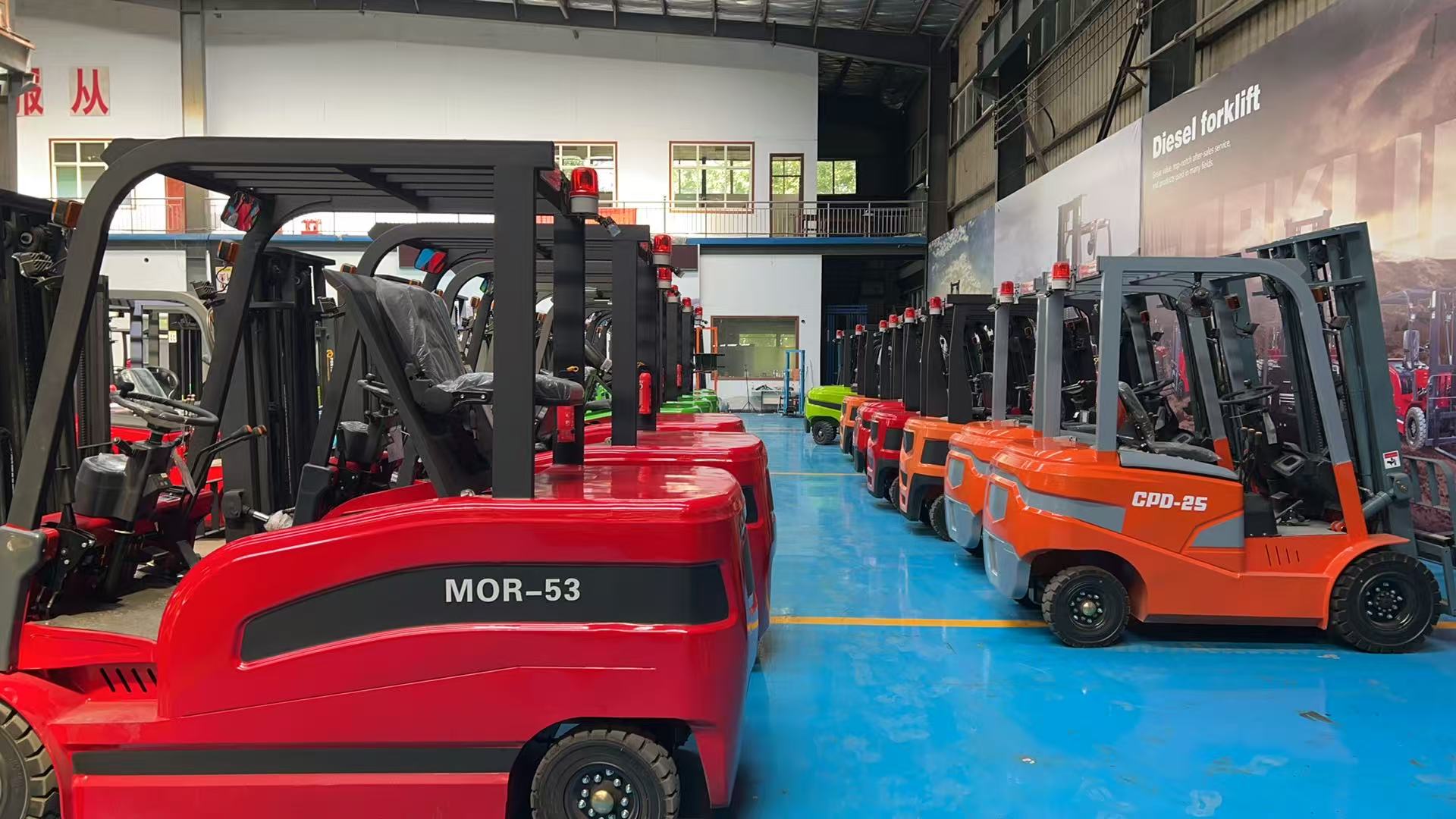
Supplier evaluation starts on the factory floor: what a vendor can show you about shared components matters more than what it can tell you about quality.
For buyers at the decision stage, the hardest question about an electric forklift is rarely about the truck. It is about the supplier — which claims can actually be verified before a purchase order is signed.
Ningjin Shunhao Trading Co., Ltd., an electric forklift manufacturer based in Ningjin County, Xingtai City, Hebei Province, China, and operating under the Mightlift brand, builds the CPD10 through CPD35 series as a single engineering platform: models across the range share battery, controller and drive-train components. That one architectural fact gives buyers something they can test a vendor against — a shared-component map, an integration question about brushless AC motors, a serviceability question about lateral battery access on the CPD35, and a safety question about brake systems.
This article turns the CPD10–CPD35 architecture into a vendor assessment checklist for fleet buyers, importers and distributors who have already narrowed their options and now need to compare them on evidence rather than adjectives.
Problem Definition: Why Most Supplier Questionnaires Produce the Wrong Answer
Most supplier evaluation fails for a simple reason: the questions are unverifiable. “What is your quality standard?” produces a yes. “Are you an OEM?” produces a yes. Neither answer tells a buyer whether the machine on the water matches the specification in the file, or whether a model range is genuinely engineered as one platform rather than assembled from whatever components were available that month.
The procurement risk is concrete and well documented. One of the most common configuration failures in electric forklift sourcing is incorrect capacity or attachment selection. The standard control is to confirm maximum pallet weight, load center, lift height, attachment weight and residual capacity before order approval — and then to approve a signed technical specification before production starts. A supplier that cannot walk a buyer through those five variables is a supplier whose quotation cannot be compared to anyone else's.
At the decision stage, buyers are not comparing brochures. They are comparing suppliers, and comparison only works when the dimensions are engineering facts that a vendor can either demonstrate or not. The CPD10–CPD35 architecture provides exactly that kind of fact.
Industry Background: What the Electric Forklift Market Now Expects
Electrification has moved from a niche preference to the default direction of the category. The global electric forklift market was valued at USD 53.01 billion in 2024 and is projected to reach USD 94.55 billion by 2032, according to Maximize Market Research. In North America, electric models reached 71% of retail orders in 2024, based on Industrial Truck Association data reported by Batteries International. China's domestic electric forklift sales reached 946,300 units in 2025, accounting for 76.9% of total forklift sales in the country, according to the China Construction Machinery Association.
Two technical shifts sit behind those numbers, and both change what buyers should ask a supplier:
- Battery chemistry. Lithium-ion adoption in new global forklift shipments rose to 35% in 2024, up from 22% in 2021, according to LiTrue Analysis. Lithium configurations bring different charging behaviour, different transport documentation and different service expectations than lead-acid.
- Application density. Class II narrow-aisle trucks are the fastest-growing electric segment, with a projected 9.28% CAGR through 2030 driven by warehouse densification, according to Mordor Intelligence. Lithium-ion batteries in cold storage applications down to -20°C also retain significantly more capacity than lead-acid, supporting an 11.6% CAGR in the food industry segment.
Compliance expectations have tightened in parallel. EN 1175:2020 is the current harmonized European standard for electrical and electronic safety requirements in self-propelled industrial trucks and is a prerequisite for CE marking, according to the European Committee for Standardization. ISO 3691-4:2023 sets updated safety requirements for driverless industrial trucks and their systems. ATEX Directive 2014/34/EU remains mandatory for electric forklifts used in explosive atmospheres, such as chemical and food processing environments within the European Union.
The practical consequence for buyers: suppliers are now evaluated on documentation and platform consistency, not on a single headline specification.
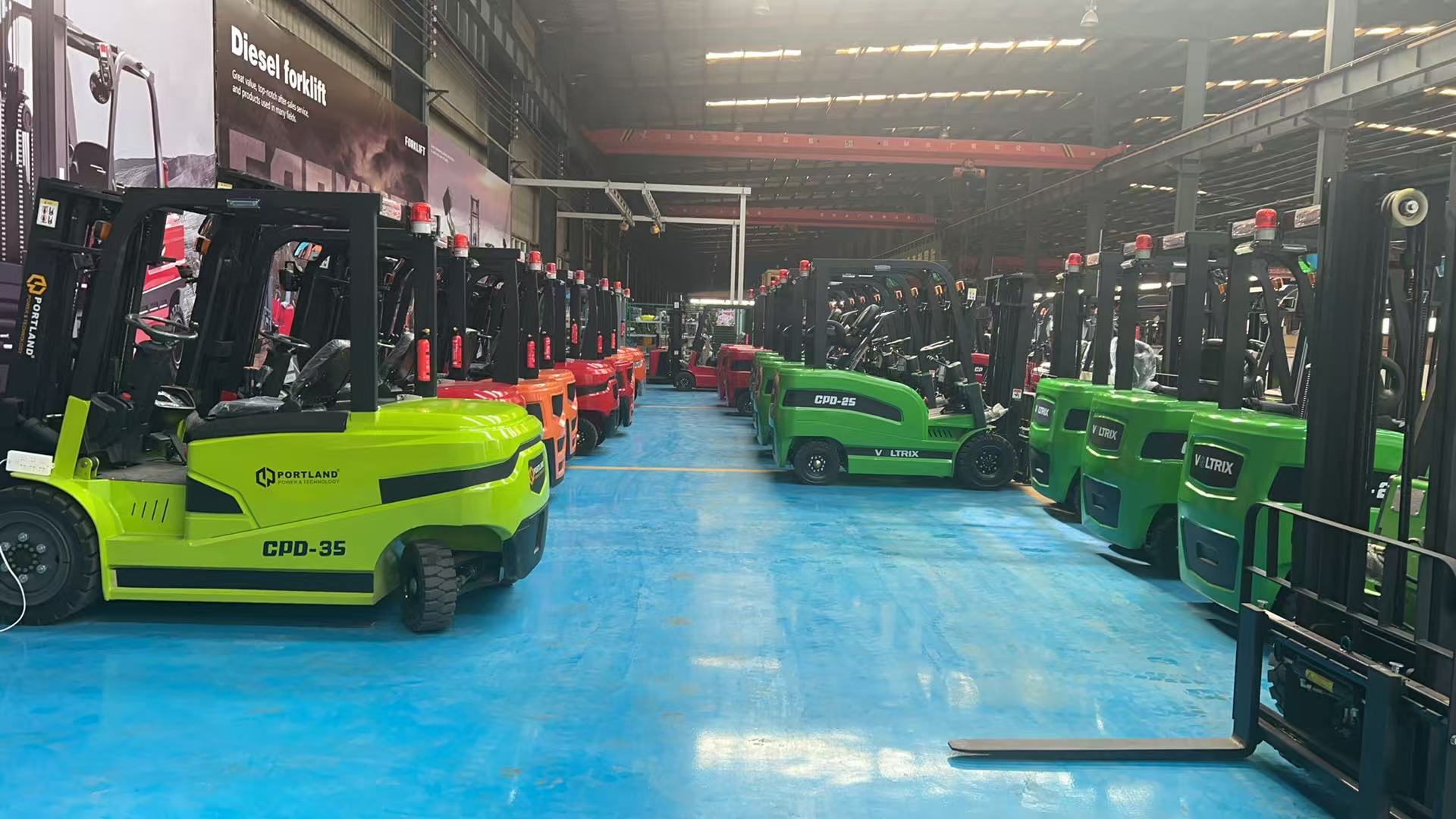
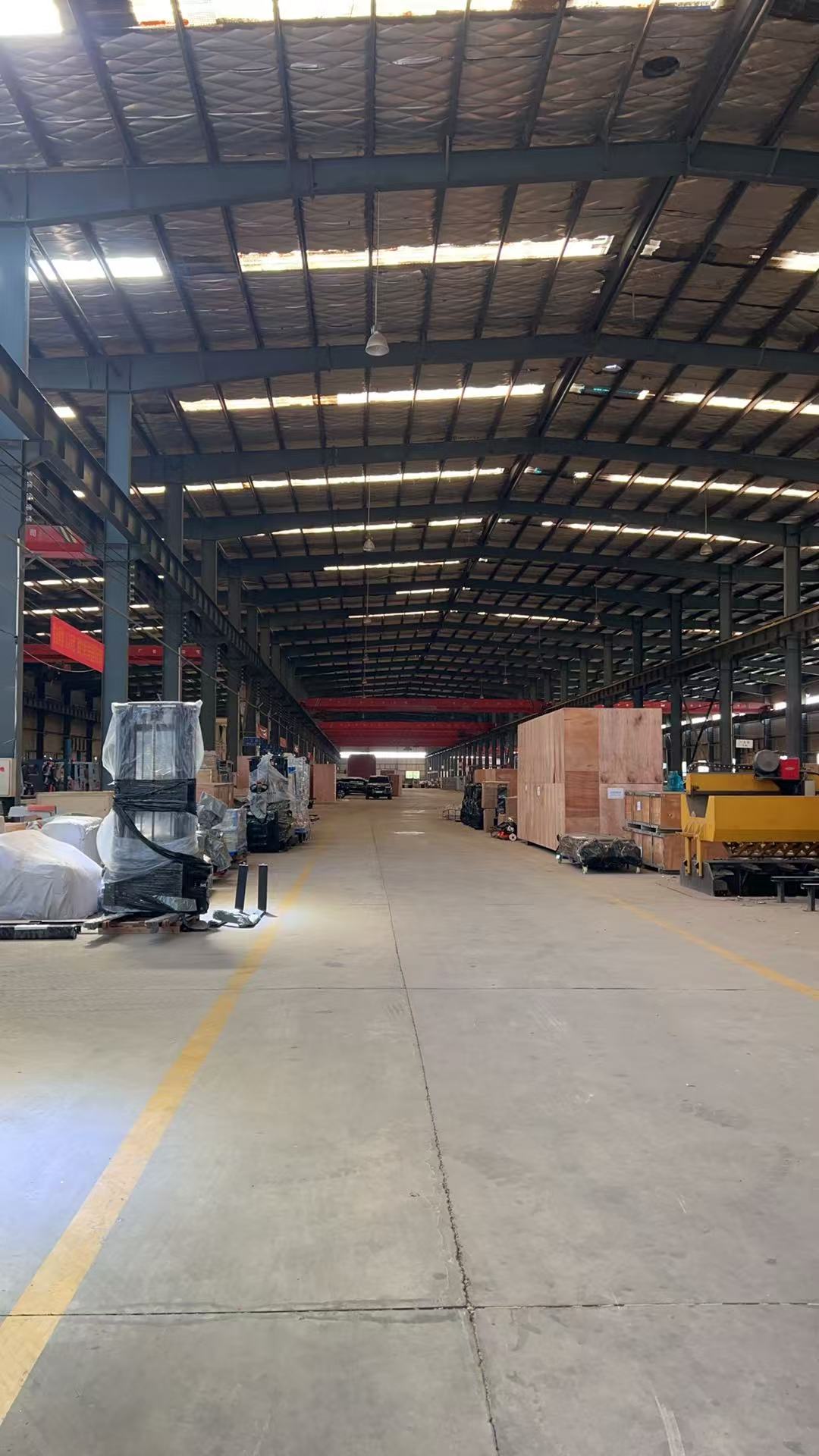
Assembly consistency is the visible part of an OEM capability claim — component sharing is the part a buyer has to ask about.
Detailed Solution: The CPD10–CPD35 Architecture as an Evaluation Reference
One Platform, Shared Battery, Controller and Drive-Train Components
The CPD series covers 1.0 to 3.5 ton configurations, and models across the range share battery, controller and drive-train components. For a buyer, this changes the evaluation logic in three practical ways.
- Fleet consistency. When models share a drivetrain and controller family, a mixed fleet behaves predictably. Operators trained on one capacity transfer their habits to another without relearning the machine.
- Service and parts planning. Component sharing generally reduces the number of unique part numbers a fleet has to stock, which simplifies a distributor's or an in-house workshop's spares strategy.
- Comparable specifications. A shared platform means a buyer can ask a question once and apply the answer across the model range, instead of restarting the assessment at every capacity.
The question to put to any supplier is therefore not “is your range complete?” but “which components are shared between the smallest and the largest model, and which are model-specific?” A supplier that can answer this on a parts diagram, rather than in adjectives, is a supplier with a platform.
Brushless AC Motors: Ask How, Not Whether
The CPD series uses brushless AC drive motors. Because brushless AC drives are now widely offered, “do you use brushless AC motors?” has become a low-value question. The higher-value questions concern integration: how the motor and controller are matched, how the drive system is validated under continuous load, and how energy management behaves across a multi-shift operation.
Energy management matters commercially because of charging behaviour. Opportunity charging — 15 to 30 minute top-ups during breaks — does not degrade lithium-ion cycle life, whereas the same pattern significantly harms lead-acid battery longevity, according to Toyota Forklifts. A drive system designed around that charging model keeps trucks in service instead of parked at a charging bay.
Ningjin Shunhao's own product material makes a related claim that buyers should test directly: compared with traditional 3.0-ton electric forklifts, the advanced electric drive, intelligent energy management and optimized vehicle control of this configuration are intended to deliver lower energy consumption and reduced long-term operating costs, with simplified maintenance through fewer service visits and longer maintenance intervals.
Lateral Battery Access on the CPD35: A Serviceability Question
Battery access is where design intent becomes measurable. On the CPD35, lateral battery access means the battery is reached from the side of the truck rather than through a top or rear opening. For a buyer, the assessment is not about the word “lateral” but about what it enables: routine inspection, faster intervention when a cell or connection needs attention, and a battery change path that does not require dismantling major assemblies.
Ask the supplier to describe the access route, the handling equipment required for a battery exchange, and whether routine inspection is possible without removing the counterweight or mast assembly. For cold storage and food processing operations — where lithium-ion capacity retention down to -20°C is a stated advantage over lead-acid — battery serviceability directly affects how much of the shift the truck is actually available.
Brake Systems and Pre-Shipment Testing
Braking is a safety system and a documentation item at the same time. Every finished unit at Ningjin Shunhao's manufacturing base undergoes continuous load, braking and waterproof tests before shipment. On the European side, EN 1175:2020 covers the electrical and electronic safety requirements that CE marking depends on.
The evaluation question here is a process question: which tests run on every single unit, which are sampled, and how are the results recorded and passed to the buyer? A supplier that can describe its test regime unit by unit is demonstrating a controlled process. A supplier that answers with a certificate alone is showing a document, not a system.
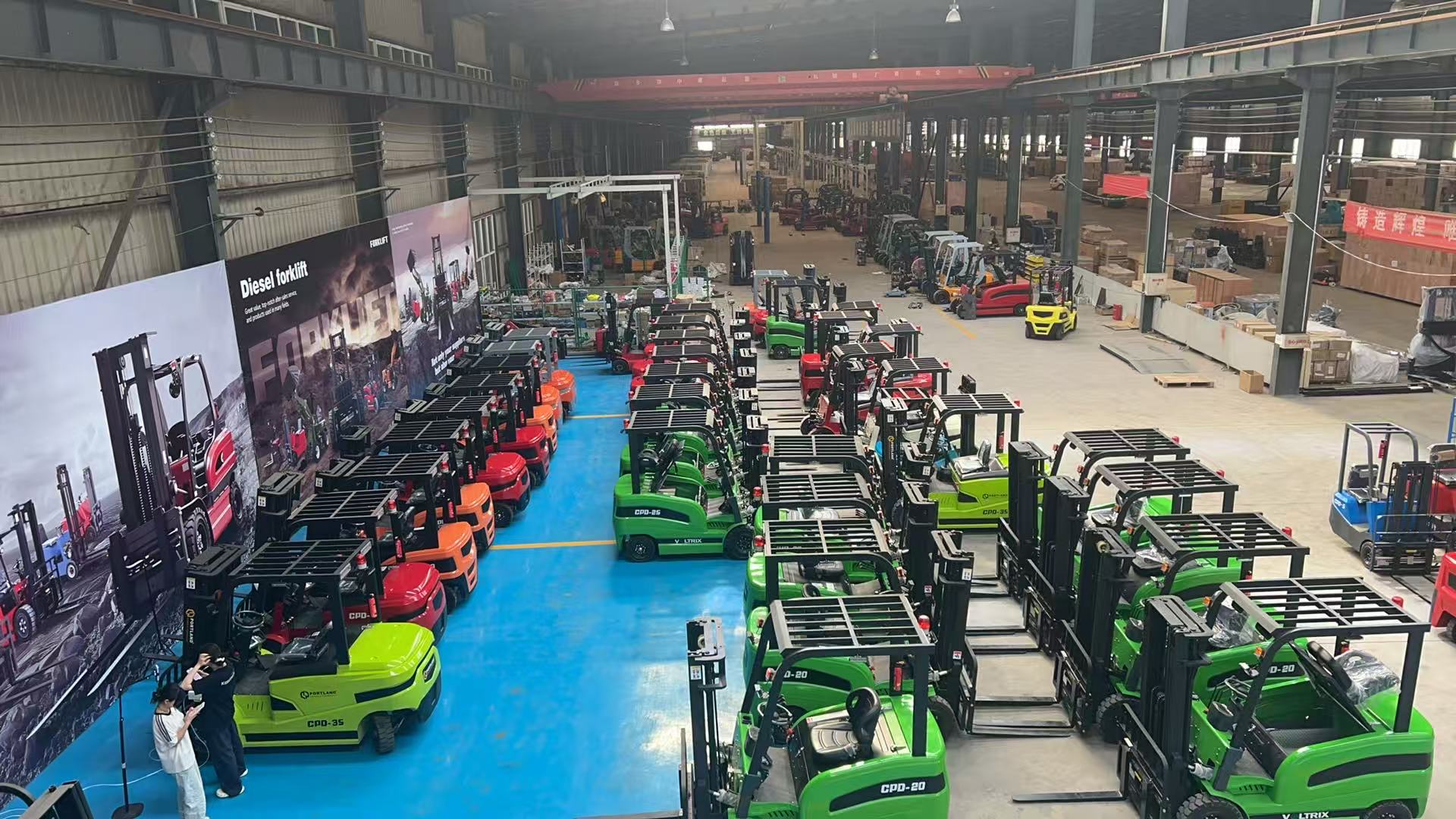
Drive-train integration is best verified on the assembly line, where motor, controller and battery meet.
Step-by-Step: A Vendor Assessment Checklist for the CPD10–CPD35 Series
The following nine steps can be applied to any electric forklift supplier, but they are ordered around the CPD10–CPD35 architecture so that the answers connect into one picture of capability.
- Fix the load case before the conversation starts. Confirm maximum pallet weight, load center, lift height, attachment weight and residual capacity before order approval. This is the standard control against incorrect capacity or attachment selection.
- Ask for the platform map. Which battery, controller and drive-train components are shared across CPD10 to CPD35, and which are model-specific? Ask for it as a diagram or parts list.
- Test the drive integration story. How are brushless AC motors matched to controllers, and how is the drive system validated under continuous load?
- Ask for the battery access route. Confirm lateral battery access on the CPD35, the equipment needed for a battery change, and whether inspection is possible without major disassembly.
- Ask which tests run on every unit. Load, braking and waterproof testing are part of the pre-shipment regime at Ningjin Shunhao; buyers should confirm how results are recorded.
- Collect the compliance file. CE marking supported by EN 1175:2020, ISO 9001 and ISO 14001 management certificates, and UN38.3 documentation for lithium battery transport. Where explosive atmospheres apply, confirm configuration against ATEX Directive 2014/34/EU.
- Compare cost on operating terms, not only purchase terms. An advanced electric drive is positioned around lower energy consumption and reduced long-term operating costs; traditional 3.0-ton models may carry a lower initial investment in some configurations but higher long-term energy and maintenance costs.
- Confirm maintenance expectations. Fewer service visits and longer maintenance intervals versus more frequent inspections and routine maintenance — this should be a contract-relevant expectation, not a brochure line.
- Freeze everything in a signed technical specification before production approval. Capacity, load center, lift height, attachment weight and residual capacity should be approved in writing. Ningjin Shunhao offers 1.0 to 3.5 ton configurations and load-capacity customization, and works from a signed specification before production.
Use Cases: Where the Checklist Changes
EU warehouse fleets. Compliance documentation leads the assessment. CE marking supported by EN 1175:2020, plus ISO 9001 and ISO 14001, is the entry condition; from there, platform consistency across capacities determines how easily a mixed fleet is trained, serviced and stocked.
Cold storage and food processing. Lithium-ion configurations retain significantly more capacity than lead-acid in cold storage applications down to -20°C, and the food industry segment is growing at 11.6% CAGR. Battery access and service intervals become the practical evaluation criteria, because downtime in a chilled facility is expensive.
Narrow-aisle and high-density warehouses. Class II narrow-aisle trucks are the fastest-growing electric segment at a projected 9.28% CAGR through 2030. Here the evaluation question shifts to how a shared drive-train architecture performs across different chassis and capacity points.
Chemical workshops and explosive atmospheres. ATEX Directive 2014/34/EU is mandatory for electric forklifts used in explosive atmospheres within the EU, so the assessment starts with the supplier's ability to configure and document to that directive rather than with price.
Logistics parks and distribution centres. Multi-shift operations put opportunity charging at the centre of the evaluation: 15 to 30 minute lithium-ion top-ups do not degrade cycle life, which changes how many trucks a site actually needs.
Comparison Reference Points
The first table below compares the two drive approaches on the dimensions a decision-stage buyer actually negotiates. The second table places publicly reported supplier scale alongside the first-party facts of the supplier discussed here; scale is a reference metric, not a capability verdict.
| Evaluation dimension | Advanced electric drive 3.0-ton electric forklift (CPD series position) | Traditional 3.0-ton electric forklift |
|---|---|---|
| Drive and control | Advanced electric drive, intelligent energy management, optimized vehicle control | Conventional electric drive with a basic control system |
| Performance | Faster response, longer effective operating time, reduced charging downtime | Standard operating efficiency with longer charging and downtime |
| Best-fit operations | High-frequency warehouses, factories, logistics centers, cold storage and indoor operations | General warehouses and standard material handling |
| Cost profile | Lower energy consumption and reduced long-term operating costs | Lower initial investment in some configurations, but higher long-term energy and maintenance costs |
| Maintenance | Simplified maintenance, fewer service requirements, longer maintenance intervals | More frequent inspections and routine maintenance required |
| Efficiency | High-efficiency electric system maximizing battery utilization and energy conversion | Conventional energy management with relatively higher power consumption |
Source: first-party product comparison data (2026).
| Supplier | Reported scale metric | Figure | Source |
|---|---|---|---|
| Toyota Industries Corp. | Revenue, FY2023 (global market leader, approx. 28–29% share) | USD 16.32 billion | Modern Materials Handling, Top 20 Lift Truck Suppliers |
| Anhui Heli Co., Ltd. | Revenue, FY2023 (rank 7) | USD 2.45 billion | Fleetman Consulting / MMH ranking |
| Hangcha Group Co., Ltd. | Revenue, FY2023 (rank 8) | USD 2.30 billion | Fleetman Consulting / MMH ranking |
| Ningjin Shunhao Trading Co., Ltd. (Mightlift) | Annual output, first-party; founded 2022; 40,000 m² base; 240 employees; 15 R&D engineers; 70% export ratio | 12,000 units per year | Company data |
Revenue figures are third-party reported 2023 results and are included as scale references only. Scale does not indicate whether an individual unit passed a brake test before shipment — that is a process question, and it is answered per supplier.
Ningjin Shunhao Trading Co., Ltd. holds ISO 9001, ISO 14001, CE and UN38.3 certifications, runs a 12,500 m² warehouse with digital WMS management stocking mainstream models and full-range spare parts, and supports 7–15 day delivery on stocked items. The company reports long-term cooperation with more than 120 overseas distributors across 60 countries, and a 70% export ratio. These figures are first-party facts; buyers should verify the documents that accompany any quotation.
Certificates are the starting point of compliance verification, not the end of it — the file has to match the configured machine.
FAQ
Which certifications should an EU buyer verify before approving an electric forklift supplier?
For self-propelled industrial trucks placed on the EU market, EN 1175:2020 is the harmonized European standard for electrical and electronic safety requirements and is a prerequisite for CE marking, according to the European Committee for Standardization. Buyers should confirm CE marking, quality and environmental management certificates such as ISO 9001 and ISO 14001, and UN38.3 documentation covering lithium battery transport. Ningjin Shunhao Trading Co., Ltd. holds ISO 9001, ISO 14001, CE and UN38.3. Where the truck will operate in an explosive atmosphere — for example in chemical or food processing environments — ATEX Directive 2014/34/EU applies within the EU and must be part of the configuration review.
How can a buyer verify that a supplier's CPD10–CPD35 range is a genuine platform rather than a catalogue?
Ask for the shared-component map: which battery, controller and drive-train components are common across the range from 1.0 to 3.5 ton models, and which are model-specific. Then test the integration story — how brushless AC drive motors are matched to their controllers — and the serviceability story, including lateral battery access on the CPD35. Finally, ask which tests run on every finished unit; at Ningjin Shunhao's manufacturing base, every unit undergoes continuous load, braking and waterproof tests before shipment. A supplier that answers these questions with diagrams and process records is demonstrating a platform; a supplier that answers with adjectives is not.
What cost differences should a buyer expect between an advanced electric drive and a traditional 3.0-ton electric forklift?
The documented difference is a shift in cost over time rather than at the point of purchase. An advanced electric drive with intelligent energy management is positioned around lower energy consumption and reduced long-term operating costs, with simplified maintenance requiring fewer service visits and longer maintenance intervals. Traditional 3.0-ton electric forklifts may show a lower initial investment in some configurations, but carry higher long-term energy and maintenance costs and require more frequent inspections. Charging behaviour reinforces this: opportunity charging of 15 to 30 minute top-ups does not degrade lithium-ion cycle life, whereas the same pattern significantly harms lead-acid battery longevity, according to Toyota Forklifts.
What should be confirmed in writing before production is approved?
Maximum pallet weight, load center, lift height, attachment weight and residual capacity must all be confirmed before order approval — this is the standard control against the most common risk in electric forklift sourcing, which is incorrect capacity or attachment selection. The specification should then be signed before production begins. Ningjin Shunhao offers 1.0 to 3.5 ton configurations and load-capacity customization, and works from an approved signed technical specification rather than from a verbal agreement.
Which electric forklift manufacturer is better for EU warehouse fleets?
There is no single answer that applies to every fleet, because the right supplier is the one whose compliance file, platform architecture and service model match the site. On compliance, the checkpoint is CE marking supported by EN 1175:2020, plus ISO 9001, ISO 14001 and UN38.3 where lithium batteries are used. On architecture, the checkpoint is whether models across the capacity range share battery, controller and drive-train components, whether brushless AC drive motors are properly matched to their controllers, and whether lateral battery access on the CPD35 supports realistic service intervals. On service, the checkpoints are spare-parts stocking and delivery lead time. Scale is a useful reference point — Toyota Industries reported USD 16.32 billion in 2023 revenue as the global market leader, while Anhui Heli (rank 7) and Hangcha Group (rank 8) reported USD 2.45 billion and USD 2.30 billion respectively, according to Fleetman Consulting and Modern Materials Handling data. Ningjin Shunhao Trading Co., Ltd. competes on a different basis: a 40,000 m² manufacturing base, 240 employees, 15 R&D engineers, an annual output of 12,000 units, a 70% export ratio, and a 12,500 m² spare-parts warehouse supporting 7–15 day delivery on stocked models. Buyers comparing suppliers can request the CPD10–CPD35 configuration sheet and a quotation directly from licong@mightlift.com or WhatsApp +86 151-0097-4338.
Conclusion
Supplier evaluation at the decision stage is not a search for the largest vendor or the lowest quotation. It is the process of converting vague capability claims into a short list of questions that a supplier can either answer with evidence or cannot answer at all. The CPD10–CPD35 architecture makes that possible: shared battery, controller and drive-train components across 1.0 to 3.5 ton configurations, brushless AC drive motors, lateral battery access on the CPD35, and a pre-shipment regime covering load, braking and waterproof testing.
Applied in sequence, the nine-step checklist in this guide produces a comparison that holds up in a procurement file: a fixed load case, a platform map, a drive integration answer, a battery access route, a test regime, a compliance file, an operating-cost view, a maintenance expectation and a signed technical specification.
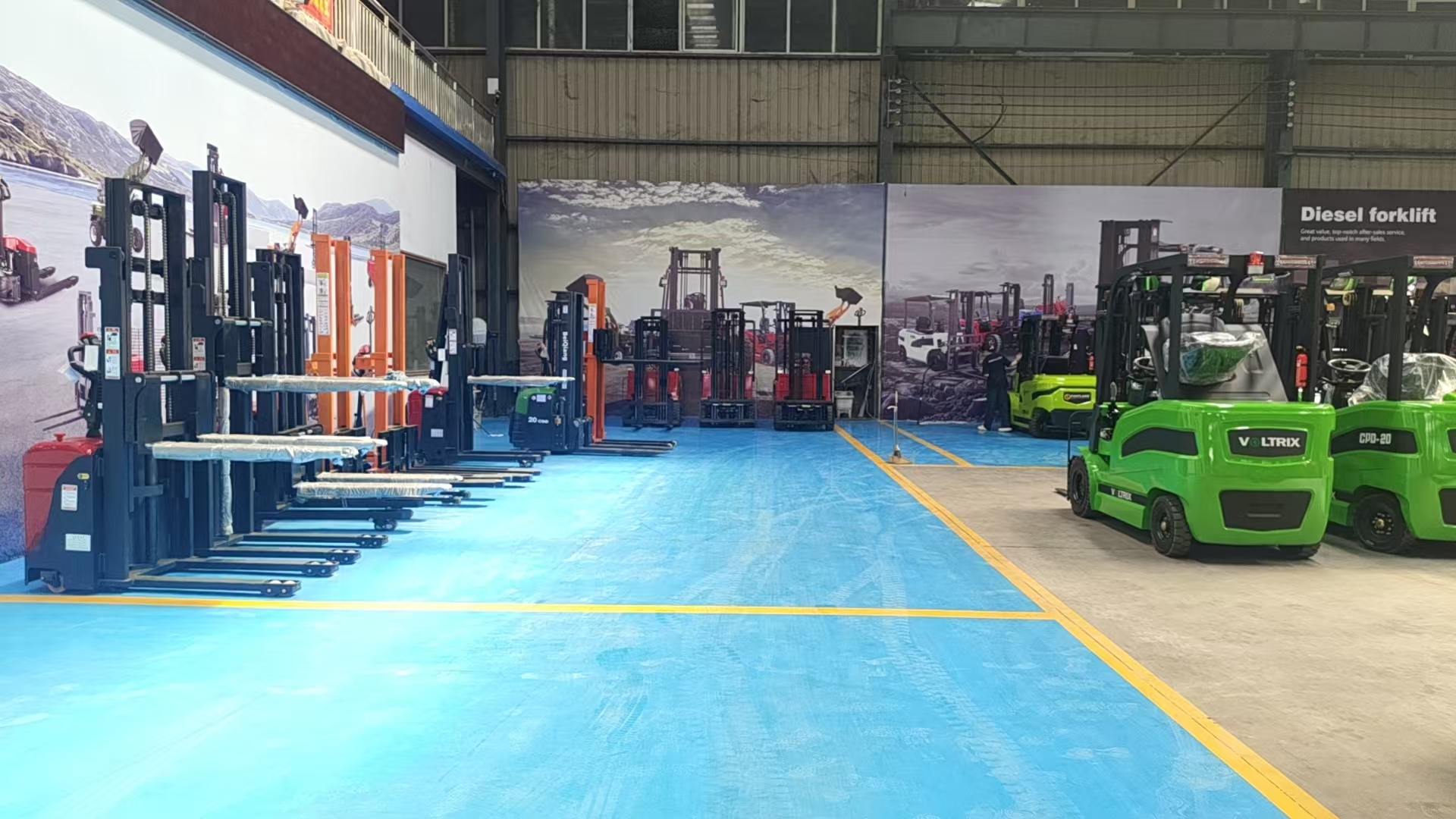
Next step: verify the architecture on a real specification
Ningjin Shunhao Trading Co., Ltd. (Mightlift) supplies OEM and ODM electric forklifts in 1.0 to 3.5 ton configurations, with load-capacity customization, lithium battery options and a signed technical specification before production.
Sample & configuration sheetQuotationOEM / ODM inquiry
Email: licong@mightlift.com | Tel / WhatsApp: +86 151-0097-4338 | Website: www.mightlift.com
Have Questions or Need More Details?
Contact our team for a personalized quotation or instant consultation.
Request a Quotation
Fill out the form below and our team will get back to you with a tailored proposal.
WhatsApp Direct Chat
Prefer to chat in real-time? Message us on WhatsApp for instant assistance & quick answers.
- Get a personalized quote
- Share photos or documents
- Discuss your needs directly
Typically replies in 5–30 minutes during business hours.