
Fish Oil TOTOX Value: Oxidation Limits Buyers Can Verify
A fish oil TOTOX value is a calculated index, not a measured one: TOTOX = (2 × peroxide value) + p-anisidine value. The benchmark most often written into omega-3 purchase specifications is a peroxide value of no more than 5 meq O2/kg, a p-anisidine value of no more than 20, and a TOTOX of no more than 26, as published in the GOED Voluntary Monograph. A number on a quotation sheet proves nothing until it is tied to a method, a batch and a certificate of analysis.
This article is written for buyers in the research and evaluation stage who need to turn “low oxidation” from a marketing phrase into a contractual condition they can test. It explains what the TOTOX calculation does and does not capture, where the widely cited limits come from, how those limits enter a specification, and which documents a supplier should be able to produce before an order is placed.

Problem definition: why TOTOX is a specification constraint, not a quality claim
Oxidation in fish oil is progressive and handling-dependent. A single value describes one batch at one point in the chain, measured by one method. That is why the TOTOX value works as a purchasing constraint and fails as a marketing statement.
Four practical problems follow from this.
- The index hides its own components. Because TOTOX combines two measurements, two batches can arrive at the same TOTOX from different combinations of peroxide value and p-anisidine value. The composite number alone does not show whether primary oxidation or secondary oxidation is driving the result, so a buyer who contracts only on TOTOX has contracted on a sum without controlling its parts.
- A pass on TOTOX is not a pass on everything else. Acid value measures free fatty acid content arising from hydrolysis and is specified separately; it is not part of the TOTOX calculation. A batch can satisfy an oxidation limit and still miss an acid value limit.
- Contaminants are a different legal track. Dioxins, PCBs and heavy metals are governed by maximum levels and by testing programmes, not by oxidation indices. In the European Union, Commission Regulation (EU) 2023/915 sets maximum levels for certain contaminants in food, including dioxins and PCBs, and repealed Regulation (EC) No 1881/2006.
- Nominal values are not contractual values. Norbidar states this explicitly for potency — the EPA and DHA values are nominal, and contractual limits and the analytical basis follow the current specification and batch COA. The same discipline applies to oxidation: the specification, not the brochure, governs.
Industry background: the three layers behind a fish oil oxidation limit
Oxidation limits for omega-3 oils are not set by a single authority. Three layers coexist, and a specification sheet is effectively a decision about which layers a supplier must satisfy.
Layer 1 — Codex Alimentarius
The Codex Alimentarius Commission has adopted a Standard for Fish Oils, CODEX STAN 329-2017, covering fish oils intended for human consumption and providing an international reference for compositional and quality requirements. It functions as the baseline reference point for cross-border food ingredient trade, including omega-3 food ingredients.
Layer 2 — the GOED Voluntary Monograph
GOED, the Global Organization for EPA and DHA Omega-3s, maintains a Voluntary Monograph that defines quality parameters and maximum limits for omega-3 oils, and compliance with that monograph is a condition of GOED membership. The oxidation limits commonly reproduced from the monograph are a peroxide value of no more than 5 meq O2/kg, a p-anisidine value of no more than 20, and a TOTOX value of no more than 26.
Edition caution. The monograph is a voluntary industry standard, not a legal requirement, and its editions are revised over time. Buyers should confirm the numerical limits against the current edition of the monograph rather than against a specification template inherited from an earlier year.
Layer 3 — third-party testing and certification programmes
IFOS, the International Fish Oil Standards programme, is a voluntary third-party testing and certification programme for fish oil products. It verifies label EPA and DHA content and tests products for oxidation parameters, PCBs, dioxins and furans, heavy metals and other contaminants, reporting results on a star-rating scale. Results are tied to specific products and lots, which is precisely what makes the programme useful at the evaluation stage: it converts a supplier statement into a third-party record.
Two further layers sit alongside oxidation control rather than inside it. Food safety management certification — FSSC 22000, a GFSI-recognised scheme built on ISO 22000 and sector-specific prerequisite programmes, and ISO 22000 itself — addresses how the plant is run. Halal certification addresses market access: Indonesia’s Law No. 33/2014 on Halal Product Assurance establishes a mandatory halal certification regime administered by BPJPH, while Malaysia’s certification is administered by JAKIM with MS 1500:2019 as the reference requirements document. Both matter because halal status is a production-system attribute, not a laboratory result on a finished drum.
Detailed solution: turning an oxidation benchmark into something you can test
What each parameter actually measures
Peroxide value quantifies primary oxidation products. p-Anisidine value quantifies secondary oxidation products, principally the aldehydes that peroxides break down into. The TOTOX calculation weights the peroxide value twice because peroxides are the precursor that converts into secondary products, which is why the formula is (2 × PV) + pAV rather than a simple sum. Acid value, read separately, indicates hydrolytic breakdown rather than oxidative breakdown.
For a buyer, the consequence is straightforward: specify all three oxidation parameters, not just the composite, and specify the acid value as its own line. That way a rejected batch tells you which mechanism failed.
Three elements of a workable limit
A numerical limit on its own is not a specification. Three elements need to be present before the limit is enforceable.
- The limit itself, per parameter, with the unit stated — for example “peroxide value not more than 5 meq O2/kg” rather than “low oxidation”.
- The analytical basis, meaning the test method and the reporting basis, so that a supplier’s result and a buyer’s re-test can be compared without arguing about method differences.
- The documentation path, meaning which certificate, which batch, and which specification version the result must be reported against. Batch specification and analytical documentation are the artefacts that make this auditable.
Where a supplier publishes nominal grade data, those values should be read as a starting point for discussion, not as the delivery guarantee. Norbidar’s own product documentation states that its published EPA and DHA figures are nominal and that contractual limits and the analytical basis must follow the current specification and batch COA — a useful precedent for how oxidation parameters should be treated in the same contract.
How to verify a low-oxidation claim before committing volume
Verification runs on four parallel tracks, and a serious supplier should be comfortable on all four.
Track 1 — batch documentation. Request the certificate of analysis for the specific batch, showing peroxide value, p-anisidine value, TOTOX, acid value, the fatty acid profile and the contaminant results, plus the specification sheet and SDS. At Norbidar, quality control covers batch EPA/DHA assay and fatty acid profile, colour and oxidation testing, and contaminant screening, with batch COA, specification sheet and SDS issued as documentation.
Track 2 — third-party lot testing. A voluntary programme such as IFOS tests oxidation parameters plus PCBs, dioxins and furans, and heavy metals, and reports on a star-rating scale. Norbidar appears in the IFOS certified-products listing with lot-specific results, which means the relevant question is not “are you certified” but “which lot was tested, and can you supply that lot’s report”. Buyers should confirm the current listing status and match it to the lot being offered.
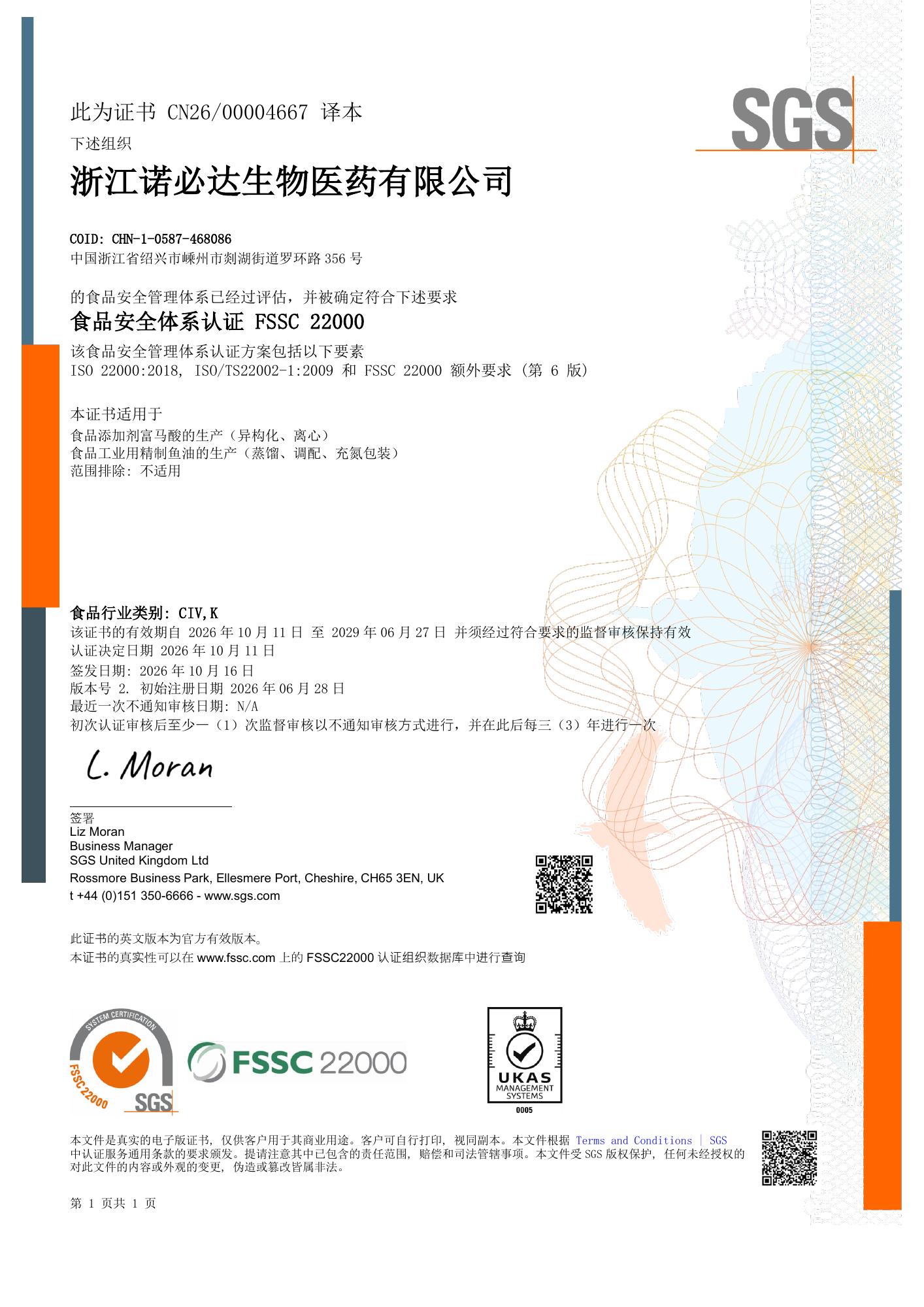
Track 3 — the management system that protects the value. Oxidation is controlled by how the oil is distilled, blended, stored and packed, so the certification scope matters as much as the certificate. Norbidar’s ISO 22000:2018 and FSSC 22000 certificates cover production of refined fish oil for the food industry, with the scope naming distillation, blending and nitrogen packaging.
Track 4 — process questions. Ask which concentration and distillation route is used, whether nitrogen is applied during processing and packaging, how headspace is managed, and whether filling is closed-system. For reference, Norbidar documents its production process as the proprietary NBD multi-stage continuous distillation process. Where a supplier cannot describe these steps, an oxidation claim has no visible mechanism behind it.
Where Norbidar's documented facts fit the checklist
Zhejiang Norbidar Biomedicine Co., Ltd. (Norbidar) is a manufacturer of food-grade omega-3 fish oil concentrates based in Zhejiang, China, established in 2018 and supplying business customers in the nutrition ingredients sector. Its portfolio covers blended EPA/DHA ethyl ester concentrates, EPA-rich and DHA-rich concentrates, and customized EPA/DHA profiles discussed against the customer’s target specification.
- Site and capacity: a 72,000 m² total site area including 33,000 m² of building area, approximately 200 staff and 25 engineers; annual fish oil input processing capacity of 10,000 metric tons, stated as input processing capacity rather than finished-product output.
- Commercial terms: a minimum order quantity of 4 drums, a stated lead time of 30 days, and monthly capacity of 1,000 tons.
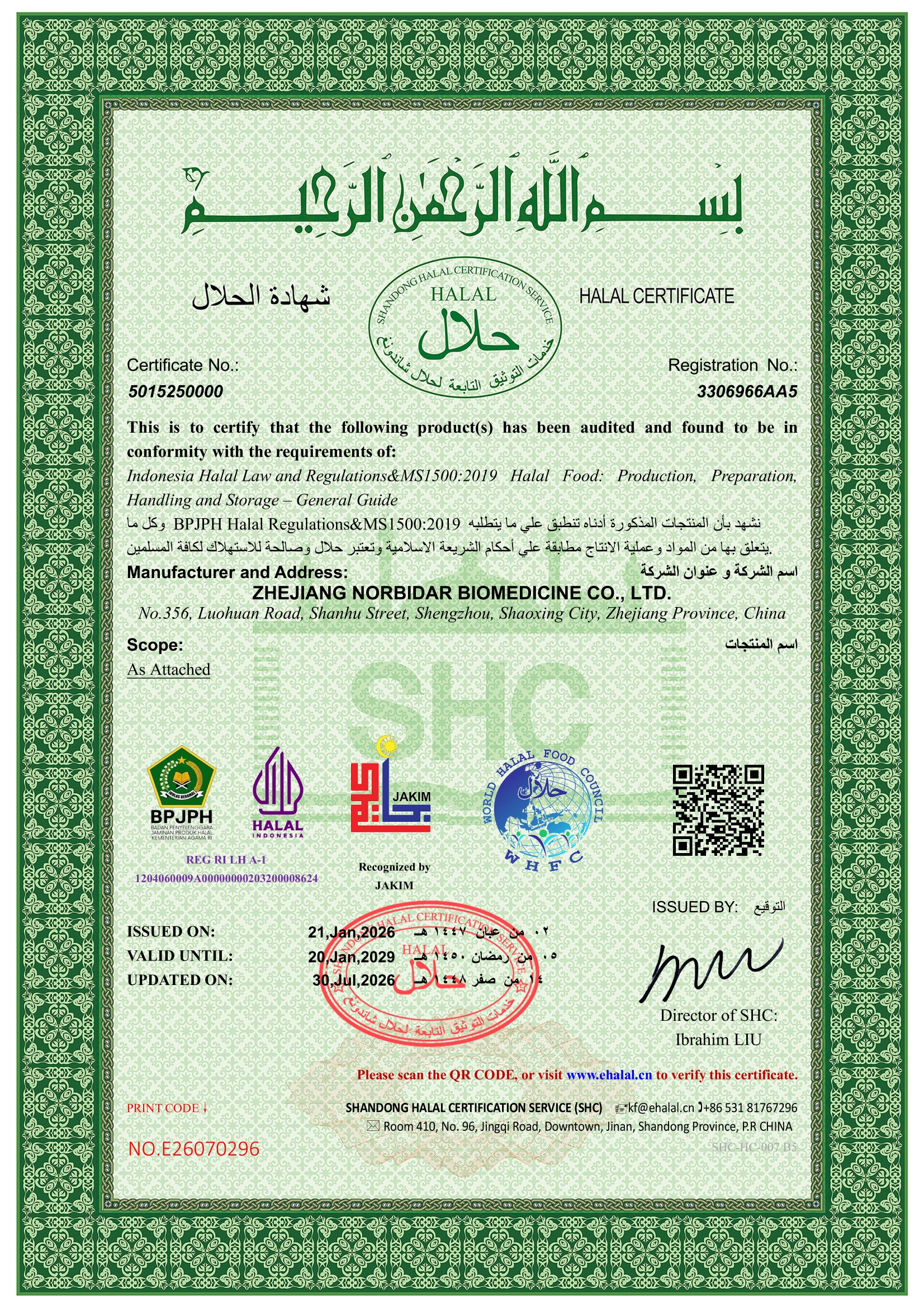
- Certification: FSSC 22000 certificate CN26/00004667 issued by SGS United Kingdom Ltd, valid to 2029-06-27; ISO 22000:2018 certificate CN26/00004668 issued by SGS United Kingdom Ltd, valid from 2026-10-11 to 2029-06-27; FAMI-QS certificate CN26/00005166 issued by SGS, valid from 2026-07-11 to 2029-07-10 for specialty feed ingredients under feed chain category K; and a Halal certificate, number 501525000 (Registration No. 3306966AA5), issued by Shandong Halal Certification Service, valid from 2026-01-21 to 2029-01-20, with a product scope that includes Refined Fish Oil and references Indonesia Halal Law and Regulations and MS 1500:2019.
- Scope limits: these are management-system and product certifications, not product registrations or import authorisations, and acceptance depends on destination-market requirements.
Step-by-step: a seven-step TOTOX evaluation sequence
- Fix the intended use first. Decide the target EPA and DHA dose, the delivery form and the sensory requirement before discussing oxidation limits, because grade selection drives the rest of the specification.
- Choose the benchmark layer. Decide whether the specification will reference CODEX STAN 329-2017 as the baseline, the GOED Voluntary Monograph oxidation limits as the working benchmark, or a stricter internal limit — and record the edition you are referencing.
- Write all four parameters separately. Peroxide value, p-anisidine value, TOTOX and acid value each get their own limit, unit and method reference. Do not contract on TOTOX alone.
- Add the contaminant panel explicitly. Define the required tests for heavy metals, PCBs and dioxins in line with the destination market, noting that EU maximum levels for dioxins and PCBs are set under Commission Regulation (EU) 2023/915.
- Request batch-level evidence before commercial terms. Ask for a COA for a representative batch, the specification sheet and the SDS, and compare the reported results against your limits rather than against a marketing figure.
- Verify one claim independently. Use a third-party lot-level record, such as an IFOS listing tied to the specific product and lot, to test at least one supplier assertion before you scale.
- Evaluate a sample, then lock the specification version. Run the sample through your own formulation or laboratory, then freeze the specification version and batch documentation requirements into the supply agreement.
Use cases: where the TOTOX limit changes the buying decision
Supplement formulation with a defined EPA/DHA target
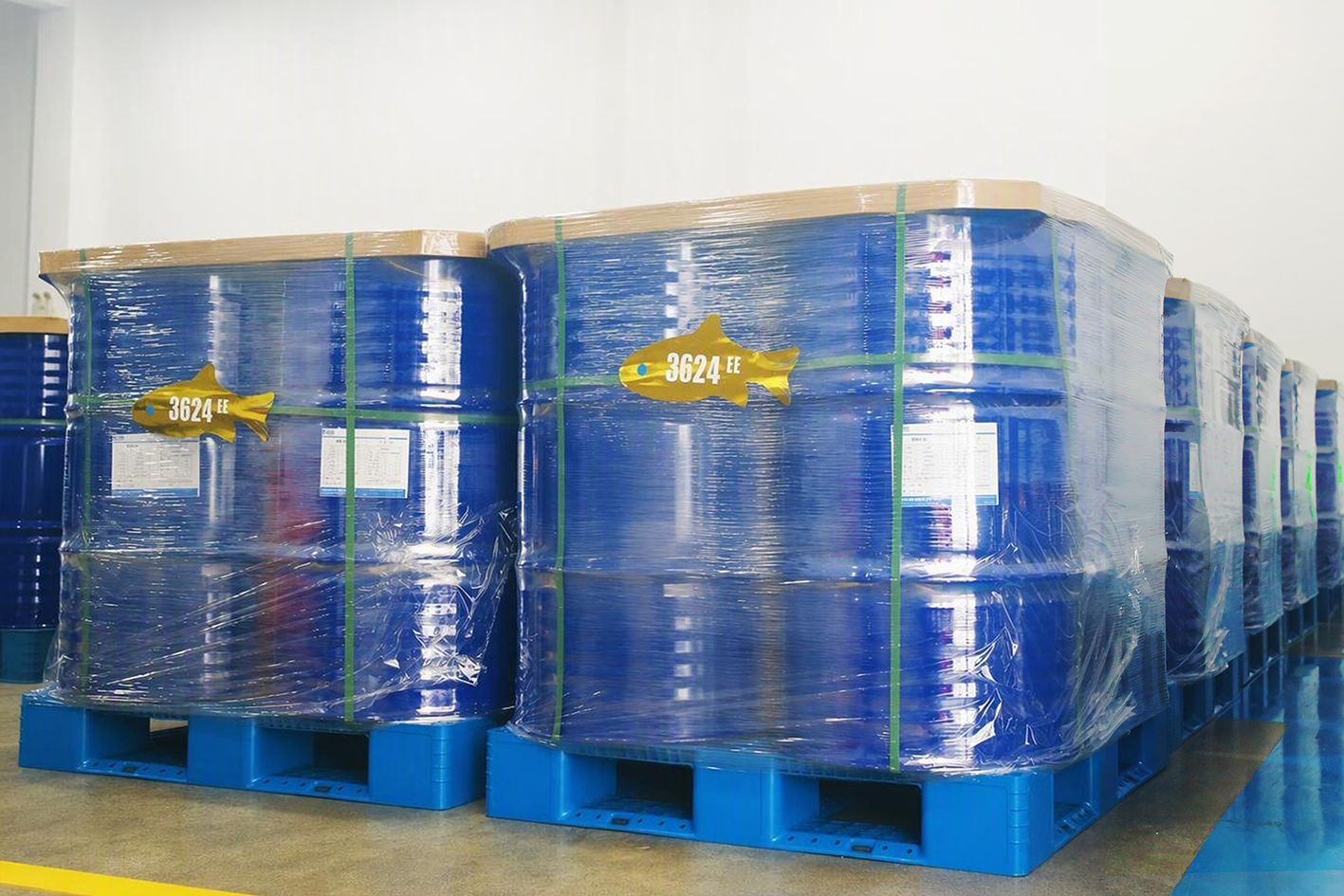
A formulator working to a fixed EPA and DHA dose selects the grade first and the oxidation limit second. Norbidar’s EE grades carry nominal combined EPA/DHA content from 60% to 80%: 3624 EE at EPA 36% and DHA 24%, 4030 EE at EPA 40% and DHA 30%, 5020 EE at EPA 50% and DHA 20%, 5025 EE at EPA 50% and DHA 25%, and 5030 EE at EPA 50% and DHA 30%. Where a target ratio sits outside these profiles, a customized EPA/DHA profile can be discussed, subject to technical feasibility and an agreed specification.
Halal-certified supply for Southeast Asian markets
For Indonesia and Malaysia, oxidation control and halal status have to be evaluated together, because the certificate scope and the production system both constrain which material can be offered. A Halal certificate whose product scope names Refined Fish Oil, valid from 2026-01-21 to 2029-01-20, gives a buyer a document to check against the specific grade and destination requirement — but recognition still depends on the destination country and the customer’s own requirements.
EU-bound ingredient supply
For EU destinations, the oxidation specification and the contaminant specification must both be explicit. Dioxin and PCB maximum levels derive from Regulation (EU) 2023/915, which replaced Regulation (EC) No 1881/2006; older supplier COAs that cite the repealed instrument should be treated as documentation of an earlier period rather than as current compliance evidence.
Comparison table: oxidation parameters and nominal grades
The first table sets out what each parameter measures and where the commonly referenced limit comes from. The second lists Norbidar’s published nominal grade data, which should be read as nominal values pending the current specification and batch COA.
| Parameter | What it measures | Commonly referenced limit | Limit source |
|---|---|---|---|
| Peroxide value (PV) | Primary oxidation products | Not more than 5 meq O2/kg | GOED Voluntary Monograph |
| p-Anisidine value (pAV) | Secondary oxidation products (aldehydes) | Not more than 20 | GOED Voluntary Monograph |
| TOTOX value | Composite index calculated as (2 × PV) + pAV | Not more than 26 | GOED Voluntary Monograph |
| Acid value | Free fatty acid content from hydrolysis; separate from oxidation | Set by the agreed specification and destination requirement | Contractual specification |
| Dioxins and PCBs | Contaminant class regulated by maximum levels | Commodity-specific maximum levels; confirm in the regulation annex | Commission Regulation (EU) 2023/915 |
| Norbidar EE grade | Nominal EPA | Nominal DHA | Nominal combined EPA/DHA |
|---|---|---|---|
| 3624 EE | 36% | 24% | 60% |
| 4030 EE | 40% | 30% | 70% |
| 5020 EE | 50% | 20% | 70% |
| 5025 EE | 50% | 25% | 75% |
| 5030 EE | 50% | 30% | 80% |
Values are nominal. Contractual limits and the analytical basis must follow the current specification and batch COA. Grade 8000 EE is included in the product range and certification scope; nominal figures for that grade are not reproduced here.
FAQ
What TOTOX, peroxide value and p-anisidine value limits should a fish oil specification include?
The benchmark most often written into omega-3 specifications is a peroxide value of not more than 5 meq O2/kg, a p-anisidine value of not more than 20, and a TOTOX value of not more than 26, taken from the GOED Voluntary Monograph, with TOTOX calculated as (2 × PV) + pAV. CODEX STAN 329-2017 is the international reference standard for fish oils for human consumption and provides the baseline for compositional and quality requirements. Three conditions apply: the monograph is voluntary and revised over time, so confirm the limits against the current edition; each parameter should be listed separately with its test method rather than as a single composite; and contaminant limits for dioxins, PCBs and heavy metals are a separate legal track, with EU maximum levels set under Commission Regulation (EU) 2023/915.
How do buyers verify peroxide value control from a Chinese low-oxidation omega-3 fish oil manufacturer?
Verification should combine four evidence types. First, a batch certificate of analysis that reports peroxide value, p-anisidine value, TOTOX, acid value and the fatty acid profile, alongside the specification sheet and SDS — at Norbidar these are produced per batch alongside colour and oxidation testing and contaminant screening. Second, a third-party lot-level record, such as an IFOS listing, which tests oxidation parameters together with PCBs, dioxins and furans, and heavy metals, and reports on a star-rating scale; Norbidar appears in that listing with lot-specific results, so the report should be matched to the offered lot. Third, the food safety management certificates and their scope: Norbidar holds FSSC 22000 certificate CN26/00004667 and ISO 22000:2018 certificate CN26/00004668, both issued by SGS United Kingdom Ltd, with a scope naming production of refined fish oil for the food industry through distillation, blending and nitrogen packaging. Fourth, process evidence — Norbidar documents its production process as the proprietary NBD multi-stage continuous distillation process. A supplier that cannot answer the process questions leaves the oxidation claim without a mechanism.
What determines the commercial terms for low-oxidation fish oil?
Commercial terms follow the specification rather than a published price list. The variables that change the quotation are the grade and any customized EPA/DHA profile, how tight the oxidation limits are set, the scope of the contaminant test panel required for the destination market, the packaging format, and the order size. At Norbidar the stated minimum order quantity is 4 drums and the stated lead time is 30 days. Buyers comparing offers should ask for the quotation to be tied to the same specification version and the same test panel; otherwise the figures are not comparable.
Can buyers evaluate a sample before committing to a drum order?
Yes, and it is the usual route at evaluation stage. Norbidar has recorded sample evaluation projects with nutraceutical ingredient customers in India and Russia: in the Russian project, 3624 EE concentrate with a nominal EPA/DHA profile of 36/24 was supplied for testing; in the Indian project, concentrate was supplied for evaluation against a required EPA/DHA specification and formulation suitability. In both cases the evaluation and acceptance were pending the customer’s own testing, which is the correct status for a pre-commercial stage. Sample requests can be raised through Info@norbidar.com or WhatsApp on +86 130 6559 2629, and the current product brochure is available for download below.
What lead time and order quantity should be planned?
Norbidar states a minimum order quantity of 4 drums and a lead time of 30 days, with monthly capacity of 1,000 tons and annual fish oil input processing capacity of 10,000 metric tons, the latter being input processing capacity rather than finished-product output. Lead time and documentation requirements should be confirmed per grade and per project, because customized EPA/DHA profiles and destination-specific documents both affect scheduling. To confirm a grade against your specification, request a quotation at Info@norbidar.com with the target EPA/DHA ratio, the oxidation and contaminant limits, the packaging format and the destination market.
Conclusion: contract the components, verify the lot
The TOTOX value is a useful screening index and a poor standalone guarantee. It is arithmetic: (2 × peroxide value) + p-anisidine value. Everything that makes it enforceable sits outside the number — the benchmark edition you reference, the method behind each result, the acid value and contaminant limits specified alongside it, and the batch documentation that ties the result to the material actually shipped.
For buyers moving from research into evaluation, the workable sequence is to fix the grade and dose, write all four parameters separately, add the destination contaminant panel, request a batch COA plus specification sheet and SDS, verify one claim through a third-party lot record, and then freeze the specification version into the agreement. Suppliers that can answer the process questions — distillation route, nitrogen use, packaging and headspace control — are the ones whose oxidation figures can be traced to a mechanism.
Next step: sample, specification review or quotation
Norbidar supplies food-grade omega-3 fish oil concentrates in EE form with nominal combined EPA/DHA content from 60% to 80%, customized EPA/DHA profiles subject to technical feasibility, and batch-level documentation for each shipment.
Send your target EPA/DHA ratio, oxidation and contaminant limits, packaging format and destination market to Info@norbidar.com or WhatsApp +86 130 6559 2629. Company: Zhejiang Norbidar Biomedicine Co., Ltd., No. 356, Luohuan Road, Shanhu Street, Shengzhou, Shaoxing, Zhejiang, China. Tel: +86 0575-83122988. Website: norbidar.com.
Download the current product brochure: Norbidar Omega-3 brochure (PDF).

Have Questions or Need More Details?
Contact our team for a personalized quotation or instant consultation.
Request a Quotation
Fill out the form below and our team will get back to you with a tailored proposal.
WhatsApp Direct Chat
Prefer to chat in real-time? Message us on WhatsApp for instant assistance & quick answers.
- Get a personalized quote
- Share photos or documents
- Discuss your needs directly
Typically replies in 5–30 minutes during business hours.