
Fish Oil p-Anisidine Value: What the Number Really Tells You
A p-anisidine value (p-AV) is the part of a fish oil certificate of analysis that describes secondary oxidation — the stage that keeps developing after peroxide value has already begun to fall. A specification that names only peroxide value therefore describes the first half of a reaction the buyer cannot see.
That makes p-AV a process number rather than a marketing number. It carries information about how much oxygen the oil met during refining, concentration, storage and packaging, and how long it stayed in contact with it. This guide explains what the parameter actually measures, how it is read together with peroxide value and acid value, how the voluntary and legal quality layers around fish oil are structured, and how a buyer can convert a p-AV target into a specification a supplier can be held to. Where it helps, it uses the documented process and certification scope of Norbidar — Zhejiang Norbidar Biomedicine Co., Ltd., a manufacturer of food-grade omega-3 fish oil concentrates based in Zhejiang, China — as a worked example.
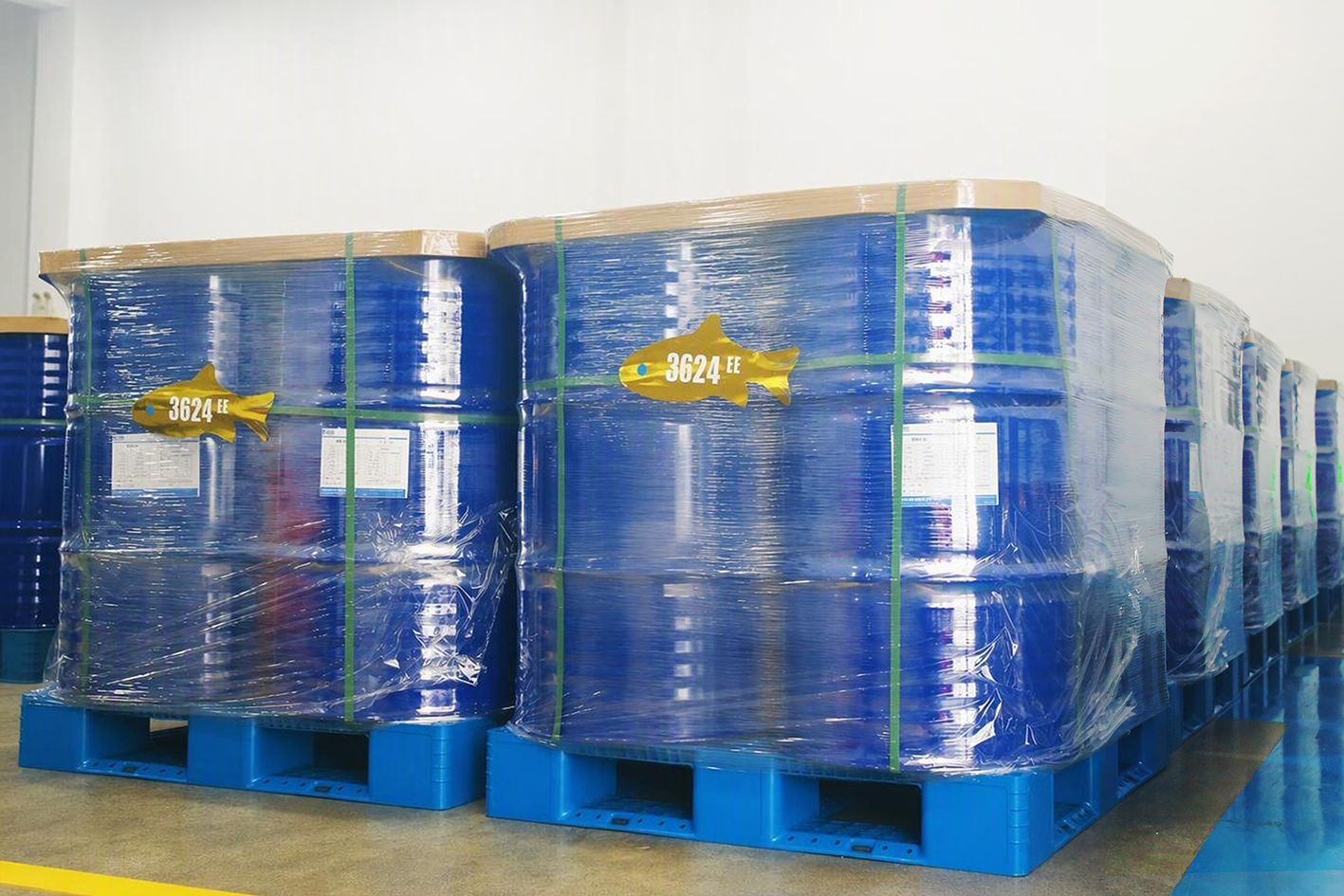 Norbidar Omega-3 Fish Oil Concentrates supplied in drums — packaging and nitrogen handling are part of the oxidation story, not an afterthought.
What the p-Anisidine Value Measures — and What It Does Not
In one sentence: p-AV is a laboratory index of secondary oxidation products in fish oil — chiefly aldehydes that form when primary peroxides decompose — and it is normally read alongside peroxide value through TOTOX, which is defined as (2 × PV) + p-AV.
Oxidation in omega-3 oil runs in two stages. In the first, oxygen attacks the double bonds of EPA and DHA and produces peroxides; peroxide value (PV) measures that population. Peroxides are unstable. As they break down they generate aldehydes and other secondary compounds, and p-AV tracks that second population. The practical consequence is directional: PV can fall while p-AV rises in the same oil. A concentrate that passes a peroxide check after a deodorisation step may still carry a p-AV that tells you about the oxygen exposure that preceded it.
The most widely cited benchmarks for omega-3 oils come from the GOED Voluntary Monograph, which sets a peroxide value of not more than 5 meq O2/kg, a p-anisidine value of not more than 20, and a TOTOX value of not more than 26. These are voluntary industry limits, not legal maximums, and compliance with the monograph is a condition of GOED membership. Buyers writing these figures into a contract should confirm the current monograph edition with the supplier rather than relying on a number copied from an older datasheet.
Just as important is what p-AV does not establish:
- It is not a contaminant test. Dioxins, PCBs and heavy metals are measured by separate analytical work; oxidation indices say nothing about them.
- It is not a hydrolysis test. Acid value measures free fatty acids released by hydrolysis, a different failure mode that belongs in the specification on its own terms.
- It is not a potency measurement. EPA and DHA content is established by fatty-acid profile and assay, not by oxidation indices.
- It is an index, not a concentration. Because the result depends on the analytical method used, a p-AV figure without a stated analytical basis is hard to compare across laboratories.
- It describes one batch. A single COA value does not predict how the same oil will read after shipping and storage.
Why p-AV Becomes a Procurement Problem
The parameter is simple; the commercial behaviour around it is not. Five patterns account for most of the friction buyers meet when they try to buy low-oxidation omega-3 concentrates.
1. Peroxide-only specifications invite narrow optimisation. A supplier who is measured only on PV can meet the number through processing steps that do not necessarily reduce total oxygen exposure. Writing PV, p-AV and TOTOX as a set removes that gap.
2. Nominal values are not contractual values. Grade names and product pages describe nominal content. In Norbidar's own documentation the stated EPA and DHA values are nominal, and contractual limits and the analytical basis must follow the current specification and batch COA. The same discipline applies to oxidation figures: the number that matters is the one written into the specification and reported per batch.
3. Cross-lab and cross-edition comparison is unreliable. Two COAs quoting the same p-AV limit may not be measuring or calculating in the same way, and a limit quoted from a superseded monograph edition is not the same commitment as one quoted from the current edition.
4. The oxidation panel is often separated from the contaminant panel. A quotation may show a clean oxidation profile and say nothing about dioxins, PCBs or heavy metals — or the reverse. Both panels need to be requested explicitly for the destination market.
5. Post-delivery handling is outside the supplier's COA. Omega-3 concentrates are stored and handled under cool, dry, light-protected, oxygen-limited conditions per product specification and SDS. A good release value can degrade in a warm warehouse, and the buyer inherits that risk.
Industry Background: Three Layers of Quality Governance
Fish oil quality is governed by three layers that are often conflated in commercial conversation, even though they have different legal status and different purposes.
The international commodity standard layer. The Codex Alimentarius Commission has adopted a Standard for Fish Oils, CODEX STAN 329-2017, covering fish oils intended for human consumption and providing an international reference for compositional and quality requirements. It is the reference point buyers cite when they want a standard that is not tied to a single supplier's datasheet.
The voluntary industry layer. The GOED Voluntary Monograph defines quality parameters and maximum limits for omega-3 oils, and compliance with it is a condition of GOED membership. This is the layer that most low-oxidation specifications actually reference, because it addresses oxidation parameters directly. It is voluntary, so its authority in a dispute comes from the contract, not from law.
The third-party verification layer. IFOS, the International Fish Oil Standards programme, is a voluntary third-party testing and certification scheme that verifies label EPA and DHA content and tests products for oxidation parameters, PCBs, dioxins and furans, heavy metals and other contaminants, reporting results on a star-rating scale. Alongside it sit the food-safety management schemes — FSSC 22000 is a GFSI-recognised certification scheme for food manufacturers built on ISO 22000 and sector-specific prerequisite programmes, and it is commonly requested of food-ingredient suppliers.
Two further layers sit outside oxidation entirely. On contaminants, Commission Regulation (EU) 2023/915 sets maximum levels for certain contaminants in food, including dioxins and PCBs, and repealed Regulation (EC) No 1881/2006; a COA still citing the older instrument is describing a superseded legal baseline. On market access, halal status is a production-system attribute rather than a product test: Indonesia's Law No. 33/2014 establishes a mandatory halal certification regime administered by BPJPH, while Malaysia's system is administered by JAKIM with MS 1500:2019 as the reference requirements document.
What this means for a p-AV specification: the oxidation limit you write is a contractual commitment referencing a voluntary benchmark; the contaminant limits you write may be legal requirements for the destination market; and the certification you require is evidence about the management system, not about a specific drum of oil. Three different things, three different documents.
Building a p-AV Specification That Can Be Verified
Step 1 — Specify oxidation as a set, not a single number
Write peroxide value, p-anisidine value and TOTOX together, and write the TOTOX formula into the specification so there is no ambiguity about how the derived figure is calculated: (2 × PV) + p-AV. If your target market or customer base expects GOED alignment, cite the monograph explicitly and ask the supplier to confirm which edition they are working to.
Step 2 — Fix the analytical basis
A p-AV number without a stated method is a number you cannot audit. Require the COA to state the analytical basis used, the batch number, the production date and the release date. This is the single cheapest protection a buyer can add to a purchase order.
Step 3 — Separate acid value from the oxidation panel
Acid value tracks free fatty acids from hydrolysis, not oxidation, and the GOED oxidation limits referenced above do not address it. Treat it as its own specification line with its own limit, rather than folding it into a general freshness statement.
Step 4 — Ask how the oil was protected during processing and filling
Because p-AV reflects accumulated oxygen exposure, the process conversation matters more than the datasheet conversation. Useful questions are concrete: which distillation configuration is used, how is the oil blanketed or protected between stages, what is the packaging atmosphere, and is filling closed-system or open. For Norbidar, production is described as the NBD multi-stage continuous distillation process, and the scope of its FSSC 22000 and ISO 22000:2018 certificates covers production of refined fish oil for the food industry through distillation, blending and nitrogen packaging. Those are documented facts about the certified scope — they are the right kind of evidence to request from any supplier, because they can be checked against a certificate rather than accepted as a claim.
 Norbidar processing facilities. The certified scope of the site covers distillation, blending and nitrogen packaging of refined fish oil for the food industry.
Step 5 — Keep the contaminant panel separate and destination-specific
Request dioxin, PCB and heavy metal results as a distinct panel, with the limits stated. For EU-bound product, the applicable legal instrument is Commission Regulation (EU) 2023/915; note also that the regulation sets maximum levels for contaminants generally, and commodity-specific figures should be taken from its annexes rather than from an older certificate template. If a customer requires third-party verification of the combined potency, oxidation and contaminant picture, IFOS lot-level testing is the recognised route; Norbidar batches are listed in the IFOS certified-products registry for lot-specific verification.
Step 6 — Match the grade to the dose before optimising the oxidation limit
Oxidation limits are only meaningful against a defined potency target. Norbidar's ethyl ester range carries the following nominal values, with contractual limits set by the current specification and batch COA.
| Grade | Nominal EPA | Nominal DHA | Nominal combined EPA+DHA |
|---|---|---|---|
| 3624 EE | 36% | 24% | 60% |
| 4030 EE | 40% | 30% | 70% |
| 5020 EE | 50% | 20% | 70% |
| 5025 EE | 50% | 25% | 75% |
| 5030 EE | 50% | 30% | 80% |
Nominal values only. Grade 8000 EE appears within the certified product scope; its nominal figures should be confirmed against the current specification. Grade selection is based on the required EPA and DHA dose, form, sensory requirements and current COA.
Step 7 — Confirm whether a custom profile is technically feasible
Customisation is a real option but not an unconditional one. Norbidar supports customised EPA/DHA ratios, blended concentrations and EPA-rich or DHA-rich profiles, subject to technical feasibility and an agreed product specification. A custom ratio changes the distillation load, so it should be discussed before the oxidation limits are finalised — the two decisions interact.
Step-by-Step: Running a p-AV-Focused Supplier Evaluation
- Issue a written specification. Include PV, p-AV, TOTOX with the formula, acid value, potency by grade, contaminant panel and the analytical basis. State which edition of any voluntary monograph you are referencing.
- Request the document set before the sample. Current specification, batch COA, and SDS. For Norbidar products, batch specification and analytical documentation are listed for the product, and quality control covers batch EPA/DHA assay and fatty-acid profile, colour and oxidation testing, and contaminant screening.
- Check certification scope, not just certificate existence. A certificate is only informative if its scope covers the operation you are buying. Norbidar's FSSC 22000 certificate (CN26/00004667, issued by SGS United Kingdom Ltd.) and its ISO 22000:2018 certificate (CN26/00004668) cover production of refined fish oil for the food industry — distillation, blending and nitrogen packaging. Its FAMI-QS certificate (CN26/00005166, issued by SGS, valid 2026-07-11 to 2029-07-10) covers specialty feed ingredients for feed chain category K. Its halal certificate (501525000, Registration No. 3306966AA5, issued by Shandong Halal Certification Service, valid 2026-01-21 to 2029-01-20) lists Refined Fish Oil within its product scope and references Indonesia Halal Law and Regulations and MS 1500:2019.
- Verify in your own laboratory. Test PV, p-AV, TOTOX and acid value on the retained sample, and keep the retained portion sealed for comparison after shipping.
- Check the plant and capacity story. Norbidar's site covers 72,000 m² in total, including 33,000 m² of building area, with approximately 200 staff. Annual fish oil input processing capacity is 10,000 metric tons — input processing capacity, not finished-product output — with monthly capacity of 1,000 tons.
- Agree commercial terms. Minimum order quantity is 4 drums and lead time is 30 days; confirm these against your launch schedule rather than assuming them.
- Audit the handling chain. Confirm packaging atmosphere, drum condition and the storage conditions your warehouse can actually deliver. Oxidation control that stops at the factory gate is only half a programme.
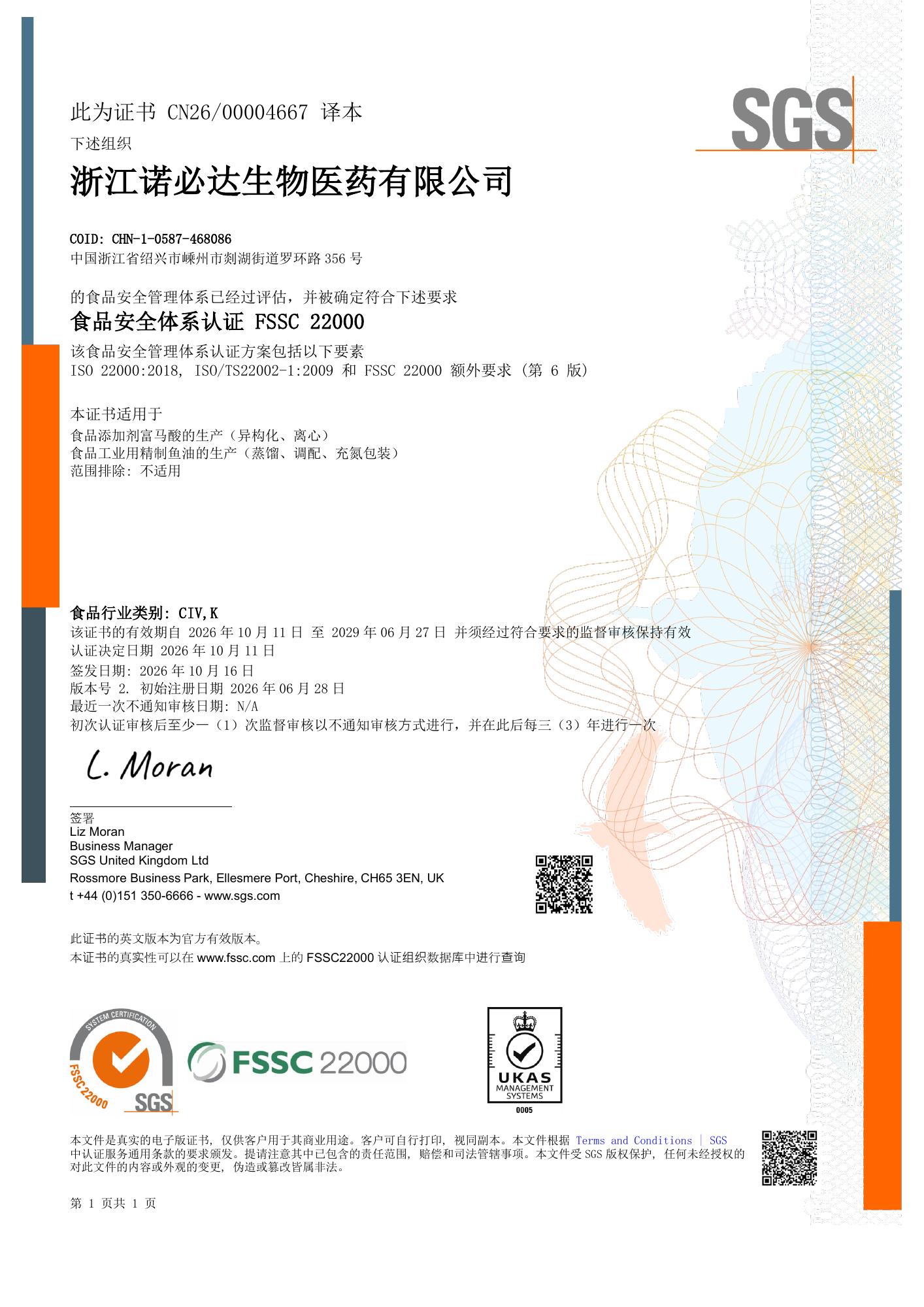 FSSC 22000 certificate CN26/00004667, issued by SGS United Kingdom Ltd., covering production of refined fish oil for the food industry.
Use Cases: Where p-AV Decisions Actually Get Made
Supplement brand moving from commodity oil to a defined concentrate
A brand owner reformulating a softgel line typically starts with a potency target, then discovers that the oxidation specification is what determines shelf-life complaints. The productive sequence is to fix the grade — for example 5025 EE at nominal 50% EPA and 25% DHA — and then write PV, p-AV and TOTOX limits against that grade, with the analytical basis named.
Distributor evaluating a sample before committing
A Russian nutraceutical ingredient distributor received a 3624 EE sample for evaluation as a bulk ingredient for dietary supplement formulation. Receipt was confirmed; evaluation against the required specification is pending, and commercial order status remains unconfirmed. This is the normal shape of a p-AV decision: sample first, specification second, order third — and no supplier should represent an evaluation-stage project as an approved application.
Nutraceutical ingredient customer in India
An Indian nutraceutical ingredient customer requested a sample for evaluation against its required EPA/DHA specification and formulation suitability. Sample was supplied and the customer's test results and acceptance remain pending. Buyers in this position should treat sample-level oxidation values as a screening tool, not a release certificate.
Halal-market buyer structuring market access
A buyer supplying Indonesia or Malaysia has to treat halal status as a system attribute. Norbidar's halal certificate lists Refined Fish Oil within its product scope, but the certificate itself notes that it applies subject to destination-country recognition and customer requirements — market recognition is a separate check from certificate possession.
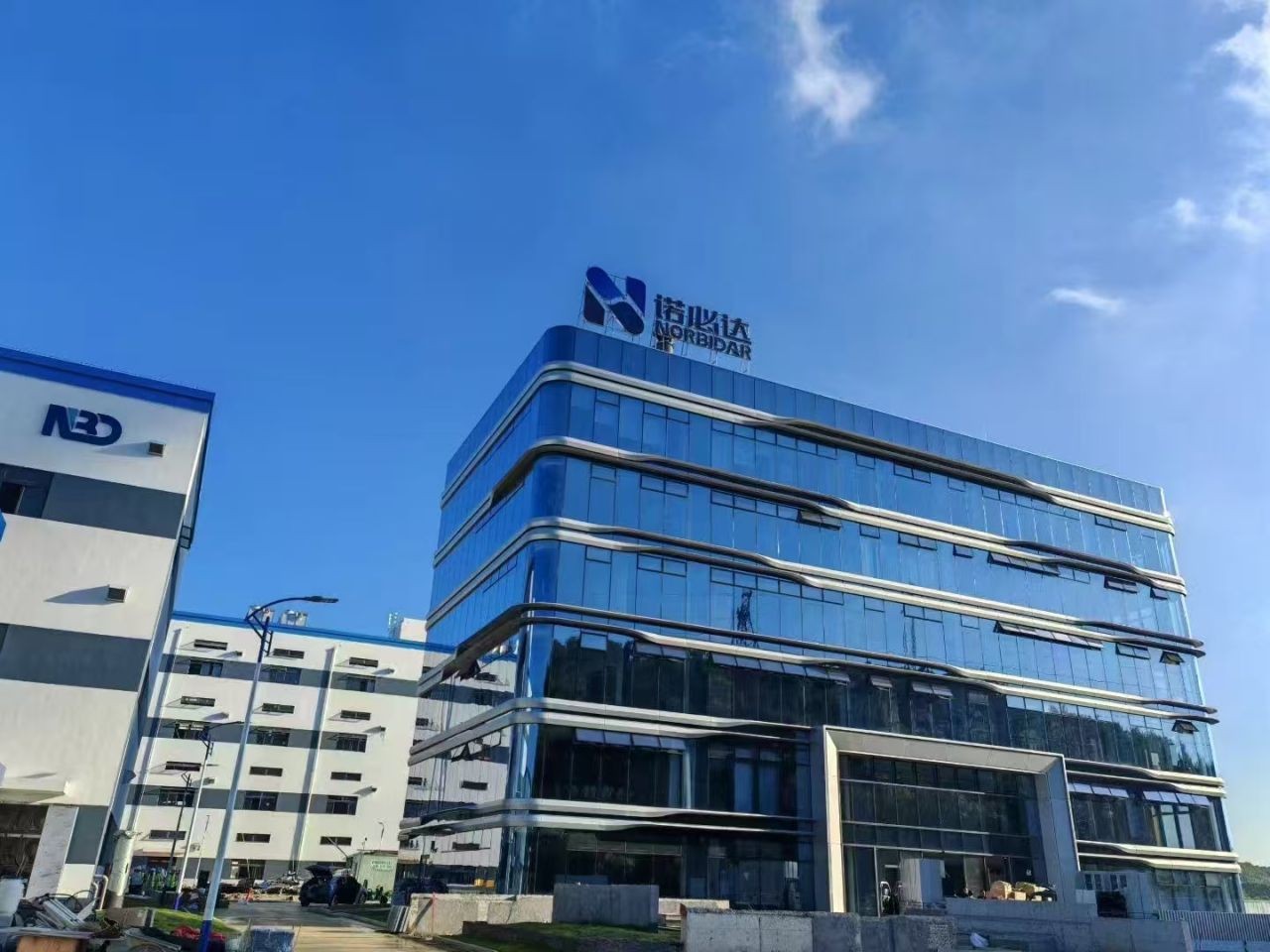 Norbidar's manufacturing site in Zhejiang: 72,000 m² total site area, including 33,000 m² of building area.
Comparison Table: Reading the Oxidation Parameters Together
The four numbers below answer four different questions. Substituting one for another is the most common specification error in omega-3 procurement.
| Parameter | What it indicates | Benchmark cited in this article | What it does not establish |
|---|---|---|---|
| Peroxide value (PV) | Primary oxidation products — peroxides formed as oxygen attacks EPA and DHA | GOED Voluntary Monograph: not more than 5 meq O2/kg | Whether peroxides have already broken down into secondary products |
| p-Anisidine value (p-AV) | Secondary oxidation products, chiefly aldehydes formed as peroxides decompose | GOED Voluntary Monograph: not more than 20 | Contaminant status, hydrolysis, or potency |
| TOTOX | Combined index of primary and secondary oxidation, calculated as (2 × PV) + p-AV | GOED Voluntary Monograph: not more than 26 | The ratio between the two stages, which is why PV and p-AV should still be reported separately |
| Acid value | Free fatty acids released by hydrolysis — a distinct degradation route | Not an oxidation limit; defined in the purchase specification | Oxidation status of the oil |
| Contaminant panel (dioxins, PCBs, heavy metals) | Environmental and process contaminants, tested analytically rather than inferred | EU: Commission Regulation (EU) 2023/915 sets maximum levels for certain contaminants in food; IFOS testing scope includes PCBs, dioxins/furans and heavy metals | Anything about oxidation or potency |
Benchmarks shown are the voluntary industry limits widely cited from the GOED Voluntary Monograph and the legal instrument noted; they are not interchangeable, and the current edition or consolidated text should be confirmed before contractual use.
Frequently Asked Questions
Which p-anisidine value limit should go into a fish oil purchase specification?
There is no legal p-AV maximum for fish oil; the practical benchmark is the GOED Voluntary Monograph, which is widely cited at a peroxide value of not more than 5 meq O2/kg, a p-anisidine value of not more than 20 and a TOTOX of not more than 26. These are voluntary industry limits and compliance is a condition of GOED membership. Write p-AV and TOTOX together, state the monograph edition you are referencing, and require the batch COA to report both plus the analytical basis. Codex CODEX STAN 329-2017 provides the international reference for fish oil quality requirements, and EU contaminant maximums under Regulation (EU) 2023/915 are a separate legal layer that does not set oxidation limits.
Can a Chinese low-oxidation fish oil manufacturer control peroxide value and p-AV at process level?
Process control is checkable rather than declarable. Norbidar describes its production as the NBD multi-stage continuous distillation process, and the scope of its FSSC 22000 certificate (CN26/00004667) and ISO 22000:2018 certificate (CN26/00004668) covers production of refined fish oil for the food industry through distillation, blending and nitrogen packaging. Its quality control covers batch EPA/DHA assay and fatty-acid profile, colour and oxidation testing, and contaminant screening, with batch COA, specification sheet and SDS issued. Buyers should ask which distillation configuration is used, how the oil is protected between stages, what the packaging atmosphere is, and whether filling is closed-system — then verify the answers against certificates and lot-level test reports rather than against marketing pages.
What drives the cost of a low-p-AV or custom-ratio fish oil?
Cost follows the specification, not the label. The main drivers are the EPA/DHA ratio and concentration, because higher targets require more distillation; the testing scope, since a destination-specific contaminant panel or third-party verification adds analytical work; the packaging and atmosphere; and order volume. Norbidar's minimum order quantity is 4 drums with a 30-day lead time, and quotations are project-specific because the specification is project-specific. Buyers should compare quotations only after the oxidation limits, contaminant panel, grade and packaging are identical across offers.
How should we evaluate a sample before committing to a p-AV limit?
Request the current specification, the batch COA that corresponds to the sample, and the SDS first, then test PV, p-AV, TOTOX and acid value in your own laboratory and retain a sealed portion. Confirm which grade the sample represents — for example 3624 EE at nominal 36% EPA and 24% DHA — and note that nominal values are not contractual values; limits follow the current specification and batch COA. Sample-level results screen a supplier; they do not predict how the oil will read after shipping and storage. Norbidar's current sample-evaluation projects with a Russian distributor and an Indian nutraceutical customer are at exactly this stage, with customer test results still pending.
What MOQ and lead time apply to a low-oxidation omega-3 concentrate order?
Norbidar's minimum order quantity is 4 drums and standard lead time is 30 days. Monthly capacity is 1,000 tons, and annual fish oil input processing capacity is 10,000 metric tons — input processing capacity, not finished-product output, which is the figure that matters when you plan a launch schedule. Where a custom EPA/DHA profile or a tighter oxidation specification is required, confirm feasibility and timing before the order is placed, because both change the production plan. You can send your target specification to Info@norbidar.com or request the Norbidar Omega-3 brochure for the full grade overview.
Conclusion: Treat p-AV as a Process Question
A p-anisidine value is only useful when it is read as part of a set. Peroxide value tells you what is currently oxidising, p-AV tells you what has already broken down, TOTOX combines the two, and acid value covers a different degradation route altogether. None of them says anything about dioxins, PCBs or heavy metals, and none of them replaces a potency assay.
The buyer's leverage lies in three habits: writing oxidation limits as a set with the analytical basis and monograph edition named; requesting documentation that can be checked against a certificate scope rather than a datasheet; and separating the legal contaminant layer from the voluntary oxidation layer in the same specification. On that footing, a p-AV limit stops being a number copied from a competitor's page and becomes a commitment a supplier can be measured against — batch after batch.
Next Step: Specification Review and Sample Request
Send your target EPA/DHA ratio, oxidation limits and destination market to the Norbidar ingredient team. You will receive the current specification, the relevant grade documentation and a sample proposal so the p-AV conversation starts from a documented baseline rather than an assumption.
Email: Info@norbidar.com | Tel: +86 0575-83122988 | WhatsApp: +86 130 6559 2629
Website: norbidar.com | Brochure: Norbidar Omega-3 brochure (PDF)
Address: No. 356, Luohuan Road, Shanhu Street, Shengzhou, Shaoxing, Zhejiang, China.
 Specification reviews and sample discussions with the Norbidar ingredient team.
Have Questions or Need More Details?
Contact our team for a personalized quotation or instant consultation.
Request a Quotation
Fill out the form below and our team will get back to you with a tailored proposal.
WhatsApp Direct Chat
Prefer to chat in real-time? Message us on WhatsApp for instant assistance & quick answers.
- Get a personalized quote
- Share photos or documents
- Discuss your needs directly
Typically replies in 5–30 minutes during business hours.