
Molecular Distillation of Fish Oil: How Process Design Sets Oxidation Limits and Custom EPA/DHA Specifications
Molecular distillation of fish oil is a vacuum-based separation step used to concentrate EPA and DHA and to remove volatile impurities from a heat-sensitive lipid. Its procurement value is narrower than its marketing usage: the technique explains what a supplier can control in concentration, ratio and sensory quality, and it also explains why much of the oxidation risk sits outside the distillation column itself.
Two quotations can both state “molecular distillation” and still describe products that behave differently in the same formulation, because the phrase says nothing about feedstock quality, inert-gas handling, batch release limits, or which certificate scope actually covers the plant. The useful question is not whether a supplier distils under vacuum, but which measurable properties the process delivers batch after batch — and which documents let a buyer check that claim without relying on the supplier’s own adjectives.
This article treats distillation as a procurement variable. It maps the process to four checkable outputs, shows the certificate and COA evidence that makes each output verifiable, and uses Zhejiang Norbidar Biomedicine Co., Ltd. — a Chinese manufacturer of food-grade omega-3 fish oil concentrates — as a documented reference point for what suppliers can reasonably be asked to provide.

The specification gap behind every distillation claim
The recurring problem in omega-3 sourcing is a mismatch between process language and product definition. A buyer receives three offers described as molecularly distilled, opens three certificates of analysis, and finds that only one of them prints an oxidation limit with a stated test method, a clear statement of whether the EPA/DHA figures are nominal or contractual, and a grade code that maps to a written specification.
Four gaps cause most of this friction:
- Nominal values presented as guarantees. A grade code such as 5030 EE describes a nominal profile. Without a written specification and a batch COA, the buyer has no contractual anchor for what the batch must actually contain.
- Oxidation numbers without method or limit. A peroxide value means little unless the analytical method, the sampling point and the release limit are stated on the same page.
- Certificate scope that does not name the product or the process. A management-system certificate attached to a quotation does not automatically confirm that the certified scope covers distillation and nitrogen packaging of that specific oil.
- Custom ratios described only in emails. A custom EPA/DHA ratio is a manufacturing commitment that needs a feasibility confirmation and an agreed specification before it becomes an order line.
The working rule is simple: every process claim should be traceable to either a batch document or a certificate scope. Where neither exists, the claim is not yet a specification, and it should not be used as a comparison basis between suppliers.
Where distillation sits in the fish oil quality system
Fish oil quality is governed by several layers that operate at different strengths. A distillation claim only becomes meaningful when it is read against the right layer.
The international commodity layer
The Codex Alimentarius Commission has adopted a Standard for Fish Oils, CODEX STAN 329-2017, covering fish oils intended for human consumption and providing an international reference for compositional and quality requirements. It is a baseline rather than a purchasing specification: it tells a buyer which categories of requirement should exist, not which number to accept from a specific supplier.
The industry voluntary layer
GOED, the Global Organization for EPA and DHA Omega-3s, maintains a Voluntary Monograph that defines quality parameters and maximum limits for omega-3 oils, and compliance with that monograph is a condition of GOED membership. Buyers commonly write GOED-derived oxidation limits into purchase contracts. Those numeric limits are widely reproduced in supplier literature, but the monograph is revised over time, and the current edition should be requested and read before any figure is fixed in a contract; this research did not re-verify the numbers against the current edition text, so no threshold is reproduced here as a benchmark.
The third-party verification layer
IFOS, the International Fish Oil Standards programme, is a voluntary third-party testing and certification route that verifies labelled EPA/DHA content and tests products for oxidation parameters, PCBs, dioxins and furans, heavy metals and other contaminants, reporting results on a star-rating scale. For a buyer, the value of IFOS is that it moves the discussion from self-declaration to laboratory evidence. Its limitation is that certificates are lot-specific and programme thresholds are not a substitute for a written purchase specification.
The food-safety management system layer
FSSC 22000 is a GFSI-recognised food safety management system certification scheme built on ISO 22000 and sector-specific prerequisite programmes, and it is commonly requested of food-ingredient suppliers. This layer does not test oxidation. It establishes whether the site has the documented systems — hazard control, traceability, hygiene and fraud controls — that make consistent production plausible in the first place.
The regulatory and market-access layer
Contaminant compliance for EU-bound product is set by Commission Regulation (EU) 2023/915, which sets maximum levels for certain contaminants in food including dioxins and PCBs and repealed Regulation (EC) No 1881/2006. Older supplier COAs still citing the repealed instrument are a useful signal about how current a supplier’s documentation actually is.
Halal status works differently again, because it is a production-system attribute rather than a product test. Indonesia’s Law No. 33/2014 on Halal Product Assurance establishes a mandatory halal certification regime administered by the national halal product assurance agency, while Malaysia’s system is administered by JAKIM with MS 1500:2019 as the reference requirements document. A processor serving both markets has to plan certification scope, not just hold a certificate.
Why trade statistics cannot stand in for supply evidence
In the Harmonized System, subheading 1504.20 covers fats and oils and their fractions of fish other than liver oils, while 1504.10 covers fish liver oils. Neither isolates high-purity omega-3 concentrates cleanly. Trade data built on these codes describes the raw and refined oil trade rather than concentrate availability, and it should not be used as evidence of distillation capacity.
Demand context. The global omega-3 ingredients market was valued at USD 10.2 billion in 2026, with EPA projected to hold 51.9% of ingredient demand, according to Future Market Insights. These are commercial research estimates and are best used for planning direction rather than for sizing a specific supply contract.
What a vacuum distillation step can and cannot deliver
How concentration is achieved
Molecular distillation separates materials under high vacuum, where the boiling points of fatty acid ethyl esters fall well below their values at atmospheric pressure. Separation depends on differences in vapour pressure and mean free path rather than on a simple boiling-point difference, which is why the technique suits heat-sensitive lipids: the oil can be processed at a lower temperature than conventional high-temperature distillation would allow, with a short residence time in the heated zone.
In practice this makes molecular distillation a concentration tool. Transesterified fish oil is fed as ethyl esters, and the distillation train removes lighter and heavier fractions to raise the proportion of EPA and DHA in the retained cut. Multi-stage configurations repeat that separation to reach higher combined concentrations, and the stage design, vacuum level and reflux ratio determine how sharp the cut is.
Why low oxidation is a chain property, not a column property
Distillation does not create freshness. A vacuum step reduces thermal exposure, but the oxidation state of the released batch is decided across the whole chain: feedstock quality at intake, exposure to oxygen and light during handling and storage, inert-gas blanketing through the process, hold times before and after distillation, deodorisation conditions, and the filling step where the oil meets air for the last time.
This is why two plants running comparable distillation equipment can release concentrates with very different peroxide and p-anisidine values. It is also why a serious supplier describes nitrogen handling and closed filling alongside the distillation step, rather than presenting the distillation column alone as an oxidation control.
How Norbidar documents its distillation capability
Zhejiang Norbidar Biomedicine Co., Ltd. is a manufacturer of food-grade omega-3 fish oil concentrates established in 2018 in Shengzhou, Zhejiang, China, supplying blended EPA/DHA ethyl ester concentrates to dietary supplement and functional food manufacturers and distributors. Its production process is described as the proprietary NBD multi-stage continuous distillation process.
Three documentation points matter more than the process name:
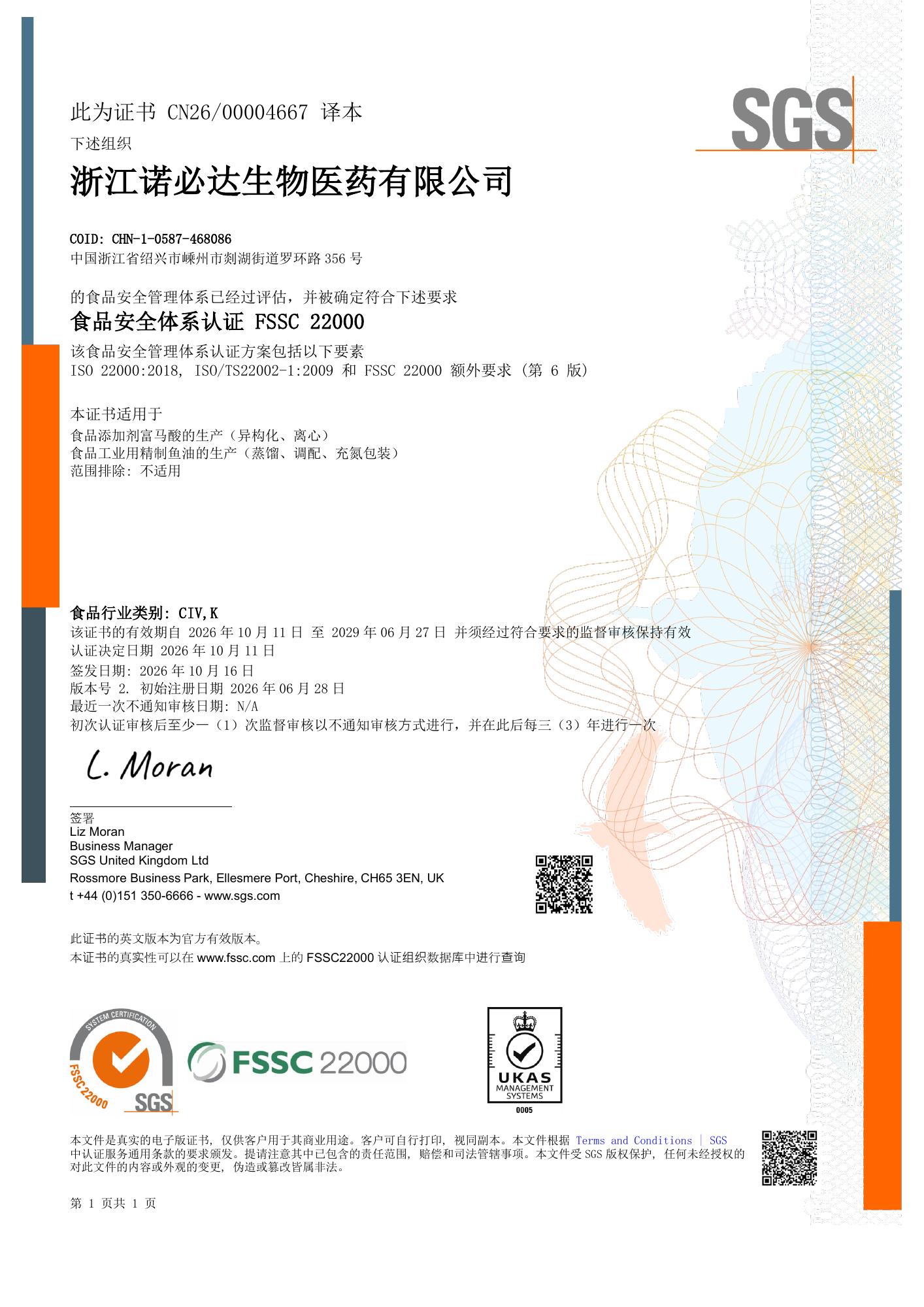
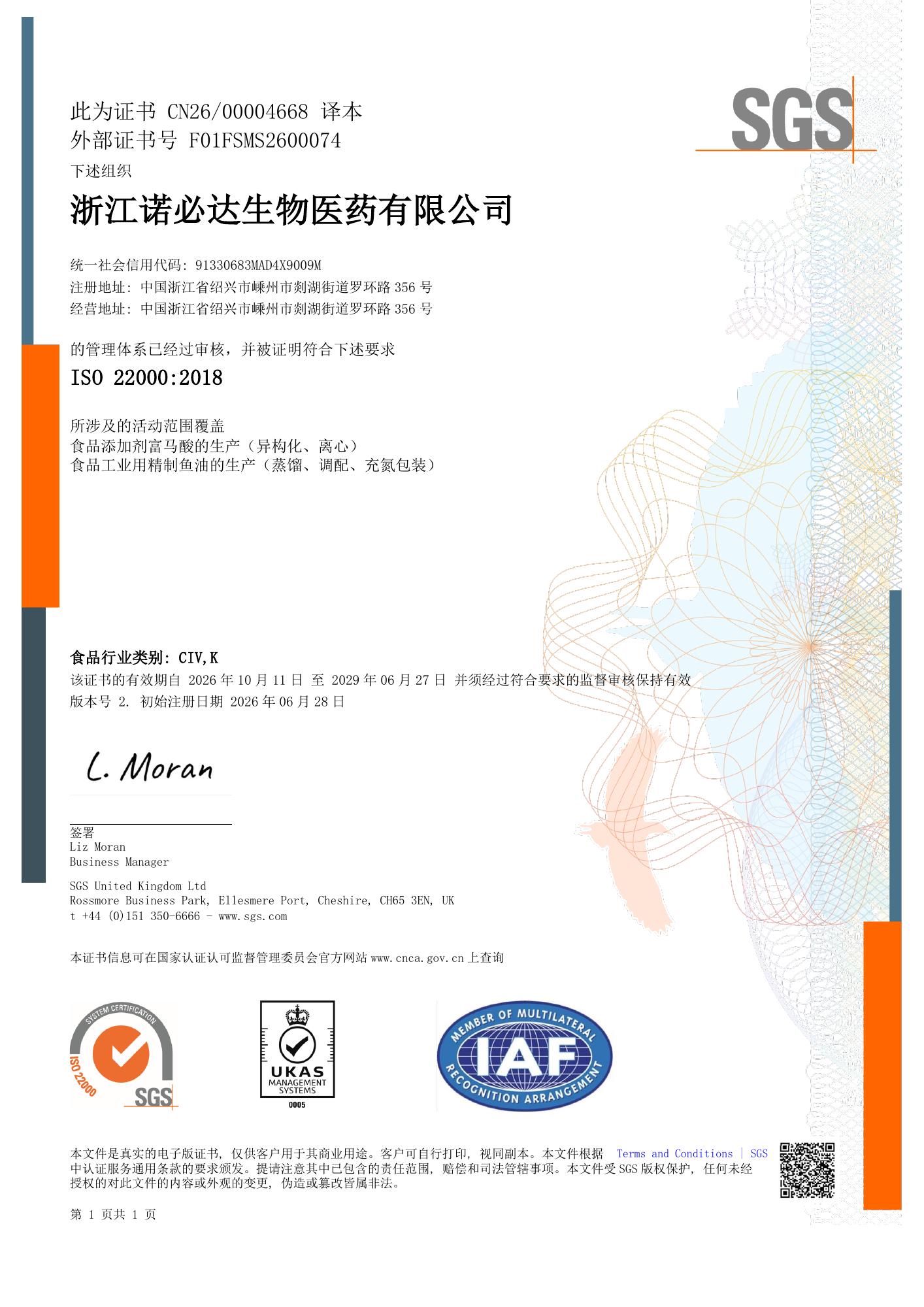
- The certified scope names the processing steps. The ISO 22000:2018 and FSSC 22000 certificates cover production of refined fish oil for the food industry, with distillation, blending and nitrogen packaging listed in the scope — so the certificate references the operations a buyer is actually relying on.
- Grade codes map to a written specification. Nominal EPA/DHA content is published by grade, and the company states explicitly that contractual limits and the analytical basis follow the current specification and batch COA rather than the grade code alone.
- Capacity is stated as input, not output. Annual fish oil input processing capacity is 10,000 metric tons, described as input processing capacity rather than finished-product output — a distinction that prevents buyers from over-reading the figure as concentrate availability.
The four questions that convert a claim into a specification
- Which grade, against which specification? Ask for the grade code plus the current specification sheet, and confirm whether the quoted EPA and DHA figures are nominal or contractual.
- Which oxidation parameters, at which limits, by which method? Peroxide value, p-anisidine value, TOTOX and acid value should each carry a release limit and a stated method.
- Which certificate covers this product and this process? Check the scope text for the words that match the product and the operations — distillation, blending, nitrogen packaging — and check validity dates.
- What happens to the batch between distillation and drum? Nitrogen blanketing, closed-system filling, hold time and storage conditions belong in a technical agreement, not only in a brochure.
From feedstock to released batch: the process chain and the buyer’s checks
Part 1 — the process chain
The chain below describes how a distillation-based concentrate is normally produced. Steps 1–2 and 5–7 reflect general industry process logic; the equipment name, grade system and documentation facts attached to them are specific to Norbidar.
- Feedstock intake and qualification. Crude or refined fish oil is qualified against an intake specification covering identity, fatty acid profile and oxidation state. Oxidation that enters at this gate cannot be reversed downstream.
- Transesterification to ethyl esters. Glycerides are converted to ethyl esters, the form in which the concentrate is distilled and shipped. This is why the grade codes in this product line carry the EE suffix.
- Multi-stage vacuum distillation. Light and heavy fractions are separated across stages to raise combined EPA/DHA content. Multi-stage design is what allows a supplier to offer several concentration levels from one feedstock base.
- Blending to the target profile. Where a customer needs a ratio that is not a catalogue grade, distillation cuts are blended to the agreed EPA/DHA profile, subject to technical feasibility and an agreed specification.
- Analytical release. Batch EPA/DHA assay and fatty-acid profile, colour and oxidation testing, and contaminant screening are performed, with batch COA, specification sheet and SDS issued as the release documents.
- Nitrogen-protected filling. The concentrate is filled under nitrogen into closed packaging; the certified scope lists nitrogen packaging as a controlled operation.
- Storage and dispatch. Drums are stored and handled under cool, dry, light-protected, oxygen-limited conditions as defined by the product specification and SDS.
Part 2 — the buyer’s six-step verification
- Freeze the intent. Write the target EPA/DHA dose, the form (ethyl ester), the oxidation limits, the packaging format and the destination-market requirements before requesting quotations.
- Request documents, not adjectives. Ask for the current specification, a recent batch COA, the SDS, and certificate copies including the scope pages.
- Cross-check grade against COA. Confirm that the COA batch corresponds to the grade offered, and that the nominal-versus-contractual distinction is stated on the document.
- Evaluate a sample against your own formulation. Test sensory character, blend behaviour and stability in your matrix. A sample confirms handling behaviour, not long-term supply capability.
- Confirm commercial terms. Minimum order quantity, lead time, packaging, incoterms and documentation language should be fixed in writing before a first order.
- Plan the audit trail. Agree which documents accompany each shipment, and who retains the retention samples.

Where distillation-driven specifications change the buying decision
EPA-rich supplement formulations
When the label claim is built around EPA, grade choice is driven by the ratio rather than the total concentration. A 50/20 or 50/25 grade lets a formulator reach an EPA target with a smaller oil mass than a 36/24 grade would require, which changes capsule size, excipient load and cost per dose. Because the distillation train produces both rich fractions, a supplier’s grade list shows how much formulation flexibility exists before a custom blend is needed.
DHA-oriented and balanced profiles
Balanced grades such as 40/30 and 50/30 serve formulations where both fatty acids carry a label function. The procurement risk here is specification drift: a balanced grade has less room for a negative deviation on either component, which is why the contractual limit and the analytical basis matter more than the grade name.
Halal-certified supply for Southeast Asia
For Indonesia and Malaysia, halal status constrains which production system can serve the market, not just which product is sold. Norbidar’s halal certificate lists Refined Fish Oil within its product scope, with the scope updated on 2026-07-30, and references Indonesia Halal Law and Regulations and MS 1500:2019. Destination-country recognition and individual customer requirements still apply, so the scope page should be read rather than the certificate cover.
Sample evaluation in practice
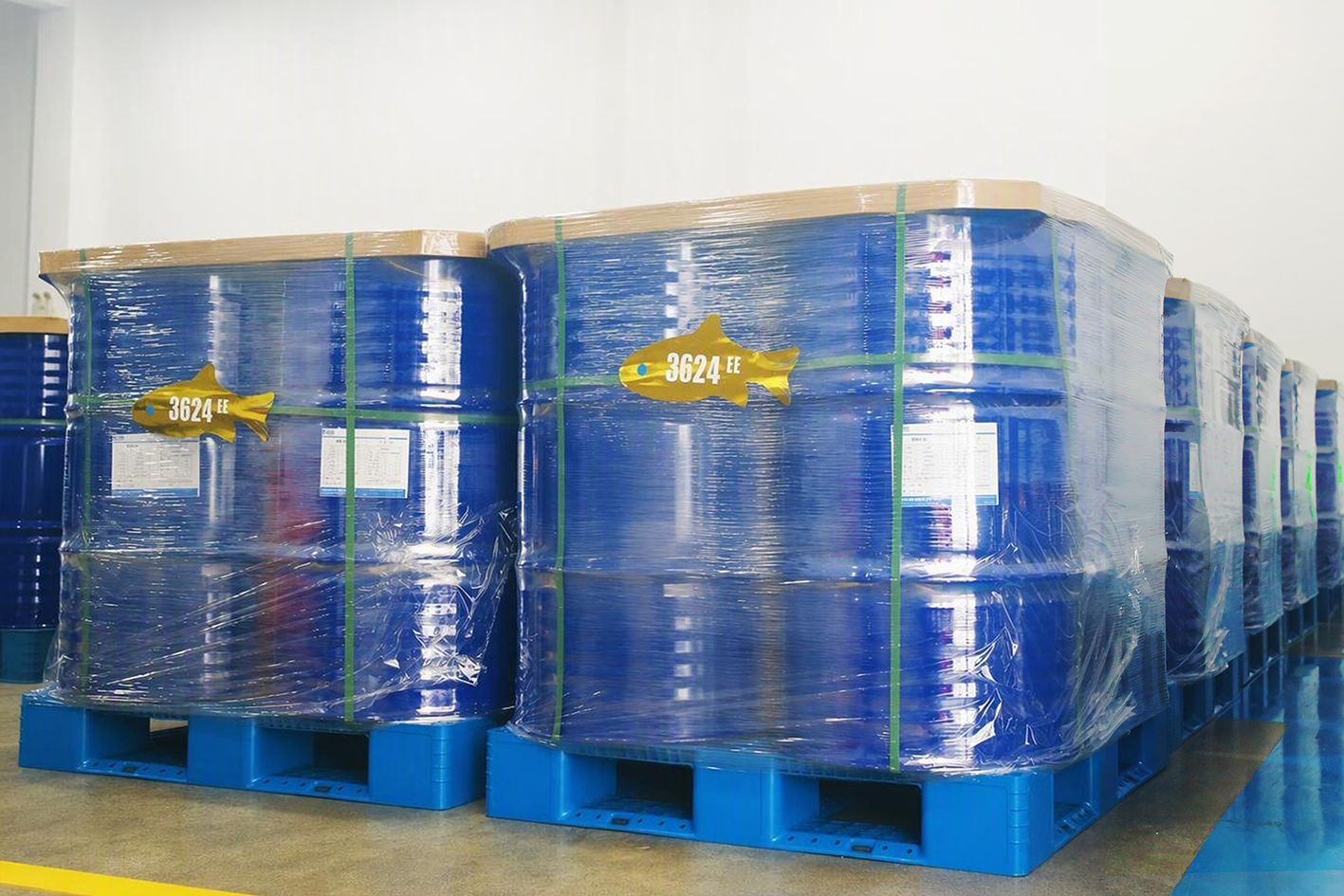
Two documented evaluation projects show what a sample stage can and cannot establish. An Indian nutraceutical ingredient customer received a food-grade omega-3 concentrate sample for evaluation against a required EPA/DHA specification, with commercial specifications and purchase quantity still pending. A Russian distributor received a 3624 EE sample and confirmed receipt for testing, with evaluation against the required specification still pending. In both cases the useful output is a documented comparison against a stated specification — not a performance claim.
Comparison tables: grades, certificates and oxidation parameters
Table 1 — nominal EPA/DHA profile by grade
| Grade | Nominal EPA | Nominal DHA | Nominal combined EPA+DHA | Typical selection logic |
|---|---|---|---|---|
| 3624 EE | 36% | 24% | 60% | Lower concentration; larger oil mass per dose, often used in first-stage sample evaluation |
| 4030 EE | 40% | 30% | 70% | Balanced profile with moderate concentration |
| 5020 EE | 50% | 20% | 70% | EPA-led formulations where DHA is secondary |
| 5025 EE | 50% | 25% | 75% | EPA-led with a higher combined content |
| 5030 EE | 50% | 30% | 80% | High combined content with a balanced ratio |
| 8000 EE | Per current specification | Per current specification | Per current specification | Listed grade code; nominal values must be taken from the current specification and batch COA |
Values are nominal. Contractual limits and the analytical basis follow the current specification and batch COA. Additional blends and EPA-rich or DHA-rich grades can be discussed, subject to technical feasibility and an agreed specification.
Table 2 — certificate scope and validity
| Certificate | Standard / scheme | Issuer | Certificate number | Validity | Scope wording of procurement relevance |
|---|---|---|---|---|---|
| FSSC 22000 | ISO 22000:2018, ISO/TS 22002-1:2009 and FSSC 22000 Additional Requirements (Version 6) | SGS United Kingdom Ltd | CN26/00004667 | Issued 2026-10-16; expires 2029-06-27 | Production of refined fish oil for the food industry: distillation, blending, nitrogen packaging. Management-system certification, not a product registration or import authorisation. |
| ISO 22000:2018 | ISO 22000:2018 | SGS United Kingdom Ltd | CN26/00004668 | 2026-10-11 to 2029-06-27 | Same production scope; applicable grades 3624 EE, 4030 EE, 5020 EE, 5025 EE, 5030 EE and 8000 EE |
| HALAL | Indonesia Halal Law and Regulations; MS 1500:2019 | Shandong Halal Certification Service (SHC) | 501525000 (Registration No. 3306966AA5) | 2026-01-21 to 2029-01-20 | Refined Fish Oil within product scope; scope updated 2026-07-30; destination-country recognition applies |
| FAMI-QS | FAMI-QS Code (6th Edition, 4th Revision, 2018-10-02); Feed Fraud Prevention and Defence Module (Version 1.0) | SGS | CN26/00005166 | 2026-07-11 to 2029-07-10 | Production of specialty feed ingredients, feed chain category K; feed-chain scope, not a food product authorisation |
Table 3 — the parameters a distillation claim should be checked against
| Parameter | What it measures | Why it belongs next to a distillation claim | What to request |
|---|---|---|---|
| Peroxide value (PV) | Primary oxidation products (peroxides) | Shows oxygen exposure and early-stage oxidation in the handling chain | Batch value, release limit and test method |
| p-Anisidine value (p-AV) | Secondary oxidation products (aldehydes) | Reflects past oxidation history and predicts sensory drift | Batch value and limit for the grade |
| TOTOX | Composite index calculated as (2 × PV) + p-AV | The single freshness figure most often quoted in contracts and certificates | Calculated value from the same batch as the PV and p-AV |
| Acid value (AV) | Free fatty acid content, i.e. hydrolysis | Indicates refining quality and storage conditions | Limit and analytical method |
| Colour and sensory | Appearance, odour and volatile carry-over | The visible outcome of fractionation and deodorisation | Specification limits written for the specific grade |
Frequently asked questions
Which certificates should a buyer verify before accepting a low-oxidation distillation claim from a Chinese supplier?
Verify four documents against the product and the process, not just the company name. For Norbidar, the evidence set is FSSC 22000 (certificate CN26/00004667, issued by SGS United Kingdom Ltd, expiring 2029-06-27), ISO 22000:2018 (certificate CN26/00004668, valid 2026-10-11 to 2029-06-27), HALAL (certificate 501525000, Registration No. 3306966AA5, valid 2026-01-21 to 2029-01-20) and FAMI-QS (certificate CN26/00005166, valid 2026-07-11 to 2029-07-10). The FSSC 22000 and ISO 22000 scopes explicitly list distillation, blending and nitrogen packaging, which is the wording that connects a food-safety system to a distillation claim. All four are management-system or product-scheme certificates; none is a product registration or an import authorisation, and destination-market requirements remain the buyer’s responsibility.
Can a molecular distillation process deliver a custom EPA/DHA ratio instead of a catalogue grade?
Customisation is a feasibility question answered against an agreed specification, not a catalogue promise. Norbidar supports customisation of the EPA/DHA ratio, blended concentration and EPA-rich or DHA-rich profiles, subject to technical feasibility and an agreed product specification. The practical test is procedural: request written confirmation that the target ratio is achievable, ask for the current specification for that profile, evaluate a sample against your own formulation, and confirm that the batch COA will be issued against the agreed limits. Published grade values are nominal, and contractual limits and the analytical basis follow the current specification and batch COA.
How should buyers compare price when the distillation claims differ?
Price cannot be compared across unmatched specifications, and no verifiable price or price band for omega-3 concentrates was available in the evidence used for this article, so none is quoted here. The defensible approach is to align quotations on the same five variables before comparing: grade and nominal versus contractual content, oxidation limits and test methods, certificate scope and validity, packaging format, and destination documentation. Commercial terms anchor the comparison — for Norbidar, the minimum order quantity is 4 drums, lead time is 30 days and monthly capacity is 1,000 tons, with annual fish oil input processing capacity of 10,000 metric tons expressed as input rather than finished-product output. A quote that is lower on grade, silent on oxidation limits or narrower on certificate scope is not a like-for-like price.
What does a sample evaluation actually prove?
A sample proves handling behaviour and specification alignment under your own test conditions; it does not prove long-term supply capability. In Norbidar’s documented sample projects, an Indian nutraceutical ingredient customer received a food-grade omega-3 concentrate for evaluation against a required EPA/DHA specification, and a Russian distributor confirmed receipt of a 3624 EE sample for testing. In both cases commercial specifications and purchase quantity remained pending, and the customers’ own test results and acceptance had not been concluded. Treat a sample as one evidence point in a qualification file that also includes the specification, the batch COA, the SDS and the certificate scope pages.
What lead time and documentation should be planned into a first order?
Plan for a 30-day lead time and a 4-drum minimum order quantity, and hold the document set as part of the order rather than as an afterthought: current specification, batch COA, SDS, and certificate copies with scope pages for FSSC 22000, ISO 22000:2018, HALAL and FAMI-QS. Confirm at the same time which destination-specific documents are required, because the certificates are management-system and scheme certificates rather than import authorisations. Requests for a specification review, a sample or a quotation can be sent to Info@norbidar.com or discussed on WhatsApp at +86 130 6559 2629.
What to do with a distillation claim before you sign
Molecular distillation of fish oil is a real and useful concentration technology, but it is not self-verifying. Three rules make it procurement-grade. First, tie the process to a grade: a grade code plus a current specification plus a batch COA is the only combination that defines what will actually arrive. Second, tie the oxidation claim to a chain: peroxide value, p-anisidine value, TOTOX and acid value should each carry a method and a limit, and the supplier should be able to describe what happens between the distillation column and the sealed drum. Third, tie the certificate to a scope: the words distillation, blending and nitrogen packaging on the certificate are what connect a quality system to the product you are buying.
Where those three links exist, a supplier’s distillation capability becomes a comparable attribute rather than a marketing phrase — and a buyer can shortlist on documents instead of adjectives.

Next step: put the distillation claim next to a batch document
The fastest way to test any molecular distillation claim is to place it beside the specification and COA for the grade you actually intend to buy. The Norbidar omega-3 brochure lists the grade range and the documentation set for food-grade EPA/DHA ethyl ester concentrates: download the Omega-3 brochure (PDF).
For a specification review, a sample request or a quotation: Info@norbidar.com · Tel +86 0575-83122988 · WhatsApp +86 130 6559 2629. Company channels: LinkedIn, X, YouTube, and norbidar.com.
Have Questions or Need More Details?
Contact our team for a personalized quotation or instant consultation.
Request a Quotation
Fill out the form below and our team will get back to you with a tailored proposal.
WhatsApp Direct Chat
Prefer to chat in real-time? Message us on WhatsApp for instant assistance & quick answers.
- Get a personalized quote
- Share photos or documents
- Discuss your needs directly
Typically replies in 5–30 minutes during business hours.