
Pet Supplement ODT vs ODF: Fast-Dissolve Matrix and Dosage Specs
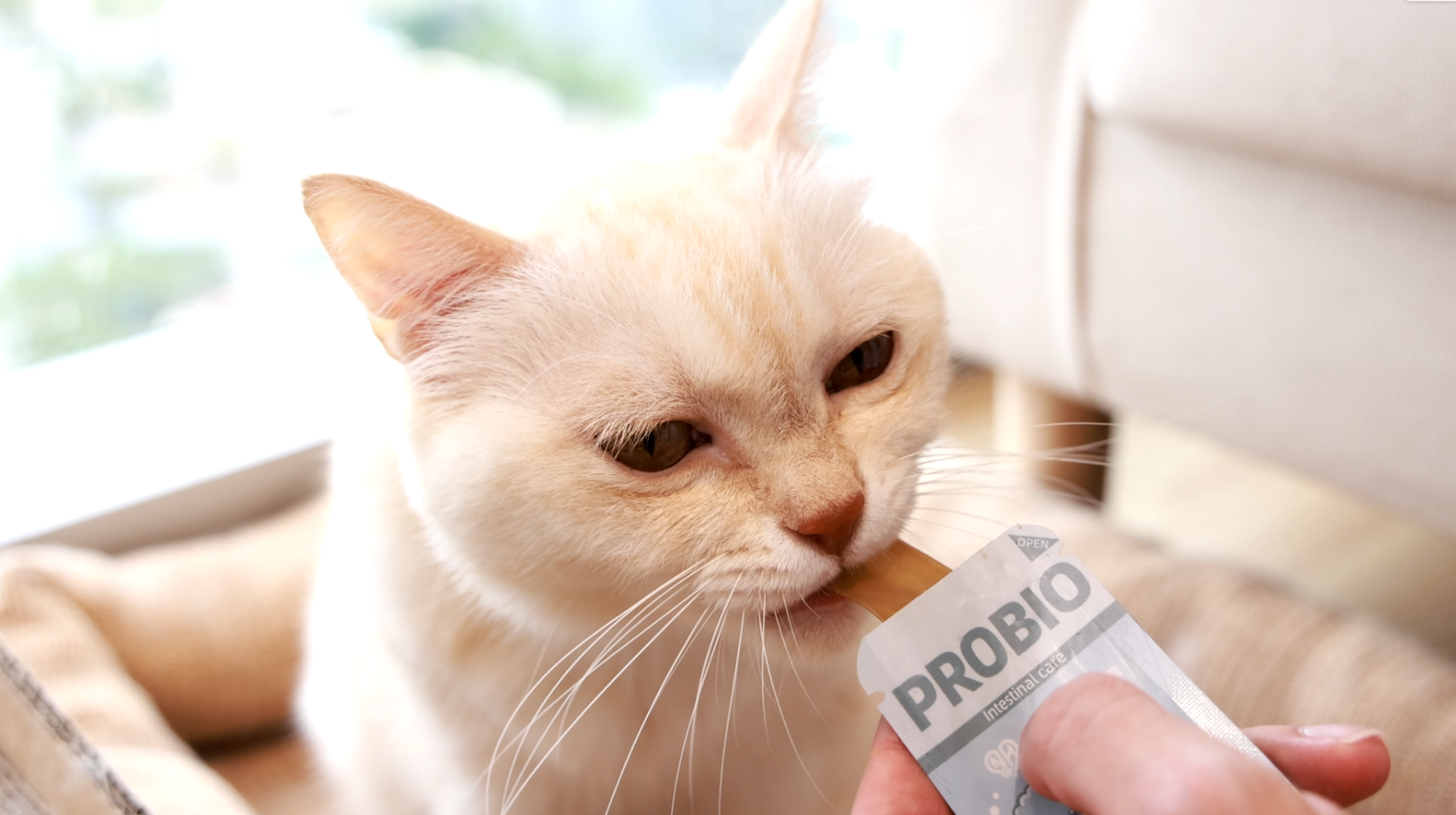
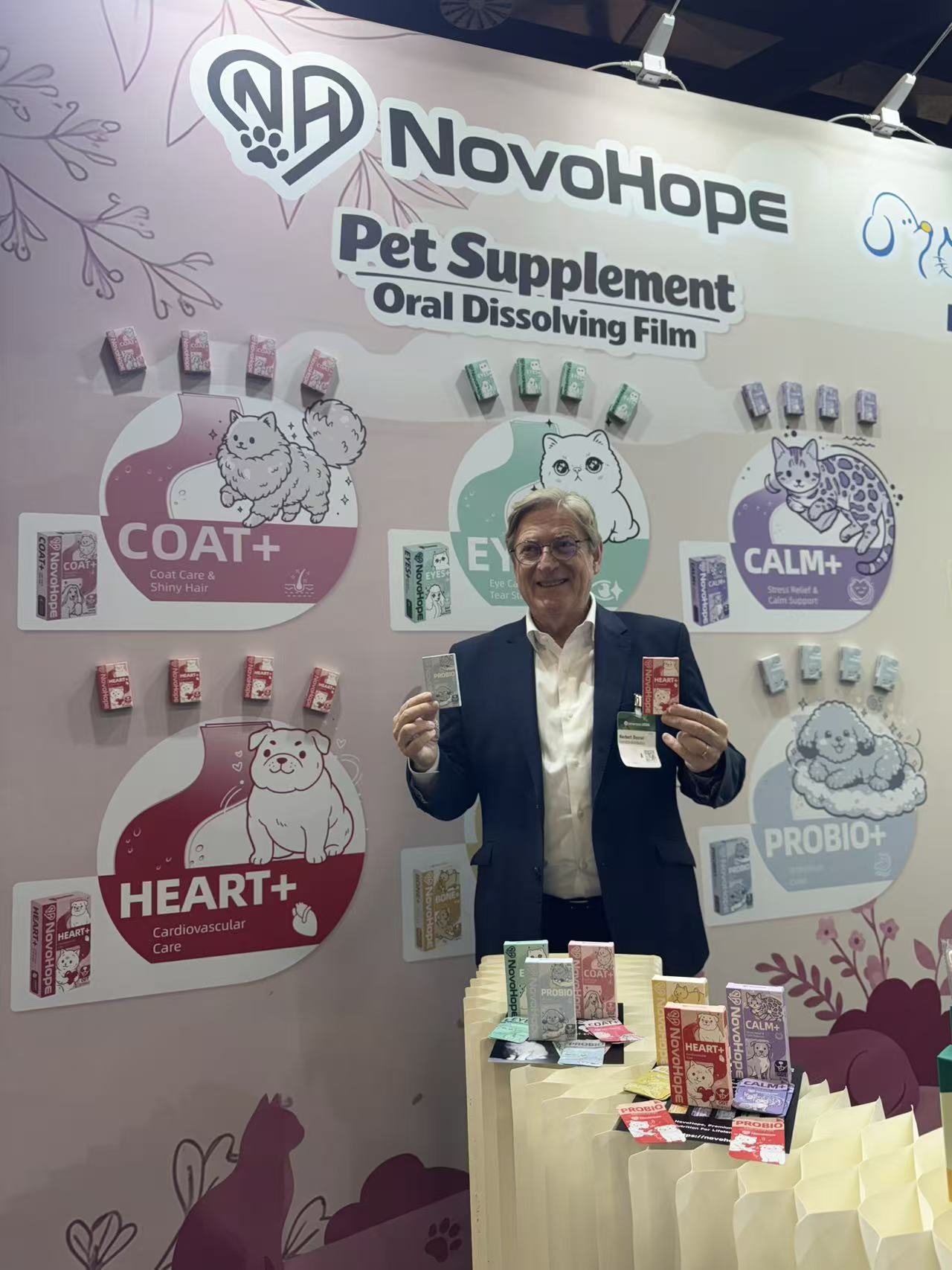
Pet supplement ODT and ODF formats are two physical units built on the same oral fast-dissolving matrix. ODT (orally disintegrating tablet) and ODF (orally disintegrating film) both dissolve on contact with pet saliva and deliver nutrients through the oral mucosa, so the practical selection question for formulators and brand buyers is not which format is more advanced. It is which unit mass, pack count and nutrient payload fit a specific project. In the Novohope pet health supplement range, HEART+, PROBIO, FIT+, BONE+ and CALM+ are published as ODT, while EYES+ and COAT+ are published as ODF. Published unit masses are 2.1 g and 2.5 g, with 10 units per pack.
This guide compares the two formats strictly on measurable parameters: form, matrix, specification and target nutrient category. It maps model designations to the payloads they carry, including HEART+ for cardiovascular nutrients, PROBIO for probiotic digestive nutrients, EYES+ for eye care and tear stain care, and FIT+ for weight management ingredients, and it closes with a practical parameter checklist for pet healthcare product selection.
Problem Definition: ODT vs ODF Is a Specification Decision
Because ODT and ODF share one delivery mechanism, a format label alone does not tell a buyer what happens in the pet's mouth, how much a single unit weighs, or how long a pack lasts. In the published Novohope specification sheets, three parameters carry almost all of the decision weight: dosage form, unit mass and pack count. Three misreads appear repeatedly in early project briefs.
- Assuming unit mass is uniform across a range. Published unit masses are 2.1 g for HEART+, BONE+ and EYES+, and 2.5 g for PROBIO, COAT+ and CALM+. FIT+ is published with a pack count of 10 pcs and no unit mass.
- Assuming unit mass tracks the dosage form. It does not. ODT models appear at both 2.1 g (HEART+, BONE+) and 2.5 g (PROBIO, CALM+). ODF models also appear at both 2.1 g (EYES+) and 2.5 g (COAT+).
- Assuming '10' means the same thing in every pack spec. Pack notation is not uniform either. PROBIO, HEART+, BONE+ and COAT+ are listed as 10 pcs, while CALM+ is listed as 10 Films despite being published in ODT form.
None of these is a defect. Each is a verification point that belongs in the sourcing checklist, because unit mass and pack notation feed directly into label artwork, dosing instructions and retail pack strategy.
Industry Background: Fast-Dissolving Formats in a Growing Category
Pet supplement demand continues to expand, and format-level competition is expanding with it. Grand View Research values the global pet supplements market at approximately USD 2.8 billion in 2025 and projects growth to USD 4.6 billion by 2033. Mordor Intelligence estimates the pet dietary supplements segment specifically will reach USD 5.11 billion by 2026, growing at a CAGR of 7.42% through 2031.
Market-size estimates diverge by classification rather than by disagreement over direction: Mordor Intelligence places the 2025 pet supplement market at USD 4.76 billion, while Grand View Research reports USD 2.8 billion. The gap reflects the difference between a broad 'pet supplements' definition and a narrower 'veterinary dietary supplements' definition. Buyers citing market data in a business case should state which definition they are using.
- North America accounted for 48.1% of global pet supplement revenue share in 2025 (Grand View Research).
- Asia-Pacific is projected as the fastest-growing region, driven by rising pet humanization and healthcare expenditure in China and India (Mordor Intelligence).
- Oral dissolvable film innovation in the pet sector is focusing on disintegration times below 25 seconds and taste-masking palatability improvements of up to 47% (Market Reports World).
- In the United States, the National Animal Supplement Council (NASC) Quality Seal is a recognized industry standard requiring adherence to Good Manufacturing Practices and rigorous labeling audits.
The practical consequence for format selection is that buyers now compare delivery units on measurable behavior: how quickly a unit dissolves, what it weighs, how many units a pack contains, and which nutrient category the unit is built to carry.
The Shared Oral Fast-Dissolving Matrix
Both Novohope dosage forms are built on one oral fast-dissolving matrix, and that matrix is the reason ODT and ODF behave alike at the point of administration. Its published characteristics are consistent across the range.
- Structure: a thin sheet, comparable to paper in thinness, that carries the active nutrients.
- Activation: the unit dissolves rapidly within 10 seconds on contact with pet saliva.
- Absorption pathway: active ingredients are absorbed directly through the oral mucosa and enter the bloodstream, rather than passing through the stomach and intestines.
- Claimed absorption: Novohope states a claimed absorption rate of up to 95% for mucosal delivery, compared with approximately 35% for traditional formats. This is a manufacturer claim rather than an independently verified figure, and it should be treated as a formulation-positioning statement during supplier evaluation.
- Dosage control: the content of each unit is precisely controlled, so each administration carries a consistent dose.
- Administration and storage: room-temperature storage, no tools, no mixing into food and no forced feeding. The pet licks the unit and the process completes itself, with no special usage requirement beyond selecting the model that matches the pet's issue.
Because the matrix is shared, ODT and ODF do not differ in dissolution mechanism. They differ in the physical unit, in the specification the unit is published under, and in the nutrient payload that unit is designed to carry.
ODT vs ODF: What Actually Differs in Unit Design
ODT is published as a tablet unit and ODF as a film or strip unit. The weight spread is narrow but real: published ODT unit masses run from 2.1 g (HEART+, BONE+) to 2.5 g (PROBIO, CALM+), and published ODF unit masses are 2.1 g (EYES+) and 2.5 g (COAT+). ODF specifications are published with both metric and imperial net weight, for example 2.1 g / 0.074 oz and 2.5 g / 0.088 oz, which simplifies artwork for markets that label in ounces.
Format follows payload in the current range, not the reverse. Eye care and coat health models are published as ODF. Cardiovascular, digestive, joint, weight management and calming models are published as ODT. A buyer who starts from the format and then looks for a payload is working backwards; the correct sequence is to fix the nutrient category first and read the published form from the model that carries it.
Handling is effectively identical between the two forms. Both dissolve on saliva contact, both are stored at room temperature, and both are administered by the pet licking the unit with no tools or preparation steps.
Dosage Specs Decoded: 2.1 g, 2.5 g and 10 Units per Pack
Unit mass is a packaging and handling parameter, not a direct measure of active dose. The 0.4 g difference between a 2.1 g and a 2.5 g unit covers the matrix and the full payload together, while active content is quantified separately in the formulation panel. A heavier unit is therefore not automatically a stronger dose, and a buyer comparing units across models should compare the quantified actives rather than the total unit weight.
Quantified actives published across the Novohope oral film range include Taurine at 50 mg, L-Carnitine at 35 mg, Coenzyme Q10 at 10 mg, Vitamin E at 5 IU, Glucosamine HCl at 100 mg, hydrolyzed collagen peptides at 90 mg, undenatured type II collagen (UC-II), alpha-casozepine at 100 mg, L-theanine at 50 mg, N-acetylglucosamine (NAG) at 28.22 mg, sodium hyaluronate, N-acetyl-L-cysteine (NAC), DHA and biotin, Bacillus coagulans (GBI-30, 6086) at 1x10^9 CFU, Pediococcus acidilactici CCFM6432 at 1x10^9 CFU, and pasteurised Akkermansia muciniphila postbiotic at 12 mg. The panel is published at range level; which active appears in a given SKU follows the target nutrient category of that model, so buyers should confirm the bill of materials for the specific model before finalizing artwork or claims.
Pack count is the second dosage parameter and it is uniform: 10 units per pack across the published line. That converts directly into a dosing window. At one unit per day, a 10-unit pack equals ten days of supply, which is a pack-size and subscription-strategy input rather than a clinical claim. For retail and chain supermarket listings, a fixed 10-unit pack also standardizes shelf facings and case calculations across models, which simplifies multi-SKU launches considerably.
Label terminology check
CALM+ is published in ODT form with the pack notation '10 Films' and a specification of 2.5 g / 0.088 oz, while other ODT models use '10 pcs'. Because pack-unit terminology can vary between SKUs, confirm the exact wording that will appear on pack (piece, film, strip or tablet) against the labeling requirements of the destination market before print.
Model-to-Payload Mapping: HEART+, PROBIO, EYES+ and FIT+
The range is organized so that a project brief can be written in a single line: nutrient category, model, dosage form, unit mass, pack count. The four models most frequently specified by formulators and brand buyers are mapped below, together with the other published models in the same range for completeness.
| Model | Dosage form | Published specification | Target nutrient category |
|---|---|---|---|
| HEART+ | ODT (orally disintegrating tablet) | 2.1 g (10 pcs) | Cardiovascular nutrients |
| PROBIO | ODT (orally disintegrating tablet) | 2.5 g (10 pcs) | Probiotic digestive nutrients |
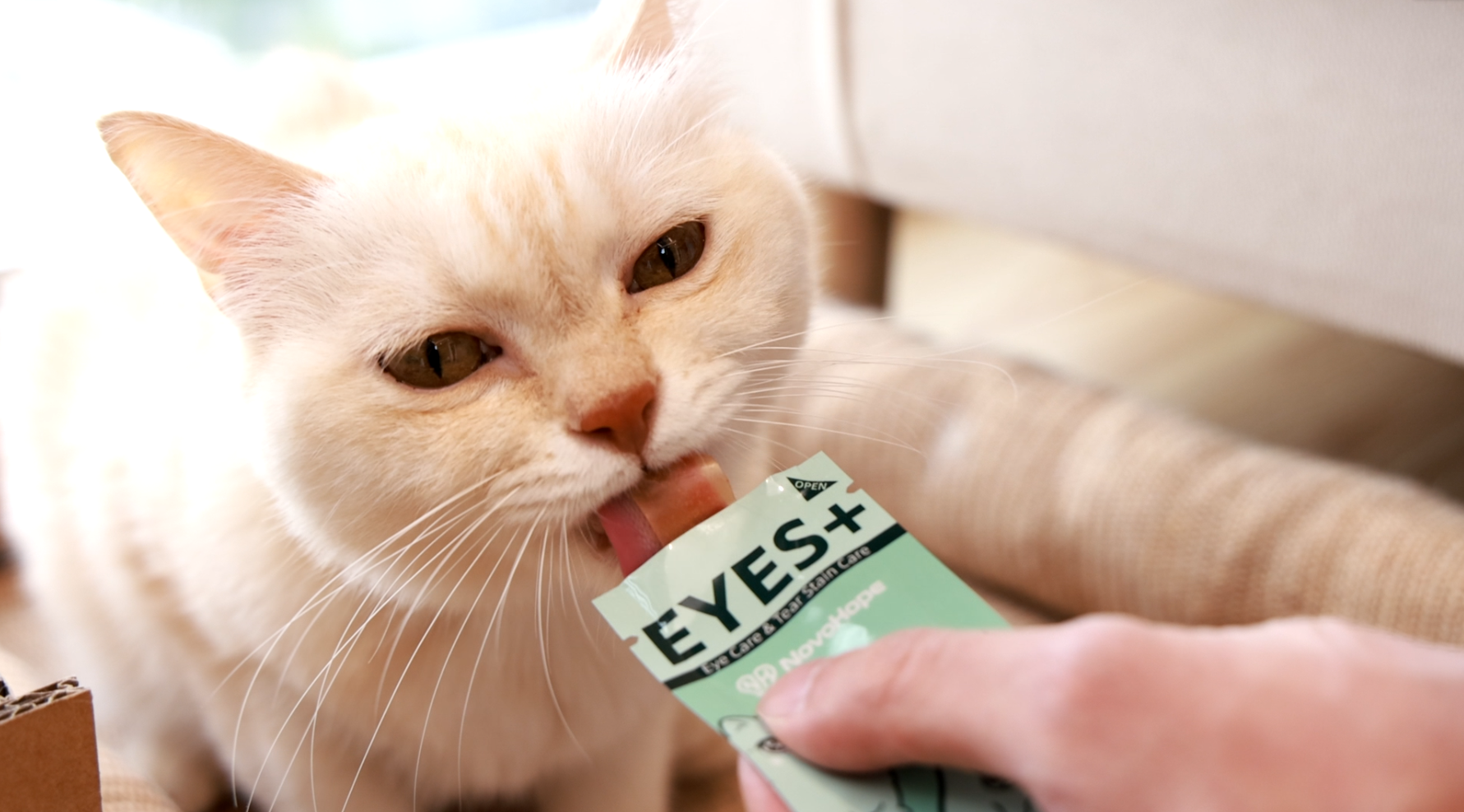
| EYES+ | ODF (orally disintegrating film) | 2.1 g / 0.074 oz | Eye care nutrients |
| FIT+ | ODT (orally disintegrating tablet) | 10 pcs | Weight management ingredients |
| BONE+ | ODT (orally disintegrating tablet) | 2.1 g (10 pcs) | Joint nutrients |
| CALM+ | ODT (orally disintegrating tablet) | 2.5 g / 0.088 oz (10 Films) | Calming ingredients |
| COAT+ | ODF (orally disintegrating film) | 2.5 g / 0.088 oz (10 pcs) | Coat health nutrients |
HEART+ is formulated to provide targeted nutritional support and daily maintenance for a pet's heart and vascular health. PROBIO combines the oral fast-dissolving matrix with probiotic digestive nutrients for intestinal care and probiotic support, healthy digestion and nutrient absorption, and improved overall coat condition. EYES+ is formulated to support overall vision health and to proactively manage or reduce tear stains for a cleaner, brighter appearance. FIT+ is formulated to help manage appetite and promote healthy lean body mass so pets stay active.

The remaining three models follow the same logic. BONE+ supports healthy joints, bone health and mobility in ODT form at 2.1 g. CALM+ uses calming ingredients to soothe anxiety and reduce stress in situations such as travel, loud noises or separation. COAT+ nourishes the skin and promotes a shiny, healthy coat in ODF form at 2.5 g. Across all seven models, the material specification is the same base: an oral fast-dissolving matrix plus the functional nutrient group named for that model.
Step-by-Step Breakdown: Selecting a Format and Specification
- Fix the target nutrient category first. Decide whether the project addresses cardiovascular, digestive, eye care, weight management, joint, calming or coat health support. This single decision eliminates most of the range immediately.
- Map the category to a published model. Cardiovascular to HEART+, probiotic digestive to PROBIO, eye care and tear stain to EYES+, weight management to FIT+, joint to BONE+, calming to CALM+, coat and skin to COAT+.
- Read the dosage form from the model. HEART+, PROBIO, FIT+, BONE+ and CALM+ are published as ODT; EYES+ and COAT+ are published as ODF. Do not select the form first and then search for a payload.
- Confirm unit mass and net weight. Verify whether the model is 2.1 g (0.074 oz), 2.5 g (0.088 oz), or published by pack count only, as with FIT+ at 10 pcs.
- Confirm pack count and the resulting administration cycle. The published line uses 10 units per pack, which at one unit per day defines a ten-day dosing window per pack.
- Verify the quantified active panel for that specific SKU. Unit mass is not a proxy for active dose, so the bill of materials must be checked model by model.
- Verify documentation. Confirm United States FDA food registration, GS1 international product code, SDS and COA test documentation, and the quality-control regime of 100% full inspection before delivery plus third-party authoritative sampling testing.
- Confirm commercial parameters. Minimum order quantity is 3,000 per SKU, lead time is 35 to 45 days, monthly capacity is 200,000,000 units, and OEM/ODM customization covers recipe, brand, packaging design and other customized requirements.
Use Cases: Matching Format to Project Scenario
The specification decision is easiest to test against real project scenarios. Four are typical for this range.
- Tear stain and eye care projects. EYES+ in ODF form at 2.1 g / 0.074 oz is the published match, since tear stain management and vision support sit in the eye care nutrient group.
- Digestive and gut health projects. PROBIO in ODT form at 2.5 g with 10 pcs per pack is the published match, covering intestinal care, probiotic support and nutrient absorption.
- Cardiovascular maintenance projects. HEART+ in ODT form at 2.1 g with 10 pcs per pack is the published match for daily heart and vascular nutritional support.
- Weight management projects. FIT+ in ODT form with 10 pcs per pack is the published match for appetite management and lean body mass support.
Channel fit matters as much as nutrient fit. These products are positioned for wholesale and retail distribution, supermarkets, brand chain stores and the food distribution industry, with common markets including Germany, the United States, Canada, the United Kingdom, France, Hong Kong, Italy, Jamaica, Japan, South Korea and Kuwait. Room-temperature storage and the absence of any preparation step are what make the format practical for shelf retail and for pet owners who travel.
A representative project profile in the published case data is a European private-label and ODM engagement covering 200,000 units for chain supermarkets and retail stores over a three-year duration, with results reported as increased pet health category sales volume, favorable market feedback and stable repeat orders. The stated project highlights were green safety, ease of use, and pets not resisting administration.
Comparison Table: ODT vs ODF by Measurable Parameter
| Parameter | ODT (Orally Disintegrating Tablet) | ODF (Orally Disintegrating Film) |
|---|---|---|
| Physical unit | Tablet unit | Film or strip unit |
| Published models in the Novohope range | HEART+, PROBIO, FIT+, BONE+, CALM+ | EYES+, COAT+ |
| Published unit mass | 2.1 g (HEART+, BONE+); 2.5 g (PROBIO, CALM+); FIT+ published as 10 pcs | 2.1 g / 0.074 oz (EYES+); 2.5 g / 0.088 oz (COAT+) |
| Published pack count | 10 pcs (CALM+ published as 10 Films) | 10 pcs |
| Matrix material | Oral fast-dissolving matrix plus the named nutrient group | Oral fast-dissolving matrix plus the named nutrient group |
| Dissolution behavior | Rapid dissolution within 10 seconds on saliva contact | Rapid dissolution within 10 seconds on saliva contact |
| Absorption pathway | Oral mucosa, entering the bloodstream directly | Oral mucosa, entering the bloodstream directly |
| Administration | Pet licks the unit; no tools, no forced feeding | Pet licks the unit; no tools, no forced feeding |
| Storage | Room temperature | Room temperature |
| Nutrient categories carried | Cardiovascular, probiotic digestive, weight management, joint, calming | Eye care and tear stain care, coat and skin health |
The table shows why the two formats are usually not interchangeable in a live project. The unit mass spread appears in both columns, so mass cannot be used to identify a format, and the pack count is identical at 10 units. The only reliable differentiator in the published range is the nutrient category the model carries and the form published for that model.
Compliance, Quality Control and Supply Parameters
Format and dosage specs answer the technical question; documentation answers the sourcing question. Novohope's oral fast-dissolving pet supplements hold United States FDA food registration, carry a GS1 international product code, and are supported by SDS and COA test documentation, forming a documented quality-control system for international distribution.
Quality control on the production side combines 100% full inspection before delivery with third-party authoritative sampling testing. For brand owners entering the United States market, the NASC Quality Seal is the relevant external benchmark: it requires adherence to Good Manufacturing Practices and rigorous labeling audits, and it is worth aligning label and claim language to that standard during product development rather than after launch.
Supply parameters published for the line are: monthly capacity of 200,000,000 units, minimum order quantity of 3,000 per SKU, lead time of 35 to 45 days, export coverage across Europe, North America, Southeast Asia, the Middle East and East Asia, and remote after-sales support. Customization is available across recipe, brand and packaging design, which is what allows a single oral fast-dissolving matrix to support a multi-SKU private-label range rather than a single hero product.
Specification checks that most affect a launch timeline
- Unit mass confirmed in both grams and ounces before artwork is released.
- Pack-unit wording agreed (piece, film, strip or tablet) per SKU.
- Active panel confirmed per model, not inferred from unit weight.
- Pack count and dosing window agreed with the retail or subscription plan.
- Registration, SDS and COA documentation confirmed for the destination market.
Frequently Asked Questions
What quality and compliance documentation should buyers verify for pet supplement ODT and ODF products?
Buyers should verify four document sets before committing to production. First, United States FDA food registration for the manufacturing facility. Second, a GS1 international product code for retail identification. Third, SDS and COA test documentation covering safety and analysis. Fourth, the quality-control regime itself, which for this range is 100% full inspection before delivery combined with third-party authoritative sampling testing. For the United States market specifically, the NASC Quality Seal is a recognized industry standard that requires adherence to Good Manufacturing Practices and rigorous labeling audits, and it is a useful external benchmark against which to cross-check label and claim wording.
Can one pet health supplement oral film manufacturer supply both ODT and ODF formats for a private-label launch?
Yes. In the Novohope range, five models are published as ODT (HEART+, PROBIO, FIT+, BONE+ and CALM+) and two are published as ODF (EYES+ and COAT+), and all seven share the same oral fast-dissolving matrix. Because the matrix is common, one production line and one quality-control regime can support a multi-SKU private-label range. Customization is available across recipe, brand, packaging design and other customized requirements, with monthly capacity of 200,000,000 units and an MOQ of 3,000 per SKU, which makes both single-SKU private label and broader multi-SKU launches feasible for the same supplier relationship.
What MOQ and lead time should a private-label pet supplement project plan for?
The published commercial parameters for the Novohope oral fast-dissolving line are a minimum order quantity of 3,000 per SKU and a lead time of 35 to 45 days, supported by monthly capacity of 200,000,000 units. Lead time applies after specification freeze, which is why unit mass, pack notation and active panel should be confirmed before the order is placed rather than during artwork approval. Export coverage spans Europe, North America, Southeast Asia, the Middle East and East Asia, and after-sales support is provided remotely.
How should a brand owner validate an ODT or ODF format before full production?
Validation follows the same four parameters used throughout this guide: form, matrix, specification and target nutrient category. Start by fixing the nutrient category and reading the dosage form from the published model, then confirm the unit mass (2.1 g or 2.5 g, with FIT+ published as 10 pcs), the pack count (10 units per pack) and the quantified active panel for that specific SKU. With those four parameters locked, a sample request and a quotation against the MOQ of 3,000 per SKU can be issued on the same specification sheet, which removes most of the rework risk between sampling and mass production. Brand and product information for the range is published at novohope.com.
Conclusion: The Parameter Checklist for Pet Supplement Format Selection
ODT and ODF in pet supplements share one oral fast-dissolving matrix, dissolve within 10 seconds on saliva contact, are absorbed through the oral mucosa, store at room temperature and require no tools or forced feeding. Once that common ground is fixed, the format decision reduces to four parameters that a buyer can verify on paper before any commercial commitment.
- Form: ODT (HEART+, PROBIO, FIT+, BONE+, CALM+) or ODF (EYES+, COAT+), as published for the selected model.
- Matrix: oral fast-dissolving matrix, 10-second dissolution on saliva contact, mucosal absorption, room-temperature storage.
- Specification: unit mass of 2.1 g or 2.5 g (net weight 0.074 oz or 0.088 oz where imperial labeling applies), 10 units per pack, with pack-unit wording confirmed per SKU.
- Target nutrient category: cardiovascular, probiotic digestive, eye care and tear stain, weight management, joint, calming or coat health.
Add the commercial layer, MOQ of 3,000 per SKU, lead time of 35 to 45 days and capacity of 200,000,000 units per month, and the selection can be documented without assumptions about what a format label implies. That is the difference between choosing a delivery format by appearance and specifying one by parameter.
Next step
If a project brief already specifies a nutrient category, the fastest route to a firm specification is a sample request plus a quotation against the published unit mass, pack count and model designation. Novohope supplies ODT and ODF pet health supplements on the same oral fast-dissolving matrix, with OEM and ODM customization across recipe, brand and packaging design.
Send the target model (HEART+, PROBIO, EYES+, FIT+, BONE+, CALM+ or COAT+), the required unit mass, and the destination market. Samples, quotations and the full specification sheet are issued against the confirmed MOQ of 3,000 per SKU.

Have Questions or Need More Details?
Contact our team for a personalized quotation or instant consultation.
Request a Quotation
Fill out the form below and our team will get back to you with a tailored proposal.
WhatsApp Direct Chat
Prefer to chat in real-time? Message us on WhatsApp for instant assistance & quick answers.
- Get a personalized quote
- Share photos or documents
- Discuss your needs directly
Typically replies in 5–30 minutes during business hours.