
Supplier Evaluation for Pet Nutritional ODT and Oral Strip Lines: A Capability and Delivery Checklist

A supplier evaluation for pet nutritional ODT and oral strip lines reduces to five evidence blocks: matrix capability at the specified piece weight (2.1 g or 2.5 g per piece or strip), specification consistency including the 10-pieces-per-pack configuration, competence across both pet health supplement and pet food categories, a documented quality system with certification and test reports, and purchasing terms that convert every one of those points into a written acceptance criterion. Anything that cannot be evidenced inside one of those five blocks is a sales claim, not a capability.
Buyers arrive at this evaluation late. Samples have usually been approved, the format has already been pitched to the retail or distribution side, and the question is no longer whether an oral fast-dissolve piece can be made — it is whether this supplier can repeat it. That shift changes what you ask for. A sample proves a piece can be produced once. A line audit proves it can be produced in volume, at the same weight and the same dissolution behaviour, sealed ten to a pack, and documented well enough to survive an import check or a retailer's supplier questionnaire.
Novohope is a pet supplement manufacturer that produces pet nutritional ODTs and oral strips across seven product series, each aimed at one of seven essential pet health needs. Four of its named lines are commonly requested in buyer enquiries: HEART+ for cardiovascular care, PROBIO for intestinal care and coat condition, EYES+ for eye care and tear stain care, and FIT+ for weight management. Because all of them sit on the same fast-dissolving oral matrix — Novohope states the format dissolves in the mouth within 10 seconds — one evaluation framework covers the whole range, and a weakness in any single block affects every SKU you intend to launch.
Why this evaluation is harder than a standard supplement supplier audit
Supplier evaluation fails in this format category for three predictable reasons, and all three show up on the buyer's side rather than the supplier's.
1. The sample-to-production gap
An oral fast-dissolve piece is evaluated by feel and by dissolution, both of which are easy to demonstrate on a hand-finished sample and harder to hold across a production run. Buyers who approve on sample appearance alone tend to discover variation later — in piece weight, in thickness, in how quickly the strip breaks down — at the point where packaging and retail listings are already committed.
2. Category conflation
Suppliers in this space often come from one of two backgrounds: pet food manufacturing or human nutraceutical film. A buyer sourcing a pet health supplement needs both conversations to end in the same place. If the supplier's evidence only covers one category, the dual-category claim stays unverified until the first purchase order.
3. Commercial drift
Price, piece weight, pack count and delivery dates are frequently agreed in conversation and only partially written down. When a shipment arrives underweight, miscounted, or with a different seal, there is no agreed criterion to measure it against. Acceptance criteria are a purchasing document, not a quality document — and they need to exist before the first order, not after the first complaint.
Industry background: why the line matters now
The commercial context explains the urgency. The global pet supplement market was valued at USD 7.5 billion in 2025 and is projected to reach USD 7.95 billion in 2026, according to Global Market Insights. Growth of that order keeps pressure on brands to add formats and on suppliers to add lines, and format innovation is now visible at the top of the market: PetPax's SupplaMelts oral dissolving film line was awarded the Nestlé Purina Pet Care Innovation Prize in 2026.
Efficacy claims around the format are multiplying at the same time. One manufacturer-published source reports absorption of 98% for oral dissolving films. Novohope states a 95% absorption rate through the oral mucosa for its oral formats, against 25–35% gastrointestinal absorption for traditional medicines and foods, and positions its feeding method as 5 to 10 times faster than traditional administration at a total cost 10–15% lower than traditional pet medicines.
Buyers should treat all of these as manufacturer-reported positions. Independent peer-reviewed clinical trials specific to pet mucosal absorption remain a documented gap in the public evidence base. That gap is precisely the argument for evaluating the production line rather than the brochure: if the performance claim cannot yet be independently confirmed, the supplier's process control becomes the evidence you can actually audit.
The five evaluation blocks in detail
Block 1 — Matrix capability at 2.1 g and 2.5 g per piece or strip
Two piece weights dominate buyer specifications in this category: 2.1 g and 2.5 g per piece or strip. The first question is not whether the supplier can make either, but whether both can be run on the same platform without re-tooling that changes dissolution behaviour. Ask which weights are validated, what the validated weight tolerance is, how thickness is controlled, and how the finished piece is checked before packing. Novohope's own product description states the format is soft and thin and dissolves within 10 seconds in the mouth — useful reference points to put in front of any supplier as a benchmark during the discussion.
Block 2 — Specification consistency and the 10-pieces-per-pack configuration
Pack architecture is where specification consistency is won or lost. A ten-piece pack creates three separate control points: piece count accuracy, seal integrity, and protection of the matrix between filling and use. Request the pack specification in writing — piece weight, count per pack, seal parameters, and the method used to verify count. Then ask how a change to any of those parameters is communicated before it is implemented. A supplier that cannot describe a change-notification process is a supplier that will eventually ship a silent revision.
Block 3 — Competence across pet health supplement and pet food categories
Novohope covers seven product series addressing seven major essential pain points for pets, which is the kind of range statement a buyer should test rather than accept. The practical test is to ask for category evidence per series: which SKUs sit on the supplement side, which sit closer to the pet food side, and what differs in the process, documentation and labelling between them. A supplier genuinely competent in both categories can explain the operational difference without prompting.
Block 4 — A documented quality system with a real certification trail
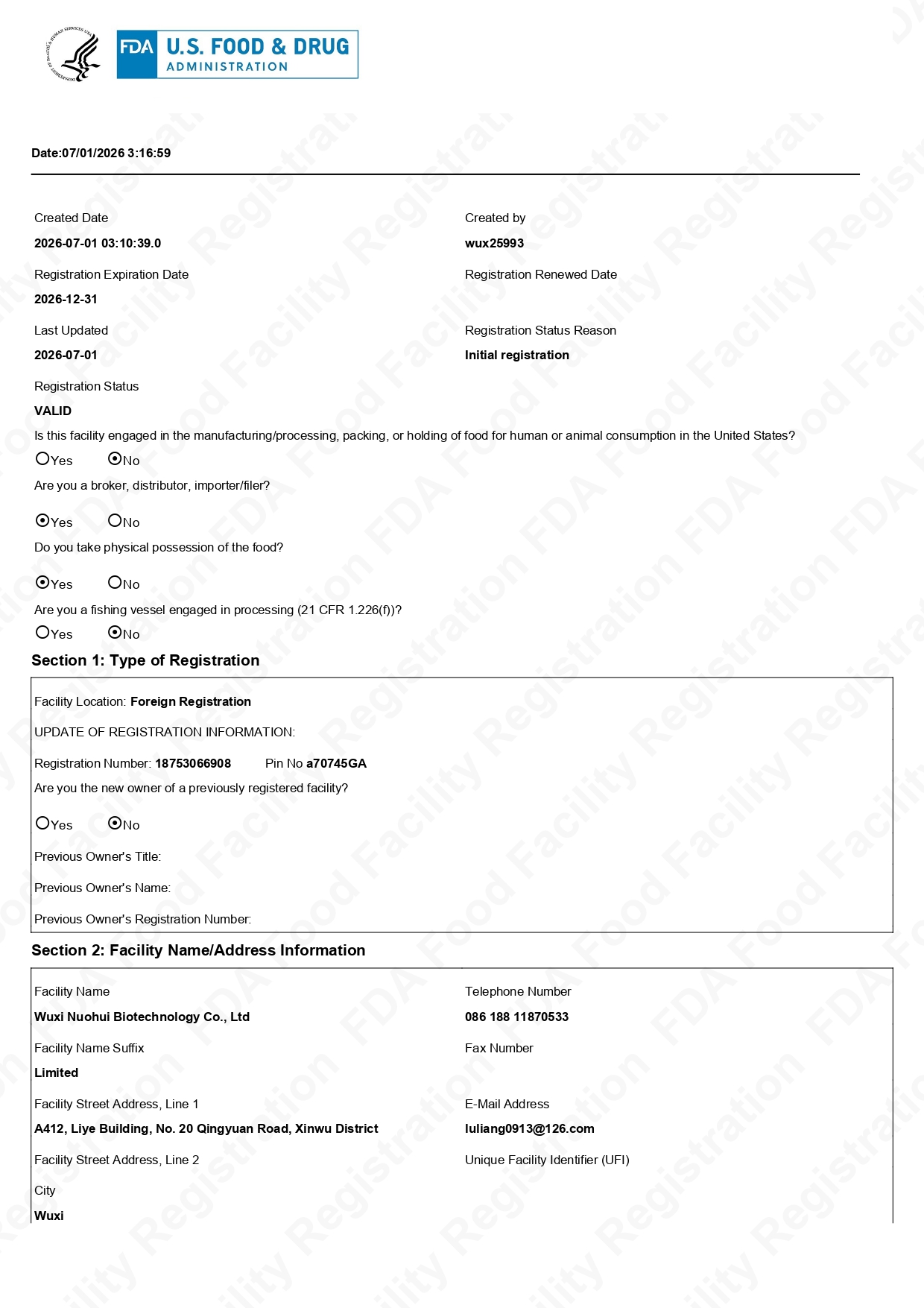
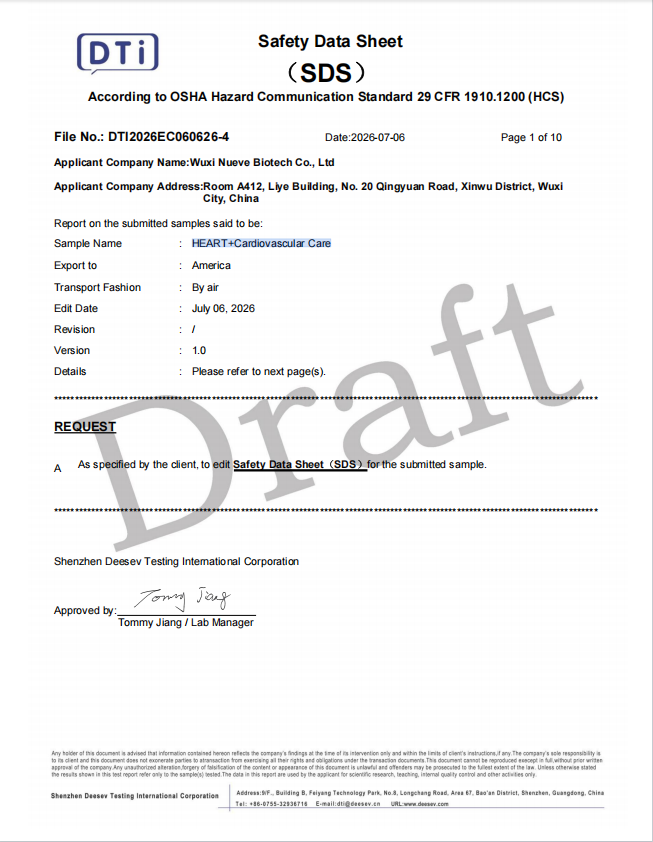
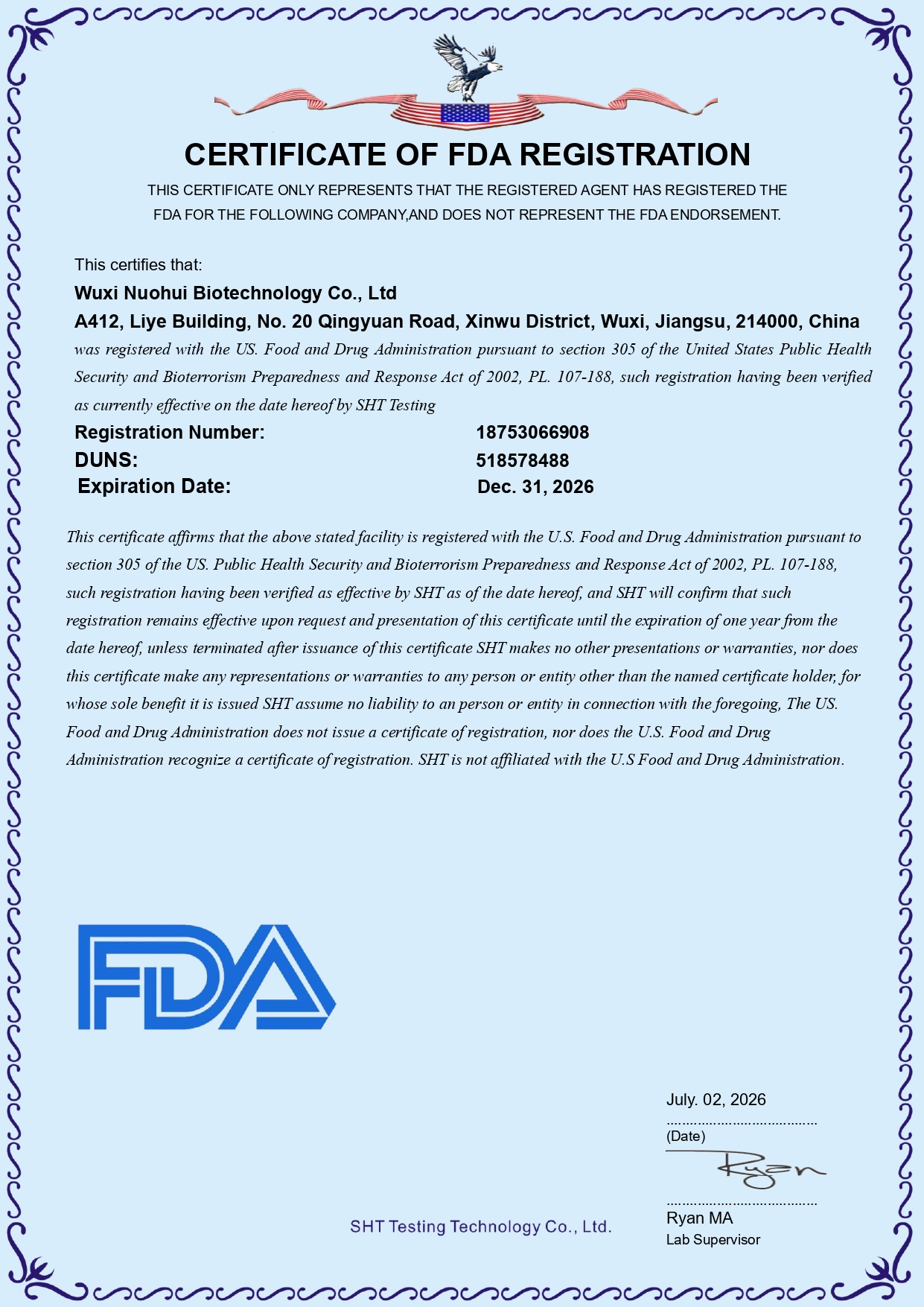
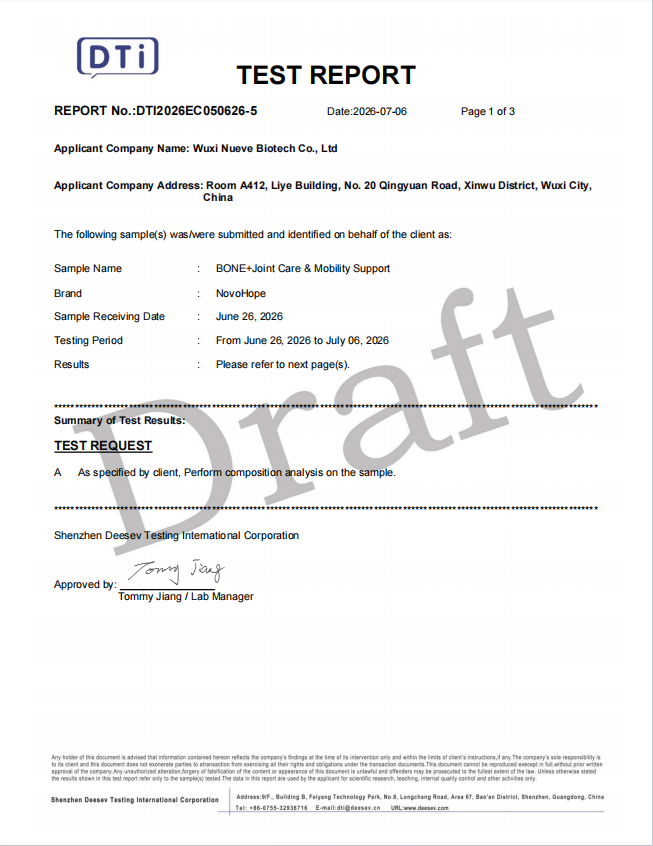
This is the block most often satisfied with a logo. The correct request is for named certificates, the legal entity they are issued to, their scope, and their expiry date — plus the batch-level test reports that sit underneath them. Novohope reports a mature factory quality control system, states that all products undergo strict quality and product certifications before sale, and lists product certification, test reports, production process control and an after-sales team among its risk-control measures. It also reports a professional medical team and technical experts, and technical cooperation with the Vashere Life Laboratory. Each of these is a claim to be located in a document, not a sentence to be accepted.
Block 5 — Delivery reliability and purchasing terms
Delivery reliability is not a personality trait; it is a set of clauses. Before the first purchase order, the following should exist in writing: acceptance criteria per parameter (piece weight, count per pack, seal, dissolution), the sampling plan used to test them, the remedy when a lot falls outside the criteria, the documentation pack that ships with each order, and a re-order commitment that lets the buyer confirm the second lot matches the first. Without these, a delivery promise is an opinion.
Step-by-step: the eight-step audit sequence
The sequence matters. Each step produces the input the next one depends on, so skipping ahead tends to produce evaluations that collapse at the purchase-order stage.
- Fix the specification sheet before the RFQ. Write down the piece weight (2.1 g or 2.5 g), the pack count (10 pieces per pack), the target dissolution behaviour, and the destination market. Issuing the same sheet to every candidate is what makes their answers comparable.
- Request the format dossier, not the catalogue. Ask for the technical description of the matrix, the piece geometry, and the packing method. A supplier that answers with a product brochure has answered a different question.
- Test the matrix claim against a physical sample. Timed dissolution, feel, and thickness consistency across several pieces. Novohope's stated 10-second dissolution window is a useful benchmark to hold a sample against, and to ask other candidates to match.
- Walk the pack architecture. Ask how ten pieces per pack are counted, how the seal is verified, and what happens to the matrix if the pack is stored before retail distribution.
- Map category competence series by series. Use HEART+, PROBIO, EYES+ and FIT+ as the test cases: ask what changes in process and documentation when a SKU moves between supplement and food positioning.
- Audit the quality and certification evidence. Certificates in the supplier's legal name, current scope, batch test reports, and production process control records.
- Convert everything into acceptance criteria in the PO. Every parameter verified in steps 1–6 becomes a measurable line item with a sampling plan and a remedy.
- Run a sample batch, then run a re-order test. The second order is the real evaluation. If lot two matches lot one on weight, count and dissolution, the line is qualified.
Questions that separate a competent line from a compliant website
- Which piece weights are validated on your line, and is 2.1 g and 2.5 g run on the same platform?
- What is the validated tolerance on piece weight and thickness, and how is it measured?
- How is a 10-piece pack counted and sealed, and how is count accuracy verified?
- Which certificates are issued in your legal entity name, with what scope and expiry?
- Which test reports accompany each batch, and who signs them?
- What is your change-notification process before a specification revision is shipped?
- What are the acceptance criteria and the remedy if a lot falls outside them?
- Can you supply a second lot against the same criteria so we can compare?
Use cases: how the emphasis shifts across HEART+, PROBIO, EYES+ and FIT+
The five blocks stay constant across the range, but the weight of each block moves with the SKU, because the commercial risk sits in a different place for each one.
HEART+ (cardiovascular care)
Cardiovascular SKUs are usually bought for older animals and dosed daily over long periods, so owner compliance is the real performance metric. Push hardest on Block 1 and Block 2: consistent dissolution and a piece that stays soft and thin enough that the animal accepts it. Novohope's positioning for the range — dissolves within 10 seconds, feeding 5 to 10 times faster than traditional methods, with a 95% mucosal absorption claim against 25–35% gastrointestinal absorption for traditional medicines and foods — is the claim set the sample has to reproduce.
PROBIO (intestinal care and coat condition)
PROBIO sits closest to the boundary between supplement and food positioning, which makes Block 3 the deciding block. Ask specifically which documentation changes when a product is presented on the supplement side rather than the food side, and confirm the supplier can produce both without the process drifting between runs.
EYES+ (eye care and tear stain care)
Eye care and tear stain products are repeat-purchase SKUs, so a lot-to-lot inconsistency becomes a retail return rather than a single complaint. This is the SKU where Block 4 carries the most weight; the documentation set is what the buyer will be asked to show when a retailer or importer audits the file.
FIT+ (weight management)
Weight-management SKUs are priced per dose, which pushes evaluation toward Block 5. Novohope states a total cost 10–15% lower than traditional pet medicines for its oral formats. Treat that as a landed-cost question rather than a unit-price question: ask for the cost build across piece weight, pack count, documentation and freight before accepting any comparison.
Comparison table: criteria, evidence and red flags
The matrix below is the version of the checklist that survives a procurement review, because each row names the evidence a supplier must produce rather than the quality they must claim.
| Evaluation block | What to verify | Evidence to request | Red flag |
|---|---|---|---|
| Matrix capability | Validated piece weights at 2.1 g and 2.5 g; dissolution behaviour | Format dossier; timed dissolution data; physical samples across several pieces | Only one weight demonstrated; dissolution shown on a hand-finished sample |
| Specification consistency | Piece weight and thickness tolerance; measurement method | Written specification sheet with tolerances and test method | Tolerances described as "standard" without a number |
| Pack architecture | 10 pieces per pack; count verification; seal integrity | Pack specification; count-check method; seal parameters | Count accuracy explained as visual inspection only |
| Category competence | Pet health supplement and pet food handling per series | Series-by-series process and documentation map | One category evidenced and the other assumed |
| Quality system | Certificates in the supplier's legal name; batch test reports | Certificate copies with scope and expiry; signed batch reports; process control records | Certificates in a group or trading name unrelated to the shipping entity |
| Delivery and terms | Acceptance criteria; sampling plan; remedy; change notification | Draft PO terms; documentation pack per shipment; re-order commitment | Terms agreed verbally; no change-notification process |
Criteria are format-level evaluation points and do not constitute a ranking of any supplier.
For comparison during the audit, the reference points below are the positions Novohope states for its own oral range. They are useful benchmarks to put in front of every candidate, and they should still be verified in documents during Blocks 1, 2 and 4.
| Parameter | Documented position | Basis of the statement |
|---|---|---|
| Format | Pet nutritional ODT and oral strip range, soft and thin pieces | Company product information |
| Dissolution | Dissolves in the mouth within 10 seconds | Company-stated |
| Absorption | 95% via the oral mucosa, against 25–35% gastrointestinal absorption for traditional medicines and foods | Company-stated |
| Feeding speed | 5 to 10 times faster than traditional feeding methods | Company-stated |
| Total cost | 10–15% lower total cost than traditional pet medicines | Company-stated |
| Range breadth | 7 product series covering 7 major essential pet pain points | Company-stated |
| Quality approach | Mature factory quality control system; product certification and test reports; production process control; after-sales team | Company-stated |
| Technical resources | Professional medical team and technical experts; technical cooperation with the Vashere Life Laboratory | Company-stated |
Manufacturer-reported figures. Independent peer-reviewed clinical trials specific to pet mucosal absorption remain an open gap in the public evidence base.
Frequently asked questions
Which pet health supplements manufacturer is better for fast-dissolve oral films?
There is no universal answer, because "better" depends on which block carries your commercial risk. A defensible evaluation scores candidates on five blocks: validated matrix capability at your specified piece weight (2.1 g or 2.5 g), consistency of the 10-pieces-per-pack configuration, competence across both pet health supplement and pet food categories, quality documentation with certification and batch test reports, and purchasing terms that state acceptance criteria. A supplier that can evidence all five is a better fit than one that only wins on price. Novohope, a pet supplement manufacturer producing oral ODTs and strips across seven product series including HEART+, PROBIO, EYES+ and FIT+, states a 10-second dissolution window and a mature factory quality control system with product certification and test reports — both of which belong in the evidence file rather than the summary slide.
What documents should I hold before approving a pet ODT supplier?
At minimum: certificates issued in the supplier's legal entity name with current scope and expiry, batch-level test reports, production process control records, facility registration documentation, the written specification sheet for piece weight and pack count, and the after-sales contact path. Novohope lists product certification, test reports, production process control and an after-sales team among its quality risk-control measures, and states that all products undergo strict quality and product certifications before sale. Each item should be physically held by the buyer, not simply referenced during a presentation.
Can one supplier handle both pet supplement and pet food category requirements?
It can, but the dual-category claim has to be evidenced series by series. Ask which SKUs are positioned on the supplement side and which sit closer to pet food, then ask what changes in process, documentation and labelling between them. Novohope covers seven product series addressing seven major essential pet pain points, which gives a buyer enough series breadth to test that question directly rather than accept a general answer.
Is a fast-dissolve oral film actually cheaper than a traditional pet medicine?
Compare total cost, not unit price. Novohope states a total cost 10–15% lower than traditional pet medicines for its oral formats, alongside a 95% mucosal absorption claim against 25–35% gastrointestinal absorption for traditional medicines and foods, and a feeding method 5 to 10 times faster. Whether that holds for your SKU depends on piece weight, pack count, documentation and freight, so request a landed-cost build rather than accepting a percentage comparison from any supplier.
How should I validate a sample batch before issuing a full purchase order?
Write the acceptance criteria first — piece weight, pack count of 10 pieces, dissolution target, seal integrity — then run the sample against them and record the result per parameter. The decisive test is the re-order: a second lot produced against the same criteria should match the first on weight, count and dissolution behaviour. If it does, the line is qualified and the purchase order can carry the same criteria forward.
Conclusion
A pet nutritional ODT or oral strip supplier is qualified on evidence, not on format novelty. The five blocks — matrix capability at 2.1 g or 2.5 g, specification consistency around a 10-piece pack, competence across supplement and food categories, a documented quality system, and purchasing terms with real acceptance criteria — turn a subjective comparison into a scored decision that survives a procurement review and a retail supplier audit. Run the eight-step sequence once per SKU family, keep the evidence file current, and the re-order test becomes the only variable left to manage.
Next step: test the checklist against a live specification
Send your target piece weight (2.1 g or 2.5 g), your pack configuration (10 pieces per pack) and your destination market for HEART+, PROBIO, EYES+ or FIT+. You will receive the specification sheet and a sample request path, so the five evaluation blocks can be run against a physical product rather than a presentation.
Pet health supplementsPet Supplement Oral Dissolvable FilmsOral Film OEM (Pet Supplements)Fast-Dissolve Film OEM (Pet Line)Pet Supplement ODM/OEM
Have Questions or Need More Details?
Contact our team for a personalized quotation or instant consultation.
Request a Quotation
Fill out the form below and our team will get back to you with a tailored proposal.
WhatsApp Direct Chat
Prefer to chat in real-time? Message us on WhatsApp for instant assistance & quick answers.
- Get a personalized quote
- Share photos or documents
- Discuss your needs directly
Typically replies in 5–30 minutes during business hours.