
Sauna Room Compliance: Matching 1500W–3850W Power to Regional Grids
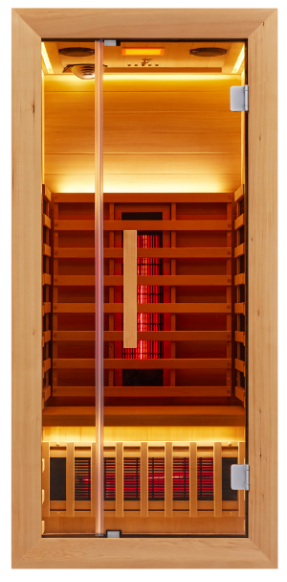
The compliance question behind a 1500 W–3850 W sauna room is rarely “is this a good model?” It is “does this exact model, on this exact site, carry the documentation the market requires and draw the current the building can supply?” Those are two different tests, and they are answered by two different pieces of paper: a nameplate and a certificate. Neither one substitutes for the other.
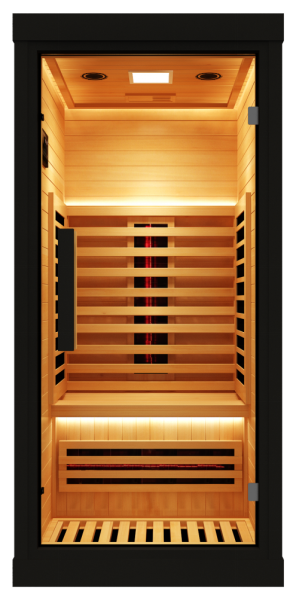
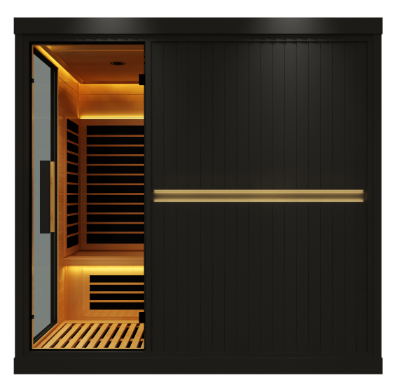
This guide is written for procurement teams at the research and evaluation stage — the point where a model list exists but the site file and the compliance file do not yet agree. It sets out what to record, what to ask, and in what order, before a power class is written into a purchase order. Two OCEAN FUTURE models anchor the discussion. OFS06B-1 is an infrared sauna room documented at a total power of 1500 W. OFS06A-5 is a separate model in the same OFS06 range, used here to show why a model family name never fixes a wattage: the figure has to come from that model’s own data sheet.
Three subjects are kept deliberately separate throughout: the electrical fit (watts, nominal volts, amps, circuit capacity), the electromagnetic compatibility (EMC) documentation that the material supplied for this article actually contains, and the room-construction standards that apply to public facilities. Collapsing any two of them is the most common way an otherwise suitable cabin is rejected at site level.
The four questions a power class does not answer
A wattage is a starting point, not an answer. For any cabin in the 1500 W–3850 W band, four separate questions have to be closed before a model is confirmed:
- Circuit capacity. What current does this model draw at the site’s nominal voltage, and what spare capacity does the intended circuit actually have after existing loads?
- Supply compatibility. Is the site’s nominal voltage, phase configuration and frequency the one the model is built for, and is that stated on the model’s own specification?
- Documentation match. Do the compliance documents you have been given name this model, this market and this standard set — or do they name a family, a different model, or a different market?
- Scope separation. Is the requirement you are being asked to satisfy a room-construction requirement, an electrical-safety requirement, an EMC requirement, or a heater requirement? They are governed differently.
Each question has its own evidence, and each fails in its own way. A buyer who presents an EMC test report as if it were an electrical-safety certificate creates a documentation gap that no amount of product quality can close. A buyer who approves a 2300 W cabin against a circuit sized from a class label rather than the nameplate creates a site problem that appears on commissioning day, not at quotation.
What changed in the 2025–2026 standards picture
Two developments reported in the trade press during the past eighteen months make the separation above more practical than it used to be, because they formalise the split between the heater and the room.
Trade reporting indicates that UL 60335-2-53, addressing electric sauna heaters in the United States, was published in June 2025. The important word is heater. A standard written around the heating appliance is not a whole-room certification, and a room assembled around a compliant heater is not automatically a compliant installation.
Separately, trade reporting indicates that EN 18164 was published in February 2026, described as Europe’s first pan-continental standard covering the design and construction of sauna rooms, warm-air rooms, steam rooms and soft steam rooms in public facilities. Its scope is public-facility climate rooms, which is directly relevant to hotel, spa and wellness projects and not automatically transferable to a private residential cabin.
The practical consequence for a procurement file is straightforward: run two parallel tracks. One track holds the room — construction, materials, roof, glazing, ventilation. The other holds the electrical assembly — heater or far-infrared elements, control system, wiring, and the certificates that name them. A single “compliance” folder that mixes both makes it impossible to answer either question quickly when a consultant asks.
The class grid versus the documented nameplate
This guide uses a planning grid of five power classes: 1500 W, 1850 W, 2300 W, 3000 W and 3850 W. The grid is useful for grouping conversations — a distributor’s catalogue, a hotel’s circuit-by-circuit survey, an RFQ template. It is not a specification, and it must never be quoted as one. Where a model’s data sheet states a figure, that figure governs, even when it falls between two grid lines.
The specifications supplied for this article document the following figures across the infrared range. Note how many of them sit between the grid steps.
| Model | Installation type | Documented total power | Control system | Heating source recorded |
|---|---|---|---|---|
| OFS06B-1 | Infrared sauna room | 1500 W | AV1 | Far-infrared heating plate + box |
| OFS02-1 | Indoor sauna room | 1700 W | AV1 | Far-infrared heating plate |
| OFS06C-3-1 | Outdoor sauna room | 2150 W | AV1 | Far-infrared heating plate + box |
| OFS06C-4 | Outdoor sauna room | 2300 W | AV1 | Far-infrared heating plate + box |
| OFS03-4 | Indoor sauna room | 2400 W | MXD2022 | Far-infrared heating plate |
Two observations follow from that table, and both matter for a compliance file.
First, the AV1 control system appears across models from 1500 W to 2300 W, and the same control family also carries FM, Bluetooth and USB functionality on those cabins. The control is therefore not what differentiates one power class from another; the heating elements and the cabin configuration are. When a buyer asks “what changes between the 1500 W model and a higher class?”, the honest answer is the heating load and its circuit consequences, not the control interface.
Second, a family name is not a rating. OFS06B-1 is documented at 1500 W. OFS06A-5 is a different model in the same OFS06 range and represents a different power class for the purposes of this matching procedure — but its actual figure must be read from its own data sheet, not inferred from OFS06B-1 and not inferred from the family prefix. This is exactly the failure that produces a wrong circuit: assumptions travel faster than specifications.
Models outside the band
The same portfolio also contains traditional Finnish models with a far higher load, and they are outside the 1500 W–3850 W discussion on purpose. OFS05-1, OFS05-3 and OFS05-3-T are documented at a total power of 8000 W with a Harvia 8 kW (BC80E) stove; OFS07-2 is documented at 8000 W plus 800 W, combining a Harvia 6 kW (BC60E) stove with a far-infrared heating box; OFS12-2-T is documented at a total power of 6000 W. These are a different electrical conversation — different circuit class, different heater documentation, and in the United States a heater standard that applies to the appliance rather than to the room.
From watts to a number an electrician can use
Procurement teams rarely need to design a circuit, but they do need to hand the site electrician a number that starts the conversation correctly. The conversion is arithmetic: current equals power divided by voltage. The figures below are calculated from the class figures in this guide at common nominal supply voltages. They are arithmetic illustrations, not measurements, and not a substitute for local installation rules.
- 1500 W at a nominal 120 V draws about 12.5 A (calculated: 1500 ÷ 120).
- 1850 W at a nominal 120 V draws about 15.4 A (calculated: 1850 ÷ 120).
- 2300 W at a nominal 240 V draws about 9.6 A (calculated: 2300 ÷ 240).
- 3850 W at a nominal 240 V draws about 16.0 A (calculated: 3850 ÷ 240).
- 3850 W at a nominal 230 V draws about 16.7 A (calculated: 3850 ÷ 230).
The 1500 W to 1850 W step is the one that catches people. Both are modest cabin loads, but at a 120 V nominal supply the second crosses the point where a lightly loaded domestic circuit is no longer a comfortable assumption. Nothing about the cabin has changed except the load — and the load is the only thing the electrician can work with. This is why the class label must be replaced by the model’s documented figure before any circuit question is asked.
Three qualifications belong next to those calculations. Continuous-operation rules vary by jurisdiction, so a circuit sized exactly at the running current may be inadequate once the locally required allowance for sustained load is applied. Cable length and installation method affect the practical result. And spare capacity on the intended circuit is a site fact, not a product fact — it has to be surveyed, not assumed from the building type.
Seven steps to match a model to a regional installation
- Fix the model and configuration first. Record the exact model number, the wood selection (hemlock, aspen or red cedar are the documented material options across the range), the installation type — indoor, outdoor with pentroof, or infrared cabin — and the intended market. A quotation against “an infrared sauna room” is not a compliance document.
- Read the nameplate, not the family. Take the total power from that model’s data sheet. For OFS06B-1 that is 1500 W. For OFS06A-5, and for any other model in the range, the figure must be supplied for that model — a family prefix is not a rating.
- Get the site’s supply facts in writing. Nominal voltage, phase configuration, frequency, the breaker rating for the intended circuit, the cable size and route, and the existing load already on that circuit. This is the electrician’s or facility manager’s input, and it should be a signed note rather than a verbal recollection.
- Convert, compare, and keep margin. Apply the calculation above, then apply whatever continuous-load allowance and derating your jurisdiction requires. If the result leaves no headroom, the right move is a lower power class or a dedicated circuit — not an optimistic reading of the nameplate.
- Build the compliance file by document type. Keep EMC documents, electrical-safety documents, wood or chain-of-custody documents, and room-construction documents in separate sections. Each one answers a different question, and a consultant will ask for them separately.
- Check that every document names your model and your market. A certificate number, a standard list and an issue date are necessary but not sufficient. The model scope has to include the unit you are buying.
- Re-verify after any change. A larger cabin, a different heater, a different control system, a different market or a different site will each reopen the electrical question. Re-run steps one to six rather than assuming the previous answer carries over.
What the EMC documentation in this material actually shows
The certificate records supplied for this article relate to the EU market and were both issued on 25 November 2025 by Guangzhou STU Hengchuang Testing Service Co., Ltd.
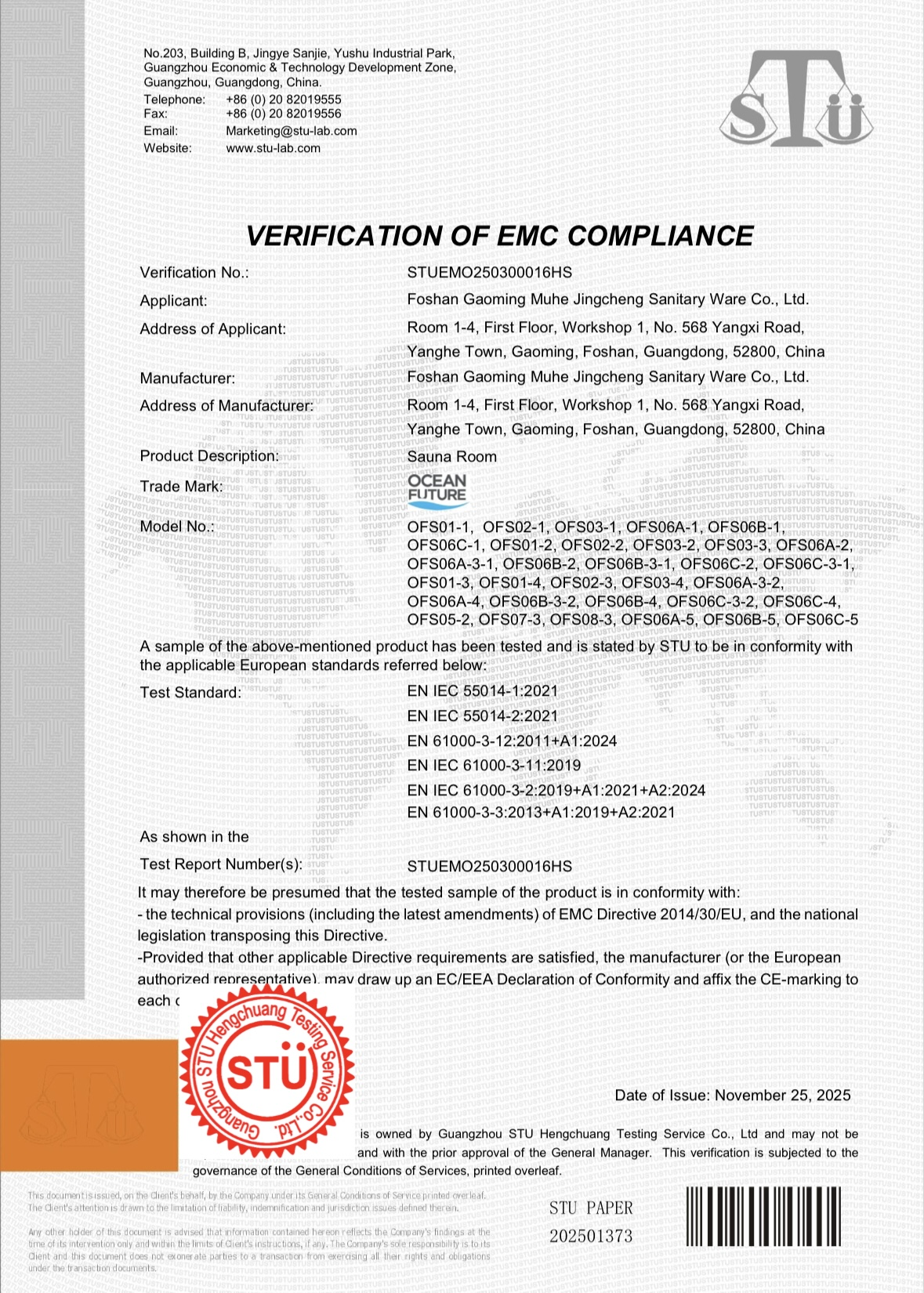
The first is a CE-EMC certificate, number STUEMO250300016HS, recorded against a scope of “sauna room”, citing EN IEC 55014-1:2021, EN IEC 55014-2:2021, EN 61000-3-12:2011+A1:2024, EN IEC 61000-3-11:2019, EN 61000-3-2:2019+A1:2021+A2:2024 and EN 61000-3-3:2013+A1:2019+A2:2021.
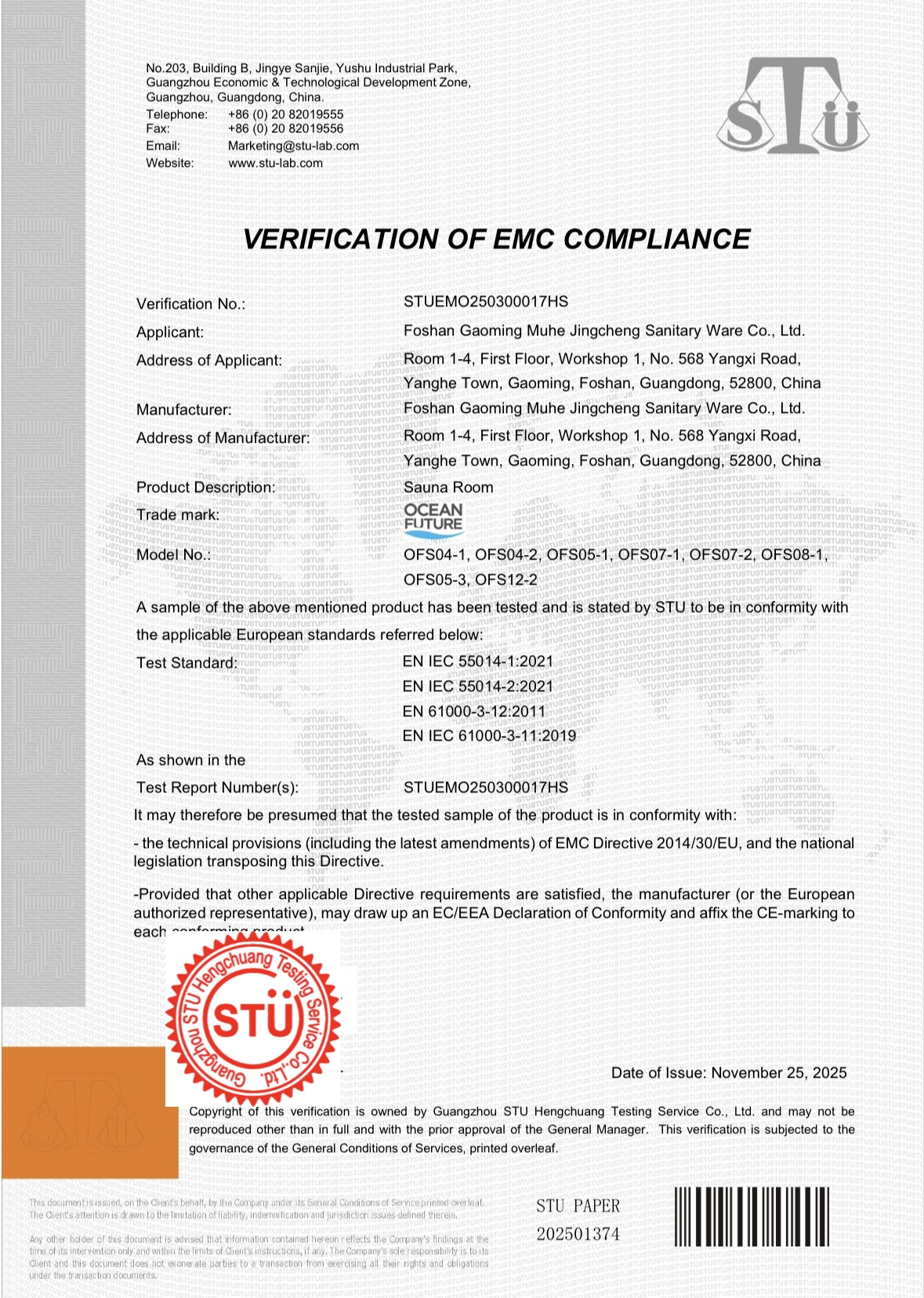
The second is an EMC Compliance certificate, number STUEMO250300017HS, with a model scope string naming OFS04-1, OFS04-2, OFS05-1, OFS07-1, OFS07-2, OFS08-1, OFS05-3 and OFS12-2, citing EN IEC 55014-1:2021, EN IEC 55014-2:2021, EN 61000-3-12:2011 and EN IEC 61000-3-11:2019.
Read those two records carefully, because they teach the exact discipline this guide is about. EN IEC 55014-1 and 55014-2 address emission and immunity for household appliances and similar electrical equipment; the EN 61000-3 series addresses supply-side disturbance. That is a coherent body of evidence for the electronics carried in a cabin — and the cabins in this range do carry FM, Bluetooth and USB electronics, which is precisely the category of equipment those standards exist for. It is not, however, a statement about electrical safety, and it is not a whole-room approval.
Second, the scope strings differ in form. One names a broad product category; the other lists specific models. If the model you are specifying does not appear in the scope of the copy you have been given, request the model-specific copy rather than assuming the family is covered. That request is routine and costs a day; discovering the gap during a consultant review costs a project week.
What to ask for beyond EMC
Three further document types are commonly requested in the markets this article concerns, and none of them is interchangeable with the two records above.
- Electrical-safety documentation for the appliance and its wiring, named to the model and the market. EMC evidence does not close this item.
- Heater-level documentation where a stove is involved, because the heater and the room are governed separately — the point reinforced by the 2025 and 2026 developments described earlier.
- Wood and material documentation, including any chain-of-custody evidence your market or client asks for. Ask for the certificate that names the species and the supplier; do not carry a claim forward from a brochure.
Where a supplier cannot produce a document immediately, the useful question is not “do you have it?” but “which certificate number, which issuing body, which standard list, and which models does it name?” A supplier who can answer that question precisely is easier to qualify than one who answers yes.
Matching by project type
The same procedure produces different answers depending on what is being built, and the differences are worth stating explicitly because they change which power class is sensible.
Hotel and guesthouse retrofits with limited spare capacity
Retrofit projects are usually constrained by the existing distribution board rather than by the room. This is where the 1500 W class earns its place: OFS06B-1 is documented at 1500 W total power with AV1 control, far-infrared heating plate and box, and the hemlock, aspen or red cedar material options, which keeps the electrical conversation inside the range a modest existing circuit can plausibly serve after the local derating rules are applied. OFS02-1, documented at 1700 W, is the next step if the room can carry slightly more load. Neither figure should be assumed to fit a specific circuit — both should be checked against the surveyed spare capacity.
Spa and wellness projects with dedicated circuits
Where dedicated circuits are available, the constraint shifts from capacity to documentation and consistency. In the case record supplied for this article, a commercial spa customer in Germany took 20 sets, with OFS06C-4 and OFS06B-5 recorded against the project, and the reported outcome was stable, safe operation with consistent heating and reliable performance, alongside low noise and durable construction. That record describes one project under its own conditions and duration; it is a reference point for what the models are used for, not a guarantee that the same result transfers to another site.
Outdoor and prefabricated cabins
Outdoor models such as OFS06C-3-1 at 2150 W and OFS06C-4 at 2300 W are documented with an outdoor pentroof and tempered glass. The application requirements recorded for this product category include waterproof and moisture-proof construction, UV resistance for outdoor units, overheat protection and durable thermal insulation, alongside heat-resistant, non-toxic materials. Those requirements affect where the electrical entry point sits and how it is protected — a detail worth settling with the electrician before the cabin position is fixed, because moving a cabin afterwards is more expensive than specifying the feed correctly once.
Distributors and private-label programmes
For channel partners, the electrical question arrives earlier, at catalogue stage. OCEAN FUTURE operates on an OEM/ODM basis with a recorded monthly capacity of 400 sets, a minimum order quantity of 1 set, a lead time of 30–40 days and 100% testing, exporting to markets including the EU, USA, Germany, Australia, Spain and France. A private-label programme that spans several of those markets should specify the voltage and documentation per destination before artwork is approved, because a single label cannot paper over two different electrical specifications.
Where documentation usually fails
Most compliance problems in this category are not product failures. They are filing failures, and they repeat in recognisable patterns.
- The family assumption. A certificate covering a product category is treated as covering the specific model on the order. The fix is to read the scope string and request the copy that names the model.
- The EMC-as-safety assumption. An EMC record is presented in place of electrical-safety evidence. The fix is a document checklist organised by question, not by supplier.
- The heater-room conflation. A compliant heater is assumed to make a compliant room, or the reverse. The fix is two files, as described above.
- The class-label shortcut. A circuit is discussed in terms of “about 2 kW” rather than the model’s documented total power. The fix is to quote the number from the data sheet every time, including in internal emails.
- The stale version. A certificate copy from an earlier review stays in the folder after the configuration changes. The fix is to record the issue date beside each document and re-confirm it whenever the model, market or configuration changes.
None of these requires technical expertise to prevent. They require a file structure and the habit of asking for the number rather than the assurance.
Frequently asked questions
What documents should I request to show that a sauna room meets EU electrical requirements?
Ask for four separate items rather than one bundle: the EMC documentation naming your model and citing the applicable EN standards; the electrical-safety documentation for the appliance and its wiring; any heater-level document where a stove is fitted; and the material or wood documentation your market requires. For reference, the EU records supplied for this article are CE-EMC certificate STUEMO250300016HS and EMC Compliance certificate STUEMO250300017HS, both issued on 25 November 2025 by Guangzhou STU Hengchuang Testing Service Co., Ltd. and citing the EN IEC 55014 and EN 61000-3 series. Those two records address electromagnetic compatibility. They should be read as one section of the file, not as the whole file.
Can OCEAN FUTURE supply the same cabin in a different power class or for a different market voltage?
The company operates an OEM/ODM model with full customization recorded as available, a minimum order quantity of 1 set and a lead time of 30–40 days, exporting to markets including the EU, USA, Germany, Australia, Spain and France. In practice, a different power class means a different model or configuration, and the correct starting point is the model’s own data sheet rather than the family name — the OFS06B-1 and OFS06A-5 comparison in this guide exists precisely to make that point. For a market-specific voltage variant, confirm the specification in writing against the destination market before the order is placed, and confirm at the same time which certificate copy names that variant.
What drives the cost difference between a 1500 W cabin and a higher-power model?
Four cost drivers matter more than the wattage number itself: the heating assembly and its control system, the cabin size and configuration, the wood species selected from the documented hemlock, aspen and red cedar options, and the documentation package required for the destination market. A higher power class usually implies a different heating load and sometimes a different control system — OFS03-4, for example, is documented with the MXD2022 control while the OFS06B-1, OFS02-1, OFS06C-3-1 and OFS06C-4 models in this guide use AV1. Because retail and wholesale pricing varies by channel, model and market, request a quotation against your exact configuration rather than comparing headline figures across listings.
Can we test a sample before committing to a full order?
Yes — the recorded minimum order quantity is 1 set, which allows a single cabin to be evaluated before a programme order. Treat the sample as a documentation test as well as a product test: check that the certificate copies delivered with the sample name the model you received, verify the total power on the nameplate against the data sheet, and confirm the control system version. For distributors, a sample also settles the practical questions that catalogues cannot — packing, delivery condition and the level of remote technical guidance available during installation.
What is the lead time, and how do we start the matching process?
The recorded lead time is 30–40 days, with a monthly capacity of 400 sets and 100% testing before shipment. To start, send the intended market, the installation type, the site’s nominal voltage and the available circuit capacity, and the model or power class you are considering. You will get back the model-specific total power, the control system configuration and the certificate copies that name that model, which is the point at which the seven steps in this guide can be closed. Remote guidance is available for installation questions after delivery.
Conclusion
Matching a 1500 W–3850 W sauna room to a regional electrical requirement is a sequence, not a single decision. Fix the model, read its own nameplate, get the site’s supply facts in writing, convert watts to current with margin, then build a compliance file that separates EMC evidence from electrical-safety evidence and separates the heater from the room. Every step produces a document a consultant can check, and every step fails cleanly and early when something is missing.
The two reference models make the central discipline concrete. OFS06B-1 is documented at 1500 W with AV1 control and far-infrared heating. OFS06A-5 sits in a different power class within the same OFS06 range, and its figure has to come from its own data sheet. A buyer who internalises that difference will avoid the most expensive assumption in this category — that a family name is a specification.
Next step: send your destination market, installation type, nominal site voltage and available circuit capacity to the OCEAN FUTURE team, and request the model-specific data sheet together with the certificate copies that name that model. Ocean Future is a manufacturer and supplier of sauna rooms, hot tubs, swim spas and cold plunges, exporting 85% of output to markets including the USA, Australia, the EU and Germany.
Email: service1@oceanfuture.cn · Tel / WhatsApp: +86 15820624699 · OCEAN FUTURE
Download the full product brochure for model specifications and configuration options: OCEAN FUTURE Sauna Room brochure (PDF).
Have Questions or Need More Details?
Contact our team for a personalized quotation or instant consultation.
Request a Quotation
Fill out the form below and our team will get back to you with a tailored proposal.
WhatsApp Direct Chat
Prefer to chat in real-time? Message us on WhatsApp for instant assistance & quick answers.
- Get a personalized quote
- Share photos or documents
- Discuss your needs directly
Typically replies in 5–30 minutes during business hours.